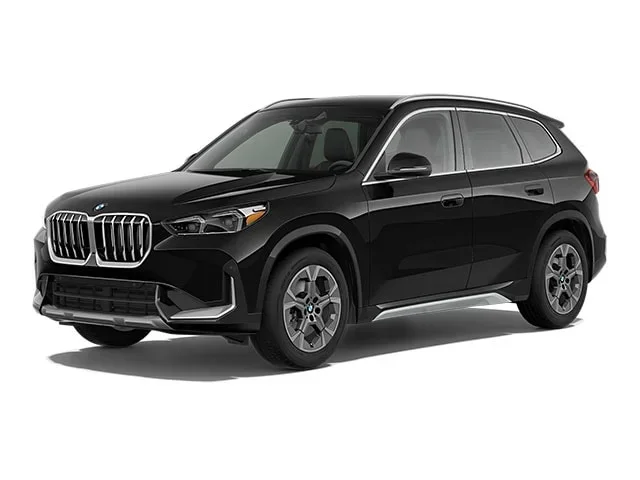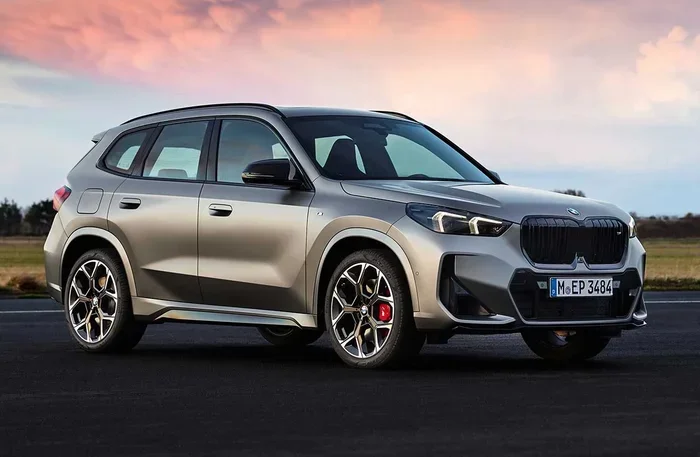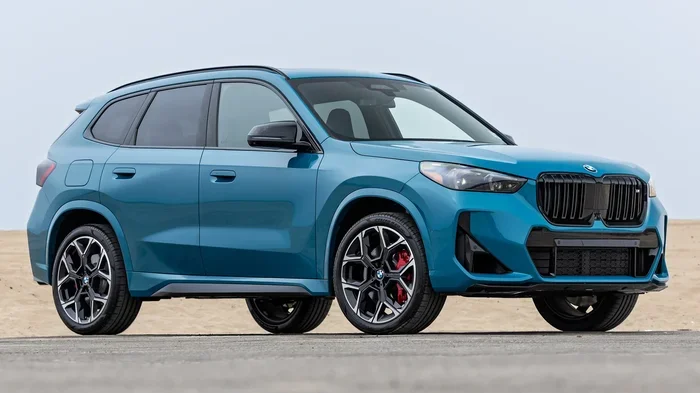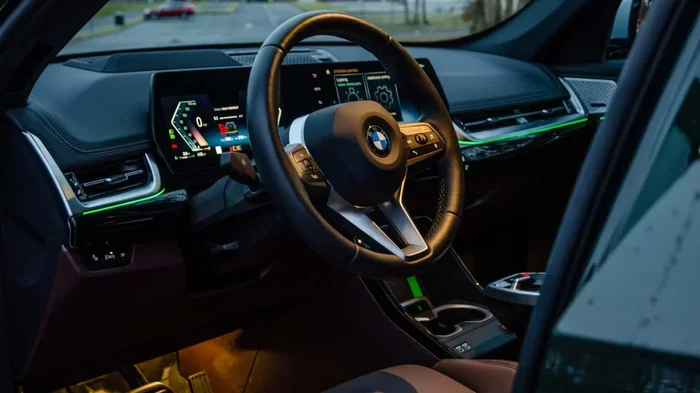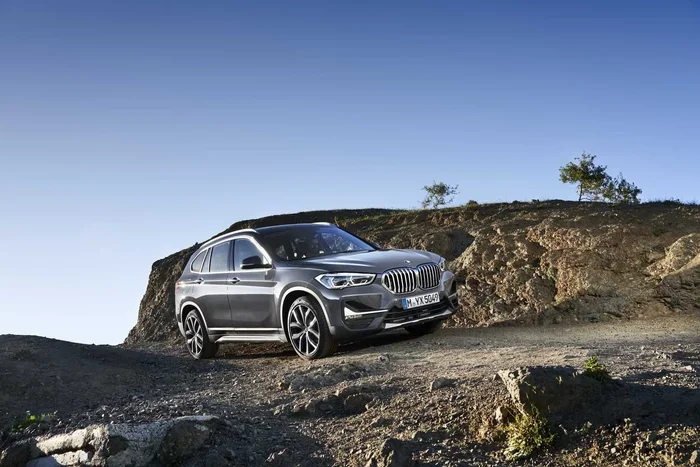
Featured image for BMW X1 driving
Image source: mediapool.bmwgroup.com
The BMW X1 FWD (sDrive) is a smart buy for most people because it saves money upfront and at the pump while delivering the same luxury interior. It handles dry and wet roads perfectly fine thanks to modern traction control. Unless you face steep, icy driveways regularly, the xDrive premium is hard to justify.
Shopping for a compact luxury SUV usually brings you to the BMW X1. It is the best-selling BMW in many global markets for a reason. It looks sharp, the interior feels premium, and it drives better than most rivals. But there is a fork in the road early in the configurator: sDrive (FWD) or xDrive (AWD).
Dealers often push xDrive because it carries a higher price tag and sounds safer. But is the extra hardware actually necessary for you? Let’s cut through the marketing speak and look at the mechanical reality of the front-wheel-drive X1.
Key Takeaways
- Cost Savings: FWD models cost roughly $2,000 less upfront and return 1-2 MPG better fuel economy.
- Platform Engineering: Current X1 models (U11 chassis) use a sophisticated front-biased architecture that minimizes traditional FWD drawbacks like torque steer.
- Traction Reality: With quality all-season or winter tires, the FWD X1 handles 90% of winter driving scenarios confidently.
- Maintenance Simplicity: Removing the transfer case, rear driveshaft, and rear differential reduces long-term repair bills and fluid changes.
- Driving Dynamics: The X1 remains engaging to drive; the electric parking brake and ARB (actuator wheel slip limitation) mimic a limited-slip differential effectively.
- Resale Considerations: In northern states, AWD holds value slightly better, but in the Sun Belt, FWD is equally desirable.
- Model Selection: The xDrive23i and M35i are AWD only; the sDrive18i and sDrive20i are your FWD entry points depending on market.
📑 Table of Contents
- Understanding the BMW X1 Platform: UKL and FAAR
- BMW X1 FWD vs AWD (xDrive): The Core Differences
- The Pros of Choosing the BMW X1 FWD (sDrive)
- The Cons of the BMW X1 FWD You Should Know
- Real World Driving: Snow, Rain, and Daily Commutes
- Maintenance, Reliability, and Long-Term Costs
- Who Should Buy the FWD X1? (And Who Shouldn’t)
- Expert Insight: The “ARB” Technology Deep Dive
- Quick Tips for BMW X1 FWD Owners
- Common Mistakes Buyers Make
- Comparing Generations: F48 (2015-2022) vs U11 (2023+)
- Final Verdict: Is the BMW X1 FWD Good?
Understanding the BMW X1 Platform: UKL and FAAR
To understand if is BMW X1 FWD good, you have to know what sits under the sheet metal. Since the second generation (F48) launched in 2015, the X1 has sat on BMW’s UKL (Untere Klasse) front-wheel-drive platform. The current third generation (U11) uses the updated FAAR architecture.
This is not an afterthought. Unlike older BMWs where AWD was the “native” layout and FWD was derived from it, these platforms are front-drive first. The engine sits transversely (sideways). The transmission is integrated tightly with the engine. The xDrive system is actually an add-on: a power take-off unit on the transmission sends power to a driveshaft running under the car to a rear differential.
This matters immensely. The FWD version is the “native” configuration. The weight distribution, steering geometry, and suspension tuning are all optimized for the front-drive layout first. You are not buying a compromised version of an AWD car; you are buying the core engineering intent.
The sDrive Badge Explained
BMW uses the term sDrive for front-wheel drive. It sounds marketing-heavy, but it simply means the front wheels do 100% of the driving. The rear wheels are free-rolling. This saves weight—roughly 100 to 150 lbs depending on the generation—right over the rear axle. That weight saving improves the front-to-rear balance slightly, often making the sDrive model feel a touch more nimble in tight corners because there is less polar moment of inertia.
BMW X1 FWD vs AWD (xDrive): The Core Differences
Let’s look at the hardware differences side-by-side so you can see exactly what you gain and what you lose.
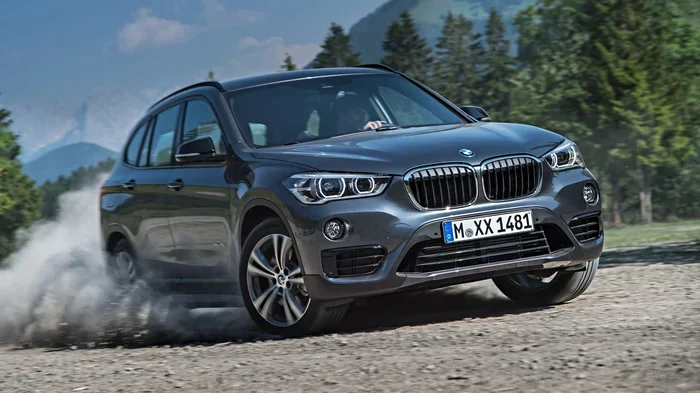
Visual guide about BMW X1 driving
Image source: topgear.com
| Feature | BMW X1 sDrive (FWD) | BMW X1 xDrive (AWD) |
|---|---|---|
| Drivetrain Hardware | Transaxle only. No rear driveshaft, no rear diff. | Power take-off unit, driveshaft, rear differential, clutch pack. |
| Weight | ~3,700 – 3,850 lbs (varies by engine) | ~3,850 – 4,000 lbs |
| Fuel Economy (EPA Combined) | 26 – 29 MPG (Gas), 40+ MPG (Diesel/EU) | 24 – 27 MPG (Gas) |
| Ground Clearance | Standard (approx 7.2 – 7.5 in) | Often slightly higher (approx 7.5 – 8.0 in) |
| Towing Capacity | Lower (approx 1,500 – 2,000 lbs) | Higher (approx 2,000 – 2,400 lbs) |
| MSRP Difference | Base Price | +$2,000 (approx) |
| Maintenance Items | Front brakes, tires, transmission fluid. | All above + Transfer case fluid, Rear diff fluid, CV joints. |
The table tells a clear story. You pay more upfront, you burn more fuel, and you have more components to service later. The trade-off is traction in low-grip scenarios and towing capacity.
The Pros of Choosing the BMW X1 FWD (sDrive)
There are compelling reasons to stick with the standard drivetrain. For a huge percentage of buyers, the FWD model is actually the better car.
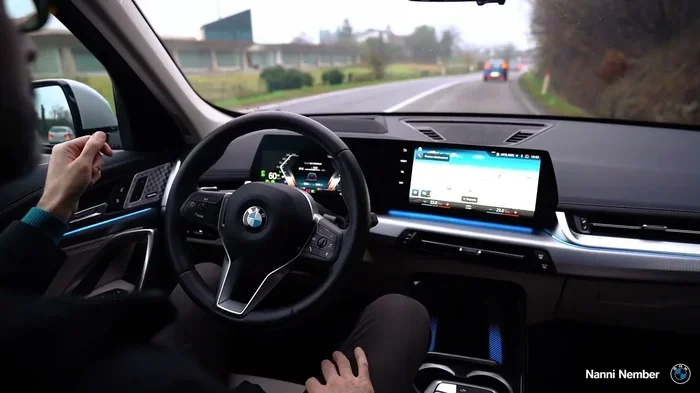
Visual guide about BMW X1 driving
Image source: i.ytimg.com
1. Better Fuel Efficiency
Every pound counts. Every rotating mass counts. The xDrive system adds parasitic drag. Even when the rear axle is decoupled (which happens at highway speeds in modern systems), you are spinning extra seals, bearings, and gears. The EPA ratings consistently show a 1-2 MPG advantage for sDrive. Over a 100,000-mile ownership cycle, that is real money staying in your pocket.
2. Lower Purchase Price
The roughly $2,000 premium for xDrive is pure profit margin for the dealer on a feature you might use 1% of the time. That $2,000 buys a lot of winter tires—which are far more effective than AWD on all-seasons for stopping and turning in snow.
3. Reduced Mechanical Complexity
This is the sleeper benefit. No transfer case means no transfer case fluid changes (BMW recommends this every 40k-60k miles on xDrive). No rear differential means no diff fluid. No driveshaft means no center support bearing to fail or guibo (flex disc) to crack. Fewer CV joints to tear boots. If you plan to keep the car past 100k miles, the FWD model is mechanically simpler and cheaper to maintain. When you do need parts, sticking to quality aftermarket brands keeps costs reasonable without sacrificing reliability.
4. More Interior Space (Slightly)
Because there is no driveshaft tunnel running down the center of the car, the rear floor is flatter. The center console design is often slightly different, offering a bit more knee room for the middle rear passenger. It’s a small win, but a win nonetheless.
5. Tire Rotation Flexibility
On FWD cars, the front tires wear much faster than the rears (60/40 or 70/30 split). You can rotate them front-to-back every 5,000-7,500 miles to even out wear. On xDrive, the wear is more even, but you must keep tread depths within 2/32nds of an inch across all four tires to avoid damaging the viscous coupling or clutch packs in the center differential. A single blown tire on an xDrive car often forces you to buy four new tires. On FWD, you can often replace just two (on the front) if the rears have life left.
The Cons of the BMW X1 FWD You Should Know
It’s not all sunshine. There are genuine downsides to the front-drive layout, especially if you push the car hard or live in specific climates.
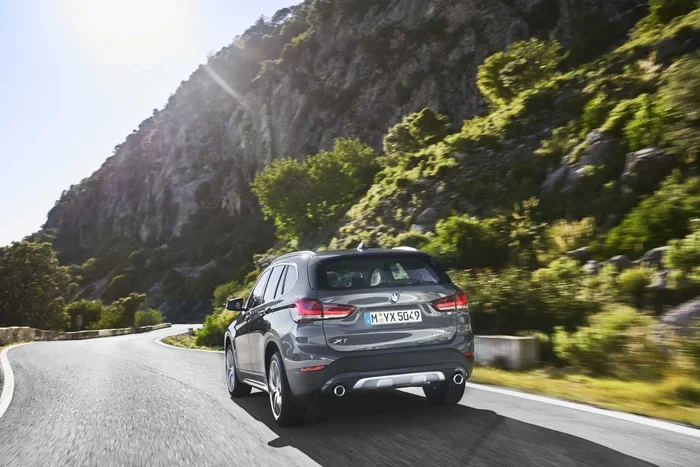
Visual guide about BMW X1 driving
Image source: mediapool.bmwgroup.com
1. Traction Limits in Low Grip
Physics is physics. Asking the front tires to steer and put down 200+ lb-ft of torque (in the 20i/23i models) while braking is a tall order. On a wet uphill launch, or pulling out of a gravel side street onto a busy road, the front tires can saturate. The traction control will clamp the brakes or cut power. You sit there waiting for grip. xDrive would shuffle that torque rearward instantly.
2. Torque Steer (Managed, But Present)
Modern BMWs use ARB (Actuator Wheel Slip Limitation). This is a software function that uses the ABS module to brake a spinning inside front wheel, mimicking a mechanical limited-slip differential. It works remarkably well. But under hard acceleration out of a tight corner, you can still feel a slight tug on the steering wheel. It is subtle—nothing like the old torque-steer monsters of the 2000s—but purists notice it.
3. Understeer at the Limit
Front-heavy, front-drive cars naturally push wide (understeer) when you enter a corner too hot. The X1 is tuned to be safe and predictable. It will not snap oversteer. But if you drive “ten-tenths” on a track or canyon road, the xDrive car can power out of the apex better. For 99.9% of street driving, this is irrelevant.
4. Towing and Steep Boat Ramps
If you tow a jet ski or a small trailer up a wet, algae-covered boat ramp, FWD can struggle. The weight of the trailer tongue unloads the front axle (or doesn’t load it enough), and the front tires spin. xDrive puts power to the rear wheels which are weighted by the trailer. Also, the tow rating is officially lower on sDrive models.
5. Resale in Snow Belt States
If you live in Minnesota, Colorado, or Upstate New York, the used market expects AWD. An sDrive X1 will take longer to sell and fetch a lower price there. In Florida, Texas, or California? Nobody cares. It sells just as fast.
Real World Driving: Snow, Rain, and Daily Commutes
This is the section that matters most. Let’s break down specific scenarios.
The “Winter Tire” Rule
I cannot stress this enough: A FWD car on four dedicated winter tires outperforms an AWD car on all-season tires in every metric except deep snow clearance. Braking distance on ice? FWD + Winters wins. Cornering on snow? FWD + Winters wins. Hill start on ice? FWD + Winters wins.
If you buy an sDrive X1, budget $800-$1,200 for a set of winter wheels and tires. You are still $1,000 ahead of the xDrive MSRP, and you are significantly safer. If you refuse to swap tires, xDrive on all-seasons is safer than FWD on all-seasons. But it is a false economy.
Rain and Wet Highways
In the rain, the X1 sDrive is rock solid. The wide front tires (225 or 245 section width typically) cut through standing water well. The stability control (DSC) is calibrated brilliantly. You would have to be driving recklessly to provoke instability. Hydroplaning risk is identical between sDrive and xDrive—it depends on tire tread depth and speed.
Daily Commute and Highway Cruising
This is where the sDrive shines. It is lighter. The steering feels slightly less corrupted by driveline vibrations. The ride quality is often marginally better because the unsprung weight at the rear is lower (no rear diff/half-shafts). It feels more like a traditional BMW—light on its feet, responsive turn-in. If you do 90% highway miles, you will prefer the sDrive.
Light Off-Road / Gravel Roads
If your “off-road” is a gravel driveway or a maintained forest service road, sDrive is fine. Keep momentum up. If you hit a muddy patch where one front wheel and one rear wheel lose grip (cross-axle articulation), an open-diff FWD car stops. An xDrive car with the electronic differential lock (EDL) braking the spinning wheels will crawl out. But the X1 has low ground clearance and low-profile tires standard. It is not an off-roader in either trim.
Maintenance, Reliability, and Long-Term Costs
Let’s talk about keeping this thing running for 150,000 miles.
Fluids and Intervals
sDrive: Engine oil, Brake fluid (2 yrs), Coolant (lifetime fill but check), Transmission fluid (ZF 7-speed DCT or 8-speed Auto – change every 60k miles for peace of mind). xDrive adds: Transfer case oil (every 40k-60k), Rear differential oil (every 40k-60k).
Skipping transfer case fluid on xDrive leads to “clunk” on takeoff and eventual clutch pack failure—a $2,000+ repair. The sDrive simply deletes this failure mode. Also, knowing what colour BMW coolant is helps you spot leaks early regardless of drivetrain.
Common Failure Points
- Front Control Arm Bushings: Wear item on all X1s. FWD puts more load on front suspension, so these might wear slightly faster, but the difference is negligible.
- Turbo/Engine Issues: Identical between sDrive and xDrive. The B38 (3-cyl) and B48 (4-cyl) engines are robust.
- Transmission: The 7-speed DCT (F48) or 8-speed Auto/Steptronic (U11) are shared. Reliability is good if fluid is changed.
- xDrive Specific: Rear differential seal leaks, transfer case actuator motor failure, center support bearing noise.
Tire Costs Over Time
As mentioned, FWD eats front tires. Expect 30k-40k miles on a set of fronts if you rotate religiously. Rears can go 60k+. xDrive eats all four evenly at ~40k-50k. The total tire spend over 100k miles is roughly similar, but the FWD car lets you stagger the purchases (buy 2 now, 2 later), helping cash flow.
Who Should Buy the FWD X1? (And Who Shouldn’t)
Let’s make the decision easy.
Buy the sDrive (FWD) If:
- You live where snow is rare or light (South, West Coast, UK, Coastal Europe).
- You are willing to buy a set of winter tires if you see snow occasionally.
- Your driving is 90% commute, highway, school run, Costco runs.
- You want the lowest total cost of ownership.
- You prefer lighter, sharper steering feel.
- You don’t tow anything heavier than a small utility trailer.
- You are buying a used CPO car and want to save $2k-$3k over an equivalent xDrive.
Buy the xDrive (AWD) If:
- You live at the top of a steep, unplowed driveway in Vermont/Colorado/Alps.
- You tow a trailer near the max capacity regularly.
- You simply want the “best” spec and peace of mind regardless of cost.
- You live in a region where resale value tanks without AWD badge.
- You drive on unmaintained dirt/mud roads weekly.
The “M35i” Exception
Note: The top-tier X1 M35i (U11) is xDrive only. It has a mechanical Torsen limited-slip differential on the front axle plus the rear drive. If you want max performance, you don’t get a choice. You get AWD. For the standard xDrive23i / sDrive20i / sDrive18d models, the choice is yours. If you crave that M Performance power, check out our guide on what BMW is the fastest to see where the X1 M35i ranks.
Expert Insight: The “ARB” Technology Deep Dive
BMW’s implementation of FWD is unique because of ARB (Aktorisches Radschlupfbegrenzung). Most FWD cars use a “brake-based e-diff” that is reactive. BMW’s system is predictive. It uses data from the steering angle sensor, yaw rate sensor, and wheel speed sensors before slip occurs. It pre-loads the brake pressure on the inside front wheel during corner entry.
This effectively gives the X1 sDrive a “virtual limited-slip differential.” It allows you to put power down earlier on exit. It is a genuine engineering advantage over competitors like the Audi Q3 (which uses a similar Haldex-based system but often feels more reactive) or Mercedes GLA (which historically had more torque steer). The result? The X1 sDrive feels surprisingly neutral. You can actually rotate the car on the throttle slightly—lift-off oversteer is tuneable in the M Sport models via the DSC modes (Sport/Track).
Quick Tips for BMW X1 FWD Owners
- Rotate Tires Every Oil Change: Set a reminder. Front-to-back only (directional tires) or cross-rotation (non-directional). This is the single biggest money saver.
- Buy a Second Set of Wheels for Winters: Steelies or cheap alloys. Swapping tires on rims twice a year costs $80-$120. Swapping tires off rims costs $200+ and risks bead damage.
- Use “Sport” Mode in Rain: It sharpens throttle response and holds gears longer, but crucially, it relaxes DSC intervention slightly, letting the ARB work more naturally before the nanny cuts power completely.
- Check Front CV Boots Annually: They do the work of four axles. Grease leakage is the first sign of failure.
- Don’t “Launch” It: Brake-torquing a FWD turbo car kills front tires and stresses the transaxle. Roll into the throttle.
Common Mistakes Buyers Make
- Buying AWD “For Safety” but keeping All-Seasons: This is the #1 error. AWD helps you go. Tires help you stop and turn. Stopping is more important.
- Ignoring the Tow Rating: Hooking a 3,000 lb camper to an sDrive 18i will cook the transmission and void warranty.
- Assuming FWD = “Not a Real BMW”: The UKL platform cars (X1, X2, 1 Series, 2 Series Gran Coupe) drive better than many older “RWD” BMWs did on street tires. The chassis stiffness and suspension kinematics are world-class.
- Skipping Transmission Fluid Changes: “Lifetime fluid” is marketing for “lifetime of warranty.” Change it at 60k miles.
Comparing Generations: F48 (2015-2022) vs U11 (2023+)
If you are shopping used, the generation changes the calculus slightly.
F48 Generation (2015–2022)
- Engines: B38 1.5L 3-cyl (sDrive18i), B48 2.0L 4-cyl (sDrive20i/25i).
- Transmission: 7-Speed Dual Clutch (DCT) on lower models, 8-Speed Auto on higher.
- FWD Feel: Slightly more torque steer on the 3-cyl DCT combo at low speed. The DCT can be jerky in parking lots.
- Interior: Older iDrive 6/7. Physical buttons for climate. Many prefer this.
U11 Generation (2023–Present)
- Engines: B38 1.5L 48V Mild Hybrid (sDrive18i), B48 2.0L 48V Mild Hybrid (sDrive20i / xDrive23i).
- Transmission: 7-Speed DCT (18i) / 8-Speed Auto (20i/23i). The 48V starter-generator smooths the DCT significantly.
- FWD Feel: Much refined. The mild hybrid system fills the torque gap off-idle, eliminating the “lag-then-surge” that caused torque steer.
- Interior: Curved Display, iDrive 9, touchscreen HVAC. Polarizing but modern.
- ARB Calibration: Improved significantly. Feels almost RWD-like in Sport mode.
Verdict: The U11 sDrive is the better daily driver. The F48 sDrive is the better used value.
Final Verdict: Is the BMW X1 FWD Good?
Yes. Unequivocally. The BMW X1 sDrive is not a penalty box. It is the purest expression of the UKL/FAAR platform. It is lighter, more efficient, cheaper to buy, cheaper to run, and more engaging on dry pavement than the xDrive model.
The only reasons to pay the xDrive tax are: you have a steep icy driveway, you tow near the limit, or you live where the used market punishes FWD at trade-in time. For everyone else? Take the $2,000 savings, buy a set of Michelin CrossClimate 2s (or dedicated winters), and enjoy a car that handles better on the roads you actually drive on.
Don’t let the badge snobs convince you that “BMW must be RWD or AWD.” The engineering on this platform is genuine. The FWD X1 is a brilliant compact SUV that happens to send power to the front wheels. Drive both back-to-back. You’ll likely pick the sDrive.
Frequently Asked Questions
Is the BMW X1 front-wheel drive good in snow?
Yes, the BMW X1 FWD is good in snow provided you fit proper winter tires. The ARB electronic differential lock and stability control manage traction well. However, ground clearance is limited (~7.2 inches), so deep unplowed snow will stop it before traction does.
Does the BMW X1 FWD have torque steer?
It has very minimal torque steer thanks to the ARB (Actuator Wheel Slip Limitation) system which brakes the inside front wheel to simulate a limited-slip differential. You may feel a slight tug under hard acceleration out of tight corners, but it is well-controlled.
What is the difference between sDrive and xDrive on the BMW X1?
sDrive is BMW’s marketing term for front-wheel drive (FWD). xDrive is their all-wheel drive (AWD) system which adds a driveshaft, transfer case, and rear differential to send power to the rear wheels when needed. sDrive is lighter, cheaper, and more fuel-efficient.
Can you tow with a BMW X1 FWD?
Yes, but the towing capacity is lower than the xDrive model (typically around 1,500–2,000 lbs vs 2,000–2,400 lbs). It is fine for a small utility trailer or jet ski, but not for a heavy travel trailer. Steep, wet boat ramps can also challenge FWD traction.
Is the BMW X1 FWD cheaper to maintain than xDrive?
Yes, significantly. The FWD model eliminates the transfer case, rear differential, driveshaft, and associated fluids and seals. This removes several service intervals and potential failure points (like transfer case actuator motors or rear diff leaks), lowering long-term ownership costs.
Which BMW X1 models come only in FWD?
In most markets, the entry-level models like the X1 sDrive18i (1.5L 3-cyl) and sDrive20i (2.0L 4-cyl detuned) are FWD only. The higher performance M35i is xDrive only. The mid-range xDrive23i is AWD only in the current U11 generation, though older F48 generations offered sDrive20i and sDrive25i variants.