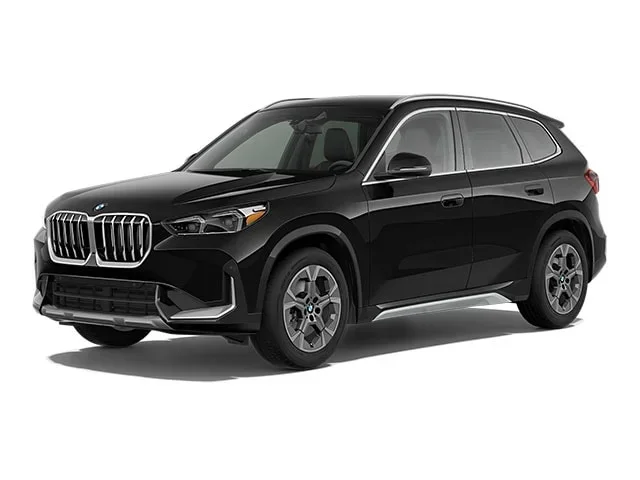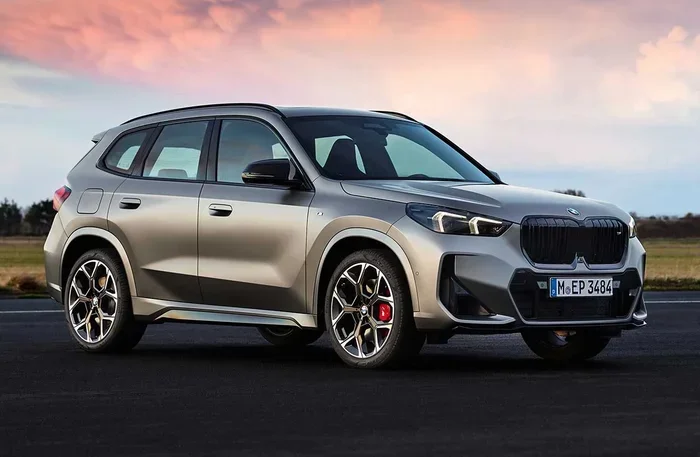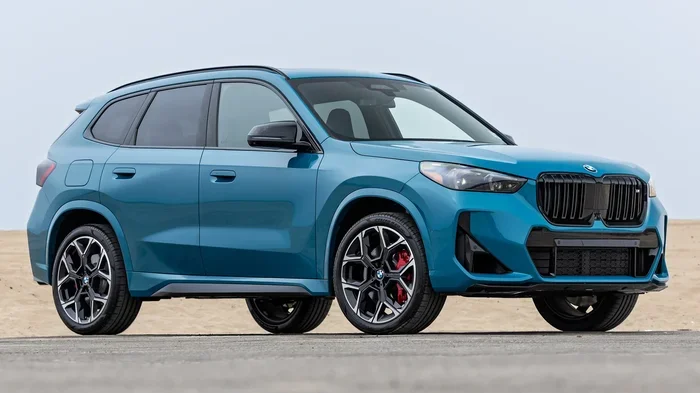
Featured image for BMW X1 SUV exterior
The BMW X1 sits right on the line between subcompact and compact SUV classes. Earlier generations were firmly subcompact, but the current model has grown significantly in size and interior space. This guide explains the classification confusion, compares dimensions against key rivals, and helps you decide if the X1 fits your lifestyle and garage.
Shopping for a luxury crossover can feel like decoding a secret language. You see the BMW X1 listed as a subcompact SUV on one website and a compact SUV on another. It is confusing. You just want to know: will it fit in your garage? Will it fit your family? And how does it stack up against the Audi Q3 or the Honda CR-V?
The short answer is that the BMW X1 has grown up. The first two generations were textbook subcompact SUVs. They were small, sporty, and tight in the back. But the third generation, launched for the 2023 model year, changed the game. It stretched in every direction. It gained legroom. It gained cargo space. Suddenly, it started encroaching on compact SUV territory. Today, it sits in a sweet spot—a “tweener” that offers compact room with subcompact agility. Let’s break down exactly where it fits so you can buy with confidence.
Key Takeaways
- Classification Shift: The BMW X1 started as a subcompact SUV but the current generation (2023+) is widely considered a compact SUV due to increased dimensions.
- Size Matters: The latest X1 is longer, wider, and taller than its predecessor, offering rear legroom and cargo space that rival traditional compact models.
- Rival Comparison: It competes directly with the Audi Q3, Mercedes GLA, and Volvo XC40—all classified as subcompact luxury crossovers—but now matches the Honda CR-V and Toyota RAV4 in key interior metrics.
- Platform Change: The switch to the FAAR front-wheel-drive architecture allowed for a more spacious cabin without increasing the exterior footprint dramatically.
- Buying Implication: If you need maximum parking ease, the X1 is still smaller than a CR-V. If you need family space, it now works as a compact alternative.
- Naming Convention: BMW’s “X1” badge traditionally denoted the entry-level SUV, but size inflation across the industry has blurred segment lines.
- Value Proposition: You get near-compact space with subcompact maneuverability and a premium badge, making it a unique “tweener” value.
📑 Table of Contents
- Understanding SUV Segments: Compact vs. Subcompact
- The Evolution of the BMW X1: Three Generations of Growth
- By the Numbers: BMW X1 Dimensions vs. The Competition
- Why Classification Matters for Your Wallet and Garage
- Interior Space Deep Dive: Where the X1 Feels Compact (and Where It Doesn’t)
- Powertrain and Platform: How Engineering Dictates Class
- Technology and Features: Punching Above Weight Class
- The “Is It Right For You?” Decision Matrix
- Ownership Costs: The Hidden Factor in Classification
- Expert Insight: The “Goldilocks” Luxury Crossover
- Quick Tips for the BMW X1 Buyer
- Common Mistakes to Avoid
- Frequently Asked Questions About BMW X1 Size
Understanding SUV Segments: Compact vs. Subcompact
Before we look at the X1 specifically, we need to define the playing field. The automotive industry uses loose definitions, but general size classes exist for a reason. They help buyers compare apples to apples.
What Defines a Subcompact SUV?
Subcompact SUVs are the smallest mainstream crossovers. Think Honda HR-V, Mazda CX-30, or Hyundai Kona. They usually sit on a car platform (unibody). They prioritize city parking, fuel economy, and a low entry price. Rear seat space is often tight for adults. Cargo areas fit groceries or a small stroller, but not much more. Length typically falls between 165 and 175 inches.
What Defines a Compact SUV?
Compact SUVs are the best-sellers in America. The Toyota RAV4, Honda CR-V, and Ford Escape live here. They ride on larger platforms. They offer genuine adult space in the second row. Cargo space usually exceeds 35 cubic feet behind the rear seats. Lengths typically run from 180 to 188 inches. They are family haulers first, city cars second.
The “Tweener” Problem
Luxury brands love to blur these lines. A Mercedes GLA is shorter than a Mazda CX-30. An Audi Q3 is barely longer than a Subaru Crosstrek. But they cost $10,000 more. They sell “premium” instead of “space.” The BMW X1 has historically played this game perfectly—until now.
The Evolution of the BMW X1: Three Generations of Growth
To understand the current classification debate, you have to look at the history. The X1 has undergone a massive transformation over 15 years.
First Generation (E84: 2009–2015) – The Sporty Subcompact
The original X1 was based on the 3 Series sedan platform (rear-wheel drive biased). It was low, wide, and handled like a hatchback on stilts. It was 174 inches long. Rear legroom was a cramped 37 inches. Cargo space was 27 cubic feet. It was undeniably a subcompact SUV. It drove better than anything in its class, but you bought it for the drive, not the space.
Second Generation (F48: 2016–2022) – The Practical Subcompact
BMW switched to the UKL front-wheel-drive platform (shared with the Mini Countryman). This was controversial for enthusiasts but brilliant for space. The wheelbase stretched. Length grew to 175 inches. Rear legroom jumped to 37.4 inches. Cargo space hit 27.1 cubic feet (58.7 with seats down). It was still a subcompact by the numbers, but a very roomy one. It became the best-selling BMW model in the US for a reason.
Third Generation (U11: 2023–Present) – The Compact Contender
This is where the classification breaks. The new X1 sits on the FAAR architecture. It is 177.2 inches long. That is nearly 3 inches longer than the old model. Width is up. Height is up. But the interior is the story. Rear legroom is now 38.7 inches. That matches the Audi Q3 (38.0 in) and beats the Mercedes GLA (36.1 in). Cargo space behind the rear seats is 27.7 cubic feet (57.2 with seats folded).
For context, a Honda CR-V offers 39.3 inches of rear legroom and 39.3 cubic feet of cargo space. A Toyota RAV4 offers 37.8 inches of legroom and 37.6 cubic feet of cargo. The X1 is closer to the RAV4 in legroom than the GLA. It has effectively graduated to the compact class in terms of usability, even if its exterior length remains slightly shorter than the mainstream Japanese leaders.
By the Numbers: BMW X1 Dimensions vs. The Competition
Numbers don’t lie. Let’s look at how the 2024-2025 BMW X1 stacks up against its direct luxury rivals and the mainstream compact benchmarks.
| Model | Length (in) | Width (in) | Height (in) | Wheelbase (in) | Rear Legroom (in) | Cargo Behind 2nd Row (cu ft) |
|---|---|---|---|---|---|---|
| BMW X1 (2023+) | 177.2 | 72.4 | 64.2 | 106.0 | 38.7 | 27.7 |
| Audi Q3 | 176.7 | 72.7 | 64.1 | 105.6 | 38.0 | 23.7 |
| Mercedes GLA 250 | 174.1 | 71.3 | 63.2 | 107.4 | 36.1 | 15.4 |
| Volvo XC40 | 174.2 | 72.8 | 65.2 | 106.4 | 36.1 | 20.7 |
| Honda CR-V (Compact) | 184.8 | 73.4 | 66.5 | 106.3 | 39.3 | 39.3 |
| Toyota RAV4 (Compact) | 180.9 | 73.0 | 67.0 | 105.9 | 37.8 | 37.6 |
| Mazda CX-30 (Subcompact) | 173.0 | 70.7 | 61.7 | 103.9 | 36.3 | 20.2 |
Analysis: The X1 is the longest and widest in the luxury subcompact set. Its rear legroom beats the GLA and XC40 and matches the RAV4. Its cargo volume beats the Q3, GLA, and XC40 handily. However, it trails the CR-V and RAV4 significantly in cargo volume. The verdict? It is a “large subcompact” or a “small compact.” It splits the difference perfectly.
Why Classification Matters for Your Wallet and Garage
You might wonder: why does the label matter? It matters for three practical reasons: cross-shopping, insurance, and parking.
Cross-Shopping Targets
If you view the X1 as a subcompact, you compare it to the Q3, GLA, and XC40. In that fight, the X1 wins on space and tech. If you view it as a compact, you compare it to the BMW X3, Audi Q5, or Genesis GV70. In that fight, the X1 loses on space and ride comfort but wins on price and fuel economy. The smart buyer cross-shops both segments. You test drive a Q3 (subcompact) and an X3 (compact). The X1 sits right in the middle of that Venn diagram.
Insurance and Registration Costs
Insurance companies use vehicle class codes. A “subcompact luxury SUV” often carries a lower base rate than a “compact luxury SUV” because replacement costs and repair complexity differ. However, the X1’s high safety ratings (IIHS Top Safety Pick+) help offset this. Check with your agent, but generally, the X1 is cheaper to insure than an X3 or Q5.
Garage and Parking Reality
At 177.2 inches, the X1 is about 4 inches shorter than a CR-V. That 4 inches is the difference between clearing your garage door comfortably and folding your mirrors every night. If you live in a dense city with street parking, the X1’s subcompact footprint is a feature, not a bug. It turns tighter (37.4 ft turning circle) than almost any compact SUV.
Interior Space Deep Dive: Where the X1 Feels Compact (and Where It Doesn’t)
Specs on paper are one thing. Living with the car is another. Let’s look at the daily experience.
Front Seats: Compact Luxury Done Right
The driver sits high. Visibility is excellent. The dashboard design on the new U11 model features the curved display (iDrive 9). It feels wide. There is ample shoulder room. You never feel “cramped” up front. It feels like a proper BMW—premium materials, great seat adjustability, and that signature driving position.
Rear Seats: The Surprise Factor
This is the game changer. I put two 6-foot adults back-to-back in a new X1. The driver set the seat for themselves. The passenger behind them had knee room. Not “okay” knee room. Actual knee room. The roofline stays high far back. Headroom is 38.4 inches. You can fit a rear-facing car seat without moving the front passenger seat all the way forward. That is a compact SUV benchmark. The only catch? The center seat. The transmission tunnel (even on FWD models) is high. The middle passenger sits “on” the car, not “in” it. That is a subcompact trait.
Cargo Area: Shape Matters
27.7 cubic feet sounds small next to a CR-V’s 39. But the X1’s trunk is square. It is deep. The load floor is low. You fit two large rolling suitcases side-by-side with room for a backpack on top. The rear seats fold 40/20/40 (standard) almost flat. With seats down, you get 57.2 cubic feet. That is enough for a bike with the front wheel off, or a small dresser. It is highly usable space, just less total volume than the class-leading boxes on wheels.
Powertrain and Platform: How Engineering Dictates Class
The X1’s classification is rooted in its bones. The platform dictates the possible.
The FAAR Architecture
FAAR stands for Front-wheel-drive Architecture Automotive Range. It underpins the X1, 2 Series Gran Coupe, and the new MINI Countryman. It is designed for transverse engines. This allows short overhangs (good for parking) and a long wheelbase relative to length (good for space). It is a “compact class” platform technically, but BMW tuned the X1 for the entry-luxury price point.
Engine Options: xDrive23i and xDrive28i (and M35i)
- xDrive23i (sDrive23i FWD): 2.0L Turbo 4-cylinder, 241 hp, 295 lb-ft. 0-60 in 6.2 sec. This is the volume seller. It feels punchy, not slow.
- xDrive28i: Same engine, tuned to 268 hp. Quicker, but marginal real-world difference.
- M35i xDrive: 2.0L Turbo, 312 hp. 0-60 in 5.2 sec. This is a hot hatch in SUV clothes. It changes the vibe entirely.
All use a 7-speed dual-clutch transmission (DCT). It snaps shifts. It helps fuel economy (25-28 MPG combined). The powertrain feels “compact premium,” not “subcompact economy.” There is no CVT drone. No weak base engine. This engineering quality supports a compact classification feel.
Technology and Features: Punching Above Weight Class
Modern car classes are defined by screens and software as much as metal. The X1 gets the latest iDrive 9 on the curved display (10.25″ cluster + 10.7″ touchscreen). It runs BMW Operating System 9. It is snappy, customizable, and supports wireless Apple CarPlay/Android Auto.
Standard safety tech includes:
- Frontal Collision Warning with Pedestrian Detection
- Lane Departure Warning
- Speed Limit Info
- Automatic High Beams
Optional (or standard on higher trims) Driving Assistance Professional adds adaptive cruise with stop-and-go, active lane keep, and traffic jam assist (hands-off at low speeds). This is compact SUV tech. You don’t get this level of standard ADAS on a Mazda CX-30 or Hyundai Kona without moving up trims.
The “Is It Right For You?” Decision Matrix
Let’s make this practical. Here is how to decide based on your actual life.
Buy the BMW X1 If…
- You want a premium badge and interior quality but have a subcompact parking spot/garage.
- You regularly carry two adults in the back but rarely three.
- You want driving dynamics (steering feel, chassis balance) that shame a RAV4 or CR-V.
- You like the latest tech interface (iDrive 9) and digital key capability.
- Your cargo needs are “Costco runs + stroller + weekend bags,” not “Home Depot runs + moving boxes.”
Look at a True Compact (X3, Q5, RAV4, CR-V) If…
- You need three-across car seats or three adults in the back regularly.
- You tow more than 2,000 lbs (X1 max tow is 2,000 lbs / 3,700 lbs for M35i with package; RAV4 does 3,500 lbs).
- You want a smoother, more isolated ride over broken pavement (the X1 runs stiff run-flats).
- You need maximum cargo volume for dogs, gear, or bulk items.
Look at a True Subcompact (Q3, GLA, XC40, CX-30) If…
- Price is the absolute driver (though X1 pricing is very close to these).
- You prioritize the absolute smallest footprint for city parallel parking.
- You rarely use the back seat for adults.
- You prefer a specific brand’s styling or infotainment over BMW’s.
Ownership Costs: The Hidden Factor in Classification
Class affects cost. The X1 starts around $40,000 MSRP. A loaded X1 M35i hits $55,000. A base X3 starts at $48,000. A loaded CR-V Hybrid is $40,000.
Maintenance and Reliability
BMW offers BMW Ultimate Care (free scheduled maintenance for 3 years/36k miles) on new models. This is a huge value add that mainstream compact brands (Toyota, Honda) don’t match. However, long-term reliability data for the new U11 chassis is still building. The F48 generation proved solid. The B48 2.0L engine is proven. The 7-speed DCT is robust. Identifying the most reliable BMW models for longevity often highlights the X1 as a strong contender due to its shared components with high-volume platforms.
Tires and Wear Items
The X1 comes standard with run-flat tires. They allow you to drive 50 miles on a puncture. They also ride firmer, wear faster, and cost more to replace ($300-$400+ per corner). Many owners switch to non-run-flats and carry a sealant kit. Understanding BMW run-flat tires design benefits and care is essential before you buy, as this is a distinct ownership cost compared to a CR-V with standard tires.
Fuel Economy Reality
The EPA rates the xDrive23i at 25 City / 32 Highway / 28 Combined. Real world? Expect 26-29 MPG mixed. The CR-V Hybrid gets 40 MPG combined. The RAV4 Hybrid gets 37 MPG. If fuel cost is your primary metric, the X1 loses the compact comparison. But against the Q3 (23/29/26) or GLA (24/32/27), it wins.
Expert Insight: The “Goldilocks” Luxury Crossover
I have driven every generation of the X1 on track and on potholed city streets. The current car is the most complete product BMW has ever sold in this segment. It solves the “entry-level penalty box” problem. You don’t feel punished for buying the cheapest BMW SUV.
The steering is light but accurate. The chassis rotates willingly. The brake pedal is firm. It drives like a 3 Series on stilts. That is the BMW promise. The fact that it now carries four adults and their luggage for a weekend trip? That is the evolution. It is no longer a “subcompact SUV with a roundel.” It is a “right-sized luxury crossover.”
If you are cross-shopping, drive a Volvo XC40 back-to-back. The Volvo feels safer, quieter, and weirder (in a good way). Drive an Audi Q3. The Audi feels tighter, tech-heavy, but smaller inside. Drive a Genesis GV70 (compact). The Genesis feels richer, bigger, and better value—but it is physically larger and pricier. The X1 sits in the logic center of that triangle.
Quick Tips for the BMW X1 Buyer
- Spec the Parking Assistant Plus: The 360-degree camera and automated parking make the most of the compact footprint.
- Skip the 20-inch Wheels: 18s or 19s ride significantly better on run-flats. The 20s look cool but transmit every expansion joint.
- Get the Power Tailgate: It’s standard on xDrive28i/M35i, optional on 23i. Worth it for the low liftover height.
- Test Drive FWD vs AWD: The sDrive23i (FWD) saves $2,000, weighs less, and gets better MPG. If you don’t see snow, you don’t need xDrive.
- Check Lease Rates: BMW often subsidizes X1 leases heavily. The residual values are strong. A 36-month lease often beats financing.
Common Mistakes to Avoid
- Assuming “Subcompact” Means “Cramped”: Don’t skip the test drive because of the label. Sit in the back seat behind your driving position.
- Comparing Cargo Cubes Directly: 27 cubes in a square box holds more than 30 cubes in a tapered, sloped box. Measure your specific gear.
- Ignoring the M35i: If you drive enthusiastically, the M35i is a bargain compared to an SQ3 or GLA 35. It transforms the car.
- Forgetting Run-Flat Costs: Budget $1,500-$2,000 for a set of tires at 25k-30k miles.
- Over-optioning: An X1 over $55k steps on X3 pricing. The X3 is a better car at that price point (more space, better ride).
Frequently Asked Questions About BMW X1 Size
Is the BMW X1 considered a compact SUV by the EPA?
The EPA classifies the BMW X1 as a “Small Sport Utility Vehicle 4WD” (or 2WD). This is their category for what the industry calls subcompact/compact crossovers. They do not distinguish between “compact” and “subcompact” in their official fuel economy guide classes. However, the IRS and insurance institutes often use different segmentations based on wheelbase and interior volume.
How does the BMW X1 compare in size to the BMW X3?
The X3 is significantly larger. It is 11 inches longer (188.2 in), 2 inches wider, has a 6-inch longer wheelbase, and offers 40.3 inches of rear legroom vs the X1’s 38.7. Cargo space behind the second row in the X3 is 28.7 cubes (similar) but expands to 62.7 cubes with seats down. The X3 is a true compact; the X1 is a large subcompact/small compact.
Can you fit a rear-facing car seat in a BMW X1 easily?
Yes. The current generation (2023+) has excellent LATCH anchor access and enough front-to-back clearance. A tall driver (6’0″) can sit comfortably in front of a rear-facing convertible seat (like a Graco Extend2Fit or Nuna Rava) without their knees hitting the dash. This was difficult in the previous generation.
Does the BMW X1 have a spare tire?
No. No current BMW X1 comes with a spare tire. All models come standard with run-flat tires and a tire mobility kit (sealant and compressor) in the trunk floor. This saves weight and space but means you cannot repair a sidewall blowout on the roadside.
What is the ground clearance of the BMW X1?
The 2023+ X1 xDrive models have 7.2 inches of ground clearance. The sDrive (FWD) models sit slightly lower at 6.7 inches. This is adequate for gravel roads and snow, but it is lower than a Subaru Crosstrek (8.7 in) or RAV4 (8.4 in). It is typical for the luxury subcompact class.
Is the BMW X1 bigger than the Audi Q3?
Yes, slightly. The X1 is 0.5 inches longer, 0.3 inches narrower, 0.1 inches taller, and has a 0.4-inch longer wheelbase. The real difference is interior execution: the X1 offers 38.7 inches of rear legroom vs the Q3’s 38.0, and significantly more cargo space (27.7 vs 23.7 cu ft).