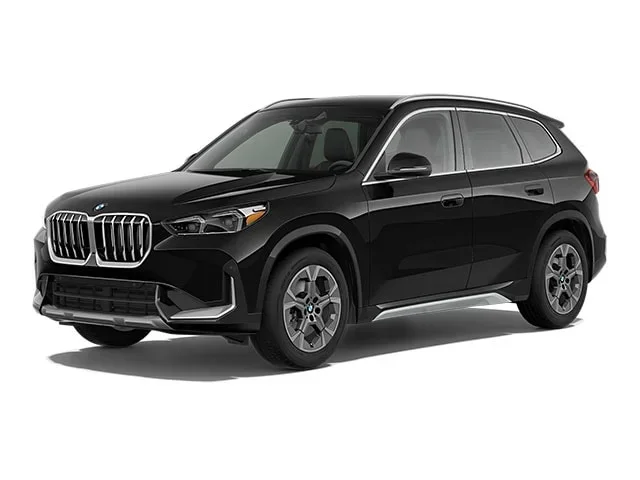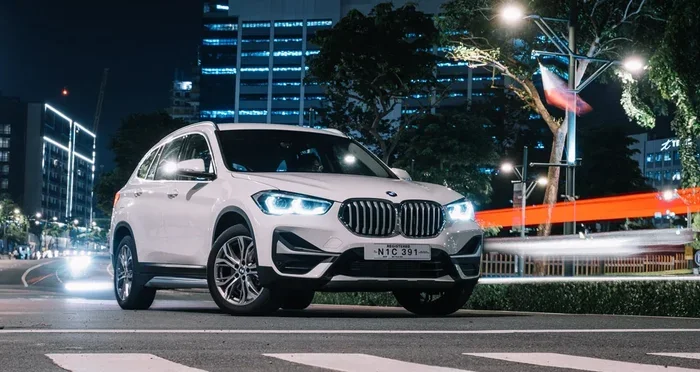
Featured image for BMW X1 driving city
Image source: visor.ph
Yes, most modern BMW X1 models are Euro 6 compliant. This guide breaks down exactly which model years and engines meet the standard, covering both the F48 and new U11 generations. You will learn how to verify your specific vehicle’s status using the V5C logbook or registration date, and why compliance matters for Clean Air Zones and running costs.
Buying a used car or checking your current ride involves a lot of homework. One of the biggest questions for UK drivers right now is is bmw x1 euro 6 compliant. It is a fair question. With Ultra Low Emission Zones (ULEZ) expanding and Clean Air Zones (CAZ) popping up in major cities, knowing your emission standard saves you money. It also saves you a massive headache.
The short answer is yes, but the devil is in the details. The BMW X1 has been through two distinct generations recently. The changeover years matter a lot. Engine codes matter even more. We are going to walk through everything you need to know. We will cover the specific engines, the registration cut-off dates, and how to check your exact car in thirty seconds flat.
Key Takeaways
- Euro 6 Start Date: BMW X1 models registered from September 2015 onwards generally meet Euro 6 standards.
- Engine Families: The B38 (petrol), B48 (petrol), and B47 (diesel) engine families are the primary Euro 6 compliant units in the X1 lineup.
- ULEZ & CAZ Ready: Compliant models avoid daily charges in London’s ULEZ and other UK Clean Air Zones.
- Verification is Key: Always check your V5C registration document (Section D.2) or use the official DVLA/TfL vehicle checkers to be 100% certain.
- Newer is Cleaner: The latest U11 generation (2022+) meets the stricter Euro 6d and Euro 6e standards, including mild-hybrid tech.
- Diesel Complexity: Euro 6 diesel X1s require AdBlue (SCR) and a Diesel Particulate Filter (DPF) to stay legal and efficient.
- Tax Benefits: Compliance often lowers Vehicle Excise Duty (VED) and Benefit-in-Kind (BiK) rates for company car drivers.
📑 Table of Contents
- Understanding Euro 6 And Why It Matters For Your X1
- BMW X1 Generations: The Compliance Timeline
- Deep Dive: Engine Codes And Emission Tech
- How To Check Your Specific BMW X1 In 30 Seconds
- Real World Driving: Maintaining Compliance
- Buying Guide: Choosing The Right Compliant X1
- Common Myths About BMW X1 Euro 6 Compliance
- Expert Insight: The Future Of Emissions And Your X1
- Quick Maintenance Checklist For Euro 6 X1 Owners
- Comparing The X1 To Rivals On Compliance
- Conclusion
Understanding Euro 6 And Why It Matters For Your X1
First, let’s define the standard. Euro 6 is the sixth incarnation of the European Union directive to reduce harmful pollutants from vehicle exhausts. It targets Nitrogen Oxides (NOx), Carbon Monoxide (CO), Hydrocarbons (HC), and Particulate Matter (PM). For diesel cars, the NOx limit dropped dramatically compared to Euro 5. It went from 180mg/km down to just 80mg/km.
Why should you care? Money. Pure and simple. If your BMW X1 is not Euro 6 compliant, driving into London costs you £12.50 a day. Birmingham, Bristol, Bath, Bradford, Portsmouth, Sheffield, Newcastle, and Greater Manchester all have similar schemes. Non-compliant vans and cars face daily fees ranging from £8 to £100 depending on the city and vehicle class. Over a year of commuting, that is thousands of pounds.
There is also the tax angle. Vehicle Excise Duty (VED) for older, higher-emission cars can be steep. Company car drivers face Benefit-in-Kind (BiK) tax bands heavily weighted towards CO2 figures. Euro 6 engines are simply more efficient. They burn cleaner. They usually return better MPG. That puts cash back in your pocket every month.
The Difference Between Euro 6, 6d-TEMP, 6d, and 6e
You will see these sub-categories thrown around. It gets confusing fast. Here is the plain English version:
- Euro 6b (2014-2017): The original lab-test standard (NEDC). Good for basics, but real-world emissions were often higher.
- Euro 6d-TEMP (2017-2020): Introduced Real Driving Emissions (RDE) testing step 1. Cars had to pass on the road, not just a rolling road. Conformity factor of 2.1 for NOx.
- Euro 6d (2020-2023): RDE step 2. Conformity factor tightened to 1.0 (plus a 0.5 margin). Much cleaner in the real world.
- Euro 6e / Euro 6e-bis (2023+): The latest standard. Even stricter RDE margins. Aligns with upcoming Euro 7 proposals.
For the BMW X1, the generation shift lines up almost perfectly with these tightening rules. The late F48 models hit 6d-TEMP and 6d. The new U11 hits 6d and 6e.
BMW X1 Generations: The Compliance Timeline
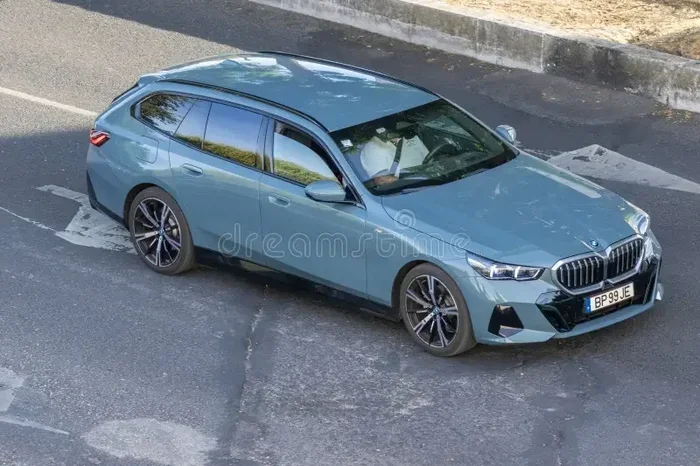
The BMW X1 has two main modern generations you will find on the used market today. The F48 (2015–2022) and the U11 (2022–present). There was an earlier E84 generation (2009–2015). We will touch on that too, but spoiler alert: the E84 is mostly Euro 5.
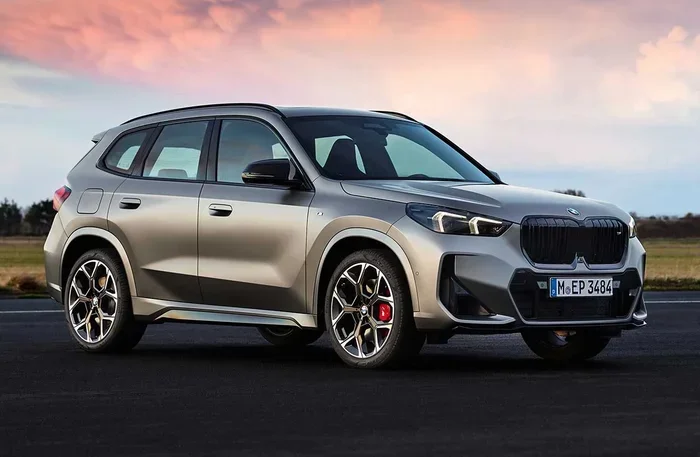
Visual guide about BMW X1 driving city
Image source: thumbs.dreamstime.com
The E84 Generation (2009–2015): Mostly Euro 5
If you are looking at a first-gen X1, be careful. The E84 launched in 2009. Euro 5 was the law then. Euro 6 did not become mandatory for all new registrations until September 2015. The E84 stopped production in mid-2015.
Result? The vast majority of E84 X1s are Euro 5. They will not be ULEZ compliant (petrol needs Euro 4, so petrol E84s are okay for ULEZ, but diesels are not). Wait, correction: Petrol cars need Euro 4 for ULEZ (since 2006). Diesel needs Euro 6 (since Sept 2015). So a petrol E84 is ULEZ compliant. A diesel E84 is NOT ULEZ compliant. This is a crucial distinction.
The F48 Generation (Late 2015–2022): The Sweet Spot
This is where the magic happens. The F48 launched in late 2015. Because the registration deadline was September 2015, almost every F48 sold in the UK is Euro 6 compliant from day one. This generation switched to the new modular B-series engines (B38, B48, B47). These were designed from the ground up for Euro 6.
Key Engines in the F48:
- sDrive18i / xDrive18i / xDrive20i / xDrive25i: Petrol. B38 1.5L 3-cylinder or B48 2.0L 4-cylinder. All Euro 6.
- sDrive16d / sDrive18d / xDrive18d / xDrive20d / xDrive25d: Diesel. B37 1.5L 3-cylinder or B47 2.0L 4-cylinder. All Euro 6.
- xDrive25e (Plug-in Hybrid): Launched 2020. B48 petrol + electric. Euro 6d.
There was a facelift in 2019 (Life Cycle Impulse – LCI). Post-LCI models (late 2019 onwards) moved to Euro 6d-TEMP and then Euro 6d. They got the updated iDrive 7, digital dash, and slightly cleaner engine calibrations. Pre-LCI (2015-2019) are Euro 6b/6c. Both are ULEZ compliant.
The U11 Generation (2022–Present): The Cleanest Yet
The current X1 launched in late 2022. It rides on the FAAR platform. Every single engine option here meets Euro 6d or the newer Euro 6e standard. This includes the new mild-hybrid 48-volt systems on almost every variant.
Key Engines in the U11:
- xDrive23i / sDrive18i: B48 2.0L / B38 1.5L Petrol Mild Hybrid (48V). Euro 6e.
- xDrive23d / sDrive18d: B47 2.0L Diesel Mild Hybrid (48V). Euro 6e.
- xDrive25e / xDrive30e: Plug-in Hybrids. B48 Petrol + Electric. Euro 6e.
- iX1 eDrive20 / xDrive30: Fully Electric. Zero emissions. Euro 6 irrelevant, but best for zones.
If you buy a U11, you are future-proofed for years. The mild-hybrid system helps the engine stay in its sweet spot, lowering NOx and CO2 further.
Deep Dive: Engine Codes And Emission Tech
Knowing the engine code (found on the V5C or under the hood) is the pro way to verify compliance. BMW uses a specific nomenclature. The “B” series equals modular Euro 6 ready. The “N” series (older) equals Euro 5/6 transition.
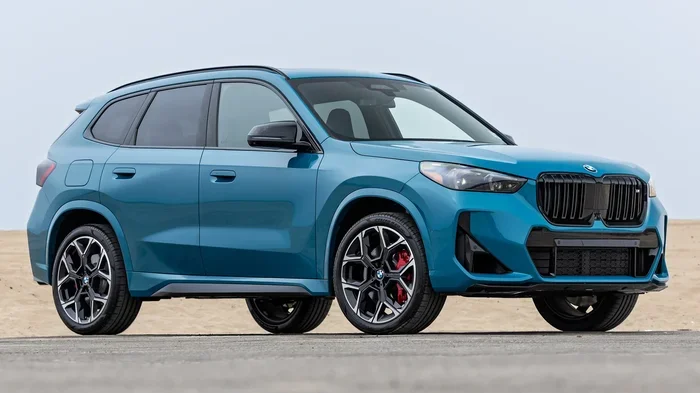
Visual guide about BMW X1 driving city
Image source: thumbs.dreamstime.com
Petrol Engines: B38 and B48
These are the stars of the show for clean air zones. Petrol cars only needed Euro 4 for ULEZ (since 2006), so every BMW X1 petrol ever made is ULEZ compliant. However, for VED and BiK, Euro 6 matters.
- B38 (1.5L TwinPower Turbo 3-Cyl): Found in sDrive18i. Light, punchy, efficient. Uses Valvetronic (valve lift control) instead of a throttle body. This reduces pumping losses and improves cold-start emissions.
- B48 (2.0L TwinPower Turbo 4-Cyl): Found in xDrive20i, xDrive25i, and PHEVs. High pressure direct injection (up to 200-350 bar). Particulate filter (GPF/OPF) fitted on all post-2017 models to meet PN (Particle Number) limits.
Quick Tip: If you see a Gasoline Particulate Filter (GPF) / Otto Particulate Filter (OPF) in the service history, it is a later Euro 6d-TEMP or 6d car. Very clean.
Diesel Engines: B37 and B47
This is where Euro 6 compliance is non-negotiable for city driving. The B47 2.0L four-cylinder is the volume seller (18d, 20d, 25d). The B37 1.5L three-cylinder is rare in the UK (sDrive16d/18d).
To hit that 80mg/km NOx limit, BMW uses a full after-treatment system:
- DOC (Diesel Oxidation Catalyst): Burns CO and HC.
- DPF (Diesel Particulate Filter): Traps soot. Regenerates by burning it off at high temp.
- SCR (Selective Catalytic Reduction): Injects AdBlue (urea solution) to convert NOx into harmless Nitrogen and Water.
- ASC (Ammonia Slip Catalyst): Catches excess ammonia from the SCR.
If you own a diesel F48 or U11, AdBlue is your friend. Never let it run dry. The car simply will not restart if the tank hits zero. It is not a breakdown; it is a legal immobilizer. Top it up at the dealer or buy 10L bottles at petrol stations. It costs pennies per mile.
How To Check Your Specific BMW X1 In 30 Seconds
Do not guess. Check. It takes less than a minute. Here are the three best ways.
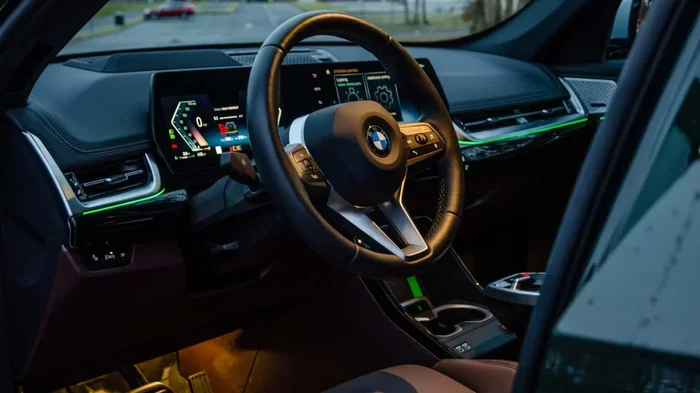
Visual guide about BMW X1 driving city
Image source: cdn.bmwblog.com
Method 1: The V5C Logbook (The Gold Standard)
Grab your V5C (the paper logbook). Look at Section D.2 (Type Approval / Exhaust Emissions). You are looking for a code starting with “e“ followed by numbers.
- Look for Euro 6 written explicitly.
- Or look for the regulation number: Regulation (EC) No 715/2007 with a suffix like 595/2009, 2016/646 (6d-TEMP), 2017/1151 (6d), or 2021/1248 (6e).
- If it says Euro 5 or Regulation 692/2008, it is Euro 5.
Method 2: DVLA Vehicle Enquiry (Free, Official)
Go to the DVLA Check Vehicle Tax page. Enter the registration number. Confirm the make/model. Scroll down to “Emissions”. It will list the Euro Status (e.g., “Euro 6”). It also shows CO2 figures and tax band.
Method 3: TfL / Local Authority Checkers (For Zone Access)
If you only care about the ULEZ or Birmingham CAZ charge, use the specific checker.
- London ULEZ: TfL ULEZ Checker.
- Other Cities: Search “[City Name] Clean Air Zone vehicle checker”. They all hook into the same DVLA database.
Enter the reg. It gives a instant “Charge applies” or “Meets standards” result. This is the only answer that matters for your wallet.
Real World Driving: Maintaining Compliance
Passing the test at the factory is one thing. Staying compliant for 100,000 miles is another. As an owner, you play a huge role. A poorly maintained Euro 6 car can pollute more than a well-kept Euro 5 car.
The Diesel Particulate Filter (DPF) Reality
Short trips kill DPFs. The filter needs heat (approx. 600°C) to burn off soot. That happens on a 20-minute motorway run. If you do 3-mile school runs and supermarket hops, the DPF clogs. The car forces a regeneration (high idle, fans roaring, smell). If you interrupt it repeatedly, the filter blocks permanently. Replacement is £1,500–£2,500.
Advice: If you are a low-mileage urban driver, buy the petrol or PHEV. Do not buy a diesel X1. It is the single biggest mistake X1 buyers make.
AdBlue Quality Matters
Use ISO 22241 standard fluid. Cheap, unbranded fluid from unknown sources can crystallize in the injector or SCR catalyst. That triggers a limp mode and a dealer visit. Stick to known brands (GreenChem, Total, BMW branded) or fill at the pump (HGV lanes often have AdBlue pumps for cars now).
Software Updates
BMW releases “Technical Campaigns” or “Service Actions” (not always safety recalls) that update the DME (Digital Motor Electronics) software. These often optimize injection timing or regeneration cycles for emissions. When you service the car, ask: “Are there any open technical campaigns for the engine ECU?” It is free warranty work usually.
Fuel Quality
Supermarket fuel meets EN590 (diesel) or EN228 (petrol). It is fine. But premium fuels (Shell V-Power, BP Ultimate, Esso Synergy+) have better detergent packs. They keep injectors clean. Clean injectors = precise spray pattern = lower emissions. Once every 3-4 tanks, run a tank of premium. It is cheap insurance for the injection system.
Buying Guide: Choosing The Right Compliant X1
If you are in the market right now, use this cheat sheet to pick the right compliant X1 for your life.
Scenario A: The Urban Commuter (Low Miles, City Center)
Best Pick: X1 xDrive25e (F48 PHEV) or U11 xDrive25e/30e.
- Electric range: 40-55 miles (WLTP).
- Zero tailpipe emissions for the commute.
- Petrol engine for longer trips.
- Lowest BiK tax (2-8% depending on year).
- Congestion Charge discount (until Dec 2025).
Runner up: Petrol sDrive18i (B38). Cheap to buy, ULEZ free, simple maintenance.
Scenario B: The High-Mileage Motorway Cruiser (20k+ miles/year)
Best Pick: X1 xDrive20d (F48 LCI or U11 xDrive23d).
- B47 Diesel with 48V Mild Hybrid (on U11).
- Real world 50-55 MPG easy.
- Torque makes motorway overtaking effortless.
- AdBlue tank lasts 5k-8k miles.
- DPF loves constant speed.
Scenario C: The Family Hauler (Space, Reliability, Value)
Best Pick: F48 xDrive18i or xDrive20i (2019+ LCI Petrol).
- Avoids diesel complexity (DPF/AdBlue).
- B48 engine is bulletproof.
- LCI models have better infotainment (Apple CarPlay/Android Auto standard).
- Euro 6d-TEMP = Clean air zone ready forever.
- Cheaper purchase price than PHEV.
Common Myths About BMW X1 Euro 6 Compliance
Let’s bust a few myths I hear constantly in forums and at the dealership.
Myth 1: “All diesels are banned in ULEZ.”
False. Only non-Euro 6 diesels are charged. Euro 6 diesels (Sept 2015+) are fully compliant. The BMW X1 18d/20d/25d (F48/U11) are perfectly legal to drive in London, Birmingham, Bristol, etc., with zero charge.
Myth 2: “Petrol cars don’t need Euro 6.”
False for new standards. For ULEZ, petrol needs Euro 4 (2006). So all X1 petrols pass ULEZ. BUT, for the upcoming Euro 7 (approx 2027) and current VED/BiK tax bands, Euro 6 petrols (with GPF) are significantly cheaper to tax than Euro 5/6b petrols without GPF. Also, some future CAZ proposals may tighten petrol rules.
Myth 3: “Remapping/Deleting AdBlue/DPF makes it faster and I’ll just MOT it.”
Disaster. Since 2018, the MOT includes a strict DPF check (visual + smoke meter). Since 2021/2022, DVSA connected equipment reads live ECU data. A deleted DPF or AdBlue cheat = Instant MOT Fail. It is also illegal under the Road Vehicles (Construction and Use) Regulations. Fines up to £2,500 for the driver, unlimited for the garage. Insurance void. Do not do it.
Myth 4: “The E84 xDrive20d is Euro 6 because it’s a 2014 plate.”
False. Registration date is king. A car registered 1st Sept 2015 must be Euro 6. A car registered 31st Aug 2015 can be Euro 5. The E84 stopped production in June 2015. They are virtually all Euro 5. Check the V5C.
Expert Insight: The Future Of Emissions And Your X1
We are heading toward Euro 7 (expected 2027+). It will likely merge car and van limits. It will test for brake dust and tire particles (non-exhaust). It will extend durability requirements (maybe 200,000km / 10 years).
The U11 X1 is engineered with this in mind. The brake-by-wire system (on EVs/PHEVs) and regenerative braking drastically cut brake dust. The mild-hybrid 48V system allows the engine to shut off more often (coasting), cutting exhaust to zero during those phases.
If you keep cars 5-7 years, a U11 X1 (Euro 6e) is the safest bet for residual value and future access. If you change every 3 years, a late F48 LCI (Euro 6d) is a brilliant value buy. It has 95% of the compliance for 60% of the price.
Quick Maintenance Checklist For Euro 6 X1 Owners
Keep your compliance valid and your engine happy with this routine:
- Oil Changes: Every 10k miles or 12 months (whichever first). Use BMW Longlife-04 FE (0W-20) for B48/B47. Low SAPS oil protects the GPF/DPF.
- AdBlue Top Up: Check at every fuel stop (iDrive menu shows range). Fill when < 1500 miles range.
- Brake Fluid: Every 2 years. Hygroscopic fluid kills ABS/DSC pumps.
- Coolant: Lifetime fill, but check level. If topping up, use BMW HT-12 (blue/green). Choosing the right coolant matters for aluminum engine longevity.
- Air Filters: Engine & Cabin every 2 years. Turbo engines hate dust.
- Spark Plugs (Petrol): Every 40k-60k miles. B48 runs high boost; plugs wear fast.
- Run Flat Tyres: Check pressures monthly. Run flats mask punctures; you won’t feel a slow leak until the sidewall is destroyed.
Comparing The X1 To Rivals On Compliance
How does the X1 stack up against the Audi Q3, Mercedes GLA, and Volvo XC40?
| Model | Euro 6 Start (Approx) | Petrol GPF Standard? | Diesel Mild Hybrid? | PHEV Option |
|---|---|---|---|---|
| BMW X1 (F48/U11) | Sept 2015 (F48 Launch) | Yes (Post 2017) | Yes (U11 Gen) | Yes (25e/30e) |
| Audi Q3 (8U/F3) | Sept 2015 (F3 Launch) | Yes (Post 2018) | Yes (MHEV on 2nd Gen) | Yes (45/50 TFSI e) |
| Mercedes GLA (H247) | Sept 2015 (H247 Launch) | Yes (Post 2018) | Yes (MHEV on facelift) | Yes (250e) |
| Volvo XC40 | Launch 2018 (Euro 6d-TEMP) | Yes (All models) | Yes (All Mild Hybrid) | Yes (Recharge T5/T6) |
Verdict: The X1 F48 was early to the party (2015). The U11 is class-leading with standard 48V mild-hybrid across the range. Volvo XC40 is the only rival where every* single car sold was Euro 6d-TEMP or better from launch (2018).
Conclusion
So, is bmw x1 euro 6 compliant? For the massive majority of cars on the road today — the F48 (2015-2022) and U11 (2022+) — the answer is a resounding yes. The only exceptions are the older E84 generation (2009-2015), which are mostly Euro 5 diesels (non-compliant for ULEZ) but Euro 4/5 petrols (compliant for ULEZ).
Your action plan is simple. Check the registration date. If it is September 2015 or newer, you are 99% good. Verify on the DVLA or TfL website using the reg plate. It takes 10 seconds. If you are buying, match the engine to your mileage: Petrol/PHEV for city, Diesel Mild Hybrid for motorway. Keep the AdBlue topped up and the DPF hot with a monthly long run.
Compliance isn’t just a certificate. It is freedom to drive where you want, when you want, without a penalty charge notice landing on your doormat. The BMW X1 delivers that freedom in a package that is still genuinely fun to drive. Enjoy the ride.
Frequently Asked Questions
What year did BMW X1 become Euro 6 compliant?
The BMW X1 became Euro 6 compliant with the launch of the F48 generation in late 2015 (September 2015 onwards). Almost every F48 and the new U11 (2022+) meets Euro 6 standards. The previous E84 generation (2009-2015) is predominantly Euro 5.
Is a 2016 BMW X1 Euro 6 compliant?
Yes. A 2016 BMW X1 (F48 generation) is Euro 6 compliant. Since it was registered after the September 2015 cutoff, it meets the standard regardless of whether it is a petrol (sDrive18i, xDrive20i) or diesel (sDrive18d, xDrive20d) model. It is exempt from ULEZ and CAZ charges.
Does the BMW X1 18d meet Euro 6 standards?
Yes, provided it is an F48 model (late 2015 onwards). The xDrive18d and sDrive18d use the B37 (1.5L) or B47 (2.0L) engines which were designed for Euro 6. They feature Selective Catalytic Reduction (AdBlue) and a Diesel Particulate Filter (DPF) to meet the strict NOx limits.
How do I check if my specific BMW X1 is Euro 6?
You have three easy options: 1) Check your V5C logbook (Section D.2) for “Euro 6” or regulation codes like 2016/646. 2) Use the free DVLA vehicle checker online (gov.uk/check-vehicle-tax). 3) Use the TfL ULEZ checker or your local Clean Air Zone checker for an instant “Meets Standards” result.
Are all BMW X1 petrol models ULEZ compliant?
Yes. All BMW X1 petrol models, including the old E84 (2009-2015), are ULEZ compliant because the petrol standard for ULEZ is Euro 4 (mandatory from 2006). However, only post-2015 (F48/U11) petrol models are Euro 6 compliant for tax and future-proofing purposes.
What happens if I put the wrong fuel or run out of AdBlue in a Euro 6 X1?
If you run out of AdBlue, the car will not restart once the engine is turned off (it gives ~1500 miles warning). You must refill to at least 3-5 liters. If you misfuel (petrol in diesel), do not start the engine. Call breakdown recovery. Starting it pumps petrol through the high-pressure pump and injectors, causing catastrophic damage costing £5,000+.