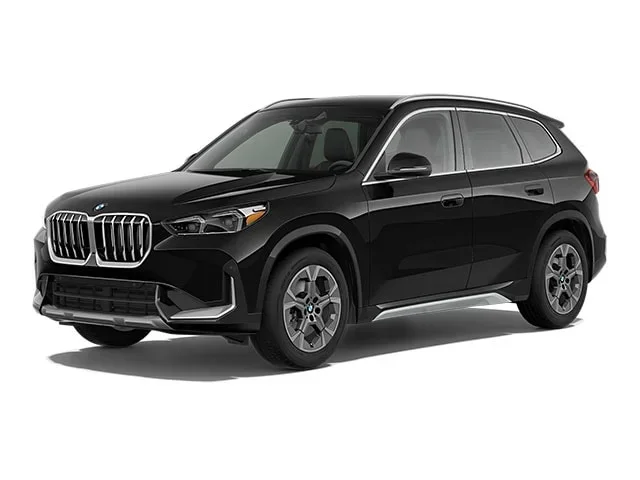
Featured image for BMW X1 xDrive
Image source: static1.caroom.fr
Yes, BMW absolutely makes the X1 in xDrive configurations across all three generations of the compact SUV. The xDrive system provides intelligent all-wheel traction that enhances stability in rain, snow, and light off-road situations. This guide breaks down every generation, current trim levels, performance differences, and maintenance tips to help you choose the right drivetrain for your needs.
If you are shopping for a compact luxury crossover, you have almost certainly asked yourself: does BMW make an X1 in xDrive? The short answer is a resounding yes. In fact, the xDrive all-wheel-drive system is one of the defining features of the X1 lineup, available on every generation since the model debuted in 2009. Whether you are looking at a used first-generation E84, a popular second-generation F48, or the brand-new third-generation U11, xDrive is a core part of the equation.
But availability is only half the story. You need to know how the system works, which trims offer it, how it affects fuel economy, and what it means for long-term maintenance. This deep dive covers everything from the mechanical hardware to the real-world driving experience. We will also compare it against the front-wheel-drive sDrive models so you can make the smartest purchase decision for your climate and driving style.
Key Takeaways
- Standard Availability: BMW has offered the X1 with xDrive all-wheel drive since the first generation launched in 2009.
- Current Lineup: The third-generation U11 X1 (2023+) sells exclusively as the xDrive28i in the United States, making AWD standard.
- sDrive vs. xDrive: sDrive denotes front-wheel drive (FWD), while xDrive denotes all-wheel drive (AWD); the difference impacts weight, price, and fuel economy.
- Performance Edge: xDrive models typically hit 60 mph faster than sDrive variants due to superior launch traction.
- Efficiency Cost: Expect a 1-2 mpg penalty with xDrive compared to sDrive due to added weight and drivetrain friction.
- Tire Maintenance: xDrive models require strict tire rotation and matching tread depths to protect the center differential and transfer case.
- Resale Value: In northern climates, xDrive models command higher resale prices and sell faster than FWD equivalents.
📑 Table of Contents
- The Short Answer: Yes, Every Generation Offers xDrive
- Understanding sDrive vs. xDrive: The Core Difference
- A Walk Through X1 Generations and xDrive Availability
- Current Trim Levels Featuring xDrive (2023+ U11)
- Performance and Handling: How xDrive Changes the Drive
- Is xDrive Worth It for You? Pros and Cons
- Maintenance Considerations for xDrive Models
- Buying Used: What to Look For in a Pre-Owned xDrive X1
- Comparing the X1 xDrive to Rivals
- Quick Tips for X1 xDrive Owners
- Common Mistakes to Avoid
- Expert Insight: The “Hidden” Benefit of xDrive
- Conclusion
The Short Answer: Yes, Every Generation Offers xDrive
BMW introduced the X1 in 2009 (as a 2010 model in some markets) and xDrive was available from day one. Unlike some competitors who reserve all-wheel drive for top trims only, BMW has historically offered xDrive across a wide range of trim levels and engine options. This philosophy continues today.
In the current US market, the equation has simplified significantly. For the 2023 model year and newer, BMW dropped the front-wheel-drive sDrive variant entirely in the States. Every new X1 sold in America today is an xDrive model. This makes the buying decision easier but understanding the used market requires a bit more nuance.
Understanding sDrive vs. xDrive: The Core Difference
Before we dig into specific generations, let’s clear up the naming convention. BMW uses specific badges to tell you which wheels receive power.
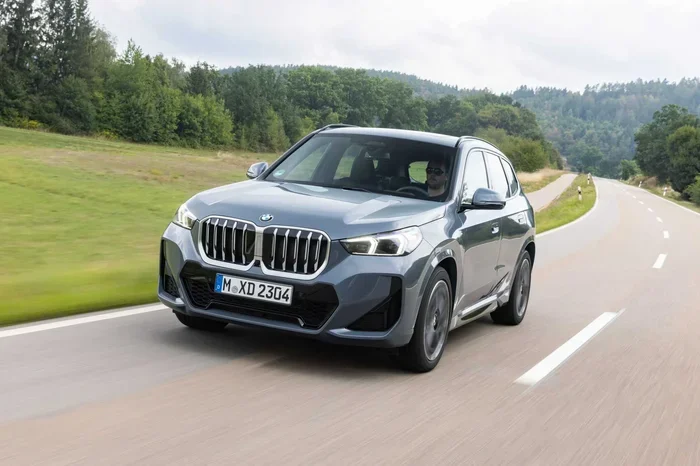
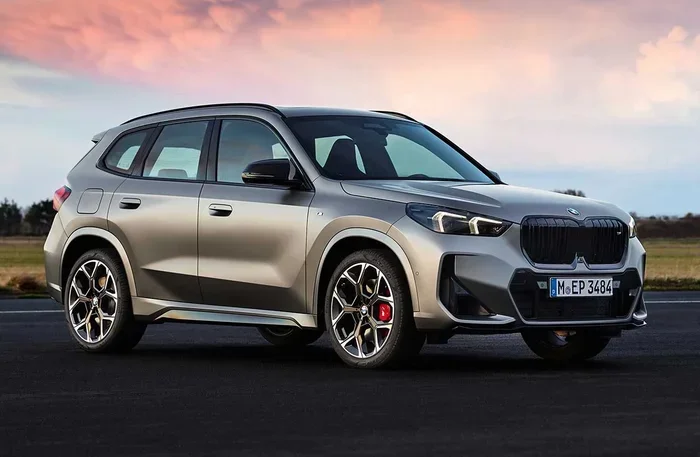
Visual guide about BMW X1 xDrive
Image source: mediapool.bmwgroup.com
What is sDrive?
sDrive equals two-wheel drive. On the X1, this historically meant front-wheel drive (FWD). The engine sends power exclusively to the front axle. This setup is lighter, cheaper to buy, cheaper to maintain, and returns slightly better fuel economy. For drivers in warm climates like Florida, Texas, or Southern California, sDrive is often perfectly adequate.
What is xDrive?
xDrive equals intelligent all-wheel drive. It is not a locked 50/50 split system like old-school off-roaders. Instead, it uses an electronically controlled multi-plate clutch pack (a transfer case) mounted to the transmission. In normal driving, it sends most power to the front wheels for efficiency. When sensors detect slip—say, on a wet on-ramp or icy street—it can redirect up to 100% of available torque to the rear axle in milliseconds.
This seamless transition is the hallmark of the system. You don’t press buttons or pull levers. The car just handles it. If you want to understand how this fits into the broader BMW vehicle designations, that guide breaks down the full naming logic.
A Walk Through X1 Generations and xDrive Availability
The X1 has spanned three distinct generations. The availability of xDrive—and the hardware behind it—evolved significantly across them.
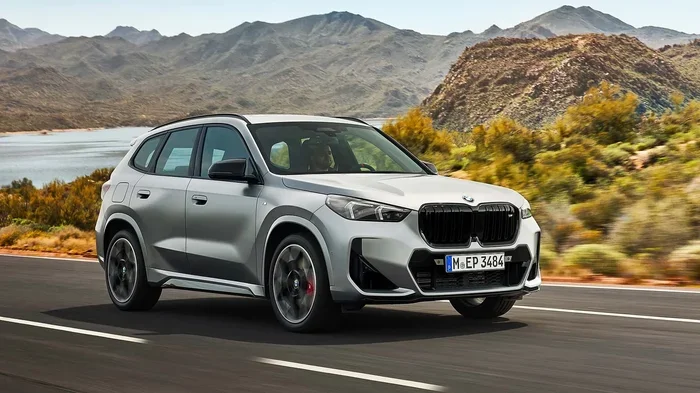
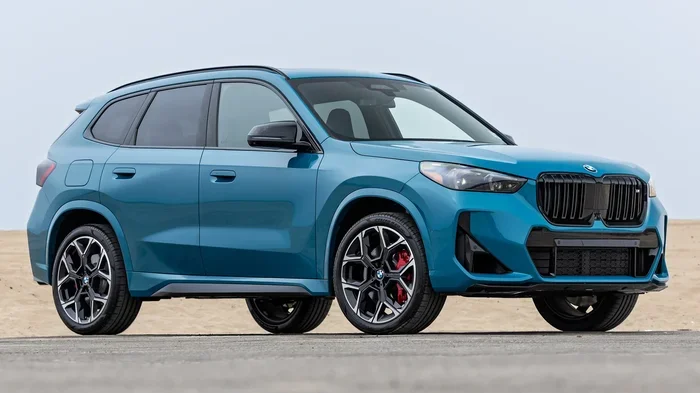
Visual guide about BMW X1 xDrive
Image source: cdn.motor1.com
First Generation (E84 Chassis | 2010–2015)
The original X1 was unique. It was built on a rear-wheel-drive platform (shared with the E90 3 Series) but adapted for transverse engine mounting. This gave it a distinct driving feel—more “car-like” and rear-biased than rivals.
- xDrive Hardware: It used a mechanical center differential with a viscous coupling (early models) or an electronically controlled clutch (later models).
- Engine Pairings: Initially paired with the N52 naturally aspirated inline-6 (xDrive28i) and later the N20 turbo-4 (xDrive28i). The xDrive35i (N55 turbo-6) is a rare, sought-after unicorn.
- Key Trait: These models have a 50/50 torque split default, making them the most “rear-biased” X1s ever made. They are favorites among enthusiasts.
Second Generation (F48 Chassis | 2016–2022)
This generation switched to the UKL front-wheel-drive platform (shared with the Mini Countryman). This was controversial among purists but brilliant for packaging. Interior space jumped dramatically.
- xDrive Hardware: Electrically actuated clutch pack (Hang-on system) on the rear axle. Default is 100% front-wheel drive until slip is detected.
- US Market Mix: Both sDrive (FWD) and xDrive (AWD) were sold side-by-side.
- Trims: xDrive28i (2.0L Turbo-4) was the volume seller. The M35i (300+ hp) arrived late in the cycle with standard xDrive and a Torsen limited-slip front differential.
- Reliability Note: This generation ranks well on reliability charts. If you are cross-shopping, check out the most reliable BMW models to see where the F48 lands.
Third Generation (U11 Chassis | 2023–Present)
The current X1 grows larger, rides on an updated UKL platform (FAAR), and features bold styling inside and out.
- US Market: xDrive is now standard. The only model is the X1 xDrive28i (241 hp, 2.0L Turbo-4, 7-speed DCT).
- Global Market: Europe and other markets still get sDrive (FWD) variants like the xDrive23i (mild hybrid) and diesel xDrive18d/20d.
- Tech Upgrade: The xDrive system integrates more deeply with the stability control and the new dual-clutch transmission for sharper responses.
Current Trim Levels Featuring xDrive (2023+ U11)
Since the US lineup is a single trim strategy, the “trim level” conversation really revolves around packages. The base xDrive28i starts around $40,000 MSRP. Here is how the packages stack up:
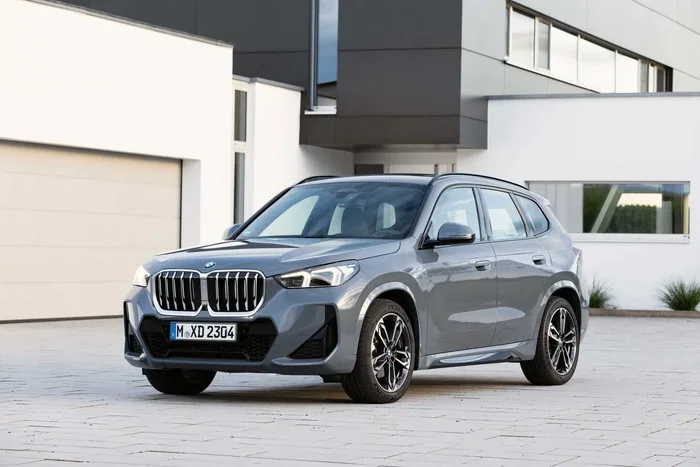
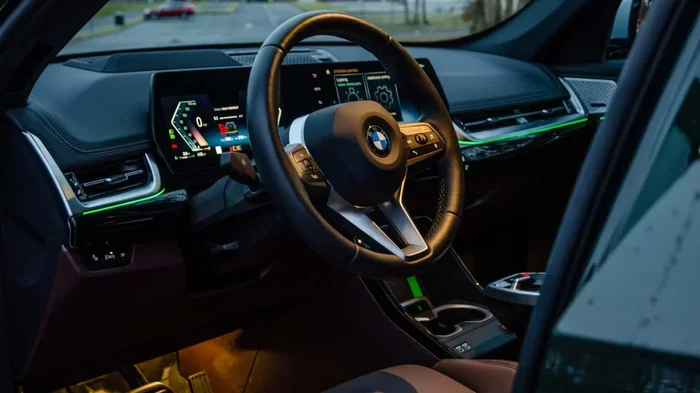
Visual guide about BMW X1 xDrive
Image source: mediapool.bmwgroup.com
Base xDrive28i
You get the 2.0L TwinPower Turbo engine, 7-speed dual-clutch automatic, xDrive AWD, 18-inch wheels, LED lights, synthetic leather (SensaTec), panoramic moonroof, and the iDrive 9 curved display. It is remarkably well-equipped out of the box.
Convenience Package
Adds hands-free liftgate, wireless charging pad, ambient lighting, and digital key capability. High value for daily drivers.
Premium Package
This is the sweet spot for many. It adds genuine Vernasca leather, heated front seats, heated steering wheel, head-up display, Harman Kardon sound system, and Parking Assistant Plus (surround view cameras).
M Sport Package
Visual upgrades: M aerodynamics kit, 19-inch or 20-inch M wheels, M sport seats, M steering wheel, shadowline trim, and anthracite headliner. It does not change the xDrive hardware or engine tune.
M35i xDrive (The Performance Flagship)
Arriving slightly later in the model cycle, the M35i bumps output to 312 hp. It adds an M-tuned xDrive system with a rear-axle slip limiter (effectively a limited-slip effect on the rear), M sport brakes, adaptive M suspension, and specific 19-inch wheels. This is the only X1 where xDrive hardware is mechanically distinct from the base model.
Performance and Handling: How xDrive Changes the Drive
Does xDrive make the X1 faster? Yes. Does it make it more fun? That depends on your definition.
Acceleration and Launch Traction
The numbers don’t lie. The current X1 xDrive28i hits 60 mph in roughly 6.2 seconds. The old F48 sDrive28i (FWD) did it in about 6.6 seconds. That four-tenths gap is almost entirely due to launch traction. The xDrive car puts power down instantly with zero wheelspin. The M35i xDrive slashes that to 5.2 seconds.
In the real world, merging onto highways or pulling out into busy traffic feels effortless in the xDrive car. There is no torque steer (the steering wheel tugging in your hands under hard acceleration) which plagues high-power FWD cars.
Cornering Dynamics
Here is the trade-off. The xDrive system adds roughly 150–200 lbs over the front axle and rear subframe. This raises the center of gravity slightly and adds understeer at the limit. The F48 sDrive was often praised for being more tossable and playful on a dry track.
However, on a wet or snowy back road, the xDrive car is in a different league. It allows you to apply throttle earlier exiting corners. The “corner exit speed” is higher. For 99% of drivers on public roads, the xDrive advantage wins.
Fuel Economy Trade-offs
Physics demands its tax. The EPA ratings tell the story for the 2024 X1 xDrive28i:
- Combined: 27 MPG
- City: 24 MPG
- Highway: 32 MPG
For comparison, the last F48 sDrive28i (FWD) was rated 24/33/27. The highway number drops slightly due to the parasitic drag of the rear driveshaft and differential spinning constantly. Over 15,000 miles a year, that difference costs you roughly $50–$80 annually at current gas prices. Negligible for the safety gain.
Is xDrive Worth It for You? Pros and Cons
This is the decision matrix. Be honest about where you live and how you drive.
When to Choose xDrive (The “Yes” Column)
- You see snow/ice annually: Even with winter tires, FWD struggles on unplowed streets or steep driveways. xDrive with all-seasons beats FWD with all-seasons every time. xDrive with winter tires is unstoppable.
- You have a steep driveway: Wet leaves + incline + FWD = stuck. xDrive solves this instantly.
- You tow a small trailer: The xDrive28i is rated for 2,000–3,700 lbs (depending on equipment). Traction at the boat ramp or campsite matters.
- You live on a gravel/dirt road: Loose surfaces confuse FWD traction control. xDrive distributes power to whatever wheel has grip.
- Resale value matters: In the Northeast, Midwest, and Mountain West, xDrive models retain 3–5% more value after 3 years.
When sDrive (FWD) is Enough (The “No” Column)
- You live in the Sun Belt: Miami, Phoenix, San Diego, Houston. You will likely never utilize the hardware.
- You run dedicated winter tires: A FWD car on Blizzaks outperforms an AWD car on all-seasons in braking and cornering on ice. If you are disciplined about tire swaps, sDrive saves money upfront.
- Maximum MPG is the goal: Every drop counts for high-mileage commuters.
- Lower maintenance budget: No transfer case fluid, no rear diff fluid, no rear driveshaft u-joints/CV boots to worry about.
Maintenance Considerations for xDrive Models
Owning an xDrive X1 requires a slightly different maintenance mindset than a FWD car. Ignoring the driveline is the fastest way to a four-figure repair bill.
Transfer Case Fluid (The “Hidden” Service)
BMW labels the transfer case fluid as “Lifetime Fill.” Do not believe it. Heat cycles and clutch wear contaminate the fluid. Most independent BMW specialists recommend changing it every 50,000 to 60,000 miles. It uses a specific fluid (typically BMW part number 83 22 2 409 710 or equivalent ATF). It is a cheap DIY job (~$40 fluid) or a $150–$250 shop job. Skipping it leads to shuddering on tight turns (“binding”) and eventual clutch pack failure ($2,000+).
Rear Differential Fluid
The rear differential (on the rear axle) also has “Lifetime Fluid.” Same advice: change it every 60,000 miles. It takes roughly 0.8 liters of 75W-90 or 75W-140 GL-5 gear oil (check your specific spec sticker). Clean fluid protects the expensive gears and bearings.
Tire Matching is Non-Negotiable
This is the #1 killer of xDrive systems. The system relies on wheel speed sensors. If your front tires are worn down to 4/32″ and you put two new tires on the rear (10/32″), the diameter difference forces the clutch pack to slip constantly to compensate for the speed difference. It will burn up the transfer case in months.
- Always replace tires in sets of 4.
- Rotate every 5,000–7,500 miles religiously.
- If you damage one tire, you may need to shave a new tire to match the tread depth of the other three (Tire Rack and some shops offer this service).
- This applies heavily to the BMW run-flat tires often equipped on the X1.
CV Axles and Driveshaft
The front CV axles and the rear driveshaft (propshaft) have rubber boots and center support bearings. Inspect them at every oil change. Torn boots fling grease and let water in. A clicking noise on tight turns = bad outer CV joint. A vibration at highway speed = worn center support bearing or driveshaft guibo (flex disc).
Coolant System Health
The turbocharged 2.0L engine (B48 in current gen, N20/B48 in previous) runs hot. The xDrive hardware packages the engine bay tighter. Coolant expansion tanks, hoses, and water pumps are wear items. Stay on top of the correct coolant specification (BMW HT-12 / G48 / Blue) and flush intervals (every 4–5 years) to prevent overheating the engine or the transmission cooler integrated into the radiator.
Buying Used: What to Look For in a Pre-Owned xDrive X1
If you are buying a used F48 (2016–2022) or E84 (2010–2015), add these specific checks to your pre-purchase inspection (PPI):
- Test the AWD engagement: Find a loose gravel lot or wet grass. Accelerate moderately from a stop. You should feel zero wheelspin and a solid “dig” sensation. If the front wheels spin wildly before the rear kicks in, the transfer case clutch may be worn.
- Check for “Binding”: Drive in tight figure-8s at low speed (parking lot). Listen/feel for a shuddering, chattering, or binding sensation in the drivetrain. This indicates transfer case clutch wear or mismatched tires.
- Scan for Codes: Use a BMW-specific scanner (ISTA, Carly, BimmerCode). Look for codes in the DSC (Dynamic Stability Control) and VTC (Vertical Transfer Case) modules. Codes like “Transfer case motor,” “Clutch wear limit reached,” or “Wheel speed sensor plausibility” are red flags.
- Verify Tire History: Ask for receipts. Confirm 4 tires were bought together. Measure tread depth at all 4 corners yourself. Variance > 2/32″ is a negotiation point or walk-away.
- Check Recalls: The F48 had a recall for the front driveshaft (propshaft) potentially fracturing. Ensure it was done. The E84 had timing chain tensioner issues (N20 engine) – not xDrive specific, but critical.
Comparing the X1 xDrive to Rivals
How does the BMW implementation stack up against the segment benchmarks?
| Feature | BMW X1 xDrive | Audi Q3 Quattro | Mercedes GLA 4MATIC | Volvo XC40 AWD |
|---|---|---|---|---|
| System Type | Hang-on Clutch (Front-biased) | Haldex Clutch (Front-biased) | 4MATIC Clutch (Front-biased) | Haldex Clutch (Front-biased) |
| Default Split | 100% Front | 100% Front | 100% Front | 100% Front |
| Max Rear Torque | 100% (Theoretical) | 100% (Theoretical) | 50% (Typical) | 100% (Theoretical) |
| Response Speed | Very Fast (Electric Actuator) | Fast (Hydraulic/Electric) | Fast (Electric) | Fast (Electric) |
| Driving Feel | Sportiest, Rear-biased feel | Neutral, Safe | Comfort-oriented | Safe, Stable |
| Ground Clearance | 7.2 in (U11) | 6.7 in | 5.8 in (Standard) / 7.1 in (Off-road pkg) | 8.3 in |
Verdict: The X1 xDrive generally feels the most “rear-wheel-drive-like” when pushed. The Volvo has better ground clearance for actual soft-roading. The Audi and Mercedes are competent but tuned more for stability than engagement.
Quick Tips for X1 xDrive Owners
- Buy a tread depth gauge. Keep it in the glovebox. Check monthly.
- Use “Sport Mode” in snow. It reduces DSC intervention slightly and sharpens throttle response, helping momentum in deep snow.
- Don’t use tire sealant goo. If you get a flat, use the spare (if equipped) or call roadside. Sealant ruins TPMS sensors and makes a mess of the AWD clutch fluid if the tire is run flat for too long (heat).
- Brake fluid every 2 years. The xDrive system uses the brakes to simulate locking differentials (brake vectoring). Fresh fluid with high boiling point is essential.
- Software updates. Ask the dealer to check for DSC/xDrive software updates during service visits. BMW refines the engagement logic via software flashes.
Common Mistakes to Avoid
- Mismatching Tires: Buying two tires instead of four. (Worth repeating).
- Ignoring Transfer Case Fluid: Assuming “Lifetime” means forever.
- Overestimating Off-Road Ability: The X1 has 7.2 inches of clearance and no low range. It handles fire roads and snow, not Moab.
- Assuming All xDrive is Equal: The E84 (Gen 1) system is mechanically superior for performance driving. The F48/U11 are packaging/efficiency optimized. Know which you are buying.
- Skipping the PPI: Especially on used F48s with 60k+ miles. Transfer case wear is invisible until it fails.
Expert Insight: The “Hidden” Benefit of xDrive
Most people buy xDrive for snow. The hidden benefit is rain safety. Hydroplaning resistance improves significantly when the rear axle can pull the car straight if the front tires lose contact with the pavement. Additionally, the xDrive system integrates with the DSC to perform brake-based torque vectoring. If you enter a corner too hot, the system brakes the inside rear wheel slightly, rotating the car (yaw control). This works on both sDrive and xDrive, but it is more effective on xDrive because the rear axle has a driveshaft connected to it, allowing for more precise control of the vehicle’s attitude. It makes the X1 feel surprisingly agile for a tall crossover.
Conclusion
So, does BMW make an X1 in xDrive? Absolutely. It is the heart of the lineup. For the current generation, it is the only option in the US, and that is a good thing for most buyers. The system is mature, responsive, and reliable—provided you respect the maintenance schedule, specifically the transfer case fluid and tire matching discipline.
If you are buying new, you don’t have to choose; the decision is made for you. If you are buying used, weigh the $1,500–$2,000 premium for xDrive against your climate and ownership timeline. In the snow belt, it pays for itself in peace of mind and resale value. In the sun belt, a well-maintained sDrive with winter tires (or just all-seasons) saves money upfront and at the pump. Either way, the X1 remains one of the most engaging drives in the segment, xDrive or not.
Frequently Asked Questions
Is the BMW X1 xDrive good in snow?
Yes, the BMW X1 xDrive is excellent in snow, especially when equipped with winter tires. The system reacts instantly to wheel slip, sending power to the rear axle to maintain traction. Combined with decent ground clearance (7.2 inches on the new model), it handles deep snow and icy hills far better than front-wheel-drive competitors.
Can you turn off xDrive on a BMW X1?
No, you cannot fully disable xDrive on the X1. You can disable Dynamic Stability Control (DSC) by holding the button down, which allows more wheel spin, but the all-wheel-drive hardware remains active and will still transfer torque to the rear wheels as needed.
Does the BMW X1 xDrive require premium gas?
Yes, BMW recommends 91 octane or higher (Premium) for all X1 models, including xDrive variants. The turbocharged engines use high compression and boost pressure that require premium fuel to prevent knocking and achieve rated horsepower and fuel economy.
What is the difference between X1 sDrive and xDrive?
sDrive is BMW’s marketing term for two-wheel drive (front-wheel drive on the X1). xDrive is their term for all-wheel drive. xDrive adds a transfer case, rear driveshaft, and rear differential, adding weight and complexity but providing superior traction in low-grip conditions.
How often should I change the transfer case fluid on an X1 xDrive?
Despite BMW labeling it “Lifetime Fluid,” most experts recommend changing the transfer case fluid every 50,000 to 60,000 miles. Regular changes prevent clutch pack wear and shuddering during tight turns, significantly extending the life of the expensive all-wheel-drive unit.
Is the BMW X1 xDrive expensive to maintain?
It is moderately more expensive to maintain than the sDrive (FWD) model. You have additional fluids (transfer case, rear differential) and components (driveshaft, rear CV axles) to service. However, compared to older BMW AWD systems or competitors like Audi Quattro, the X1’s transverse layout is relatively simple and cost-effective to keep running.