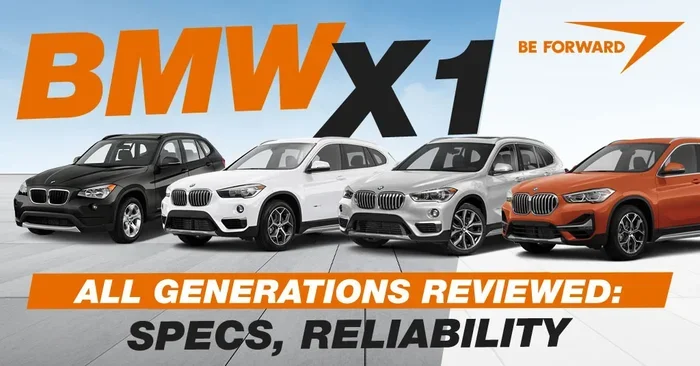
Featured image for BMW X1 generations lineup
Image source: blog.beforward.jp
How many generation does BMW X1 have? The BMW X1 has three distinct generations since its debut in 2009. This guide covers the E84 (2009-2015), F48 (2015-2022), and current U11 (2022-present) models. You will learn the major differences, engine options, technology updates, and which generation offers the best value for your driving needs.
If you are shopping for a used luxury crossover or just love BMW history, you have probably asked how many generation does BMW X1 have. The answer is straightforward: there are three. But the story behind each generation is packed with engineering shifts, design evolutions, and technology leaps that completely changed the character of the car. Understanding these differences is the key to buying the right used X1 or appreciating the latest model on the showroom floor.
The BMW X1 entered the market as the brand’s entry-level Sports Activity Vehicle (SAV). It was designed to bring the “Ultimate Driving Machine” feel to a smaller, more affordable package. Over fifteen years, it has transformed from a quirky, tall hatchback with rear-wheel-drive bones into a sophisticated, tech-laden family hauler available with gas, hybrid, and full electric powertrains. Let’s break down every generation so you know exactly what you are getting.
Key Takeaways
- Three generations total: The BMW X1 spans the E84, F48, and U11 chassis codes across its production history.
- Layout changed in gen two: The switch from rear-wheel-drive bias to front-wheel-drive architecture happened with the 2015 F48 model.
- Electrification arrived in gen three: The current U11 generation introduces the first fully electric iX1 and plug-in hybrid variants.
- Interior tech leap: Each generation brought massive infotainment upgrades, culminating in the curved display and iDrive 9 in the newest model.
- Size has grown steadily: Every new generation is longer, wider, and offers more cargo space than the last.
- Reliability varies by generation: The E84 has unique turbo issues, while the F48 improved dependability scores significantly.
- Certified Pre-Owned value: Late-model F48 models offer the best balance of modern features, proven reliability, and CPO warranty coverage.
📑 Table of Contents
- The Short Answer: How Many Generations Does BMW X1 Have?
- First Generation (E84): 2009–2015 — The Trailblazer
- Second Generation (F48): 2015–2022 — The Volume Seller
- Third Generation (U11): 2022–Present — The Tech & EV Era
- Key Differences Between Generations: Quick Comparison
- Which BMW X1 Generation Is Right for You?
- Common Questions About BMW X1 Generations
- Conclusion
The Short Answer: How Many Generations Does BMW X1 Have?
As of 2024, the BMW X1 has three official generations. BMW identifies them by internal chassis codes: E84, F48, and U11. Each generation typically runs for six to seven years before a full redesign. There are also “LCI” (Life Cycle Impulse) mid-cycle refreshes within each generation that bring updated lights, bumpers, and tech. Knowing the chassis code is the easiest way to identify exactly which generation a specific used car belongs to.
Generation Timeline at a Glance
| Generation | Chassis Code | Model Years | Key Defining Trait |
|---|---|---|---|
| 1st Generation | E84 | 2009–2015 | RWD-based architecture, unique tall stance |
| 2nd Generation | F48 | 2015–2022 | FWD-based UKL platform, massive sales success |
| 3rd Generation | U11 | 2022–Present | FAAR platform, EV/iX1 debut, curved display |
First Generation (E84): 2009–2015 — The Trailblazer
The original E84 was a bold experiment. It looked like a jacked-up 3 Series wagon. It sat tall, had a steeply raked windshield, and offered a driving position higher than any BMW before it. Critics called the styling polarizing. Buyers called it brilliant. It carved out a new niche: the premium compact crossover.

Visual guide about BMW X1 generations lineup
Image source: cdn.bmwblog.com
Platform and Drivetrain Layout
The E84 used a modified version of the rear-wheel-drive E90 3 Series platform. This is the only X1 generation with a longitudinal engine layout. Even the all-wheel-drive xDrive models sent power primarily to the rear wheels (40/60 split) until slip was detected. This gave it a distinct, sporty balance that enthusiasts still praise today. It felt like a lifted sports sedan.
Engine Lineup
- sDrive28i / xDrive28i: 3.0L naturally aspirated inline-6 (N52) — early years only. Smooth, reliable, but thirsty.
- xDrive28i (later): 2.0L turbocharged inline-4 (N20) — replaced the six-cylinder. Faster, better MPG, but early N20s had timing chain issues.
- xDrive35i: 3.0L turbocharged inline-6 (N55) — the performance king. 300 hp. Rare and highly sought after.
- Diesel variants (Europe/Global): 2.0L four-cylinder diesels (18d, 20d, 25d) — legendary torque and fuel economy.
Interior and Practicality
The interior was pure early-2010s BMW. Lots of hard plastics, the famous “iDrive” knob controller, and a small pop-up navigation screen (optional). Rear seat space was tight for adults. Cargo space was modest at 27.7 cubic feet behind the rear seats. The high seating position and massive greenhouse provided incredible visibility — a feature lost in later, sleeker generations.
Common Issues and Buying Tips
- N20 Timing Chain: 2012–2015 four-cylinder models. Check for service records showing the updated tensioner/guide replacement.
- Valve Cover & Oil Filter Housing Gaskets: Standard BMW DIY territory. Budget for these leaks.
- Electric Water Pump / Thermostat: Failure is a “when,” not “if.” Replace preventatively at 80k miles.
- Transfer Case (xDrive): Fluid changes every 50k miles are critical to avoid expensive failure.
Expert Insight: The E84 is the “driver’s choice.” If you prioritize handling feel over rear legroom and want a used BMW that feels like a traditional BMW, this is the one. Just budget $1,500–$2,500 for deferred maintenance if buying a high-mileage example. For a deeper look at long-term dependability across the lineup, check our guide on identifying the most reliable BMW models for longevity.
Second Generation (F48): 2015–2022 — The Volume Seller
BMW made a massive pivot for the F48. They moved the X1 to the UKL front-wheel-drive platform (shared with the Mini Countryman and 2 Series Active Tourer). Purists howled. The accountants cheered. The F48 became the best-selling BMW model globally for several years. It proved that buyers cared more about interior space, fuel economy, and price than driveshaft layout.

Visual guide about BMW X1 generations lineup
Image source: actualidadmotor.com
Platform Shift: Longitudinal to Transverse
The engine now sits sideways (transverse). The base sDrive models are front-wheel drive. The xDrive system uses an electro-hydraulic clutch pack to send power to the rear axle only when needed. It is reactive, not proactive. On dry pavement, it drives like a FWD car. In snow or mud, it works seamlessly. The payoff? A flat load floor, significantly more rear legroom, and a lower step-in height.
Engine Lineup (US Market Focus)
- sDrive28i / xDrive28i (2016–2019): 2.0L Turbo-4 (B48) — 228 hp. The B48 is a massive reliability improvement over the N20.
- xDrive25e (2020–2022): Plug-in Hybrid (PHEV). 1.5L Turbo-3 + electric motor. ~220 hp combined. ~17 miles EV range. Great for short commutes.
- M35i (2020–2022): 2.0L Turbo-4 (B48 high output) — 302 hp. Standard xDrive, sport suspension, M Sport brakes. A genuine pocket rocket.
LCI Refresh (2019): What Changed?
The 2019 facelift (often called F48 LCI) is the sweet spot for used buyers. Updates included:
- New LED headlights and taillights (adaptive LEDs optional).
- Larger kidney grille (controversial then, normal now).
- Standard 8.8-inch touchscreen (finally touch-capable) with Apple CarPlay/Android Auto.
- Digital instrument cluster optional (Live Cockpit Professional).
- Mild hybrid 48-volt system added to 28i models for smoother start/stop and slight torque fill.
Reliability and Ownership
The F48 is widely considered the most reliable X1 generation. The B48 engine is bulletproof. The Aisin 8-speed automatic (FWD/xDrive) and 7-speed DCT (M35i) are robust. Electronics are mature. If you want a used X1 with modern safety tech (standard automatic emergency braking, blind-spot monitoring on higher trims) and low headache factor, a 2019+ F48 is the target. Many of these are now coming off lease as BMW CPO warranty candidates, adding a year of unlimited-mileage coverage.
Third Generation (U11): 2022–Present — The Tech & EV Era
The current U11 generation rides on the FAAR platform (Front-wheel-drive Architecture ARchitecture). It is scalable for EV, PHEV, and ICE. It is larger, sharper, and unapologetically digital. It marks the first time the X1 is sold as a dedicated electric vehicle (iX1) alongside gas and hybrid versions.

Visual guide about BMW X1 generations lineup
Image source: medias.blogbmw.fr
Design Language: Blocky and Bold
Gone are the soft curves. The U11 is angular, upright, and wide. The kidney grille is massive and illuminated (Iconic Glow optional). The Hofmeister kink is now a sharp crease in the C-pillar. It looks like a mini X5. Dimensions grew significantly: +2.1 inches length, +0.9 inches width, +1.7 inches height. Rear legroom is now genuinely adult-friendly.
Powertrain Variety: Something for Everyone
| Model | Powertrain | Horsepower | 0-60 MPH | Key Feature |
|---|---|---|---|---|
| X1 sDrive28i | 2.0L Turbo-4 Mild Hybrid (B48) | 241 hp | 6.2 sec | FWD, 48V system |
| X1 xDrive28i | 2.0L Turbo-4 Mild Hybrid (B48) | 241 hp | 6.2 sec | AWD, 48V system |
| X1 xDrive30e | 1.5L Turbo-3 PHEV | 317 hp combined | 5.6 sec | ~40 mi EV range (WLTP) |
| iX1 xDrive30 | Dual Motor EV (64.7 kWh net) | 313 hp | 5.6 sec | 260+ mi range (EPA est.) |
| X1 M35i xDrive | 2.0L Turbo-4 High Output | 312 hp | 5.2 sec | M Sport Diff, M brakes |
The Interior Revolution: BMW Curved Display & iDrive 9
This is the biggest leap. The dash is dominated by a single curved glass panel housing a 10.25-inch digital cluster and a 10.7-inch central touchscreen. No more iDrive knob. Everything runs on iDrive 9 with BMW Operating System 9. It uses natural voice commands (“Hey BMW”), wireless Apple CarPlay/Android Auto, and over-the-air updates. Physical climate controls remain (thankfully). Material quality is a noticeable step up — soft-touch surfaces everywhere, available vegan leather (Veganza), and ambient lighting with 11 colors.
Driving Dynamics: Better Than Expected
Despite the FWD bones, the U11 handles remarkably well. The M35i uses a Torsen limited-slip differential on the front axle — a first for a transverse BMW. It puts power down cleanly out of corners. The steering is lighter than the E84 but precise. The ride is compliant on 18s, firm on 20s. The iX1’s low battery center of gravity masks its 4,400+ lb weight surprisingly well.
Key Differences Between Generations: Quick Comparison
Choosing between generations comes down to priorities. Here is the head-to-head breakdown.
| Category | E84 (Gen 1) | F48 (Gen 2) | U11 (Gen 3) |
|---|---|---|---|
| Drive Layout | RWD-biased (Longitudinal) | FWD-biased (Transverse) | FWD-biased (Transverse / EV) |
| Best Engine | N55 3.0L I6 (xDrive35i) | B48 2.0L I4 (M35i / 28i) | B48 2.0L I4 (M35i) / Dual Motor EV |
| Reliability | Average (N20 risks) | Best (Mature B48) | Too early for long-term data |
| Infotainment | iDrive 4/5 (Knob only) | iDrive 6/7 (Touch + Knob) | iDrive 9 (Touch/Voice only) |
| Rear Legroom | 36.4 in | 37.0 in | 38.5 in |
| Cargo Space (seats up) | 27.7 cu ft | 27.1 cu ft | 29.6 cu ft |
| Electrification | None | PHEV (xDrive25e) | PHEV (xDrive30e) + BEV (iX1) |
| Used Price Range (2024) | $8k – $18k | $18k – $32k | $38k – $55k+ |
Which BMW X1 Generation Is Right for You?
Choose the E84 (2009–2015) If:
- You want the “classic BMW” driving feel (RWD bias, hydraulic steering feel).
- You are a DIY enthusiast comfortable with brake fluid changes, coolant flushes, and gasket replacements.
- You want the cheapest entry point into X1 ownership.
- You prefer physical buttons and a smaller footprint for city parking.
- Pro Tip: Hunt for a 2013–2015 xDrive35i with the N55 engine and M Sport package. It is the unicorn of the lineup.
Choose the F48 (2015–2022) If:
- You need maximum reliability and low maintenance costs.
- You regularly carry rear passengers or need a flat load floor for dogs/gear.
- You want modern safety suites (blind spot, lane keep, auto braking) standard or cheap.
- You want the best value proposition: 2019+ LCI models with CPO warranty eligibility.
- Pro Tip: The xDrive25e PHEV (2020–2022) qualifies for a used federal tax credit ($4,000) if bought from a dealer under $25k, making it a steal.
Choose the U11 (2022–Present) If:
- You want the latest tech, EV capability, and modern design.
- You have a longer commute and want the iX1 electric range or PHEV tax credits.
- You value interior ambiance, material quality, and digital integration.
- You are leasing or buying new and want the full factory warranty + BMW Ultimate Care maintenance coverage.
- Pro Tip: The xDrive30e PHEV offers the best real-world flexibility: 40+ miles EV for daily driving, gas engine for trips, and HOV lane access in many states.
Common Questions About BMW X1 Generations
Did the BMW X1 ever have a V8?
No. The X1 has never been offered with a V8 engine. The most powerful factory engine was the 3.0L turbo inline-6 (N55) in the E84 xDrive35i and the 2.0L high-output turbo-4 (B48/S58-adjacent) in the F48 M35i and U11 M35i, both around 300–312 hp.
Is the BMW X1 built in Germany?
It depends on the generation. The E84 was built in Regensburg, Germany. The F48 moved production to Regensburg and a new plant in Shenyang, China (for Chinese market) and later to BMW’s plant in Spartanburg, South Carolina? No, Spartanburg builds X3-X7. The F48 and U11 for global markets are primarily built in Regensburg, Germany, and Tiexi, China. Some CKD kits are assembled in other markets. Always check the VIN (WBA = Germany, LBV = China).
What does “sDrive” vs “xDrive” mean on the X1?
sDrive = Two-wheel drive. On E84, this meant RWD. On F48/U11, this means FWD. xDrive = All-wheel drive. On E84, it was a full-time mechanical system (planetary center diff). On F48/U11, it is an on-demand electro-hydraulic clutch system (front-biased). For a deeper understanding of model designations, see our guide on decoding BMW vehicle designations.
Are all BMW X1 models equipped with run-flat tires?
Almost all US-spec X1s from the factory come with run-flat tires and no spare tire. This applies to all three generations. Many owners switch to non-run-flats for better ride quality and lower cost, but you must carry a tire repair kit or spare. Learn more about the pros and cons in our article on BMW run-flat tires design benefits and care.
Does the BMW X1 require premium gas?
Yes. BMW recommends 91 octane (premium) for all gasoline X1 models across all generations. The engine management systems can adjust for 87 octane in a pinch, but you will lose power, fuel economy, and risk long-term carbon buildup or knock. The PHEV and EV models obviously do not use gas for daily driving.
What is the maintenance schedule like for a used X1?
BMW uses Condition Based Servicing (CBS). The car tells you what it needs. Generally: Oil/Filter every 10k miles (or 12 months). Brake fluid every 2 years. Coolant is “lifetime” but should be changed at 100k. Transfer case (xDrive) and rear diff (E84) fluids every 50k-60k. Spark plugs every 60k (turbo engines). The F48 B48 engine has a timing chain designed for the life of the engine, but inspection at 100k is wise. For a full breakdown, review what BMW service includes.
Conclusion
So, how many generation does BMW X1 have? Three. Each one tells a chapter of BMW’s evolution from a driver-focused niche player to a global volume leader embracing electrification. The E84 captures the soul of old BMW — rear-drive proportions, inline-six availability, and analog charm. The F48 represents the pragmatic pivot — space, efficiency, reliability, and tech that made it a bestseller. The U11 defines the future — digital, electric, spacious, and undeniably premium.
If you are buying used today, the 2019–2022 F48 LCI is the smart money. It delivers 90% of the new car experience for 60% of the price, backed by a proven powertrain and available CPO warranty. If you are an enthusiast on a budget, a well-maintained E84 xDrive35i is a future classic. And if you want the latest and greatest, the U11 xDrive30e or iX1 puts you at the cutting edge of BMW’s compact lineup.
Whichever generation you choose, maintain it well. Use the correct fluids, follow the CBS intervals, and address leaks early. A cared-for X1 of any generation will deliver years of driving pleasure. Happy hunting!



