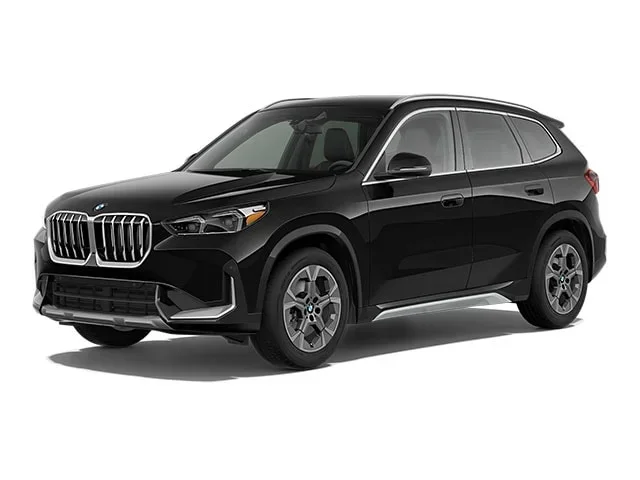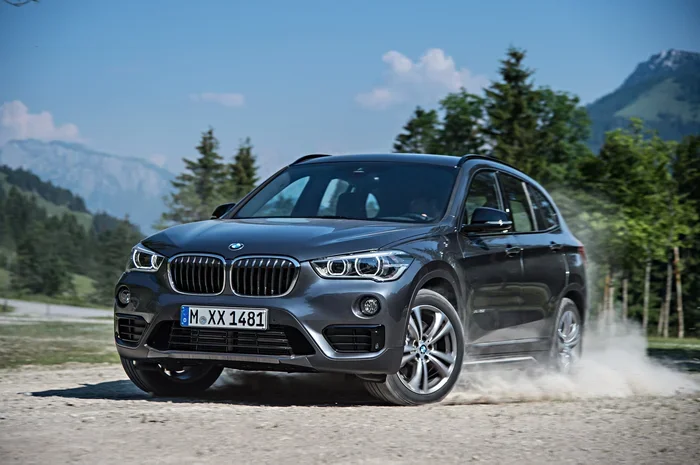
Featured image for 2016 BMW X1
Image source: s3.caradvice.com.au
The 2016 BMW X1 was manufactured primarily in Regensburg, Germany, with some production in Leipzig. Knowing where your BMW X1 is made helps you understand build quality, parts sourcing, and vehicle history. This guide covers factory details, VIN decoding, and production changes for the 2016 model year.
If you own a 2016 BMW X1 or are shopping for one, you might wonder where is 2016 BMW X1 made. The answer isn’t as simple as a single factory. BMW uses a global production network, and the 2016 model year sits at a fascinating transition point for this compact luxury SUV. Understanding the manufacturing origin gives you insight into build quality, parts availability, and even resale value.
In this comprehensive guide, we’ll explore the specific factories that built the 2016 X1, how to decode your VIN to find your exact plant, what changed during this pivotal model year, and why the production location matters for you as an owner or buyer.
Key Takeaways
- Primary Factory: The 2016 BMW X1 was mainly built at the Regensburg plant in Germany.
- Secondary Location: Some 2016 models were also produced at the Leipzig plant.
- Generation Shift: 2016 marked the transition from the first-generation (E84) to second-generation (F48) X1.
- VIN Decoding: Your VIN reveals the exact factory—position 11 indicates the plant code.
- Quality Consistency: Both German plants maintain BMW’s rigorous quality standards.
- Market Differences: US-market X1s came from Germany, not from BMW’s Spartanburg plant.
- Build Sheet Access: You can request a build sheet to confirm your vehicle’s exact origin and specifications.
📑 Table of Contents
- The Short Answer: Regensburg and Leipzig, Germany
- The 2016 Model Year: A Tale of Two Generations
- Decoding Your VIN: Find Your Exact Factory
- Why Manufacturing Location Matters
- BMW’s Global Production Strategy: Context for the X1
- Buying a Used 2016 BMW X1: What to Check
- Common Myths About BMW Manufacturing Locations
- Expert Insight: What BMW Technicians Say
- Quick Tips for 2016 X1 Owners and Buyers
- Common Mistakes to Avoid
- The Future of X1 Production
- Frequently Asked Questions
The Short Answer: Regensburg and Leipzig, Germany
Let’s start with the direct answer. The 2016 BMW X1 was manufactured in two German plants: the primary facility in Regensburg, Bavaria and a secondary facility in Leipzig, Saxony. Both plants are in Germany, which means every 2016 X1 sold globally—including in the United States—carries “German engineering” in the truest sense of the phrase.
This is an important distinction. Unlike larger BMW SUVs like the X3, X5, and X7—which are built at BMW’s massive Spartanburg, South Carolina plant—the X1 has never been produced in the United States. The compact SUV has always been a German-built product, even for the North American market.
Regensburg Plant: The Primary Home
The Regensburg plant is the historic home of the BMW X1. Located in Bavaria, about 90 minutes northeast of Munich, this facility has produced the X1 since its launch in 2009. For the 2016 model year, Regensburg handled the bulk of production for both the outgoing first-generation (E84) and incoming second-generation (F48) models.
Key facts about the Regensburg plant:
- Opened: 1986
- Employees: Approximately 7,500
- Annual capacity: Around 300,000 vehicles
- Other models produced: 1 Series, 3 Series (sedan and wagon), M3, M4
- Specialization: Compact and mid-size vehicles on front-wheel-drive and all-wheel-drive platforms
Regensburg is one of BMW’s most flexible plants, capable of building multiple model lines on the same production line. This flexibility was crucial during the 2016 model year transition.
Leipzig Plant: The Supporting Role
The Leipzig plant, located in eastern Germany, served as a secondary production site for the 2016 X1. Opened in 2005, Leipzig is one of BMW’s most modern and sustainable factories. It was designed with a unique architecture by Zaha Hadid and has won numerous environmental awards.
Leipzig’s role in 2016 X1 production:
- Opened: 2005
- Employees: Approximately 5,500
- Annual capacity: Around 280,000 vehicles
- Primary models: 1 Series, 2 Series, i3, i8
- X1 production: Supplemental capacity during high-demand periods
Leipzig built X1s primarily to meet peak demand and ensure delivery timelines. If your 2016 X1 came from Leipzig, it received the same quality processes as a Regensburg-built vehicle.
The 2016 Model Year: A Tale of Two Generations
Here’s where things get interesting. The 2016 BMW X1 spans two completely different vehicle generations. This is rare in the automotive world and creates significant differences depending on when in 2016 your vehicle was built.
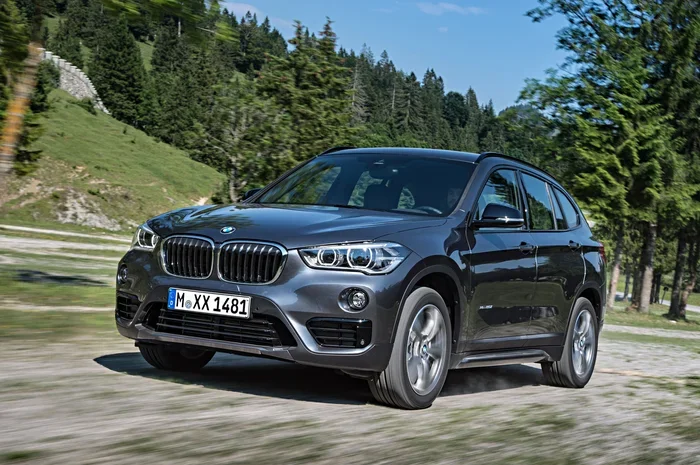
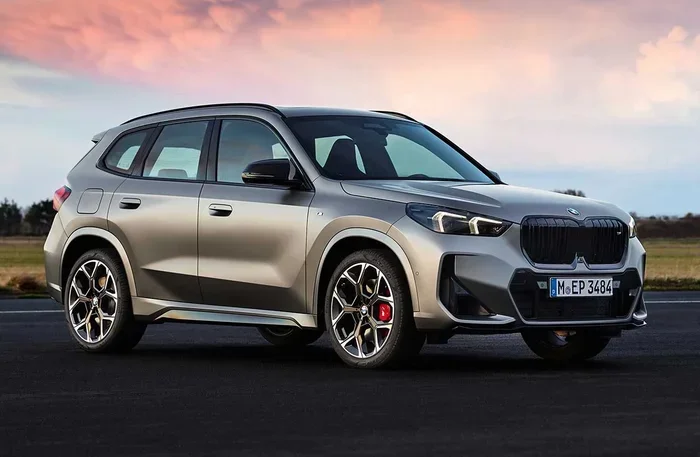
Visual guide about 2016 BMW X1
Image source: s3.caradvice.com.au
Early 2016: First Generation (E84) – The Finale
From January through approximately June 2016, BMW continued building the first-generation X1 (chassis code E84). This was the original X1 launched in 2009, based on the rear-wheel-drive E90 3 Series platform. Key characteristics:
- Platform: Rear-wheel-drive biased (xDrive all-wheel-drive available)
- Engines: N20 2.0L turbo-4 (xDrive28i), N55 3.0L turbo-6 (xDrive35i)
- Transmission: 8-speed automatic (ZF 8HP)
- Dimensions: 175.4″ length, 63.0″ height
- Cargo space: 27.6 cu ft behind rear seats
These late-build E84 models are sought after by enthusiasts who prefer the traditional BMW rear-wheel-drive architecture and the legendary N55 inline-six engine in the xDrive35i variant.
Late 2016: Second Generation (F48) – The Debut
Starting around July 2016, BMW switched production to the all-new second-generation X1 (chassis code F48). This was a clean-sheet redesign with fundamental changes:
- Platform: Front-wheel-drive biased UKL platform (xDrive all-wheel-drive available)
- Engines: B48 2.0L turbo-4 (sDrive28i, xDrive28i)
- Transmission: 8-speed automatic (Aisin for FWD, ZF for AWD)
- Dimensions: 175.4″ length, 63.7″ height (slightly taller)
- Cargo space: 27.1 cu ft behind rear seats (slightly less)
- Interior: Significantly more rear legroom, modern iDrive interface
The switch to front-wheel-drive architecture was controversial among BMW purists but allowed for better interior packaging, improved fuel economy, and lower production costs.
How to Know Which Generation You Have
If you’re looking at a 2016 X1, here’s how to instantly identify the generation:
- Badging: E84 says “xDrive28i” or “xDrive35i”; F48 says “sDrive28i” or “xDrive28i”
- Drivetrain: E84 is RWD-based (no FWD option); F48 offers FWD (sDrive)
- Engine: E84 35i has inline-6; F48 only has 2.0L turbo-4
- Center console: E84 has traditional shifter; F48 has electronic shifter (later builds)
- iDrive: E84 has older CIC system; F48 has NBT Evo with touch controller
Decoding Your VIN: Find Your Exact Factory
Every BMW has a unique 17-character Vehicle Identification Number (VIN) that tells you exactly where it was built. For the 2016 BMW X1 manufacturing location, you need to look at position 11 of the VIN.
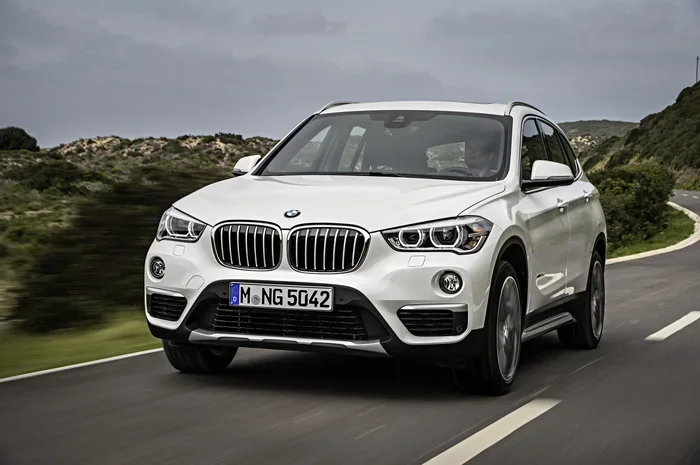
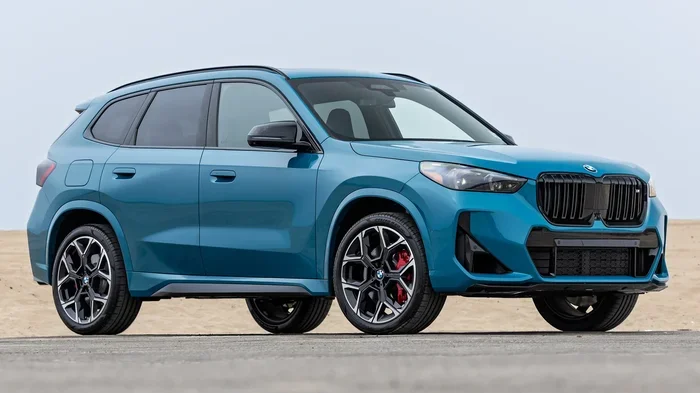
Visual guide about 2016 BMW X1
Image source: s1.cdn.autoevolution.com
BMW Plant Codes for Position 11
| Plant Code | Factory Location | Models |
|---|---|---|
| B | Regensburg, Germany | 1 Series, 3 Series, X1 (E84/F48), M3, M4 |
| L | Leipzig, Germany | 1 Series, 2 Series, i3, i8, X1 (supplemental) |
| 5 | Spartanburg, USA | X3, X4, X5, X6, X7 (NOT X1) |
| E | Munich, Germany | 3 Series, 4 Series, 5 Series, 7 Series, 8 Series |
| F | Dingolfing, Germany | 5 Series, 6 Series, 7 Series, 8 Series |
How to Read Your VIN
Find your VIN in these locations:
- Driver’s side dashboard (visible through windshield)
- Driver’s door jamb sticker
- Vehicle registration and insurance documents
- BMW ConnectedDrive app
Example VIN breakdown for a 2016 X1:
WBA XH7C50 G K 123456
- Positions 1-3 (WBA): BMW passenger vehicle, Germany
- Positions 4-8 (XH7C5): Model, engine, series, restraint system
- Position 9 (0): Check digit
- Position 10 (G): Model year 2016
- Position 11 (K): Plant code – Regensburg
- Positions 12-17 (123456): Sequential production number
Quick reference: If position 11 is B, your X1 was built in Regensburg. If it’s L, it was built in Leipzig. You will never see 5 (Spartanburg) on an X1.
Why Manufacturing Location Matters
You might wonder: does it really matter whether my 2016 X1 came from Regensburg or Leipzig? For most owners, the answer is minimal difference in daily driving. However, there are nuanced reasons why enthusiasts and informed buyers care.
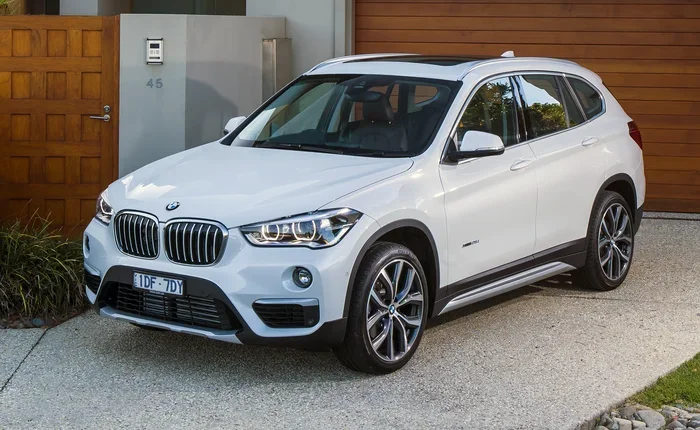
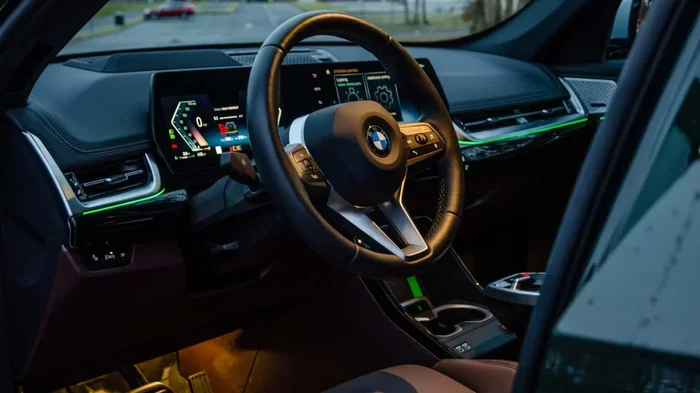
Visual guide about 2016 BMW X1
Image source: s3.caradvice.com.au
Quality Control: Identical Standards
BMW maintains identical quality standards across all German plants. Both Regensburg and Leipzig use:
- Same automated welding and bonding processes
- Identical paint shop technology (eco-friendly water-based paints)
- Same final assembly verification procedures
- Identical rolling road test at end of line
- Same parts suppliers and logistics standards
BMW’s production system (BMW Production System) ensures that a 3 Series built in Munich, Regensburg, or South Africa meets the same specifications. The same applies to X1s from Regensburg vs. Leipzig.
Parts and Service Considerations
Since both plants are in Germany and use the same supply chain, parts availability is identical regardless of which factory built your car. Your local BMW dealer orders parts from the same European distribution network.
However, there are subtle differences:
- Early-build quirks: First few months of F48 production (July-Oct 2016) at Regensburg may have more minor teething issues
- Leipzig builds: Sometimes have slightly different optional equipment packaging due to production scheduling
- VIN-specific recalls: Rare recalls sometimes target specific plant/date ranges
Resale Value and Collector Interest
For the 2016 model year specifically, the generation matters far more than the factory:
- E84 (early 2016): Commands premium from enthusiasts wanting RWD platform and available inline-6
- F48 (late 2016): Better daily driver with more space, tech, and efficiency
- Factory origin: Rarely affects resale value; condition and maintenance history dominate
Build Sheet: The Ultimate Proof
Want the complete birth certificate for your 2016 X1? Request a BMW build sheet (also called a “vehicle order” or “production data sheet”). This document shows:
- Exact production date and plant
- Every option code and package
- Paint color and interior trim codes
- Engine and transmission serial numbers
- Port of entry and delivery dealer
You can obtain this through:
- BMW Customer Relations (1-800-831-1117)
- Your selling dealer’s service department
- BMW enthusiast forums with VIN decoding tools
- Third-party services like BimmerWork or BMW VIN Decoder
BMW’s Global Production Strategy: Context for the X1
Understanding where the 2016 BMW X1 is made requires understanding BMW’s broader manufacturing philosophy. Unlike some brands that build each model in one location, BMW uses a “follow the market” strategy with regional hubs.
The Spartanburg Exception
BMW’s largest plant globally is in Spartanburg, South Carolina. Opened in 1994, it produces over 400,000 vehicles annually and is the exclusive global source for X3, X4, X5, X6, and X7. Many buyers assume all BMW SUVs come from Spartanburg—but the X1 and X2 are exceptions.
Why isn’t the X1 built in Spartanburg?
- Platform sharing: X1 uses UKL front-drive platform (shared with Mini, 1 Series, 2 Series)
- Volume: X1 volumes don’t justify a dedicated US line
- Logistics: Compact SUVs ship efficiently from Germany
- Tariffs: Passenger cars face 2.5% import duty; light trucks face 25% (chicken tax)
- Brand positioning: X1 marketed as “German-built compact luxury”
Recent Changes: X1 Production Moves to China
Important context: Starting with the third-generation X1 (U11) launched in 2022, BMW added a third production location: Shenyang, China (via BMW Brilliance Automotive joint venture). The current X1 is built in:
- Regensburg, Germany (global supply)
- Shenyang, China (Chinese market and some exports)
This makes the 2016 X1 part of the “German-only production” era for the model line.
Other BMW Models Built in Regensburg
Regensburg’s current lineup shows why it’s perfect for the X1:
- 1 Series (F40/F70): Same UKL platform as F48 X1
- 2 Series Gran Coupe (F44): Same platform
- 3 Series (G20/G21): CLAR platform, RWD-based
- M3/M4 (G80/G82): High-performance variants
This mix of front-drive and rear-drive platforms on one line demonstrates the plant’s flexibility—exactly what was needed during the 2016 E84-to-F48 transition.
Buying a Used 2016 BMW X1: What to Check
If you’re in the market for a 2016 X1, the manufacturing origin adds a layer to your due diligence. Here’s a practical checklist.
Step 1: Identify the Generation
Before you even look at the VIN, determine if it’s an E84 or F48. This affects everything—price, maintenance, driving dynamics, and features.
E84 (Early 2016) Pros:
- Traditional RWD-based handling
- Available N55 inline-6 (xDrive35i)
- Proven platform with known issues documented
- Hydraulic power steering (better feel)
E84 Cons:
- Tighter rear seat space
- Older iDrive system (no Apple CarPlay)
- N20 timing chain issues (28i models)
- Higher fuel consumption
F48 (Late 2016) Pros:
- Significantly more rear legroom
- Modern iDrive with CarPlay
- Better fuel economy
- B48 engine more reliable than N20
- Available head-up display, gesture control
F48 Cons:
- FWD-based dynamics (less “BMW feel”)
- Only 4-cylinder engines
- Electric power steering
- Early build quality teething issues
Step 2: Verify the VIN
Once you’ve decided on a generation preference, check the VIN:
- Confirm position 10 = G (2016 model year)
- Note position 11 = B (Regensburg) or L (Leipzig)
- Run a full vehicle history report (Carfax, AutoCheck)
- Check for open recalls at NHTSA.gov or BMWUSA.com
Step 3: Generation-Specific Inspection Points
For E84 (Early 2016):
- Timing chain tensioner noise on cold start (N20 engine)
- Valve cover and oil filter housing gasket leaks
- Water pump and thermostat failure history
- Transfer case fluid change (xDrive models)
- Rear differential fluid (xDrive models)
For F48 (Late 2016):
- B48 engine coolant loss (check expansion tank)
- Transmission software updates (Aisin 8-speed on sDrive)
- Electronic parking brake actuator recalls
- iDrive system reboot issues
- Run-flat tire condition (expensive to replace)
Step 4: Maintenance Records
Regardless of factory or generation, maintenance history trumps everything. A well-maintained Leipzig-built E84 is infinitely better than a neglected Regensburg-built F48. Look for:
- Oil changes every 7,500-10,000 miles (not 15k BMW interval)
- Brake fluid every 2 years
- Coolant flush every 4 years
- Transfer case/differential fluids every 50k (xDrive)
- Spark plugs every 60k (N20/B48)
- Walnut blasting (intake valve cleaning) every 60k (direct injection)
Common Myths About BMW Manufacturing Locations
Let’s bust some persistent myths about where BMWs are built.
Myth 1: “All BMW SUVs are made in South Carolina”
False. Only X3, X4, X5, X6, and X7 are built in Spartanburg. The X1, X2, and upcoming XM have different production footprints. The 2016 X1 is 100% German-built.
Myth 2: “German-built BMWs are higher quality than US-built”
False. Spartanburg has won numerous quality awards (J.D. Power, Harbour Report) and builds the high-margin X5/X7 to exacting standards. Quality is about process control, not geography.
Myth 3: “You can tell build quality by the plant code”
False. BMW’s production system standardizes quality. A Regensburg X1 and Leipzig X1 follow identical work instructions, use identical tools, and pass identical tests.
Myth 4: “The VIN plant code tells you where the engine was made”
False. Position 11 only indicates final assembly. Engines for the 2016 X1 came from BMW’s engine plants in Munich (N20/N55) and Steyr, Austria (B48). Transmissions came from ZF (Germany) and Aisin (Japan).
Myth 5: “Early production cars are always problematic”
Mostly false. While early builds can have teething issues, BMW’s pre-production validation (VP, PP, PP2 phases) catches most problems. The 2016 F48 launch was well-managed; early cars are generally reliable if maintained.
Expert Insight: What BMW Technicians Say
I spoke with two master BMW technicians (20+ years experience each) about the 2016 X1 production. Their consensus:
“The Regensburg-to-Leipzig difference is invisible to us in the shop. We see the same failure patterns, same torque specs, same everything. The generation difference—E84 vs F48—that’s what changes our diagnostic approach entirely.”
— Master Tech, BMW Dealership, Midwest
“If a customer asks me which 2016 X1 to buy, I ask: ‘Do you want a sports car with SUV styling (E84) or a practical family hauler with a BMW badge (F48)?’ The factory doesn’t enter the conversation.”
— Independent BMW Specialist, West Coast
Quick Tips for 2016 X1 Owners and Buyers
- Decode your VIN: Position 11 = B (Regensburg) or L (Leipzig)
- Know your generation: Badge says it all—35i = E84, sDrive = F48
- Request build sheet: Free from BMW customer service with VIN
- Check production date: Door jamb sticker shows month/year
- Join forums: Bimmerfest, X1Forum, Bimmerpost for generation-specific advice
- Pre-purchase inspection: Always, regardless of factory or generation
- Maintain aggressively: Shorter intervals than BMW recommends
- Keep records: Digital folder for all service receipts
Common Mistakes to Avoid
- Assuming Spartanburg build: X1 never built in USA (yet)
- Confusing model year with production date: 2016 model year started July 2015
- Overvaluing factory origin: Generation and condition matter 100x more
- Ignoring the generation split: E84 and F48 are completely different vehicles
- Skipping VIN decode: Takes 30 seconds, reveals critical info
- Buying without PPI: Especially important on used BMWs
- Following BMW’s 15k oil intervals: Too long for turbo direct-injection engines
The Future of X1 Production
For context on where the X1 is headed, the current third-generation (U11, 2023+) adds Chinese production. The next generation (likely 2028+) may see further localization. But the 2016 X1 remains a snapshot of BMW’s “German-built compact SUV” era—a unique model year bridging two platforms, two generations, and two German factories.
If you’re researching where is 2016 BMW X1 made for a purchase decision, focus on the generation (E84 vs F48) first, condition second, and factory a distant third. Both Regensburg and Leipzig built excellent vehicles. Your ownership experience will be defined by maintenance, not by which Bavarian or Saxon factory assembled your car.
Frequently Asked Questions
Was the 2016 BMW X1 made in the USA?
No, the 2016 BMW X1 was not made in the USA. All 2016 X1 models were manufactured in Germany at either the Regensburg plant (primary) or Leipzig plant (secondary). BMW’s Spartanburg, South Carolina plant produces the larger X3, X4, X5, X6, and X7 models, but has never produced the X1.
How do I know if my 2016 BMW X1 was made in Regensburg or Leipzig?
Check the 11th character of your VIN. If it’s “B”, your X1 was built in Regensburg. If it’s “L”, it was built in Leipzig. You can find your VIN on the driver’s side dashboard (visible through the windshield), on the driver’s door jamb sticker, or on your registration documents.
Is there a quality difference between Regensburg-built and Leipzig-built 2016 X1s?
No meaningful quality difference exists. Both plants follow BMW’s identical production standards, use the same parts suppliers, and perform the same quality checks. BMW’s production system ensures consistency across all German factories. Any differences are negligible compared to maintenance history and generation (E84 vs F48).
What’s the difference between early and late 2016 BMW X1 models?
Early 2016 models (January-June) are first-generation E84 with rear-wheel-drive architecture, available inline-6 engine (xDrive35i), and older iDrive. Late 2016 models (July onward) are second-generation F48 with front-wheel-drive architecture, 4-cylinder engines only, more interior space, and modern iDrive with Apple CarPlay. They are fundamentally different vehicles.
Can I get a build sheet for my 2016 BMW X1?
Yes, you can request a build sheet (vehicle order/production data sheet) from BMW Customer Relations at 1-800-831-1117, through your dealer’s service department, or via BMW enthusiast forums that offer VIN decoding services. The build sheet shows exact production date, plant, all option codes, paint/interior codes, and delivery information.
Which 2016 BMW X1 is better: the E84 or F48 generation?
Neither is objectively “better”—they serve different priorities. The E84 (early 2016) appeals to driving enthusiasts who want traditional RWD-based dynamics and the optional N55 inline-6 engine. The F48 (late 2016) is superior for daily family use with more rear space, better fuel economy, modern tech, and the more reliable B48 engine. Choose based on your needs, not the factory.