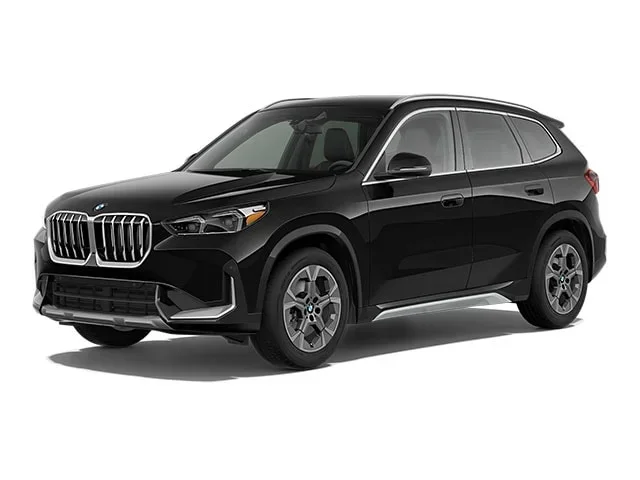
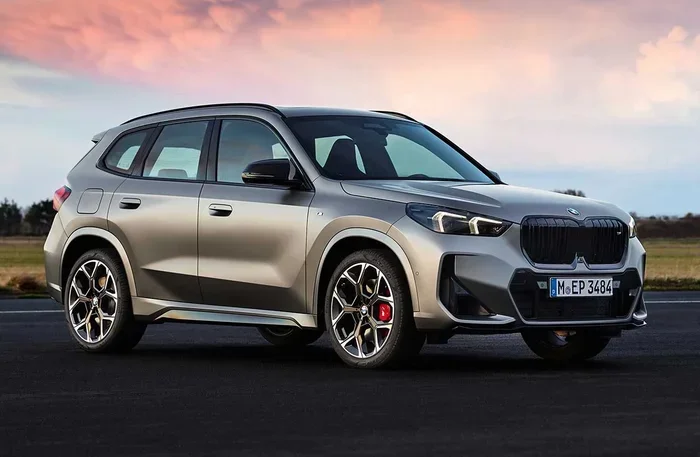
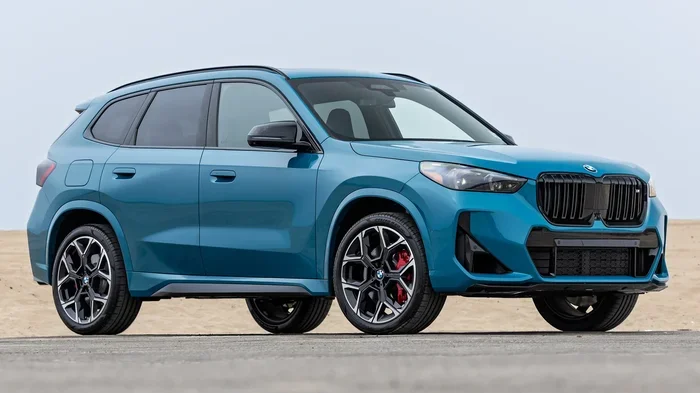
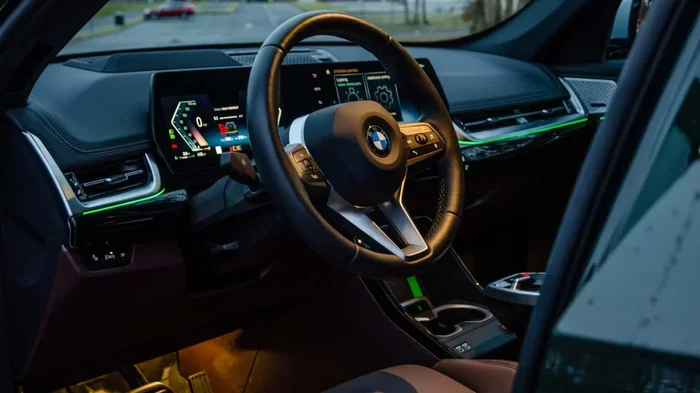
Featured image for BMW X1 assembly line
Image source: cdn.bmwblog.com
How long does it take to make a BMW X1? The actual assembly process on the production line takes roughly 20 to 30 hours of active work, spread over two to three calendar days. However, if you order a custom configuration, the total timeline from order confirmation to delivery typically ranges from 8 to 14 weeks depending on the factory location and current supply chain conditions.
Buying a new car is exciting, but the wait can feel endless. If you have ordered a BMW X1 or are planning to, you probably wonder exactly what happens behind the factory gates. It is not just about bolting parts together; it is a symphony of robotics, logistics, and human craftsmanship. Understanding the timeline helps set realistic expectations for your delivery date.
The answer depends on whether you are asking about the physical assembly time or the total order-to-driveway timeline. The physical build is surprisingly fast thanks to high automation. The total wait involves scheduling, parts logistics, shipping, and dealer prep. We will break down every stage so you know exactly where your future SUV is in the process.
Key Takeaways
- Active build time: The physical assembly of a BMW X1 takes about 20 to 30 hours on the line.
- Calendar days: A car moves through the main shops (Body, Paint, Assembly) in roughly 2 to 3 days.
- Order to delivery: Custom orders usually take 8 to 14 weeks to reach the dealer.
- Global production: The X1 is built in Regensburg (Germany), Leipzig (Germany), and Shenyang (China).
- Paint shop bottleneck: The paint curing and inspection process is the longest single stationary phase.
- Quality gates: Every X1 passes through rigorous testing, including a rolling road test and water leak check.
- Tracking your build: You can monitor progress using your production number via the BMW dealer or owner’s app.
📑 Table of Contents
- The Short Answer: Build Time vs. Wait Time
- Where the BMW X1 Is Born: Global Production Network
- Step-by-Step: The BMW X1 Manufacturing Process
- What Slows Down the Timeline? Key Variables
- From Factory Gate to Your Driveway: The Logistics Chain
- Decoding Your Build: The VIN and Production Number
- Expert Insights: What the Plant Managers Won’t Tell You
- Common Mistakes Buyers Make During the Wait
- Quick Tips for a Smoother Experience
- Comparison: BMW X1 Build Time vs. Competitors
- Sustainability in X1 Production
- What Happens If Something Goes Wrong? (The “Hold” Status)
- Conclusion
The Short Answer: Build Time vs. Wait Time
Let us clear up the confusion immediately. There are two very different clocks ticking when you ask how long does it take to make a BMW X1.
Active Production Hours (The “Build”)
Once a Vehicle Identification Number (VIN) is assigned and the chassis enters the Body Shop, the clock starts. The actual hands-on (and robots-on) time to weld, paint, assemble, and test the vehicle is approximately 20 to 30 hours. This is pure production time. Modern BMW plants run on a “takt time” — the rhythm of the line — often moving a car to the next station every 60 to 90 seconds.
Calendar Days on the Line
Because the line moves continuously and cars queue between shops (especially the Paint Shop), a single car spends about 2 to 3 calendar days traveling through the main production halls. It enters as raw steel coils and rolls out as a finished, driving vehicle.
Total Order-to-Delivery Timeline
This is the number you really care about. For a custom factory order in the US or Europe, expect 8 to 14 weeks from the moment the dealer submits the order to the day you pick it up. This includes:
- Order scheduling and allocation (1–3 weeks)
- Parts procurement and logistics (ongoing)
- Factory production slot (your specific build week)
- Transit: Rail, ship, truck, and rail again (3–6 weeks)
- Vehicle Processing Center (VPC) / Port inspection (3–10 days)
- Dealer prep and PDI (Pre-Delivery Inspection) (1–3 days)
Where the BMW X1 Is Born: Global Production Network
BMW builds the X1 at three major locations worldwide. Knowing where your car comes from helps estimate shipping time. The global manufacturing footprint is designed to serve regional markets efficiently.

Visual guide about BMW X1 assembly line
Image source: cdn.bmwblog.com
Regensburg Plant (Germany) — The Lead Plant
Located in Bavaria, this is the historic home of the X1 (since the F48 generation). It is a massive, highly automated facility. It produces the X1 alongside the 1 Series and 2 Series Active Tourer. If you are in Europe or ordering a specific M Sport package for the US, your car likely starts here. Regensburg has a capacity of roughly 300,000+ vehicles per year.
Leipzig Plant (Germany) — Flexible Capacity
Leipzig is famous for its sustainable architecture (wind turbines on site) and flexibility. It builds the X1 for specific markets and helps balance load when Regensburg is at max capacity. It also produces the 1 Series and 2 Series Gran Coupe.
Brilliance BMW Plant, Shenyang (China) — Local for Local
The joint venture plant in Shenyang (Dadong and Tiexi factories) builds the long-wheelbase version of the X1 (sold as X1 L) exclusively for the Chinese market. This version has a stretched rear cabin. Cars built here generally stay in China and do not export to the West.
How to Know Your Build Location
Check the 11th character of your VIN (Plant Code).
- W or K: Regensburg
- L: Leipzig
- D or E: Shenyang (China)
Step-by-Step: The BMW X1 Manufacturing Process
The journey from steel coil to SUV follows a classic “Body-in-White -> Paint -> Assembly” flow. Let’s walk the line.

Visual guide about BMW X1 assembly line
Image source: cdn.bmwblog.com
1. The Body Shop: The Skeleton Takes Shape
This is where the BMW X1 production timeline physically begins. Massive coils of steel and aluminum arrive. Blanking presses cut flat sheets into shaped blanks.
- Press Shop: High-speed transfer presses stamp blanks into complex 3D shapes (doors, fenders, roof, floor pan). Modern presses use “tailored blanks” — welding different thickness steels together before stamping — to save weight and add safety.
- Sub-Assembly: Robots weld smaller units: door inners, hood, tailgate, side frames. The X1 uses extensive high-strength steel and aluminum for the hood and tailgate.
- Main Line (Resistance Spot Welding & Laser Welding): The “Body-in-White” (BIW) comes together. The floor pan goes first. Then side frames, roof, and rear section. Thousands of robots perform resistance spot welding (RSW). BMW uses laser brazing for the roof-to-side-panel joint — it creates a cleaner, narrower seam that looks better after paint.
- Geometry Gates: Optical measuring cells (laser/camera) scan the body at multiple stations. They check hundreds of points to ensure dimensional accuracy within fractions of a millimeter. If a body fails, it is routed to a repair loop or scrapped.
Time in Body Shop: ~8–12 hours active time.
2. The Paint Shop: Beauty and Protection
This is the most environmentally controlled, energy-intensive, and time-consuming shop. The BIW enters dirty and leaves glossy.
- Pre-Treatment (Phosphate/E-Coat): The body is dipped in massive baths. Degreasing, phosphating (corrosion prep), and then E-Coat (Electro-Deposition). Electricity pulls paint particles into every crevice — inside box sections, door cavities, under the dash. This is your rust proofing. It is baked at ~180°C.
- Sealing (PVC/Seam Sealer): Robots apply sound-deadening and water-sealing paste to seams, hem flanges, and underbody. This happens before the color coats.
- Primer Surfacer: A layer to smooth the E-Coat texture and provide chip resistance. Baked again.
- Base Coat (Color): The color robots apply the pigment. The X1 offers metallics, non-metallics, and BMW Individual finishes. This layer has no gloss — just color.
- Clear Coat: The thick, glossy, UV-protective layer. This gives the depth and scratch resistance. Final bake at ~140°C.
- Polishing & Inspection: “Orange peel” removal, dust nib sanding, high-gloss polish. Then the “Light Tunnel” — intense lights and cameras scan every inch for runs, sags, dirt, or color mismatch.
Time in Paint Shop: ~10–14 hours active, but often 24+ hours elapsed due to curing/queuing.
3. The Assembly Hall: The Marriage
Now the painted body meets the powertrain and interior. This is often called the “Marriage” point.
- Axle & Powertrain Build (Parallel): Engines (B38 3-cyl, B48 4-cyl) and transmissions arrive from engine plants (Steyr, Austria; Munich; UK). Front and rear axles are pre-assembled with brakes, hubs, and suspension links.
- Underbody “Marriage”: The body is lowered onto the rolling chassis (engine, transmission, axles, exhaust, fuel lines, brake lines). Bolts are torqued to spec by DC nutrunners that record every value.
- Interior Trim: Dashboard carrier, center console, seats, headliner, carpets, door panels. The X1’s iDrive screen and OS 9 integration require careful cable routing and antenna placement.
- Exterior Trim: Glass (windshield, side, rear), bumpers, grille, lights, mirrors, wipers. The panoramic sunroof (if equipped) is installed here.
- Wheels & Tires: Often run-flat tires are mounted. The Tire Pressure Monitoring System (TPMS) sensors are programmed to the car.
- Fluids Fill: Oil, coolant, brake fluid, washer fluid, refrigerant (A/C), AdBlue (diesel).
Time in Assembly: ~8–10 hours active.
4. Quality Control: The Final Exam
Every single BMW X1 drives off the line under its own power for testing. No sampling — 100% check.
- Rolling Road (Dyno): The car runs on rollers. Technicians check engine management, transmission shifts, ABS/ESP function, speedometer accuracy, and emissions at various loads.
- Water Test (Monsoon Booth): High-pressure nozzles simulate a tropical downpour. Inspectors check inside for leaks with flashlights.
- Light Tunnel / Aim Check: Headlight aim (adaptive LED matrix) is calibrated automatically.
- Brake Test: Deceleration and balance check on rollers.
- Alignment: Wheel alignment checked and adjusted if needed.
- Visual/Audible Inspection: Panel gaps, flushness, interior fit, rattles, squeaks.
If a defect is found, the car goes to the “Repair Shop” (Nacharbeit) before it gets a “Release” stamp.
What Slows Down the Timeline? Key Variables
Why does one car take 8 weeks and another 16? Here are the main levers.

Visual guide about BMW X1 assembly line
Image source: c8.alamy.com
Custom Order vs. Dealer Stock
Dealer Stock: The dealer ordered this configuration months ago based on predicted demand. It is already built, shipped, or sitting on the lot. Timeline: 1–4 weeks (mostly transit and prep).
Custom Order (Retail Order): You pick every option. The factory builds your specific VIN. Timeline: 8–14 weeks typical. The factory schedules your VIN into a “Build Week” based on plant capacity and parts availability.
Supply Chain & Parts Availability
This is the biggest wildcard since 2020. A shortage of semiconductor chips, specific leather hides, Harman Kardon speakers, or even the glass for the panoramic roof can pause a build slot. The factory might build the body but hold it in a “bank” waiting for a missing module. This adds “dwell time” between shops.
Model Generation Changeover (F48 to U11)
The current U11 (3rd Gen) launched in late 2022/2023. During a model year changeover (usually July/August), plants shut down for retooling for 2–4 weeks. Ordering right before a changeover can delay your slot significantly as the plant clears the old model backlog.
Paint Color Constraints
BMW Individual colors (like Frozen Pure Grey, Tanzanite Blue) or special matte finishes require separate paint booth runs or manual masking. The plant batches these colors. If you order a rare Individual paint, you wait for the “paint batch week.” This can add 2–4 weeks to the schedule.
Port & Logistics Congestion
Cars from Regensburg/Leipzig for the US roll to Bremerhaven or Emden ports. They wait for a RoRo (Roll-on/Roll-off) ship. Port congestion, customs holds, or rail car shortages at the US entry port (Charleston, Baltimore, San Diego, Newark) add unpredictable delays.
From Factory Gate to Your Driveway: The Logistics Chain
The car is built. It passes the final audit. Now the physical journey begins.
1. Factory Yard & Rail Head
The car is driven to a massive parking structure (Auslieferungslager). It waits for a full train load (Autotransporter wagons). Rail moves it to the export port (Bremerhaven/Emden). Time: 2–7 days.
2. Ocean Transit
RoRo vessels carry 6,000+ cars. Crossing the Atlantic takes 10–14 days. Pacific routes (if applicable) take longer. The ship tracks via AIS; dealers can see the vessel name.
3. Vehicle Processing Center (VPC) / Port Install
This is a critical, often overlooked step. Cars do not go straight to dealers.
- Inspection: Cosmetic damage from transit (rail dust, bird droppings, dings) is repaired.
- Port Installed Options (PIO): Floor mats, wheel locks, roof racks, first aid kits — often installed here to save dealer time.
- Software Flash: Final ISTA software updates applied.
- Customs & Hold: VW/Audi diesel scandal era taught us customs holds can last weeks. Rare now, but possible.
Time: 3–14 days.
4. Rail/Truck to Dealer
Auto-ramps unload to rail yards for inland transport or directly to car carriers (trucks) for local dealers. Time: 3–10 days.
5. Dealer Prep (PDI)
The Pre-Delivery Inspection. Technicians remove transport protection (plastic wraps, wheel covers), check fluid levels, tire pressures, battery charge, run a short test drive, pair keys, and wash the car. Time: 4–8 hours.
Decoding Your Build: The VIN and Production Number
Once your order is “Accepted by Production Planning,” you get a Production Number (Auftragsnummer) — usually 5 digits. Later, you get the VIN. You can track the status codes:
- 111: Order accepted
- 112: Scheduled for production (Build Week assigned)
- 150: In production (Body Shop started)
- 151: Paint Shop
- 152: Assembly
- 153: Quality Check / Complete
- 154: Released for dispatch
- 155: At port / In transit
- 156: At VPC
- 157: En route to dealer
- 158: At dealer
- 159: Delivered to customer
Understanding the BMW model designations in your VIN (like the U11 chassis code for the current X1) helps you verify you are getting the exact generation and engine you ordered.
Expert Insights: What the Plant Managers Won’t Tell You
Insider Tip: The “Build Week” is not a guarantee. It is a target. If a critical part (like the iDrive 9 head unit) is short, your VIN might get “pulled forward” (built early with parts on hand) or “pushed back” (held at Body Shop). Dealers see the Target Production Week; the Actual week appears in the system only after the car hits status 150.
Pro Move: Ask your dealer for the “BAUR” report (BMW internal status) or use the MyBMW App once the VIN is assigned. The app shows real-time status: “Body Shop,” “Paint Shop,” “Assembly,” “Quality Check.” It is addictive to watch.
Common Mistakes Buyers Make During the Wait
- Mistake: Assuming the “Build Week” equals “Delivery Week.” Reality: Add 4–8 weeks for shipping and processing.
- Mistake: Calling the dealer daily for updates. Reality: Dealers see the same system you do (MyBMW App). They cannot speed up the ship.
- Mistake: Ordering a constrained option (Individual paint, specific wheel/tire combo) without asking for “constraint status.” Reality: Some options have 0% allocation for months.
- Mistake: Skipping the VPC check assumption. Reality: Port damage happens. Insist on seeing the VPC repair report if status lingers at 156.
- Mistake: Not pre-arranging financing/insurance. Reality: Cars sit at dealers for days while paperwork clears.
Quick Tips for a Smoother Experience
- Order Early in the Model Year: Best allocation availability is usually September–January.
- Be Flexible on Color/Trim: “Priority 1” colors (Alpine White, Black Sapphire, Phytonic Blue) schedule faster than Individual.
- Use the MyBMW App: Add the VIN the second you get it. Push notifications beat dealer calls.
- Ask for Photos: At status 153 (Complete), some dealers can request “End-of-Line” photos from the plant (showing your specific car on the rollers).
- Prep Your Trade-In: Get your current car appraised before the new one lands. Don’t let the new X1 depreciate on the lot while you negotiate your trade.
- Check Brake Fluid Spec: When it arrives, verify the dealer used the correct brake fluid specification (DOT 4 LV usually) during PDI bleed checks.
Comparison: BMW X1 Build Time vs. Competitors
| Factor | BMW X1 (Regensburg/Leipzig) | Mercedes GLA (Rastatt) | Audi Q3 (Győr, Hungary) | Volvo XC40 (Ghent, Belgium) |
|---|---|---|---|---|
| Active Build Hours | ~25 hrs | ~22 hrs | ~24 hrs | ~26 hrs |
| Line Speed (Takt) | ~75 sec | ~80 sec | ~78 sec | ~85 sec |
| Custom Order Lead Time (US) | 10–14 wks | 12–16 wks | 10–14 wks | 14–20 wks |
| Paint Shop Automation | High (EcoDryScrubber) | High | High | High |
| Final Test | 100% Dyno + Water | 100% Dyno + Water | 100% Dyno + Water | 100% Dyno + Water |
Note: Times are estimates for current generation models. “Lead Time” varies heavily by market demand and supply chain.
Sustainability in X1 Production
BMW markets the X1 as a sustainable choice, and the factories back that up.
- Regensburg: Uses 100% external green electricity. Heat recovery from paint shop ovens heats the factory. The “EcoDryScrubber” in paint eliminates water waste in overspray capture (uses limestone powder instead).
- Leipzig: Four wind turbines on site provide ~25% of plant power. Extensive biodiversity areas (bees, sheep grazing).
- Materials: The U11 X1 uses ~30% recycled/secondary materials (aluminum, steel, plastics). Carpets and floor mats use recycled fishing nets (ECONYL).
- Logistics: ~60% of parts arrive by rail to Regensburg. Finished cars leave ~70% by rail.
What Happens If Something Goes Wrong? (The “Hold” Status)
Sometimes your status sticks at 150, 151, or 152 for weeks. This is a “Quality Hold” or “Parts Hold.”
- Quality Hold: A systemic issue found on your VIN or a batch of VINs (e.g., a sensor calibration drift). Engineering analyzes root cause. Fix applied. Car re-tested.
- Parts Hold (Constraint): The body is built but waiting for a specific module (e.g., Head-Up Display, Parking Assistant Plus). The body sits in a “Supermarket” buffer zone.
- Campaign Hold: A Technical Campaign (recall/service action) is identified for that build week. Fix applied before release.
Action: Don’t panic. These holds usually resolve in 1–3 weeks. If it exceeds 4 weeks, ask your dealer to open a “Critical Parts Request” or “Expedite” ticket with BMW Regional.
Conclusion
So, how long does it take to make a BMW X1? The robots and skilled workers need about a day and a half of active work to turn steel and circuits into your Ultimate Driving Machine. But the journey from your signature on the order form to your hands on the steering wheel is a marathon of global logistics — typically 10 to 14 weeks for a custom build.
The magic happens in the Body Shop precision, the Paint Shop depth, and the Assembly Hall marriage. Knowing the steps — and the status codes — turns the anxious wait into an informed tracking experience. Whether your X1 rolls out of Regensburg’s historic halls or Leipzig’s wind-powered lines, it carries the same DNA: rigorous German engineering, 100% final test validation, and a build process refined over decades.
Use the MyBMW app, stay flexible on color if you want speed, and prep your paperwork early. Before you know it, the status will hit 159: Delivered. Enjoy the drive.
Frequently Asked Questions
How many hours of actual labor does it take to assemble a BMW X1?
The active assembly time on the production line is approximately 20 to 30 hours. This includes the Body Shop welding, Paint Shop coating cycles, and final Assembly Hall marriage, though much of this is performed by automated robots with human oversight.
Why does my custom BMW X1 order take 3 months if the build only takes 2 days?
The 2–3 days is just the time the car spends physically moving through the factory. The majority of the 8–14 week wait comes from order scheduling (waiting for a build slot), ocean shipping (2–3 weeks), port processing (1–2 weeks), and overland transport to your dealer.
Where is the BMW X1 manufactured for the US market?
For the US market, the BMW X1 is primarily manufactured at the Regensburg plant in Germany. Some volumes may also come from the Leipzig plant depending on capacity and model configuration.
Can I track my BMW X1 while it is being built?
Yes. Once a VIN is assigned (usually at status 112/150), you can track the build progress in real-time using the MyBMW app or by asking your dealer for the current status code (e.g., 151 Paint Shop, 152 Assembly).
Does the paint color affect how long it takes to build my X1?
Standard metallic and non-metallic paints run on the main line continuously. However, BMW Individual or special matte/frozen paints require batch processing, which can add 2–4 weeks of waiting for the next available paint slot.
What is the “Vehicle Processing Center” and why does my car sit there?
The VPC is a facility at the entry port where cars are inspected for transit damage, receive port-installed accessories (floor mats, wheel locks), get software updates, and clear customs. It typically takes 3–10 days but can take longer if repairs are needed.