Featured image for BMW X1 xDrive badge
Image source: m.media-amazon.com
Is my BMW X1 all wheel drive? You can find out instantly by checking the trunk badge for xDrive or sDrive, decoding your VIN, or looking at the drivetrain settings in your iDrive menu. This guide shows you exactly how to identify your drivetrain, explains the differences between xDrive and sDrive, and shares vital maintenance tips for AWD models.
So, you are standing by your car asking yourself, is my BMW X1 all wheel drive? It is a very common question. BMW uses specific naming conventions that can confuse even longtime owners. The short answer lies in one specific badge on the back of your car: xDrive means yes, sDrive means no. But there is much more to the story than just a badge.
Knowing your drivetrain changes how you drive in winter, how you maintain your vehicle, and even how you buy tires. Whether you just bought a used X1 or have owned yours for years, this guide will help you confirm your setup in seconds. We will cover five foolproof ways to check, explain the mechanical differences, and give you the maintenance schedule you actually need.
Key Takeaways
- Check the badge: An xDrive badge means AWD; an sDrive badge means FWD (or RWD on older models).
- Decode the VIN: Use a free online BMW VIN decoder to see the factory drivetrain specification.
- Look underneath: AWD models have a rear differential and driveshaft; FWD models do not.
- xDrive handles differently: It sends power to all four wheels automatically for better traction in snow and rain.
- Maintenance varies: xDrive models need transfer case fluid and rear differential fluid changes; sDrive models do not.
- Tires matter more on AWD: You must replace all four tires at once on xDrive to avoid drivetrain damage.
- Fuel economy differs: sDrive models typically get 1-2 MPG better than xDrive versions.
📑 Table of Contents
- The Short Answer: xDrive vs. sDrive Explained
- How to Check If Your BMW X1 Has All-Wheel Drive (5 Easy Ways)
- Why It Matters: xDrive vs. sDrive Differences
- Common Misconceptions About BMW X1 AWD
- Maintenance Tips for Your BMW X1 xDrive
- Buying a Used X1: Verifying the Drivetrain Before You Sign
- Quick Reference: X1 Generations and Drivetrain Availability
- Frequently Asked Questions
- Conclusion
The Short Answer: xDrive vs. sDrive Explained
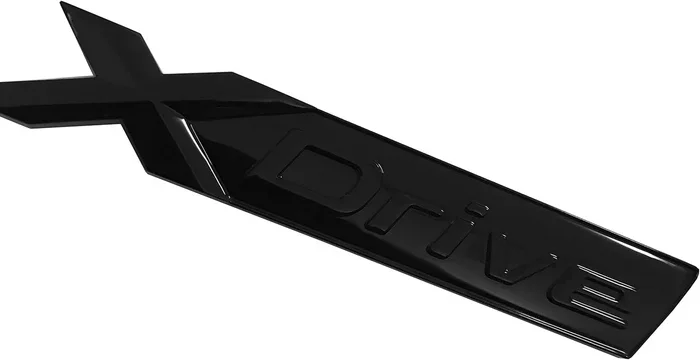
BMW keeps it simple with badges. Every modern BMW X1 (F48 chassis 2016–present and U11 chassis 2023–present) wears a badge on the trunk lid that declares its drivetrain.
- xDrive: This is BMW’s marketing name for all-wheel drive. If you see this badge, power goes to all four wheels.
- sDrive: This is BMW’s name for two-wheel drive. On the X1, this means front-wheel drive (FWD).
There is no “AWD” badge. There is no “4WD” badge. It is strictly xDrive or sDrive. If the badge is missing—maybe it was debadged or damaged—do not panic. You have four other reliable ways to find out.
How to Check If Your BMW X1 Has All-Wheel Drive (5 Easy Ways)
You do not need a mechanic or a lift. You can verify your drivetrain right now in your driveway.
Visual guide about BMW X1 xDrive badge
Image source: bimmerelite.nl
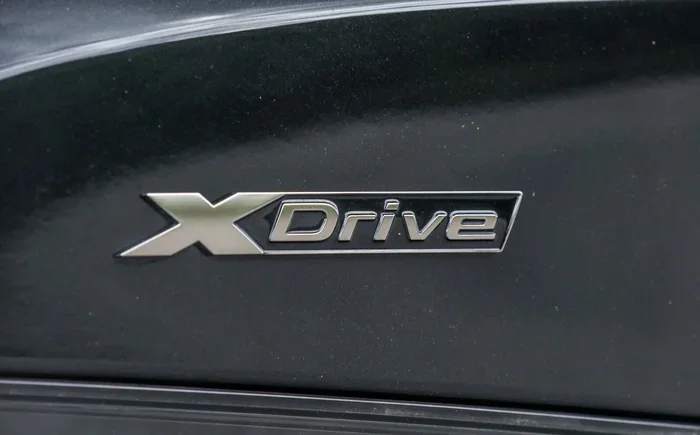
1. Look at the Trunk Badge (Fastest Method)
Walk to the rear of your X1. Look at the model designation badge on the right side of the trunk lid (or tailgate).
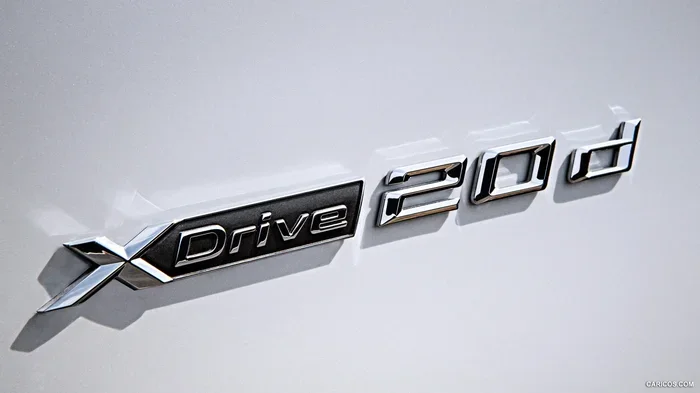
- It usually reads something like X1 xDrive28i or X1 sDrive28i.
- The number (18i, 20i, 25e, 28i, 30e, 35i) refers to the engine power output.
- The word xDrive or sDrive sits right before that number.
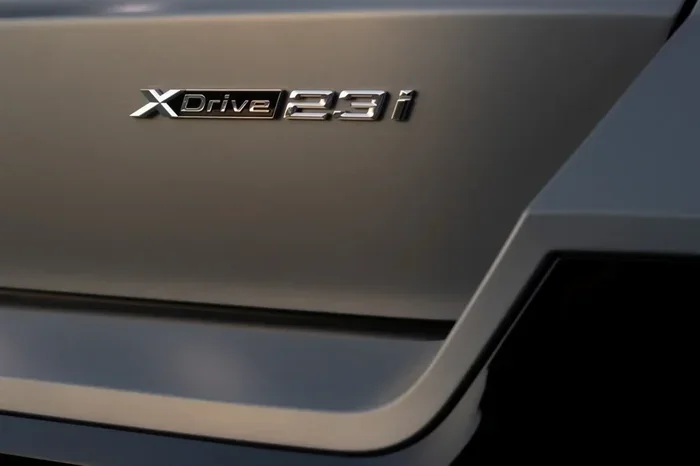
Pro Tip: On the newest U11 generation (2023+), the badge might just say “X1” with a small “xDrive” script lower down or on the side. Look closely.
2. Decode Your VIN (Most Accurate Method)
The Vehicle Identification Number (VIN) holds the factory build sheet. It never lies, even if badges were swapped.
- Find your VIN on the driver’s side dashboard (visible through the windshield) or the driver’s door jamb sticker.
- Go to a free BMW VIN decoder site (like bmwvin.com, mdecoder.com, or realoem.com).
- Enter the VIN.
- Look for “Drive Type” or “SA Code” (Special Equipment).
- SA Code 205 or 205 usually indicates xDrive. SA Code 204 indicates sDrive.
This method also reveals the original engine, transmission, color, and every option the car left the factory with. It is the gold standard for used car buyers.
3. Inspect the Undercarriage (Visual Confirmation)
If you can safely look under the car (or have a friend check), the mechanical hardware tells the truth.
- xDrive (AWD): You will see a driveshaft running from the transmission down the center tunnel to a rear differential (a round “pumpkin” shape) on the rear axle. You will also see CV axles going from that rear diff to each rear wheel.
- sDrive (FWD): There is no driveshaft tunnel hump in the rear floor pan (usually). There is no rear differential. The rear suspension is a simple beam or multi-link setup with no axle shafts going to the wheels.
This is 100% definitive. No software glitch or missing badge can hide the hardware.
4. Check the iDrive Menu (Digital Confirmation)
Modern BMWs store the vehicle configuration in the infotainment system.
- Start the car (or turn ignition to accessory mode).
- Go to Menu > Vehicle Info > Vehicle Status (or similar path depending on iDrive version).
- Look for “Drivetrain,” “Drive Type,” or “xDrive Status.”
- It will explicitly state “All-Wheel Drive (xDrive)” or “Front-Wheel Drive (sDrive).”
On the newest Operating System 9 (2023+ models), swipe to the “Vehicle” widget or check “All Vehicle Data.”
5. Check the Owner’s Manual or Window Sticker
If you have the original paperwork, it is spelled out clearly.
- Monroney Label (Window Sticker): Lists “xDrive All-Wheel Drive” as a line item or standard equipment.
- Owner’s Manual: The specifications page in the front or back lists “Drive concept: All-wheel drive (xDrive)” or “Front-wheel drive (sDrive).”
Why It Matters: xDrive vs. sDrive Differences
Okay, you know which one you have. Now, why should you care? The differences affect your wallet, your safety, and your driving feel.
Visual guide about BMW X1 xDrive badge
Image source: images.caricos.com
Traction and Winter Performance
This is the main reason people buy xDrive.
- xDrive: Uses an electronically controlled multi-plate clutch (on transverse engine X1s) to send up to 100% of torque to the front or rear axle instantly. It reacts in milliseconds to wheel slip. It is exceptional in snow, ice, and wet leaves.
- sDrive: Power goes only to the front wheels. With good winter tires, it is perfectly safe for most climates. But in deep snow or icy hills, it cannot match the grip of AWD.
Fuel Economy
AWD adds weight and mechanical drag.
- xDrive: Typically returns 1–2 MPG less than the sDrive equivalent. Expect roughly 23–25 MPG combined on a gas xDrive28i.
- sDrive: Lighter and more efficient. You might see 25–27 MPG combined on the same engine.
Over 15,000 miles a year, that difference costs you roughly $100–$200 extra in fuel.
Maintenance Costs and Complexity
This is where long-term ownership costs diverge.
| Service Item | xDrive (AWD) | sDrive (FWD) |
|---|---|---|
| Transfer Case Fluid | Required (~every 40k-60k miles) | Not Applicable |
| Rear Differential Fluid | Required (~every 40k-60k miles) | Not Applicable |
| Front Axle / CV Joints | Standard Wear | Standard Wear |
| Rear CV Joints / Axles | Standard Wear (4 axles total) | Not Applicable |
| Tire Replacement | Must replace all 4 at once | Can replace in pairs (Front) |
Budget an extra few hundred dollars every few years for driveline fluids if you own an xDrive. It is cheap insurance against expensive repairs.
Driving Dynamics
The X1 uses a front-wheel-drive-based platform (UKL/FAAR architecture).
- sDrive: Feels like a nimble front-drive car. Slight understeer at the limit. Lighter steering.
- xDrive: Feels more planted. The system can send 50% of power to the rear, giving a more neutral, “rear-drive” feel in corners. It masks the front-heavy weight distribution well.
Common Misconceptions About BMW X1 AWD
Let’s clear up some myths I hear all the time in the shop and forums.
Visual guide about BMW X1 xDrive badge
Image source: parkers-images.bauersecure.com
Myth 1: “All X1s are AWD because it’s an SUV.”
False. BMW sells plenty of sDrive (FWD) X1 models, especially in southern states and as base fleet vehicles. Never assume.
Myth 2: “xDrive is the same as old 4WD systems.”
False. There is no low-range gearing. You cannot lock the center differential manually. It is an on-demand, automatic system designed for pavement and light off-road (gravel, grass), not rock crawling.
Myth 3: “If I have xDrive, I don’t need winter tires.”
Dangerous. AWD helps you go. Winter tires help you stop and turn. An sDrive X1 on Blizzaks will out-brake and out-corner an xDrive X1 on all-seasons every time. Run-flat tires are common on X1s; ensure you get the correct winter run-flats if you keep that setup.
Myth 4: “The badge on the side says ‘AWD’.”
False. BMW never uses “AWD” badging. Only xDrive. If you see an “AWD” sticker, it is aftermarket.
Maintenance Tips for Your BMW X1 xDrive
If you confirmed you have xDrive, you have a few extra maintenance items compared to your sDrive neighbors. Ignoring them leads to shuddering, binding, or total failure of the transfer case (often called the “VTG” or Power Transfer Unit on these transverse models).
Tire Care is Critical (The Golden Rule)
This is the number one killer of xDrive systems.
- All four tires must be the same brand, model, size, and tread depth.
- Maximum tread depth difference: 2/32nds of an inch (approx 1.5mm) between axles.
- If you get a flat and the other tires are worn 50%, you must buy four new tires. Shaving a new tire to match old ones is an option some shops offer, but replacing the set is safer.
- Rotate tires every 5,000–7,500 miles to keep wear even. The X1 is front-heavy; fronts wear faster.
Fluid Changes: Transfer Case & Rear Diff
BMW calls these “Lifetime Fluids.” Do not believe it. “Lifetime” means “Lifetime of the Warranty.”
- Transfer Case (PTU/VTG) Fluid: Change every 40,000–50,000 miles. Use BMW specific fluid (usually TL 7080 or similar spec). It is a small amount (approx 0.5L) but vital for the clutch packs.
- Rear Differential Fluid: Change every 50,000–60,000 miles. Use 75W-90 GL-5 (approx 0.5L–0.7L).
- Front Differential: Integrated into the transmission/transaxle. Serviced during transmission fluid changes (recommended every 60k miles on ZF 8HP).
Fresh fluid prevents the dreaded “drivetrain malfunction” warning and shudder on acceleration. If you see a drivetrain malfunction warning, check fluid levels and codes immediately.
Brake Fluid and Coolant
These apply to all X1s, but AWD puts slightly more heat into the braking system during spirited driving or towing.
- Brake Fluid: Every 2 years (DOT 4 LV).
- Coolant: Every 4–5 years or 60k miles. Use BMW Blue Coolant (G48/HT-12) diluted with distilled water. Never use green universal coolant. If you are unsure about the color, read our guide on proper coolant color for your BMW engine.
Software Updates
BMW releases software updates for the xDrive control module (VTG module) occasionally. These can improve engagement smoothness and reduce wear. Ask your dealer or indie shop to check for “ISTA/P” updates during major services.
Buying a Used X1: Verifying the Drivetrain Before You Sign
If you are shopping for a used X1, verifying the drivetrain is step one. Here is your pre-purchase checklist.
- Match the Badge to the VIN: Decode the VIN before you test drive. Ensure the badge matches the build sheet. A mismatched badge suggests accident repair or fraud.
- Test Drive Specifics:
- Find a gravel or wet grass patch. Accelerate gently. Feel for rear-end push (xDrive) vs front wheel spin (sDrive).
- Turn the wheel lock-to-lock at low speed. Listen for binding or clunking from the rear (bad CV joints or diff on xDrive).
- Accelerate hard 0–40 mph. Watch for “Drivetrain Malfunction” on the dash. Feel for shudder (worn transfer case clutch).
- Check Service Records: Look for transfer case and rear diff fluid changes. If the seller has records at 40k and 80k, that is a green flag. If they have zero records at 90k miles, budget $400–$600 for fluids immediately.
- Inspect Tires: Are they four matching tires? Measure tread depth at all four corners. Mismatched tires on an xDrive car = walk away or negotiate hard.
- Check for Recalls: Some early F48 xDrive models had transfer case actuator recalls. Run the VIN on the NHTSA site or BMW owner portal.
Knowing which BMW models are most reliable helps, but the X1 xDrive is generally solid if maintained. The sDrive is simpler and cheaper to run, but xDrive holds resale value better in snow-belt states.
Quick Reference: X1 Generations and Drivetrain Availability
It helps to know what was offered when.
E84 Generation (2010–2015) – Rear-Wheel Drive Based
- sDrive18i / sDrive20i / sDrive28i: Rear-Wheel Drive (RWD).
- xDrive18d / xDrive20d / xDrive28i / xDrive35i: All-Wheel Drive.
- Note: This generation is longitudinally mounted. sDrive = RWD. This is unique to the E84.
F48 Generation (2016–2022) – Front-Wheel Drive Based (UKL Platform)
- sDrive18i / sDrive20i / sDrive18d / sDrive20d: Front-Wheel Drive (FWD).
- xDrive20i / xDrive25i / xDrive28i / xDrive25d / xDrive18d / xDrive20d: All-Wheel Drive.
- Plug-in Hybrid (xDrive25e): AWD via electric rear motor (eDrive).
U11 Generation (2023–Present) – Front-Wheel Drive Based (FAAR Platform)
- sDrive18i / sDrive20i / sDrive18d: Front-Wheel Drive (FWD).
- xDrive23i / xDrive30i / xDrive20d / xDrive23d: All-Wheel Drive.
- Plug-in Hybrid (xDrive30e): AWD via electric rear motor.
Critical Distinction: On the current F48 and U11 models, sDrive = FWD. On the old E84, sDrive = RWD. This confuses people constantly. If you are looking at a 2014 X1 sDrive, it is RWD. If you are looking at a 2019 X1 sDrive, it is FWD.
Frequently Asked Questions
Can I convert my sDrive X1 to xDrive?
Technically yes, but practically no. It requires a new rear subframe, rear suspension, driveshaft, transfer case, transmission, wiring harness, control modules, and software coding. The cost exceeds the value of the car. Sell yours and buy an xDrive model instead.
Does xDrive work in “Sport Mode” differently?
Yes. In Sport mode, the xDrive clutch pre-loads more torque to the rear axle (up to 50/50 split) for sharper turn-in. In Eco Pro, it biases heavily front (near 100%) for efficiency until slip is detected.
My xDrive badge is missing. How do I order the right one?
Use your VIN at a site like realoem.com or bmwfans.info. Enter the last 7 digits of your VIN. It will show the exact part number for the “xDrive” or “sDrive” badge specific to your model year and paint code (chrome vs black).
Is the X1 xDrive good in deep snow?
It is good for a crossover. It has ~7.2 inches of ground clearance. It handles unplowed roads well with winter tires. It is not an X5 or a Jeep Wrangler. Do not attempt deep off-roading; the front bumper and plastic undertrays will crack.
Does xDrive affect towing capacity?
Usually, xDrive models have a slightly higher tow rating (e.g., 3,500 lbs vs 2,000 lbs for sDrive) because the AWD traction helps pull a boat ramp or wet trailer. Check your specific door jamb sticker for the exact number.
What fluid goes in the X1 transfer case?
Most F48/U11 X1 xDrive models use a Power Transfer Unit (PTU) made by Magna/GKN. It takes a specific low-viscosity fluid (BMW Part Number 83 22 2 409 710 / TL 7080 spec). Do not use standard ATF or gear oil. Buy from the dealer or a specialist like Pentosin/RAVENOL matching that spec.
Conclusion
Finding out is my BMW X1 all wheel drive takes about 30 seconds. Check the badge. If it says xDrive, you have AWD. If it says sDrive, you have FWD (or RWD on the old 2010–2015 model). Verify with your VIN if the badge is gone.
Once you know, you can maintain it correctly. xDrive owners: rotate your tires religiously and change that transfer case fluid. sDrive owners: enjoy the better MPG and simpler maintenance, but buy good winter tires if you see snow. Both are excellent cars when cared for. Now get out there and enjoy the drive.