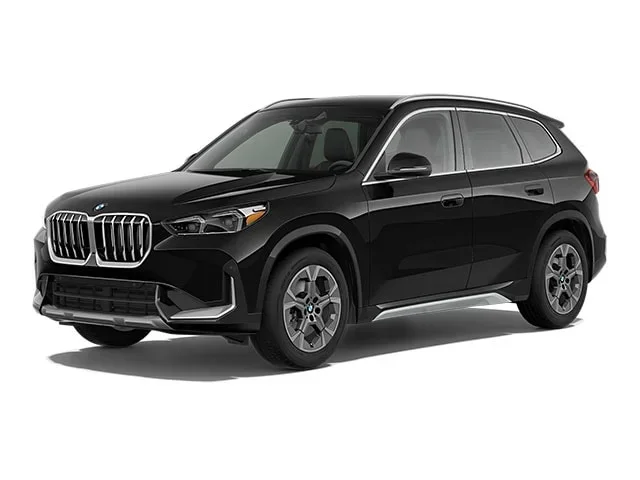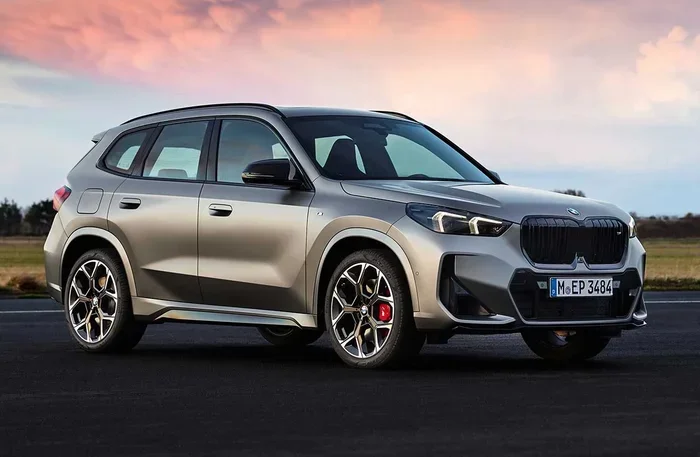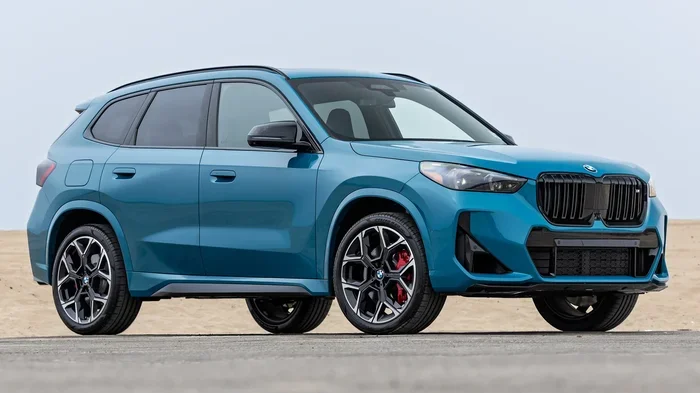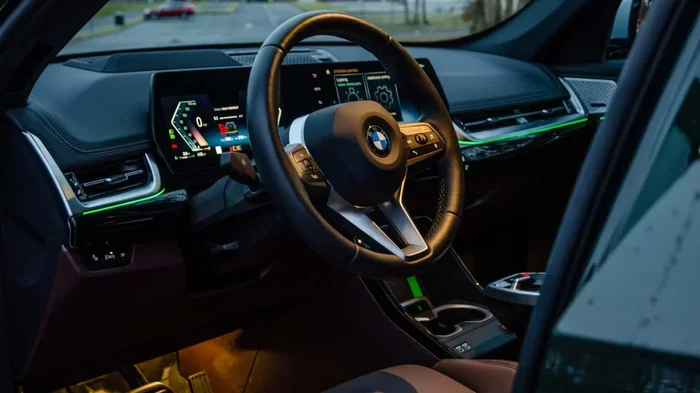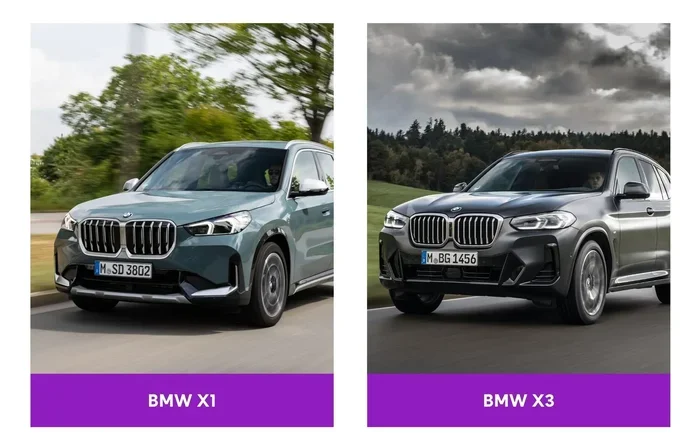
Featured image for BMW X1 driving comparison
Image source: a.storyblok.com
Choosing between the BMW X1 FWD vs AWD comes down to your climate, budget, and driving style. The sDrive (FWD) model saves money upfront and at the pump, while xDrive (AWD) offers superior traction in snow and rain. This guide covers everything you need to decide.
Shopping for a compact luxury SUV often leads you straight to the BMW X1. It is a fantastic package. It looks sharp, drives well, and packs tech that punches above its weight class. But before you sign the paperwork, you face a big fork in the road. You have to decide between front-wheel drive and all-wheel drive. In BMW speak, that is sDrive versus xDrive.
This decision changes the price, the fuel bills, and how the car handles a snowy Tuesday morning. It also changes maintenance costs down the line. Many buyers just check the AWD box for peace of mind. But is that the smart move for you? We are going to dig deep into the BMW X1 FWD vs AWD debate. We will look at the hardware, the real-world numbers, and the hidden costs. By the end, you will know exactly which badge belongs on your trunk.
Key Takeaways
- Drivetrain Names: BMW calls FWD “sDrive” and AWD “xDrive” on the X1.
- Price Gap: xDrive typically adds $2,000 to the MSRP over sDrive.
- Fuel Economy: sDrive returns better MPG, often 1-2 mpg combined higher.
- Winter Driving: xDrive with winter tires is king; sDrive with winter tires is very capable for most.
- Maintenance: xDrive has more components (transfer case, rear diff) leading to slightly higher long-term costs.
- Resale Value: xDrive holds value better in northern states; sDrive sells faster in the south.
- Driving Feel: sDrive feels lighter and more nimble; xDrive adds grip but adds weight.
📑 Table of Contents
- What Do sDrive and xDrive Actually Mean?
- BMW X1 sDrive (FWD): The Value Proposition
- BMW X1 xDrive (AWD): The All-Weather Security Blanket
- Head-to-Head: The Numbers That Matter
- Decision Matrix: Which One Fits Your Life?
- Common Myths and Misconceptions
- Expert Insight: The Used Market Factor
- Maintenance Deep Dive: What You Actually Pay For
- Driving Dynamics: The Feel Behind the Wheel
- Quick Tips for the Test Drive
- Conclusion
What Do sDrive and xDrive Actually Mean?
First, let’s clear up the jargon. BMW loves proprietary names. It confuses people. But it is simple once you know the code.
sDrive Equals Front-Wheel Drive
When you see sDrive on an X1, it means front-wheel drive (FWD). The engine sends all power to the front wheels. The rear wheels just follow along. This is the standard setup on the base X1 models. It uses a transverse engine layout. This means the engine sits sideways under the hood. It is lighter, simpler, and cheaper to build.
xDrive Equals All-Wheel Drive
When you see xDrive, you get all-wheel drive (AWD). This system can send power to all four wheels. On the current X1 (U11 chassis), it uses a sophisticated electronic clutch pack. It sits near the rear differential. In normal driving, it acts like FWD to save gas. When slip is detected—or predicted—it locks up and sends torque rearward. It can send up to 50% of power to the rear axle.
The Platform Context
The current generation X1 rides on the FAAR platform. This is a front-drive architecture. It is shared with the 2 Series Gran Coupe and the X2. This is important. It means the xDrive system here is not the same as the longitudinal xDrive in a 3 Series or X5. Those use a center differential inside the transmission. The X1 uses a “hang-on” system. It is lighter and more efficient, but it works differently.
BMW X1 sDrive (FWD): The Value Proposition
Let’s talk about the base model. The sDrive is the volume seller in warm states. It has a lot going for it.

Visual guide about BMW X1 driving comparison
Image source: a.storyblok.com
Lower Purchase Price
This is the biggest factor. Choosing sDrive saves you roughly $2,000 off the bat. On a $40,000 car, that is 5%. You can put that toward the Premium Package, better wheels, or just keep it in your pocket. If you lease, it lowers your monthly payment noticeably.
Better Fuel Economy
Physics is physics. Driving two wheels takes less energy than driving four. The sDrive X1 is lighter by about 100-150 pounds. It has less drivetrain friction. The EPA ratings usually show a 1 to 2 mpg advantage for sDrive in combined driving. Over 15,000 miles a year, that adds up to real savings at the pump.
Lower Weight, Better Balance (Sort Of)
Because the heavy transfer case and rear driveshaft are gone, the sDrive is lighter. It also has a slightly better front-to-rear weight distribution. The engine sits over the driven wheels. This actually helps traction in dry acceleration. The car feels a bit more eager to turn in. It has less understeer at the limit because the front wheels aren’t asked to steer and put down massive torque simultaneously.
Simpler Maintenance
Fewer moving parts mean fewer things to break. You don’t have a transfer case fluid change. You don’t have a rear differential fluid change. You have two fewer CV axles. Over a 100,000-mile ownership cycle, this saves you a few service visits. It also reduces the risk of a major drivetrain failure out of warranty.
The “Good Enough” Traction Argument
Modern traction control is incredible. The X1 sDrive has an electronic differential lock (EDL). It brakes a spinning front wheel to send torque to the gripping one. Pair this with a set of dedicated winter tires, and an sDrive X1 will climb hills that stump an xDrive on all-seasons. Tires matter more than driven wheels for stopping and turning.
BMW X1 xDrive (AWD): The All-Weather Security Blanket
Now for the upgrade. xDrive costs more, but it buys you capability that FWD physically cannot match.

Visual guide about BMW X1 driving comparison
Image source: assets-eu-01.kc-usercontent.com
Launch Traction and Acceleration
Put your foot down hard in an sDrive X1. The front tires will chirp. Torque steer might tug the wheel. The xDrive? It hooks up and goes. The 0-60 mph time is usually a tenth or two quicker. More importantly, it feels effortless. Merging onto a wet highway is drama-free. The system pre-loads the clutch before slip happens. It reads steering angle, throttle position, and yaw rate.
Superior Inclement Weather Performance
This is why people buy it. In deep snow, slush, or heavy rain, xDrive provides mobility that FWD cannot. If you live where roads go unplowed for days, or you have a steep driveway, xDrive is not a luxury. It is a necessity. The ability to push power to the rear axle gets you moving when the front wheels have zero grip. It also helps stability during cornering on low-friction surfaces.
Towing Capability
Check the owner’s manual. The xDrive model usually has a higher towing capacity. The rear axle helps stabilize the trailer. The drivetrain cooling is often more robust. If you plan to tow a small trailer, jet skis, or a bike rack loaded heavy, xDrive is the safer bet.
Resale Value in Snow Belt States
Try selling a FWD SUV in Minnesota or Colorado in January. It is tough. xDrive models retain value better in northern markets. Dealers know they can move them fast. If you live in the rust belt and trade cars every 3-4 years, you will likely recoup most of that $2,000 premium at trade-in time.
The “Peace of Mind” Factor
There is value in not worrying. With xDrive, you don’t need winter tires to get home in a surprise storm (though you still should run them). You don’t worry about pulling out of an icy side street. For many buyers, that mental comfort is worth the monthly cost.
Head-to-Head: The Numbers That Matter
Let’s look at the spec sheet side-by-side for a 2024/2025 X1 xDrive28i vs sDrive28i. The engine is the same 2.0L turbo-four. The transmission is the same 7-speed dual-clutch.

Visual guide about BMW X1 driving comparison
Image source: bmwmtkisco.com
| Specification | X1 sDrive28i (FWD) | X1 xDrive28i (AWD) |
|---|---|---|
| MSRP (Approx) | $39,200 | $41,200 |
| Curb Weight | ~3,700 lbs | ~3,850 lbs |
| EPA Combined MPG | 26-27 MPG | 25-26 MPG |
| 0-60 MPH | ~6.2 sec | ~6.0 sec |
| Towing Capacity | 2,000 lbs (check manual) | 2,600 lbs (check manual) |
| Ground Clearance | 7.2 in | 7.2 in |
| Drivetrain Fluids | Transmission only | Trans + Transfer Case + Rear Diff |
Note: Specs vary slightly by model year. Always verify with the specific window sticker.
Real World Fuel Cost Difference
Let’s do the math. Assume 15,000 miles/year. Gas at $3.80/gal.
- sDrive (26 MPG): 577 gallons = $2,192/year.
- xDrive (25 MPG): 600 gallons = $2,280/year.
- Difference: ~$88 per year.
Over 5 years, that is $440. It is not nothing, but it won’t break the bank. The $2,000 upfront price gap is the real financial hit.
Decision Matrix: Which One Fits Your Life?
Stop overthinking the specs. Look at your life. Here is a cheat sheet.
Buy the sDrive (FWD) If:
- You live in the South, Southwest, or Coastal California.
- You see snow maybe 1-2 times a year, and it melts by noon.
- You want the lowest monthly payment.
- You plan to keep the car 8+ years and want minimal maintenance.
- You are a driving enthusiast who prefers a lighter, more tossable front end.
- You are willing to buy a set of winter tires for peace of mind.
Buy the xDrive (AWD) If:
- You live in the Northeast, Midwest, Mountains, or Pacific Northwest.
- You have a steep, unheated driveway.
- You drive before the plows come out (nurses, first responders, early shifts).
- You tow a trailer regularly.
- You plan to sell/trade in 3-4 years in a northern market.
- You simply want the “best” spec and don’t care about the premium.
The “Winter Tire” Truth Bomb
I cannot stress this enough. An sDrive on winter tires outperforms an xDrive on all-seasons in every metric except deep snow mobility. Braking distance on ice? Winter tires win. Cornering on snow? Winter tires win. Hill climbing in 6 inches of powder? xDrive wins. If you buy the sDrive, budget $800-$1,200 for a winter wheel/tire set. You are still net positive vs the xDrive purchase price.
Common Myths and Misconceptions
Myth: “xDrive is Full-Time AWD.”
False. The X1 xDrive is front-biased. It is primarily FWD until the computer decides otherwise. It is reactive and predictive, but it is not a 50/50 split all the time like a Subaru or an Audi Quattro with a Torsen center diff. This saves fuel.
Myth: “FWD BMWs Aren’t Real BMWs.”
Gatekeeping nonsense. The X1 has been FWD-based since 2015 (F48 chassis). They drive exceptionally well. The steering is sharp. The chassis balance is neutral. The 2.0L turbo engine is a gem. It drives better than many RWD cars from 10 years ago.
Myth: “xDrive Adds Huge Maintenance Costs.”
It adds some. Transfer case fluid (every ~60k miles) and rear diff fluid (lifetime fill usually, but check intervals). It’s maybe $300-$500 extra over 100k miles if you DIY or use an indie shop. Dealer pricing is higher. It is not a financial catastrophe.
Myth: “You Can’t Drift an xDrive X1.”
You can, sort of. The system allows slip angle. But it will clamp down hard if you overcook it. It is not a drift toy. It is a safety system. Turn off DSC (hold the button) and you get more rope, but the front-bias remains.
Expert Insight: The Used Market Factor
If you are buying used (CPO or private party), the calculus shifts. The depreciation hit on the xDrive premium has already happened. A 3-year-old xDrive often costs barely more than an sDrive at the dealer auction. In that case, just get the xDrive. You get the capability for near-free. The maintenance history matters more than the drivetrain type. Check for transfer case fluid service records.
Also, consider the BMW X1 M35i. It comes standard with xDrive. It has a mechanical limited-slip diff on the front axle. It is a different animal entirely. If you want performance, that is the one. But for the standard 28i, the choice remains sDrive vs xDrive.
Maintenance Deep Dive: What You Actually Pay For
Let’s look at the service schedule differences. This is where the rubber meets the road for long-term owners.
sDrive Service Items
- Engine Oil & Filter (Every 10k miles / 1 year)
- Brake Fluid (Every 2 years)
- Cabin/Engine Air Filters
- Coolant (Long life, ~100k+ miles)
- Transmission Fluid (DCT): BMW says “lifetime,” but enthusiasts change it at 60k-80k miles. ~$300-$500.
xDrive Additional Items
- Transfer Case Fluid: Small reservoir. Change every 60k miles. Cheap fluid, easy DIY. ~$50 in fluid.
- Rear Differential Fluid: Usually “lifetime” but smart money changes at 60k-100k. ~$100 in fluid.
- Rear CV Axles: Two more boots to inspect/tear.
The added cost is negligible if you DIY. At a dealer, each fluid service is a line item adding $200-$400 per visit. Over 10 years, maybe $1,500 extra at dealer rates. Factor that into your decision.
Driving Dynamics: The Feel Behind the Wheel
Numbers are one thing. Feel is another.
sDrive Feel
You feel the front wheels pulling. You can “throttle steer” slightly. Lift off mid-corner, the nose tucks in. It feels like a hot hatch. The steering is lighter. The car rotates willingly. It is genuinely fun on a back road. Torque steer is managed well by the electronic diff, but you feel a tug under hard acceleration on uneven pavement.
xDrive Feel
It feels planted. You brake later into corners because you know the exit traction is there. You floor it at the apex. The car shoots out. The steering is slightly heavier due to the front axle weight. There is a subtle “push” (understeer) at the absolute limit if you enter too hot. But the safety net is massive. It feels substantial. Premium. Secure.
Quick Tips for the Test Drive
- Drive both back-to-back. Same road, same tires (ideally).
- Find a gravel lot or wet grass. Turn DSC off (hold button 3-5 secs). Feel the difference in slip.
- Check the turning circle. xDrive sometimes has a slightly wider turning radius due to front axle geometry. Test a U-turn.
- Listen for drivetrain noise. On used xDrives, listen for “groaning” from the rear at low speed tight turns. That means transfer case/clutch wear.
- Verify the tire match. On used xDrives, all 4 tires must be same brand/model/size with < 2/32" tread depth difference. Mismatched tires kill the xDrive clutch pack. This is critical.
Conclusion
There is no wrong answer here. The BMW X1 is a brilliant car in either configuration. If you live where it snows properly—where you drive on packed snow for weeks—buy the xDrive. The $2,000 is insurance. The resale value covers it. The stress reduction is real.
If you live where snow is a novelty? Buy the sDrive. Pocket the cash. Buy the better tire package. Enjoy the lighter steering and better MPG. Put the savings toward a track day or a weekend trip. Just promise me one thing: whichever you pick, fit proper tires for your season. That decision matters more than the badge on the tailgate.
Now you know the facts. You know the costs. You know the feel. Go drive them. Your wallet and your driveway will tell you the rest.
Frequently Asked Questions
Is the BMW X1 FWD or AWD better in snow?
The xDrive (AWD) is significantly better in deep snow and on icy hills because it can send power to the rear wheels. However, an sDrive (FWD) equipped with four dedicated winter tires will outperform an xDrive on all-season tires for braking and cornering on plowed roads.
Does the BMW X1 xDrive require more maintenance?
Yes, slightly. The xDrive adds a transfer case and a rear differential, which require fluid changes roughly every 60,000 miles. The sDrive only requires transmission fluid service. The cost difference is minor if you use an independent shop.
What is the price difference between X1 sDrive and xDrive?
The xDrive option typically adds approximately $2,000 to the MSRP compared to the equivalent sDrive model. This gap remains relatively consistent across trim levels.
Can I tow more with the BMW X1 xDrive?
Yes. The xDrive model generally offers a higher towing capacity (often around 2,600 lbs vs 2,000 lbs for sDrive) because the all-wheel-drive system provides better stability and traction when pulling a load.
Does BMW X1 xDrive hurt gas mileage?
Yes, but minimally. The xDrive is heavier and has more drivetrain friction. Expect a reduction of roughly 1-2 MPG combined compared to the sDrive model. This amounts to roughly $50-$100 per year in extra fuel costs for average drivers.
Are all BMW X1 models front-wheel drive based?
Yes, since the 2015 redesign (F48 chassis), all BMW X1 models use a front-wheel-drive architecture (FAAR platform). The “sDrive” models stay FWD, while “xDrive” models add an electronically controlled clutch pack to drive the rear axle on demand.