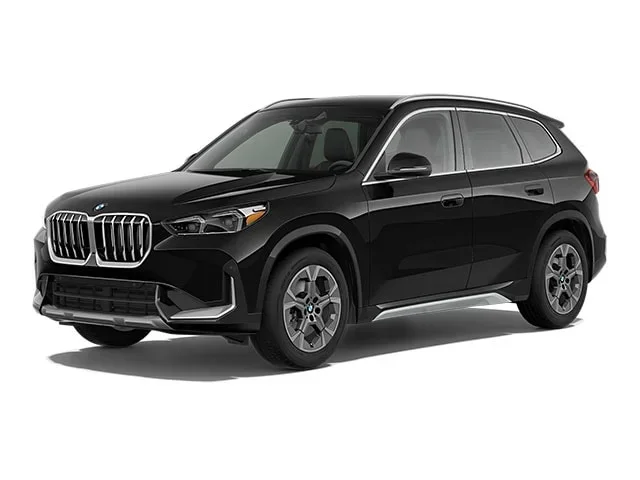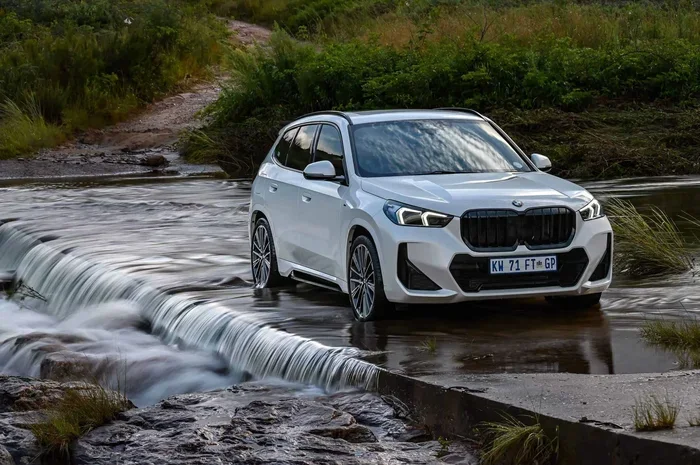
Featured image for BMW X1 lifestyle photography
Image source: cdn.bmwblog.com
The BMW X1 defies outdated gender stereotypes as a versatile compact luxury SUV loved by men and women alike. Its blend of sporty handling, practical cargo space, and premium features appeals to a broad demographic ranging from young professionals to small families. Ultimately, the best car for you depends on your lifestyle needs, not marketing labels.
Let’s be honest. You have probably heard someone at a coffee shop or a dealership whisper, “Is the BMW X1 a girl’s car?” Maybe you even typed that exact phrase into Google late at night while car shopping. It is a question that pops up on forums constantly, usually followed by a heated debate about grilles, ride height, or badge prestige.
Here is the short answer: Cars do not have a gender. The BMW X1 is a machine made of steel, aluminum, and clever engineering. It does not care who is holding the steering wheel. But we know why you are asking. You want to know who actually buys this thing. You want to know if it fits your life. So, let’s ignore the noise and look at the facts, the demographics, and the real-world experience of owning BMW’s entry-level SUV.
Key Takeaways
- No Gender Owner: Registration data shows a near 50/50 split between male and female owners for the BMW X1.
- Practical Performance: The X1 offers a unique mix of BMW driving dynamics and genuine SUV utility that appeals to everyone.
- Configurable Drivetrain: Choose between efficient front-wheel drive (sDrive) or confident all-wheel drive (xDrive) based on your climate.
- Strong Resale Value: As a BMW, the X1 holds its value well, making it a smart financial choice for any buyer.
- Tech-Forward Interior: The latest iDrive 8 system and curved display satisfy tech enthusiasts regardless of gender.
- Compact Dimensions: Easy parking and city maneuverability make it a favorite for urban dwellers of all backgrounds.
- Safety First: Top safety ratings from IIHS and NHTSA make it a logical pick for safety-conscious drivers.
📑 Table of Contents
- Why the “Girl Car vs. Guy Car” Label Exists (And Why It Is Wrong)
- What the BMW X1 Actually Is: A Segment-Bender
- Performance & Drivetrain: sDrive vs. xDrive
- Interior, Tech, and Daily Livability
- Ownership Costs: The “BMW Tax” Reality Check
- Comparison: BMW X1 vs. The Competition
- Who Actually Buys the X1? (Real Owner Profiles)
- Common Misconceptions Debunked
- Expert Insight: The “M35i” Factor
- Quick Tips for Buying Your X1
- Common Mistakes to Avoid
- The Verdict: Drive What Makes You Happy
- Final Thoughts
Why the “Girl Car vs. Guy Car” Label Exists (And Why It Is Wrong)
Before we dig into the X1 specifically, let’s address the elephant in the room. The auto industry has a long, awkward history of gendered marketing. Remember the Dodge La Femme in the 50s? Pink paint, matching purse, rain bonnet. Cringe.
Fast forward to today. The labels have shifted. “Guy cars” are usually labeled as trucks, muscle cars, or track-focused sedans. “Girl cars” get slapped onto convertibles, small crossovers, or anything deemed “cute.” The BMW X1 sits in a weird middle ground. It is a BMW (traditionally “driver’s car” = guy car marketing), but it is a compact crossover with a higher roofline (practical = “mom car” marketing).
This binary thinking is lazy. It ignores the reality of modern buyers. Women buy more than 60% of new cars in the US and influence 85% of purchases. Men drive carpool and grocery runs. The X1 sells because it solves a problem: I want a luxury badge, good gas mileage, easy parking, and space for my stuff. That problem is universal.
The Demographics Don’t Lie
If you look at registration data for the BMW X1, the split is remarkably even. It hovers right around 50% male / 50% female ownership. Compare that to a BMW X5 or X7, which skews slightly more male (often 55-60%), or a BMW 2 Series Convertible, which historically skews slightly more female.
The X1 is the statistical definition of a “unisex” vehicle. It hits the sweet spot for a single guy wanting a fun daily driver, a couple needing a weekend adventure mobile, or a mom/dad needing a safe, premium school-run vehicle.
What the BMW X1 Actually Is: A Segment-Bender
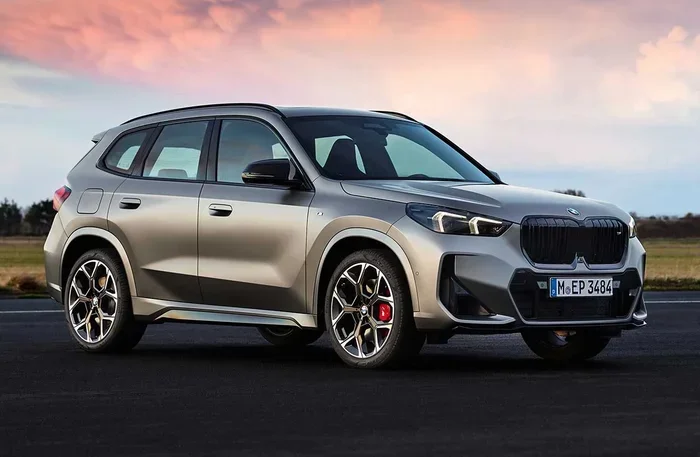
To understand the appeal, you have to understand the segment. The X1 competes in the subcompact luxury crossover class. Think Audi Q3, Mercedes GLA, Volvo XC40, Lexus UX.
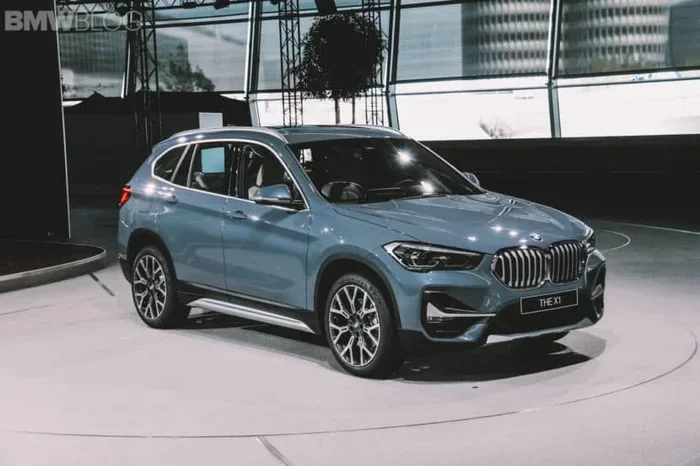
Visual guide about BMW X1 lifestyle photography
Image source: cdn.bmwblog.com
What makes the X1 unique in this crowd? It drives like a BMW. That sounds like a slogan, but the chassis tuning is genuinely sharper than the Mercedes GLA (which prioritizes comfort) or the Lexus UX (which prioritizes efficiency). It feels planted. The steering has weight. You can toss it into a highway on-ramp and grin.
But—and this is crucial—it doesn’t punish you on the pothole-ridden road to work. It has enough sidewall on the tires and enough travel in the suspension to be a compliant daily driver.
Generational Differences: E84 vs. F48 vs. U11
If you are buying used, the “vibe” changes drastically by generation.
- E84 (2010–2015): The original. Boxier, taller, available with a proper manual transmission (rare!) and the legendary N52 naturally aspirated inline-6 in the xDrive28i. This one feels the most “traditional BMW.” Enthusiasts (often guys, statistically) hunt these down.
- F48 (2016–2022): Switched to front-wheel-drive architecture (UKL platform). Lost the inline-6, gained turbo 4-cylinders (B48). Way more interior space, better MPG, cheaper to maintain. This is the volume seller. The demographic widened massively here.
- U11 (2023–Present): The current model. Bold styling, massive curved screen, mild-hybrid tech, no manual option. It looks aggressive. It feels premium. It attracts a younger, tech-focused buyer of all genders.
If you are looking at a used F48 or new U11, the “chick car” vs “dude car” argument evaporates because the car is just… competent. Really competent.
Performance & Drivetrain: sDrive vs. xDrive
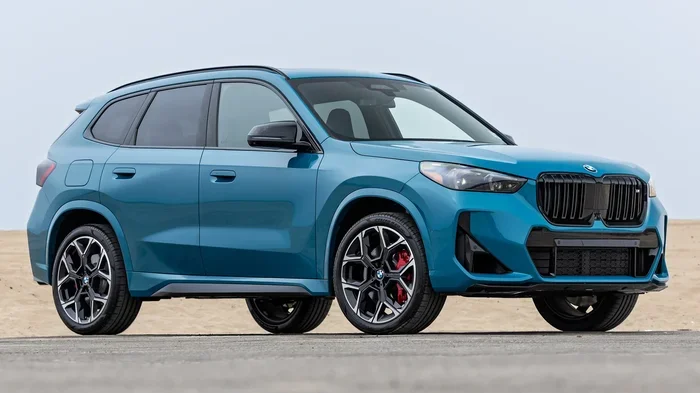
One of the biggest decisions you will make has zero to do with identity and everything to do with physics: sDrive (FWD) vs xDrive (AWD).
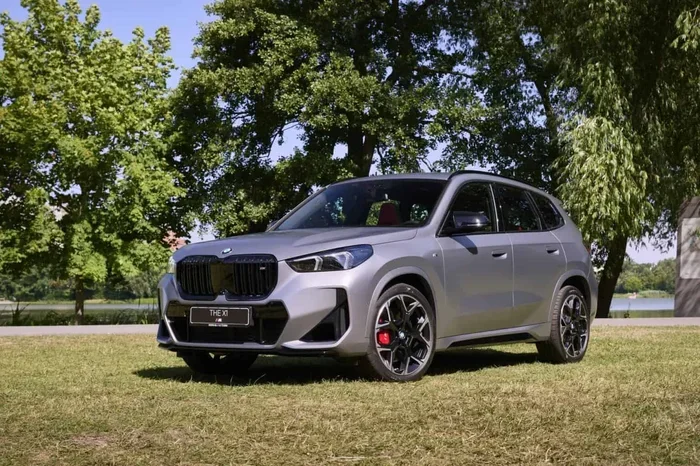
Visual guide about BMW X1 lifestyle photography
Image source: cdn.bmwblog.com
BMW’s xDrive system is rear-biased in feel but front-biased in architecture (on the F48/U11 platforms). It sends power to the rear wheels only when slip is detected or predicted. It is seamless.
Who Should Buy sDrive (FWD)?
- You live in the Sun Belt (Texas, Florida, SoCal, Arizona).
- You want the best fuel economy (often 1-2 MPG better).
- You want lower maintenance complexity (no rear diff, no transfer case).
- You want a slightly lower purchase price.
Who Should Buy xDrive (AWD)?
- You see snow, ice, or heavy rain regularly.
- You have a steep driveway or unpaved road.
- You want the perception of the “ultimate driving machine” security blanket.
- Resale value in northern states is significantly higher for xDrive.
Quick Tip: A FWD X1 on winter tires will destroy an AWD X1 on all-seasons in the snow. Tires matter more than driven wheels. If you buy sDrive, budget for a dedicated winter set.
Interior, Tech, and Daily Livability
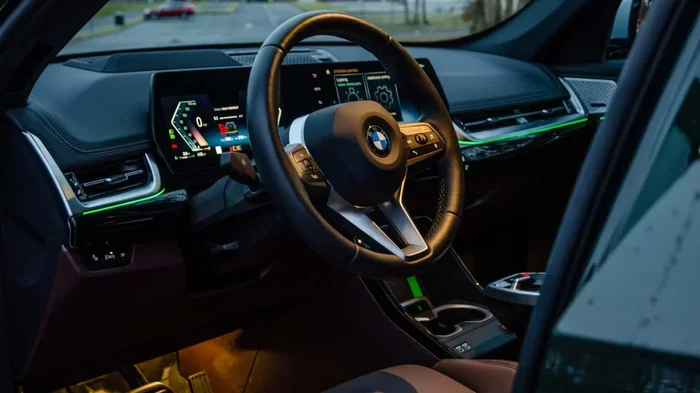
This is where the X1 wins the argument for any buyer. The current U11 generation features the BMW Curved Display (10.25″ cluster + 10.7″ touchscreen) running iDrive 8. It is slick, responsive, and supports wireless Apple CarPlay/Android Auto.
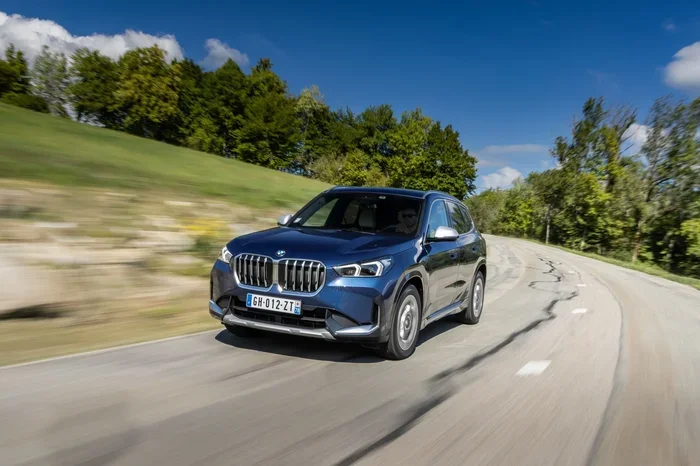
Visual guide about BMW X1 lifestyle photography
Image source: cdn.bmwblog.com
But let’s talk ergonomics. The seat height is the “Goldilocks” zone. You don’t climb up into it like a truck, and you don’t fall down into it like a sports car. You just sit. This “command seating” is the #1 reason crossovers killed sedans. It works for a 5’2″ driver and a 6’2″ driver equally well.
Cargo Space: The Great Equalizer
With the rear seats up, you get roughly 27 cubic feet (U11) or 25 (F48). Fold the 40/20/40 split seats flat, and you open up ~57 cubes. That fits:
- Two large suitcases + a stroller.
- A bike with the front wheel off.
- A Costco run (the true test of any SUV).
- Moving boxes for a dorm room.
This utility is why the X1 crosses demographic lines. It is a hatchback with better seats and a badge.
The Run-Flat Reality
Almost every X1 leaves the factory on BMW run-flat tires. This is a polarizing topic. The upside: no spare tire needed, more trunk floor space, you can drive 50 miles on a puncture. The downside: stiffer ride, louder noise, expensive to replace, limited brand choices.
Many owners (guys and gals) swap to non-run-flats immediately and buy a tire repair kit or a compact spare. It transforms the ride quality. If you test drive one and think “too harsh,” know that it’s likely the tires, not the suspension.
Ownership Costs: The “BMW Tax” Reality Check
Let’s talk money. This is where gender disappears and “smart buyer” appears.
Purchase Price & Depreciation
A new 2024/2025 X1 xDrive28i starts around $41k-$43k MSRP. Loaded, you hit $50k+. Depreciation for luxury German cars is steep years 1-3 (expect 40-50% loss). Buying a 2-3 year old Certified Pre-Owned (CPO) X1 is the financial sweet spot. You let someone else eat the depreciation, you get the BMW CPO warranty (1 year/unlimited miles after the factory 4yr/50k expires), and you save $10k-$15k.
Maintenance & Reliability
The B48 2.0L turbo-4 engine (in all modern X1s) is robust. It uses a timing chain (lifetime-ish), direct injection (watch for carbon buildup on intake valves ~60k miles), and a ZF 8-speed automatic (bulletproof).
Common items to budget for:
- Brakes: BMWs eat pads/rotors. Budget $800-$1200 per axle at a dealer; $400-$600 DIY/Indy shop.
- Coolant: Use the correct BMW coolant (blue HT-12). Don’t mix colors. Change every 4-5 years.
- Oil: LL-01 or LL-17FE+ spec. Every 7,500-10k miles (don’t wait for the 15k CBS interval).
- Walnut Blasting: Intake valve cleaning ~$400-$600 every 60k-80k miles for direct injection health.
Is it more expensive than a Toyota RAV4? Yes. Is it more expensive than an Audi Q3 or Mercedes GLA? Roughly the same. The “BMW Tax” is real but manageable if you find a good independent specialist.
Comparison: BMW X1 vs. The Competition
How does it stack up against the rivals people actually cross-shop?
| Feature | BMW X1 (U11) | Audi Q3 | Mercedes GLA | Volvo XC40 |
|---|---|---|---|---|
| Driving Dynamics | ★★★★★ (Sharpest) | ★★★★☆ (Composed) | ★★★☆☆ (Comfort focus) | ★★★☆☆ (Safe/Heavy) |
| Interior Tech | ★★★★★ (iDrive 8/Curved) | ★★★★☆ (Virtual Cockpit) | ★★★★★ (MBUX/Hyperscreen avail) | ★★★★☆ (Google Built-in) |
| Rear Seat Room | ★★★★☆ (Best in class legroom) | ★★★☆☆ (Tight) | ★★★☆☆ (Tight) | ★★★★☆ (Boxy = space) |
| Cargo Space | ★★★★☆ (57 cu ft max) | ★★★☆☆ (48 cu ft max) | ★★★☆☆ (43 cu ft max) | ★★★★★ (57 cu ft max) |
| Fuel Economy (AWD) | 26 Combined MPG | 25 Combined MPG | 26 Combined MPG | 26 Combined MPG (Mild Hybrid) |
| Starting Price (Approx) | $41,500 | $38,500 | $39,500 | $41,000 |
Verdict: The X1 wins on driving feel and rear passenger space. The Volvo wins on safety perception and boxy utility. The Mercedes wins on “wow factor” interior ambiance. The Audi is the safe, middle-ground choice. You buy the X1 if you actually enjoy driving.
Who Actually Buys the X1? (Real Owner Profiles)
Forget the stereotypes. Here are the real people I see in the X1 forums, at Cars & Coffee, and in the school pickup line.
1. The “One Car Does It All” Urban Professional (Male & Female)
Age 28-38. Lives in a city (Chicago, Denver, Seattle, Atlanta). Parks on the street or in a tight garage. Needs AWD for winter trips to the mountains. Wants a badge that signals “I’ve arrived” but needs CarPlay and a backup camera that works. They cross-shopped a 3 Series but needed the hatchback utility.
2. The Empty Nesters / Downsizers (Male & Female)
Age 60+. Had an X5 or 5 Series. Kids are gone. Don’t need the size. Want the easy entry/exit, the high seating position for visibility, and the latest safety tech (Active Driving Assistant Pro). They buy loaded xDrive28i or M35i models.
3. The Enthusiast Daily Driver (Mostly Male, but changing)
Has a project car in the garage (E30, Miata, Air-cooled 911). Needs a reliable, warranty-covered appliance for the commute that doesn’t feel like an appliance. They tune the B48 (JB4/Bootmod3), put on Michelin PS4S tires, and smile at stoplights.
4. The Practical Parent (Male & Female)
One kid, maybe two (rear-facing seats fit fine, three-across is tight). They looked at the X3 but couldn’t justify the $8k-$10k premium. The X1 fits the stroller, the diaper bag, and the dog. The BMW warranty coverage (4yr/50k maintenance included on new) seals the deal for budget predictability.
Common Misconceptions Debunked
“It’s just a Mini Countryman underneath.”
Half true. The F48 and U11 share the FAAR/UKL front-drive architecture with the Mini Countryman. But the suspension geometry, steering rack, bushing rates, subframe mounting points, and body structure are unique to BMW. They drive differently. The Countryman is stiffer/quirkier; the X1 is more refined/isolated.
“The 4-cylinder sounds rough.”
The B48 is smooth. It has a balance shaft. It makes peak torque at 1,450 RPM. It has a “growl” in Sport mode (partly synthesized through speakers on new models), but at highway cruise, it is quiet. It is not the agricultural 4-cyl of the 90s.
“It’s too small for a family.”
It is smaller than an X3. But for a family of 3 (or 4 with small kids), it works. Rear legroom in the U11 is class-leading (37+ inches). If you need three car seats across, buy an X5 or a minivan. If you need one or two, the X1 is easier to park and gets better mileage.
“Maintenance is a nightmare.”
It’s a German car. It needs correct maintenance, not deferred maintenance. If you treat it like a Camry (ignore oil changes, buy cheap tires, use green coolant), it will punish you. If you follow the schedule, it runs 150k+ miles easily. Check out our guide on identifying the most reliable BMW models for context on where the X1 ranks.
Expert Insight: The “M35i” Factor
The new X1 M35i (U11) changes the conversation entirely. 312 hp, 0-60 in 5.2 seconds, M Sport suspension, M Sport brakes, Torsen limited-slip front differential. This is a genuine hot hatch in SUV clothing.
This model attracts the “enthusiast” buyer hard. It is the spiritual successor to the old 135i/235i hatchbacks Europe got but the US missed. If you buy an M35i, nobody—nobody—asks if it’s a “girl’s car.” They ask, “Is that the fast one?”
Quick Tips for Buying Your X1
- Test Drive Both Drivetrains: Drive an sDrive and an xDrive back-to-back. Feel the weight difference in the front end.
- Check Tire Dates: On used cars, check the DOT code. Run-flats age out (harden) at 5-6 years even with tread left.
- Verify Service History: Look for the “BMW Value Service” or dealer stamps. Specifically, look for brake fluid changes (every 2 years) and coolant flushes.
- Negotiate on “Out the Door”: Don’t negotiate monthly payment. Negotiate total price + fees + tax.
- Skip the Dealer Extended Warranty: Buy a third-party exclusionary policy (like Endurance or CarShield) after CPO expires if you keep it long term. Shop around.
Common Mistakes to Avoid
- Buying “S-Line” or “M Sport” Cosmetics Only: On used F48s, an “M Sport” package might just be wheels, seats, and steering wheel. The M35i is the real performance model. Know the difference.
- Ignoring the “iDrive 7 vs 8” Learning Curve: If you hate touchscreens, the U11 (iDrive 8) requires more screen interaction for HVAC. The F48 (iDrive 7) has physical climate knobs. Decide which you prefer.
- Assuming All X1s Are AWD: Many southern-state lease returns are sDrive. Verify the badge or VIN before buying if you need AWD.
- Cheaping Out on Tires: Putting budget tires on a BMW ruins the chassis balance. Stick to Michelin, Continental, Pirelli, or Bridgestone.
The Verdict: Drive What Makes You Happy
So, is the BMW X1 a girl or guys car? It’s a car for people who want a premium badge, engaging driving dynamics, surprising practicality, and modern tech in a package that fits in a compact parking spot.
If you like it, buy it. If you fit in the seat, see out the windows, and the payment works for your budget, the opinion of a random internet stranger—or a coworker with a lifted truck—is irrelevant.
The X1 is one of the few vehicles that genuinely deserves the “something for everyone” cliché. It’s a BMW first, an SUV second, and a demographic target never.
Now go book a test drive. That’s the only review that matters.
Final Thoughts
The automotive world is full of tribalism. Sedan vs SUV. Domestic vs Import. EV vs ICE. And yes, “Girl Car vs Guy Car.” The BMW X1 sits right in the middle of all of it, refusing to be pigeonholed. It is a testament to good engineering that a vehicle can satisfy a 25-year-old driving to their first tech job, a 40-year-old hauling toddlers, and a 65-year-old heading to the mountains.
When you walk into the dealership—or meet a private seller—bring a checklist, not a label. Check the maintenance records. Feel the brakes. Test the tech. Smell the interior (no smoke, no mold). That is how you buy a good car. The rest is just noise.
And if anyone asks you later, “Hey, isn’t that a girl’s car?” you just smile, tap the roof, and say, “It’s a BMW. It’s for driving.”
Frequently Asked Questions
Is the BMW X1 considered a “chick car”?
No, the BMW X1 is not a “chick car.” Registration data shows a nearly even 50/50 split between male and female owners. It is a compact luxury crossover chosen for its driving dynamics, practicality, and badge appeal by a diverse range of buyers.
Which BMW X1 generation is the most reliable?
The F48 generation (2016–2022) with the B48 2.0L turbo engine is widely considered the most reliable. It moved away from the problematic N20 timing chain issues of the early E84 models and uses the proven ZF 8-speed automatic transmission.
Does the BMW X1 require premium gas?
Yes, BMW recommends 91 octane (premium) fuel for all X1 models for optimal performance and fuel economy. The engine will run on 87 octane via knock sensor retardation, but you will lose power, efficiency, and risk long-term carbon buildup.
Is the BMW X1 good in snow?
The xDrive (AWD) model is excellent in snow when equipped with proper winter tires. The sDrive (FWD) model is competent in light snow with winter tires but struggles in deep snow or icy hills due to lack of rear traction. Tires are the single biggest factor.
What is the difference between sDrive and xDrive on the X1?
sDrive is front-wheel drive (FWD); it is lighter, cheaper, and more fuel-efficient. xDrive is all-wheel drive (AWD); it adds a rear differential and transfer case for better traction in rain, snow, and loose surfaces, but adds weight, cost, and maintenance complexity.
How expensive is BMW X1 maintenance compared to a Toyota RAV4?
Expect to pay roughly 1.5x to 2x the maintenance cost of a Toyota RAV4. BMWs require synthetic oil, specific coolant, premium brakes, and often run-flat tires. However, costs are comparable to rivals like the Audi Q3 or Mercedes GLA. Using an independent BMW specialist saves 30-40% over dealer labor rates.