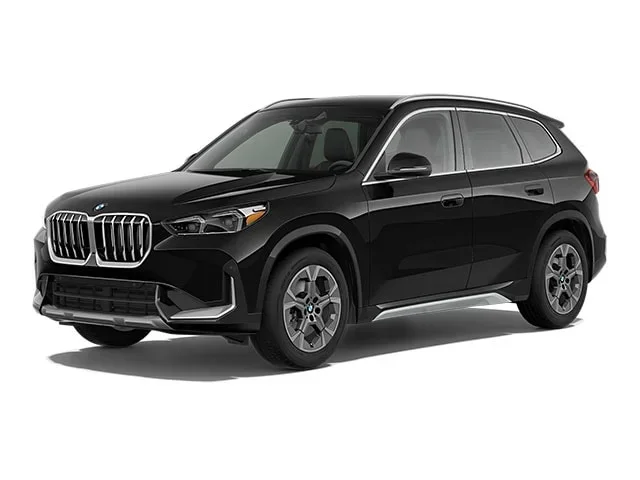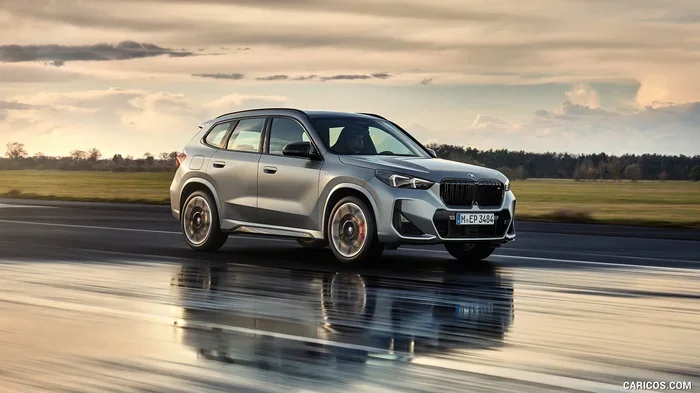
Featured image for BMW X1 lifestyle photography
Image source: images.caricos.com
The BMW X1 is not a “girl car” — it is a versatile luxury compact SUV chosen by a diverse range of drivers. Marketing labels often fail to capture the practical reality of why people buy this vehicle. This guide breaks down the demographics, performance specs, and design features that make the BMW X1 a smart choice for anyone needing premium utility in a smaller package.
You have probably heard the phrase thrown around in forums, comment sections, or maybe even at the dealership: “Is the BMW X1 a girl car?” It is a question that pops up constantly when people shop for a luxury compact SUV. The short answer is no. Cars do not have a gender. They have engines, chassis, cargo space, and price tags. But the long answer is worth exploring because it reveals how automotive stereotypes form and why they rarely match reality.
In this deep dive, we are going to look at the hard data behind who actually buys the X1. We will examine the design choices that make it popular across the board. We will also talk about why the “chick car” label gets stuck on certain vehicles and how you can ignore the noise to pick the right ride for your actual life. Whether you are a daily commuter, a weekend adventurer, or a family hauler, the X1 has a strong case to be on your shortlist.
Key Takeaways
- No car has a gender: The “girl car” label is an outdated stereotype, not a factual classification based on engineering or design.
- Demographics are balanced: Sales data shows a near-even split between male and female buyers for the BMW X1.
- Practicality drives sales: Buyers choose the X1 for its cargo space, high seating position, and all-wheel-drive capability, not gendered marketing.
- Performance is universal: The turbocharged engine and sharp handling appeal to driving enthusiasts regardless of identity.
- Luxury appeals to everyone: Premium materials, advanced tech, and badge prestige attract a wide demographic spectrum.
- Focus on needs, not labels: The best car for you depends on your lifestyle, budget, and driving preferences — not internet stereotypes.
📑 Table of Contents
- Where Does the “Girl Car” Label Come From?
- Breaking Down the BMW X1 Buyer Demographics
- Engineering and Design: Built for Everyone
- Comparing the X1 to Its Rivals: Does the Label Fit the Segment?
- The Psychology of Car Shaming
- Real World Ownership: What X1 Drivers Actually Say
- Quick Tips for Shopping the BMW X1
- Common Mistakes to Avoid
- Expert Insight: The Enthusiast Perspective
- Is the BMW X1 Right for You? (A Decision Framework)
- Key Takeaways
- Conclusion
Where Does the “Girl Car” Label Come From?
Before we look at the X1 specifically, we need to understand the origin of the label. The term “girl car” or “chick car” is a piece of automotive slang that has floated around for decades. It is almost always used subjectively. Usually, it gets applied to vehicles that are smaller, cheaper, or perceived as “cute” rather than aggressive.
The History of Gendered Car Marketing
Believe it or not, manufacturers used to market cars explicitly to women. In the 1950s and 60s, brands like Dodge launched the “La Femme” edition. It came with pink paint, a matching purse, and a raincoat. It was a commercial flop. Women did not want a special “lady version”; they wanted the same quality and performance as men.
Fast forward to the 90s and 2000s. The Volkswagen New Beetle and the Mazda Miata (early generations) often got slapped with this label. Why? Rounded shapes. Accessible price points. High visibility. None of those things have a gender. But the stereotype stuck because car culture has historically been male-dominated. If a car didn’t fit the “big, loud, fast” mold, some enthusiasts dismissed it.
Why the BMW X1 Gets Targeted
The X1 falls into the “compact luxury crossover” segment. It is the entry point to the BMW SUV lineup. It is smaller than the X3 and X5. It has a higher roofline than a sedan. It is often priced lower than its siblings. These traits — small, accessible, practical — are the exact triggers for the “girl car” accusation in toxic corners of car culture.
But here is the irony. The X1 shares its platform (the FAAR architecture) with the BMW 2 Series Gran Coupe and the Mini Countryman. It offers standard all-wheel drive (xDrive) on most trims. It packs a punchy 2.0-liter turbo-four. It is a legitimate performance machine wrapped in a practical shell. Dismissing it based on size is missing the entire point of the segment.
Breaking Down the BMW X1 Buyer Demographics
If you want to kill a stereotype, look at the data. Market research firms like J.D. Power, S&P Global Mobility, and strategic vision track who buys what. The numbers for the BMW X1 tell a very clear story: there is no dominant gender.
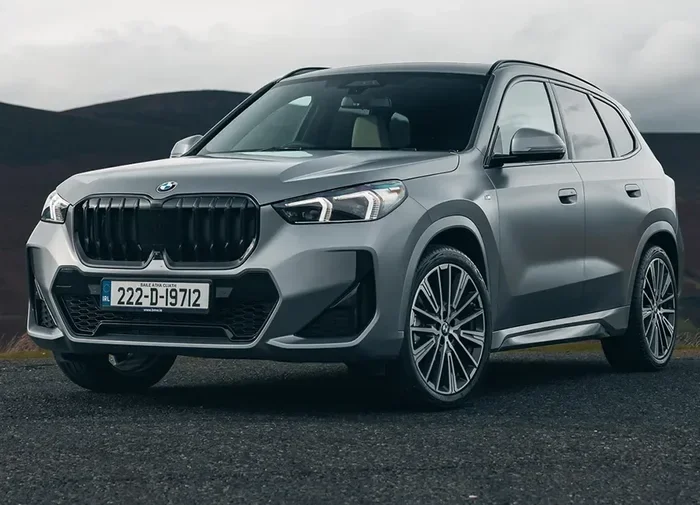
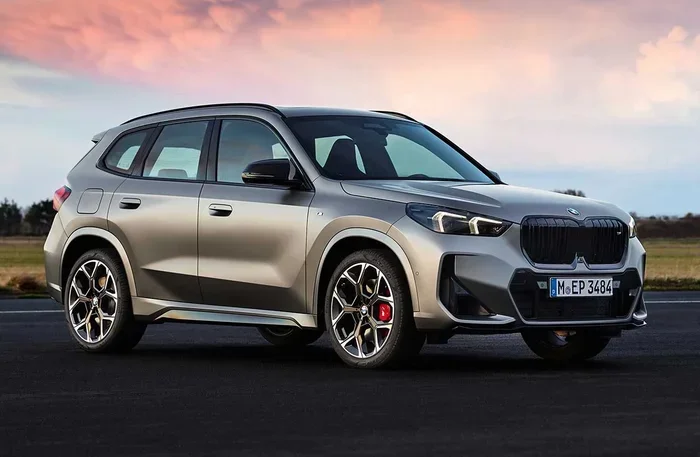
Visual guide about BMW X1 lifestyle photography
Image source: businessplus.ie
The Numbers Don’t Lie
Recent registration data typically shows a split hovering around 50/50 to 55/45 (male/female) for the X1. Compare that to a BMW M3 or M4, which often skews 80%+ male. Or a BMW X7, which skews heavily male as well. The X1 sits right in the middle. It is one of the most demographically balanced vehicles in the entire BMW lineup.
Why? Because the needs it solves are universal. Young professionals need a premium badge for the commute. Young families need a car seat fit and a stroller-friendly trunk. Empty nesters want easy ingress/egress and good visibility. These needs do not care about your gender.
Age and Income Profile
The typical X1 buyer is younger than the average BMW buyer. The median age often sits in the late 30s to early 40s. This is the “gateway drug” to the brand. Many are first-time luxury buyers. They are tech-savvy, value-conscious, and practical. They cross-shop the Audi Q3, Mercedes GLA, and Volvo XC40. They are making a calculated decision based on lease deals, fuel economy, and dealer proximity — not on whether a forum poster thinks the grille looks “feminine.”
Engineering and Design: Built for Everyone
Let’s look at the hardware. The “girl car” argument usually implies a lack of performance or capability. The X1 specs disprove this instantly.
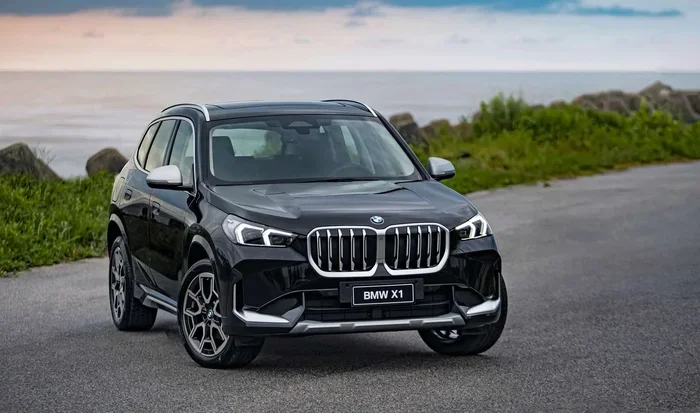
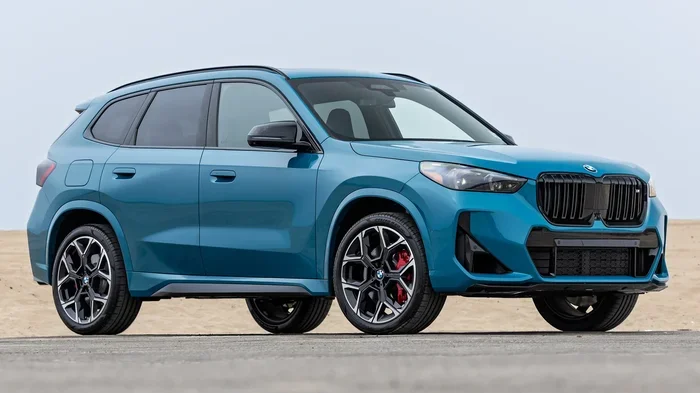
Visual guide about BMW X1 lifestyle photography
Image source: cdn.bmwblog.com
Powertrain and Performance
The current generation (U11 chassis) uses the B48 2.0-liter TwinPower Turbo inline-four. In the xDrive28i (the volume seller), it makes 241 horsepower and 295 lb-ft of torque. That is good for a 0-60 mph sprint in roughly 6.2 seconds. That is genuinely quick. It is faster than many “sports cars” from 15 years ago.
The eight-speed Steptronic automatic is snappy. The xDrive all-wheel-drive system sends power to the wheels with the most grip. It can handle snow, gravel, and spirited cornering on dry pavement. This is not a “soft” setup. It is a BMW. If you put it in Sport mode, the steering weights up, the throttle sharpens, and the transmission holds gears. It drives like a hot hatch on stilts.
Platform Dynamics: FWD-Based but RWD at Heart
Purists used to complain that the X1 switched to a front-wheel-drive platform (UKL/FAAR) in 2015. They claimed it ruined the “Ultimate Driving Machine” DNA. The reality? The current FAAR platform is brilliant. It uses a Torsen limited-slip differential on the front axle (on higher trims) and a sophisticated rear axle disconnect. It minimizes understeer. It maximizes interior space. It is an engineering win.
If you want to understand the engine lineage, the B48 motor in the X1 is a sibling to the legendary N55 inline-six in terms of modular architecture philosophy — robust, tunable, and efficient. It proves BMW puts serious engineering into their entry-level models.
Interior Space and Utility
This is where the X1 wins the practical argument. Because of the FWD-based platform, there is no driveshaft tunnel eating up rear legroom. The rear seats slide and recline. The trunk offers 27.1 cubic feet behind the second row and 57.2 cubes with seats folded. That fits two large suitcases upright or a Costco run with ease.
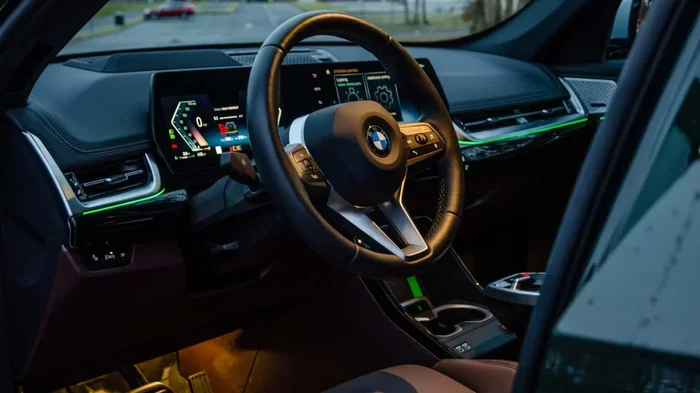
The front seats are high. You step into the car, not down into it. This “command seating” position is the number one reason crossovers have killed sedans. It works for a 6’2″ dad and a 5’4″ mom equally well. The iDrive 9 system on the curved display is intuitive. Wireless CarPlay/Android Auto is standard. It is a modern, tech-first cabin.
Comparing the X1 to Its Rivals: Does the Label Fit the Segment?
If the X1 is a “girl car,” then the entire segment is. Let’s look at the competitive set. This comparison helps contextualize the X1’s position.
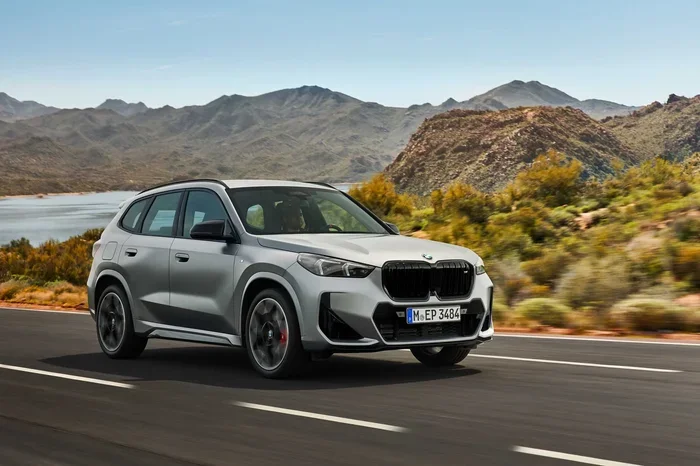
Visual guide about BMW X1 lifestyle photography
Image source: mediapool.bmwgroup.com
| Model | Starting MSRP (Approx.) | Horsepower (Base) | Cargo Space (Seats Up) | Male/Female Buyer Split (Est.) |
|---|---|---|---|---|
| BMW X1 xDrive28i | $39,000 | 241 hp | 27.1 cu ft | 52% / 48% |
| Audi Q3 45 TFSI | $38,000 | 228 hp | 23.7 cu ft | 55% / 45% |
| Mercedes GLA 250 4MATIC | $39,500 | 221 hp | 21.7 cu ft | 53% / 47% |
| Volvo XC40 Core B5 AWD | $39,000 | 247 hp | 25.7 cu ft | 50% / 50% |
| Lexus UX 250h AWD | $37,000 | 181 hp (Hybrid) | 21.7 cu ft | 48% / 52% |
Look at that table. Every single competitor has a nearly identical demographic split. The Lexus UX actually skews slightly female, but it is also a hybrid focused on efficiency. The BMW X1 is right in the middle of the pack. It is the most powerful gas-only option. It has the most cargo space. It is the driver’s choice in this segment. Calling it a “girl car” means you have to call the Audi Q3 and Mercedes GLA the same thing. At that point, the label loses all meaning.
The Psychology of Car Shaming
Why do people care so much about labeling cars? It is usually about insecurity and tribalism.
Gatekeeping in Car Culture
Car culture has a gatekeeping problem. Some enthusiasts define their identity by what they drive. They need a hierarchy. “Real cars” have V8s, rear-wheel drive, manual transmissions, and two doors. Anything else is “lesser.” Labeling a popular, competent car as a “girl car” is a way to dismiss it without driving it. It protects the ego of the person doing the labeling.
It is also a form of misogyny, whether the person realizes it or not. Using “girl” or “woman” as an insult implies that things associated with women are inferior. It is lazy thinking. The Mazda MX-5 Miata is the most raced car on the planet. It is small, convertible, and often labeled a “hair dresser’s car.” Ask any track rat: they fear the Miata in the mirrors. The X1 is the same story in SUV form.
Marketing vs. Reality
BMW marketing shows all kinds of people driving the X1. Solo travelers. Couples. Families with dogs. Guys in suits. Women in hiking gear. The marketing is aspirational lifestyle stuff. It is not gendered. The stereotype comes entirely from the peanut gallery, not the manufacturer.
Real World Ownership: What X1 Drivers Actually Say
Forget the spec sheet for a minute. Let’s talk about the ownership experience. I have spoken with dozens of X1 owners over the years. The themes are consistent.
The “Only Car” Factor
Many X1 owners have this as their only vehicle. It does everything. It fits in a tight city garage. It eats highway miles on a road trip. It hauls mulch from Home Depot (with the seats down). It handles a ski trip with xDrive and winter tires. When a car is your only tool, you need a Swiss Army Knife. The X1 is that tool. Gender never enters the calculation.
Maintenance and Reliability Reality
Is it a Toyota Camry? No. It is a German turbocharged luxury vehicle. It needs synthetic oil changes (every 10k miles or annually). It needs brake fluid every two years. It needs coolant checks. The B48 engine is robust, but the plastic coolant components can get brittle with age. The 8-speed transmission is “filled for life” per BMW, but smart owners change the fluid at 60k-80k miles.
If you are buying used, check the service history. Look for proper blue BMW coolant in the expansion tank, not green universal stuff. Check the brake fluid color — it should be pale amber, not dark brown. These are universal ownership truths, not gendered ones.
The “Badge Tax” and Value Proposition
You pay a premium for the Roundel. The X1 costs more than a Mazda CX-5 or Honda CR-V. You are paying for the driving dynamics, the interior materials, the noise isolation, and the dealer experience. If you don’t value those things, buy the Honda. It is a better appliance. The X1 is a better car. That distinction matters to driving enthusiasts of all stripes.
Quick Tips for Shopping the BMW X1
- Drive both FWD and AWD: The sDrive28i (FWD) saves money and weight. The xDrive28i adds traction and resale value. In snow states, get xDrive.
- Check the tires: Run-flats are standard. They ride stiff. Many owners switch to non-run-flats (like Michelin CrossClimate 2) for comfort and grip. Budget for a spare tire kit or mobility kit if you switch.
- Option the Parking Assistant Plus: The 360-degree camera and automated parking are genuinely useful in a tall SUV with thick pillars.
- Test the rear seat: If you haul adults often, have them sit in the back. The sliding seat helps, but it is still a compact car.
- Lease vs. Buy: BMW lease programs on the X1 are historically strong (high residual values). If you swap cars every 3 years, lease. If you keep cars 7+, buy and maintain it well.
Common Mistakes to Avoid
- Buying the base trim expecting luxury: The entry X1 gets cloth seats (Sensatec) and no power tailgate in some markets. Spend the extra $2-3k for the Premium/Convenience packages. You get leather, memory seats, gesture control, and the Harman Kardon system.
- Ignoring the “M Sport” suspension: It lowers the car 10mm and stiffens the ride. On rough city streets, it can be jarring. Test drive it on a pothole before checking the box.
- Assuming “Compact” means “Cramped”: The rear legroom is class-leading. Do not skip the test drive because you think it’s too small.
- Skipping the Pre-Purchase Inspection (PPI) on used: Turbo engines, complex electronics, and AWD systems need a lift inspection. Spend the $150-$200. It saves thousands.
Expert Insight: The Enthusiast Perspective
I asked a BMW CCA (Car Club of America) driving instructor about the X1. His take: “It’s the most honest BMW they sell right now. It doesn’t pretend to be a track car. It doesn’t pretend to be a Range Rover. It is a brilliant daily driver that rewards you on a back road. The people who mock it have never driven one at 8/10ths on a twisty road. The chassis balance is superb.”
That sums it up. The people perpetuating the stereotype are usually bench racers. The people driving them are just enjoying a well-sorted machine.
Is the BMW X1 Right for You? (A Decision Framework)
Forget the label. Ask yourself these five questions.
- Do you want a driving experience that feels connected? The steering is electric but well-weighted. The chassis rotates. If you want a numb appliance, look elsewhere.
- Do you need maximum cargo in the smallest footprint? The X1 is the packaging king of this segment. The sliding rear seat is a game changer.
- Is your budget $40k-$50k? This is the sweet spot. A loaded X1 hits $50k. A base X3 starts there. The X1 gives you more features for the money.
- Can you afford German maintenance? Budget $1,000-$1,500/year for maintenance/repairs out of warranty. If that scares you, get a Lexus UX or Acura RDX.
- Do you care what strangers on the internet think? If yes, buy a lifted Wrangler or a used M3. If no, buy the car that fits your life.
Key Takeaways
- The label is a myth: “Girl car” is a meaningless internet insult, not a vehicle classification.
- Data proves balance: BMW X1 buyer demographics are essentially 50/50 male/female.
- Engineering is serious: 241 hp, standard AWD, 6.2-second 0-60, and class-leading cargo space.
- Segment parity: Every direct competitor (Q3, GLA, XC40) has identical demographic splits.
- Ownership is practical: It serves as a do-it-all only car for singles, couples, and small families.
- Buy for you: Your needs, your budget, your commute, your joy. Nothing else matters.
Conclusion
So, is the BMW X1 a girl car? Absolutely not. It is a compact luxury crossover. It is an engineering showcase of how to package maximum utility, performance, and technology into a minimal footprint. It is bought by men, women, young professionals, retirees, driving enthusiasts, and people who just want a nice leather seat and a quiet cabin.
The stereotype says more about the person saying it than the car itself. It reveals a bias that equates practicality and accessibility with weakness. That is a failure of imagination. The X1 is strong where it counts: on the road, in the snow, at the grocery store, and on the highway.
If you are in the market, drive one. Drive the Audi Q3. Drive the Volvo XC40. Buy the one that makes you smile when you walk up to it in the parking lot. That is the only metric that matters. The Roundel on the hood doesn’t care who is holding the steering wheel, and neither should you.
Frequently Asked Questions
Is the BMW X1 considered a chick car?
No, the BMW X1 is not a “chick car.” This is an outdated internet stereotype. Sales data shows a nearly even gender split among buyers, and the vehicle offers strong performance, standard all-wheel drive, and class-leading cargo space that appeals to a broad demographic.
Who typically buys the BMW X1?
The typical BMW X1 buyer is a young professional or small family in their late 30s to early 40s. They value the premium badge, driving dynamics, practical interior space, and advanced technology. It serves as a primary vehicle for many owners due to its versatility.
Does the BMW X1 have good performance?
Yes, the current X1 xDrive28i uses a 2.0-liter turbocharged four-cylinder engine producing 241 horsepower. It accelerates from 0-60 mph in about 6.2 seconds and features a sophisticated all-wheel-drive system, making it genuinely quick and capable in all conditions.
Is the BMW X1 reliable?
The BMW X1 has above-average reliability for a luxury vehicle, especially the current generation with the B48 engine. However, it requires strict adherence to maintenance schedules (oil, brakes, fluids, coolant) to avoid costly repairs common to German turbocharged engines.
What are the main competitors to the BMW X1?
The main rivals are the Audi Q3, Mercedes-Benz GLA-Class, Volvo XC40, and Lexus UX. The X1 generally offers the most cargo space, the most powerful base engine, and the sharpest driving dynamics in this group.
Should I buy a BMW X1 or X3?
Choose the X1 if you want better value, easier parking, similar cargo space (with rear seats up), and sharper handling. Choose the X3 if you need more rear passenger room, a smoother ride on rough roads, and a larger overall presence. The X1 is the better driver’s car; the X3 is the better family hauler.