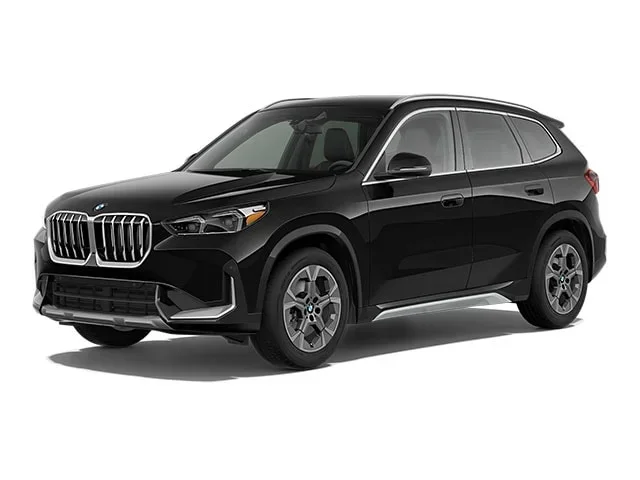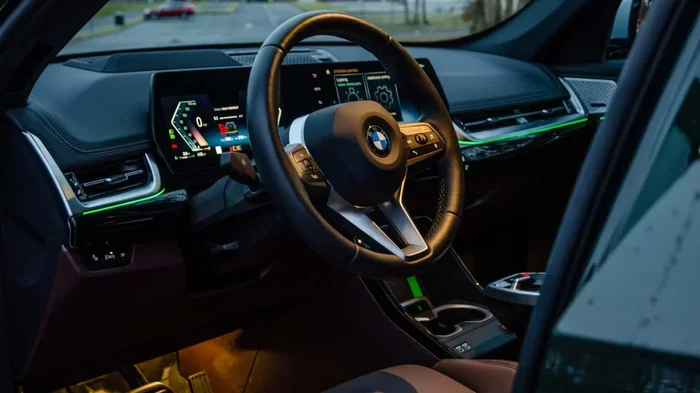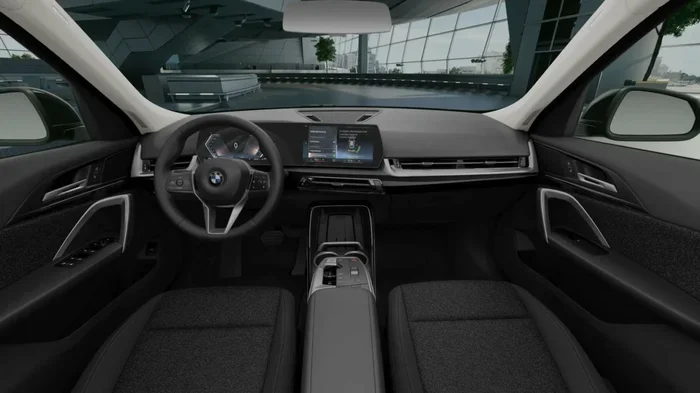
Featured image for BMW X1 configurator interior
Image source: cdn.bmwblog.com
Learning how to spec a BMW X1 ensures you get the exact features you need without overspending on options you will rarely use. This comprehensive guide walks you through every critical decision, from choosing between sDrive and xDrive to selecting the right packages like Premium and Technology. We break down engine choices, essential safety tech, and interior upgrades so you can build a compact SUV that fits your lifestyle and budget perfectly.
Buying a new car is exciting, but the configurator page can feel overwhelming. There are so many boxes to tick, packages to decode, and prices climbing with every click. If you are staring at the screen wondering where to start, you are not alone. This guide is designed to simplify the process. We will walk through every major decision point so you can build a car that feels tailor-made for you.
The current generation BMW X1 (U11 chassis) is a fantastic compact SUV. It offers more space, better tech, and sharper driving dynamics than ever before. But because it is so customizable, two X1s parked next to each other can feel like completely different cars. One might be a firm-riding, track-ready M35i, while the other is a plush, efficient xDrive23i xLine. Knowing how to spec a BMW X1 means understanding which differences actually matter to your daily life.
Key Takeaways
- Start with the trim: The xLine and M Sport trims offer distinct looks and standard equipment; pick the vibe you prefer first.
- Drivetrain matters: Choose xDrive for all-weather traction or sDrive for better fuel economy and a lower price.
- Engine choice defines the drive: The 2.0-liter turbo in the xDrive23i and M35i hits the sweet spot for daily driving performance.
- Packages bundle value: The Premium and Technology packages add high-resale-value features like heated seats, a head-up display, and advanced parking aids for less than standalone pricing.
- Don’t skip driver assists: The Driving Assistance Professional package adds adaptive cruise control and lane keeping, reducing fatigue on long trips.
- Wheels change the ride: Larger 19 or 20-inch wheels look great but ride firmer; 18-inch wheels offer the best comfort.
- Color and interior combos: Lighter interiors like Vernasca Leather in Mocha or Oyster modernize the cabin but show wear faster than black.
📑 Table of Contents
- Understanding the BMW X1 Trim Strategy
- Choosing Your Drivetrain: sDrive vs. xDrive
- Picking the Right Engine: 18i, 20i, 23i, or M35i?
- Essential Packages: Where the Real Value Lives
- Standalone Options: The “A La Carte” Decisions
- Common Mistakes to Avoid When Speccing
- Expert Tips for Getting the Best Value
- Putting It All Together: Three Sample Builds
- Final Thoughts on Your X1 Spec
Understanding the BMW X1 Trim Strategy
Before you pick a paint color or wheel design, you have to choose your “trim.” In the US market, BMW has simplified the lineup significantly. You essentially have three main starting points. Each one sets the baseline for your styling, suspension tuning, and standard features.
The xLine Trim: Balanced and Polished
The xLine is the volume seller for a reason. It projects a rugged, SUV-ready stance with specific exterior trim elements like silver roof rails and unique front bumper inserts. Inside, you get specific upholstery options and interior trim strips that lean towards a modern, lifestyle aesthetic.
- Standard 18-inch wheels (usually aerodynamic styling).
- Roof rails in High-Gloss Black or Aluminum (depending on package).
- Specific seat upholstery combinations (Vernasca leather or Sensatec).
- Standard adaptive LED headlights.
This is the trim to choose if you want a premium family hauler that looks the part without screaming “sport sedan.” It rides well on the standard suspension and comes very well equipped out of the gate.
The M Sport Trim: Athletic Stance
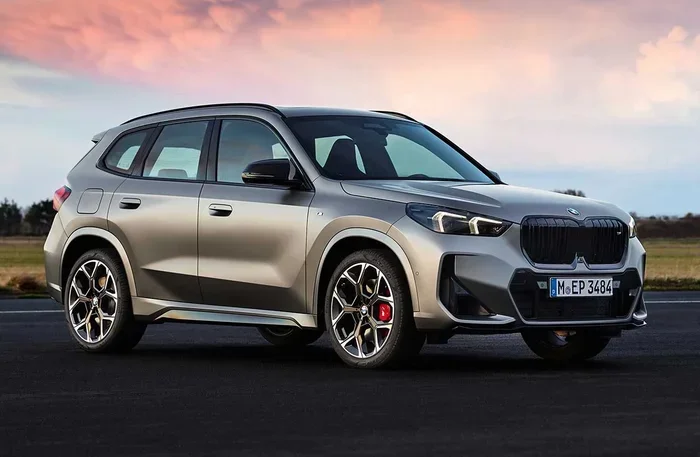
If you want your X1 to look lower, wider, and more aggressive, the M Sport trim is the answer. It adds the M Aerodynamics package (larger air intakes, side skirts, rear diffuser), Shadowline exterior trim (black window surrounds), and M-specific badging.
- M Sport suspension (lowered and stiffened) – standard on M35i, optional on others.
- M Sport steering wheel (thicker rim, leather grip, red stitching option).
- M-specific pedals and door sill plates.
- 19-inch M Light Alloy wheels standard (20s optional).
Expert Insight: The M Sport suspension is firmer. If you live in an area with rough roads or potholes, test drive an M Sport model on bad pavement before committing. The standard xLine suspension is noticeably more compliant.
The M35i xDrive: The Performance Flagship
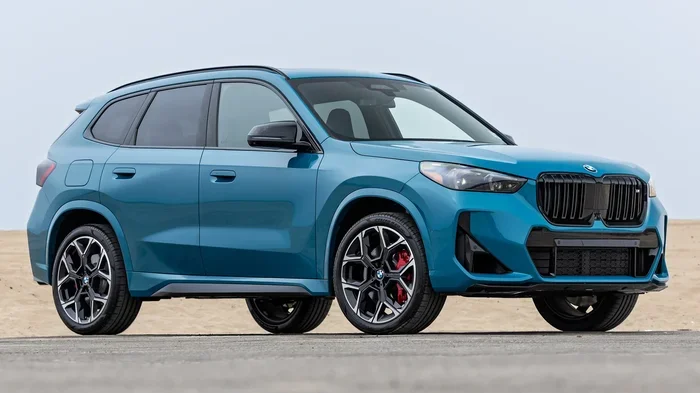
This isn’t just a trim; it’s a different engine tier. The M35i gets the 312-hp version of the B48 2.0-liter turbo-four. It comes exclusively with xDrive and the 7-speed Dual Clutch Transmission (DCT). It includes the M Sport suspension, M Sport brakes (blue calipers), M Sport differential, and a specific exhaust note.
If you want the quickest X1 (0-60 in roughly 5.2 seconds), this is the only choice. However, it commands a significant price premium over the 23i models. For a deeper look at where this engine ranks in the lineup, check out our guide on the most powerful BMW models.
Choosing Your Drivetrain: sDrive vs. xDrive
This is the single biggest mechanical decision you will make. BMW uses “sDrive” for Front-Wheel Drive (FWD) and “xDrive” for All-Wheel Drive (AWD). The price difference is usually around $2,000.

Visual guide about BMW X1 configurator interior
Image source: cdn.yeecar.com.au
When to Choose sDrive (FWD)
Modern FWD platforms are incredibly capable. The X1 uses the FAAR architecture, which puts the engine transversely. The front wheels handle both power and steering.
- You live in the Sun Belt: Florida, Texas, Southern California, Arizona. You rarely see snow or ice.
- You prioritize MPG: sDrive models are lighter and have less drivetrain loss. You gain 1-2 MPG combined.
- You want max interior space: Deleting the rear driveshaft and differential frees up a tiny bit of rear footwell space and lowers the load floor slightly.
- Lower maintenance: Fewer components (no transfer case, rear diff, driveshaft) mean fewer things to service long-term.
When to Choose xDrive (AWD)
BMW’s xDrive system is rear-biased in feel but front-biased in architecture. It can send up to 100% of torque to either axle. It uses an electro-hydraulic clutch pack for near-instant reaction.
- You see winter weather: Snow, ice, slush, or even heavy rain. The traction advantage pulling away from a stoplight is massive.
- You drive unpaved roads: Gravel, dirt, grass parking lots. xDrive prevents the front wheels from spinning helplessly.
- Resale value: In northern states, xDrive cars sell faster and hold value better. In southern states, the gap narrows.
- Towing: If you plan to use the max towing capacity (around 2,000-2,400 lbs depending on engine), xDrive provides much better stability.
Quick Tip: If you choose sDrive, spend the savings on a dedicated set of winter tires. A FWD car on winter tires outperforms an AWD car on all-seasons in snow braking and cornering.
Picking the Right Engine: 18i, 20i, 23i, or M35i?
BMW’s naming convention used to indicate displacement. Now, the number indicates performance tier. Decoding BMW vehicle designations helps clarify this, but here is the short version for the X1.

Visual guide about BMW X1 configurator interior
Image source: cdn.bmwblog.com
xDrive18i / sDrive18i (Entry Level)
This is the 1.5-liter 3-cylinder (B38). It makes roughly 154 hp and 170 lb-ft. It uses a 7-speed Dual Clutch Transmission (DCT).
- Pros: Lowest price, best fuel economy (mid-30s MPG highway), peppy around town thanks to turbo torque.
- Cons: Gets noisy at highway speeds; passing power on the interstate requires planning; 3-cylinder vibration at idle.
- Verdict: Great for city dwellers who rarely hit the highway. Skip if you do frequent road trips.
xDrive23i / sDrive23i (The Sweet Spot)
This uses the 2.0-liter 4-cylinder (B48) making 241 hp and 295 lb-ft. It uses the same 7-speed DCT. This is the engine most buyers should get.
- Pros: Smooth, quiet, punchy mid-range torque, 0-60 in ~6.2 seconds, decent MPG (low 30s combined).
- Cons: Costs more upfront; requires premium fuel.
- Verdict: The Goldilocks engine. It transforms the X1 from “adequate” to “genuinely fun.”
M35i xDrive (The Enthusiast Choice)
Same 2.0-liter B48, tuned to 312 hp and 295 lb-ft (overboost to 317 lb-ft). Uses a reinforced 7-speed DCT.
- Pros: Genuine sports car speed, standard M Sport Diff, better brakes, exhaust sound.
- Cons: Firm ride, premium fuel only, higher insurance, price approaches X3 territory.
- Verdict: Buy this if you drive enthusiastically on weekends. Otherwise, the 23i is 90% of the experience for 75% of the price.
Essential Packages: Where the Real Value Lives
BMW loves packages. They bundle popular options together at a discount compared to ordering them individually. On the X1, there are three main packages you need to understand. Getting these right is the core of how to spec a BMW X1 intelligently.

Visual guide about BMW X1 configurator interior
Image source: tadvantagebetaprod-com.cdn-convertus.com
1. The Premium Package (Highly Recommended)
This is the “comfort and convenience” bundle. It typically includes:
- Heated Front Seats: Essential in 80% of the US. Even in the South, winter mornings are cold.
- Heated Steering Wheel: Once you have it, you never want a car without it.
- Panoramic Glass Roof: Opens up the cabin significantly. Includes a power sunshade.
- Power Tailgate with Hands-Free Access: Kick under the bumper to open. A lifesaver with grocery bags.
- Auto-Dimming Mirrors: Inside and out. Reduces glare at night.
- Ambient Lighting: Configurable LED strips in doors and dash. Adds a premium night vibe.
If you skip this, you lose the sunroof and heated seats (usually). The resale hit for missing a sunroof on a premium compact SUV is real. Just get the package.
2. The Technology Package (Highly Recommended)
This upgrades the screens and smarts. The base car has a decent setup, but this package brings it to 2024 standards.
- Head-Up Display (HUD): Projects speed, nav arrows, and speed limits onto the windshield. A safety feature disguised as a tech toy.
- Wireless Charging Tray: Larger tray with better cooling. Includes a signal booster antenna for better reception.
- Harman Kardon Surround Sound: 12 speakers, 360W. The base stereo is “okay”; this is “great.”
- Parking Assistant Plus: Adds Surround View cameras (3D view), Remote 3D View (check car via phone app), and Parking Assistant Professional (automated parallel/perpendicular parking).
The HUD and Surround View cameras alone justify this package. Parking a car with thick C-pillars (like the X1) without a 360-degree camera is stressful.
3. The M Sport Package (Standard on M Sport Trim)
If you pick the xLine trim, you can add the M Sport Package as an option. It brings the visual upgrades (bumpers, wheels, steering wheel, seats) but not the M Sport suspension or M Sport brakes (usually). It is a cosmetic package on the lower trims.
On the M35i, this content is standard. On the 23i, it adds roughly $3,000-$4,000. It looks fantastic and the M Sport seats (with adjustable thigh support and bolsters) are significantly better for spirited driving than the standard comfort seats.
Standalone Options: The “A La Carte” Decisions
Even with packages, there are critical standalone options. These are the items that define the daily experience.
Exterior Paint: Metallic vs. Non-Metallic
Non-metallic (Alpine White, Jet Black, Sapphire Black) are free. Metallic paints (Phytonic Blue, Cape York Green, Utah Orange, Space Silver, Black Sapphire, Mineral White) cost ~$550-$650.
- Resale: Metallic colors generally hold value better and photograph better for listings.
- Maintenance: Dark metallics show swirls and scratches easier. White hides dust and scratches best.
- Style: The X1 looks best in Phytonic Blue, Cape York Green, or Space Silver. They highlight the body creases.
Wheels: Size vs. Comfort
This is a trade-off you feel every mile.
| Wheel Size | Typical Availability | Ride Quality | Handling | Visual Impact | Tire Cost (Replacement) |
|---|---|---|---|---|---|
| 18-inch | Standard xLine / Base | Best (Most sidewall) | Good | Conservative | Lowest ($) |
| 19-inch | Standard M Sport / Opt xLine | Firm (Less sidewall) | Better turn-in | Sporty / Balanced | Medium ($$) |
| 20-inch | Opt M Sport / M35i | Harsh (Low profile) | Sharpest | Aggressive / “Pimped” | Highest ($$$) |
Recommendation: Stick to 18s or 19s. 20-inch tires on a compact SUV with short sidewalls are prone to pothole damage and transmit every road imperfection. Also, note that the X1 comes standard with BMW run-flat tires. You don’t get a spare tire. Run-flats allow you to drive 50 miles at 50 mph after a puncture, but they ride stiffer than standard tires. Many owners swap to non-run-flats at first replacement and carry a mobility kit.
Interior Upholstery: Leather vs. Sensatec vs. Veganza
BMW is moving away from traditional leather in entry trims.
- Sensatec: High-quality vinyl. Standard on base/xLine. Durable, easy to clean, looks good. No animal products.
- Vernasca Leather: Real leather. Included in Premium Package on xLine; Standard on M Sport. Softer, breathes better, develops patina. Requires conditioning.
- Veganza: Newer premium synthetic. Perforated, very leather-like. Often on M Sport models as a no-cost option or standard in some markets.
Color Choice: Black is safe. Mocha, Oyster, or Cognac (if available) transform the cabin, making it feel larger and more expensive. Warning: Light colors show dye transfer from blue jeans and wear on bolsters faster. If you keep cars 7+ years, black or dark Vernasca is safer.
Driver Assistance Professional (The Safety Net)
This is often a standalone option or part of a higher “Driving Assistance” package depending on the model year configurator. It adds:
- Active Cruise Control with Stop & Go: Maintains distance in traffic jams. Essential for commuters.
- Steering and Lane Control Assistant: Keeps you centered in the lane on highways. Hands-on detection via capacitive steering wheel.
- Traffic Jam Assistant: Hands-free driving (eyes on road) under 40 mph in traffic.
- Evasion Aid & Cross-traffic Alert: Helps steer around obstacles; warns of crossing traffic when reversing.
If you do any highway driving, buy this. It reduces driver fatigue dramatically. It is the difference between arriving stressed and arriving relaxed.
M Sport Brakes (Red/Blue Calipers)
On the 23i models, you can often option the M Sport brakes (larger rotors, 4-piston front calipers, usually Red or Blue). They look great behind open-wheel designs and resist fade better. If you drive in mountains or tow, get them. For flatland daily driving, standard brakes are fine.
Adaptive Suspension (M Adaptive Suspension)
Available on M Sport and M35i models. Electronically controlled dampers with Comfort, Sport, and Adaptive modes.
- Comfort mode: Soaks up bumps better than the standard M Sport passive suspension.
- Sport mode: Firms up for canyon carving.
If you picked the M Sport trim for the looks but want a compliant ride for family duty, you must check this box. Without it, the M Sport passive suspension is stiff 24/7.
Common Mistakes to Avoid When Speccing
Even smart buyers fall into these traps on the configurator. Here is how to dodge them.
Mistake 1: Skipping the Panoramic Sunroof (Premium Package)
You think, “I never open it.” Buyers think, “Does it have a sunroof?” At trade-in, a missing sunroof on a $50k+ SUV is a red flag. It kills the airy feel of the cabin. The Premium Package is the only way to get it. Do not delete it to save $2,500; you lose $3,000 at resale.
Mistake 2: Getting 20-Inch Wheels for “The Look”
They look amazing in the brochure. On your street, with frost heaves and potholes, you will bend wheels and crack run-flats. The ride quality penalty is not subtle. 19s are the visual sweet spot.
Mistake 3: Ignoring the Head-Up Display (Tech Package)
People view HUD as a gimmick. It is not. It keeps your eyes on the road. Speed limit info, navigation arrows, and collision warnings projected at eye level are genuine safety features. It is bundled in the Tech Package—don’t skip the package.
Mistake 4: Overlooking the “Executive” or “Ultimate” Package (If Available)
Some model years/regions offer a top-tier package bundling Premium + Tech + Driving Assist + HUD + Parking Pro + Harman Kardon. If this exists on the configurator, it is almost always the best dollar-for-value click. It simplifies the build sheet and maximizes resale.
Mistake 5: Forgetting Floor Mats and Cargo Accessories
The configurator often hides “Accessories” at the very end. BMW All-Weather Floor Liners (laser measured, high walls) and the Cargo Mat are $200-$300 total. They protect your investment. Buy them with the car; they arrive installed.
Expert Tips for Getting the Best Value
You have the build sheet ready. Now, how do you pay a fair price?
Tip 1: Build It, Save It, Share It
Use the BMW USA “Build Your Own” tool. Save the configuration (creates a unique code/URL). Email this exact code to 3-5 local dealers. Say: “I have a build code [CODE]. What is your best out-the-door price on this exact configuration? I am ready to place a deposit this week.” This prevents the “well, we don’t have that exact one, but we have this one with the $3,000 Executive package you didn’t want” runaround.
Tip 2: Check Dealer Inventory First
Before custom ordering (8-12 week wait), search dealer inventory within 200 miles for your exact spec (Color / Trim / Packages). A car on the lot has “floor plan” cost pressure on the dealer. They are motivated to move it. You can often negotiate a better deal on a stock unit than a factory order.
Tip 3: Understand the Invoice vs. MSRP Spread
On the X1, the spread between Invoice and MSRP is typically 5-7%. There is less markup than on an M3 or X5. A fair deal is usually $500-$1,000 over Invoice (before incentives) or MSRP minus current BMW incentives/loyalty credits. Don’t expect massive discounts on a hot seller.
Tip 4: Lease vs. Buy Math
BMW Financial Services often subsidizes leases with high residual values and low money factors (interest rates). The X1 typically has a 58-62% residual at 36 months/10k miles. If you swap cars every 3 years, leasing is usually mathematically superior. If you keep cars 6+ years, finance it. The B48 engine in the 23i is proven reliable—check our data on the most reliable BMW models for long-term ownership peace of mind.
Tip 5: The “Ambient Air” Detail
If you option the Premium Package, you get Ambient Lighting. But the BMW Ambient Air scents (the fragrance system) is often a separate, inexpensive option (~$100-$150) or part of a specific interior package. It integrates with the climate control and lighting for a “welcome scenario.” It’s a small touch that makes the car feel special every time you unlock it.
Putting It All Together: Three Sample Builds
To visualize the strategy, here are three “Persona Builds” for the 2024/2025 X1.
Build A: The Smart Commuter (sDrive23i xLine)
- Drivetrain: sDrive (FWD) – Save $2k, better MPG.
- Paint: Alpine White (Free) – Low maintenance, high resale.
- Wheels: 18″ Aerodynamic (Standard) – Best ride, cheapest tires.
- Packages: Premium Package + Technology Package.
- Standalone: Driving Assistance Pro; All-Weather Mats.
- Interior: Sensatec Black (Standard) or Vernasca Mocha (via Premium Pkg).
- Why: Max comfort tech, min cost, efficient daily driver.
Build B: The Family All-Rounder (xDrive23i xLine)
- Drivetrain: xDrive (AWD) – Safety in weather.
- Paint: Space Silver Metallic – Hides dirt/scratches, looks premium.
- Wheels: 19″ V-Spoke (Opt on xLine) – Better look, acceptable ride.
- Packages: Premium + Technology + Driving Assistance (if separate).
- Standalone: Adaptive Suspension (if available on xLine w/ M Sport pkg) or just standard suspension; M Sport Brakes (Red calipers look sharp); Roof Rails (Standard on xLine).
- Interior: Vernasca Leather Oyster (via Premium) – Bright, airy cabin.
- Why: All-weather security, premium feel, tech safety for family.
Build C: The Enthusiast Daily (M35i xDrive)
- Drivetrain: xDrive Only.
- Paint: Phytonic Blue or Cape York Green – Shows off M bodywork.
- Wheels: 19″ M Double-Spoke (Standard) – Do NOT upgrade to 20s. Keep the ride quality.
- Packages: Everything is mostly standard. Verify Tech Pack (HUD/HK) is included or add it.
- Standalone: M Sport Brakes (Blue Calipers standard? Check year); Driving Assistance Pro.
- Interior: Veganza/Leather Black with Blue Stitching or Red Stitching.
- Why: Maximum performance, standard equipment high, no need for M Sport package add-on.
Final Thoughts on Your X1 Spec
Specifying a car is a series of compromises. Budget vs. features. Comfort vs. sportiness. Style vs. practicality. The beauty of the current X1 is that the baseline is so high. Even a “base” xLine sDrive18i with just the Premium Package is a lovely vehicle.
But if you follow the logic above—prioritizing the Premium Package for comfort/resale, the Technology Package for safety/modernity, the 2.0L engine (23i) for the best power/efficiency balance, and 18 or 19-inch wheels for ride quality—you will end up with a spec that feels expensive, drives brilliantly, and holds its value.
Don’t get paralysis by analysis. Use the “Build Your Own” tool, apply the filters we discussed, save the code, and send it to dealers. Your perfect X1 is closer than you think. Enjoy the drive.
Frequently Asked Questions
What is the difference between sDrive and xDrive on the BMW X1?
sDrive is BMW’s name for front-wheel drive (FWD), while xDrive is their all-wheel drive (AWD) system. sDrive is lighter, more fuel-efficient, and cheaper to buy. xDrive provides superior traction in snow, rain, and on loose surfaces, and generally holds resale value better in northern climates.
Which BMW X1 engine is the best value?
The xDrive23i (or sDrive23i) with the 2.0-liter turbocharged four-cylinder engine is widely considered the sweet spot. It offers 241 horsepower, smooth refinement, strong passing power, and reasonable fuel economy, making it significantly better balanced than the base 3-cylinder or the pricey M35i.
Is the BMW X1 Premium Package worth it?
Yes, the Premium Package is highly recommended. It bundles the panoramic sunroof, heated seats, heated steering wheel, power tailgate, and ambient lighting. These are high-resale-value features that are expensive or impossible to add later, and the package price is lower than adding them individually.
Should I get 19-inch or 20-inch wheels on my X1?
Stick with 19-inch wheels or the standard 18s. 20-inch wheels use low-profile run-flat tires that result in a harsh ride, increased road noise, and a much higher risk of wheel damage from potholes. 19s offer the best balance of sporty looks and daily comfort.
Does the BMW X1 come with a spare tire?
No, the BMW X1 does not come with a spare tire. It comes standard with run-flat tires that allow you to drive up to 50 miles at 50 mph after a puncture. Many owners choose to replace run-flats with standard tires later and carry a tire repair kit.
What is the most reliable BMW X1 configuration for long-term ownership?
For long-term reliability, the sDrive23i or xDrive23i with the B48 2.0-liter engine is the top pick. Avoiding the M Sport suspension (passive) and 20-inch wheels reduces wear on suspension components. The B48 engine has a proven track record of durability compared to the newer 3-cylinder or highly tuned M35i versions.