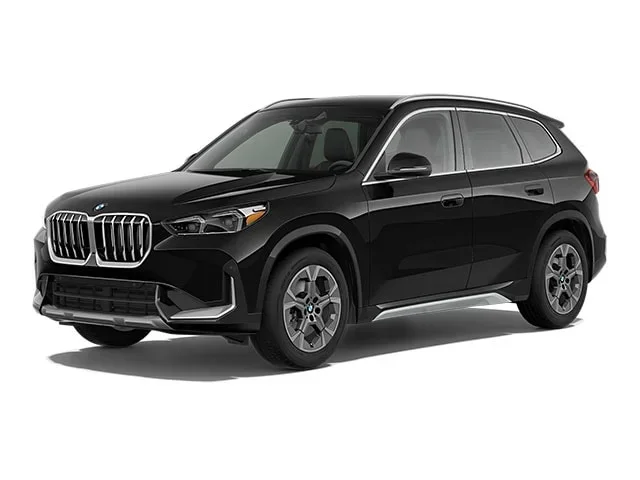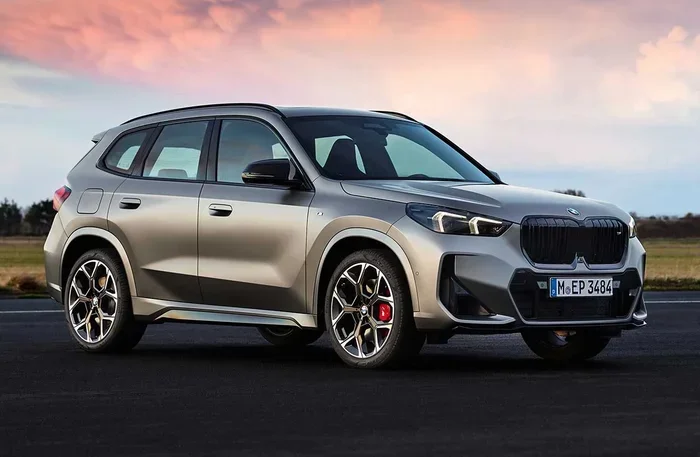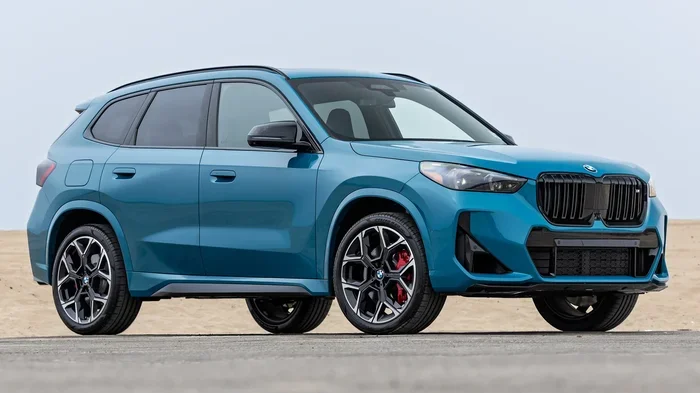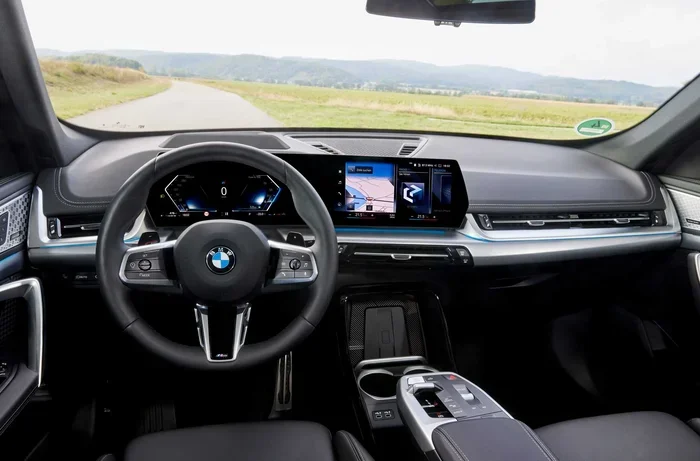
Featured image for BMW X1 xDrive dashboard controls
Image source: mediapool.bmwgroup.com
Turning on all wheel drive BMW X1 models is automatic because the xDrive system engages instantly when wheel slip is detected. You do not need to press a button to activate it. However, selecting specific driving modes like Snow or Off-Road optimizes the system for tough conditions. This guide explains how xDrive works, which modes to use, and what to do if the system malfunctions.
If you just bought a BMW X1 or are renting one for a ski trip, you might be wondering how to turn on all wheel drive BMW X1 models. You might be scanning the dashboard for a button labeled “AWD” or “4×4.” Here is the short answer: you don’t. There is no button to press. The system, called xDrive, is fully automatic. It reads the road hundreds of times per second and sends power to the wheels that have grip. This article walks you through exactly how the system works, how to use the driving modes to help it along, and what to check if you think it isn’t working.
Key Takeaways
- xDrive is always active: The system engages automatically within milliseconds when sensors detect wheel slip.
- No manual button exists: You cannot “turn on” AWD with a switch; you manage it via Driving Experience Control modes.
- Use Snow Mode for winter: This mode adjusts throttle response and torque split for icy or snowy roads.
- Off-Road Mode unlocks maximum traction: Available on equipped models, it allows more wheel slip to dig through mud or sand.
- Tires matter more than modes: Proper BMW run flat tires or winter tires are essential for xDrive to work effectively.
- Warning lights indicate issues: A “Drivetrain” or “AWD” warning light means the system has disabled itself and needs service.
- Fuel economy drops slightly: AWD adds weight and friction, so expect lower MPG compared to sDrive (FWD) models.
📑 Table of Contents
- Understanding the BMW X1 xDrive System
- Using Driving Modes to Optimize Traction
- Step-by-Step: Configuring Your X1 for Maximum Grip
- Common Misconceptions About BMW X1 AWD
- Troubleshooting: When xDrive Stops Working
- Maintenance to Keep xDrive Healthy
- BMW X1 sDrive vs xDrive: Which Should You Buy?
- Advanced Tips for Specific Scenarios
- Frequently Asked Questions (Quick Fire)
Understanding the BMW X1 xDrive System
The BMW X1 comes in two main drivetrain flavors: sDrive and xDrive. The sDrive models are front-wheel drive only. The xDrive models are all-wheel drive. If your badge says “xDrive” on the tailgate, you have the system. It is not something you switch on; it is a permanent hardware setup managed by software.
How xDrive Differs from Old School 4WD
Old trucks had a lever you pulled to lock the front and rear axles together. That was part-time four-wheel drive. You could not use it on dry pavement. The BMW xDrive system is totally different. It uses an electronically controlled multi-plate clutch pack connected to the front differential. It can send 100% of torque to the front wheels or 50% to the rear wheels instantly. It varies this split constantly based on throttle position, steering angle, wheel speed, and yaw rate.
The Hardware Behind the Magic
- Transfer Case: Mounted to the transmission, it houses the clutch pack.
- Driveshaft: Runs down the center tunnel to the rear differential.
- Rear Differential: Distributes power to the left and right rear wheels.
- Sensors: Wheel speed sensors at all four corners feed data to the DSC (Dynamic Stability Control) module.
Because the system reacts in milliseconds, you never feel it “kick in.” It prevents slip before you even know it happened.
Using Driving Modes to Optimize Traction
While you cannot turn the system on or off, you can change how aggressive it is. The Driving Experience Control switch (usually near the shifter or on the center console) changes the “personality” of the xDrive logic. This is the closest thing to a manual control you have.

Visual guide about BMW X1 xDrive dashboard controls
Image source: c8.alamy.com
Comfort Mode (Default)
This is the standard setting. The system biases power to the front wheels (often 100%) for fuel economy. It waits for slip before sending power rearward. It is smooth, quiet, and efficient for daily driving.
Sport Mode
Sport mode stiffens the steering (if you have variable sport steering) and sharpens throttle response. For xDrive, it pre-emptively sends more torque to the rear axle (often a 50/50 split or rear bias) during spirited driving. This helps rotate the car through corners. It is fun on dry roads but not ideal for deep snow.
Eco Pro Mode
Eco Pro prioritizes fuel savings. It keeps the car in front-wheel drive as long as possible. It also coasts (decouples the engine) when you lift off the throttle. Understanding what Eco Pro means on BMW models helps you realize this mode actually reduces AWD intervention to save gas. Avoid this mode in heavy snow or mud.
Quick Tip: What does Eco Pro do BMW drivers ask? It basically tells the computer: “Save fuel first, traction second.” Turn it off in winter.
Snow / Ice Mode (If Equipped)
Many newer X1 models (especially 2023+) have a dedicated Snow or Ice mode accessible via the iDrive screen or a dedicated button. This is the best setting for winter. It does three key things:
- Starts in 2nd gear (automatic transmission) to reduce wheel spin.
- Locks the center clutch earlier and more aggressively (near 50/50 split).
- Softens throttle mapping so a sneeze on the pedal doesn’t break traction.
Off-Road Mode (X1 U11 Generation 2023+)
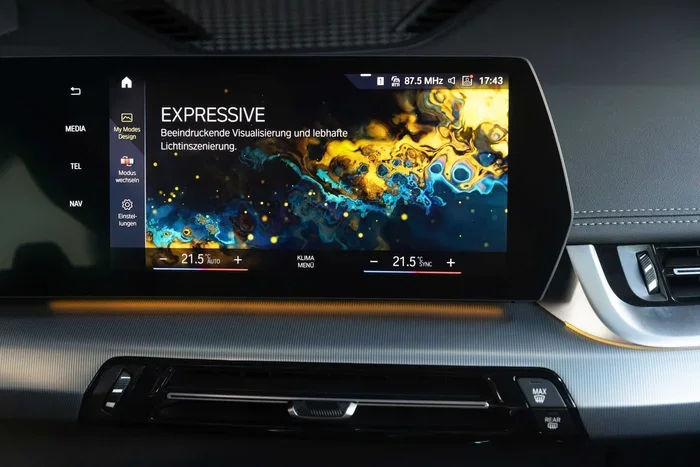
The newest X1 (U11 chassis) offers an Off-Road mode in the iDrive “My Modes” or “Experience Modes” menu. This allows controlled wheel spin. Why? Because in deep sand or mud, you need the tires to dig and clean their treads. Standard stability control would cut power the moment a wheel spins. Off-Road mode raises the threshold for intervention. It also engages Hill Descent Control automatically on steep grades.
Step-by-Step: Configuring Your X1 for Maximum Grip
Even though the system is automatic, follow this workflow when conditions get nasty. This ensures the hardware has the best chance to do its job.

Visual guide about BMW X1 xDrive dashboard controls
Image source: topdeals4wheels.com
1. Check Your Tires First
This is the single most important factor. xDrive cannot defy physics. If you have summer performance tires on ice, the best AWD system in the world will just slide you into a ditch faster. You need:
- Winter Tires (Snowflake Symbol): Mandatory below 45°F (7°C).
- All-Season Tires (M+S Rating): Okay for light snow, poor on ice.
- Tread Depth: Minimum 4/32″ for snow; 2/32″ is legal but useless in winter.
If you have run-flats, check the sidewalls for cracks. BMW run flat tires have stiff sidewalls that can feel harsh on ice; non-run-flat winter tires often perform better.
2. Select the Correct Mode
- Wet Rain: Comfort or Sport is fine.
- Packed Snow / Ice: Select Snow/Ice Mode.
- Deep Snow / Mud / Sand: Select Off-Road Mode (U11 models) or keep in Comfort with DSC ON (older F48 models).
- Steep Icy Hill: Snow Mode + Manual Gear Selection (Hold 1st or 2nd).
3. Do Not Turn Off Traction Control (Usually)
There is a button with a car and squiggly lines (DSC). Pressing it once activates DTC (Dynamic Traction Control). This allows some wheel spin to help you rock out of a parking spot. Holding it for 3+ seconds turns DSC OFF completely. Do not drive with DSC OFF on public roads. You lose stability control, brake assist, and the xDrive brain. Only use DTC (single press) if you are stuck and need to rock the car.
4. Use Manual Gear Selection on Descents
Shift the lever left into “M/S” or use paddle shifters. Downshift to 1st or 2nd gear. This uses engine braking. It keeps the drivetrain loaded, which keeps the xDrive clutch engaged, giving you maximum engine braking at all four wheels. It saves your brakes and keeps you stable.
Common Misconceptions About BMW X1 AWD
There is a lot of bad info on forums. Let’s clear up the big ones.
Visual guide about BMW X1 xDrive dashboard controls
Image source: mediapool.bmwgroup.com
Myth: “I need to press a button to engage 4WD.”
False. The system is always active. The clutch pack is hydraulic and electronic. It engages in under 100 milliseconds. By the time your brain thinks “slip,” the car has already moved torque.
Myth: “xDrive makes me invincible in snow.”
Dangerous. AWD helps you accelerate. It does not help you stop or turn better. That is 100% down to tires. An sDrive X1 on Blizzaks will out-brake and out-corner an xDrive X1 on summer tires every time.
Myth: “I should turn off stability control in snow.”
False. Stability control (DSC) uses the brakes to simulate a locking differential. If a front wheel spins, DSC brakes that wheel, sending torque across the axle to the gripping wheel. It works with xDrive. Turning it off removes your best tool.
Myth: “xDrive is the same as Audi Quattro or Subaru Symmetrical AWD.”
Different architecture. Audi (Torsen/Ultra) and Subaru (mechanical center diff) use mechanical torque sensing. BMW uses an electronically controlled clutch. BMW is faster to react and more tunable via software, but it relies entirely on electronics and hydraulic pressure. If the battery dies or a sensor fails, the system defaults to FWD.
Troubleshooting: When xDrive Stops Working
If you see a yellow triangle with a car skidding (DSC light) or a message saying “Drivetrain Malfunction” or “AWD Inactive”, the system has protected itself. It defaults to front-wheel drive only.
Common Causes
- Overheating Clutch: Extended wheel spin (rocking in deep snow) overheats the transfer case fluid. The system disables to cool down. Wait 10-15 minutes.
- Mismatched Tires: Different tread depths (more than 2/32″ difference) or brands confuse the wheel speed sensors. The computer thinks the car is constantly slipping and shuts down to prevent damage.
- Faulty Wheel Speed Sensor: Very common. A bad sensor sends erratic data. The DSC module disables xDrive because it doesn’t trust the data.
- Transfer Case Actuator Failure: The electric motor that squeezes the clutch plates fails. Requires replacement.
- Low Battery Voltage: BMW electronics are voltage sensitive. A dying battery causes all sorts of ghost errors.
Quick Reset Procedure
- Pull over safely. Turn engine off.
- Open and close driver door (wakes up modules).
- Wait 2 minutes.
- Restart car.
- If light stays off, drive gently. If light returns immediately, get it scanned.
Expert Insight: Never ignore a drivetrain warning. Continuing to drive with a “Drivetrain Malfunction” error can destroy the transfer case, turning a $300 sensor job into a $3,000 transfer case replacement.
Maintenance to Keep xDrive Healthy
The xDrive system needs fluid changes. BMW calls it “Lifetime Fluid,” but mechanics know better. Heat and shear break down the fluid, leading to clutch shudder (judder) on tight turns.
Transfer Case Fluid Service
- Interval: Every 40,000 – 50,000 miles (or 4-5 years).
- Fluid: BMW Transfer Case Oil (OTL-3 or newer spec). Do not use generic ATF.
- Symptoms of Bad Fluid: Binding/clunking on tight low-speed turns (parking lots), shudder on acceleration, “AWD Inactive” warning after hard use.
Rear Differential Fluid
- Interval: Every 60,000 miles.
- Fluid: 75W-90 GL-5 (BMW Hypoid Gear Oil).
Front Differential (Integrated with Transmission)
On the X1 (F48/U11), the front diff shares fluid with the transmission (DCT or 8-Speed Auto). Follow transmission service intervals (usually 60k-80k miles).
BMW X1 sDrive vs xDrive: Which Should You Buy?
If you are shopping used, this is the big question. Here is a quick comparison.
| Feature | sDrive (FWD) | xDrive (AWD) |
|---|---|---|
| Weight | ~150 lbs lighter | Heavier (transfer case, driveshaft, rear diff) |
| Fuel Economy | Better (2-3 MPG combined) | Slightly worse |
| Traction (Snow/Ice) | Good with winter tires | Excellent with winter tires |
| Maintenance Cost | Lower (no rear diff/transfer case service) | Higher (extra fluids, potential actuator failure) |
| Handling Balance | Understeer bias | Neutral / slight oversteer potential in Sport |
| Resale Value (North) | Lower demand | High demand, sells faster |
Verdict: If you live where it snows more than 3 times a year, buy xDrive. If you live in Florida or Southern California, sDrive saves money upfront and on maintenance. Identifying the most reliable BMW models often points to the simpler sDrive, but the xDrive is robust if maintained.
Advanced Tips for Specific Scenarios
Getting Unstuck (The “Rocking” Technique)
- Turn DSC OFF (Hold button 3+ seconds) OR press once for DTC (preferred).
- Shift to Drive (D).
- Gently apply throttle until wheels spin slightly.
- Immediately release throttle, let car roll back.
- Shift to Reverse (R) quickly.
- Gently apply throttle.
- Repeat. Build momentum.
- CRITICAL: Re-enable DSC (Press button once) immediately once moving.
Driving on the Beach (Sand)
- Air down tires to 18-20 PSI (reinflate immediately after).
- Use Off-Road Mode (U11) or DTC (F48).
- Keep momentum. Do not stop in soft sand.
- Avoid sharp turns; they dig the front tires in.
Towing with xDrive
The X1 is rated to tow up to 3,700 lbs (braked) on xDrive models (check your specific VIN sticker). xDrive helps immensely at boat ramps (wet, slippery concrete). Use Sport Mode or Off-Road Mode for the launch. Keep the transmission in a lower gear (M1 or M2) to manage heat.
Frequently Asked Questions (Quick Fire)
Does the BMW X1 have a low range gear?
No. The X1 uses a transverse engine layout with a transfer case that does not have a low-range reduction gear. It relies on the transmission’s 1st gear ratio and torque converter multiplication (or dual-clutch launch) for low-speed torque.
Can I drift a BMW X1 xDrive?
Not easily. The system detects yaw angle and instantly sends power to the front wheels to straighten the car. You can induce oversteer in Sport mode with DSC OFF on a track, but the front axle will always pull you straight. It is not a RWD-biased system like an M car.
Does xDrive work in reverse?
Yes. The system is fully active in reverse gear. This is huge for backing up icy driveways or boat ramps.
Why does my steering wheel shake when I turn full lock in a parking lot?
This is “binding” or “crow hop.” It happens if the transfer case clutch is sticking (old fluid) or if you have mismatched tire sizes. Service the transfer case fluid first. If it persists, check tire circumferences.
Is the BMW X1 xDrive good in snow?
Yes, it is excellent with proper winter tires. The front-biased architecture actually helps; the weight of the engine over the front wheels aids initial bite. The quick rear engagement prevents the rear from stepping out.