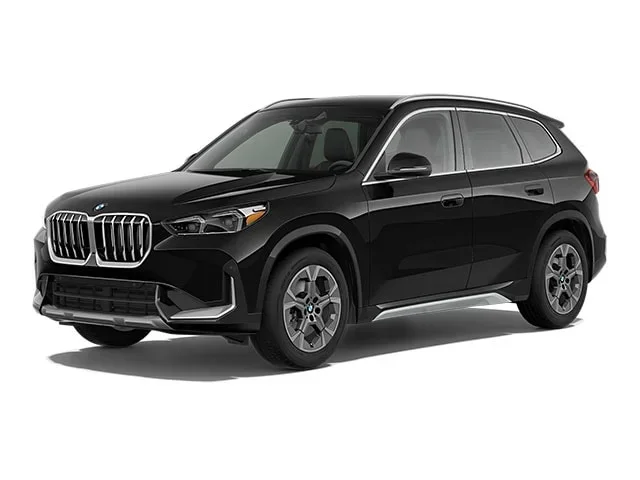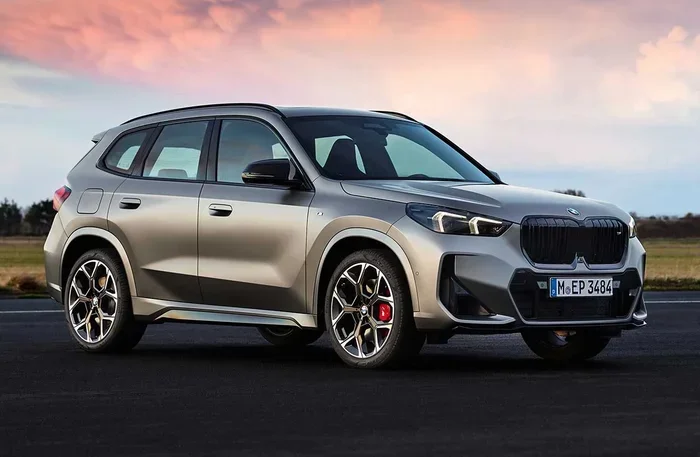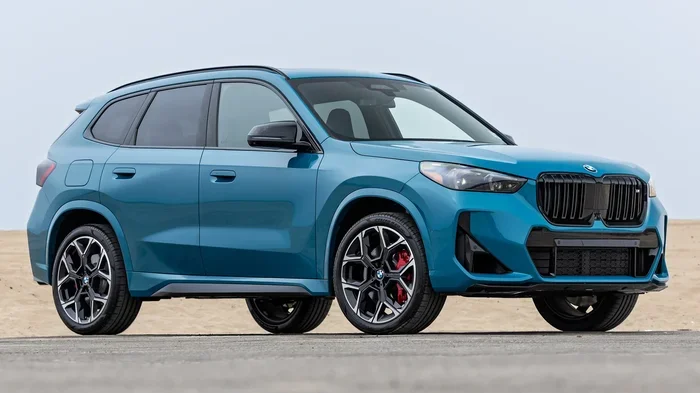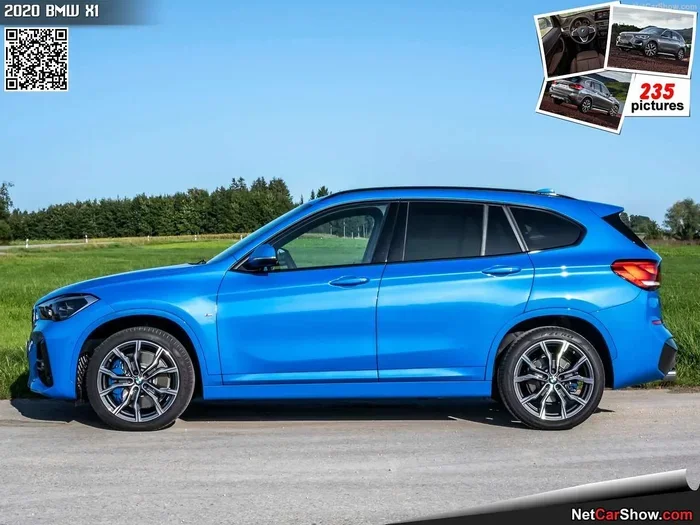
Featured image for BMW X1 side profile
Image source: netcarshow.com
How high is the BMW X1? The current 2024 model stands at 64.2 inches tall with 7.2 inches of ground clearance. This guide breaks down height specs for every generation, explains how ride height changes with xDrive, and helps you decide if it fits your garage or lifestyle needs.
If you are shopping for a compact luxury SUV, one of the first questions you might ask is how high is BMW X1 models really? It seems like a simple number, but the answer changes depending on the model year, the trim level, and whether you have roof rails installed. Knowing the exact height helps you plan for garage parking, car washes, roof cargo boxes, and even off-road adventures. In this deep dive, we cover every generation, every measurement, and every practical scenario you need to know.
Key Takeaways
- Current Generation Height: The 2023-present U11 BMW X1 measures 64.2 inches in roof height and offers 7.2 inches of ground clearance.
- Generation Differences: The first generation (E84) was slightly lower at roughly 61-62 inches, while the second generation (F48) sat around 63-64 inches depending on trim.
- Ground Clearance Matters: With 7.2 inches of clearance, the new X1 handles light off-roading and snow better than many rivals, but it is not a rock crawler.
- xDrive Adds Height: All-wheel-drive models typically sit a few millimeters higher than sDrive front-wheel-drive versions due to the drivetrain hardware.
- Garage Fit Check: At 64.2 inches, the X1 fits in standard 7-foot garage doors with roof rails, but measure your specific opening if you use a roof box.
- Interior Headroom: Front headroom is 39.4 inches and rear is 38.4 inches, offering decent space for adults despite the sloping roofline.
- Competitor Comparison: The X1 is taller than the Audi Q3 (63.9 in) but shorter than the Mercedes GLA (65.3 in), placing it squarely in the middle of the segment.
📑 Table of Contents
- BMW X1 Height Overview By Generation
- Detailed Exterior Dimensions Breakdown
- Ground Clearance And Off-Road Reality
- Interior Height And Cargo Space
- Practical Scenarios: Garages, Car Washes, And Roof Racks
- BMW X1 Height Vs. Key Rivals
- Suspension Options And Ride Height Variations
- Measuring Your Specific Vehicle
- The Electric iX1 Height Differences
- Common Mistakes Owners Make Regarding Height
- Expert Tips For X1 Owners
- Maintenance And Height-Related Wear Items
- Understanding BMW Naming And Height
- Conclusion
BMW X1 Height Overview By Generation
The BMW X1 has gone through three distinct generations since its debut in 2009. Each redesign brought changes to the platform, stance, and overall proportions. Understanding these generational differences is the best way to contextualize the height numbers.
First Generation (E84 | 2009–2015)
The original E84 X1 was built on a rear-wheel-drive platform shared with the 3 Series. This gave it a lower, sportier stance compared to its successors. The roof height hovered around 61.7 inches for sDrive models and roughly 62.2 inches for xDrive models. Ground clearance was approximately 6.7 inches. It felt more like a lifted wagon than a traditional SUV, which many driving enthusiasts still prefer today.
Second Generation (F48 | 2016–2022)
The switch to the front-wheel-drive UKL platform changed everything. The F48 grew in almost every dimension. Roof height increased to roughly 63.0 inches for the base sDrive28i and up to 63.7 inches for the xDrive28i with roof rails. Ground clearance improved to about 7.2 inches on standard suspension. The M Sport suspension lowered the ride height by roughly 10-15mm, bringing the roof line down slightly but reducing ground clearance.
Third Generation (U11 | 2023–Present)
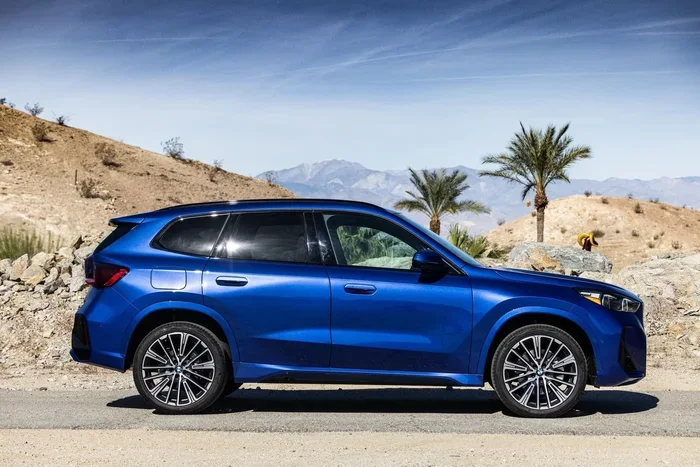
The current U11 generation (including the electric iX1) is the tallest yet. The official roof height is 64.2 inches (1,631 mm) without roof rails. With standard roof rails, that figure jumps to approximately 65.0 inches. Ground clearance remains a healthy 7.2 inches (183 mm) for standard models. The M35i xDrive performance variant sits slightly lower due to its sport suspension tuning, typically losing about 0.4 inches of ground clearance.
Detailed Exterior Dimensions Breakdown
Height doesn’t exist in a vacuum. To understand the full picture of the X1’s size, you have to look at length, width, and wheelbase together. These numbers dictate how the car fits in a parking spot, how it handles, and how much interior space you actually get.

Visual guide about BMW X1 side profile
Image source: netcarshow.com
2024 BMW X1 U11 Key Dimensions
- Length: 175.4 inches (4,455 mm)
- Width (mirrors folded): 73.2 inches (1,860 mm)
- Width (mirrors extended): 82.5 inches (2,096 mm)
- Height (no rails): 64.2 inches (1,631 mm)
- Height (with rails): ~65.0 inches (1,651 mm)
- Wheelbase: 105.9 inches (2,690 mm)
- Ground Clearance: 7.2 inches (183 mm)
Comparison Table: X1 Generations
| Specification | Gen 1 (E84) 2012 | Gen 2 (F48) 2019 | Gen 3 (U11) 2024 |
|---|---|---|---|
| Roof Height (No Rails) | 61.7 in | 63.0 in | 64.2 in |
| Roof Height (With Rails) | ~62.5 in | ~63.7 in | ~65.0 in |
| Ground Clearance | 6.7 in | 7.2 in | 7.2 in |
| Wheelbase | 105.1 in | 105.1 in | 105.9 in |
| Length | 174.9 in | 175.4 in | 175.4 in |
As you can see, the wheelbase has remained remarkably consistent, but the roof has crept up over 2.5 inches across 15 years. This reflects the market shift toward more upright, boxy SUV shapes that maximize interior volume.
Ground Clearance And Off-Road Reality
Ground clearance is the measurement from the lowest point of the underbody (usually the differential or exhaust) to the ground. For the BMW X1, this number is 7.2 inches on the current generation. But what does that mean in the real world?
Visual guide about BMW X1 side profile
Image source: cdn.bmwblog.com
What 7.2 Inches Gets You
- Snow Driving: You can confidently drive through 5-6 inches of unplowed snow without the front bumper acting like a plow.
- Speed Bumps & Driveways: Steep driveway entrances and aggressive speed bumps are rarely an issue if you approach them at an angle.
- Gravel & Dirt Roads: Forest service roads and maintained gravel are perfectly fine. The X1 handles washboard surfaces well thanks to the long travel suspension.
- Limitations: You have minimal underbody protection. A sharp rock can puncture the oil pan or damage the transmission cooling lines. The approach angle (approx 18 degrees) and departure angle (approx 22 degrees) limit steep obstacle climbing.
xDrive vs sDrive Clearance
Does all-wheel drive change the height? Technically, yes. The xDrive system adds a rear differential and driveshaft. On the F48 generation, xDrive models sat roughly 5-10mm higher than sDrive models. On the current U11, the difference is negligible in spec sheets (both listed at 7.2 inches), but the xDrive hardware sits lower in the chassis, potentially making the effective running clearance slightly less at the rear axle center section. If maximum clearance is your priority, the base sDrive model on standard suspension (non-M Sport) is theoretically the highest riding variant.
Interior Height And Cargo Space
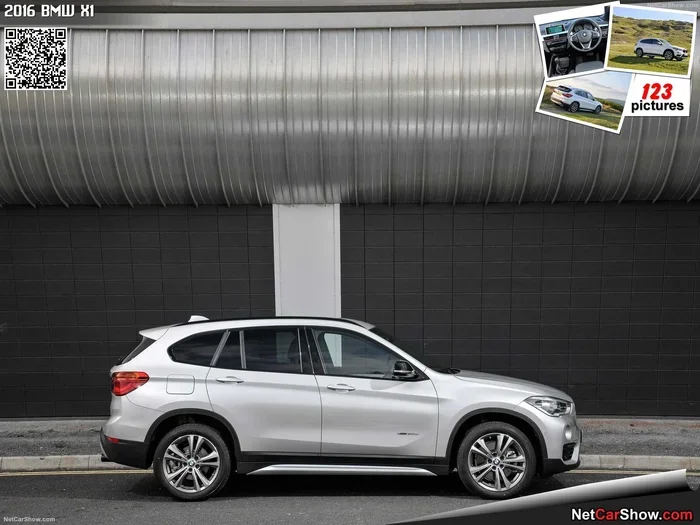
Exterior height dictates interior headroom. The U11 X1 features a slightly more raked roofline than the boxy F48, but the higher roofline starting point means headroom remains competitive.
Visual guide about BMW X1 side profile
Image source: netcarshow.com
Headroom Specs (U11 Generation)
- Front Headroom (without Sunroof): 39.4 inches
- Front Headroom (with Sunroof): 37.8 inches
- Rear Headroom (without Sunroof): 38.4 inches
- Rear Headroom (with Sunroof): 37.2 inches
Quick Tip: If you are over 6 feet tall, skip the panoramic sunroof. It eats up 1.5 to 2 inches of headroom. Without it, the X1 is surprisingly spacious for a compact SUV.
Cargo Volume And Vertical Space
The cargo area height (floor to ceiling) is roughly 30 inches at the tailgate opening, tapering forward. Total cargo volume is 27.1 cubic feet behind the rear seats and 57.2 cubic feet with seats folded. The liftgate opening height is about 29 inches, which is low enough for easy loading but tall enough for large suitcases.
Practical Scenarios: Garages, Car Washes, And Roof Racks
Numbers on a spec sheet are one thing. Daily life is another. Here is how the X1 height translates to common ownership scenarios.
Will It Fit In My Garage?
Standard residential garage doors are 7 feet (84 inches) or 8 feet (96 inches) tall. The X1 at 64.2 inches (65.0 with rails) leaves you with 19 to 31 inches of clearance. That is plenty of room.
Watch out for:
- Garage Door Openers: The motor unit hangs down 4-6 inches from the ceiling. If your ceiling is low (7 ft total), the opener rail might sit at ~78 inches. You still have 13+ inches of clearance.
- Roof Cargo Boxes: A Thule or Yakima box adds 12-18 inches. Total height becomes ~77-83 inches. This fits under a standard 7ft door only if the door tracks and opener allow it. Measure your specific garage clearance before buying a box.
- Kayaks/Bikes on Roof: A kayak adds significant height. You will almost certainly not fit in a standard garage with a boat on top.
Automatic Car Wash Compatibility
Most drive-through car washes have a maximum vehicle height limit of 84 inches (7 feet). The X1 clears this easily, even with roof rails and a low-profile roof rack. However, if you have a tall roof box (over 14 inches tall), you risk hitting the 84-inch limit. Always remove cargo boxes before entering automated washes.
Roof Rail Impact
Factory roof rails add roughly 0.8 to 1.0 inches to the overall height. Aftermarket crossbars (Thule, Yakima, BMW branded) add another 1.5 to 3 inches depending on the foot pack and bar profile. Factor this in if you have a low-clearance parking structure at work or home (some older city garages have 6’6″ or 6’8″ limits).
BMW X1 Height Vs. Key Rivals
The compact luxury SUV segment is tight. A few inches dictate the “feel” of the car—whether it feels like a hatchback or a proper SUV.
Segment Height Comparison (2024 Models, No Rails)
| Model | Roof Height | Ground Clearance | Length |
|---|---|---|---|
| BMW X1 (U11) | 64.2 in | 7.2 in | 175.4 in |
| Audi Q3 | 63.9 in | 6.7 in | 176.7 in |
| Mercedes GLA 250 | 65.3 in | 5.8 in (FWD) / 6.2 in (AWD) | 174.3 in |
| Volvo XC40 | 65.2 in | 8.3 in | 174.2 in |
| Lexus UX 250h | 61.0 in | 6.1 in | 177.0 in |
What This Means For You
- Vs Audi Q3: The X1 is slightly taller and has significantly more ground clearance (7.2 vs 6.7). The X1 feels more “SUV-like.”
- Vs Mercedes GLA: The GLA is taller overall but has less ground clearance. The GLA prioritizes cabin airiness over rough-road ability.
- Vs Volvo XC40: The Volvo is the king of clearance here at 8.3 inches. If you actually drive on rough dirt roads often, the XC40 beats the X1.
- Vs Lexus UX: The UX is a crossover coupe in disguise. It is 3 inches lower. It handles better but offers far less cargo height and rear headroom.
Suspension Options And Ride Height Variations
Not every X1 sits at the same height. BMW offers several suspension configurations that alter the stance.
Standard Suspension
This is the baseline. It offers the best balance of comfort and the advertised 7.2-inch ground clearance. It uses passive dampers and standard springs. This is the most common setup on sDrive28i and xDrive28i models.
M Sport Suspension
Standard on M Sport trim packages and the M35i. It lowers the vehicle by approximately 10mm (0.4 inches). Springs are stiffer, dampers are firmer. Ground clearance drops to roughly 6.8 inches. The car looks planted and aggressive, but you lose a tiny bit of snow/bump capability.
Adaptive M Suspension (Optional on U11)
Available on higher trims. This uses electronically controlled dampers. In “Comfort” mode, it rides at standard height. In “Sport” mode, it firms up but does not lower the car physically (unlike air suspension on the X5/X7). It maintains the standard 7.2-inch clearance at all times.
Air Suspension?
The X1 does not offer air suspension. That technology is reserved for the X5, X6, X7, and 7 Series. The X1 relies solely on coil springs. This means you cannot raise the ride height for off-roading or lower it for loading/aero.
Measuring Your Specific Vehicle
Spec sheets are averages. Your specific car might vary due to tire wear, tire size, fuel load, passenger weight, and manufacturing tolerances. Here is how to measure your own X1 accurately.
Tools You Need
- A metal tape measure (25ft).
- A level (optional, but helpful for roof height).
- A flat, level surface (concrete garage floor is best).
Step-By-Step: Roof Height
- Park on perfectly flat ground. Check tire pressures (inflate to door jamb spec).
- Measure from the ground to the highest point of the roof (usually the antenna base or roof rail center).
- Measure both front and rear corners. Note the difference (rake).
- If you have a sunroof, measure to the glass panel (closed) and the roof skin separately.
Step-By-Step: Ground Clearance
- Identify the lowest hanging point. Usually the front subframe, rear differential (xDrive), or exhaust resonator.
- Measure from that specific point straight down to the floor.
- Do not measure to the plastic undertray; measure to the metal hard point.
- Repeat at the front bumper lip (approach angle reference) and rear bumper (departure angle reference).
Expert Insight: Tire diameter changes ride height. Switching from 18-inch wheels to 20-inch wheels (with lower profile tires) often keeps the overall diameter nearly identical. But switching to a taller all-terrain tire (e.g., 235/60R18 vs stock 225/55R18) can net you an extra 0.5 inches of real-world clearance. Check out our guide on which BMW models use 265/60/18 tires for fitment ideas, though the X1 typically runs narrower widths.
The Electric iX1 Height Differences
The BMW iX1 (sold in Europe and other markets, not currently US) shares the U11 body. However, the battery pack sits in the floor pan. This raises the floor height inside the cabin, reducing headroom slightly (approx 1 inch less rear headroom). Externally, the roof height is identical to the gas X1 at 64.2 inches. Ground clearance is often marginally lower (approx 6.7 inches) due to the battery protection plate hanging below the floor pan. If you are importing or buying used abroad, verify the specific clearance for the xDrive30 electric variant.
Common Mistakes Owners Make Regarding Height
- Assuming “SUV” Means High Clearance: 7.2 inches is good for the class, but it is not a Jeep Wrangler (10.8 in) or Bronco (11.6 in). Do not attempt serious trails.
- Ignoring Roof Rails On Garage Entry: Many owners install aftermarket crossbars and forget they are there. The first crunch into the garage door frame is an expensive lesson.
- Confusing Ride Height With Ground Clearance: Lowering springs drop the body closer to the wheels. Ground clearance drops by the same amount. If you lower an X1 1.5 inches on coils, you only have ~5.7 inches of clearance. That is sedan territory.
- Overloading The Roof: The dynamic roof load limit (while driving) is typically 165 lbs (75 kg). Static limit (parked/camping) is much higher. Exceeding dynamic load changes the center of gravity and handling drastically.
Expert Tips For X1 Owners
Pro Tip 1: The “Garage Door Tennis Ball” Trick. Hang a tennis ball on a string from your garage ceiling so it touches the windshield when the X1 is parked perfectly. This prevents you from creeping forward and hitting the wall with your roof rack or shark fin antenna.
Pro Tip 2: Snow Mode And Clearance. In deep snow, do not turn off traction control. The xDrive system brakes spinning wheels to transfer torque. Momentum is key. If you stop, you sink to the frame rails (approx 6 inches up), and you are stuck.
Pro Tip 3: Tire Choice Changes Effective Height. Run-flat tires (standard on many X1s) have stiff sidewalls that don’t deflect much. Switching to non-run-flat all-season tires (with a mobility kit) often provides a slightly softer ride and marginally better contact patch, but the rolling diameter is nearly identical. If you want more clearance, you need a taller tire diameter, not just a different construction. Read more about BMW run-flat tires design benefits and care before switching.
Maintenance And Height-Related Wear Items
Ride height isn’t static forever. As your X1 ages, the suspension settles.
Suspension Sag
Coil springs lose rate over time. After 80,000–100,000 miles, it is common for the rear to sag 0.5 to 1.0 inches lower than the front. This reduces ground clearance, changes headlight aim (blinding oncoming traffic), and wears rear tires on the inner edge. If your X1 looks “low in the rear,” new springs and shocks/struts restore the factory stance.
Self-Leveling Suspension (Rear Only)
Some F48 and U11 models (especially those with towing packages or M Sport) feature rear self-leveling air springs (not full air suspension). These maintain ride height when loaded. If the compressor fails or air bags leak, the rear drops suddenly. You will hear the compressor running constantly. This is a common failure point around 70k miles.
Control Arm Bushings
The front lower control arm bushings (thrust arms) are fluid-filled on many BMWs. When they fail, the front wheel moves rearward under braking, effectively changing the caster and slightly lowering the front corner. This makes the car feel vague and reduces front clearance slightly. Inspect them at every oil change.
Understanding BMW Naming And Height
The “X1” badge tells you it is the smallest SUV (SAV in BMW speak). The numbers and letters after it (sDrive28i, xDrive28i, M35i) denote drivetrain and engine, not height. However, the “M” models (M35i) get the lowered M Sport suspension standard. If you see an “M” badge on the trunk, assume it sits ~0.4 inches lower than a non-M sibling. For a deeper dive into the naming logic, check our article on decoding BMW vehicle designations.
Conclusion
So, how high is BMW X1 models in the real world? For the 2024 model sitting in the showroom today, the answer is 64.2 inches to the roof and 7.2 inches under the belly. It is a Goldilocks package—tall enough for command seating and snow clearance, low enough for garages and car washes. Whether you are eyeing a used E84 for its sporty 61-inch stance or a new U11 for maximum cargo volume, knowing these numbers ensures you buy the right tool for your life. Measure your garage, check your local car wash height limit, and pick the suspension tune that matches your roads. The X1 hits a sweet spot in the segment, and now you have the data to prove it.
Frequently Asked Questions
What is the exact height of a 2024 BMW X1?
The 2024 BMW X1 (U11 generation) has a roof height of 64.2 inches without roof rails. With standard roof rails installed, the height increases to approximately 65.0 inches.
How much ground clearance does the BMW X1 have?
The current BMW X1 offers 7.2 inches (183 mm) of ground clearance. This applies to both sDrive (FWD) and xDrive (AWD) models on standard suspension. M Sport suspension lowers this by roughly 0.4 inches.
Will a BMW X1 fit in a standard 7-foot garage door?
Yes, easily. At 64.2 inches tall (65 inches with rails), the X1 fits under a standard 84-inch garage door with 19+ inches of clearance. However, adding a roof cargo box (typically 12-18 inches tall) may bring the total height close to the limit.
Is the BMW X1 taller than the Audi Q3?
Yes, the BMW X1 (64.2 in) is slightly taller than the Audi Q3 (63.9 in). The X1 also has significantly more ground clearance (7.2 in vs 6.7 in), giving it a more upright SUV stance.
Does the BMW X1 have adjustable ride height?
No, the BMW X1 does not have adjustable air suspension. It uses fixed coil springs. Only the larger X5, X6, X7, and 7 Series offer adjustable air suspension in the current BMW lineup.
How does the panoramic sunroof affect interior headroom?
The panoramic sunroof reduces front headroom by about 1.6 inches (from 39.4 to 37.8 in) and rear headroom by about 1.2 inches (from 38.4 to 37.2 in). Tall drivers should consider skipping the sunroof for maximum comfort.