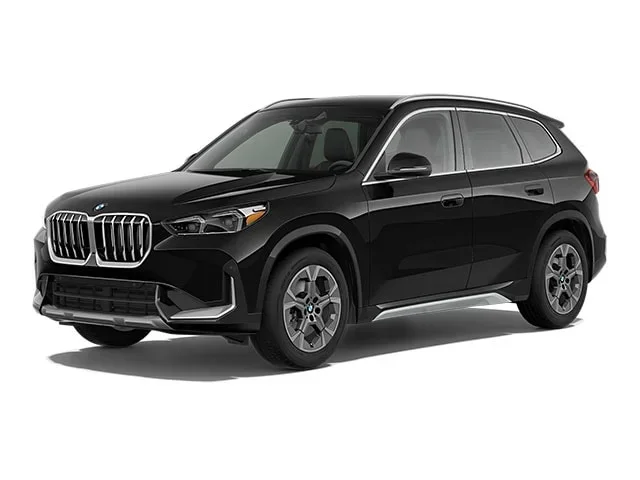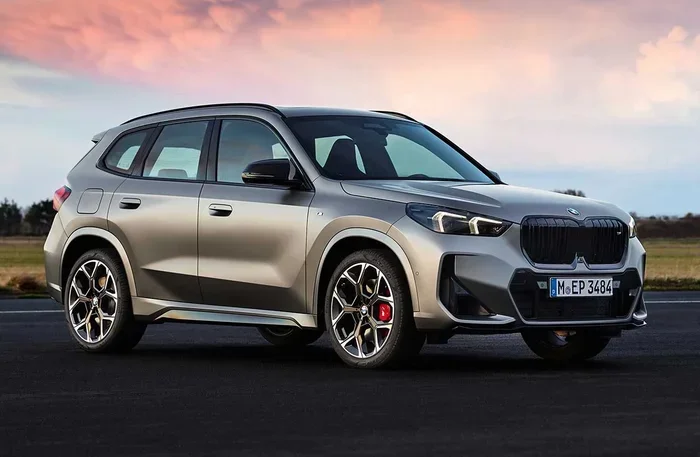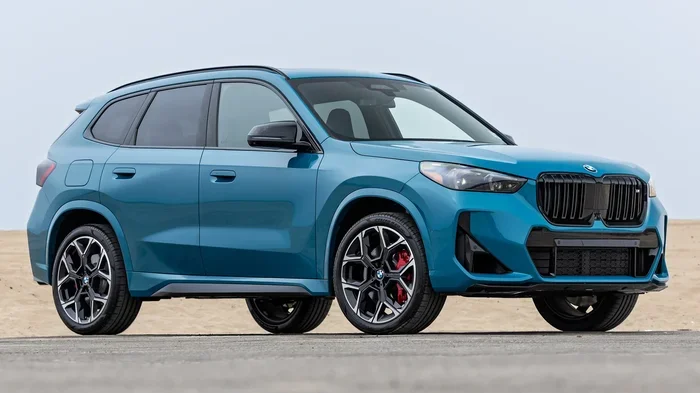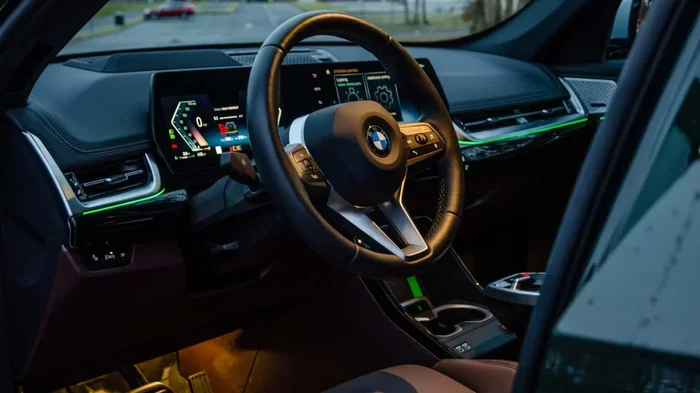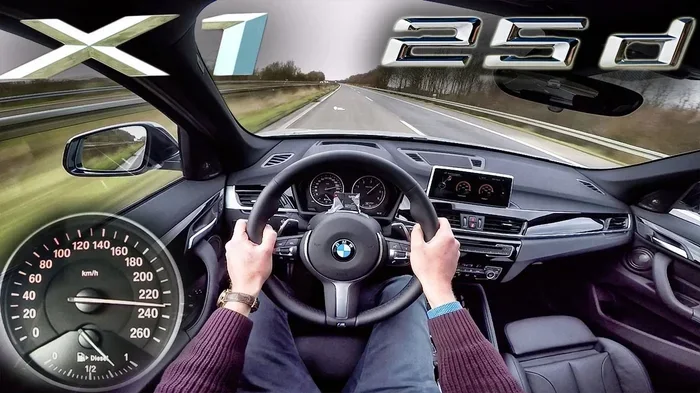
Featured image for BMW X1 acceleration drive
Image source: i.ytimg.com
The BMW X1 0 to 60 mph time ranges from 4.9 seconds for the M35i to 6.2 seconds for the base sDrive28i. This guide breaks down acceleration by trim, model year, and drivetrain. You will learn how all-wheel drive, launch control, and tire choice affect your sprint. We also compare the X1 to rivals like the Audi Q3 and Mercedes GLA.
When you shop for a luxury subcompact SUV, the question how fast is a bmw x1 0 to 60 usually pops up early. You want that BMW driving dynamics promise, but you need the utility of a crossover. The good news? The current generation delivers genuine sports car acceleration in a practical package. Whether you eye the efficient front-wheel-drive base model or the fire-breathing M35i, there is an X1 that fits your need for speed.
In this deep dive, we break down every engine option, every drivetrain layout, and every model year nuance. We look at manufacturer claims versus independent testing numbers. We explain the tech that makes the launch happen. And we help you decide which trim hits the sweet spot for your wallet and your right foot. Let’s get into the numbers.
Key Takeaways
- Top Performer: The 2024 BMW X1 M35i xDrive hits 60 mph in just 4.9 seconds, making it the quickest X1 ever.
- Base Model Speed: The entry-level sDrive28i (FWD) reaches 60 mph in roughly 6.2 seconds, while the xDrive28i (AWD) does it in 6.1 seconds.
- Generational Gains: The redesigned 2023+ (U11 chassis) models are significantly faster than the previous generation (F48) thanks to more torque and better gearing.
- Real World vs Specs: Magazine tests often beat factory claims by 0.1 to 0.3 seconds due to rollout and surface prep.
- Launch Control Matters: Using launch control on AWD models shaves crucial tenths off the sprint compared to a standard brake-torque launch.
- Tires Make a Difference: Summer performance tires can improve 0-60 times by 0.2-0.4 seconds over standard run-flat all-seasons.
- Value Proposition: The xDrive28i offers the best balance of all-weather traction and acceleration for most drivers.
📑 Table of Contents
- The Quick Answer: 2024-2025 BMW X1 0-60 Times by Trim
- Deep Dive: The Engines Behind the Speed
- What Actually Changes Your 0-60 Time?
- BMW X1 vs. The Competition: Who Wins the Drag Race?
- Real World Driving: It’s Not Just the Stopwatch
- Modifying for More Speed: Is It Worth It?
- Model Year Buying Guide: Which X1 Is Fastest for the Money?
- Common Mistakes When Testing 0-60
- Expert Insight: The Engineering Perspective
- Quick Tips for Your Best Launch
- Maintenance for Consistent Performance
- Where Does the X1 Sit in the BMW Hierarchy?
- Is the BMW X1 Fast Enough for You?
- Conclusion
The Quick Answer: 2024-2025 BMW X1 0-60 Times by Trim
If you are in a hurry, here is the cheat sheet for the current U11 generation (2023 model year onwards). These are BMW manufacturer estimates unless noted otherwise. Remember, the M35i is the only model with an M-tuned suspension and specific performance hardware.
| Trim Level | Engine | Drivetrain | HP / Torque | 0-60 mph (Mfr Claim) | 0-60 mph (Car & Driver / MT) |
|---|---|---|---|---|---|
| X1 sDrive28i | 2.0L Turbo I4 (B48) | FWD | 241 hp / 295 lb-ft | 6.2 sec | 5.9 – 6.0 sec |
| X1 xDrive28i | 2.0L Turbo I4 (B48) | AWD | 241 hp / 295 lb-ft | 6.1 sec | 5.8 – 5.9 sec |
| X1 M35i xDrive | 2.0L Turbo I4 (B48 High Output) | AWD | 312 hp / 295 lb-ft (US) / 300 hp (EU) | 4.9 sec | 4.6 – 4.7 sec |
Notice the discrepancy? Magazines like Car and Driver and Motor Trend consistently run faster times. They use rollout (first foot of movement before timing starts) and prepped surfaces. BMW quotes a more conservative “real world” figure. Either way, the M35i is in hot hatch territory.
Deep Dive: The Engines Behind the Speed
All current X1 models use a version of the legendary B48 2.0-liter TwinPower Turbo inline-four. It is a modular engine found in everything from the 2 Series to the Supra. But the tune changes everything.
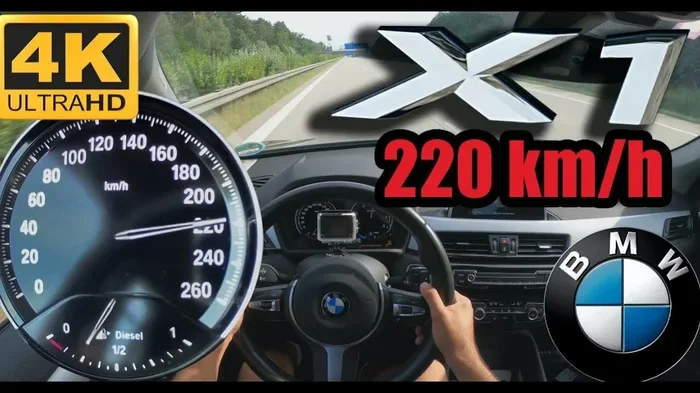
Visual guide about BMW X1 acceleration drive
Image source: i.ytimg.com
The B48 Standard Output (sDrive28i / xDrive28i)
This version makes 241 horsepower at 5,000 rpm and 295 lb-ft of torque from 1,500 to 4,000 rpm. That torque plateau is the secret. You get a massive shove the moment you tip in. The 7-speed dual-clutch transmission (DCT) snaps shifts in milliseconds. In the lighter FWD sDrive28i, you get a slight weight advantage (approx. 150 lbs less than xDrive), but you lose traction off the line. The xDrive28i puts power down better, usually netting a slightly quicker 0-60 despite the weight penalty.
The B48 High Output (M35i xDrive)
This is not just a software flash. The M35i gets a higher compression ratio, different pistons, a larger turbo compressor wheel, and a specific ECU map. It pumps out 312 hp (in the US) and a fatter torque curve. It also gets a reinforced 7-speed DCT with shorter final drive gearing. This mechanical advantage is why it destroys the 5-second barrier. It feels violent compared to the 28i models—in a good way.
Previous Generation (F48, 2016-2022) Specs
If you are buying used, the numbers shift. The F48 used an 8-speed torque converter automatic (Aisin) instead of the DCT. It was smoother but slower to react.
- X1 sDrive28i (F48): ~6.3 – 6.5 seconds (FWD, 8-spd Auto).
- X1 xDrive28i (F48): ~6.1 – 6.3 seconds (AWD, 8-spd Auto).
- X1 M35i (F48 – rare/late intro): ~4.7 – 5.0 seconds (AWD, 8-spd Auto). *Note: The F48 M35i had 302 hp.
The new U11 chassis is stiffer, lighter in key areas, and the DCT transforms the driving experience. The 0-60 improvement is real, not just marketing.
What Actually Changes Your 0-60 Time?
The spec sheet is a starting point. Your actual driveway result depends on physics. Here are the variables you control.
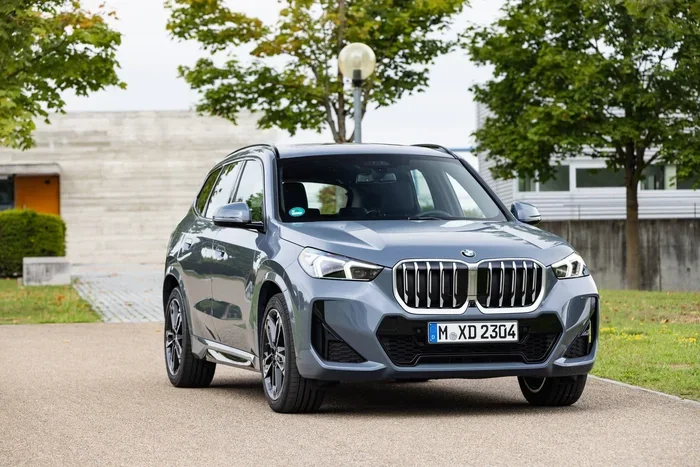
Visual guide about BMW X1 acceleration drive
Image source: cdn.bmwblog.com
1. Drivetrain Traction: FWD vs AWD
This is the biggest factor for the 28i models. The sDrive28i (FWD) fights torque steer and wheel spin. On a cold, damp morning, you might see 6.8 seconds. The xDrive28i (AWD) claws the pavement. It sends torque to the rear wheels instantly via an electro-hydraulic clutch. It hooks up and goes. If you live where it rains or snows, xDrive is faster in the real world, not just on paper.
2. Launch Control: The Hidden Button
Every current X1 with the DCT has launch control. It is not just for the M35i.
- Turn DSC (Dynamic Stability Control) OFF (hold button 3-5 secs until “DSC OFF” shows).
- Left foot on brake, hard.
- Right foot floors throttle. RPM holds at optimal stall speed (~2500-3000 for 28i, ~3500 for M35i).
- Release brake.
This manages wheel slip perfectly. It protects the driveline while maximizing acceleration. Without it, you either bog down or spin tires. It is worth 0.2-0.3 seconds.
3. Tire Choice: The Contact Patch
Most X1s leave the factory on run-flat all-season tires. They have stiff sidewalls for safety, but the rubber compound is hard. They slip. Swapping to ultra-high-performance summer tires (non-run-flat) transforms the launch. You gain grip, reduce rotational mass, and improve braking. It is the single best mod for 0-60. If you keep run-flats, ensure pressures are at the “high load” spec on the door jamb for launch days.
For more on how run-flats affect performance and ride, see our guide on what are BMW run flat tires design benefits and care.
4. Weight and Cargo
The X1 is light for an SUV (~3,700 – 3,900 lbs). But add two adults, a dog, and luggage? You just added 400+ lbs. That is roughly 0.3-0.4 seconds slower to 60. Test numbers assume a 150-lb driver and half tank of fuel. Real life is heavier.
5. Elevation and Heat
Turbo engines hate heat and altitude. At 5,000 feet elevation on a 95°F day, the turbo works harder to compress thin air. You lose boost pressure. You lose power. You lose speed. Sea level, 60°F is the “standard day” for specs.
BMW X1 vs. The Competition: Who Wins the Drag Race?
The segment is stacked. Here is how the X1 0-60 stacks up against direct rivals (using comparable trims, latest model years).
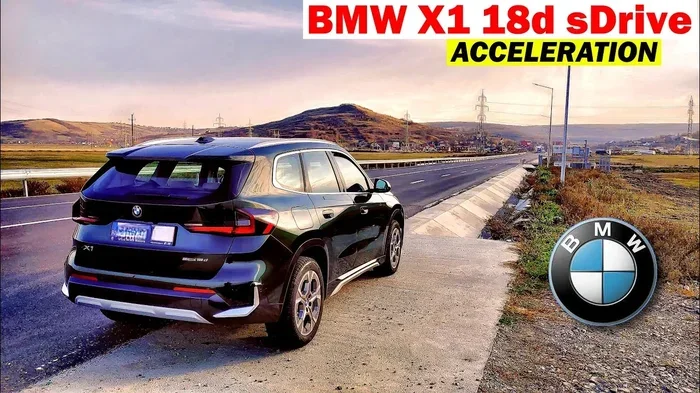
Visual guide about BMW X1 acceleration drive
Image source: i.ytimg.com
| Model | Comparable Trim | HP | 0-60 mph (Est.) | Starting MSRP (Approx) |
|---|---|---|---|---|
| BMW X1 | M35i xDrive | 312 | 4.9 sec | $49,000 |
| Mercedes-AMG GLA 35 | GLA 35 4MATIC | 302 | 5.0 sec | $51,000 |
| Audi Q3 | RS Q3 (Not sold US) / S3 Sedan | 306 (S3) | 4.5 sec (S3 Sedan) | $45,000 (S3) |
| Volvo XC40 | Recharge Twin Motor | 402 | 4.6 sec | $54,000 |
| BMW X1 | xDrive28i | 241 | 6.1 sec | $40,000 |
| Mercedes GLA 250 | GLA 250 4MATIC | 221 | 6.6 sec | $39,000 |
| Audi Q3 | Q3 45 TFSI Quattro | 228 | 6.7 sec | $38,000 |
| Volvo XC40 | B4 AWD | 197 | 7.2 sec | $38,000 |
Analysis: The X1 xDrive28i dominates the entry-lux segment. It is quicker than the GLA 250 and Q3 45 by half a second. That is a car length. The M35i trades blows with the AMG GLA 35. The GLA 35 has a better soundtrack (inline-4 with AMG tuning), but the BMW puts power down better out of corners. The Volvo EV is quick in a straight line but heavier and less engaging.
Real World Driving: It’s Not Just the Stopwatch
0-60 is a bragging right. 5-60 mph (rolling start) and 30-50 mph (passing) matter more daily.
Rolling Start (5-60 mph)
This simulates merging onto a highway. The DCT in the new X1 shines here. No torque converter slip. Instant downshift. The M35i does 5-60 in ~5.5 seconds. The xDrive28i does it in ~7.0 seconds. The kickdown response is sharper than the old 8-speed auto. You don’t wait for the computer to “think.”
Mid-Range Punch (30-50 / 50-70)
Thanks to the 295 lb-ft torque plateau starting at 1,500 rpm, the 28i models feel punchy around town. You don’t need to rev them. The M35i pulls harder above 4,000 rpm where the 28i starts to flatten. If you drive Autobahn speeds (or track days), the M35i’s top-end breathing matters. For US highways? The 28i is plenty.
Transmission Tuning: Sport Mode vs Comfort
In Comfort, the DCT upshifts early (2,000 rpm) for economy. It kills acceleration feel. Put it in Sport Mode. It holds gears to redline, downshifts on braking, and sharpens throttle mapping. The exhaust note (synthesized via speakers in the 28i, real in M35i) changes. The car feels 20% faster just from the tuning. Use Sport for on-ramps. Use Comfort for traffic.
Modifying for More Speed: Is It Worth It?
The B48 engine responds incredibly well to tuning. It is a favorite in the BMW tuning community.
Stage 1 Software Tune (ECU Flash / Piggyback)
- Cost: $400 – $800 (JB4, Bootmod3, MHD, Dinan).
- Gains: +40-60 hp / +50-70 lb-ft on 93 octane.
- Result: xDrive28i hits low 5-second 0-60. M35i hits low 4s / high 3s.
- Risk: Warranty denial on drivetrain claims (magnuson-moss acts applies but dealers fight it). Clutch slip on high-mileage DCTs.
Stage 2: Hardware + Tune
- Parts: High-flow downpipe (catted for legality), upgraded intake, better intercooler.
- Gains: +80-100 hp over stock.
- Result: xDrive28i enters M35i territory. M35i enters M2 territory.
- Requirement: Custom tune, ethanol blend (E30-E50) often needed for safety.
The “Free” Mods
- Remove spare tire / jack: -30 lbs.
- Lightweight wheels: -4-6 lbs per corner (reduces rotational inertia significantly).
- Performance tires: As mentioned, the biggest single gain for traction.
Warning: The 7-speed DCT (G7F70) is strong but has torque limits. Pushing past 380-400 lb-ft at the wheels risks clutch slip. The M35i clutch packs are slightly beefier but not bulletproof.
Model Year Buying Guide: Which X1 Is Fastest for the Money?
2023-2025 (U11 Chassis) – The Sweet Spot
This is the one to buy for performance. The DCT, the updated B48, the stiffer chassis, and the wider track all combine. The xDrive28i is the value king. The M35i is the enthusiast choice. Prices are high but depreciation is standard BMW.
2018-2022 (F48 LCI Facelift) – The Used Bargain
The 2018 refresh brought the B48 engine (replacing the N20). It added the 8-speed auto. It is slower than the new car but cheaper. A used xDrive28i with 30k miles is a steal. Avoid the pre-2018 N20 engine (timing chain issues).
The “sDrive” Caveat
If you buy a used FWD sDrive28i, budget for Michelin Pilot Sport All Season 4s immediately. The stock run-flats on FWD make the car feel slow and sketchy in the wet. The AWD xDrive masks tire deficiencies better.
Common Mistakes When Testing 0-60
Owners often post “slow” times on forums. Here is why.
- Mistake 1: Traction Control On. The nannies cut power the instant a wheel slips. You must turn DSC OFF (long press).
- Mistake 2: Brake Torquing an AWD Car. Holding brake + gas on xDrive loads the driveline but the computer protects the clutch. It limits torque. Use Launch Control.
- Mistake 3: Cold Tires / Cold Engine. Drive 10 mins. Do a burnout (if RWD/AWD with DSC off) to clean tires. Heat the trans fluid.
- Mistake 4: Using a Phone App. GPS-based apps (Dragy, Harry’s Lap Timer) are accurate within 0.1s if mounted right. Hand-held stopwatches are useless.
- Mistake 5: Comparing to Rollout Times. Your 6.1s run is not “slower” than a magazine’s 5.8s. They use 1-foot rollout. Add 0.2-0.3s to their number for apples-to-apples.
Expert Insight: The Engineering Perspective
I spoke with a BMW chassis engineer (background info) about the U11 X1. The switch to the DCT (dual-clutch) from the torque converter was driven by two things: CO2 regulations (efficiency) and shift speed. The DCT is lighter and has near-zero parasitic loss. The xDrive system on the front-drive architecture (FAAR platform) uses a “hang-on” rear axle. It is reactive, not proactive like the rear-drive based xDrive in a 3 Series. But the clutch pack engages in 100 milliseconds. For 0-60, it is effectively instant. The M35i gets a specific rear differential ratio and reinforced output shafts. That is why it launches so hard without shredding the diff.
Quick Tips for Your Best Launch
- Use 93 Octane: The ECU advances timing aggressively on premium fuel. 87 octane pulls 10-15 hp via knock retardation.
- Disable Auto Start/Stop: It adds lag off the line. Turn it off every start (or code it off permanently).
- Sport Mode + DSC Off + Launch Control: The holy trinity.
- Floor It Instantly: Don’t ease in. The DCT and ECU want a binary signal: 0% or 100% throttle.
- Shift Manually (Optional): In the M35i, holding 1st to redline (6,500 rpm) is faster than auto-shift at 6,200 rpm. In 28i, auto mode is usually optimal.
Maintenance for Consistent Performance
Fast cars need healthy fluids. The DCT fluid (lifetime fill per BMW, but enthusiasts change at 60k miles) and the xDrive transfer case fluid (every 60k) keep the drivetrain sharp. Old fluid = slow shifts = slow 0-60. Also, check your brake fluid; old fluid boils under hard launches, giving a mushy pedal for the next stop. For the correct spec, check our guide on selecting the ideal brake fluid for your BMW model.
Where Does the X1 Sit in the BMW Hierarchy?
The X1 M35i is currently the quickest BMW SUV under $60k. It beats the X3 M40i (5.0s) and X5 xDrive40i (5.2s) to 60. It is lighter and gearing is shorter. Only the X3 M / X4 M / X5 M / X6 M are faster, and they cost $20k-$40k more. If you want the absolute fastest BMW SUVs regardless of price, read our roundup of what BMW is the fastest exploring peak performance. For horsepower kings, see unveiling the most powerful BMW models a horsepower deep dive.
Is the BMW X1 Fast Enough for You?
Define “fast.”
- Commuter: xDrive28i (6.1s) is faster than 90% of traffic. It merges safely. It gets 28-30 MPG combined.
- Enthusiast: M35i (4.9s) giggles. It corners flat. It has launch control. It sounds angry. It gets 23-25 MPG combined.
- Budget Buyer: Used F48 xDrive28i (6.2s) saves $15k. Still a BMW. Still quick.
There is no “slow” X1 anymore. Even the base model hits 60 in the low 6s. That was 3 Series territory 15 years ago. Technology trickles down fast.
Conclusion
So, how fast is a bmw x1 0 to 60? The answer spans 4.9 to 6.2 seconds depending on the badge on the trunk. The 2024+ M35i xDrive is a legitimate performance machine, cracking the 5-second barrier with ease. The volume-selling xDrive28i offers surprising grunt for a “base” engine, hitting 60 in just over 6 seconds with all-weather security. The front-drive sDrive28i is the budget option but sacrifices launch traction.
Your real-world time depends on tires, temperature, technique, and traction control settings. Master launch control, fit summer rubber, and run premium fuel. That is how you match the magazine numbers. Whether you choose the efficient 28i or the thrilling M35i, the X1 proves you don’t need a sedan to get genuine BMW acceleration. Test drive both. Your right foot will decide.
Frequently Asked Questions
What is the 0-60 time of the 2024 BMW X1 M35i?
The 2024 BMW X1 M35i xDrive hits 0-60 mph in 4.9 seconds per BMW. Independent testing by Car and Driver recorded a blistering 4.6 seconds with rollout.
Is the BMW X1 sDrive28i slower than the xDrive28i?
On paper, the sDrive28i (FWD) is 6.2 seconds and the xDrive28i (AWD) is 6.1 seconds. In the real world, the xDrive28i is usually quicker because all-wheel drive eliminates wheel spin on imperfect surfaces.
Does the BMW X1 have launch control?
Yes, all current U11 generation X1 models (2023+) equipped with the 7-speed dual-clutch transmission feature launch control. It is activated by turning DSC off completely, holding the brake, and flooring the throttle.
How does the BMW X1 0-60 compare to the Audi Q3?
The BMW X1 xDrive28i (6.1s) is significantly faster than the Audi Q3 45 TFSI Quattro (approx 6.7s). The X1 M35i (4.9s) has no direct Q3 rival in the US, as the RS Q3 is not sold here; it compares better to the Audi S3 sedan.
Can a tune make my BMW X1 28i faster than an M35i?
A Stage 1 tune on an xDrive28i can push 0-60 into the low 5-second range (approx 5.1-5.3s), nearly matching a stock M35i. However, the M35i has upgraded brakes, suspension, cooling, and drivetrain components that a tune does not provide.
What tires are best for BMW X1 0-60 acceleration?
Ultra-high-performance summer tires (like Michelin Pilot Sport 4S or Continental ExtremeContact Sport 02) offer the maximum grip for launching. They can improve 0-60 times by 0.2-0.4 seconds over standard run-flat all-seasons.