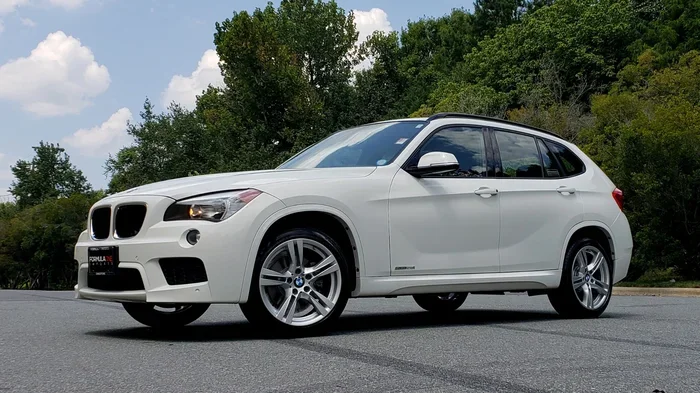
Featured image for 2015 BMW X1 exterior
Image source: formulaimports.com
Should I buy a used 2015 BMW X1? This compact luxury SUV offers sporty handling and a premium interior, but potential buyers must weigh the N20 timing chain risks and N55 fuel injector costs against strong resale value. A thorough pre-purchase inspection is non-negotiable for a smart purchase.
Buying a used luxury SUV always feels like a balancing act. You want the badge, the leather, and the driving dynamics, but you fear the repair bills. The 2015 BMW X1 sits right in that sweet spot of depreciation where it becomes affordable, yet it still feels modern inside and out. But is it a smart buy or a money pit waiting to happen? Let’s break down everything you need to know.
This generation (E84) was the first X1 ever sold in the US. It marks the end of an era—rear-wheel-drive architecture and hydraulic steering—before the switch to front-wheel-drive platforms in 2016. That makes the 2015 model unique. It drives like a proper BMW, but it carries specific mechanical quirks you need to understand before signing the paperwork.
Key Takeaways
- Two distinct engines: The sDrive28i/xDrive28i uses the N20 four-cylinder (timing chain risk), while the xDrive35i uses the N55 six-cylinder (more reliable but pricier to fix).
- Timing chain is the #1 concern: Early N20 engines (pre-2015 build date) suffer from timing chain guide failure; verify the updated tensioner was installed.
- Run-flat tires add cost: The X1 typically comes with run-flats; budget for expensive replacements and consider switching to conventional tires for ride quality.
- Electronics glitches occur: iDrive screen delamination, faulty tail light LEDs, and water intrusion in the FRM module are common annoyances.
- Maintenance history is everything: A documented service record with BMW LL-01 oil changes every 7,500 miles is the best predictor of longevity.
- xDrive vs sDrive: All-wheel drive (xDrive) adds traction but increases complexity and reduces fuel economy slightly compared to front-wheel drive (sDrive).
- Value proposition: It drives better than rivals like the Audi Q3 or Mercedes GLA, but ownership costs run higher than Japanese competitors.
📑 Table of Contents
- Quick Overview: The 2015 BMW X1 at a Glance
- Engine Deep Dive: N20 vs. N55 Reliability
- Common Problems & “Gremlins” Checklist
- Maintenance Costs: The “BMW Tax” Reality
- Driving Dynamics: Why People Love This Car
- Pre-Purchase Inspection (PPI): Your $200 Insurance Policy
- Certified Pre-Owned (CPO) vs. Private Party
- Verdict: Should You Buy a Used 2015 BMW X1?
- Final Thoughts
Quick Overview: The 2015 BMW X1 at a Glance
The 2015 X1 is a subcompact luxury crossover. It slots below the X3. It came in two main flavors: the sDrive28i (front-wheel drive) and xDrive28i (all-wheel drive), both powered by the 2.0L turbocharged N20 four-cylinder engine. The range-topper was the xDrive35i, featuring the 3.0L turbocharged N55 inline-six.
All models used an 8-speed ZF automatic transmission. This gearbox is widely considered one of the best in the business. It shifts fast and smooth. Standard features included leatherette upholstery, a panoramic moonroof, and the iDrive 4.2 or 6.0 infotainment system depending on trim.
Key Specs Comparison
| Feature | sDrive28i / xDrive28i | xDrive35i |
|---|---|---|
| Engine | 2.0L Turbo I4 (N20) | 3.0L Turbo I6 (N55) |
| Horsepower | 240 hp | 300 hp |
| Torque | 260 lb-ft | 300 lb-ft |
| Drivetrain | FWD / AWD | AWD Only |
| 0-60 mph | ~6.1 sec / ~6.3 sec | ~5.3 sec |
| EPA Combined MPG | 26 / 24 | 21 |
Engine Deep Dive: N20 vs. N55 Reliability
The engine choice defines your ownership experience. The four-cylinder N20 is efficient and peppy. The six-cylinder N55 is smoother and faster. But their failure modes differ wildly.

Visual guide about 2015 BMW X1 exterior
Image source: i.ytimg.com
The N20 Timing Chain Issue (28i Models)
This is the elephant in the room. The N20 engine uses a timing chain driven by a plastic guide rail. On early production engines (roughly before 01/2015 build date), these guides become brittle and shatter. If the chain jumps or snaps, the engine destroys itself—valves hit pistons, game over.
Good news: BMW issued a Technical Service Bulletin (TSB) and updated the tensioner and guide design. Many 2015 models rolled off the line with the updated parts, but not all.
Action item: Check the vehicle build date on the driver’s door jamb sticker. If built after 01/2015, you are likely safe. If earlier, demand proof the timing chain components were upgraded. Listen for a diesel-like rattle on cold startup—that is the death rattle.
The N55 Inline-Six (35i Model)
The N55 is a legend for a reason. It uses a single twin-scroll turbo and Valvetronic. It does not have the N20 timing chain flaw. However, it has its own wallet-drainers:
- Fuel Injectors: The piezo injectors (Index 11 or 12 are current) fail somewhat regularly. A set of six plus coding runs $1,500–$2,500.
- Valve Cover & Oil Filter Housing Gaskets: These leak oil onto the exhaust manifold, causing a burning smell. It’s a standard maintenance item every 60k–80k miles.
- VANOS Solenoids: Can get gummed up with poor oil change intervals, causing rough idle and codes.
If you want the most reliable BMW engine of this era, the N55 in the xDrive35i is it, provided you budget for injector replacement eventually.
Common Problems & “Gremlins” Checklist
Beyond the engine, the E84 chassis has a well-documented list of annoyances. None are catastrophic alone, but they add up.
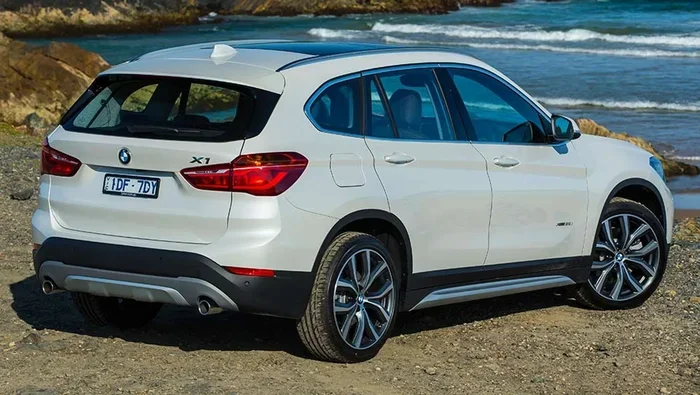
Visual guide about 2015 BMW X1 exterior
Image source: images.carsguide.com.au
1. Run-Flat Tires & Suspension
The X1 almost certainly rides on run-flat tires (RFT). They have stiff sidewalls to support the car when flat. The downside? They transmit every pothole into your spine, wear out fast (20k–25k miles), and cost $300+ per corner.
- Tip: Most owners switch to high-quality non-run-flats (Michelin CrossClimate 2, Continental DWS06+). You gain ride comfort and grip. Just buy a tire repair kit or a compact spare for the trunk.
- Suspension: Front control arm bushings (thrust arms) wear out by 60k miles. Rear shocks leak. Budget $800–$1,200 for a full front-end refresh.
Understanding the pros and cons of run-flat tires will save you money and back pain immediately.
2. Cooling System Fragility
BMW cooling systems are consumable. The electric water pump and plastic thermostat housing fail without warning, usually between 70k–100k miles. If the pump dies, the engine overheats in minutes. Aluminum heads warp fast.
- Replace water pump and thermostat as preventive maintenance at 80k miles if no record exists.
- Use only BMW-approved blue coolant (G48 or HT-12). Never mix with green universal coolant.
- Bleeding the air out of the system requires a scan tool or specific procedure—don’t guess.
3. Oil Leaks: The BMW Trifecta
Expect leaks from three places on high-mileage examples:
- Oil Filter Housing Gasket (OFHG): Leaks down the front of the engine. Easy DIY, messy pro job.
- Valve Cover Gasket: Leaks onto exhaust manifold. Smells like burning oil at stoplights.
- Oil Pan Gasket: Requires subframe drop on xDrive models. Expensive labor ($1k+).
4. Electronics & Interior Quirks
- iDrive Screen Delamination: The anti-glare coating bubbles and peels on the 6.5″ or 8.8″ screen. It’s cosmetic but annoying. Replacement screens are available on eBay.
- Tail Light LED Failure: The inner LED boards crack, causing “tail light malfunction” errors. Used assemblies are cheap; new ones are not.
- FRM (Footwell Module) Corrosion: Water leaks past the pollen filter or door seals into the passenger footwell, frying the module. Causes window/light/lock chaos. Check for damp carpet.
- Bluetooth/USB Issues: Early iDrive 6.0 (with navigation) can be glitchy with modern iPhones/Androids. A software update at the dealer often fixes it.
Maintenance Costs: The “BMW Tax” Reality
Let’s talk numbers. If you DIY, the 2015 X1 is cheap to maintain. If you pay a shop $180/hr, it hurts.

Visual guide about 2015 BMW X1 exterior
Image source: imgcdn.zigwheels.my
Fluids Are Your Friend
BMW calls them “lifetime fluids.” They lie. Change these on schedule:
- Engine Oil: Every 7,500 miles (not 15k). Use LL-01 or LL-01 FE 0W-20 / 5W-30. Critical for N20 timing chain life.
- Transmission Fluid: ZF 8HP “lifetime” fill? Change at 60k–80k miles. It transforms shift quality. Use ZF LifeGuard Fluid 8.
- Transfer Case (xDrive) & Rear Diff: Every 50k–60k miles. Use BMW LT-2 or equivalent 75W-90.
- Brake Fluid: Every 2 years regardless of mileage. Use DOT 4 LV. Correct brake fluid specification matters for ABS/DSC function.
- Coolant: Every 4–5 years. See cooling section above.
Estimated Annual Maintenance Budget (Shop Prices)
- Low Mileage (<60k): $1,200–$1,800/year (oil, brakes, filters, minor leaks).
- High Mileage (>100k): $2,500–$4,000/year (suspension, cooling overhaul, injectors, gaskets).
Pro Tip: Find an independent BMW specialist. Avoid the dealer for out-of-warranty work unless it’s a software update. Labor rates are often 30–40% lower.
Driving Dynamics: Why People Love This Car
Despite the maintenance list, the E84 X1 drives better than almost anything in its class, even today.
The “Last True BMW” Feel
Because it shares the 3 Series (E90/F30) rear-wheel-drive platform, the steering is hydraulic (servotronic). It has weight, feedback, and on-center feel. The 2016+ F48 generation switched to electric steering and FWD architecture. The difference is night and day.
- sDrive28i: Surprising fun. Front-wheel drive but with a 50/50 weight distribution nearly. You can rotate the rear with throttle lift-off.
- xDrive28i/35i: Rear-biased AWD (40/60 split normally). Handles snow effortlessly. Feels planted in corners.
Practicality Check
It is small. Rear seat legroom is tight for 6-footers. Cargo space is 27 cu ft behind rear seats (58 folded). The high liftover height makes loading heavy items awkward. If you need three rows, look elsewhere—this is a two-row only vehicle. For family hauling comparisons, see which BMW SUV has three rows.
Pre-Purchase Inspection (PPI): Your $200 Insurance Policy
Never buy a used BMW without a PPI. Not from a general mechanic. A BMW specialist. Here is the exact checklist to hand them:
Must-Check Items
- Cold Start Video: Ask seller for a video of first start of the day. Listen for timing chain rattle (N20) or wastegate rattle (N55).
- Oil Analysis: Send a sample to Blackstone Labs ($35). Shows bearing wear, fuel dilution, coolant intrusion.
- Scan for Shadow Codes: Generic OBD2 scanners miss BMW-specific codes. Need ISTA/D or Carly/BMW Scanner app. Look for misfire counters, VANOS codes, injector adaptation values.
- Timing Chain Verification (N20): Mechanic can inspect tensioner through oil cap hole with borescope or check service records for updated part numbers (11317606831 tensioner, 11317617217 guide rail).
- Transfer Case Fluid Condition (xDrive): Black fluid = neglected. Silver glitter = chain wear.
- Brake Pad/Life Sensors: Check front/rear % remaining. Sensors often break; visual check needed.
- Sunroof Drains: Pour water in tracks. Ensure it exits behind front wheels / in front of rear wheels. Clogged drains = wet carpets = fried FRM module.
- Subframe Mounts (Rear): Check for tears/cracks. Common on high-torque 35i models.
Certified Pre-Owned (CPO) vs. Private Party
BMW CPO warranty (now “BMW Certified”) covers 1 year/unlimited miles after the original 4yr/50k warranty expires. For a 2015, the original warranty is long gone. CPO adds value but costs $1,500–$3,000 premium.
- CPO Worth It If: You want peace of mind on major components (engine/trans/drivetrain). Covers injectors, turbos, water pump, electronics.
- CPO Skip If: You are handy, have a trusted indy shop, and the car has 80k+ miles (many wear items aren’t covered).
Always verify the CPO inspection checklist was actually performed. Some dealers rubber-stamp it.
Verdict: Should You Buy a Used 2015 BMW X1?
Yes, if:
- You want a driver’s car, not an appliance.
- You accept higher maintenance costs than a RAV4 or CR-V.
- You verify the N20 timing chain update (on 28i) or budget for N55 injectors (on 35i).
- You find one with 60k–90k miles, full service history, and recent cooling/suspension refresh.
- You plan to keep it 3–5 years and drive 10k–12k miles/year.
No, if:
- You want “set it and forget it” ownership.
- You cannot afford a $2,000 surprise repair bill.
- You need three rows or massive cargo space.
- The seller has zero records and “it just needs a sensor.”
- You live in a rust belt state and the undercarriage looks like a coral reef.
The Sweet Spot Buy
Target a 2015 xDrive28i (built 03/2015 or later) with 70k–85k miles. Silver/Black/Grey exterior, black interior. One owner. Dealer service records showing oil every 7.5k, brakes at 40k, cooling system at 80k. Price range: $14,000–$17,000 depending on market. That car will run another 100k miles with basic care.
If you find a clean xDrive35i under 80k miles with injector receipts? Buy it immediately. They are unicorns and hold value incredibly well.
Final Thoughts
The 2015 BMW X1 is a fantastic used buy for the right person. It delivers a driving experience that newer, heavier, front-drive-based competitors simply cannot match. The hydraulic steering, the rear-biased AWD, the inline-six option (35i)—these are dying breeds.
But it demands respect. It demands oil changes. It demands you listen to the engine on startup. It demands you fix the small leaks before they become big leaks. If you treat it like a German sports car wearing SUV clothes, it will reward you with years of smiles per mile. If you treat it like a Camry, it will punish your wallet.
Do your homework. Get the PPI. Check the build date. And enjoy one of the last “true” small BMWs ever made.
Frequently Asked Questions
Is the 2015 BMW X1 reliable?
The 2015 X1 is average for reliability if maintained strictly. The N20 engine (28i) has a known timing chain defect on early build dates, while the N55 (35i) is more robust but suffers from fuel injector and gasket leaks. A complete service history is the single biggest reliability indicator.
What is the biggest problem with the 2015 BMW X1?
The biggest problem is the N20 timing chain guide failure on 28i models built before January 2015. It can cause catastrophic engine failure. Secondary issues include oil leaks (valve cover, oil filter housing, oil pan), cooling system component failure (water pump/thermostat), and run-flat tire expense.
How many miles will a 2015 BMW X1 last?
With meticulous maintenance (oil every 7,500 miles, cooling overhaul at 80k, transmission fluid at 60k), the N20 and N55 engines can easily exceed 200,000 miles. The chassis and electronics typically hold up well, though suspension refreshes are needed every 80k–100k miles.
Does the 2015 BMW X1 require premium gas?
Yes, BMW recommends 91 octane minimum (93 preferred) for all 2015 X1 models (both N20 and N55). Running 87 octane risks engine knock, reduced power, poor fuel economy, and potential long-term carbon buildup or piston damage under load.
Is the 2015 BMW X1 good in snow?
The xDrive (AWD) models are excellent in snow with proper winter tires. The sDrive (FWD) models are competent in light snow with winter tires but lack the traction of AWD. All-season run-flats perform poorly in deep snow; a dedicated winter tire set is highly recommended for either drivetrain.
What is the difference between sDrive and xDrive on the 2015 X1?
sDrive is front-wheel drive (FWD); xDrive is all-wheel drive (AWD). xDrive adds a transfer case, front driveshaft, and front differential. It improves traction and stability but adds ~150 lbs, reduces fuel economy by 1-2 MPG, and introduces more components to maintain (transfer case fluid, front diff fluid, CV axles).