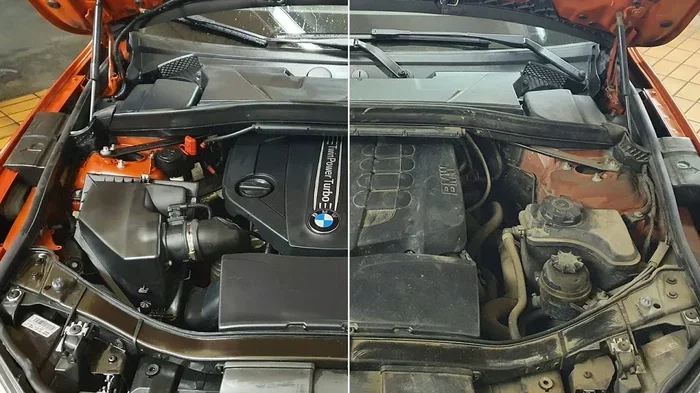
Featured image for BMW X1 engine bay
Image source: i.ytimg.com
Yes, BMW still uses plastic parts on the X1 extensively across all generations, particularly in the engine bay, cooling system, and exterior bumpers. This isn’t a cost-cutting flaw; it is a deliberate engineering choice for weight reduction, thermal efficiency, and complex molding capabilities. Understanding which parts are plastic—like the valve cover, intake manifold, and expansion tank—helps you plan maintenance and avoid common failure points as the vehicle ages.
If you are shopping for a used BMW X1 or currently own one, you have probably popped the hood and noticed something surprising. There is a lot of plastic. It sits right on top of the engine. It runs through the cooling system. It wraps the front and rear ends. This leads to a very common question: does bmw still use plastic parts on x1 models today?
The short answer is a definitive yes. But before you assume this is a sign of cheapening quality or “planned obsolescence,” you need to understand the why. Modern BMW engineering relies heavily on advanced polymers. These aren’t the brittle plastics of the 1990s. They are glass-fiber reinforced, heat-stabilized composites designed to outperform metal in specific applications. In this guide, we will break down exactly which parts are plastic, why they are there, which ones fail, and how to maintain them so your X1 runs strong for years.
Key Takeaways
- Strategic Engineering: Plastic components in the BMW X1 are primarily chosen for weight savings, thermal management, and manufacturing precision, not just to lower costs.
- Engine Bay Dominance: Critical parts like the valve cover, intake manifold, coolant expansion tank, and thermostat housing are made from high-strength reinforced composites on both B38 and B48 engines.
- Exterior & Interior Use: Front and rear bumper covers, kidney grille surrounds, lower body cladding, and significant interior trim pieces utilize various plastic polymers.
- Common Failure Points: The cooling system (expansion tank, thermostat housing) and charge pipes (on tuned models) are the most frequent plastic-related repair items as mileage climbs past 60,000 miles.
- Generational Evolution: Newer U11 models (2023+) use higher-grade composites and more aluminum reinforcement compared to the F48 generation, improving durability.
- Maintenance is Key: Proactive replacement of cooling system plastics every 60k–80k miles prevents catastrophic overheating and engine damage.
- Not “Cheap” Plastic: BMW uses glass-fiber reinforced polyamides (PA66-GF30/GF35) designed to withstand high heat and pressure cycles far better than standard consumer plastics.
📑 Table of Contents
- The Short Answer: Yes, But It Is Strategic Engineering
- Why BMW Chooses Plastic for the X1
- Key Plastic Components Under the Hood (B38 & B48 Engines)
- Exterior Plastic Parts: Bumpers, Grilles & Cladding
- Interior Plastics: Quality Feel vs. Cost Management
- Common Issues & Maintenance Tips for X1 Plastic Parts
- Preventative Maintenance Schedule for Plastic Components
- Comparing X1 Generations: Plastic Evolution
- Expert Verdict: Should You Worry About Plastic Parts?
- Conclusion
The Short Answer: Yes, But It Is Strategic Engineering
Every current BMW X1 (the U11 chassis launched in 2023) and its predecessors (F48 2015–2022, E84 2009–2015) utilize plastic extensively. You will find it in three main zones: the powertrain, the exterior body, and the interior cabin. The motivation is rarely just “saving money on parts.” It is about physics. Metal expands and contracts significantly with heat. It is heavy. It is harder to mold into complex internal shapes required for modern airflow and coolant routing.
Plastic—specifically reinforced polyamide—solves these problems. It handles thermal cycling better in thin walls. It allows engineers to mold internal coolant passages and air runners that would be impossible to cast in aluminum. It cuts weight, which helps the X1 meet strict CAFE fuel economy standards and improves the front-to-rear weight balance. So, when you see that black valve cover or that massive intake manifold, know it is there because an engineer calculated it works better than aluminum for that specific job.
Why BMW Chooses Plastic for the X1
Weight Savings and Fuel Economy
This is the biggest driver. An aluminum intake manifold on a 2.0L turbo engine weighs roughly 8–10 lbs. The plastic version on the B48 engine weighs about 3–4 lbs. Multiply that across the valve cover, coolant pipes, thermostat housing, and front end carrier, and you save 30–50 lbs of front-end weight. On a front-wheel-drive-based platform like the X1 (UKL/FAAR architecture), moving weight off the nose improves turn-in response and reduces understeer. It also directly boosts MPG figures.
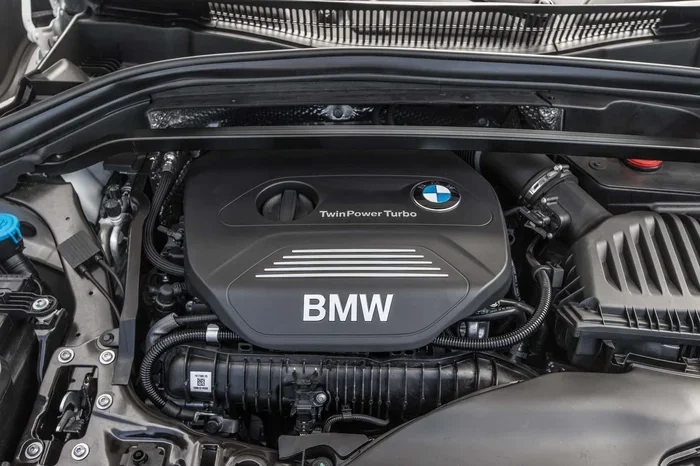
Visual guide about BMW X1 engine bay
Image source: cevpu.com
Thermal Management Properties
Metal conducts heat rapidly. In a modern turbocharged engine, you often want to keep heat in the exhaust tract (for turbo spool and catalyst light-off) but remove heat from the intake charge. Plastic is a natural insulator. A plastic intake manifold keeps the incoming air cooler than a hot aluminum manifold sitting next to the cylinder head. Cooler air is denser air, which means more power and less knock tendency. Similarly, plastic coolant passages reduce heat soak into the engine bay.
Manufacturing Precision and Integration
Injection molding allows BMW to integrate multiple parts into one. The X1’s intake manifold isn’t just a manifold; it often houses the charge air cooler (intercooler), throttle body mounting, PCV system passages, and sensor bosses in a single molding. Doing this in aluminum would require casting, machining, welding, and assembly of 10+ separate pieces. One molded plastic part eliminates gaskets, bolts, and leak paths. It is faster to assemble on the line and theoretically more reliable out of the box.
Key Plastic Components Under the Hood (B38 & B48 Engines)
Whether you have the 3-cylinder B38 (sDrive18i/xDrive23i) or the 4-cylinder B48 (xDrive28i, M35i), the material strategy is nearly identical. Here are the major plastic players you will see when you open the hood.
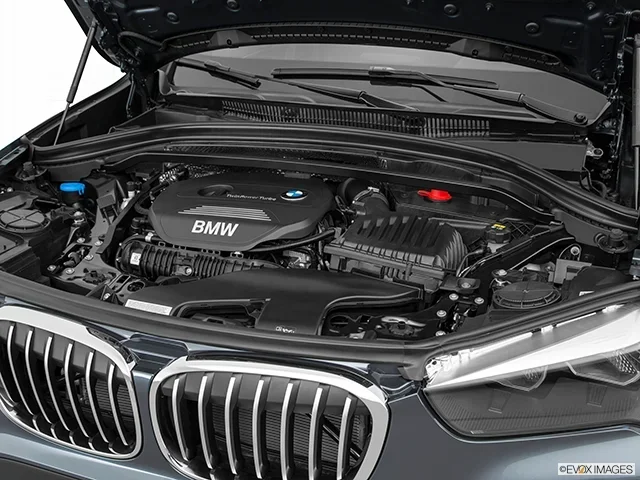
Visual guide about BMW X1 engine bay
Image source: d2ivfcfbdvj3sm.cloudfront.net
Valve Cover (Cylinder Head Cover)
This is the most visible plastic part. On the B48 and B38, the valve cover is a single-piece glass-fiber reinforced polyamide (PA66-GF35). It integrates the PCV (Positive Crankcase Ventilation) separator internally. In older engines, the PCV was a separate external valve with rubber hoses that cracked. Molding it inside the cover eliminates those hoses. However, the internal diaphragm can fail over time, requiring the whole cover replacement. The cover also holds the ignition coils and often the camshaft position sensors.
Intake Manifold / Charge Air Cooler Assembly
On the B48 engine (used in xDrive28i and M35i), the intake manifold is a massive plastic assembly that includes the water-to-air intercooler (charge air cooler) inside it. Coolant flows through the core inside the plastic shell to cool the compressed air from the turbo. This is a brilliant packaging solution but creates a critical failure mode: if the plastic shell cracks or the internal seals fail, coolant enters the intake manifold—hydrolocking the engine instantly. On the B38, the manifold is plastic but the intercooler is a separate unit mounted lower.
Cooling System: Expansion Tank, Thermostat Housing, & Water Pump
This is the “Achilles’ heel” of almost every modern BMW, X1 included. The coolant expansion tank (reservoir) is plastic. The thermostat housing is plastic. The electric water pump volute is plastic. The radiator end tanks are plastic. The heater core lines running to the firewall are plastic quick-connect fittings. These parts undergo constant pressure cycling (0 to 20+ psi) and thermal cycling (-20°F to 250°F+). Over 7–10 years, the polymer chains degrade, become brittle, and crack. This is the #1 cause of roadside breakdowns on the X1.
Pro Tip: If you are doing any major cooling work, replace the expansion tank, thermostat, and water pump as a kit. The labor overlaps 90%. Use OEM brands like Behr, Mahle, or Wahler. For more on selecting the correct fluid for these sensitive systems, check our guide on choosing the right coolant for your BMW vehicle.
Turbo Inlet Pipe & Charge Pipe
The pipe connecting the airbox to the turbo inlet is plastic (often with a rubber accordion section). The “charge pipe” carrying boosted air from the turbo/intercooler to the manifold is plastic on stock F48/U11 models. It has a plastic diverter valve (blow-off valve) housing integrated. These are fine at stock boost levels (18–22 psi). If you tune the car (Stage 1/2), the increased pressure and heat often crack the charge pipe or blow the diverter valve diaphragm. Most tuners mandate an aluminum charge pipe upgrade immediately.
Front End Carrier (Radiator Support)
Look behind the bumper. The structural crossmember holding the radiator, condenser, intercooler, and crash absorbers is a glass-fiber reinforced nylon structure. It is incredibly strong for its weight. It is designed to crush predictably in a crash. It does not rust. However, in a minor fender bender, it often cracks rather than bends, requiring replacement rather than straightening.
Exterior Plastic Parts: Bumpers, Grilles & Cladding
The X1 wears its plastic on the outside, too. This is standard industry practice, but BMW’s execution is specific.
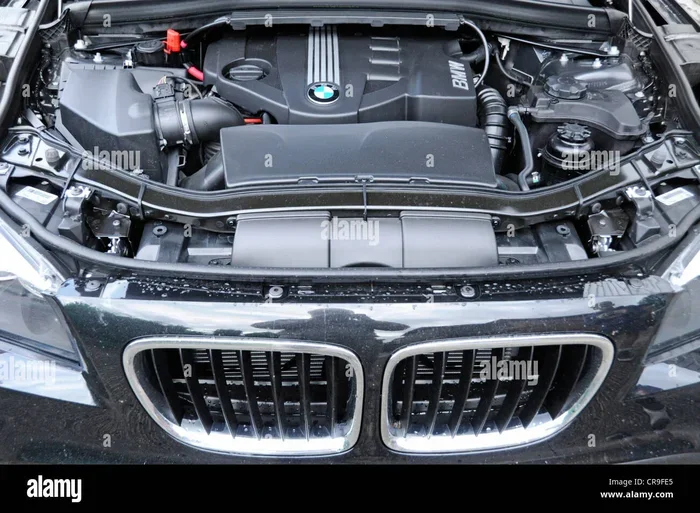
Visual guide about BMW X1 engine bay
Image source: c8.alamy.com
Kidney Grille Surrounds and Slats
The iconic double kidney grille is almost entirely plastic. The surround, the slats (vertical or horizontal depending on trim), and the active grille shutter mechanism behind them are all molded polymers. On M Sport models, the slats often have a high-gloss black finish or a “meshed” look that is painted plastic. The active shutters (flaps that close at highway speeds for aero) are small plastic actuators and flaps that can seize up from road salt and debris.
Front & Rear Bumper Covers
The entire visible bumper “skin” is a thermoplastic polyolefin (TPO) or polypropylene (PP) cover. It is painted. Underneath sits a foam impact absorber (EPS/EPP foam) and the steel/reinforced plastic crash beam. The cover is held on by plastic clips, rivets, and screws that become brittle after a few heat cycles. Parking sensors and the front camera (if equipped) mount directly into this plastic cover.
Lower Body Cladding & Wheel Arch Liners
The X1 features prominent black plastic cladding along the rocker panels and wheel arches. This is usually unpainted textured TPO. It protects the metal body from stone chips and door dings. It fades to grey over time due to UV exposure. You can restore it with products like “Solution Finish” or ceramic trim coatings. The inner wheel arch liners (fender liners) are thin, flexible plastic shields. They tear easily if you run over debris or hit a curb, exposing wiring harnesses and suspension components to salt spray.
Headlight & Taillight Housings
The lens is polycarbonate (clear plastic) with a UV hard coat. The housing (the black box behind the lens) is typically a glass-filled polyester or polypropylene. The internal reflectors are often plastic with vapor-deposited aluminum. The adjustment motors and leveling sensors mount to plastic brackets inside. Condensation inside the lens is common on high-mileage X1s due to permeable seals or cracked housings.
Interior Plastics: Quality Feel vs. Cost Management
Inside, the X1 walks a line between “premium feel” and “volume production reality.”
Dashboard & Door Panels
The main dashboard structure is a foam-backed plastic skin (often TPO or PVC) over a steel reinforcement beam. The upper dash pad on higher trims (M Sport, xLine) uses a softer, grain-textured “soft-touch” material (TPU skin). Lower dash sections, glovebox door, and center console sides are often harder, scratch-prone polypropylene. The door panels follow the same logic: soft-touch top, hard plastic lower.
Center Console & Switchgear
The iDrive controller, climate controls, window switches, and drive mode selector are all plastic. The piano black trim (if equipped) is ABS plastic with a high-gloss clear coat. It scratches if you look at it wrong. The cup holder mechanism, wireless charging pad housing, and USB port surrounds are all molded plastic. The new U11 “floating” center console uses a lot of structural plastic to achieve that open, airy look while hiding wiring harnesses.
Seat Components
Seat frames are steel. But the seat backs, bottom pans, adjustment lever handles, lumbar support knobs, and headrest guides are plastic. The “Veganza” synthetic leather (standard on many trims) is a polyurethane coating over a polyester knit backing—technically a plastic textile. It wears very well but can delaminate at high-wear points (bolsters) after 100k+ miles.
Common Issues & Maintenance Tips for X1 Plastic Parts
Knowing what is plastic helps you predict what breaks. Here is the reality of ownership.
Cooling System Brittleness (The #1 Issue)
As mentioned, the expansion tank, thermostat housing, and water pump are wear items. Plan to replace the expansion tank and cap every 60,000 miles or 6 years. Replace the thermostat and water pump every 80,000–100,000 miles. Do not wait for a leak. A cracked expansion tank on the highway = instant overheating = potential head gasket failure or warped cylinder head on these aluminum-block engines. The cost of a DIY cooling overhaul kit ($300–$500 parts) is 1/20th the cost of an engine replacement.
Charge Pipe & Diverter Valve Failures
Stock plastic charge pipes handle factory boost fine. Add a tune, and they become the weak link. The diverter valve (BOV) diaphragm inside the plastic housing tears, causing boost leaks, rough idle, and limp mode. Fix: Install an aluminum charge pipe (VRSF, CSF, Forge) and a metal diverter valve (GFB, Forge) if you tune. Keep the stock parts for warranty visits.
Brittle Clips, Rivets, & Fasteners
This drives DIYers crazy. The plastic rivets holding the engine cover, belly pans, bumper covers, and wheel liners are single-use. They shatter upon removal. Always buy a “BMW clip kit” (assortment of 50–100 push pins, rivets, and screws) before starting any job. Never reuse a clip. It will vibrate loose and you will lose a belly pan on the highway.
Intake Manifold / Intercooler Leaks (B48 Specific)
On higher mileage F48 xDrive28i/M35i models (80k+ miles), the seals between the intercooler core and the plastic manifold shell can weep coolant. You may smell sweet coolant after a hot shutdown or see pink crust near the hose connections. This requires manifold replacement ($800–$1200 part). There is no easy fix. Monitor coolant level religiously.
Active Grille Shutter Failure
The little plastic flaps behind the kidney grille get stuck open or closed. The car throws a “Active Grille Shutter” fault code (check engine light). Usually, it’s just ice/salt buildup or a broken plastic linkage arm. You can often manually free them, but the actuator motor gear strips easily. Dealer fix is ~$400–$600. Many owners just unplug the motor and code it out (requires BimmerCode/ESYS) if they live in warm climates.
Preventative Maintenance Schedule for Plastic Components
If you want your X1 to hit 200k miles without major drama, follow this plastic-focused schedule:
- Every Oil Change (10k mi): Visual inspect coolant reservoir for cracks/seepage. Check charge pipe connections for oil residue (turbo seal leak) or cracks. Check belly pan fasteners.
- Every 30k Miles: Remove engine beauty cover. Inspect valve cover for oil seepage at perimeter (PCV failure sign). Inspect turbo inlet pipe accordion for tears. Spray silicone lube on hood latch and grille shutter mechanism.
- Every 60k Miles / 6 Years: Replace Coolant Expansion Tank & Cap. Flush coolant with BMW HT-12 (blue/green) or approved equivalent. Inspect radiator end tanks for seepage.
- Every 80k–100k Miles: Replace Thermostat, Water Pump, & Thermostat Housing. Replace upper/lower radiator hoses (plastic quick-connects often fail on removal). Consider replacing the plastic heater core lines at firewall if accessible.
- As Needed: Replace brittle wheel liner clips. Restore faded exterior cladding annually with trim coat. Clean piano black trim with microfiber only (no paper towels).
Comparing X1 Generations: Plastic Evolution
The amount and type of plastic have shifted significantly across the three X1 generations.
| Component Area | E84 (2009–2015) RWD/AWD | F48 (2015–2022) FWD/AWD | U11 (2023+) FWD/AWD/EV |
|---|---|---|---|
| Valve Cover | Magnesium/Aluminum (N20) / Plastic (N18) | Plastic (B48/B38) w/ Integrated PCV | Plastic (B48TU/B38TU) Improved PCV Diaphragm |
| Intake Manifold | Plastic (N20/N18) – Separate Intercooler | Plastic w/ Integrated Water-Air Intercooler (B48) | Plastic w/ Integrated Intercooler (Revised Seals) |
| Coolant Expansion Tank | Plastic (Remote Mount) | Plastic (Integrated Sensor, Pressurized) | Plastic (Reinforced Neck, Better Sensor) |
| Thermostat Housing | Plastic (External Map Thermostat) | Plastic (Integrated Electric Thermostat) | Plastic (Integrated, Faster Acting) |
| Front End Carrier | Steel / Aluminum Hybrid | Full Plastic Composite Carrier | Plastic Composite + Aluminum Crash Nodes |
| Charge Pipe | Plastic (N20) / Aluminum (N55 35i) | Plastic (All Gas Models) | Plastic (Gas) / N/A (iX1 EV) |
| Interior Dash Top | Hard Plastic / Optional Leather | Soft-Touch TPU Standard | Soft-Touch TPU / Recycled Materials Options |
Key Takeaway: The F48 generation was the “peak plastic” moment, moving the front structure entirely to composite. The U11 refines this with better materials and slightly more aluminum reinforcement in crash zones, but the engine bay plastic strategy remains identical because the B48/B38 engine family carries over.
Expert Verdict: Should You Worry About Plastic Parts?
No. You should respect them, not fear them. The plastics BMW uses in the X1—PA66-GF30/35, PPA-GF50, TPO, PP-EPDM—are aerospace-grade engineering polymers. They are specified to survive 15 years and 150,000 miles of thermal cycling in the engine bay. They do their job well. The failures happen when:
- Maintenance is deferred. Old coolant becomes acidic and eats the plastic from the inside out. Using the correct BMW coolant is the single best thing you can do for plastic longevity.
- Modifications exceed design limits. Tuning past stock boost pressures without upgrading the charge pipe.
- Age + Heat Cycles. Polymer chains simply break down over a decade. It is physics, not a defect.
If you treat the cooling system as a consumable system (like brakes or tires) and budget $500–$800 every 4–5 years for a full plastic refresh, the X1 is remarkably reliable. The plastic valve cover and intake manifold rarely fail unless overheated. The exterior plastics are cosmetic. The interior plastics are durable if you avoid harsh chemicals.
Also, remember that the X1 shares its core architecture with the 1 Series, 2 Series Gran Coupe, and X2. The parts availability is massive. Every plastic clip, tank, and manifold is in stock at multiple warehouses worldwide. You will never hunt for a discontinued plastic part on this platform.
Conclusion
So, does bmw still use plastic parts on x1? Absolutely. From the valve cover sealing your camshafts to the bumper cover taking a parking lot ding, advanced polymers are integral to the X1’s DNA. They make the car lighter, more efficient, faster to build, and safer in crashes. The trade-off is a non-negotiable maintenance discipline: you must respect the cooling system’s lifespan. Treat the plastic expansion tank, thermostat, and water pump as scheduled replacement items—just like oil and brakes—and your X1 will reward you with years of driving enjoyment. Don’t let the sight of black composite under the hood scare you off; it’s a sign of modern, intelligent engineering. Just keep fresh blue coolant in it, and keep a spare clip kit in your trunk.
Frequently Asked Questions
Does the BMW X1 have a plastic valve cover?
Yes, all current BMW X1 models (F48 and U11 generations) use a glass-fiber reinforced polyamide plastic valve cover. It integrates the PCV system internally. While durable, the internal PCV diaphragm can fail around 80k–100k miles, often requiring full cover replacement.
Is the BMW X1 intake manifold plastic?
Yes. The B38 (3-cylinder) and B48 (4-cylinder) engines in the X1 use plastic intake manifolds. On the B48, the manifold houses the water-to-air intercooler internally. These are robust but can develop coolant leaks at the intercooler seals on high-mileage examples.
What plastic parts fail most often on the BMW X1?
The cooling system components fail most frequently: the coolant expansion tank, thermostat housing, electric water pump volute, and radiator end tanks. These should be treated as maintenance items every 60k–100k miles. Charge pipes can also crack on tuned vehicles.
Are BMW X1 bumpers plastic?
Yes, the front and rear bumper covers are made of thermoplastic polyolefin (TPO) or polypropylene. They are painted to match the body. The underlying crash structure uses a plastic composite carrier with steel/aluminum reinforcement beams.
Can I prevent plastic parts from failing on my X1?
You cannot stop aging, but you can maximize lifespan. Use only BMW-approved coolant (HT-12) to prevent internal degradation. Avoid engine overheating at all costs. Do not over-tighten plastic fasteners. Replace cooling system plastics proactively at 80k–100k mile intervals.
Is the BMW X1 front grille plastic?
Yes, the kidney grille surround, slats, and the active grille shutter mechanism behind them are all plastic. The active shutter flaps and actuator gears are common failure points in cold/salty climates but are relatively inexpensive to replace or code out.