
Featured image for BMW X1 SUV driving
Image source: mediacloud.carbuyer.co.uk
Does the BMW X1 feel like a SUV? The short answer is yes, but with a sporty, car-like twist. It offers a high seating position, available all-wheel drive, and decent ground clearance. However, its sharp handling and firm ride remind you of its sedan roots. This guide breaks down the driving dynamics, interior space, and real-world practicality so you know exactly what to expect.
Shopping for a luxury crossover often leads to a critical question: does BMW X1 feel like a SUV enough to justify the badge? It is a fair question. The X1 sits at the entry point of the BMW lineup. It shares its fundamental architecture (the FAAR platform) with the 2 Series Gran Coupe and the Mini Countryman. That means front-wheel-drive bones underpin this “Sports Activity Vehicle.”
Traditionalists argue a real SUV needs a longitudinal engine, a transfer case, and body-on-frame construction. Modern buyers usually just want the perks: a high hip-point, all-weather traction, and cargo flexibility. The X1 delivers those perks in spades. Yet, it refuses to drive like a tall, wallowy box. We spent extensive time behind the wheel—commuting, road-tripping, and tackling a snowy mountain pass—to give you the unvarnished truth.
Key Takeaways
- Elevated Seating: The X1 provides a commanding view of the road, a core SUV trait drivers love.
- Sporty Handling: It drives more like a hot hatch than a truck-based SUV, offering sharp cornering.
- xDrive Advantage: The all-wheel-drive system adds genuine foul-weather capability and traction.
- Interior Versatility: Clever packaging delivers surprising rear legroom and flexible cargo space.
- Firm Ride Quality: The suspension is tuned for control, meaning you feel bumps more than in softer rivals.
- Ground Clearance: At roughly 7.2 inches, it handles light trails but isn’t an off-roader.
- Best of Both Worlds: It blends SUV utility with the driving engagement BMW is famous for.
📑 Table of Contents
- The Driving Position: Commanding Or Confining?
- Ride Quality: Firm, Controlled, And Communicative
- All-Wheel Drive: The xDrive Difference
- Interior Space: The TARDIS Effect
- Powertrain: Turbo Four-Cylinder Grit
- Comparing The Competition: Context Matters
- Reliability And Ownership Costs
- Who Should Buy The X1?
- Quick Tips For Test Driving
- Expert Insight: The “Sports Activity Vehicle” Label
- Conclusion
The Driving Position: Commanding Or Confining?
The very first thing you notice when sliding into the driver’s seat is the view. You sit high. Your hips are level with the windows of sedans next to you at a stoplight. This elevated seating position is the primary psychological trigger that says “SUV.” You see over traffic. You spot potholes early. It feels safe and commanding.
However, the cockpit wraps around you like a sports car. The dash is low. The center console rises high to meet your arm. The steering wheel telescopes far out. You don’t feel like you are climbing up into a truck; you feel like you are strapping into a machine. The seats are heavily bolstered. They hold you tight in corners but can feel narrow for broader shoulders on a long haul. It is a “command seating” position, but with a performance orientation.
Visibility And Blind Spots
Forward visibility is excellent. The hood is short and flat. You can place the front corners within inches of a parking curb. Rear visibility is the weak link. The C-pillars are thick to accommodate the roof rails and structural safety. The rear window is small. You become heavily reliant on the standard rear-view camera and parking sensors. Optional surround-view cameras are worth every penny here.
Ride Quality: Firm, Controlled, And Communicative
If you define “SUV feel” as floating over expansion joints like a land yacht, the X1 will disappoint. The suspension tuning is distinctly European. It prioritizes body control over isolation. You feel the texture of the asphalt. Sharp impacts—potholes, frost heaves, manhole covers—thump through the chassis with a solid “thunk” rather than a muted “whoosh.”
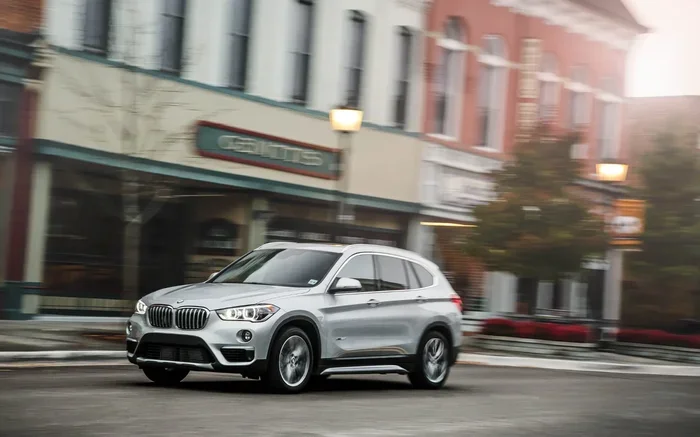
Visual guide about BMW X1 SUV driving
Image source: suvdrive.com
This firmness serves a purpose. On a winding back road, the X1 stays flat. There is minimal body roll. The rear multi-link suspension (standard even on FWD models) keeps the back end planted. You can carry surprising speed through corners. It feels agile, darty, and eager to turn in. This is the BMW X1 handling DNA shining through the taller roof line.
Adaptive Suspension: Worth The Upgrade?
Many trims offer the M Adaptive Suspension. In “Comfort” mode, it takes the edge off the sharpest hits. It makes the daily commute livable. In “Sport” mode, it firms up dramatically, reducing dive under braking and squat under acceleration. If you live in a city with crumbling infrastructure, get the adaptive dampers. If you lease and drive mostly highways, the standard passive setup is perfectly adequate.
Noise, Vibration, And Harshness (NVH)
Wind noise is well suppressed at highway speeds. The mirrors are shaped to push air away from the A-pillars. Tire roar is the main intruder. The standard run-flat tires (standard on most trims) have stiff sidewalls. They transmit more road noise and impact harshness than standard tires. Switching to non-run-flats transforms the ride quality, but you lose the mobility safety net. Many owners keep a BMW run-flat tire repair kit or a spare tire kit in the cargo well for peace of mind.
All-Wheel Drive: The xDrive Difference
This is where the SUV argument gets serious. Front-wheel drive (sDrive) models are fine for sunny climates. They save weight and fuel. But the xDrive all-wheel drive system fundamentally changes the character. It transforms the X1 from a fair-weather crossover into a genuine all-season tool.

Visual guide about BMW X1 SUV driving
Image source: miro.medium.com
The system is front-biased under normal conditions. It can send up to 100% of torque to the rear axle almost instantly. It uses brake-based torque vectoring (acting like a limited-slip differential) to rotate the car into corners. In snow, it is remarkable. The car finds grip where none seems to exist. The stability control allows just enough slip to build momentum before clamping down.
Ground Clearance And Approach Angles
The X1 offers roughly 7.2 inches of ground clearance (varies slightly by wheel/tire combo). That is enough for rutted dirt roads, deep snow, and steep driveway aprons. It is not enough for rock crawling. The front bumper hangs low. The approach angle is modest. You will scrape the chin spoiler on aggressive speed bumps or deep dips if you aren’t careful. Think “gravel road to the trailhead,” not “the trail itself.”
Driving Modes And Eco Pro
The Driving Experience Control switch (Eco Pro, Comfort, Sport) alters throttle mapping, shift points, steering weight, and climate control aggression. Eco Pro mode dulls the throttle response significantly to save fuel. It makes the car feel sluggish off the line. Most drivers leave it in Comfort for daily driving. Sport sharpens everything up, holding gears longer and weighting the steering. There is no dedicated “Off-Road” mode, though the xDrive logic handles loose surfaces automatically.
Interior Space: The TARDIS Effect
BMW calls the X1 a subcompact SUV. Park it next to a first-gen X3, and they are nearly identical in length. The current X1 (U11 generation, 2023+) grew significantly. It is wider and longer than the outgoing model. The result? Genuine adult space in the second row.

Visual guide about BMW X1 SUV driving
Image source: smartcdn.gprod.postmedia.digital
Two six-footers can sit front and back with knee room to spare. The rear bench is flat-ish, so the middle passenger only fights a modest driveshaft tunnel (on xDrive models). The seatbacks recline. You can slide the rear bench fore/aft (standard on some trims, optional on others) to prioritize legroom or cargo volume. It is a proper family hauler for four.
Cargo Versatility
Behind the rear seats, you get roughly 27 cubic feet (varies by spec). That fits a large stroller, several grocery bags, or two carry-on suitcases standing upright. Fold the 40/20/40 split rear seats flat, and the load floor is nearly level. Maximum capacity pushes past 57 cubic feet. The liftgate opening is wide and low. There is a handy under-floor storage bin for the cargo cover or dirty shoes. It is practical in the ways that matter daily.
Material Quality And Tech Feel
The dashboard features the curved display (iDrive 9) merging the 10.25-inch cluster and 10.7-inch touchscreen. It looks modern and high-tech. The graphics are crisp. The OS is snappy. However, climate controls are buried in the touchscreen. You must tap through a menu to adjust fan speed or heated seats. It is distracting at speed. Physical toggle switches for volume and hazard lights remain—thank goodness.
Materials are a mix. Soft-touch plastics on the upper doors and dash. Harder, grainy plastic on the lower doors and center console knee areas. It feels premium for the price point, but you will find nicer plastics in an Audi Q3 or Volvo XC40. The build quality is tight. No squeaks or rattles on our testers.
Powertrain: Turbo Four-Cylinder Grit
The sole engine in the US is the B48 2.0-liter turbocharged four-cylinder. In the xDrive28i, it makes 241 hp and 295 lb-ft of torque. In the M35i (the performance variant), it pumps out 312 hp and 295 lb-ft. Both use a 7-speed dual-clutch transmission (DCT).
The base engine is punchy. Torque arrives low (around 1,500 rpm). Passing power is instant. The DCT snaps off shifts instantly in Sport mode. In traffic, it can be a touch jerky at low speeds—characteristic of dual-clutch boxes. The engine note is a cultured growl, enhanced slightly by speakers. It sounds sporty, not agricultural.
Fuel Economy Reality
EPA estimates hover around 25 city / 34 highway for sDrive and 24/32 for xDrive. Real-world mixed driving typically lands in the 26–28 mpg range. It runs on premium fuel (91+ octane). The 14.5-gallon tank gives a theoretical range of 400+ miles on the highway. Decent, not class-leading.
Towing Capacity
Properly equipped, the X1 can tow 2,000 lbs (xDrive) or 1,500 lbs (sDrive). That covers a small jet ski, a lightweight teardrop camper, or a utility trailer with a motorcycle. You need the factory tow hitch prep kit. It is not a heavy hauler, but it adds to the “SUV utility” checklist.
Comparing The Competition: Context Matters
To truly answer does BMW X1 feel like a SUV, you have to drive the rivals back-to-back.
| Competitor | Ride Feel | Interior Space | Driving Dynamics | Verdict |
|---|---|---|---|---|
| BMW X1 | Firm, Sporty, Connected | Excellent for class | Sharp, Engaging, Car-like | Driver’s choice |
| Audi Q3 | Composed, Slightly Softer | Tighter Rear Legroom | Safe, Understeer-Prone | Tech & Style Focus |
| Mercedes GLA | Supple, Isolated | Cramped Rear Seat | Relaxed, Numb Steering | Comfort & Badge |
| Volvo XC40 | Comfortable, Floaty | Boxy, Very Practical | Safe, Not Sporty | Family Practicality |
| Genesis GV70 | Balanced, Refined | Spacious, Luxurious | Surprisingly Athletic | Value & Quality King |
The X1 is the only one that genuinely feels like a sports car on stilts. The Genesis GV70 comes close on engagement but rides better. The Volvo feels more like a traditional “soft” SUV. The Audi and Mercedes prioritize cabin ambiance over driver connection. If you want the SUV utility without the driving penalty, the X1 is unique.
Reliability And Ownership Costs
The B48 engine is a proven workhorse. It uses a timing chain (not a belt) and has a closed-deck block. The 7-speed DCT is generally robust but requires fluid changes every 40k–60k miles for longevity. The xDrive transfer case and rear differential also need fluid service.
Electronics are the weak point. Sensors, modules, and the complex iDrive 9 system can glitch. Software updates are frequent. As the car ages out of warranty, an extended warranty or BMW Certified Pre-Owned coverage becomes very attractive. Checking reliability rankings for specific model years is smart due diligence before buying used.
Common Issues To Watch
- Coolant Leaks: Plastic thermostat housings and water pump outlets get brittle.
- Oil Filter Housing Gasket: Classic BMW seepage point.
- Drivetrain Malfunction: Often a sensor or software glitch, but scary on the dash. Read our guide on BMW drivetrain malfunction meanings.
- Run-Flat Tire Wear: Expensive to replace; sidewalls bubble on potholes.
Maintenance costs are higher than Japanese rivals. Budget $1,200–$1,800 annually for maintenance/repairs on a 5-year-old example. DIY friendly? Moderately. The engine bay is tight. Battery registration requires a scanner. Brake fluid changes (every 2 years) are easy. See our guide on selecting the right brake fluid.
Who Should Buy The X1?
You should buy the X1 if:
- You want SUV utility (seating height, cargo, AWD) but refuse to drive a boring appliance.
- You actually enjoy driving—steering feel, cornering, acceleration matter to you.
- You need a compact footprint for city parking/garages but need maximum interior space.
- You appreciate high-tech interfaces and digital gauge clusters.
You should look elsewhere if:
- You want a pillowy soft ride that isolates you from the road completely.
- You need three rows of seating (look at the X5 or BMW X7).
- You want physical buttons for every climate and radio function.
- You plan serious off-roading (look at a Bronco, 4Runner, or Defender).
Quick Tips For Test Driving
- Bring your stuff: Install your car seat. Load your golf clubs. Check the stroller fold.
- Hit a rough road: Find a potholed street. Drive 30 mph. Assess the thump.
- Test the tech: Pair your phone. Use voice control. Try the navigation. Adjust climate via screen while moving (safely).
- Check the blind spots: Merge on a highway. Check the B-pillar obstruction.
- Try Eco Pro vs Sport: Feel the massive difference in throttle mapping.
Expert Insight: The “Sports Activity Vehicle” Label
BMW marketing coined “SAV” decades ago for the X5. It was marketing fluff then. On the X1, it is surprisingly accurate. The vehicle actively resists the typical SUV compromises. It refuses to wallow. It refuses to understeer terminally. It refuses to feel tall and tippy.
The trade-off is a firmer ride and more road noise. For the target buyer—often a younger professional or a young family keeping one “fun” car—that trade-off is the selling point. They don’t want a minivan feel. They want the car they drove before kids, just with a higher roof and a bigger trunk. The X1 delivers exactly that.
Conclusion
So, does BMW X1 feel like a SUV? Yes. It checks the functional boxes: high seating, available AWD, usable ground clearance, flexible cargo, and family-friendly rear space. It looks the part with its bold kidney grille and muscular wheel arches.
But dynamically? It feels like a BMW first. The steering talks to you. The chassis rotates on command. The powertrain punches above its weight. It sacrifices the last 10% of ride plushness to keep the driver engaged. If your definition of an SUV requires isolation and float, look at a Lexus NX or Lincoln Corsair. If your definition requires capability wrapped in driving joy, the X1 is the benchmark. It proves you don’t have to stop being a driver just because you need a utility vehicle.
Frequently Asked Questions
Is the BMW X1 considered a real SUV or just a tall car?
It is a unibody crossover (CUV), which is what almost every modern “SUV” actually is. It lacks a body-on-frame construction and low-range gearing. However, it meets the practical definition: high seating, AWD availability, and cargo versatility. It feels like an SUV when you are loading groceries or driving in snow, but drives like a car on the highway.
How does the BMW X1 ride compare to the X3?
The X3 is larger, heavier, and rides on a different platform (CLAR). It feels more substantial and isolated. The X1 feels lighter, nimbler, and firmer. The X3 soaks up bumps better; the X1 communicates more road texture. The X3 is the “mature” choice; the X1 is the “athletic” choice.
Can the BMW X1 handle snow well?
With xDrive all-wheel drive and a set of dedicated winter tires, the X1 is exceptional in snow. The torque-vectoring traction control digs through deep powder effectively. Ground clearance (7.2 inches) limits you in unplowed drifts deeper than the bumper, but for 95% of winter driving, it is extremely capable.
Is the BMW X1 big enough for a family of four?
Yes, comfortably. Two adults fit easily in the rear with good knee and headroom. The cargo area handles a double stroller or large luggage. For a family of five, the middle rear seat is usable for short trips but tight for adults on long journeys due to the firm cushion and driveshaft tunnel.
What is the difference between sDrive and xDrive on the X1?
sDrive is front-wheel drive only. It is lighter, cheaper, and slightly more fuel-efficient. xDrive is all-wheel drive. It adds traction for rain, snow, and loose surfaces, plus better launch acceleration. xDrive adds roughly 150 lbs and ~$2,000 to the price. For northern climates, xDrive is highly recommended.
Does the BMW X1 require premium gas?
Yes. BMW recommends 91 octane or higher for the B48 turbo engine. Using regular (87 octane) will cause the ECU to retard timing significantly, reducing power, potentially hurting fuel economy, and risking long-term carbon buildup or knock sensor issues. The cost difference per tank is minimal (~$4-6); just run premium.



