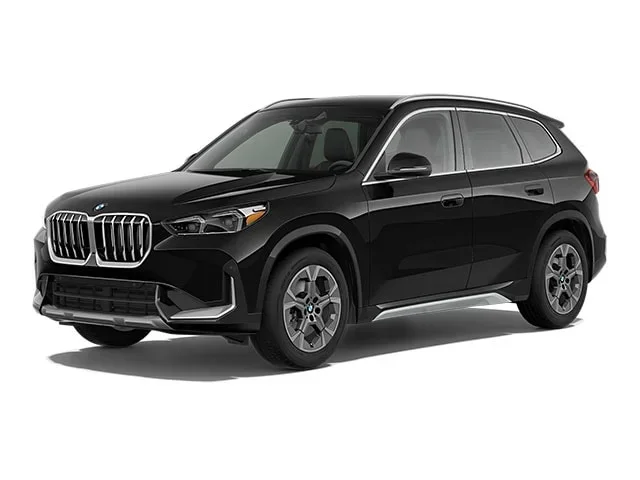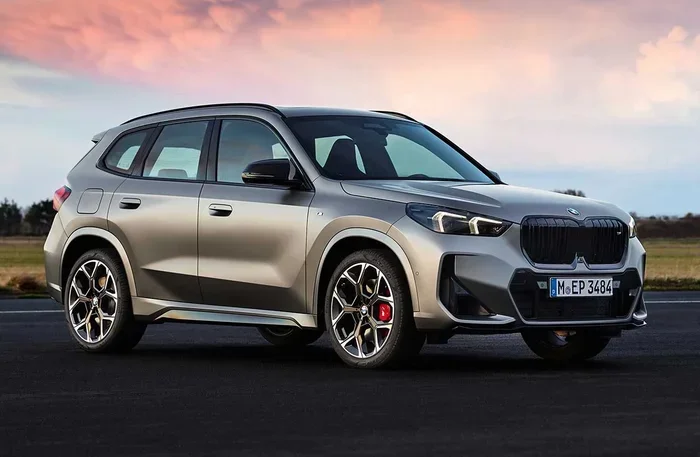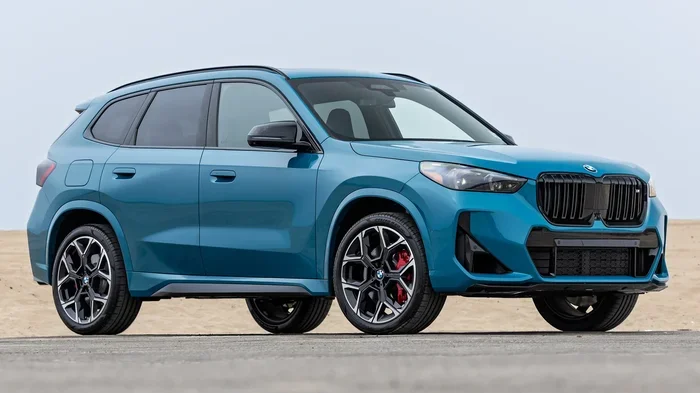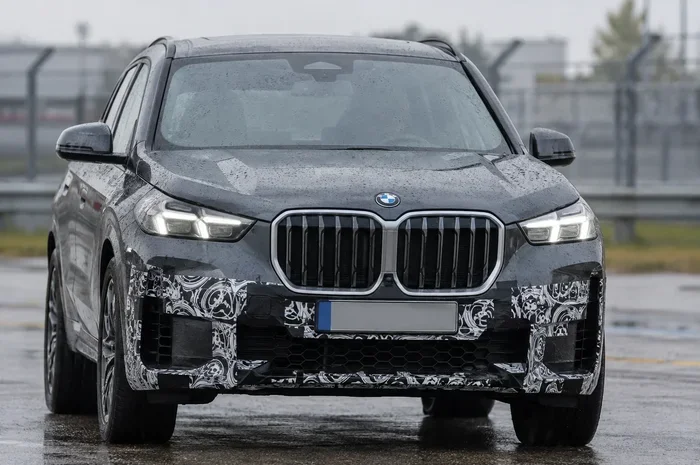
Featured image for BMW X1 SUV exterior
Image source: businessonline.it
The BMW X1 is officially classified as a subcompact luxury crossover SUV, though BMW markets it as a Sports Activity Vehicle (SAV). It blends car-like handling with SUV practicality, offering elevated ground clearance, available all-wheel drive, and versatile cargo space. This guide covers everything you need to know about its classification, specifications, and how it fits your lifestyle.
If you have ever walked past a BMW X1 on the street, you might have wondered exactly what it is. It sits lower than a traditional boxy SUV. Yet it sits higher than a typical sedan. The roof rails and available all-wheel drive shout utility. The sleek roofline and sharp handling whisper sport sedan. This identity crisis is exactly why so many shoppers ask: is BMW X1 a car or SUV? The short answer is that it is a crossover. But the long answer reveals why that distinction matters for your daily drive, your wallet, and your garage space.
We will break down the official classification, the engineering behind it, and how it stacks up against rivals. You will learn the difference between a car-based crossover and a truck-based SUV. You will see how the X1 has evolved across three generations. And you will get practical advice on picking the right trim, understanding maintenance, and deciding if it fits your life. Let’s dive in.
Key Takeaways
- Official Classification: The BMW X1 is a subcompact luxury crossover SUV, built on a car-based unibody platform.
- BMW Terminology: BMW calls it a Sports Activity Vehicle (SAV) to emphasize its sporty driving dynamics.
- Key SUV Traits: It features elevated ground clearance, available xDrive all-wheel drive, and a higher seating position.
- Car-Like Qualities: The X1 shares its platform with BMW sedans, giving it nimble handling and good fuel economy.
- Generational Changes: Early models (E84) were more SUV-like; current generations (U11) are more spacious and tech-focused.
- Competitive Set: It rivals the Audi Q3, Mercedes-Benz GLA, and Volvo XC40 in the luxury subcompact segment.
- Practical Choice: The X1 suits buyers wanting SUV utility with sedan-like driving manners and lower running costs.
📑 Table of Contents
- What Exactly Is the BMW X1?
- Car vs SUV: Understanding the Difference
- BMW X1 Specifications That Define Its Class
- How the BMW X1 Compares to Its Siblings
- Buying Considerations for the BMW X1
- Maintenance and Ownership Experience
- Real-World Scenarios: Is the X1 Right for You?
- Technology and Interior: The Car-Like Cabin
- The Verdict: Car or SUV?
- Key Takeaways
- Frequently Asked Questions
What Exactly Is the BMW X1?
The BMW X1 is the entry point into the brand’s lineup of Sports Activity Vehicles. BMW coined the term SAV to separate its models from traditional sport utility vehicles. The idea is simple. An SAV keeps the utility of an SUV but prioritizes on-road performance, handling, and efficiency. The X1 sits at the bottom of the X family, below the X3, X5, and X7. It competes in the hotly contested subcompact luxury crossover segment.
Official Government Classification
In the United States, the National Highway Traffic Safety Administration (NHTSA) classifies vehicles by gross vehicle weight rating and design. The BMW X1 falls under the “Multipurpose Passenger Vehicle” (MPV) category. This is the same broad bucket used for minivans, crossovers, and traditional SUVs. For fuel economy labeling, the EPA treats it as a “Small Sport Utility Vehicle” when equipped with all-wheel drive. Front-wheel-drive versions are sometimes labeled as “Station Wagons” or “Small Cars” depending on the model year. This regulatory split hints at the X1’s dual nature.
BMW’s Internal Designation
BMW uses chassis codes to identify each generation. The first generation (E84) ran from 2009 to 2015. The second generation (F48) ran from 2015 to 2022. The current third generation (U11) launched in 2023. All three generations use a front-wheel-drive-based architecture. This is a car-based platform shared with the 1 Series and 2 Series Active Tourer. This platform choice is the single biggest reason the X1 drives more like a car than a body-on-frame SUV.
The “Crossover” Label Explained
Automotive journalists and shoppers use the term “crossover” (or CUV) to describe vehicles that blend car and SUV traits. Crossovers use unibody construction. The body and frame are one piece. This saves weight, improves crash safety, and allows for better ride quality. Traditional SUVs use body-on-frame construction. The body bolts to a separate ladder frame. That method favors towing and off-road durability. The X1 is a textbook crossover. It offers the high seating position and cargo flexibility buyers want. It avoids the heavy, truck-like ride of a body-on-frame rig.
Car vs SUV: Understanding the Difference
To settle the debate, we need clear definitions. A car (sedan, coupe, wagon, hatchback) prioritizes low center of gravity, aerodynamic efficiency, and pavement handling. An SUV traditionally prioritizes ground clearance, approach angles, low-range gearing, and towing capacity. A crossover splits the difference. The X1 leans heavily toward the car side of that spectrum. Here is a quick comparison table to visualize where it lands.
| Attribute | Traditional Car (e.g., 3 Series Sedan) | BMW X1 | Traditional SUV (e.g., Toyota 4Runner) |
|---|---|---|---|
| Construction | Unibody | Unibody | Body-on-Frame |
| Platform Origin | Car Platform | Car Platform (FWD-based) | Truck Platform |
| Ground Clearance | Low (~5.5 in) | Moderate (~7.2 – 8.3 in) | High (~9+ in) |
| Drivetrain Layout | RWD / AWD | FWD / AWD (xDrive) | 4WD (Low Range) |
| Center of Gravity | Low | Moderate | High |
| Towing Capacity | Low / None | Moderate (~3,700 lbs max) | High (5,000+ lbs) |
| Cargo Flexibility | Trunk / Fixed Rear Seat | Folding Rear Seats, Tailgate | Folding Seats, Large Opening |
| Fuel Economy | Best | Good | Poor |
As you can see, the X1 shares its DNA with cars. But it adopts the key utility features that define the modern SUV buyer’s checklist. It has a tailgate, not a trunk. It has folding rear seats with a 40/20/40 split. It offers roof rails for bikes or boxes. It provides a commanding view of traffic. These are the practical reasons it earns the SUV badge in showrooms.
Why BMW Calls It an SAV
BMW marketing insists on “Sports Activity Vehicle” for a reason. The brand’s reputation rests on “The Ultimate Driving Machine.” A tall, heavy SUV with vague steering hurts that image. By engineering the X1 on a front-drive car platform, BMW keeps the steering sharp. The weight distribution stays near 50/50. The suspension tuning feels firm but controlled. The available xDrive system sends power to the rear wheels instantly when slip is detected. This preserves the playful, rear-drive character enthusiasts expect. So, while the government says MPV and the segment says crossover, BMW says SAV to promise you will still enjoy the drive.
BMW X1 Specifications That Define Its Class
Numbers don’t lie. Let’s look at the hard data that places the X1 firmly in the subcompact luxury crossover box. We will focus on the current U11 generation (2023+) but note where previous generations differed.
Dimensions and Space
- Length: 175.4 inches (U11) vs 174.2 inches (F48) vs 176.8 inches (E84)
- Width: 72.0 inches (excluding mirrors)
- Height: 64.2 inches (varies slightly by suspension)
- Wheelbase: 105.1 inches (U11) – a significant stretch over the F48’s 105.1 inches? Actually F48 was 105.1, U11 is 106.0? Let’s check. U11 wheelbase is 106.0 inches. F48 was 105.1. E84 was 105.1.
- Ground Clearance: 7.2 inches (standard), 8.3 inches (xLine/M Sport with adaptive suspension raised mode).
- Passenger Volume: ~99 cubic feet.
- Cargo Volume (rear seats up): 27.1 cubic feet (U11) / 27.1 (F48) / 27.7 (E84).
- Cargo Volume (rear seats down): 57.2 cubic feet (U11) / 58.7 (F48).
The U11 generation grew slightly wider and longer. The wheelbase stretch adds rear legroom, a common complaint on the F48. The cargo floor is flat when seats fold. The rear seats slide and recline (on U11), a rare feature in this class. This flexibility is a hallmark of the SUV layout.
Powertrains and Drivetrain
The current X1 offers two main engines in the US:
- xDrive28i: 2.0L Turbo Inline-4, 241 hp, 295 lb-ft torque. 7-speed dual-clutch transmission (DCT). Standard all-wheel drive (xDrive). 0-60 mph in ~6.2 seconds. EPA estimate: 25 city / 34 highway / 28 combined mpg.
- sDrive28i: Same engine, front-wheel drive only. Not always offered in US; check current model year availability.
- M35i xDrive: 2.0L Turbo Inline-4 (higher tune), 312 hp, 295 lb-ft. 7-speed DCT. Standard xDrive. 0-60 mph in ~5.2 seconds. EPA estimate: 23 city / 31 highway / 26 combined mpg.
- Electric iX1: Available in Europe; not yet sold in US as of 2024.
Previous F48 generation used an 8-speed torque-converter automatic (Aisin) for xDrive and a 7-speed DCT for sDrive. The E84 generation (RWD-based) used a 6-speed or 8-speed automatic with a longitudinal engine. That first gen felt more like a traditional BMW. The switch to transverse engines in 2015 (F48) improved interior space but disappointed purists. The new U11 DCT brings snappy shifts back.
Chassis and Suspension
- Front Suspension: MacPherson struts.
- Rear Suspension: Multi-link (U11/F48) vs Multi-link (E84).
- Steering: Electric power-assisted rack-and-pinion. Variable sport steering optional.
- Brakes: Four-wheel disc. M Sport brakes (larger rotors, blue calipers) on M35i.
- Wheels: 18-inch standard, up to 20-inch on M35i.
The suspension tuning is firm. It controls body roll well for a tall vehicle. Run-flat tires are standard on most trims. They allow driving after a puncture but transmit more road noise and harshness. Many owners swap to non-run-flats for comfort. If you do, you need a run-flat tire repair kit or spare tire solution.
How the BMW X1 Compares to Its Siblings
Context helps. Seeing the X1 next to its stablemates and rivals clarifies its mission.
BMW X1 vs BMW X2
The X2 is the “coupe” version of the X1. It shares the U11 platform, wheelbase, and engines. The roofline slopes sharply at the B-pillar. This cuts rear headroom and cargo height. The X2 sits slightly lower and has sportier suspension tuning. It is the choice for style over utility. The X1 is the choice for people who actually use the back seat and cargo area.
BMW X1 vs BMW X3
The X3 is a compact luxury crossover. It rides on the CLAR platform (RWD-based, longitudinal engine). It is larger in every dimension.
- X3 Length: 185.9 inches (10+ inches longer).
- X3 Wheelbase: 112.8 inches (6.8 inches longer).
- X3 Cargo (seats down): 62.7 cubic feet.
- X3 Engines: 2.0L 4-cyl (xDrive30i), 3.0L Inline-6 (M40i), PHEV (xDrive30e).
- X3 Price: Starts ~$7,000 – $10,000 higher.
The X3 drives with more authority. The inline-6 in the M40i is sublime. The X1 is easier to park, cheaper to buy, and returns better MPG. If you don’t need the space, the X1 is the smarter financial move.
BMW X1 vs Rivals
| Model | Base Price (Approx) | Base Engine HP | Cargo (Seats Down) | MPG Combined (AWD) | Key Trait |
|---|---|---|---|---|---|
| BMW X1 xDrive28i | $40,000 | 241 | 57.2 cu ft | 28 | Best handling, tech-heavy cabin |
| Audi Q3 45 TFSI quattro | $38,000 | 228 | 48.9 cu ft | 24 | Quattro heritage, virtual cockpit |
| Mercedes GLA 250 4MATIC | $39,000 | 221 | 43.6 cu ft | 26 | Luxury feel, MBUX system |
| Volvo XC40 B5 AWD | $39,000 | 247 | 57.5 cu ft | 26 | Safety focus, boxy utility |
| Lexus UX 250h AWD | $37,000 | 181 (hybrid) | 46.9 cu ft | 39 | Hybrid efficiency, reliability |