
Featured image for BMW X1 xDrive28i driving
Image source: cevpu.com
The 4-cylinder turbo BMW X1 xDrive28i delivers a surprising punch with 228 horsepower and 258 lb-ft of torque. It hits 60 mph in just over six seconds, making it quicker than many rivals. This article breaks down the B48 engine specs, xDrive performance, reliability records, and what it feels like behind the wheel.
If you are shopping for a compact luxury SUV, you have probably asked yourself: how strong is a 4-cylinder turbo bmw x1 xdrive28i? It is a fair question. On paper, a 2.0-liter four-cylinder does not sound exotic. But BMW has spent decades perfecting this formula. The result is an engine that punches well above its weight class. We are going to dig deep into the numbers, the engineering, and the real-world feel of this popular powertrain.
You will learn exactly what the B48 engine brings to the table. We will cover acceleration times, passing power, and how the xDrive system changes the game. We will also look at reliability, common issues, and whether you should tune it. By the end, you will know if this SUV has the muscle for your daily commute and weekend adventures.
Key Takeaways
- Strong Power Output: The B48 2.0L twin-scroll turbo produces 228 hp and 258 lb-ft of torque.
- Quick Acceleration: Expect a 0-60 mph time of roughly 6.3 seconds with xDrive traction.
- Broad Torque Curve: Peak torque arrives at just 1,450 rpm for instant response in daily driving.
- Proven Reliability: The B48 engine is widely considered one of BMW’s most dependable modern four-cylinders.
- xDrive Advantage: All-wheel drive puts power down effectively in rain, snow, or hard launches.
- Tuning Potential: Simple software tunes can unlock 30+ extra horsepower safely.
- Balanced Package: It offers sports car acceleration with SUV practicality and decent fuel economy.
📑 Table of Contents
- The Heart of the Matter: The B48 Engine Explained
- Acceleration and Real-World Speed
- The xDrive Factor: Traction Meets Dynamics
- Driving Dynamics: Does It Feel Like a BMW?
- Reliability and Longevity: The B48 Track Record
- Fuel Economy: The Turbo Four Advantage
- Tuning Potential: Unlocking Hidden Strength
- Maintenance Schedule: Keeping It Strong
- Comparing the Competition
- Model Year Differences: What to Buy
- Ownership Costs: The “Tax” on Performance
- Expert Insight: The “Goldilocks” BMW SUV
- Frequently Asked Questions
The Heart of the Matter: The B48 Engine Explained
The xDrive28i badge tells you two things: it has all-wheel drive, and it uses the 28i power tier. Under the hood sits the B48 2.0-liter TwinPower Turbo inline-four. This engine replaced the older N20 unit around the 2018 model year. It was a massive upgrade in durability and smoothness.
Key Specs at a Glance
- Displacement: 1,998 cc (2.0L)
- Configuration: Inline-4, 16-valve DOHC
- Induction: Twin-scroll turbocharger
- Valvetrain: Valvetronic (variable valve lift) + Double VANOS (variable cam timing)
- Injection: Direct high-pressure injection
- Horsepower: 228 hp @ 5,000–6,500 rpm
- Torque: 258 lb-ft @ 1,450–4,500 rpm
- Compression Ratio: 11.0:1
That torque figure is the star of the show. 258 lb-ft at just 1,450 rpm means you have strong pull almost the instant you touch the throttle. This is not a peaky motor that needs high revs. It is a torque monster down low.
B48 vs. N20: Why the Switch Mattered
The previous N20 engine was known for timing chain guide failures. The B48 moved the timing chain to the rear of the engine (flywheel side) and beefed up the guides. It also uses a closed-deck block design derived from the B58 six-cylinder. This makes the block incredibly rigid and resistant to cracking under high boost. For a used buyer, the B48 is the one you want.
Acceleration and Real-World Speed
Numbers on a spec sheet are one thing. How does it feel when you merge onto a highway? In a word: effortless.
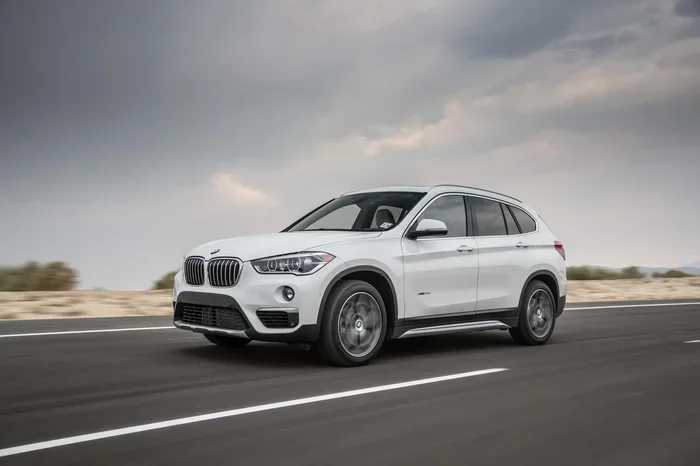
Visual guide about BMW X1 xDrive28i driving
Image source: cevpu.com
0-60 MPH and Quarter Mile
BMW claims a 0-60 mph time of 6.3 seconds for the xDrive28i. Independent testing often sees numbers between 6.0 and 6.4 seconds. The quarter-mile typically falls in the 14.5-second range at roughly 95 mph. That is genuinely quick for a compact crossover. It matches or beats many V6 competitors from just a few years ago.
The Launch Control Trick
If your X1 has the 8-speed Steptronic transmission (standard on most), you have launch control. Here is how to use it:
- Put the car in Sport mode.
- Turn DSC (traction control) off or hold the button for Dynamic Traction Control.
- Left foot on brake, right foot floors the gas.
- Wait for the RPM to settle (usually around 2,500–3,000).
- Release brake.
The xDrive system hooks up instantly. There is virtually no wheelspin. You get a solid shove in the back that feels more like a hot hatch than an SUV.
Rolling Starts and Passing Power
This is where the broad torque plateau shines. At 50 mph in 6th or 7th gear, a quick prod of the throttle drops two gears instantly. The surge from 3,000 to 5,000 rpm is linear and strong. You do not need to manually downshift with paddles unless you want to. The ZF 8HP transmission is predictive and fast.
The xDrive Factor: Traction Meets Dynamics
The “xDrive” part of the name is not just marketing. It fundamentally changes how that 228 hp reaches the road. Many front-wheel-drive based SUVs struggle with torque steer or inside-wheel spin. The X1 uses a Torsen-style limited-slip center differential (on most model years) or an electronically controlled multi-plate clutch pack.
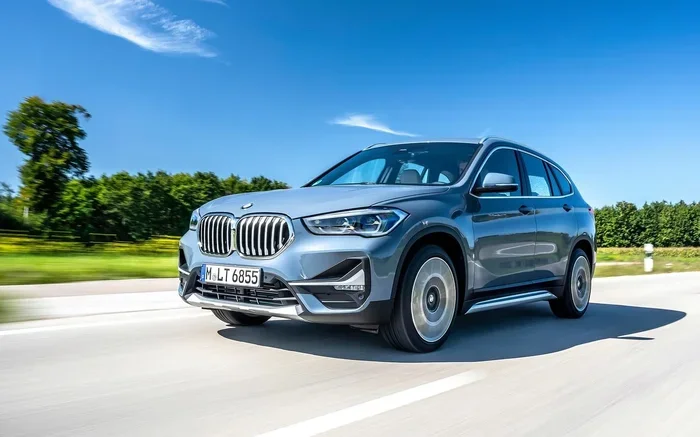
Visual guide about BMW X1 xDrive28i driving
Image source: suvdrive.com
How the Power Split Works
- Normal Driving: Roughly 50/50 front-to-rear split for stability.
- Hard Acceleration: Up to 100% of torque can go to the rear axle.
- Slip Detection: Reacts in milliseconds to send power to the gripping axle.
This means you can floor it out of a snowy intersection or a wet roundabout without drama. The car just goes. It also allows the X1 to put down its power on uneven pavement where a FWD car would spin the inside front tire.
Winter and Wet Weather Confidence
Pair xDrive with a set of dedicated winter tires, and the X1 xDrive28i becomes a snow weapon. The low-end torque lets you pull away in second gear on ice, reducing wheelspin. The 50/50 weight distribution (near perfect for this platform) helps the car rotate predictably. It feels sure-footed, not nervous.
Driving Dynamics: Does It Feel Like a BMW?
Critics often say the X1 lost its soul when it switched to the front-wheel-drive UKL platform (F48 generation, 2016+). The steering is electric, not hydraulic. The engine sits transversely. But how strong is a 4-cylinder turbo bmw x1 xdrive28i in the corners? Surprisingly capable.
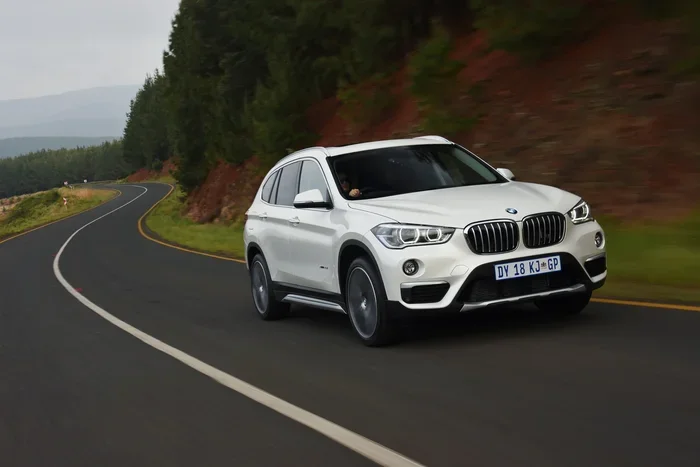
Visual guide about BMW X1 xDrive28i driving
Image source: cdn.bmwblog.com
Chassis Balance
The front suspension uses MacPherson struts; the rear uses a multi-link setup. This rear multi-link is key. It keeps the rear tires planted during hard cornering. The car exhibits mild understeer at the limit (safe for average drivers), but lift-off oversteer is accessible if you provoke it. It feels agile, not top-heavy.
Steering and Feedback
The electric power steering is weighted well in Sport mode. It is not telepathic like an old E90 3 Series, but it is precise. You place the nose exactly where you want it. The variable sport steering rack (optional on some trims) quickens the ratio at large angles, making parking lots and hairpins easier.
Braking Performance
Standard brakes are single-piston floating calipers front and rear. They are adequate for street driving but can fade after repeated hard stops on a track. For canyon carving, they work fine. If you track the car, upgrade pads and fluid first. The brake pedal feel is firm and progressive.
Reliability and Longevity: The B48 Track Record
Strength is not just about speed. It is about lasting power. The B48 engine has a reputation for bulletproof reliability. It shares architecture with the legendary B58 six-cylinder. Here is why it holds up:
Design Features That Ensure Strength
- Closed-Deck Block: Resists cylinder distortion under high cylinder pressure.
- Forged Crankshaft & Connecting Rods: Handles high torque loads easily.
- Low-Friction Coatings: Reduces wear on piston skirts and bearings.
- Electric Water Pump: Failures happen, but usually after 80k–100k miles. Replace preventatively.
- Plastic Coolant Components: The thermostat housing and expansion tank get brittle. Budget for replacement around 90k miles.
Common Issues to Watch
No engine is perfect. The most reported issues on forums for the X1 xDrive28i include:
- Coolant Leaks: Thermostat housing, water pump, or expansion tank.
- Oil Filter Housing Gasket: Can seep oil onto the exhaust manifold (smell).
- Valve Cover Gasket: Another common seep point on high-mileage examples.
- xDrive Transfer Case Fluid: Often neglected. Change every 50k–60k miles.
- Rear Differential Fluid: Same interval. Use BMW-spec fluid.
If you stay on top of fluids, these engines routinely pass 200,000 miles. For more on long-term durability across the lineup, check our guide on identifying the most reliable BMW models for longevity.
Fuel Economy: The Turbo Four Advantage
You get V6 power with four-cylinder efficiency. EPA estimates for the xDrive28i are typically 23 City / 31 Highway / 26 Combined MPG. Real-world mixed driving usually lands around 24–26 MPG. That is impressive for an AWD vehicle pushing 3,800 lbs.
Tips for Maximum MPG
- Use Eco Pro mode for highway cruising (coasting function saves fuel).
- Keep tires inflated to door placard specs (often 35-36 PSI front, 38-39 PSI rear).
- Remove roof rails/boxes when not in use.
- Run Top Tier gasoline (Shell, Chevron, Costco) to prevent carbon buildup on intake valves.
Direct injection engines like the B48 benefit greatly from high-quality fuel. Carbon buildup on intake valves can reduce power and cause rough idle by 60k–80k miles if you run cheap gas exclusively. Walnut blasting is the fix, but prevention is cheaper.
Tuning Potential: Unlocking Hidden Strength
One of the best things about the B48 is how responsive it is to software. Because the hardware (turbo, fueling, internals) is over-engineered from the factory, a simple ECU tune transforms the car.
Stage 1 Tune Gains (Software Only)
| Metric | Stock | Stage 1 (93 Octane) | Gain |
|---|---|---|---|
| Horsepower | 228 hp | ~265–275 hp | +37–47 hp |
| Torque | 258 lb-ft | ~295–310 lb-ft | +37–52 lb-ft |
| 0-60 mph | 6.3 sec | ~5.6–5.8 sec | -0.5 to -0.7 sec |
That is a massive jump for $400–$600. The car enters genuine sports car territory. Popular tuners include Bootmod3 (BM3), MHD, and JB4 (piggyback). BM3 and MHD are flash tunes; they rewrite the factory ECU maps. JB4 intercepts signals. Flash tunes are generally smoother and safer for daily driving.
Supporting Mods for Stage 2+
If you want more, you need hardware:
- High-Flow Downpipe: Catted version keeps it legal-ish; catless is for off-road only. Adds 15–20 hp.
- Upgraded Intake: Helps the turbo breathe. Injen, Dinan, or BMS are solid choices.
- Intercooler: Essential for consistent power on track or hot days. The stock unit heat-soaks fast.
- Charge Pipe: Plastic stock piece can crack under high boost. Aluminum is cheap insurance.
With full bolt-ons and E30/E50 ethanol mixes, the B48 can hit 330+ whp (wheel horsepower). That requires upgraded turbos eventually, but the stock frame turbo (B48D) is good to about 300–310 whp.
Maintenance Schedule: Keeping It Strong
BMW calls for “Condition Based Service,” but enthusiasts follow a stricter interval. If you want your xDrive28i to stay strong, follow this:
Fluid Intervals (The Real Ones)
- Engine Oil & Filter: Every 5,000–7,500 miles (LL-01 or LL-17FE+ spec). Do not wait for the 10k–15k light.
- Brake Fluid: Every 2 years (DOT 4 LV).
- Coolant: Every 4–5 years (BMW Blue HT-12).
- Transmission Fluid (ZF 8HP): Every 60k–80k miles. Use ZF Lifeguard 8 or BMW ATF 3+.
- Transfer Case Fluid: Every 50k–60k miles (BMW Transfer Case Oil).
- Rear Differential Fluid: Every 50k–60k miles (75W-90 GL-5 or BMW spec).
Wear Items
- Spark Plugs: Every 45k–60k miles (NGK 97506 / BMW 12120037244).
- Ignition Coils: Replace as needed (misfire codes). Keep a spare in the trunk.
- Run-Flat Tires: The X1 often comes with run-flats. They wear faster and ride harsher. Many owners switch to non-run-flats and carry a mobility kit. Learn more about BMW run-flat tires design benefits and care.
Sticking to this schedule prevents the vast majority of “BMW reliability” horror stories. For a full breakdown of what scheduled service covers, see what does BMW service include essential guide.
Comparing the Competition
How does the X1 xDrive28i stack up against direct rivals? Let’s look at the numbers.
| Model | Engine | HP / Torque | 0-60 (sec) | AWD System |
|---|---|---|---|---|
| BMW X1 xDrive28i | 2.0T I4 (B48) | 228 / 258 | 6.3 | Torsen / Clutch Pack |
| Audi Q3 45 TFSI | 2.0T I4 | 228 / 258 | 6.7 | Haldex (FWD-biased) |
| Mercedes GLA 250 4MATIC | 2.0T I4 | 221 / 258 | 6.6 | 4MATIC (Clutch) |
| Volvo XC40 T5 AWD | 2.0T I4 | 248 / 258 | 6.2 | Haldex (FWD-biased) |
| Acura RDX SH-AWD | 2.0T I4 | 272 / 280 | 6.0 | SH-AWD (Torque Vectoring) |
The BMW is right in the thick of it. It trails the Acura RDX in raw numbers but beats the Audi and Mercedes in acceleration feel and steering response. The Volvo is a tick quicker to 60 but feels heavier. The BMW wins on driving engagement and transmission smoothness.
Model Year Differences: What to Buy
F48 Generation (2016–2022)
- 2016–2017: N20 engine (avoid if possible, timing chain risk).
- 2018+ (LCI): B48 engine, updated iDrive 7.0, digital cluster optional, revised bumpers/lights. This is the sweet spot.
- 2020+: Android Auto added (finally). Wireless CarPlay standard.
U11 Generation (2023+)
The new X1 uses a similar B48 variant (B48D) but with 48V mild-hybrid assist. Power bumps to 241 hp / 295 lb-ft. 0-60 drops to ~5.9 sec. It is faster, heavier, and more expensive. The F48 B48 remains the value king used.
Ownership Costs: The “Tax” on Performance
Let’s be real. A used German turbo AWD SUV costs more to run than a RAV4. Budget for:
- Tires: $1,200–$1,600/set (staggered fitments on some M Sport models cost more).
- Brakes: $600–$1,000 per axle for quality pads/rotors.
- Fluids: $300–$500 DIY for all diffs/transfer case/transmission.
- Walnut Blasting: $400–$700 every 60k–80k miles (DIY possible).
- Extended Warranty: Consider a third-party wrap (CARCHEX, Endurance) if buying used past factory coverage.
If you DIY basic maintenance, the X1 is very affordable. If you pay dealer labor rates ($180–$220/hr), it adds up fast. The B48 engine itself rarely needs major work.
Expert Insight: The “Goldilocks” BMW SUV
I have driven every generation of the X1. The F48 xDrive28i with the B48 is the Goldilocks choice. It is not too slow (like the old xDrive25i), not too harsh (like the M35i), and not too fragile (like the N20 cars). It hits a mechanical sweet spot.
The B48 block is shared with the Toyota Supra 2.0 (in some markets) and the Z4 sDrive30i. That tells you the engineering ceiling is high. BMW does not put weak engines in Z-cars. The xDrive system in the F48 is also surprisingly robust. The transfer case and rear diff are beefy units shared with the 2 Series Gran Coupe and X2.
If you find a 2019–2022 model with service records, buy it with confidence. It will deliver 0-60 in the low 6s, 26 MPG on a trip, and handle a blizzard with winter tires. That is a rare combination.
Frequently Asked Questions
Is the BMW X1 xDrive28i fast enough for highway merging?
Absolutely. With 258 lb-ft of torque available at 1,450 rpm and a quick-shifting 8-speed transmission, the X1 xDrive28i merges confidently. 50-70 mph passing takes roughly 3.5 seconds. You will rarely feel undergunned.
Does the 4-cylinder turbo feel strained at high speeds?
Not really. The B48 is smooth up to its 6,500 rpm redline. At 80 mph in 8th gear, the engine turns only ~2,200 rpm. It is quiet and relaxed. Wind noise from the mirrors is louder than the engine at cruise.
Can the xDrive28i tow a trailer?
Yes. Properly equipped, the towing capacity is 3,700 lbs. That covers a small camper, jet skis, or a utility trailer. The low-end torque makes towing feel easier than the rating suggests. Add a transmission cooler if towing frequently in mountains.
What is the difference between xDrive28i and xDrive25i?
The xDrive25i (offered in some markets/years) uses a lower tune of the same B48 engine: 189 hp / 207 lb-ft. It is noticeably slower (0-60 in ~7.5 sec). The 28i is worth the premium for the torque alone. For more on decoding these badges, see decoding BMW vehicle designations what do BMW numbers mean.
Is premium fuel required?
BMW recommends 91+ octane (premium). The car runs on 87 regular via knock sensor retardation, but you lose 10–15 hp and risk carbon buildup long-term. The fuel cost difference is ~$3–$5 per tank. Run premium.
How does the xDrive28i compare to the M35i?
The M35i uses a higher-output B48 (302 hp / 332 lb-ft) with a mechanical limited-slip diff on the front axle, stiffer suspension, and bigger brakes. It is a different animal—faster (0-60 in 4.7s) but harsher, pricier to maintain, and drinks more fuel. The 28i is 90% of the daily experience for 70% of the cost.



