Featured image for BMW X1 family SUV
Image source: cdn.bmwblog.com
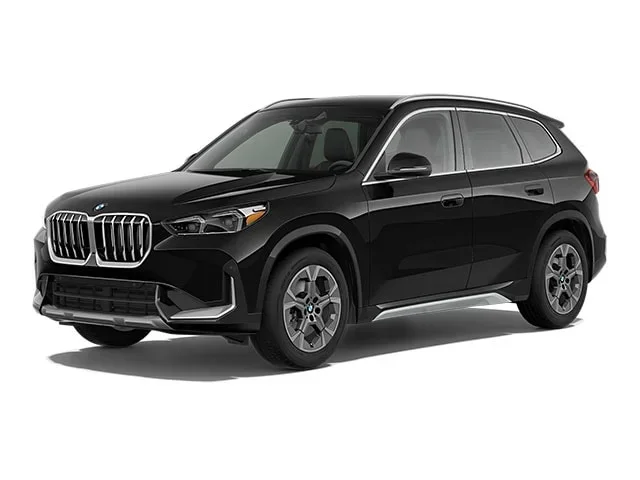
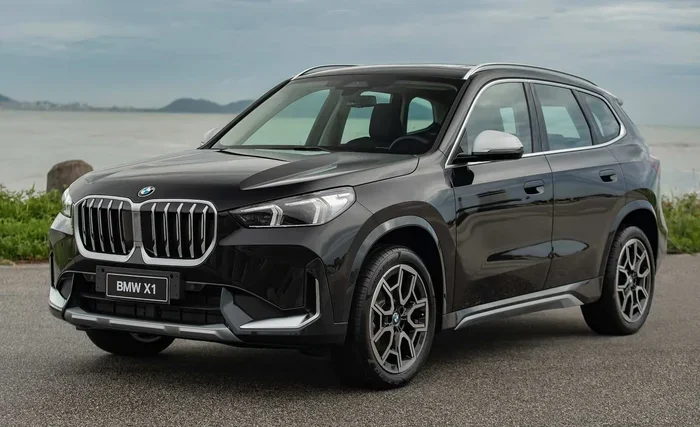
Is the BMW X1 a good family car? The short answer is yes, for small families who value driving dynamics and premium features over maximum space. It offers excellent safety scores, a high-quality interior, and surprising cargo room, but the tight rear legroom and lack of a third row limit it to families with one or two children.
Shopping for a family car is a balancing act. You need space for car seats, strollers, and soccer gear. You want top safety scores. But you also don’t want to drive a boring box on wheels. Enter the BMW X1. It promises that signature BMW driving fun in a compact SUV package. But is the BMW X1 a good family car in the real world? Let’s break down the space, safety, costs, and daily usability to see if it fits your driveway.
Key Takeaways
- Best for small families: The X1 shines for couples with one or two kids but feels cramped for three across the back.
- Top-tier safety: It earns high marks from IIHS and NHTSA, packed with standard driver-assistance tech.
- Cargo surprise: With 27.1 cubic feet behind the rear seats, it beats many rivals for stroller and grocery space.
- No third row: Unlike the X3 or X5, you cannot get a third row; check out which BMW SUV has three rows if you need more seats.
- Run-flat tires standard: They save trunk space but ride stiff; learn more about BMW run-flat tires before buying.
- Reliability is average: It ranks decently but not at the top; see how it compares to the most reliable BMW models.
- Great tech: The curved display and iDrive 9 are intuitive, keeping kids entertained and parents connected.
📑 Table of Contents
- Space and Practicality: The Real World Family Test
- Safety First: Protecting Your Precious Cargo
- Performance and Daily Driving: Does It Still Feel Like a BMW?
- Technology and Interior Quality: A Modern Cockpit
- Ownership Costs: The Fine Print
- BMW X1 vs. The Competition: How It Stacks Up
- Common Mistakes Buyers Make
- Expert Insight: The “One Kid, One Dog” Sweet Spot
- Key Takeaways Summary
- Final Verdict: Should You Buy It?
Space and Practicality: The Real World Family Test
This is the make-or-break category. The X1 is a subcompact luxury SUV. That means it sits on the smaller side of the segment. However, the current generation (U11 chassis, launched 2023) grew slightly compared to the old model. It offers more headroom and legroom than before.
Front Row Comfort
Mom and Dad will be happy up front. The seats are supportive with standard power adjustment. The driving position is high, giving you a great view of traffic. Visibility is excellent thanks to large windows and thin roof pillars. You get a standard panoramic sunroof on higher trims, which opens up the cabin feel.
Rear Seat Reality Check
This is where the “family car” definition gets tested. The rear bench fits two adults comfortably. Three across? It is tight. Three car seats? Very difficult.
- Legroom: 37 inches. It is decent for the class. Rear-facing infant seats fit behind a 6-foot driver, but the front passenger might need to move up.
- Headroom: 38.3 inches. Good for taller kids in boosters.
- LATCH System: Two full sets of lower anchors and three top tethers. They are easy to access.
- Door Opening: Wide rear doors make loading kids easy.
Quick Tip: If you need three car seats regularly, this is not the car. Look at the X3 or X5 instead.
Cargo Capacity: Surprisingly Big
Here is the hidden gem. Behind the rear seats, you get 27.1 cubic feet. That is more than the Audi Q3 (23.7) and Mercedes GLA (21.6). You can fit a large stroller, a diaper bag, and several grocery bags. Fold the 40/20/40 split rear seats flat, and you open up 57.2 cubic feet. The load floor is flat, making it great for IKEA runs.
| Spec | BMW X1 (2024+) | Audi Q3 | Volvo XC40 |
|---|---|---|---|
| Rear Legroom | 37.0 in | 36.1 in | 36.1 in |
| Cargo Behind 2nd Row | 27.1 cu ft | 23.7 cu ft | 20.7 cu ft |
| Max Cargo | 57.2 cu ft | 48.0 cu ft | 47.2 cu ft |
| Third Row? | No | No | No |
If you eventually need that third row, you can explore BMW models with three rows of seating like the X5 or X7.
Safety First: Protecting Your Precious Cargo
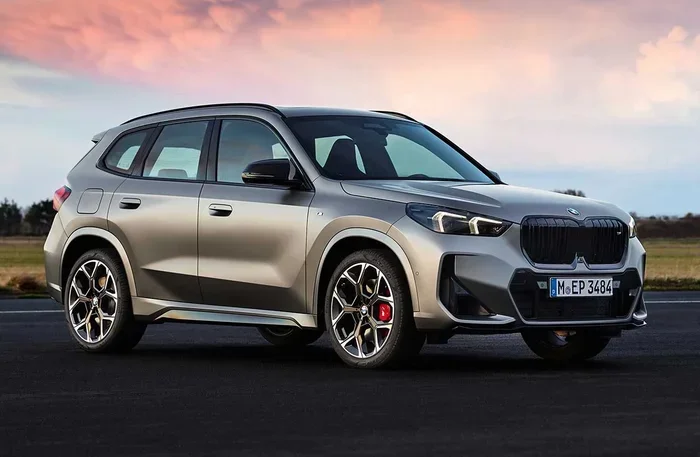
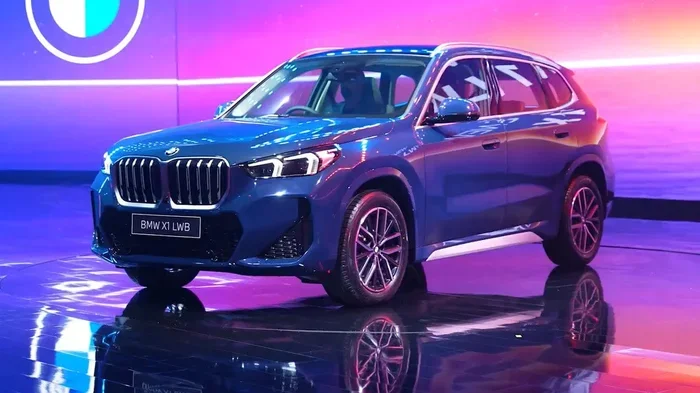
BMW takes safety seriously. The 2024 and 2025 X1 models come standard with a massive suite of driver aids. This is a huge win for family buyers who don’t want to pay extra for peace of mind.
Visual guide about BMW X1 family SUV
Image source: img-s-msn-com.akamaized.net
Standard Safety Features (Driving Assistant)
- Forward Collision Warning with Pedestrian Detection
- Automatic Emergency Braking (City and Interurban)
- Lane Departure Warning with Lane Keeping Assist
- Blind Spot Monitoring
- Rear Cross-Traffic Alert
- Speed Limit Assist
Crash Test Ratings
The IIHS named the X1 a Top Safety Pick+ (best rating) for 2024 when equipped with specific headlights. It scored “Good” in all six crashworthiness tests. The front crash prevention system earned “Superior” ratings for both vehicle-to-vehicle and vehicle-to-pedestrian scenarios. NHTSA gave it an overall 5-Star rating. This is as safe as it gets in this class.
Optional Upgrades
You can add Parking Assistant Plus (surround view cameras, automated parking) and Driving Assistant Professional (adaptive cruise with stop-and-go, active lane centering). The adaptive cruise is a lifesaver on highway road trips with kids.
Performance and Daily Driving: Does It Still Feel Like a BMW?
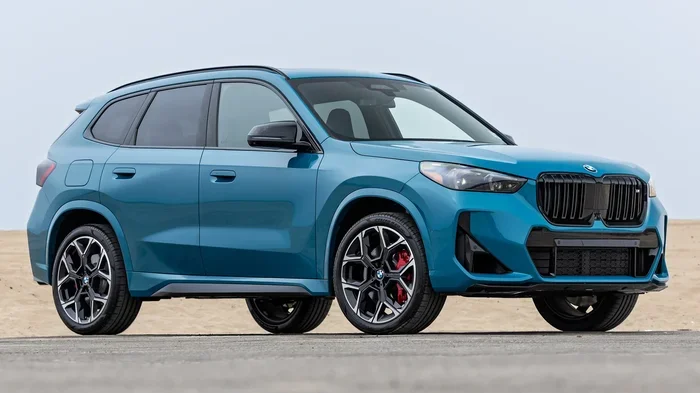
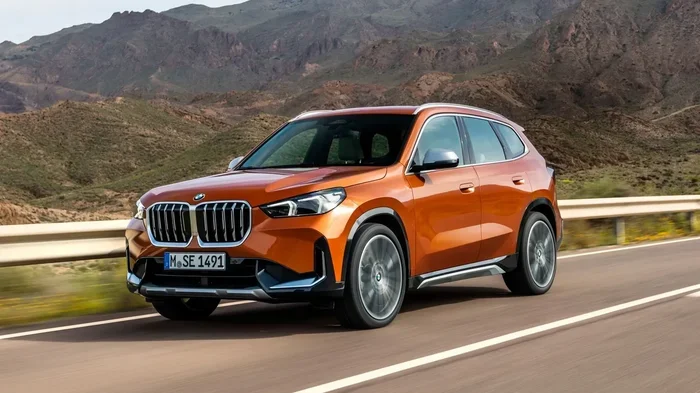
Yes, it does. This is the X1’s superpower. Most rivals (Q3, XC40, GLA) feel like tall economy cars. The X1 feels like a sports sedan on stilts.
Visual guide about BMW X1 family SUV
Image source: thesun.ie
Engine Lineup
There are two main flavors in the US:
- xDrive28i: 2.0L Turbo-4, 241 hp, 295 lb-ft. 0-60 mph in ~6.2 sec. Standard all-wheel drive (xDrive). This is the sweet spot for families. It merges onto highways effortlessly.
- M35i xDrive: 2.0L Turbo-4 (higher tune), 312 hp, 295 lb-ft. 0-60 mph in ~5.2 sec. Sport suspension, M Sport brakes, exhaust note. Fun, but stiffer ride.
Both use a 7-speed dual-clutch transmission (DCT). It snaps shifts quickly. It is smoother than the old 8-speed torque converter at low speeds.
Ride Quality and Noise
On standard 18-inch wheels (xDrive28i), the ride is compliant. It absorbs potholes well. The M35i on 19s or 20s gets firm. Road noise is present on coarse pavement but wind noise is well suppressed at highway speeds. It is quiet enough for a sleeping baby in the back.
Fuel Economy
- xDrive28i: 25 City / 34 Highway / 28 Combined MPG.
- M35i: 23 City / 31 Highway / 26 Combined MPG.
These are strong numbers for AWD vehicles. You will visit the gas station less than rivals.
Technology and Interior Quality: A Modern Cockpit
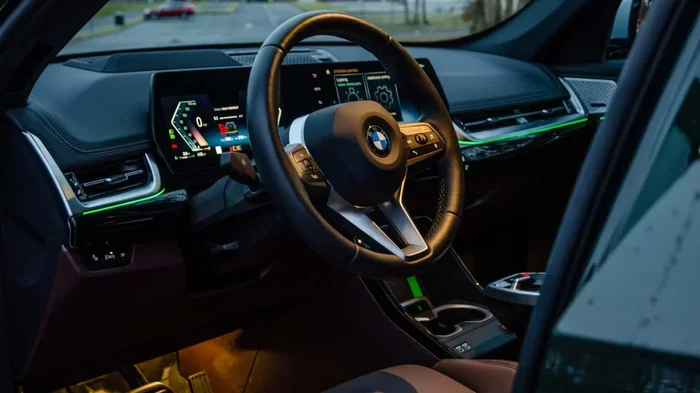
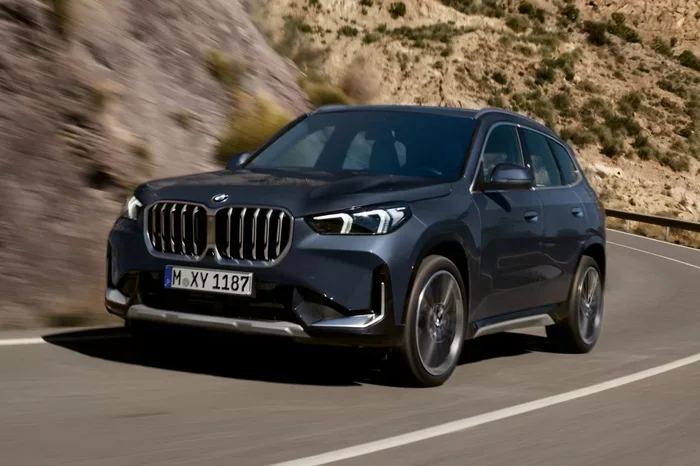
Step inside the new X1 and you see the “BMW Curved Display.” It merges a 10.25-inch digital gauge cluster with a 10.7-inch touchscreen into one glass panel. It runs iDrive 9.
Visual guide about BMW X1 family SUV
Image source: bmw.scene7.com
Infotainment Usability
The system is snappy. Wireless Apple CarPlay and Android Auto are standard. The voice assistant (“Hey BMW”) works well for navigation and climate. Physical controls remain for volume, hazard lights, and drive modes. This is a relief compared to all-touch competitors.
Rear Passenger Tech
- Two USB-C ports (standard).
- Optional rear climate vents.
- Optional wireless charging pad (front only).
There are no rear seat entertainment screens. You will need tablet mounts for long trips.
Material Quality
It feels premium. Soft-touch materials cover the dash and upper doors. Lower doors get hard plastic (standard for the price point). The “Veganza” synthetic leather (standard) is durable and easy to wipe clean—essential for juice boxes and muddy shoes.
Ownership Costs: The Fine Print
Buying the car is step one. Owning it for 5-10 years is step two. Let’s look at the numbers.
Purchase Price (2024 MSRP)
- xDrive28i: ~$40,000
- M35i xDrive: ~$48,000
Add $2,000-$5,000 for popular packages (Premium, Convenience, Parking). A well-equipped xDrive28i lands near $45k.
Maintenance and Reliability
BMW offers 3 years / 36,000 miles of free scheduled maintenance (oil, brakes, filters). This covers the first few years of diaper duty. After that, costs rise.
- Reliability: Consumer Reports and J.D. Power rate the X1 as “Average.” The new B48 engine is proven, but the complex electronics and DCT transmission are wild cards long-term.
- Extended Warranty: Highly recommended if keeping past 50k miles. BMW’s “Ultimate Care+” can be bought before the factory warranty expires.
- Common Issues: Some early 2023 models had software glitches (iDrive freezes, sensor errors). Most resolved via OTA updates.
For a broader look at long-term durability, check our guide on identifying the most reliable BMW models.
Tires and Brakes
Remember the run-flats. They cannot be repaired easily if punctured. Replacement cost is $300-$400 per tire. Many owners switch to non-run-flats and carry a sealant kit or spare tire kit for a better ride and lower cost. You can read the pros and cons in our article on BMW run-flat tires design benefits and care.
BMW X1 vs. The Competition: How It Stacks Up
The compact luxury SUV segment is a bloodbath. Here is how the X1 fights the main rivals for family duty.
Vs. Audi Q3
The Q3 looks sharper inside with its Virtual Cockpit. But it has less cargo space and a tighter back seat. The X1 drives better and has more standard safety tech. The Q3 feels more “premium” in materials; the X1 feels more “driver-focused.”
Vs. Volvo XC40
The XC40 wins on safety reputation and quirky style. It has clever storage (trash bin in console, grocery bag hooks). But the infotainment (Google-based) can be laggy. The X1 is quicker, more efficient, and has a better dealer network experience in many areas.
Vs. Mercedes GLA 250
The GLA has the best ambient lighting and “wow” factor interior. The MBUX voice assistant is superior. But the GLA is slower, has the least cargo space, and the ride can be jittery on 19-inch wheels.
Vs. BMW X3 (The Big Brother)
This is the internal battle. The X3 is wider, longer, and has way more rear legroom (38.5 in vs 37.0 in). It also offers a plug-in hybrid (30e). If your budget stretches to ~$50k+, the X3 is the better family hauler. The X1 saves you ~$8k-$10k upfront and gets better MPG.
Common Mistakes Buyers Make
- Mistake 1: Buying the M35i for daily carpool duty. The stiff suspension and loud exhaust get old fast with sleeping kids. Stick to the xDrive28i.
- Mistake 2: Skipping the Parking Assistant package. The rear pillars are thick. The 360-degree camera is worth every penny for tight school drop-off lines.
- Mistake 3: Assuming it fits three car seats. It does not. Test fit your specific seats before signing.
- Mistake 4: Ignoring the “Ultimate Care” maintenance extension. Turbo engines and DCTs are expensive to fix out of warranty.
- Mistake 5: Not decoding the model name. The “xDrive” means AWD. “sDrive” (rare on X1 now) is FWD. Understand the naming via our guide on what do BMW numbers mean.
Expert Insight: The “One Kid, One Dog” Sweet Spot
I have driven every generation of the X1. The current one is the first that feels “finished.” The first gen (E84) was tall and truck-like. The second gen (F48) was front-drive based and lost the plot dynamically. This third gen (U11) finds the balance.
Expert Take: If your family unit is 3 people (2 adults + 1 kid) or 4 people (2+2) with a dog, the X1 is arguably the best driving car in the segment. It makes the mundane school run enjoyable. Once you hit kid #3, or if grandparents visit often, the lack of a third row and tight hip room become daily annoyances. Buy it for what it is: a sporty wagon with a high roof, not a shrunken X5.
Key Takeaways Summary
- The X1 offers class-leading cargo space for its size.
- Standard safety tech is exceptional (Top Safety Pick+).
- Rear seat is tight for three passengers or three car seats.
- Driving dynamics are best-in-class; it doesn’t feel like a compromise.
- Free maintenance for 3 years softens the ownership cost blow.
- Run-flat tires are a trade-off: convenience vs. ride quality/cost.
- Ideal for families of 3-4; look at X3/X5 for 5+.
Final Verdict: Should You Buy It?
So, is the BMW X1 a good family car? Absolutely, provided your family fits the mold. It is the “Goldilocks” choice for the driving enthusiast who just had a baby. You get the badge, the handling, the tech, and the safety without the massive footprint (or price tag) of an X3 or X5.
It fails only when you ask it to be a minivan. It has two rows. It has five seatbelts. The middle rear seat is a penalty box. If you accept those limits, you will love this car. It turns the chore of driving kids around into something you actually look forward to. Test drive an xDrive28i with the Convenience and Premium packages. That is the family spec sweet spot.
Frequently Asked Questions
Can you fit three car seats in a BMW X1?
No, fitting three car seats across the second row of a BMW X1 is extremely difficult and generally not recommended. The rear hip room is roughly 51 inches, which is tight for three child restraint systems. It works best for two car seats with a passenger in the middle, or two adults and one child.
Does the BMW X1 have a third row?
No, the BMW X1 does not offer a third row of seating. It is strictly a five-passenger vehicle. If you need seven seats, you must move up to the BMW X5 or X7. You can read more about BMW models offering third row seating options.
Is the BMW X1 reliable for a family car?
The BMW X1 has average reliability ratings. The current generation uses the proven B48 2.0L engine, but the dual-clutch transmission and complex electronics are new variables. The included 3-year/36,000-mile free maintenance covers early costs. An extended warranty is advised for long-term ownership.
What is the difference between the X1 sDrive and xDrive?
In the current US lineup, almost all X1 models are xDrive (all-wheel drive). Historically, sDrive denoted front-wheel drive. xDrive provides better traction in rain, snow, and gravel, which is valuable for family safety. You can learn more about model designations in our guide on decoding BMW vehicle designations.
How much cargo space does the BMW X1 have behind the second row?
The BMW X1 offers 27.1 cubic feet of cargo space behind the rear seats. This is class-leading for the subcompact luxury SUV segment, beating the Audi Q3 (23.7 cu ft) and Volvo XC40 (20.7 cu ft). It easily accommodates a large stroller and several grocery bags.
Does the BMW X1 require premium gas?
Yes, BMW recommends 91 octane (premium) fuel for all X1 models for optimal performance and fuel economy. The engine will run on 87 octane (regular) safely due to knock sensors, but you will lose horsepower and potentially see reduced MPG. For a family hauler, the extra cost per tank is minimal compared to the peace of mind.