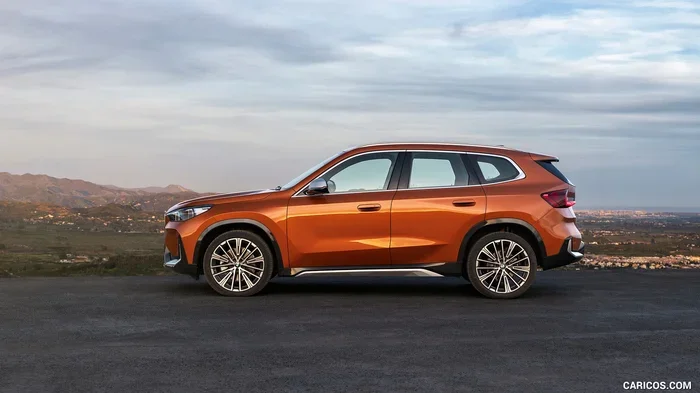
Featured image for BMW X1 side profile
Image source: images.caricos.com
The BMW X1 is not a hatchback; it is classified as a subcompact luxury crossover SUV, marketed by BMW as a Sports Activity Vehicle (SAV). While its sleek roofline and practical tailgate resemble a hatchback, its higher ground clearance, available all-wheel drive, and elevated seating position place it firmly in the SUV segment. This guide breaks down the design differences, generational changes, and practical benefits to help you understand exactly what the X1 offers.
If you have ever walked past a BMW X1 in a parking lot, you might have caught yourself wondering: is BMW X1 a hatchback? It sits low, handles sharply, and has a rear hatch that opens upward to reveal a cargo area connected to the cabin. For all intents and purposes, it looks like a lifted hatchback. The short answer is no—it is not a hatchback. BMW officially classifies the X1 as a Sports Activity Vehicle (SAV), which is their terminology for a subcompact luxury crossover SUV. Understanding this distinction is crucial if you are cross-shopping vehicles, because it changes everything from seating position and ground clearance to cargo utility and all-weather capability.
In this comprehensive guide, we will dive deep into the design philosophy, technical specifications, and generational history of the X1. We will compare it directly against traditional hatchbacks like the BMW 1 Series or Volkswagen Golf, and its true SUV rivals like the Audi Q3 and Mercedes GLA. By the end, you will know exactly where the X1 fits in the automotive landscape and whether its unique blend of car-like dynamics and SUV utility fits your lifestyle.
Key Takeaways
- Official Classification: The BMW X1 is a subcompact luxury crossover SUV (SAV), not a hatchback, despite sharing a two-box silhouette.
- Ground Clearance Matters: It offers significantly higher ride height (approx. 7.2–8.3 inches) than traditional hatchbacks, providing better visibility and light off-road capability.
- Generational Evolution: The first generation (E84) looked more SUV-like, while the second (F48) and third (U11) generations adopted a sleeker, lower profile that blurs the line visually.
- Interior Practicality: It delivers SUV-level cargo space (up to 58.7 cu ft with seats folded) and an elevated hip-point, making entry/exit easier than in a low-slung hatchback.
- Drivetrain Options: Unlike most hatchbacks, the X1 offers BMW’s xDrive all-wheel-drive system as a core feature across the lineup.
- Key Rivals: It competes directly with the Audi Q3, Mercedes-Benz GLA, and Volvo XC40—all classified as subcompact SUVs.
- Ownership Perks: Many models come standard with run-flat tires, eliminating the need for a spare tire and maximizing cargo floor space.
📑 Table of Contents
- What Exactly Is the BMW X1? Defining the SAV Segment
- Hatchback vs. SUV: The Technical Differences That Matter
- BMW X1 Generations: How the Body Style Evolved
- Practicality Check: Cargo, Space, and Daily Driving
- How the X1 Compares to True Hatchbacks and Direct Rivals
- Maintenance and Ownership Considerations
- Buying Guide: Which X1 Generation Suits You?
- Frequently Asked Questions
What Exactly Is the BMW X1? Defining the SAV Segment
BMW coined the term Sports Activity Vehicle (SAV) decades ago with the launch of the X5. They wanted to differentiate their utility vehicles from the truck-based, body-on-frame SUVs that dominated the 1990s. An SAV uses unibody construction (like a car), offers car-like handling, but packages it in a taller, more versatile body style. The X1 is the smallest member of this family.
The “Two-Box” Design Confusion
The confusion stems from the “two-box” silhouette. A traditional sedan has three distinct boxes: engine, cabin, trunk. A hatchback and an SUV both have two boxes: engine and a combined cabin/cargo area. Because the X1 lacks a separate trunk lid—featuring instead a liftgate—it visually mimics a hatchback. However, the engineering underneath tells a different story.
- Platform Architecture: Since the second generation (F48), the X1 has used the UKL front-wheel-drive platform. This platform also underpins the BMW 2 Series Active Tourer (a minivan/MPV) and the 1 Series hatchback (F40). Sharing a platform does not make them the same vehicle class; tuning, ride height, and body mounting points differ significantly.
- Ride Height: The X1 sits roughly 1.5 to 2.5 inches higher than a comparable hatchback. This isn’t just for show; it changes the center of gravity, suspension travel, and approach/departure angles.
- Seating Position (H-Point): The “H-point” (hip point) in the X1 is higher. You step into an X1, whereas you sit down into a hatchback. This “command seating” is a hallmark of the SUV segment.
Why BMW Avoids the “Hatchback” Label
Marketing plays a role, but so does engineering. A hatchback prioritizes low drag, low center of gravity, and sporty dynamics above all else. The X1 prioritizes versatility, headroom, and a specific driving posture. If you look at the BMW vehicle designations, the “X” prefix universally denotes an SAV/SUV, while odd numbers (1, 3, 5) denote sedans/wagons/hatchbacks. The X1 follows this naming convention strictly.
Hatchback vs. SUV: The Technical Differences That Matter
To truly settle the debate, we need to look at the hard numbers and engineering definitions that separate a hatchback from a subcompact SUV.
Visual guide about BMW X1 side profile
Image source: images.caricos.com
Ground Clearance and Approach Angles
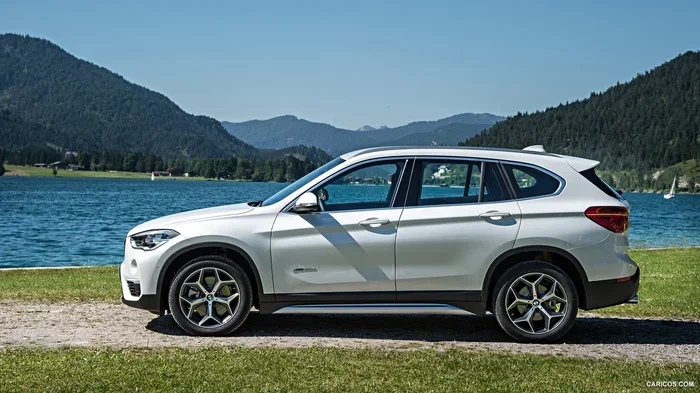
This is the single biggest differentiator. The current U11 generation X1 offers approximately 7.2 inches (183 mm) of ground clearance (xDrive models sit slightly higher). A typical hatchback like the VW Golf or BMW 1 Series sits around 5.0–5.5 inches. That extra 1.5–2 inches allows the X1 to navigate speed bumps, potholes, snowy driveways, and gravel roads without scraping the front splitter or undercarriage. The approach and departure angles are also tuned for mild off-pavement excursions, something a hatchback simply isn’t designed for.
Drivetrain Layout: xDrive vs. FWD Bias
While the base X1 (sDrive18i/20i in some markets, xDrive28i in US) sends power to the front wheels primarily, the xDrive all-wheel-drive system is a core part of the X1 identity. It is a multi-clutch system that can send 100% of torque to either axle instantly. Most hatchbacks in this price bracket are front-wheel-drive only, with AWD being rare (Subaru Impreza being a notable exception) or using less sophisticated viscous coupling systems. The X1’s AWD is designed for traction in snow and mud, not just cornering grip.
Body Structure and Safety Cell
Because the X1 is taller, the roof pillars (A, B, C, D) are longer and reinforced differently to meet rollover protection standards (FMVSS 216a) which are stricter for light trucks/SUVs than for passenger cars. The roof rails are standard on many trims, designed to carry genuine roof loads (bikes, boxes, skis) up to 165 lbs. Hatchbacks often lack roof rails or have much lower dynamic weight limits.
Comparison Table: BMW X1 vs. Typical Hatchback vs. SUV Rival
| Specification | BMW X1 (U11 xDrive28i) | Typical Hatchback (e.g., VW Golf / BMW 1 Series) | SUV Rival (Audi Q3 / Mercedes GLA) |
|---|---|---|---|
| Vehicle Class | Subcompact Luxury SUV (SAV) | Compact Hatchback | Subcompact Luxury SUV |
| Ground Clearance | ~7.2 – 8.3 inches | ~5.0 – 5.5 inches | ~6.7 – 7.9 inches |
| Seating H-Point Height | High (Command Seating) | Low (Sport Seating) | High (Command Seating) |
| Standard Drivetrain | FWD / AWD (xDrive) | FWD (AWD Rare) | FWD / AWD (Quattro / 4MATIC) |
| Cargo Volume (Seats Up) | ~27 – 30 cu ft | ~15 – 23 cu ft | ~23 – 28 cu ft |
| Cargo Volume (Seats Folded) | ~57 – 59 cu ft | ~35 – 50 cu ft | ~50 – 56 cu ft |
| Roof Rail Capacity | 165 lbs (Standard) | Often Optional / Lower Limit | 110 – 165 lbs |
BMW X1 Generations: How the Body Style Evolved
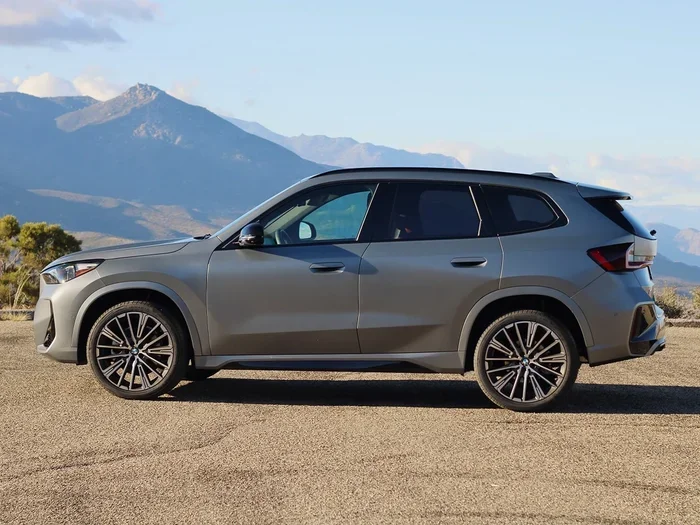
The perception of the X1 has shifted over its three generations. The first generation looked unmistakably like a small SUV. The latest generation looks remarkably sleek, fueling the hatchback comparison.
Visual guide about BMW X1 side profile
Image source: cdn.jdpower.com
First Generation (E84, 2009–2015): The “Baby X5”
The original X1 was built on a modified RWD platform (shared with the E90 3 Series). It had a distinct “boxy” SUV shape: upright greenhouse, high roof, short overhangs, and standard roof rails. It looked like a shrunken X5. Nobody called this a hatchback. It rode high, had a longitudinal engine layout (initially), and offered a true transfer case AWD system on xDrive models. It was truck-like in its proportions, just smaller.
Second Generation (F48, 2015–2022): The Pivot to FWD
This is where the lines blurred. BMW switched to the UKL front-wheel-drive platform. The engine went transverse. The roofline lowered slightly, the hood shortened, and the stance widened. It lost some of the “boxy” utility of the E84 but gained interior space efficiency and fuel economy. Visually, it started looking more like a crossover coupe. The rear hatch became more raked. This generation sparked the “is it a hatchback?” debate in earnest.
Third Generation (U11, 2023–Present): The Sleek Modern Crossover
The current U11 generation (including the electric iX1) pushes the design language further. The greenhouse is lower, the shoulder line is higher, and the D-pillar is thick and sculpted. It has a fastback-like profile. If you park a U11 X1 next to a current BMW 1 Series hatchback (sold in Europe), the silhouette is surprisingly similar. However, the U11 rides on a stretched version of the FAAR platform, specifically tuned for higher load capacity and the taller body structure required for SUV crash standards. It also introduces the iX1 electric variant, which shares the exact same body shell—something a dedicated hatchback platform rarely accommodates without a dedicated “EV-only” floor pan.
Practicality Check: Cargo, Space, and Daily Driving
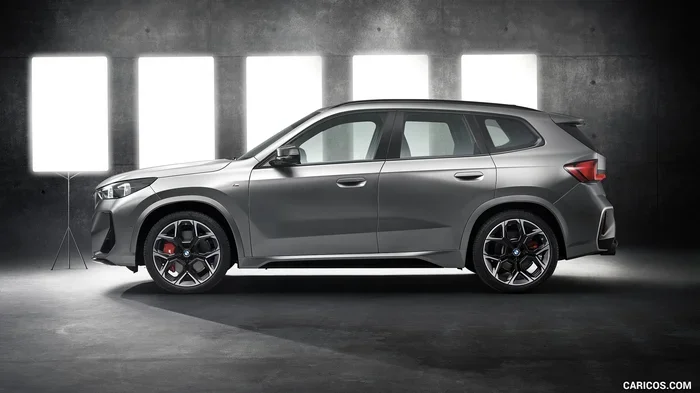
Labels aside, how does the X1 actually live? This is where the “SAV” designation proves its worth over a hatchback.
Visual guide about BMW X1 side profile
Image source: images.caricos.com
Cargo Versatility
The X1 offers a 40/20/40 split-folding rear bench as standard. This is a massive advantage over many hatchbacks that only offer 60/40 splits. The “20” middle section allows you to carry two passengers and long items (skis, lumber, pipes) simultaneously. The cargo floor is also adjustable (two heights), allowing a flat load floor when seats are folded or a hidden well for valuables. Maximum cargo volume reaches 58.7 cubic feet (U11 gas models), which rivals compact SUVs a class above.
Rear Passenger Comfort
Because the roof doesn’t slope as aggressively as a hatchback’s fastback roofline, rear headroom is excellent (approx. 38 inches). The seat cushions are mounted higher off the floor, meaning passengers’ knees are bent at a more natural angle (thigh support), reducing fatigue on long trips. The doors open nearly 90 degrees, making child seat installation significantly easier than in a low-slung hatchback.
Visibility and Maneuverability
The high seating position and large glass area (low beltline) give the driver exceptional visibility. The turning circle is tight (approx. 38 feet curb-to-curb), making it easier to park than many longer hatchbacks. The standard rear-view camera and available 360-degree camera make the most of this boxy shape.
Towing Capability
This is a definitive SUV trait. The X1 (gas xDrive models) is rated to tow up to 3,700 lbs (braked) with the factory tow hitch. A hatchback is rarely rated for towing, and if it is, it’s usually capped at 1,500–2,000 lbs. If you have a small camper, jet skis, or a utility trailer, the X1 handles it; a hatchback cannot.
How the X1 Compares to True Hatchbacks and Direct Rivals
Context is everything. Let’s see where the X1 sits in the competitive set.
Vs. BMW 1 Series Hatchback (F40/F70)
The 1 Series is the direct platform sibling (on F48/F70 architectures). The 1 Series is lower, lighter, stiffer, and sharper to drive. It is cheaper to buy and run. But it has less rear headroom, a smaller trunk (approx. 13 cu ft vs 27 cu ft behind rear seats), no towing rating, and struggles in deep snow. The X1 is the “grown-up” version: you sacrifice 10% handling sharpness for 50% more utility.
Vs. Volkswagen Golf / GTI / Golf R
The Golf is the benchmark hatchback. It drives better, gets better MPG, and costs less. But the Golf is a compact car; the X1 is a luxury subcompact SUV. The X1 offers a premium interior (standard leatherette, ambient lighting, iDrive 9 on curved display), standard AWD availability, and that crucial ground clearance. You pay a “BMW tax” and an “SUV tax,” but you get a different tool for the job.
Vs. Audi Q3 and Mercedes-Benz GLA
These are the X1’s true peers. All three are subcompact luxury SUVs built on FWD platforms with optional AWD.
- Audi Q3: Slightly boxier, excellent Virtual Cockpit, slightly firmer ride. Very similar cargo space.
- Mercedes GLA: Lower roofline than X1/Q3, looks more “hatchback-like” than the X1. Less rear headroom and cargo space. Best interior ambiance.
- BMW X1: Best driving dynamics (steering feel, chassis balance), most cargo space, best infotainment (iDrive 9/OS 9), standard wireless CarPlay/Android Auto.
Vs. Volvo XC40
The XC40 is the wild card. It looks like a shrunken XC90—very boxy, very SUV. It feels more substantial, safer (perception), and has clever storage solutions. The X1 drives better and has a more modern tech interface. If you want “SUV looks,” XC40 wins. If you want “Driver’s SUV,” X1 wins.
Maintenance and Ownership Considerations
Owning an X1 differs from owning a hatchback in a few key maintenance areas. Because it is heavier, rides higher, and often utilizes AWD, wear items follow a different schedule.
Tires and Brakes
The X1 is heavier than a 1 Series or Golf (approx. 3,700–4,000 lbs). It eats front tires faster, especially on xDrive models where the front axle handles steering, 60%+ of braking, and primary acceleration. Rotating tires every 5,000–7,500 miles is critical. As mentioned, most X1s come with run-flat tires. They allow you to drive 50 miles at 50 mph after a puncture, but they ride firmer and cost 20-30% more to replace than standard tires. Many owners switch to non-run-flats and carry a mobility kit or spare tire kit.
Fluids and Drivetrain
The xDrive system requires a transfer case oil change (approx. every 60k miles) and a rear differential fluid change (approx. every 60k miles). A FWD hatchback has neither. The 8-speed automatic transmission (Aisin on F48/U11, ZF on E84) needs fluid service every 60k–80k miles for longevity, despite BMW’s “lifetime fill” claim. Coolant is specific; using the correct BMW-approved coolant (HT-12/Blue/G48) is vital to prevent aluminum corrosion in the turbocharged engines. Brake fluid should be flushed every 2 years regardless of mileage.
Common Issues to Watch
- Timing Chain (N20/B48 engines): Earlier N20 4-cylinders (E84/early F48) had timing chain guide issues. The current B48 is robust but listen for rattles on cold start.
- Coolant Leaks: Plastic thermostat housings and water pumps are wear items on all modern BMWs. Plan for replacement around 80k–100k miles.
- Suspension Bushings: The higher weight and taller stance put more leverage on control arm bushings. Inspect annually.
- Electronics: The U11’s iDrive 9 is software-heavy. Ensure dealer performs ISTA software updates during service visits to fix glitches.
Reliability Outlook
Overall, the X1 has average to above-average reliability for a luxury vehicle. The F48 generation proved very durable. The U11 is too new for long-term data, but the B48 engine and Aisin 8-speed are proven commodities. If long-term dependability is your top metric, researching the most reliable BMW models will show that the X1 (particularly F48 2018+) ranks well among its peers, though the simpler 2-liter turbo 4-cylinder sedans (3 Series) often edge it out due to less drivetrain complexity.
Buying Guide: Which X1 Generation Suits You?
Used E84 (2010–2015): The Enthusiast’s Choice
Pros: RWD-biased chassis (best handling), hydraulic power steering (best feel), longitudinal engine (easier engine bay access), timeless boxy looks.
Cons: Older tech (iDrive CIC/NBT), smaller interior, N20 engine timing chain risk (2011–2014), higher mileage examples likely need suspension refresh.
Verdict: Buy a certified 2013+ xDrive28i with records for a fun, cheap luxury SUV.
Used F48 (2016–2022): The Sweet Spot
Pros: Modern tech (CarPlay, digital cluster optional), spacious interior, efficient B48 engine, plentiful supply, proven reliability.
Cons: Electric power steering (numb feel), run-flat ride harshness, FWD bias noticeable at limit.
Verdict: The best value proposition. A 2019+ xDrive28i with <35k miles is a fantastic daily driver.
New U11 (2023+): The Tech Flagship
Pros: Curved Display (iDrive 9), 48V mild hybrid (smoother start/stop, boost), available iX1 electric, stunning interior quality, standard safety tech (Active Driving Assistant).
Cons: High price ($40k+), capacitive HVAC controls (distracting), no physical buttons, complex electronics.
Verdict: Lease it. The tech depreciation curve on German EVs/tech-heavy cars is steep. Let BMW Financial take the hit.
Frequently Asked Questions
Is the BMW X1 considered a car or an SUV for insurance?
Insurance companies classify the BMW X1 as an SUV/Crossover. This typically results in slightly higher premiums than a comparable hatchback or sedan due to higher repair costs (aluminum panels, complex sensors in bumpers) and rollover risk ratings, though its excellent safety scores (IIHS Top Safety Pick+) help offset this.
Can the BMW X1 go off-road?
It is capable of light off-roading (gravel roads, fire trails, deep snow, beach sand with aired-down tires). It has hill descent control (on xDrive), decent approach/departure angles, and ground clearance. It is not a rock crawler—it lacks low-range gearing, locking differentials, and skid plates. Think “Overlanding lite,” not Moab.
Does the BMW X1 have a spare tire?
No. Almost all X1 models come standard with run-flat tires and a tire mobility kit (sealant + compressor). There is no well for a spare tire under the cargo floor. You can purchase a collapsible spare kit from BMW accessories if you prefer, but it will consume cargo space.
Is the BMW X1 bigger than the X2?
Yes. The X1 is longer, taller, wider, and has a longer wheelbase than the X2. The X2 is a “Coupe SUV” variant of the same platform (F39/U10), sacrificing rear headroom and cargo space for a sloping roofline. The X1 is the practical choice; the X2 is the style choice.
What is the difference between sDrive and xDrive on the X1?
sDrive = Front-Wheel Drive (FWD). xDrive = All-Wheel Drive (AWD). In the US market, the current U11 X1 is sold exclusively as xDrive28i (AWD). In other markets (Europe, Canada), sDrive FWD models are the base entry point. xDrive adds ~150 lbs, ~$2k cost, and slightly lower MPG, but vastly superior foul-weather traction.
How long do BMW X1 engines last?
With proper maintenance (oil changes every 7,500 miles with LL-01/LL-17FE+ oil, timely coolant/water pump service), the B48 2.0L turbo engine can easily exceed 200,000 miles. The N20 (older gen) requires more vigilance on the timing chain. The B38 3-cylinder (in sDrive18i) is also robust but works harder under load.



