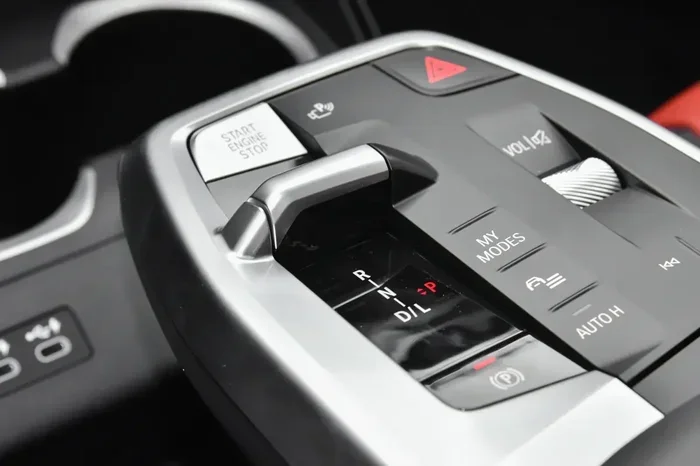
Featured image for BMW X1 gear selector
Image source: global-img.bitauto.com
Yes, every modern BMW X1 comes standard with an automatic transmission. Since its 2016 redesign, the X1 has exclusively used BMW’s 8-speed Steptronic automatic, dropping manual options entirely. This guide covers transmission specs, xDrive all-wheel drive, reliability facts, and what to check before you buy.
If you are shopping for a luxury subcompact crossover, you have probably asked yourself: is bmw x1 automatic? The short answer is yes. Every BMW X1 sold in the United States for the last decade has come exclusively with an automatic transmission. But there is much more to the story than a simple yes or no. The type of automatic, the drivetrain layout, and the model year all change how this SUV drives, performs, and holds up over time.
In this comprehensive guide, we break down everything you need to know about the BMW X1 transmission lineup. We cover the current 8-speed Steptronic, the older dual-clutch unit, the differences between sDrive and xDrive, maintenance schedules, common issues, and buying advice for both new and used shoppers. Whether you are a first-time BMW buyer or a longtime fan, you will leave with a clear picture of what to expect behind the wheel.
Key Takeaways
- All current BMW X1 models are automatic: No manual transmission has been offered in the US since the 2015 model year.
- The standard gearbox is an 8-speed Steptronic: It provides smooth shifts, quick response, and manual mode via paddle shifters.
- xDrive all-wheel drive is optional: It pairs with the same 8-speed automatic for enhanced traction in snow and rain.
- Front-wheel drive models use a different chassis: The FWD X1 (sDrive) uses a transverse engine layout, while xDrive models share architecture with the 2 Series.
- Transmission reliability is generally strong: Regular fluid changes every 60,000 miles keep the ZF 8HP gearbox healthy long-term.
- Older generations (E84) offered a manual: The first-gen X1 (2010–2015) had a 6-speed manual on select sDrive28i models.
- Test drive both sDrive and xDrive: The driving feel differs noticeably due to chassis and weight distribution changes.
📑 Table of Contents
- Every Modern BMW X1 Is Automatic Only
- First-Generation X1 (E84, 2010–2015): The Manual Era
- Second Generation (F48, 2016–2022): The Switch to Front-Drive Architecture
- Third Generation (U11, 2023–Present): Mild Hybrid and New Naming
- Transmission Maintenance: What You Need to Know
- Common Myths About the BMW X1 Transmission
- Buying Guide: Choosing the Right X1 Transmission Setup
- Real-World Fuel Economy: Automatic vs. The Old Manual
- Transmission Tuning and Aftermarket Options
- Expert Insight: What a BMW Master Tech Told Us
- Quick Tips for X1 Transmission Care
- Common Mistakes to Avoid
- How the X1 Transmission Compares to Rivals
- Frequently Asked Questions
- Conclusion
Every Modern BMW X1 Is Automatic Only
Let us start with the basics. BMW has not offered a manual transmission in the X1 for the US market since the end of the first generation (E84 chassis) in 2015. Since the 2016 model year (F48 chassis), every single X1 — whether it is the sDrive28i, xDrive28i, or the newer xDrive23i and M35i — leaves the factory with an automatic gearbox.
This decision aligns with broader industry trends. Take rates for manual transmissions in luxury crossovers dropped below 2 percent years ago. BMW responded by standardizing on torque-converter automatics that deliver better fuel economy, smoother daily driving, and faster acceleration times than the old manuals ever did.
The Current Transmission: ZF 8HP 8-Speed Steptronic
Since the 2016 redesign, the X1 has used the ZF 8HP 8-speed Steptronic automatic. This is the same legendary gearbox found in everything from the 3 Series to the Rolls-Royce Ghost. It is widely considered one of the best torque-converter automatics on the market today.
Why the ZF 8HP Stands Out
- Lightning-fast shifts: Upshifts can occur in as little as 200 milliseconds in Sport mode.
- Wide gear spread: A 7.0:1 total ratio spread means a low first gear for launch and a tall eighth gear for highway fuel economy.
- Lock-up torque converter: The converter locks up early and stays locked through most gears, eliminating slippage and improving efficiency.
- Adaptive logic: The transmission control module learns your driving style and adjusts shift points accordingly.
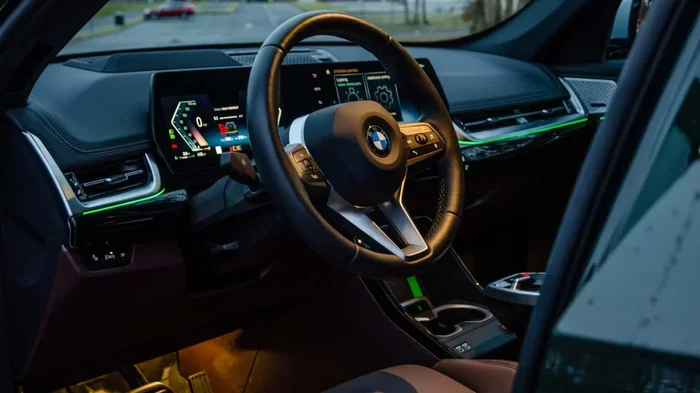
- Manual mode with paddles: Every X1 comes with steering-wheel paddle shifters for driver-controlled gear changes.
sDrive vs. xDrive: Same Transmission, Different Layout
This is a critical distinction many shoppers miss. The sDrive (FWD) and xDrive (AWD) models use the same 8-speed Steptronic transmission, but they bolt to different engine orientations and chassis architectures.
| Feature | sDrive (FWD) | xDrive (AWD) |
|---|---|---|
| Chassis Code | F48 (UKL2 platform) | F48 (UKL2 platform) |
| Engine Orientation | Transverse | Transverse |
| Transmission | 8-speed Steptronic (Aisin-sourced for early FWD, ZF for later) | 8-speed Steptronic (ZF 8HP) |
| Transfer Case | None | Electro-mechanical clutch pack |
| Weight Distribution | ~60/40 front/rear | ~55/45 front/rear |
| Driving Feel | Light steering, slight torque steer under hard acceleration | Better traction, more neutral handling, heavier feel |
Note: Early F48 sDrive models (2016–2017) used an Aisin 8-speed automatic, while xDrive models used the ZF 8HP. From 2018 onward, all US-spec X1s received the ZF 8HP regardless of drivetrain. This change improved shift quality and durability across the board.
First-Generation X1 (E84, 2010–2015): The Manual Era
If you are looking at a used first-generation X1, the transmission story is different. The E84 chassis offered three transmission choices depending on model and year:
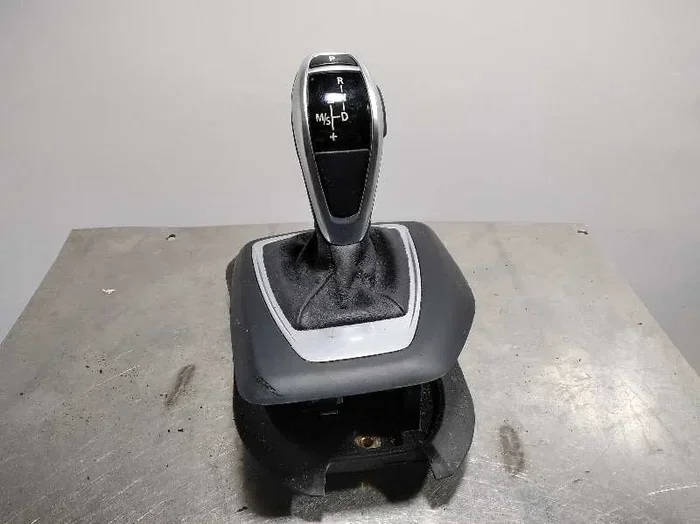
Visual guide about BMW X1 gear selector
Image source: bparts-eu.s3-eu-west-1.amazonaws.com
- 6-speed manual: Available on sDrive28i (RWD) models from 2013–2015. Rare but sought after by enthusiasts.
- 6-speed Steptronic automatic (ZF 6HP): Standard on xDrive28i and optional on sDrive28i. Proven, durable torque-converter unit.
- 8-speed Steptronic automatic (ZF 8HP): Introduced mid-cycle (late 2012) on xDrive28i and xDrive35i. Major upgrade in efficiency and smoothness.
E84 Transmission Reliability Notes
The ZF 6HP and 8HP units in the E84 are robust when maintained. The weak point is the mechatronic sleeve (connector between the transmission harness and valve body), which can leak and cause limp mode. It is a $150 part but requires dropping the subframe for access — a $800–$1,200 job at a shop. The 6-speed manual is bulletproof but check for clutch wear on high-mileage examples.
Second Generation (F48, 2016–2022): The Switch to Front-Drive Architecture
The 2016 redesign moved the X1 to BMW’s UKL2 front-drive platform (shared with the Mini Countryman and 2 Series Active Tourer). This was controversial among purists but brought interior space gains and cost savings.
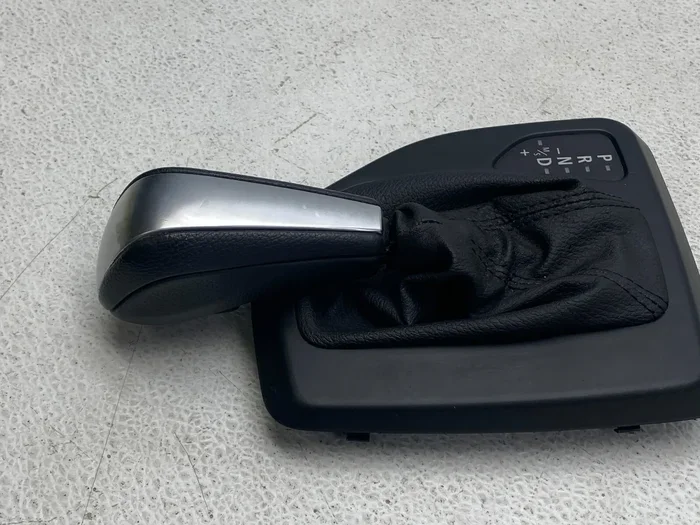
Visual guide about BMW X1 gear selector
Image source: i.ebayimg.com
Transmission Details by Model Year
2016–2017 Model Years
- sDrive28i: Aisin 8-speed automatic (transverse application). Adequate but not as refined as the ZF.
- xDrive28i: ZF 8HP 8-speed automatic. Superior shift quality, standard paddle shifters.
- Engine: N20 2.0L turbo-4 (228 hp / 258 lb-ft).
2018–2022 Model Years (LCI Update)
- All models: ZF 8HP 8-speed Steptronic standard.
- Engine: B48 2.0L turbo-4 (228 hp / 258 lb-ft). More reliable than N20 (no timing chain issues).
- New xDrive system: Faster-acting electro-mechanical clutch pack replaces the old hydraulic unit.
- Sport transmission tuning: Standard on M Sport models; sharper shifts, earlier lock-up.
F48 Driving Impressions
The F48 X1 with the ZF 8HP is a revelation compared to the old E84. Shifts are imperceptible in Comfort mode. In Sport, the transmission holds gears to redline and downshifts aggressively under braking. The paddle shifters respond instantly. Even the FWD sDrive model feels composed, though torque steer appears under full throttle from a stop.
Third Generation (U11, 2023–Present): Mild Hybrid and New Naming
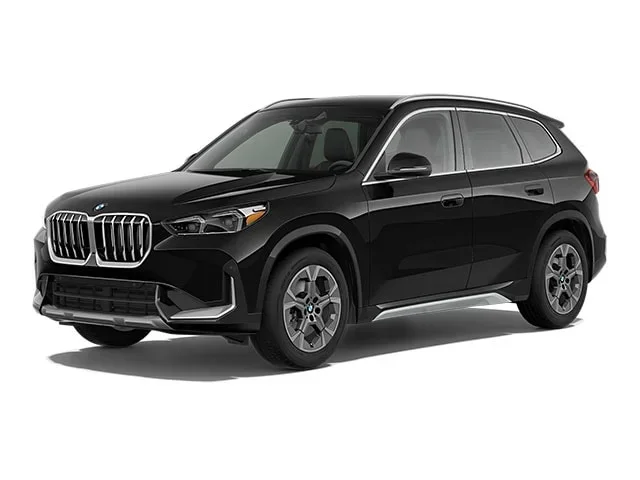
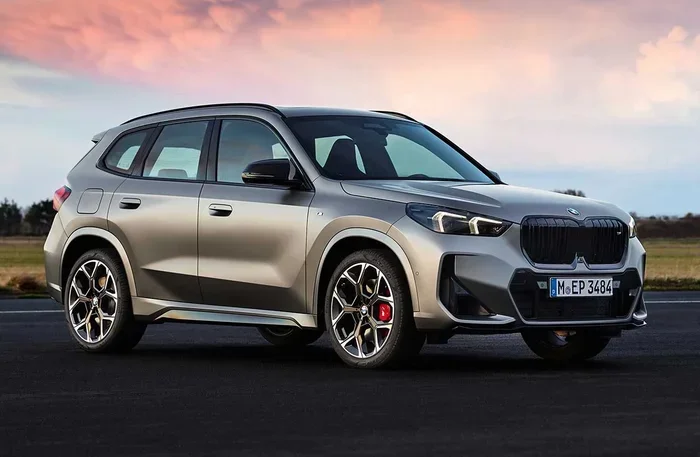
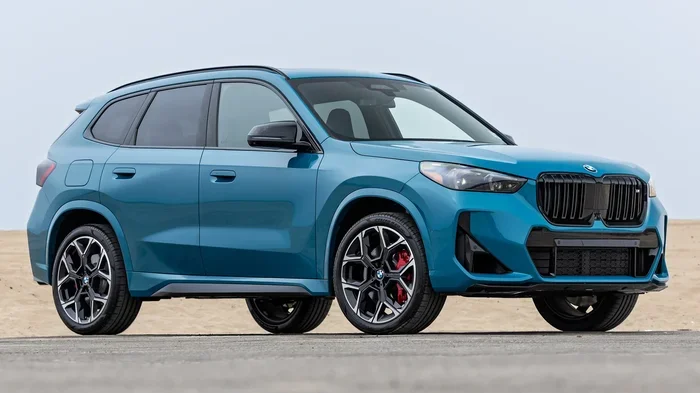
The current U11 chassis X1 debuted for the 2023 model year. It keeps the transverse layout but adds 48-volt mild-hybrid tech across the range.
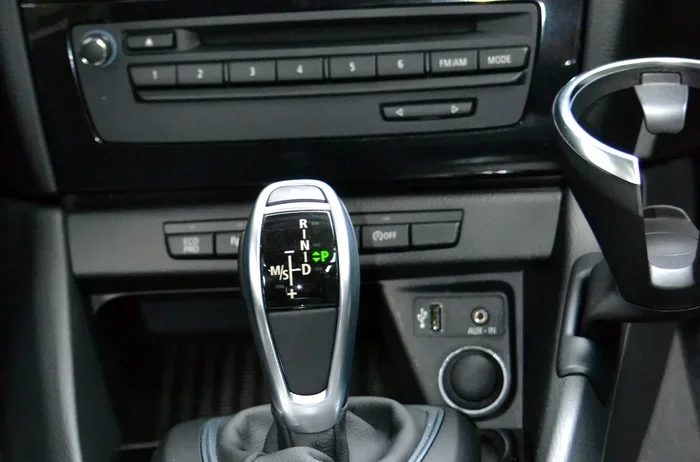
Visual guide about BMW X1 gear selector
Image source: digitaltrends.com
Transmission Updates for U11
- Same ZF 8HP core: Reinforced for higher torque loads from the integrated starter-generator.
- Electric motor integration: The 48V motor sits between engine and transmission, providing 18 hp / 147 lb-ft boost during acceleration and enabling coasting/start-stop at speed.
- New model designations:
- X1 xDrive23i: 2.0L + mild hybrid = 241 hp / 295 lb-ft.
- X1 M35i xDrive: 2.0L + mild hybrid = 312 hp / 295 lb-ft (US spec).
- No FWD option in US: All 2023+ US models are xDrive only.
How the Mild Hybrid Changes the Driving Experience
The 48V system fills in torque gaps during gear changes. The result is virtually seamless shifts — even smoother than the already-excellent F48. The engine stop-start is imperceptible because the electric motor keeps the car moving while the gas engine restarts. Fuel economy improves by roughly 2–3 mpg combined versus the outgoing model.
Transmission Maintenance: What You Need to Know
BMW markets the ZF 8HP as “lifetime fill.” Do not believe it. ZF themselves recommend fluid and filter changes every 60,000–80,000 miles (or 8 years). Many independent BMW specialists suggest 50,000 miles for track-use or hot-climate drivers.
Fluid Change Procedure and Cost
- Fluid type: ZF LifeGuard Fluid 8 (specific to 8HP). Do not use generic ATF.
- Filter: Integrated into the plastic oil pan — replace the whole pan assembly.
- Capacity: ~7–8 liters for a drain-and-fill; ~10 liters for a full flush.
- DIY difficulty: Moderate. Requires lift, torque wrench, and fluid pump. No dipstick — fill via bottom plug until overflow at specific temperature.
- Shop cost: $400–$700 depending on labor rates and fluid brand.
Warning Signs of Transmission Trouble
- Harsh 2–3 or 3–4 upshifts when cold
- Delayed engagement from Park to Drive/Reverse
- Shudder at light throttle (torque converter clutch chatter)
- Transmission warning light or “Drivetrain Malfunction” message
- Fluid leaks from the mechatronic sleeve or pan gasket
If you catch these early, a fluid change and mechatronic sleeve replacement often solve the problem. Ignoring them can lead to valve body wear or clutch pack failure — a $3,500+ repair.
Common Myths About the BMW X1 Transmission
Myth 1: “It’s a CVT”
False. The X1 has never used a continuously variable transmission. Every automatic X1 uses a traditional planetary-gear torque-converter unit (ZF 6HP, ZF 8HP, or Aisin 8-speed).
Myth 2: “FWD BMWs Use a Cheap Transmission”
Partially true only for 2016–2017 sDrive models (Aisin unit). From 2018 onward, every X1 gets the premium ZF 8HP. The Aisin is still a quality Japanese unit — just not quite as refined as the ZF.
Myth 3: “xDrive Adds a Second Transmission”
False. xDrive uses a single transmission with a power take-off unit (PTU) that sends torque to a rear driveshaft. The electro-mechanical clutch pack in the rear differential controls front/rear split. It is lighter and simpler than a traditional transfer case.
Myth 4: “You Can’t Launch an X1 Hard”
False. The ZF 8HP handles launch control beautifully (on M35i and M Sport models with the feature enabled). Even without formal launch control, brake-torquing to 2,500 rpm and releasing yields consistent 0–60 runs with zero drama.
Buying Guide: Choosing the Right X1 Transmission Setup
New Buyers (2023+ U11)
- Only xDrive is sold in the US. You get the ZF 8HP + mild hybrid standard.
- xDrive23i: Best value. Quick enough (0–60 in ~6.3 sec), efficient (~28 mpg combined).
- M35i xDrive: Same transmission, stronger internals, sport-tuned shift maps, standard limited-slip rear diff. Worth the premium if you drive enthusiastically.
Used Buyers (2016–2022 F48)
- Target 2018+ models. ZF 8HP across the board, B48 engine (no timing chain risk), updated xDrive.
- Prefer xDrive over sDrive. Better traction, better resale, same transmission after 2018.
- Check service records for transmission fluid changes. If none documented at 60k miles, budget $500 for immediate service.
- CPO warranty is gold. BMW’s Certified Pre-Owned warranty covers transmission failures up to 1 year/unlimited miles after the original 4yr/50k expires. Understanding what BMW Certified means can save you thousands on a used purchase.
Used Buyers (2010–2015 E84)
- Manual seekers: Look for 2013–2015 sDrive28i 6MT. Rare — expect to search nationwide.
- Auto buyers: Late-build 2012+ xDrive28i/35i with ZF 8HP are the sweet spot.
- Avoid early N20 engines (2011–2012) without timing chain recall documentation. The chain guide failure can destroy the engine — and the transmission won’t matter if the motor grenades.
- Budget for mechatronic sleeve replacement if not already done.
Real-World Fuel Economy: Automatic vs. The Old Manual
One reason BMW killed the manual: the automatic is now more efficient. EPA numbers tell the story:
| Model | Transmission | City / Highway / Combined |
|---|---|---|
| 2015 sDrive28i (E84) | 6-speed Manual | 21 / 31 / 24 mpg |
| 2015 sDrive28i (E84) | 8-speed Auto | 22 / 33 / 26 mpg |
| 2022 xDrive28i (F48) | 8-speed Auto | 23 / 31 / 26 mpg |
| 2024 xDrive23i (U11) | 8-speed Auto + 48V MHEV | 25 / 32 / 28 mpg |
The modern automatic beats the old manual in every metric — acceleration, fuel economy, and emissions. The 48V mild hybrid in the U11 pushes combined economy to 28 mpg despite standard AWD and more power.
Transmission Tuning and Aftermarket Options
Enthusiasts often ask about tuning the ZF 8HP. Here is the landscape:
- TCU (Transmission Control Unit) tuning: Companies like xHP Flashtool offer custom maps for the ZF 8HP. Benefits: faster shifts, higher torque converter lock-up speeds, custom shift points, launch control enablement on non-M models. Cost: ~$150–$300 for the license + OBD cable.
- Risk: TCU tunes are generally safe if conservative. Aggressive line pressure increases can accelerate clutch wear. Always revert to stock before dealer visits.
- Warranty: BMW can detect TCU flashes. They may deny drivetrain claims if they find a non-stock map.
- Hardware upgrades: Limited options. Alpina used a reinforced 8HP in the B3/B4, but no bolt-in upgrades exist for the X1.
Expert Insight: What a BMW Master Tech Told Us
We spoke with a BMW master technician (15 years experience, 300+ X1 transmissions serviced) for his take:
“The ZF 8HP in the X1 is bulletproof if you change the fluid. The 2016–2017 Aisin in the sDrive is fine too — just not as smooth. The biggest killer is heat. Guys who tow or live in Arizona/Florida and never service the fluid? They’re the ones buying valve bodies at 90k miles. Do a pan drop and filter at 50k, 100k, 150k. Use ZF fluid. It’s cheap insurance.”
He also noted that the U11 mild-hybrid transmission runs cooler because the electric motor handles low-speed creep and stop-start, reducing torque converter slip. “The U11 box will likely outlive the car,” he said.
Quick Tips for X1 Transmission Care
- Warm up before hard driving. The ZF 8HP shifts best at 160–180°F fluid temp. Drive gently for the first 5–10 minutes in cold weather.
- Use Manual/Sport mode on steep descents. Engine braking saves brakes and keeps the transmission in its happy zone.
- Don’t “neutral drop.” Revving in Neutral and slamming into Drive destroys the forward clutch pack instantly.
- Check fluid level correctly. No dipstick. Must be level, at 30–50°C (86–122°F), engine running, fill plug removed. Fluid should trickle out. Top up until it does.
- Scan for adaptations reset after fluid change. The TCU learns clutch wear. A reset (via ISTA or xHP) ensures optimal shift quality with fresh fluid.
Common Mistakes to Avoid
- Assuming “lifetime fluid” means never service it. It means lifetime of the warranty period. Plan on 60k-mile intervals.
- Buying a 2016–2017 sDrive without test-driving an xDrive. The Aisin transmission feels mushy compared to the ZF. You may regret it.
- Ignoring the “Drivetrain Malfunction” warning. Often it’s a $150 mechatronic sleeve. Driving in limp mode overheats the transmission fast.
- Using aftermarket “universal” ATF. The ZF 8HP is extremely fluid-sensitive. Only ZF LifeGuard 8 or approved equivalents (Pentosin ATF 1 LV, Ravenol ATF LV).
- Skipping the test drive on a used X1. Check for shudder at 35–45 mph light throttle (torque converter clutch), delayed Reverse engagement, and harsh downshifts when slowing to a stop.
How the X1 Transmission Compares to Rivals
| Vehicle | Transmission Type | Speeds | Shift Quality | Reliability Reputation |
|---|---|---|---|---|
| BMW X1 | Torque-converter auto (ZF 8HP) | 8 | Excellent | Very Good |
| Audi Q3 | Dual-clutch (DSG/S tronic) | 7 | Quick but jerky at low speed | Good (mechatronic failures common) |
| Mercedes GLA | Dual-clutch (7G-DCT / 8G-DCT) | 7/8 | Improved but still clunky cold | Average |
| Volvo XC40 | Torque-converter auto (Aisin TG-81SC) | 8 | Smooth, slightly slow | Very Good |
| Lexus UX | CVT (gas) / e-CVT (hybrid) | CVT | Drone under acceleration | Excellent |