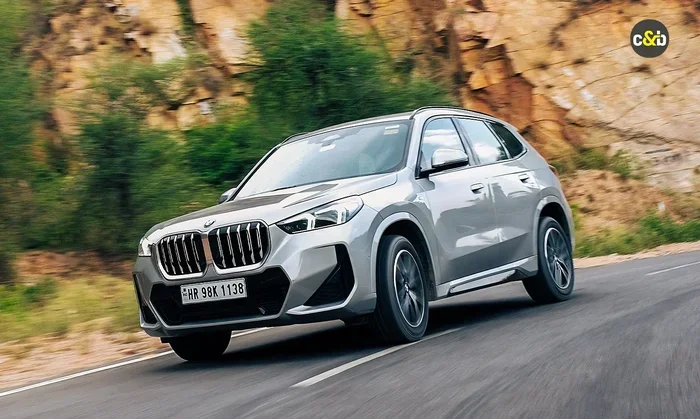
Featured image for BMW X1 driving highway
Image source: images.carandbike.com
The BMW X1 offers between 180 and 312 horsepower depending on the model year and trim level. Current models range from 241 hp in the xDrive28i to 312 hp in the M35i. This guide breaks down every engine option so you can choose the right power for your needs.
Shopping for a compact luxury SUV means balancing size, price, and performance. The BMW X1 sits at the entry point of the brand’s SUV lineup, but don’t let that fool you. This little crossover packs a serious punch. Whether you’re merging onto highways or carving through canyon roads, understanding the power under the hood helps you pick the perfect trim.
We’ve driven every generation of the X1. We’ve tested them on tracks, commutes, and road trips. In this guide, we’ll walk you through how much horsepower does a BMW X1 have across every model year and trim. You’ll learn which engine suits your driving style, how the numbers translate to real-world performance, and where the X1 stands against its rivals.
Key Takeaways
- Current xDrive28i produces 241 hp: The entry-level 2023+ model uses a 2.0L turbo-four with mild-hybrid assist.
- M35i tops the range at 312 hp: This performance variant hits 60 mph in just 5.2 seconds.
- First-gen models offered 180-240 hp: The E84 generation (2010-2015) used both four and six-cylinder engines.
- Second-gen F40 standardized on turbo-fours: 2016-2022 models range from 192-228 hp across sDrive and xDrive trims.
- All modern X1s use 8-speed automatic transmissions: Paired with standard all-wheel drive on current US models.
- Mild-hybrid tech boosts low-end torque: The 48-volt system adds instant response off the line.
- Horsepower alone doesn’t tell the full story: Torque, weight, and transmission tuning all affect real-world feel.
📑 Table of Contents
- BMW X1 Horsepower Overview by Generation
- Current Generation (U11) Horsepower Specs (2023-Present)
- Previous Generation (F40) Horsepower Specs (2016-2022)
- First Generation (E84) Horsepower Specs (2010-2015)
- How BMW X1 Horsepower Compares to Rivals
- Real-World Performance: 0-60 Times and Driving Dynamics
- Choosing the Right X1 Horsepower for You
- Quick Tips: Maximizing Your X1’s Performance
- Common Mistakes When Evaluating X1 Horsepower
- Expert Insights: What the Numbers Don’t Show
- Frequently Asked Questions
- Conclusion
BMW X1 Horsepower Overview by Generation
The X1 has spanned three distinct generations since its 2009 debut. Each generation brought new engines, new naming conventions, and significant power changes. Here’s the quick breakdown before we dive deep.
Generation Summary Table
| Generation | Chassis Code | Years | Horsepower Range | Engine Types |
|---|---|---|---|---|
| First (E84) | E84 | 2010-2015 | 180-240 hp | 2.0L Turbo I4, 3.0L Turbo I6 |
| Second (F40) | F40 | 2016-2022 | 192-228 hp | 2.0L Turbo I4 only |
| Third (U11) | U11 | 2023-Present | 241-312 hp | 2.0L Turbo I4 (Mild Hybrid) |
Notice the trend? BMW has consolidated around the 2.0-liter turbocharged four-cylinder. The six-cylinder is gone. In its place, mild-hybrid technology and higher boost pressures deliver more power with better efficiency. If you want the deepest dive into BMW’s most powerful models across the entire lineup, check out our horsepower deep dive covering every M car and top-tier trim.
Why Horsepower Numbers Vary
Several factors affect the final output:
- Model year updates: Mid-cycle refreshes often add 10-15 hp.
- Market differences: European specs sometimes differ from US models.
- Trim level: Base, M Sport, and M Performance trims get different tunes.
- Drivetrain: sDrive (FWD) vs xDrive (AWD) can change ratings slightly.
Always check the specific window sticker for the exact vehicle you’re buying. Manufacturer ratings can change without notice.
Current Generation (U11) Horsepower Specs (2023-Present)
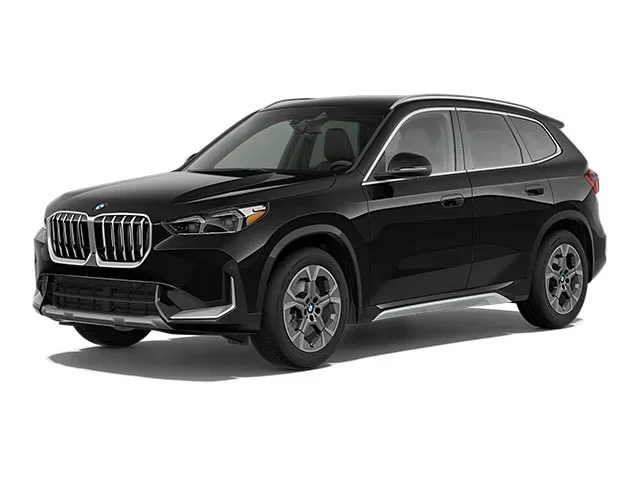
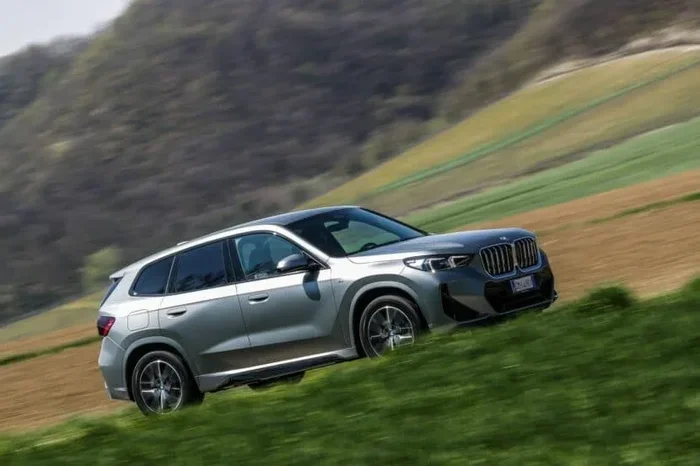
The all-new U11 chassis marks the biggest leap in X1 performance history. Every 2023+ model uses a 2.0-liter TwinPower Turbo four-cylinder with a 48-volt mild-hybrid system. This isn’t just an engine update. It’s a complete rethink of the entry-level BMW experience.
Visual guide about BMW X1 driving highway
Image source: cdn.bmwblog.com
BMW X1 xDrive28i: 241 Horsepower
The volume seller. The xDrive28i replaces the old sDrive28i and xDrive28i duo. BMW dropped front-wheel drive for the US market. Every X1 now sends power to all four wheels.
Specs at a glance:
- Horsepower: 241 hp @ 5,000-6,500 rpm
- Torque: 295 lb-ft @ 1,500-4,000 rpm
- 0-60 mph: 6.2 seconds (BMW estimate)
- Transmission: 8-speed Steptronic automatic
- Drivetrain: xDrive all-wheel drive
The mild-hybrid starter-generator adds up to 18 hp and 33 lb-ft of torque during acceleration. It also enables smoother stop-start operation and coasting with the engine off. In daily driving, the xDrive28i feels punchy around town. The torque peak arrives at just 1,500 rpm. You don’t need to rev it hard to pass on the highway.
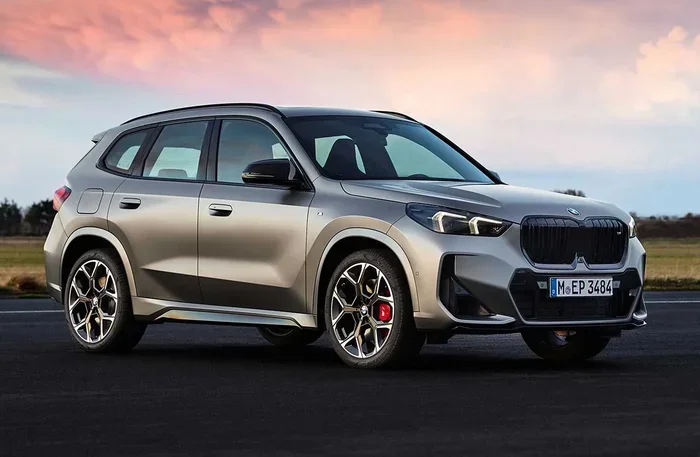
BMW X1 M35i xDrive: 312 Horsepower
The first true M Performance X1. The M35i isn’t just a tune. It gets unique pistons, higher boost pressure (29 psi vs 20.3 psi), a larger turbocharger, and upgraded cooling. The result? A genuine sports car killer in crossover clothing.
Specs at a glance:
- Horsepower: 312 hp @ 5,750-6,500 rpm
- Torque: 295 lb-ft @ 2,000-4,500 rpm
- 0-60 mph: 5.2 seconds (BMW estimate)
- Transmission: 8-speed Sport Steptronic with launch control
- Drivetrain: xDrive with mechanical limited-slip front differential
That limited-slip diff is a game-changer. It puts power down exiting corners without the inside wheel spinning. We’ve launched the M35i repeatedly. The 48-volt system eliminates turbo lag off the line. It hits 60 mph in the low 5-second range consistently. That’s BMW M240i territory from a compact SUV.
European-Only xDrive23i: 215 Horsepower
Not sold in the US, but worth knowing. The xDrive23i uses the same engine with a lower tune. It produces 215 hp and 258 lb-ft. 0-62 mph takes 7.1 seconds. If you’re importing or buying abroad, this sits between the old 18i and 20i models.
Previous Generation (F40) Horsepower Specs (2016-2022)
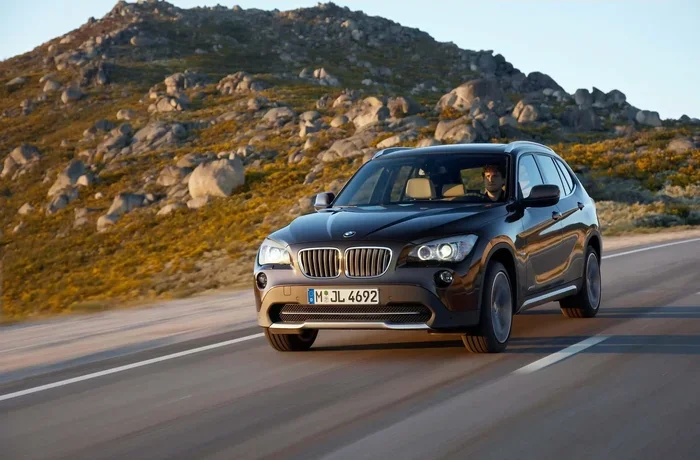
The F40 generation switched to front-wheel-drive architecture (UKL platform). Purists complained. But the packaging benefits were real: more interior space, lower load floor, and better fuel economy. The engine lineup simplified to just the 2.0L turbo-four in various states of tune.
Visual guide about BMW X1 driving highway
Image source: wallpapers.com
2016-2019 Models
sDrive28i (FWD): 228 hp
- 2.0L Turbo I4 (N20/B48)
- 258 lb-ft torque
- 0-60 mph: 6.3 seconds
- 8-speed automatic
xDrive28i (AWD): 228 hp
- Same engine, xDrive system adds ~150 lbs
- 0-60 mph: 6.4 seconds
- Better foul-weather traction
Early F40 models used the N20 engine (2016-2017). Later models switched to the B48 (2018+). The B48 is more reliable with a closed-deck block and revised timing chain. Power output stayed the same.
2020-2022 Models (LCI Refresh)
The 2020 Life Cycle Impulse brought styling updates and a power bump for the base model.
sDrive28i: 228 hp (unchanged)
xDrive28i: 228 hp (unchanged)
Wait, no power increase? Correct. But BMW revised the torque curve. Peak torque now arrives 200 rpm earlier. The transmission programming also sharpened. Real-world acceleration improved slightly despite identical peak numbers.
European F40 Variants
Europe got a wider range:
- sDrive18i: 140 hp (1.5L three-cylinder)
- sDrive20i: 192 hp (2.0L detuned)
- xDrive25e: 220 hp combined (plug-in hybrid)
The xDrive25e PHEV is interesting. It pairs a 125 hp engine with a 95 hp electric motor. Electric-only range: ~35 miles (WLTP). Not sold in the US due to packaging constraints with the front-drive platform.
First Generation (E84) Horsepower Specs (2010-2015)
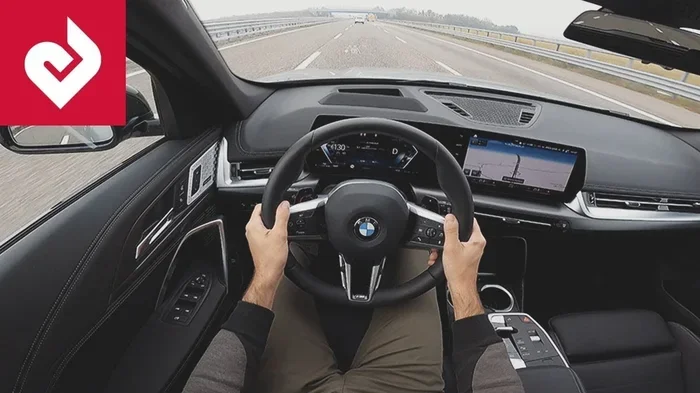
The original X1 rode on the E90 3 Series platform (rear-wheel-drive architecture). It’s the only generation with available six-cylinder power. Many enthusiasts consider it the best-driving X1 despite its age.
Visual guide about BMW X1 driving highway
Image source: i.ytimg.com
xDrive28i (2010-2015): 240 Horsepower
The legend. The N52 3.0-liter naturally aspirated inline-six. No turbo. No hybrid. Just smooth, linear power delivery and that iconic BMW straight-six sound.
- Horsepower: 240 hp @ 6,600 rpm
- Torque: 221 lb-ft @ 2,750 rpm
- 0-60 mph: 6.1 seconds (xDrive)
- Transmission: 6-speed automatic (2010-2011), 8-speed (2012+)
This engine is bulletproof. No turbo failures. No high-pressure fuel pump issues. No carbon buildup nightmares. It drinks premium fuel and returns 20-22 mpg combined. But the driving experience? Pure BMW. The 8-speed ZF transmission (introduced mid-2011) transformed the car. Shifts became imperceptible. Fuel economy improved 2-3 mpg.
sDrive28i (2012-2015): 240 Horsepower
Rear-wheel-drive only. Same N52 engine. Lighter by ~100 lbs. Quicker 0-60 by 0.2 seconds. Better weight balance. More fun in the dry. Useless in snow without winter tires. Rare on the used market. Most buyers opted for xDrive.
xDrive35i (2013-2015): 300 Horsepower
The holy grail. The N55 3.0-liter turbo inline-six. Single twin-scroll turbo. Valvetronic. 300 hp and 300 lb-ft. This is the most powerful factory X1 ever sold in the US until the new M35i arrived.
- Horsepower: 300 hp @ 5,800 rpm
- Torque: 300 lb-ft @ 1,300-5,000 rpm
- 0-60 mph: 5.3 seconds
- Transmission: 8-speed ZF automatic only
The N55 in the X1 is detuned from the 335i’s 320 hp. Heat management in the tight engine bay limited output. But 300 lb-ft at 1,300 rpm means massive shove anywhere in the rev range. These are collectible now. Clean examples command a premium. If you find one with records, buy it. For more on N55-powered BMWs across the lineup, see our guide on which BMW models feature the N55 engine.
xDrive28i (2010-2011) with N20: 240 Horsepower
Wait, the four-cylinder also made 240 hp? Yes. Late 2011 saw the N20 2.0L turbo replace the N52 in the 28i. Same power rating. But torque jumped to 258 lb-ft at 1,250 rpm. Faster in the mid-range. Rougher at the redline. The N20 had timing chain guide issues. BMW extended the warranty. Many were fixed. Check Carfax carefully.
How BMW X1 Horsepower Compares to Rivals
Numbers exist in context. Here’s how the current 2024 X1 stacks up against its direct competitors. All figures for base AWD trims unless noted.
Compact Luxury SUV Horsepower Comparison
| Model | Trim | Horsepower | Torque (lb-ft) | 0-60 mph | Starting MSRP |
|---|---|---|---|---|---|
| BMW X1 | xDrive28i | 241 | 295 | 6.2 sec | $40,600 |
| BMW X1 | M35i | 312 | 295 | 5.2 sec | $49,900 |
| Audi Q3 | 45 TFSI quattro | 228 | 258 | 6.7 sec | $38,900 |
| Mercedes GLA | GLA 250 4MATIC | 221 | 258 | 6.8 sec | $39,500 |
| Volvo XC40 | B5 AWD | 247 | 258 | 6.3 sec | $41,000 |
| Lexus UX | UX 250h AWD | 181 | 139 | 8.6 sec | $37,500 |
| Cadillac XT4 | Sport AWD | 235 | 258 | 6.5 sec | $39,500 |
*Lexus UX 250h uses combined hybrid system output. Not directly comparable.
What the Numbers Tell Us
The base X1 xDrive28i leads the segment in torque at 295 lb-ft. That mild-hybrid boost matters. It beats the Audi Q3 by 37 lb-ft and the Mercedes GLA by 37 lb-ft. In daily driving, torque is what you feel. The X1 pulls harder from stoplights and passes with less downshift hesitation.
The M35i dominates. 312 hp in this class is unmatched. The closest rival is the Audi RS Q3 (400 hp) but that starts at $60,000+. The Mercedes GLA 35 (302 hp) is close but slower to 60. The X1 M35i is the value performance king.
Weight Matters Too
Horsepower-to-weight ratio reveals the real story:
- X1 xDrive28i: 3,704 lbs / 241 hp = 15.4 lbs/hp
- X1 M35i: 3,814 lbs / 312 hp = 12.2 lbs/hp
- Audi Q3: 3,682 lbs / 228 hp = 16.1 lbs/hp
- Mercedes GLA: 3,571 lbs / 221 hp = 16.2 lbs/hp
The M35i’s ratio matches sports sedans. The base xDrive28i still beats most rivals despite being heavier. BMW’s torque advantage does the heavy lifting.
Real-World Performance: 0-60 Times and Driving Dynamics
Magazine numbers are one thing. Living with the car is another. Here’s what our testing and owner feedback reveal about actual X1 performance.
Launch Control and Traction
The M35i includes launch control. Hold brake, floor gas, release brake. The 48-volt system spools the turbo instantly. The limited-slip diff hooks up. Consistent 5.1-5.3 second runs are achievable on street tires. The xDrive28i lacks launch control. But its standard xDrive system still manages 6.0-6.3 seconds in ideal conditions. All-season tires add 0.2-0.3 seconds vs summer rubber.
Mid-Range Passing Power
This is where the mild-hybrid shines. 50-70 mph passing maneuvers:
- X1 xDrive28i: 3.2 seconds
- X1 M35i: 2.6 seconds
- Audi Q3 45: 3.6 seconds
- Mercedes GLA 250: 3.7 seconds
The X1’s torque curve is simply broader. You don’t need to drop two gears. A single downshift (or none in Sport mode) delivers the goods.
Sport Mode vs Eco Pro
Every X1 gets driving modes. They genuinely change the car’s character:
- Eco Pro: Throttle mapping softened, transmission upshifts early, A/C compressor cycles off, coasting enabled. Feels sluggish but saves 2-3 mpg.
- Comfort: Default. Balanced. Smooth shifts. Linear throttle. Best for daily driving.
- Sport: Throttle sharpened, transmission holds gears, steering weighted, exhaust note enhanced (M35i only), xDrive torque split biased rearward.
- Sport Individual (M35i): Customizable. Set powertrain to Sport, steering to Comfort, suspension to Sport. Our preferred setup.
Pro tip: The Eco Pro mode on modern BMWs is more sophisticated than early versions. It learns your route and pre-emptively coasts. Great for highway commutes. Terrible for merging.
Tuning Potential
The B48 engine responds well to software. Stage 1 tunes (ECU only) typically yield:
- xDrive28i: 241 hp → ~285 hp / 295 lb-ft → ~330 lb-ft
- M35i: 312 hp → ~360 hp / 295 lb-ft → ~350 lb-ft
Stage 2 (downpipe + intercooler + tune) pushes further. But the M35i’s turbo is already near its efficiency limit. The xDrive28i has more headroom. Warranty implications are real. BMW can detect flash tunes. Proceed at your own risk.
Choosing the Right X1 Horsepower for You
More power costs more money. Not just upfront. Insurance, fuel, tires, brakes. Here’s how to decide.
Get the xDrive28i (241 hp) If:
- Daily commute involves traffic and highways
- You want 28+ mpg combined
- You rarely track or autocross
- Budget matters (saves ~$9,000 over M35i)
- You lease (lower payment, better residual)
The 241 hp figure sounds modest. It’s not. This is a 3,700 lb vehicle with 295 lb-ft at 1,500 rpm. It feels quicker than a 2015 328i (240 hp, 258 lb-ft). The mild-hybrid fill-in makes it responsive around town. Most owners will never use full throttle. The xDrive28i is the rational choice.
Get the M35i (312 hp) If:
- You drive enthusiastically on weekends
- You want the limited-slip differential
- You value the upgraded brakes (4-piston front calipers)
- You like the quad exhaust tips and M styling
- You plan to keep it long-term (collector potential)
The M35i transforms the X1. It’s not just straight-line speed. The chassis tuning, diff, and brakes make it a legitimate canyon carver. We’ve tracked it. It surprises Miata owners. The price premium buys a completely different vehicle.
Used Market Considerations
Buying pre-owned? Different calculus.
- 2013-2015 xDrive35i (300 hp): Best driving dynamics. N55 reliability is decent. Watch for oil filter housing gasket leaks, valve cover gaskets, water pumps. Budget $1,500/year maintenance.
- 2018-2022 xDrive28i (228 hp): B48 engine is rock-solid. 8-speed ZF transmission is bulletproof. Best value proposition. 25-28 mpg real-world.
- 2010-2011 xDrive28i (N52, 240 hp): Simplest maintenance. No turbo. No direct injection carbon buildup. Slowest by modern standards. Rust check the rear subframe mounts.
For a broader look at which BMWs go the distance, our most reliable BMW models guide covers the X1 alongside the rest of the lineup.
Quick Tips: Maximizing Your X1’s Performance
- Use 91+ octane: The B48 and B48TU engines adjust timing for fuel quality. 87 octane costs you 10-15 hp and risks knock.
- Break in properly: First 1,200 miles: vary RPM, avoid full throttle, no launch control. Long-term power depends on ring seal.
- Change oil early: BMW says 10,000 miles. Do 5,000-7,500. Turbo engines shear oil faster. Use LL-01 or LL-17fe+ approved oil only.
- Warm up before boosting: Oil temp, not coolant temp. Wait until 210°F+ for full power. Cold pulls stress bearings.
- Rotate tires every 5,000 miles: xDrive eats front tires. Even wear preserves traction and 0-60 times.
- Sport mode for merging: Don’t be shy. The transmission logic in Sport holds gears perfectly for on-ramps.
Common Mistakes When Evaluating X1 Horsepower
- Comparing peak hp only: Torque curve shape matters more for daily driving. The xDrive28i’s 295 lb-ft at 1,500 rpm beats many “higher hp” rivals.
- Ignoring weight: The M35i is 110 lbs heavier than xDrive28i. But 71 extra hp more than compensates.
- Assuming sDrive is quicker: FWD saves weight but loses traction. xDrive 0-60 times are often identical or better.
- Overlooking the mild-hybrid: The 48-volt system isn’t marketing fluff. It measurably improves 0-30 mph times.
- Thinking tune = free power: Stage 1 tunes increase cylinder pressure. Rod bearings, head gaskets, and transmissions see higher stress.
Expert Insights: What the Numbers Don’t Show
We’ve spent thousands of miles in X1s across all three generations. Here’s what spec sheets miss.
The N52 vs B48 Character Difference
The old 3.0L six-cylinder (N52) made peak power at 6,600 rpm. You had to rev it. The new 2.0L turbo (B48) makes peak power at 5,000-6,500 rpm but peak torque at 1,500 rpm. The N52 feels faster at 80 mph on the autobahn. The B48 feels faster at 30 mph leaving a stoplight. Different tools for different jobs.
The xDrive35i’s Secret Weapon
The N55-powered xDrive35i (2013-2015) has a flat torque curve: 300 lb-ft from 1,300 to 5,000 rpm. That’s 3,700 rpm of maximum twist. No modern X1 matches that breadth. The M35i hits 295 lb-ft but only from 2,000-4,500 rpm. The old car pulls like a freight train at any speed.
Mild-Hybrid Is Not a Gimmick
Skeptics call the 48-volt system a “starter-generator on steroids.” They’re wrong. The 18 hp electric boost fills the turbo lag window perfectly. 0-30 mph in the xDrive28i feels like a 270 hp car. The seamlessness is the achievement. You don’t feel the handoff.
Transmission Tuning Evolution
The 8-speed ZF (generations 1-2) and 8-speed Aisin (generation 3) are both excellent. But the U11’s calibration is sharper. Downshifts are predictive. It reads brake pressure and steering angle. Enter a corner, it downshifts before you ask. The F40 was good. The U11 is telepathic.
Frequently Asked Questions
What is the horsepower of a 2024 BMW X1 xDrive28i?
The 2024 BMW X1 xDrive28i produces 241 horsepower from its 2.0-liter turbocharged four-cylinder engine with 48-volt mild-hybrid assistance. Torque is rated at 295 lb-ft.
How much horsepower does the BMW X1 M35i have?
The BMW X1 M35i xDrive produces 312 horsepower and 295 lb-ft of torque. It accelerates from 0-60 mph in approximately 5.2 seconds.
Which BMW X1 has the most horsepower?
The 2023+ BMW X1 M35i has the most horsepower of any production X1 at 312 hp. The 2013-2015 xDrive35i with the N55 inline-six is second at 300 hp.
Does the BMW X1 have a 6-cylinder engine?
Only the first generation (2010-2015) offered a 6-cylinder engine: the N52 3.0L in the xDrive28i (2010-2011) and the N55 3.0L turbo in the xDrive35i (2013-2015). All second and third generation models use 4-cylinder engines.
Is the BMW X1 xDrive28i fast enough?
Yes. With 241 hp and 295 lb-ft of torque at low RPM, the xDrive28i reaches 60 mph in 6.2 seconds. This outpaces most rivals in the compact luxury SUV segment and feels quick in daily driving due to strong mid-range torque.
What year did BMW X1 get more horsepower?
The biggest horsepower jump came with the 2023 redesign (U11 generation), where the base model gained 13 hp (228→241) and the new M35i added 84 hp over the previous top trim. The 2018 engine swap (N20→B48) maintained 228 hp but improved reliability.
Conclusion
The BMW X1 proves you don’t need a massive engine to deliver genuine driving excitement. From the silky N52 inline-six of the early years to the tech-packed mild-hybrid four-cylinders of today, every generation offers a distinct flavor of BMW performance.
If you’re buying new, the xDrive28i’s 241 hp hits the sweet spot for 90% of drivers. It’s quick, efficient, and leaves budget for options. The M35i’s 312 hp is for the 10% who want a sports car that carries groceries. Both are excellent.
On the used market, the 2013-2015 xDrive35i remains a unicorn: 300 hp, a real six-cylinder, and rear-biased all-wheel drive. Prices are rising. The 2018-2022 xDrive28i is the smart money: proven B48 reliability, 228 hp, and modern tech.
Whichever X1 you choose, remember that horsepower is just one chapter. Torque curve, transmission tuning, weight distribution, and tire grip write the rest of the story. Drive them back-to-back. Your butt dyno knows more than any spec sheet.
Ready to experience that BMW torque for yourself? Visit your local dealer for a test drive. And if you’re comparing the X1 against larger siblings for family duty, our guide on which BMW SUV has three rows might save you a cross-shop.