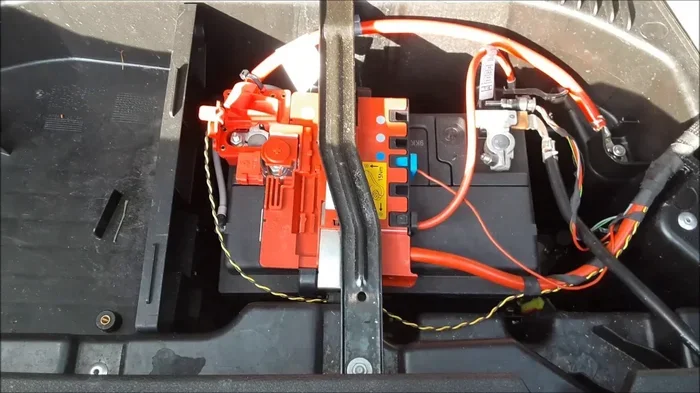
Featured image for BMW X1 jump start
Image source: i.ytimg.com
Can I jump a car with my BMW X1? Yes, you can safely jump-start another vehicle or receive a jump, but you must use the dedicated engine bay terminals—not the battery itself—to protect sensitive electronics. This guide walks you through the exact procedure, critical safety warnings, and what to do after the jump to keep your X1 running smoothly.
Picture this: you are running late, you hop into your BMW X1, press the Start/Stop button, and hear that dreaded rapid clicking sound. The battery is dead. Or maybe you are the Good Samaritan in a parking lot, and a stranger asks if your X1 can give their car a boost. In both scenarios, the same critical question pops into your head: can I jump a car with my BMW X1?
The short answer is yes. Your BMW X1 is perfectly capable of jumping another car, and it can be jumped itself if the battery dies. However—and this is a big however—modern BMWs are rolling computers packed with sensitive control modules. Doing it the “old school” way by clamping directly onto the battery terminals in the trunk is a recipe for disaster. You risk frying expensive electronics, triggering error codes, or even causing the battery to vent gas.
This comprehensive guide covers everything you need to know. We will show you exactly where the hidden jump terminals are, the precise step-by-step connection order, the mistakes that cost owners thousands, and the critical “aftercare” steps most people forget. Let’s dive in so you can handle this situation with confidence.
Key Takeaways
- Use designated terminals: Always connect cables to the jump-start terminals in the engine bay, never directly to the battery in the trunk.
- Follow the correct sequence: Connect positive to positive first, then negative to the ground point, to avoid voltage spikes.
- Protect the electronics: Modern BMWs have sensitive control modules; incorrect jumping can cause expensive damage.
- Register new batteries: If you replace the battery after a failure, it must be registered to the car’s computer system.
- Check warning lights: After a jump, monitor the dashboard for error messages like drivetrain malfunctions or charging faults.
- Consider roadside assistance: If you are unsure, BMW Roadside Assistance or a professional is safer than risking electrical damage.
- Maintain battery health: Regular drives and battery tests during service prevent unexpected dead battery situations.
📑 Table of Contents
- The Short Answer: Yes, But You Must Follow the Rules
- Locating the Jump Start Terminals in Your BMW X1
- Scenario A: Jump Starting Another Car WITH Your BMW X1
- Scenario B: Jump Starting YOUR BMW X1 (Receiving a Jump)
- Critical Safety Precautions and Common Mistakes
- Understanding BMW X1 Battery Technology: AGM and Start-Stop
- After the Jump: The “Now What?” Checklist
- When to Call BMW Roadside Assistance or a Pro
- Preventative Maintenance: Avoiding the Dead Battery
- Quick Reference: Jump Start Cheat Sheet
- Expert Insight: The “Hidden” Risks of Modern Jump Starting
- Conclusion
The Short Answer: Yes, But You Must Follow the Rules
BMW engineers designed the X1 with a specific jump-start procedure for a reason. The main battery lives in the trunk (or cargo area floor well), tucked away for weight distribution and safety. Because the battery is not under the hood, BMW installed dedicated jump-start terminals in the engine bay. These terminals are your only safe entry point for jumper cables or a portable booster pack.
If you ignore this and try to reach the battery in the trunk, you are bypassing the vehicle’s electrical safety architecture. You also risk creating a spark near a battery that may be venting hydrogen gas. Always use the engine bay terminals. It is faster, safer, and the only method approved by the manufacturer.
Why the Procedure Matters More Than You Think
Your X1 runs a sophisticated Battery Management System (BMS). This system monitors the battery’s state of charge, health, and temperature. It controls the alternator output to maximize fuel efficiency and battery life. When you introduce a massive surge of current from a donor vehicle or a jump pack, the BMS can get confused or, worse, damaged if the voltage spikes.
Furthermore, the X1 likely features an AGM (Absorbent Glass Mat) battery to support the auto start-stop system. AGM batteries are more sensitive to overcharging and voltage irregularities than old flooded lead-acid batteries. The jump terminals are wired to handle this specific chemistry and the car’s electrical load correctly.
Locating the Jump Start Terminals in Your BMW X1
Before you even think about connecting cables, pop the hood. You are looking for two specific posts, usually covered by plastic caps marked with “+” and “-” symbols.
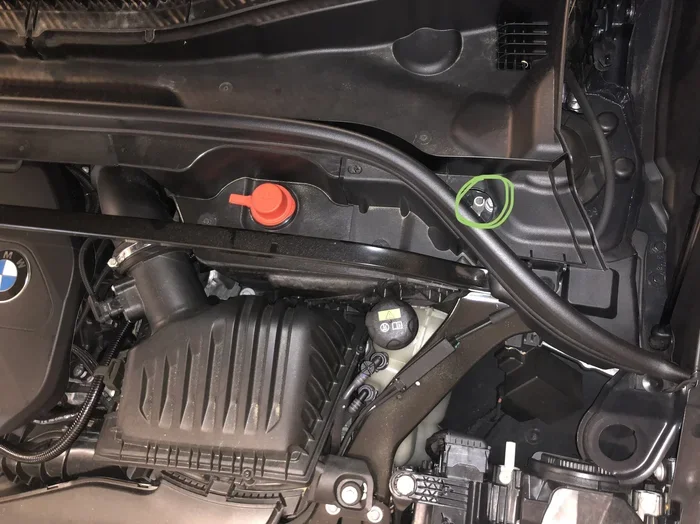
Visual guide about BMW X1 jump start
Image source: i.sstatic.net
The Positive Terminal (+)
This is the most prominent one. Look near the front of the engine bay, often close to the strut tower or the fuse box. It has a red plastic cover with a large “+” sign on it. Flip the cover open. This post connects directly to the battery positive cable but runs through the safety distribution box.
The Negative Terminal (-) / Ground Point
This is where many people get stuck. There is usually no dedicated negative post. Instead, BMW provides a designated grounding point. It is typically a solid, unpainted metal bolt or stud on the engine block, the strut tower, or the vehicle chassis. It might be marked with a “-” sticker or simply be a conspicuous bare metal nut.
Pro Tip: Consult your owner’s manual for the exact location for your specific model year (F48 or U11 chassis). It saves you from clamping onto a painted bracket or a plastic cover, which won’t conduct electricity.
What About the Battery in the Trunk?
Forget it exists for jumping purposes. The battery is located under the cargo floor panel, often under the spare tire well or a dedicated cover. While you can access it for replacement or testing, the cables running forward are long. Resistance in those long cables makes jumping from the trunk inefficient and dangerous. Stick to the engine bay.
Scenario A: Jump Starting Another Car WITH Your BMW X1
You are the hero with the running car. Your X1 is the donor. This is generally safer for your car than receiving a jump, but you still need to be careful. Your alternator and voltage regulator are designed to charge your battery, not act as a heavy-duty charger for a completely dead stranger.

Visual guide about BMW X1 jump start
Image source: i1.ytimg.com
Step-by-Step: Being the Donor Car
- Park close but not touching: Position the cars so cables reach easily. Ensure they do not touch each other.
- Turn OFF your X1 completely: This is critical. Do not leave it running, and definitely do not rev the engine during the connection process. Turn off all accessories (lights, climate, radio).
- Open the hood and locate terminals: Flip the red + cover. Identify your ground point.
- Connect Positive (+) to Positive (+): Clamp the red cable to your X1’s positive terminal first. Then clamp the other red end to the dead car’s positive terminal.
- Connect Negative (-) to Ground: Clamp the black cable to your X1’s designated ground point (engine bolt/strut tower). Do not clamp to your battery negative. Then clamp the other black end to the dead car’s engine block or designated ground—not their battery negative if possible.
- Start your X1: Now start your engine. Let it idle for 2–3 minutes. This puts a surface charge into the dead battery.
- Start the dead car: Have the other driver try to start their car.
- Disconnect in REVERSE order: Black off dead car ground. Black off your X1 ground. Red off dead car positive. Red off your X1 positive.
Critical “Donor” Rules
- Do not rev your engine. It does not help charge faster; it risks voltage spikes that can damage your alternator regulator or ECU.
- Limit cranking time. If the dead car doesn’t start in 10–15 seconds, stop. Wait a minute. Trying endlessly overheats your cables and stresses your electrical system.
- Avoid jumping massive engines. Jumping a huge V8 diesel truck from a compact X1 4-cylinder is asking for trouble. The current draw can exceed your alternator’s capacity.
Scenario B: Jump Starting YOUR BMW X1 (Receiving a Jump)
This is the higher-risk scenario for your electronics. A donor vehicle with a high-output alternator or a cheap, unregulated jump pack can send “dirty” power into your modules.

Visual guide about BMW X1 jump start
Image source: i.ytimg.com
Step-by-Step: Receiving the Jump
- Prep the donor car: Ensure the donor car is OFF initially. Turn off all accessories in your X1 (lights, HVAC, heated seats, phone chargers). Close the doors to turn off interior lights.
- Connect Positive (+) to Positive (+): Red clamp to your X1’s engine bay + terminal. Red clamp to donor car’s + terminal.
- Connect Negative (-) to Ground: Black clamp to donor car’s – terminal or engine ground. Black clamp to YOUR X1’s designated engine bay ground point.
- Start the donor car: Let it idle for 3–5 minutes. This charges your dead battery slightly before you crank, reducing the initial current surge.
- Start your X1: Press the brake and hit Start/Stop. If it doesn’t fire immediately, wait 30 seconds and try again. Do not crank for more than 10 seconds at a time.
- Keep it running: Once started, let your X1 idle. Do not drive off immediately.
- Disconnect in REVERSE order: Black off your ground. Black off donor ground. Red off donor positive. Red off your positive.
What If You Are Using a Portable Jump Starter?
Portable lithium jump packs are fantastic. The procedure is identical: Red to your + terminal, Black to your ground point. Turn the pack ON. Start the car. Turn pack OFF. Disconnect Black, then Red. Ensure your jump pack is rated for gasoline engines (usually 400A+ peak for the X1).
Critical Safety Precautions and Common Mistakes
This section saves you money. Read it twice.
Mistake 1: Clamping to the Trunk Battery
We said it before, but it bears repeating. The battery is in the trunk. The cables are long. Jumping there creates resistance, heat, and spark risk near the battery vents. Always use the engine bay terminals.
Mistake 2: Crossing the Cables (Reverse Polarity)
Connecting Positive to Negative causes an instant, massive short circuit. In a modern BMW, this can instantly destroy the IBS (Intelligent Battery Sensor), the DME (Digital Motor Electronics), the junction box electronics, and the alternator. Repair bills can exceed $5,000. Triple-check: Red to Red (+), Black to Ground (-).
Mistake 3: Letting Clamps Touch
When you have one end connected to a live battery, the other end is live. If the red and black clamps touch each other, or if the red clamp touches metal ground, you create a short. Keep separated clamps far apart.
Mistake 4: Jumping a Frozen or Cracked Battery
If it’s below freezing and your car has sat for weeks, the battery electrolyte might be frozen. Jumping a frozen battery can cause it to explode. If the battery case looks bulged or cracked, do not jump it. Call a tow truck.
Mistake 5: Ignoring the “Click-Click-Click” vs. Silence
Rapid clicking usually means a dead battery (good candidate for jump). A single loud clunk or total silence with dash lights working might be a starter motor failure or electronic steering lock fault. Jumping won’t fix a broken starter. If the dash lights are bright but the engine won’t crank at all, it might not be the battery.
Understanding BMW X1 Battery Technology: AGM and Start-Stop
Your X1 almost certainly uses an AGM battery. This is vital context for jumping and maintenance.
Why AGM is Different
AGM batteries charge faster and handle deep cycles better (perfect for start-stop), but they hate overvoltage. A standard “dumb” charger or a poorly regulated donor alternator can push 16V+ into the system. The X1’s voltage regulator usually handles this, but during a jump, the external voltage source bypasses some regulation logic.
Battery Registration: The Hidden Step
If your battery died because it failed (not just because you left a light on), and you replace it, you must register the new battery. The BMS stores the old battery’s profile (capacity, age, internal resistance). If you put in a fresh 80Ah AGM but the computer thinks it’s the old 60Ah worn-out battery, it will overcharge the new one, killing it in months.
Registration requires a BMW scan tool (like ISTA/D, Carly, BimmerLink, or a dealer tool). It tells the car: “New battery, reset the algorithm.” If you skip this, you void the battery warranty and risk electrical gremlins. This is a key part of what does bmw service include at a dealership—they register it automatically.
After the Jump: The “Now What?” Checklist
You got it started. High five. But you aren’t done.
1. Drive It (Don’t Just Idle)
Idling charges the battery very slowly. The alternator output at idle is low. You need to drive for at least 30–45 minutes at highway speeds (2000+ RPM) to put a meaningful charge back into an AGM battery. Short trips will leave you stranded again tomorrow.
2. Watch the Dashboard
After a jump, the car runs a system check. You might see:
- Check Control messages: “Increased Battery Discharge,” “Charge Battery,” or “Service Vehicle.”
- Start-Stop deactivated: This is normal. The car disables start-stop until the battery reaches a sufficient State of Charge (SOC).
- Clock/Date reset: You will likely need to reset the time and date.
- Window initialization: One-touch up/down might stop working. Hold the switch up for 3 seconds after closed to relearn.
- Steering angle sensor: Sometimes the DSC light stays on. Turn the steering wheel lock-to-lock (full left, full right) with engine running to calibrate.
If you see a Drivetrain Malfunction or Transmission Fault error after a jump, low voltage likely confused a module. Sometimes a restart clears it. If not, you need a scan tool. You can read more about this specific error in our guide on proven bmw drivetrain malfunction meaning.
3. Test the Battery and Charging System
A jump start is a band-aid. You need to know why it died.
- Parasitic draw: A module staying awake (common on BMWs).
- Old battery: AGM lasts 5–7 years typically.
- Alternator failure: Not charging while driving.
- IBS Sensor failure: The sensor on the negative terminal gives bad data.
Get a proper load test and charging system test at an indie shop or auto parts store (many do it free).
4. Check Your Key Fob
Sometimes a dead car battery coincides with a weak key fob battery. If your comfort access (keyless entry) stops working after the jump, the fob battery might be done. It’s a cheap, easy fix. Learn more about finding the right battery for your bmw key fob.
When to Call BMW Roadside Assistance or a Pro
There is zero shame in calling for help. In fact, it’s often the smartest financial decision.
Call a Pro If:
- You are unsure which terminal is which.
- The donor vehicle is a hybrid/EV (some have weird 12V systems or prohibit jumping others).
- You see smoke, smell burning plastic, or hear loud buzzing from the fuse box.
- The car starts but runs rough, has no throttle response, or shows red warning lights (oil, temp, brake).
- You are in an unsafe location (busy highway, dark alley).
BMW Roadside Assistance (usually included for 4 years/unlimited miles on new cars, or via BMW CPO warranty) sends a flatbed or a tech with a professional jump box. They know the terminals. They can scan codes on the spot. It protects your warranty and your wallet.
Preventative Maintenance: Avoiding the Dead Battery
The best jump start is the one you never need.
Drive It Weekly
BMWs have high parasitic draw (10–50mA sleep current, but modules wake up often). If the car sits for 2+ weeks, the battery drains. Take a 20-minute drive once a week.
Use a Battery Maintainer (Trickle Charger)
If you store the car or drive very short distances, buy a CTEK MXS 5.0 or similar smart charger with an AGM mode. Connect it to the engine bay terminals (or use the comfort access port in the cabin if equipped, but engine bay is better). It keeps the battery at 100% and desulfates plates. It plugs into a wall outlet.
Test Annually
Have the battery load-tested every fall before winter. Cold weather kills weak batteries. A load test simulates the starter motor draw. A conductance tester (handheld) reads internal resistance. Both are valid.
Keep Terminals Clean
Even though you jump from the engine bay, the trunk battery terminals corrode. Corrosion increases resistance, making the car think the battery is worse than it is. Clean them with a wire brush and dielectric grease during service.
Quick Reference: Jump Start Cheat Sheet
| Action | Donor Car (Your X1) | Receiving Jump (Your X1 Dead) |
|---|---|---|
| Engine State | OFF during connection, ON after | OFF during connection, START after |
| Accessories | ALL OFF | ALL OFF |
| Red Cable (+) | Your (+) Terminal -> Their (+) Terminal | Their (+) Terminal -> Your (+) Terminal |
| Black Cable (-) | Your Ground Point -> Their Ground Point | Their Ground Point -> Your Ground Point |
| Wait Time | 2-3 mins idle before they crank | 3-5 mins donor idle before you crank |
| Disconnect Order | Black (Them) -> Black (You) -> Red (Them) -> Red (You) | Black (You) -> Black (Them) -> Red (Them) -> Red (You) |
| Post-Jump | Drive 30+ mins | Drive 45+ mins, Scan for codes |
Expert Insight: The “Hidden” Risks of Modern Jump Starting
I’ve seen many X1 owners fry their Front Electronic Module (FEM) or Body Domain Controller because they used a cheap “booster pack” from a gas station that puts out unregulated 18V peaks. Modern BMWs operate on a tight 12V–14.5V window. Voltage spikes are invisible killers.
Also, never weld on the car without disconnecting the battery and the IBS sensor. But for jumping: stick to quality cables (4-gauge minimum, 2-gauge preferred for diesel/larger engines) and a reputable lithium jump pack (NOCO, DeWalt, Milwaukee, CTEK). Cheap copper-clad aluminum cables from the discount bin have high resistance; they get hot and drop voltage, making the jump fail and potentially damaging the donor car’s alternator from the strain.
Conclusion
So, can I jump a car with my BMW X1? Absolutely. It is a capable machine designed to handle this exact situation—provided you respect the engineering. The golden rules are simple: use the engine bay terminals, connect positive first/negative last to ground, never cross cables, and drive the car afterward to recharge properly.
Don’t guess. Don’t rush. The 5 minutes you spend reading the manual and identifying your ground point can save you a $3,000 module replacement. Keep a quality lithium jump pack in your cargo area; it makes you self-reliant and eliminates the need for a stranger’s car. Stay safe, keep your battery charged, and enjoy the drive.
Frequently Asked Questions
Can jumping another car damage my BMW X1 alternator?
It is unlikely if your X1 is running and you follow the correct procedure. However, jumping a much larger engine (like a diesel truck) or revving your engine during the process can overwork the voltage regulator. Let the dead car charge off your battery for a few minutes before they crank.
Where is the negative terminal on a BMW X1 for jumping?
There is no traditional negative post under the hood. You must use a designated ground point—usually an unpainted metal bolt on the engine block, strut tower, or chassis. Check your owner’s manual for the exact location for your model year.
Do I need to register the battery after a jump start?
No, you do not need to register the battery just because you jumped the car. Registration is only required when you physically replace the battery with a new one so the Battery Management System (BMS) knows the new specs.
Why is my start-stop not working after a jump start?
This is normal. The car disables the auto start-stop function until the battery reaches a sufficient State of Charge (usually 75%+). Drive the car for 30–60 minutes on the highway; the feature will reactivate automatically once the battery is charged.
Can I use a portable lithium jump starter on my BMW X1?
Yes, portable lithium jump starters are excellent for the X1. Connect the red clamp to the engine bay positive terminal and the black clamp to the engine bay ground point. Ensure the pack is rated for at least 400–600 peak amps for gasoline engines.
What do the warning lights mean after I jump my BMW X1?
Common lights include the battery/charging light (low charge), DSC/brake lights (steering angle sensor needs calibration—turn wheel lock to lock), and Check Control messages. If a Drivetrain Malfunction or red Oil/Temp light appears, shut off immediately and call a tow truck. You can learn more about dashboard symbols in our guide on what do bmw symbols mean.