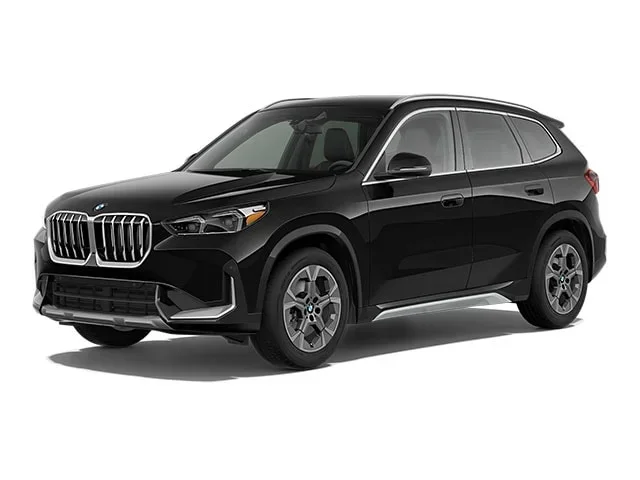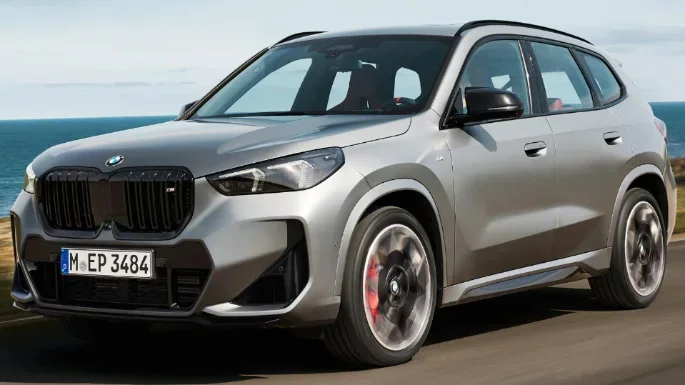
Featured image for 2024 BMW X1 exterior
Image source: autolist.com
The new BMW X1 offers both front wheel drive and all-wheel drive configurations. The base sDrive models use a transverse engine layout to send power to the front wheels, while xDrive models add a rear electric motor for traction. This guide breaks down the differences, performance stats, and buying advice for the latest generation.
If you are shopping for a premium subcompact SUV, you have probably asked yourself: is the new bmw x1 front wheel drive? The answer is not a simple yes or no. BMW now builds the X1 on a flexible platform that supports two distinct drivetrain layouts. Understanding the difference between sDrive and xDrive is the key to picking the right car for your driveway.
Gone are the days when every BMW sent power to the rear wheels first. The latest generation X1 (U11 chassis) rides on the FAAR architecture. This front-drive-focused platform allows for a spacious cabin and lower production costs. But it also means the base model drives the front wheels. Let’s dive into what that means for you, your wallet, and your daily commute.
Key Takeaways
- Not all X1s are FWD: The lineup splits into sDrive (front-wheel drive) and xDrive (all-wheel drive) variants.
- Platform change matters: The new FAAR architecture uses a transverse engine, improving interior space significantly.
- sDrive saves money: Front-wheel drive models cost less upfront and return slightly better fuel economy.
- xDrive adds confidence: The all-wheel drive system uses an electric rear motor for instant torque vectoring in slippery conditions.
- Driving dynamics differ: Purists may miss the old rear-wheel drive bias, but the new setup is sharper than most rivals.
- Maintenance is standard: Both drivetrains share similar service intervals, though xDrive adds a few extra components to inspect.
- Choose based on climate: Buyers in snowy regions benefit most from xDrive; southern drivers save cash with sDrive.
📑 Table of Contents
- The Short Answer: It Depends on the Badge (sDrive vs xDrive)
- Understanding the Platform Shift: FAAR Architecture
- BMW X1 sDrive: The Front-Wheel Drive Experience
- BMW X1 xDrive: How All-Wheel Drive Works Here
- Comparing Performance: FWD vs AWD in the Real World
- Interior Space and Practicality Benefits
- Maintenance, Reliability, and Ownership Costs
- Which One Should You Buy? Decision Framework
- The Elephant in the Room: The iX1 Electric
- Final Thoughts on the New X1 Drivetrain
The Short Answer: It Depends on the Badge (sDrive vs xDrive)
When you walk into a dealership, you will see two main flavors of the new X1: the X1 sDrive28i and the X1 xDrive28i. The badge on the trunk lid tells the whole story.
- sDrive = Front Wheel Drive (FWD). Power goes exclusively to the front axle.
- xDrive = All-Wheel Drive (AWD). Power goes to the front axle primarily, with an electric motor driving the rear axle when needed.
There is no rear-wheel drive option anymore. That ship sailed when BMW moved the X1 to the UKL/FAAR platform family shared with the Mini Countryman and the 2 Series Active Tourer. If you want a traditional longitudinal engine and rear-drive bias, you have to step up to the X3 or X5.
This shift upsets some purists. However, for the vast majority of buyers in this segment, front-wheel drive is the expected norm. Competitors like the Audi Q3, Mercedes GLA, and Volvo XC40 all start with FWD. BMW simply aligned the X1 with the market standard while trying to keep the steering feel sharp.
Understanding the Platform Shift: FAAR Architecture
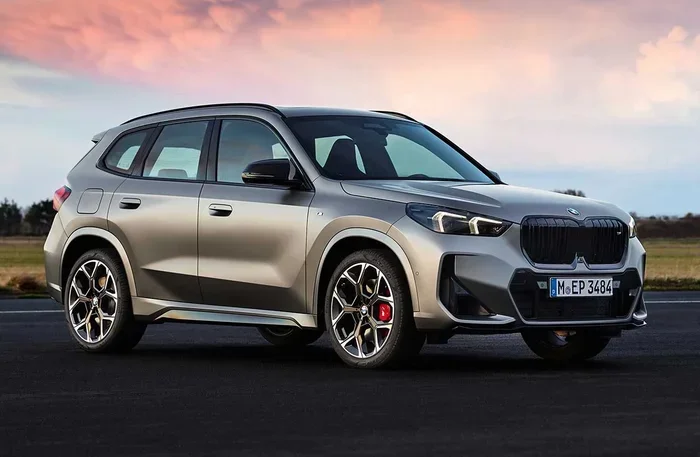
The move to the FAAR (Front-wheel Drive Architecture AR) platform is the biggest technical story of the third-generation X1. The previous generation (F48) also used a front-drive platform (UKL), but the new FAAR iteration is lighter, stiffer, and designed from the ground up for electrification.
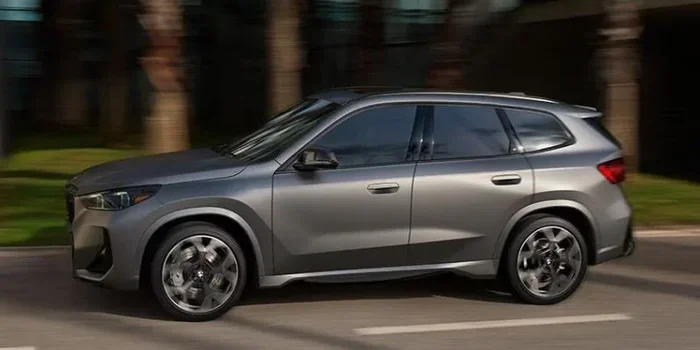
Visual guide about 2024 BMW X1 exterior
Image source: d3s8goeblmpptu.cloudfront.net
Transverse Engine Layout Explained
In the new X1, the 2.0-liter TwinPower Turbo four-cylinder engine sits sideways (transverse) under the hood. This is a massive packaging win. Because the engine doesn’t stretch lengthwise toward the firewall, BMW pushed the front wheels further forward.
This creates two huge benefits:
- More legroom: Rear passengers gain significant knee room.
- Bigger trunk: Cargo capacity jumps to roughly 27 cubic feet behind the rear seats.
The transmission is a 7-speed dual-clutch unit (Steptronic) bolted directly to the engine. It snaps off shifts quickly, helping the X1 feel sporty despite the layout.
Why BMW Switched from Rear-Wheel Drive Roots
Old-school fans remember the E84 (first-gen X1) which offered rear-wheel drive (sDrive) and a longitudinal engine. That car drove like a lifted 3 Series. It was also cramped inside and expensive to build.
BMW made the switch for three reasons:
- Cost efficiency: Sharing architecture with Mini and front-drive BMWs saves billions.
- Packaging: Transverse engines free up cabin space, critical in the subcompact class.
- Electrification: FAAR supports mild-hybrid, plug-in hybrid, and full EV (iX1) variants on the same line.
The result is a car that feels bigger inside than it looks outside. It is a rational compromise for a volume seller.
BMW X1 sDrive: The Front-Wheel Drive Experience
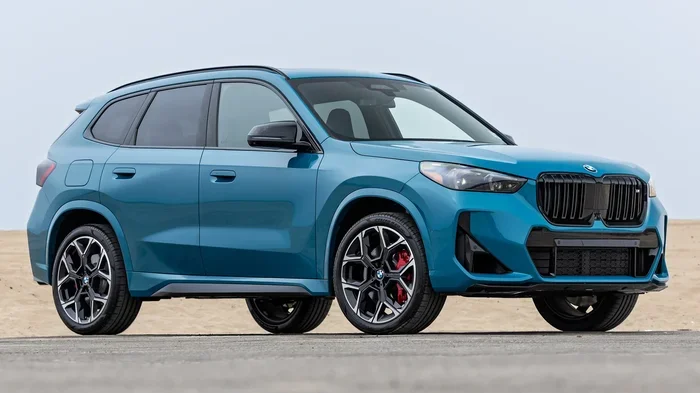
The X1 sDrive28i is the entry point. It uses a 2.0-liter turbo-four making 241 horsepower and 295 lb-ft of torque. All that twist goes to the front tires through an open differential aided by electronic brake-based torque vectoring (Performance Control).
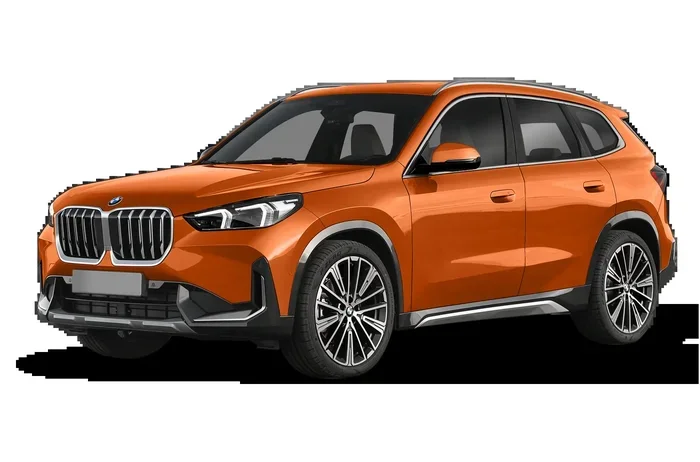
Visual guide about 2024 BMW X1 exterior
Image source: platform.cstatic-images.com
Pros of the sDrive Model
- Lower MSRP: You save roughly $2,000–$2,500 over the xDrive model.
- Better MPG: EPA estimates sit around 25 city / 34 highway / 28 combined. You lose about 1-2 mpg combined with xDrive.
- Lighter weight: Shedding the rear motor and driveshaft components drops curb weight by ~100 lbs.
- Simpler maintenance: Fewer driveline components mean fewer things to wear out long-term.
Cons to Consider
- Torque steer: Hard acceleration can tug the steering wheel slightly.
- Traction limits: In rain, snow, or loose gravel, the front tires can overwhelm easily.
- Understeer at the limit: Push hard into a corner, and the nose pushes wide sooner than an xDrive model.
For daily commuting in Florida, Texas, or California? The sDrive is perfectly adequate. The chassis tuning is stiff, the steering is direct, and the engine has plenty of grunt for highway merging.
BMW X1 xDrive: How All-Wheel Drive Works Here
The X1 xDrive28i uses the exact same front engine and transmission. The magic happens at the rear axle. Instead of a mechanical driveshaft spinning a rear differential, BMW uses an electric motor integrated into the rear axle.
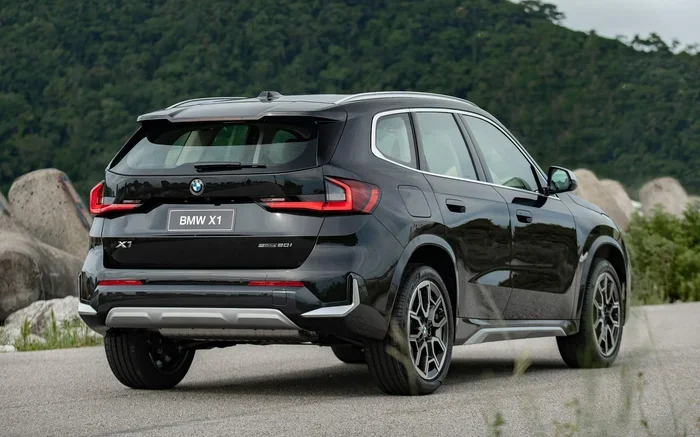
Visual guide about 2024 BMW X1 exterior
Image source: blogger.googleusercontent.com
Not Your Traditional AWD System
This is not the old Torsen-based xDrive found in an X3 or X5. Those use a center differential to split torque 40/60 front-to-rear normally. The X1 xDrive is a “through-the-road” hybrid system.
Here is how it works:
- Under normal driving, the car is 100% FWD. The rear motor is decoupled to save energy.
- Sensors detect slip (or predict it via throttle/steering angle).
- The rear electric motor engages instantly—up to 100% of torque can go rearward theoretically, though usually it’s a 50/50 split max.
- The system can vector torque left-to-right at the rear via brake actuation.
This setup is lighter and cheaper than a mechanical transfer case. It also enables a pure EV mode at low speeds (creeping in parking lots) because the rear motor can move the car alone for short distances.
When xDrive Makes Sense
- Snow belt states: If you see unplowed roads regularly, xDrive is worth every penny.
- Steep driveways: The instant electric torque at the rear prevents embarrassing wheelspin.
- Towing: The xDrive model often has a slightly higher tow rating (check local specs) due to better traction at the boat ramp.
- Resale value: AWD models retain value better in northern markets.
If you live where it snows once a year, save the money and buy winter tires for the sDrive. A FWD car on Blizzaks beats an AWD car on all-seasons every time.
Comparing Performance: FWD vs AWD in the Real World
On paper, the specs are nearly identical. Both hit 60 mph in about 6.2–6.3 seconds. Both top out at 130 mph (limited). The difference shows up in the margins.
Acceleration and Handling
Launch the sDrive hard, and you get a chirp from the front tires. The traction control clamps down fast. The xDrive hooks up and rockets forward with zero drama. It feels more “BMW” in that moment—effortless thrust.
In corners, the xDrive can “push” power to the outside rear wheel. This rotates the car nicely, mimicking rear-wheel drive agility. The sDrive relies on braking the inside front wheel to rotate. It works, but it feels more like a hot hatch than a sports sedan.
Fuel Economy Differences
| Metric | X1 sDrive28i (FWD) | X1 xDrive28i (AWD) |
|---|---|---|
| City MPG | 25 | 23 |
| Highway MPG | 34 | 32 |
| Combined MPG | 28 | 26 |
| Annual Fuel Cost (Est.) | $1,950 | $2,100 |
The penalty is real but small. Over 15,000 miles a year, you spend roughly $150 more on gas with xDrive. For many, the peace of mind justifies that coffee money.
Winter Driving and Traction
This is the xDrive kingdom. The electric rear motor reacts in milliseconds—far faster than a hydraulic clutch pack. On an icy uphill start, the sDrive spins, thinks, brakes the spinning wheel, and goes. The xDrive just goes. It feels telepathic.
However, ground clearance is identical (about 7.2 inches). Neither is an off-roader. Deep snow will high-center both.
Interior Space and Practicality Benefits
Because both versions share the FAAR platform, interior dimensions are identical. This is a major win over the old X1.
- Front headroom: 40.4 inches
- Rear legroom: 37.0 inches (up 1.6 inches vs old model)
- Cargo behind 2nd row: 27.1 cu ft
- Cargo with 2nd row folded: 57.2 cu ft
The rear seats slide fore/aft (standard) and recline. You can fit adults in the back comfortably for a 3-hour road trip. That was impossible in the first-gen X1.
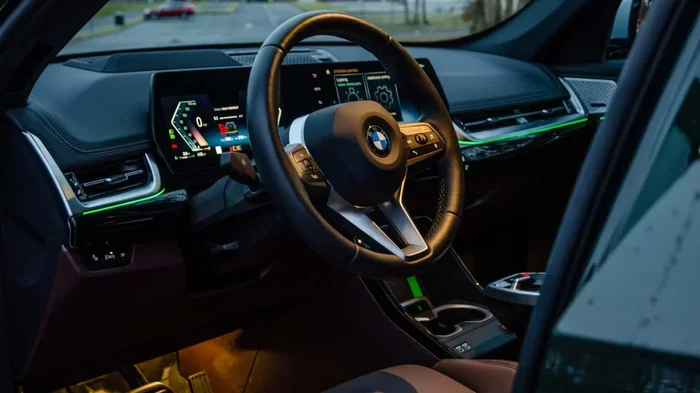
The dashboard features the new BMW Curved Display (10.25″ cluster + 10.7″ touchscreen) running iDrive 9. It is slick, responsive, and supports wireless Apple CarPlay/Android Auto. Physical climate controls remain—thank goodness.
Maintenance, Reliability, and Ownership Costs
Buying the car is step one. Owning it for 5–10 years is where the rubber meets the road. The new B48 engine is proven technology. It uses a timing chain (not a belt) and a closed-deck block. It handles tuneing well if you are into that, but stock reliability is strong.
Common Maintenance Items
- Oil changes: Every 10,000 miles or 12 months (BMW Condition Based Service). Use LL-01 or LL-17 FE+ spec 0W-20.
- Brake fluid: Every 2 years.
- Coolant: Lifetime fill (check level only). If you ever top off, use BMW-approved coolant (typically HT-12, green/blue). Mixing types causes gelling.
- Run-flat tires: The X1 typically wears run-flat tires. They ride stiffer and cost more to replace. Many owners switch to non-run-flats and carry a sealant kit.
- xDrive specific: The rear axle oil (lifetime fill technically, but change at 60k-80k miles for peace of mind) and the electric motor cooling circuit.
BMW offers BMW Ultimate Care (3 years/36k miles free maintenance) on new cars. It covers oil, brakes, wipers, and fluid top-offs. It does not cover tires or windshield replacement.
Warranty Coverage
The standard New Vehicle Limited Warranty is 4 years / 50,000 miles bumper-to-bumper. Powertrain is included. There is a 12-year unlimited mileage rust perforation warranty.
If you buy Certified Pre-Owned (CPO), you get an extra 1 year / unlimited miles on top of the remainder of the factory warranty, plus a 1-year/unlimited mile CPO extension. It is a strong safety net for the complex electronics in the new X1.
Reliability Outlook
Early data on the U11 chassis is promising. The B48 engine and 7-speed DCT are carryover parts with known histories. The new iDrive 9 had some early software glitches (mostly wireless CarPlay drops), mostly fixed via OTA updates.
If long-term dependability is your top filter, check out our guide on identifying the most reliable BMW models to see how the X1 stacks up against its siblings.
Which One Should You Buy? Decision Framework
Still stuck? Use this checklist.
Buy the sDrive28i (FWD) if:
- You live where snow is rare or you have a second car for winter.
- You want the lowest monthly payment/lease rate.
- You prioritize highway MPG for a long commute.
- You plan to swap to high-performance summer tires anyway.
Buy the xDrive28i (AWD) if:
- You face snow, ice, or heavy rain regularly.
- You have a steep, unpaved, or slippery driveway.
- You value the “zero-slip” launch feeling.
- You plan to keep the car 7+ years and want better resale in your region.
Consider the X1 xDrive30e (Plug-in Hybrid) if:
- You have a short commute (< 40 miles round trip) and can charge at home.
- You want 30+ miles of pure EV range.
- You want the torque of the electric motor (combined 317 hp) without range anxiety.
The Elephant in the Room: The iX1 Electric
If you are asking “is the new bmw x1 front wheel drive” because you want an EV, look at the iX1 xDrive30. It is dual-motor AWD only (no FWD EV version in the US yet). It makes 308 hp, does 0-60 in 5.6 seconds, and offers ~240 miles EPA range. It shares the exact same interior and cargo space. It is the quickest, quietest X1 you can buy.
Final Thoughts on the New X1 Drivetrain
The new BMW X1 is a better car than the one it replaced. It is roomier, faster, tech-heavy, and rides better. The switch to a front-wheel-drive-biased platform was a business decision that paid off in product quality.
If you buy the sDrive, you get 90% of the BMW experience for less money. If you buy the xDrive, you get a clever, electric-assisted AWD system that genuinely works in the snow without the weight penalty of old mechanical systems.
Test drive both. Drive the sDrive first. Then the xDrive. If you can’t feel a $2,500 difference on a wet on-ramp, keep the cash. If the xDrive grin makes you sign the papers, you have your answer.
Either way, you are getting a legitimate BMW that finally fits real people and real luggage. That is progress.
Frequently Asked Questions
Is the BMW X1 sDrive front wheel drive only?
Yes, the BMW X1 sDrive28i is strictly front wheel drive. It sends 100% of engine power to the front wheels via a 7-speed dual-clutch transmission. There is no mechanical connection to the rear axle.
Can the BMW X1 xDrive send 100% power to the rear wheels?
No, the X1 xDrive system cannot send 100% of power to the rear wheels. It is a front-biased system where the electric rear motor assists up to a roughly 50/50 torque split. It cannot decouple the front axle entirely.
Does the new BMW X1 have a timing belt or chain?
The new X1 uses the B48 2.0L turbo engine which features a timing chain. It is designed to last the life of the engine, though some technicians recommend inspection at high mileage (100k+ miles).
Is the BMW X1 xDrive good in snow?
Yes, the X1 xDrive is excellent in snow. The electric rear motor provides instant torque reaction to wheel slip, often faster than traditional mechanical AWD systems. Pair it with winter tires for maximum safety.
What is the ground clearance of the new BMW X1?
The new BMW X1 (U11) has a ground clearance of approximately 7.2 inches (183 mm) for both sDrive and xDrive models. This is adequate for snow but not for serious off-roading.
Does the BMW X1 require premium gas?
Yes, BMW recommends 91 octane (premium) fuel for the X1 2.0L turbo engine for optimal performance and efficiency. The engine will run on 87 octane (regular) with reduced power and potential long-term knock risk, but premium is strongly advised.