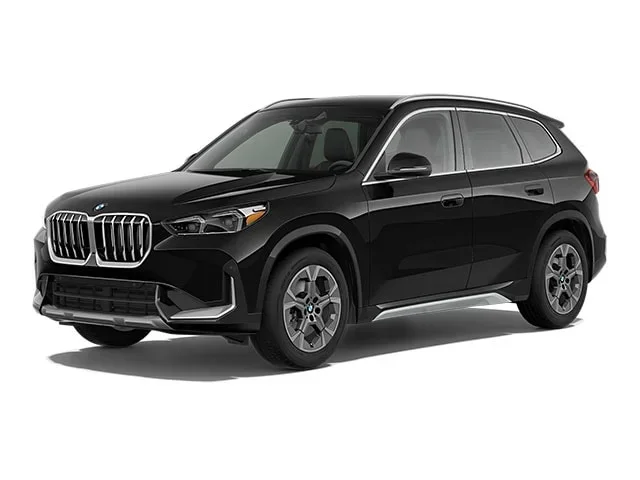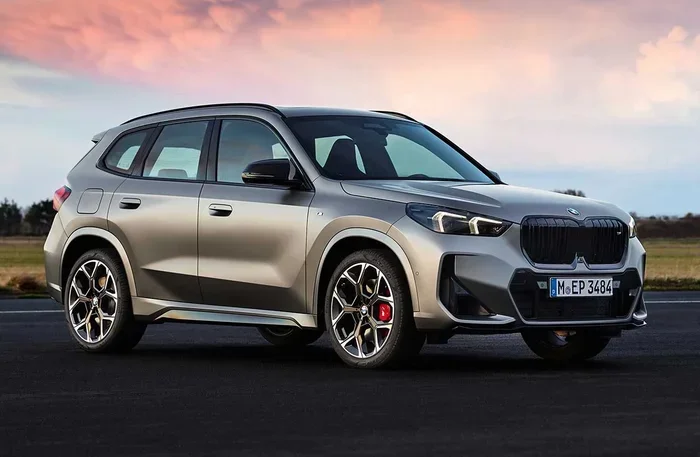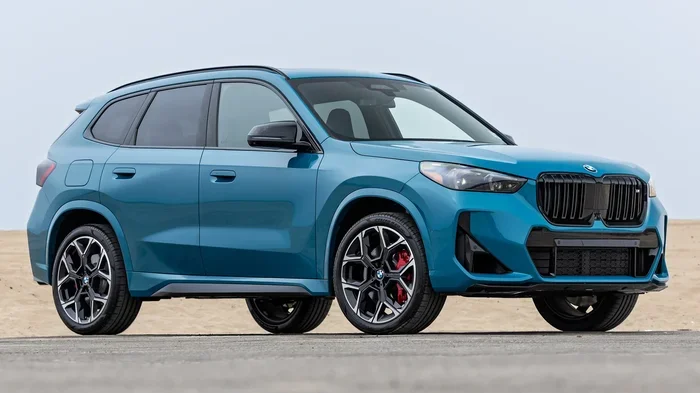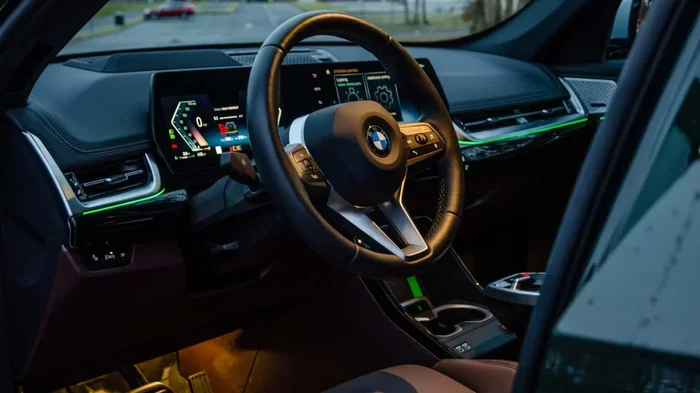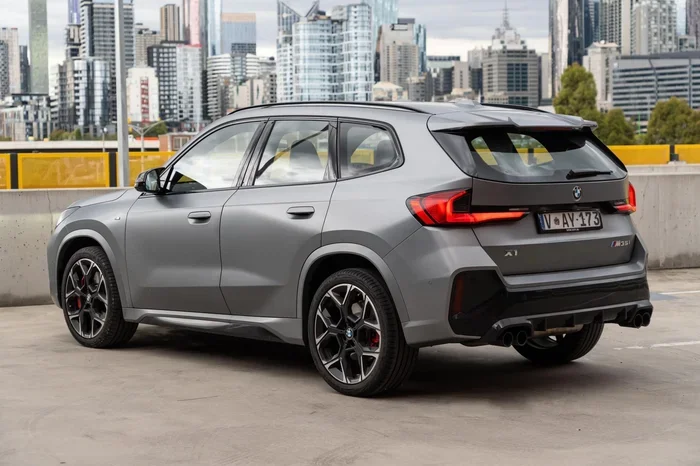
Featured image for New BMW X1 exterior
Image source: simemotors.com.au
The new BMW X1 (U11 generation) uses a front-wheel-drive-based architecture, meaning standard models are front-wheel drive (sDrive) with all-wheel drive (xDrive) as an option. There is no rear-wheel-drive version. This guide breaks down the drivetrain differences, platform changes, and helps you decide which setup is right for your daily driving.
If you are shopping for a compact luxury SUV, you have probably asked yourself: is the new bmw x1 front or rear wheel drive? It is a fair question. For decades, BMW built its reputation on rear-wheel drive. That layout gave the brand its “Ultimate Driving Machine” tagline. But times change. The automotive landscape has shifted toward space efficiency and cost savings. The newest BMW X1, known internally as the U11 generation, represents the biggest shift yet. It sits on a platform shared with Mini and front-wheel-drive BMWs. This article cuts through the marketing speak. We will explain exactly what drives the wheels, why BMW made this choice, and how it feels on the road.
Key Takeaways
- Platform Shift: The new U11 X1 rides on the FAAR architecture, which is fundamentally a front-wheel-drive platform.
- Standard sDrive: Entry-level models send power exclusively to the front wheels.
- Optional xDrive: All-wheel drive is available across the range and uses an electronic clutch to send torque to the rear axle when needed.
- No RWD Option: Unlike older generations (E84), you cannot buy a new X1 with a purely rear-wheel-drive layout.
- M35i Performance: The top-tier M35i comes standard with xDrive and a mechanical limited-slip differential on the front axle.
- Interior Space: The FWD layout maximizes cabin room and cargo capacity compared to the old RWD platform.
- Efficiency Gains: Front-wheel drive sDrive models offer the best fuel economy in the lineup.
📑 Table of Contents
- The Short Answer: It Depends on the Badge (sDrive vs xDrive)
- A History Lesson: From Rear-Wheel Drive to Front-Wheel Drive Roots
- Deep Dive: sDrive (Front-Wheel Drive) Mechanics
- Deep Dive: xDrive (All-Wheel Drive) Mechanics
- Why Did BMW Make the Switch? (Packaging, Efficiency, Cost)
- How Does It Drive? Real World Dynamics
- Which One Should You Buy? (Buying Guide)
- Maintenance Considerations for Each Drivetrain
- Comparing the Competition
- The Electric Elephant: The iX1 Factor
- Common Misconceptions Cleared Up
- Expert Insight: The Enthusiast Perspective
- Final Verdict: Does Drivetrain Define the Car?
The Short Answer: It Depends on the Badge (sDrive vs xDrive)
Let’s get straight to the point. The new BMW X1 does not offer a traditional rear-wheel-drive configuration. Period. The architecture simply does not support it. Instead, you have two choices determined by the badge on the trunk lid.
- sDrive models: These are front-wheel drive (FWD). The engine sits transversely (sideways). Power goes through a 7-speed dual-clutch transmission (DCT) to the front wheels only.
- xDrive models: These are all-wheel drive (AWD). They use the same transverse engine and DCT. However, an electronically controlled multi-plate clutch sits on the rear axle. It can send up to 50% of torque to the rear wheels instantly.
There is no longitudinal engine option. There is no driveshaft tunnel running down the center of the car in the traditional sense. This is a fundamental change from the first-generation X1 (E84). If you want a rear-wheel-drive BMW SUV today, you have to step up to the X3 or larger.
A History Lesson: From Rear-Wheel Drive to Front-Wheel Drive Roots
To understand where we are, we have to look back. The drivetrain story of the X1 is a tale of two platforms.
The First Generation (E84): True BMW DNA
Launched in 2009, the original X1 was unique. It sat on a modified version of the 3 Series (E90) platform. That meant a longitudinal engine. It meant a proper driveshaft. It meant standard rear-wheel drive (sDrive) with optional xDrive. Enthusiasts loved it. It drove like a lifted 3 Series wagon. The weight balance was near 50/50. The steering feel was hydraulic and communicative. It was the last “traditional” compact BMW SUV.
The Second Generation (F48): The Switch to UKL
In 2015, the F48 arrived. BMW moved the X1 to the UKL (Untere Klasse) platform. This is the same front-drive architecture underpinning the 1 Series, 2 Series Active Tourer, and the Mini Countryman. The engine flipped sideways. The driveshaft disappeared. Standard became front-wheel drive. Purists were upset. But sales skyrocketed. The car was roomier, cheaper to build, and more efficient. The F48 proved the market cared more about rear legroom than rear-wheel-drive purity.
The New Generation (U11): FAAR Architecture Explained
The current U11 (launched 2023) evolves the UKL platform into something called FAAR (Front-wheel-drive Architecture ARchitecture). It is lighter, stiffer, and designed from the start for electrification. It supports mild-hybrid 48-volt systems, plug-in hybrids, and full EVs (the iX1) on the same line. This platform locks in the front-wheel-drive bias permanently. It allows for a completely flat floor in the rear. That means three adults can actually sit in the back comfortably. That was impossible in the E84 due to the massive transmission tunnel.
Deep Dive: sDrive (Front-Wheel Drive) Mechanics
If you buy an X1 sDrive18i, sDrive20i, or the diesel sDrive18d, you get front-wheel drive. How does it work in practice?
Transverse Engine Layout
The engine sits east-west. The transmission bolts directly to the side. The differential is integrated into the gearbox housing. Half-shafts drive the front wheels. This is the standard layout for almost every compact car today—from a Honda Civic to a VW Golf. It packages efficiently. It leaves more room for people and batteries.
Torque Steer Management
High torque through the front wheels can cause “torque steer”—the tugging of the steering wheel under hard acceleration. BMW combats this with equal-length drive shafts on most variants and sophisticated electronic differential lock simulation. The software brakes a spinning inside wheel to mimic a limited-slip diff. It works well. You barely notice it in daily driving.
Weight Distribution
Because the heavy engine and gearbox sit entirely ahead of the front axle, the weight bias shifts forward. The U11 X1 sDrive sits roughly 55/45 front-to-rear. This induces natural understeer at the limit. You turn in, the front pushes wide. It is safe and predictable. It is not the “tail-happy” balance of old BMWs.
Deep Dive: xDrive (All-Wheel Drive) Mechanics
The xDrive system on the U11 is not the same as the one in an X3 or M3. Those use a longitudinal layout with a center differential (usually a planetary gear set or multi-plate clutch) that defaults to a 40/60 rear bias. The X1 xDrive is a “hang-on” system.
How the Electronic Clutch Works
Under normal cruising, the clutch is open. The car is 100% front-wheel drive. This saves fuel. The moment the front wheels slip—or the predictive sensors detect a need—the clutch closes. It can lock up to 100% of the available torque to the rear axle (effectively a 50/50 split max). It happens in milliseconds. The system also uses “wheel-selective torque control.” It brakes individual wheels to vector torque side-to-side. This helps rotate the car into corners.
The M35i xDrive Difference
The range-topping M35i gets special hardware. It comes standard with xDrive. Crucially, it adds a mechanical Torsen limited-slip differential on the front axle. This is a big deal. It mechanically locks the front wheels together under power. Combined with the rear clutch, it gives genuine traction out of corners. It also gets specific suspension tuning, stiffer bushings, and variable sport steering. It is the only X1 that feels like a proper M Performance car.
Why Did BMW Make the Switch? (Packaging, Efficiency, Cost)
It wasn’t just to annoy enthusiasts. There are three hard business cases.
1. Interior Space Efficiency
Compare the U11 to the E84. The new car is shorter overall but has more rear legroom. The wheelbase is longer. The floor is flat. The trunk is larger (540 liters vs 420 liters). In the compact segment, space sells. Families cross-shop the X1 against the Audi Q3 and Mercedes GLA. Both rivals are FWD-based. BMW had to match the utility.
2. Electrification Readiness
The FAAR platform had to accept a battery pack in the floor (iX1) and an electric motor on the rear axle. A longitudinal RWD platform makes packaging a flat battery and a front motor very difficult. A transverse FWD platform makes it easy. The gas X1, plug-in hybrid X1, and electric iX1 all roll down the same assembly line in Regensburg. That saves billions.
3. Manufacturing Cost and CO2 Regulations
Transverse engines are cheaper to assemble. They share parts with the high-volume 1 Series and Mini. Lower weight and better aero (flat floor) help meet strict EU fleet CO2 targets. Every gram of CO2 matters for fines. FWD sDrive models are the compliance leaders.
How Does It Drive? Real World Dynamics
Numbers on a spec sheet are one thing. The seat-of-the-pants feel is another.
Front-Wheel Drive Feel (sDrive)
Drive an sDrive20i on a twisty road. Turn-in is sharp. The steering is quick (variable ratio standard now). You feel the front tires biting. Push harder, and the nose pushes wide. Lift off the throttle, and the nose tucks back in. It is neutral-safe. It is not adjustable on the throttle like an RWD car. You cannot “steer with the rear.” But it is agile. The chassis balance is excellent for a FWD car. The 48-volt mild hybrid system fills in torque gaps at low rpm. It feels punchy around town. On a wet highway on-ramp, you might light up the inside front tire if you mash it. The electronics catch it fast.
All-Wheel Drive Confidence (xDrive)
Switch to an xDrive23i. The weight penalty is roughly 80-100 kg (mostly over the rear axle). This actually improves the weight distribution closer to 50/50. Launch traction is superb. Zero wheelspin in rain or snow. In corners, the rear axle pushes the car through the apex. You can feel the rear helping rotate the car. It feels more “BMW-like.” The limit is higher. The transition from grip to slip is progressive. It inspires confidence in foul weather. If you live where it snows, xDrive with winter tires is the only logical choice.
Ride Quality and Refinement
Both drivetrains benefit from the stiffer FAAR body structure. The suspension uses a strut front / multi-link rear setup. Standard passive dampers are well-tuned. Optional M Adaptive Suspension adds frequency-selective damping. It filters out sharp impacts (potholes) while controlling body roll. Road noise is low. The dual-clutch transmission snaps shifts instantly. It is a quiet, composed cruiser.
Which One Should You Buy? (Buying Guide)
Your choice depends entirely on where you live and how you drive.
Choose sDrive (FWD) If:
- You live in a warm climate (no snow/ice).
- You prioritize maximum fuel economy (best MPG in the range).
- You want the lowest purchase price.
- You want the lightest steering effort and easiest parking.
- You rarely explore the handling limits on back roads.
- You want maximum cargo space (no rear diff hump in trunk floor—though U11 floor is flat regardless).
Choose xDrive (AWD) If:
- You see snow, ice, or heavy rain regularly.
- You have a steep driveway or unpaved roads.
- You value resale value (AWD commands higher used prices in northern markets).
- You want the best acceleration traction (0-60 mph is quicker).
- You prefer a more neutral, planted cornering stance.
- You are buying the M35i (it is xDrive only).
Quick Tip: Tires matter more than driven wheels. An sDrive on Michelin CrossClimate 2 all-weather tires will outperform an xDrive on summer tires in January. Budget for proper rubber first.
Maintenance Considerations for Each Drivetrain
Owning an X1 long-term? The drivetrain choice affects your wallet.
sDrive Maintenance
- Transmission Fluid: The 7-speed DCT fluid should be changed every 60,000 km (approx 37k miles). It is a “lifetime fill” per BMW, but specialists recommend changes.
- Front Brakes: They do 80% of the stopping. Pads wear faster.
- Front Tires: They steer, brake, and drive. Rotate every 10k km.
- CV Axles: Boots can tear. Clicking noise on full lock = replace axle.
xDrive Maintenance
- All sDrive items above PLUS:
- Transfer Case / Rear Clutch Oil: The rear drive module (clutch pack) has its own oil. Change every 60k-80k km. It is a simple drain/fill.
- Propshaft: A small driveshaft runs to the rear. Check center support bearing for play/vibration at high mileage.
- Rear Brakes: They do more work than RWD cars due to brake-vectoring. Inspect pads regularly.
- Complexity: More parts = more potential leak points (output seals on rear unit).
If you plan to keep the car past 100k miles, the xDrive adds roughly $300-$500 per major service interval for the extra fluids and labor. It is cheap insurance for traction.
Comparing the Competition
The compact luxury SUV segment is a battle of FWD-based platforms.
| Model | Platform Base | Standard Drive | Optional Drive | Longitudinal Option? |
|---|---|---|---|---|
| BMW X1 (U11) | FAAR (FWD) | FWD (sDrive) | AWD (xDrive) | No |
| Audi Q3 (F3) | MQB (FWD) | FWD | Quattro (Haldex) | No |
| Mercedes GLA (H247) | MFA2 (FWD) | FWD | 4MATIC | No |
| Volvo XC40 | CMA (FWD) | FWD | AWD | No |
| Lexus UX | GA-C (FWD) | FWD | AWD (E-Four rear motor) | No |
As you can see, BMW is not alone. The entire segment has moved this way. The X1 differentiates itself with tuning. The steering weight, pedal feel, and chassis balance are still tuned in Munich. It drives better than the spec sheet suggests.
The Electric Elephant: The iX1 Factor
You cannot talk about the U11 platform without mentioning the iX1. The electric version uses the same floorpan. The iX1 xDrive30 has a motor on each axle. It is permanently all-wheel drive. The rear motor is the primary driver in many scenarios. It offers 313 hp and instant torque. It proves the platform can handle performance. The gas X1 benefits from the structural rigidity required for the heavy battery pack. The iX1 is the ultimate expression of this architecture.
Common Misconceptions Cleared Up
- “xDrive makes it RWD based.” False. It is FWD-based with a rear clutch. The rear wheels never drive the car alone.
- “sDrive is dangerous in rain.” False. Modern stability control and tires make FWD perfectly safe in rain. Hydroplaning risk is equal for all layouts.
- “The M35i has a different platform.” False. Same FAAR chassis. Just unique suspension kinematics, brakes, and that front mechanical diff.
- “You can retrofit RWD.” Impossible. The firewall, floorpan, and steering rack position prevent a longitudinal swap.
Expert Insight: The Enthusiast Perspective
I have driven every generation of X1 on track and road. The E84 was a sports car on stilts. The F48 was a competent appliance. The U11? It is a genuinely good driver’s car within its constraints. The steering is the best in class—weighted, accurate, with actual feedback filtering through. The chassis is stiff. The DCT is snappy. If you blindfolded me and put me in an sDrive20i on a smooth canyon road, I would guess “hot hatch,” not “crossover.” It rotates well on trail braking. The xDrive adds a layer of security that lets you carry more speed. Is it an M car? No. Is it the best driving compact luxury SUV? Yes, arguably. It beats the Q3 and GLA on engagement.
Final Verdict: Does Drivetrain Define the Car?
The new BMW X1 is front-wheel drive at its core. That is a fact. But “front-wheel drive” is not the insult it used to be. The FAAR platform is sophisticated. The xDrive system is seamless. The packaging gains are real. For 95% of buyers, the sDrive is the rational choice. It saves money, fuel, and weight. For the 5% who face winter or want that extra edge of composure, xDrive is worth every penny. Neither is “wrong.” Both are BMWs. They just aren’t the BMWs of 2009. And honestly? That is okay. The X1 sells in huge numbers because it works brilliantly as a daily driver. It hauls kids, groceries, and luggage in quiet comfort. And when the road opens up, it still puts a smile on your face. That is the ultimate test.
Frequently Asked Questions
Is the 2024 BMW X1 front-wheel drive?
Yes, the standard 2024 BMW X1 (sDrive models) is front-wheel drive. Power is sent exclusively to the front wheels via a 7-speed dual-clutch transmission.
Can you get a new BMW X1 with rear-wheel drive?
No, the current U11 generation BMW X1 does not offer a rear-wheel-drive configuration. The platform is designed for front-wheel drive and all-wheel drive only.
What is the difference between sDrive and xDrive on the X1?
sDrive denotes front-wheel drive (FWD), while xDrive denotes all-wheel drive (AWD). xDrive adds an electronically controlled clutch on the rear axle that can send up to 50% of torque to the rear wheels when needed.
Is the BMW X1 xDrive system good in snow?
Yes, the xDrive system provides excellent traction in snow and ice, especially when paired with dedicated winter tires. It reacts instantly to wheel slip and helps the car accelerate and corner securely in low-grip conditions.
Does the BMW X1 M35i come in front-wheel drive?
No, the BMW X1 M35i is only available with xDrive all-wheel drive. It also features a mechanical Torsen limited-slip differential on the front axle for improved cornering traction.
Which BMW X1 drivetrain gets the best gas mileage?
The front-wheel drive sDrive models (specifically the sDrive18d diesel or sDrive20i mild-hybrid petrol) return the best fuel economy because they are lighter and have less drivetrain friction than the xDrive variants.