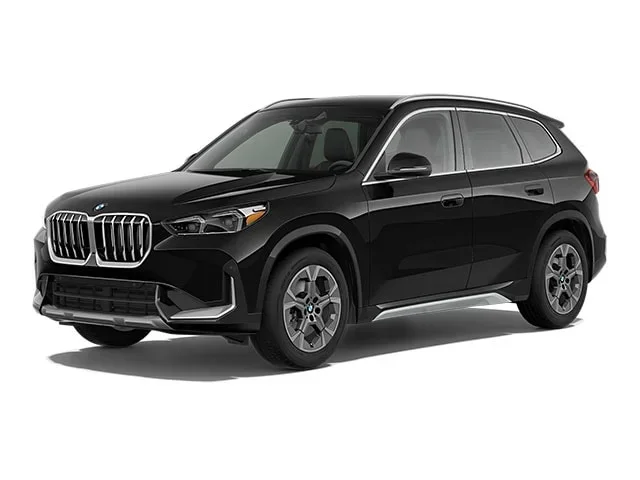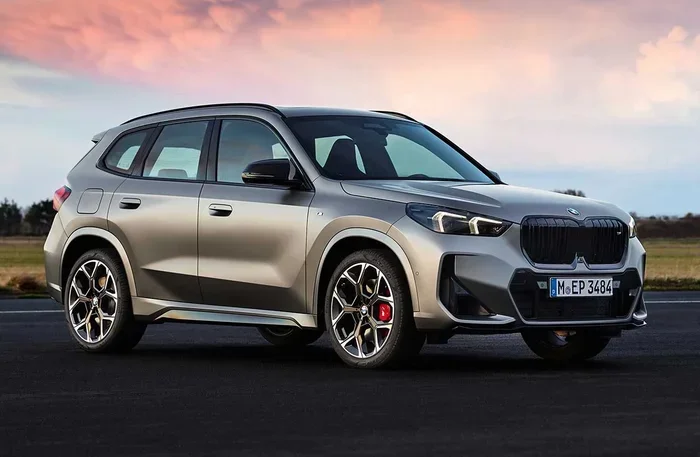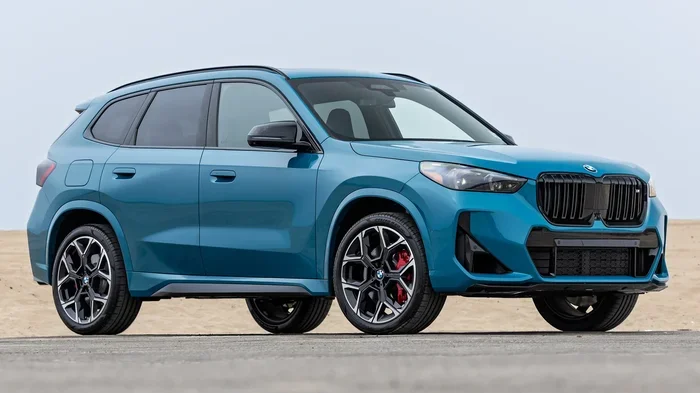
Featured image for BMW X1 SUV exterior
Why buy BMW X1? This subcompact luxury SUV delivers a rare mix of sporty handling, premium interior quality, and surprising practicality. It offers standard all-wheel drive on many trims, a punchy turbo engine, and the latest iDrive infotainment system. You get true BMW driving dynamics in a package that fits city streets and family gear with ease.
Shopping for a luxury crossover can feel overwhelming. You want style, speed, and space without breaking the bank. The BMW X1 sits in a sweet spot. It answers the question why buy BMW X1 with a compelling blend of badge prestige and daily usability. This guide breaks down every reason this model deserves a spot on your shortlist.
We will cover performance, interior comfort, technology, safety, and ownership costs. We will also compare it to key rivals. By the end, you will know if this Bavarian entry-point SUV fits your life.
Key Takeaways
- Agile Performance: The turbocharged four-cylinder engine provides quick acceleration and confident passing power.
- Premium Cabin: High-quality materials and the curved iDrive display create a modern, upscale atmosphere.
- Smart Space: Clever packaging offers generous rear legroom and flexible cargo capacity for the class.
- Advanced Tech: Standard wireless Apple CarPlay, Android Auto, and available parking assist add daily convenience.
- Strong Value: It enters the luxury segment at a lower price point than rivals like the Audi Q3 or Mercedes GLA.
- Efficient Options: Mild-hybrid tech helps improve fuel economy without sacrificing driving fun.
- Proven Reliability: Current generation models score well in dependability surveys, lowering long-term ownership stress.
📑 Table of Contents
- What Makes the BMW X1 Stand Out in a Crowded Segment
- Performance and Powertrain: Punchy and Efficient
- Interior Comfort, Space, and Cargo Versatility
- Technology, Safety, and Driver Assistance Features
- Ownership Costs: Maintenance, Warranty, and Reliability
- BMW X1 vs. Key Rivals: How It Stacks Up
- Trims and Options: Building Your Ideal X1
- Real World Pros and Cons Summary
- Who Should Buy the BMW X1?
- Final Verdict: Is the BMW X1 Worth It?
What Makes the BMW X1 Stand Out in a Crowded Segment
The subcompact luxury SUV class is fierce. You have the Audi Q3, Mercedes-Benz GLA, and Volvo XC40. They all look good on paper. The BMW X1 differentiates itself through driving dynamics. It feels like a BMW should. The steering is direct. The chassis is balanced. It does not feel like a tall hatchback; it feels like a sports sedan on stilts.
The latest generation (U11 chassis) grew slightly. It is wider and longer than the outgoing model. This translates to real interior room. It also rides on the FAAR platform. This architecture supports front-wheel drive and all-wheel drive layouts. It also accommodates electrification. This means the platform is future-proof.
The “Ultimate Driving Machine” Entry Point
BMW markets the X1 as the gateway to the brand. It carries the core DNA. The 50:50 weight distribution goal remains. The suspension tuning prioritizes control over float. Even the base sDrive28i (front-wheel drive) handles corners with minimal body roll. Step up to xDrive28i (all-wheel drive) and you gain traction for weather and spirited exits.
This driving character is the primary answer to why buy BMW X1 over a loaded mainstream compact SUV like a Mazda CX-5 or Honda CR-V. You pay for the chassis engineering. You feel it every time you change direction.
Design Evolution: Bold but Functional
The current design language is polarizing to some. The kidney grille is large. The headlights are sharp. The rear features distinct L-shaped taillights. Love it or hate it, it stands out. Aerodynamics were a focus. The underbody is smoothed. Active grille shutters close at speed. This helps highway fuel economy and reduces wind noise.
Practical touches remain. Roof rails are standard. The liftgate opening is wide. The load floor is low. These details matter when you are loading groceries or stroller frames.
Performance and Powertrain: Punchy and Efficient
Under the hood sits the B48 2.0-liter TwinPower Turbo inline-four. It is a proven workhorse. In the X1 xDrive28i, it produces 241 horsepower and 295 lb-ft of torque. That torque arrives low, at 1,500 rpm. This makes city driving effortless. You do not need to rev the engine to merge or pass.
The engine pairs with a 7-speed dual-clutch transmission (DCT). Shifts are lightning fast. The DCT is snappier than the old 8-speed torque converter. It suits the turbo torque curve perfectly. There is also a 48-volt mild-hybrid system. An integrated starter-generator adds a brief electric boost. It smooths start-stop operation. It also powers accessories, reducing parasitic loss.
Real-World Acceleration and Passing
BMW claims 0-60 mph in 6.2 seconds for xDrive. That is quick for the class. It feels faster because of the instant torque. Highway passing (50-70 mph) takes roughly 3.5 seconds. You rarely feel the need for more power. The engine sounds refined, not buzzy. At idle, it is nearly silent.
Fuel economy is respectable. EPA estimates sit at 25 mpg city / 34 mpg highway / 28 mpg combined for xDrive. sDrive models gain 1-2 mpg. In mixed driving, seeing 27-29 mpg is realistic. This efficiency helps offset the premium fuel requirement.
Driving Modes and Adaptive Suspension
Standard driving modes include Eco Pro, Comfort, and Sport. Sport sharpens throttle response. It weights the steering. It holds gears longer. Comfort is the daily sweet spot. Eco Pro maximizes efficiency by coasting and adjusting climate control.
Adaptive M Suspension is optional. It uses frequency-selective dampers. They stiffen under hard cornering but remain compliant over potholes. If your roads are rough, this option is worth the money. It transforms the ride from “firm” to “composed.”
Interior Comfort, Space, and Cargo Versatility
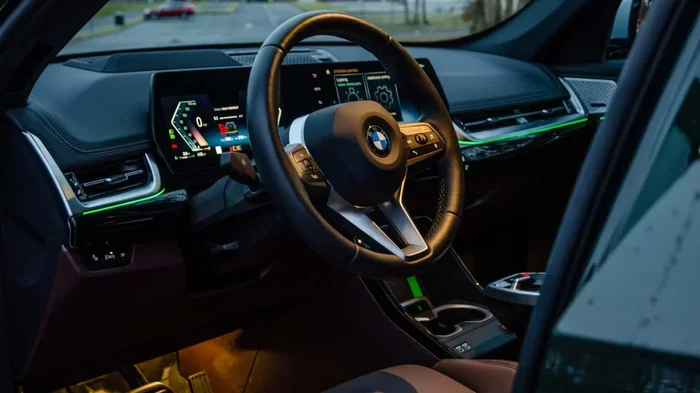
Step inside and the quality jump is immediate. Soft-touch plastics cover the dash and doors. The switchgear feels substantial. The design is driver-centric. The center console angles toward you. The floating armrest hides a deep bin. It fits a large phone and wallet easily.
The Curved Display and iDrive 9
The headline feature is the BMW Curved Display. It merges a 10.25-inch digital cluster with a 10.7-inch touchscreen. It runs iDrive 9. The interface is clean. Home screen widgets are customizable. Voice control (“Hey BMW”) works well for navigation and climate. Wireless Apple CarPlay and Android Auto are standard. The screen is glossy; glare can be an issue in direct sun.
Physical controls remain for volume, hazard lights, and drive modes. This is a win for usability. You do not need menus for basic heat or defrost.
Rear Seat Room and Flexibility
This is where the growth pays off. Rear legroom is class-leading at roughly 37 inches. Two six-footers can sit front and back comfortably. The rear bench slides (optional on some trims, standard on others). It reclines. It splits 40/20/40. The center section folds for long items (skis, lumber) while seating four.
Headroom is good despite the sloping roofline. The panoramic sunroof (standard on higher trims) cuts an inch but adds airiness. HVAC vents and USB-C ports are standard in the back.
Cargo Capacity Numbers
Behind the rear seats: 27.1 cubic feet (up from 21.6 in the old model). With seats folded: 57.2 cubic feet. The load floor is flat when folded. There is a deep underfloor bin. It hides valuables or stores the cargo cover. The liftgate is hands-free (kick sensor) on Premium trim.
Technology, Safety, and Driver Assistance Features
BMW loads the X1 with standard safety tech. “Active Driving Assistant” includes forward collision warning, automatic emergency braking (pedestrian/cyclist detection), lane departure warning, blind-spot monitoring, rear cross-traffic alert, and speed limit info. This suite covers the basics excellently.
Driving Assistance Professional Package
For highway commuters, the optional “Driving Assistance Professional” package adds adaptive cruise control with stop-and-go. It includes Steering and Lane Control Assistant. This is hands-on Level 2 autonomy. It centers the car in the lane. It handles traffic jams smoothly. It reads speed limits and adjusts. It works on most divided highways.
Parking Assistant Professional is another option. It includes surround-view cameras, 3D view, and Remote 3D View via smartphone. It can park the car automatically (parallel and perpendicular). It can also reverse the car out of a tight spot using stored path memory (up to 50 meters). This is great for narrow garages.
Digital Key and Connected Services
Digital Key Plus uses Ultra-Wideband tech. You unlock and start the car with an iPhone or Apple Watch. No need to wake the screen. You can share keys via iMessage with time limits. ConnectedDrive services include real-time traffic, concierge, and remote services (lock/unlock, precondition cabin) via the My BMW app. The app is polished and reliable.
Ownership Costs: Maintenance, Warranty, and Reliability
Luxury ownership costs are a valid concern. The X1 benefits from BMW’s current reliability upswing. The B48 engine is robust. The 7-speed DCT is generally smooth. Electronics are the main wildcard. The iDrive 9 system is new; long-term data is still accumulating.
Factory Warranty and Maintenance
Every new X1 gets a 4-year / 50,000-mile bumper-to-bumper warranty. It includes corrosion perforation (12 years) and federal emissions (8 years / 80,000 miles). BMW Ultimate Care covers scheduled maintenance for 3 years / 36,000 miles. This covers oil changes, brake fluid, engine air filter, and spark plugs. It removes routine cost guesswork for the first three years. You can read more about what BMW Ultimate Care covers to see the full list of included services.
Common Maintenance Items to Budget For
After the free maintenance window, costs rise. Brake pads and rotors wear faster on heavier EVs and performance SUVs. The X1 is lighter than an iX1, so brakes last longer. Expect front pads around 40k-50k miles. Coolant changes are due every few years. Using the correct fluid is critical for the turbo engine. You can learn what coolant BMW uses for optimal performance to avoid costly mistakes.
Run-flat tires are standard on most trims. They allow driving 50 miles at 50 mph after a puncture. They ride firmer and cost more to replace. They cannot usually be repaired. Many owners switch to non-run-flats and carry a sealant kit or spare. If you keep run-flats, understand what BMW run-flat tires are and their care requirements.
Certified Pre-Owned Value Proposition
Buying a 2-3 year old CPO X1 is a smart financial move. The CPO warranty extends coverage to 1 year / unlimited miles after the factory warranty expires. It includes a rigorous inspection. It often costs significantly less than new. Depreciation hits hardest in years 1-3. Let someone else absorb that hit. Check what BMW Certified means for proven value before shopping used.
BMW X1 vs. Key Rivals: How It Stacks Up
Cross-shopping is essential. Here is how the X1 compares to its German and Swedish rivals.
| Feature | BMW X1 xDrive28i | Audi Q3 45 TFSI quattro | Mercedes GLA 250 4MATIC | Volvo XC40 B5 AWD |
|---|---|---|---|---|
| Horsepower | 241 hp | 228 hp | 221 hp | 247 hp |
| Torque (lb-ft) | 295 | 258 | 258 | 258 |
| 0-60 mph (est.) | 6.2 sec | 6.7 sec | 6.8 sec | 6.3 sec |
| Cargo (seats up) | 27.1 cu ft | 23.7 cu ft | 15.4 cu ft | 20.7 cu ft |
| Rear Legroom | 37.0 in | 36.1 in | 36.1 in | 36.1 in |
| Starting MSRP (approx.) | $39,500 | $38,200 | $39,500 | $39,500 |
| Free Maintenance | 3 yr / 36k mi | 1 yr / 10k mi | None | 3 yr / 36k mi |
The BMW X1 leads in cargo space and torque. It matches the Volvo for speed. It beats the Mercedes on rear space significantly. The Audi is the closest price competitor but lacks the free maintenance and torque. The Volvo wins on standard safety reputation and interior design uniqueness. The BMW wins on driving engagement and dealer network density.
Trims and Options: Building Your Ideal X1
The lineup is simple. Two main engines: sDrive28i (FWD) and xDrive28i (AWD). Three trim levels: Base, xLine, M Sport. The M235i xDrive sits at the top with 312 hp.
Recommended Configuration: xDrive28i xLine
For most buyers, the xDrive28i xLine hits the value peak. xDrive adds traction for rain/snow and resale value. xLine adds 19-inch wheels, roof rails, shadowline exterior trim, and leatherette/Alcantara seats. It looks sharp without the harsh ride of M Sport’s standard 20-inch wheels.
Must-Have Options
- Premium Package: Heated front seats, heated steering wheel, head-up display, Harman Kardon audio, wireless charging pad, hands-free liftgate. High value bundle.
- Driving Assistance Professional: Essential for highway drivers. Reduces fatigue.
- Adaptive M Suspension: Highly recommended for rough roads.
- Panoramic Sunroof: Standard on xLine/M Sport in some regions, check local specs.
Skip These Options
- M Sport Brakes (Red Calipers): Cosmetic only. Standard brakes are strong.
- 19-inch or 20-inch Wheels (beyond standard): Larger wheels = harsher ride, expensive tires, bent rim risk. Stick to 18s or 19s.
- Gesture Control: Gimmicky. Touchscreen and voice are faster.
Real World Pros and Cons Summary
No car is perfect. Here is the honest breakdown.
The Good
- Best-in-class cargo space and rear legroom.
- Punchy engine with great low-end torque.
- Sharp handling; actually fun on back roads.
- Excellent standard infotainment (wireless CarPlay/Android Auto).
- 3 years free scheduled maintenance.
- High seating position with easy entry/exit.
The Not-So-Good
- Firm ride on base suspension (especially with 19/20-inch wheels).
- Glossy screen attracts fingerprints and glare.
- Run-flat tires are expensive and stiff.
- Rear visibility is tight (thick C-pillars); rely on cameras.
- Premium fuel required (91+ octane).
- Options packages add up fast; a loaded X1 nears $50k.
Who Should Buy the BMW X1?
You should buy the X1 if:
- You want a luxury badge but need a practical daily driver.
- You enjoy driving and want a crossover that handles.
- You carry passengers in the back regularly (adults fit).
- You want the latest tech interface (iDrive 9 is top-tier).
- You live in a climate where AWD (xDrive) provides peace of mind.
You should look elsewhere if:
- You prioritize a pillowy soft ride over control (look at Volvo XC40 or Lexus UX).
- You want a plug-in hybrid or EV (the iX1 is not yet widely available in US; consider Volvo XC40 Recharge or Audi Q4 e-tron).
- You need three rows (impossible in this size; look at which BMW SUV has three rows like the X5 or X7).
- You want to avoid premium fuel and higher maintenance costs long-term (look at Mazda CX-50 or Toyota RAV4 Prime).
Final Verdict: Is the BMW X1 Worth It?
The BMW X1 successfully bridges the gap between a sport sedan and a family hauler. It does not ask for major compromises. You get the driving dynamics the badge promises. You get space that rivals larger vehicles from five years ago. You get tech that feels modern, not dated.
The ownership proposition is strengthened by free maintenance and a strong CPO program. Reliability data for the B48 engine is encouraging. If you spec it wisely—xDrive, xLine, Premium Package, Adaptive Suspension—you get a near-perfect daily driver. It answers why buy BMW X1 with confidence. It is the benchmark in the subcompact luxury class for a reason. It drives like a BMW, works like a crossover, and costs less than the competition to keep running for the first three years.
Test drive one. Compare it back-to-back with a Q3 and GLA. The steering feel and seat comfort usually seal the deal. It is a smart buy for the head and a fun buy for the heart.
Frequently Asked Questions
Is the BMW X1 reliable long term?
The current generation uses the proven B48 2.0L engine which has a strong track record. Early data on the new chassis and iDrive 9 is positive. Buying a Certified Pre-Owned model adds a warranty extension for extra peace of mind.
Does the BMW X1 require premium gas?
Yes, BMW recommends 91 octane or higher for the X1. The turbocharged engine relies on higher octane to prevent knock and achieve rated performance and fuel economy. Using regular gas occasionally won’t damage it but reduces power and efficiency.
What is the difference between sDrive and xDrive on the X1?
sDrive is front-wheel drive only. xDrive is BMW’s all-wheel drive system. xDrive adds a power take-off unit and driveshaft to send torque to the rear wheels when slip is detected. It adds about 150 lbs and roughly $2,000 to the price.
Can the BMW X1 tow a trailer?
Yes, when properly equipped with the factory tow hitch, the X1 xDrive28i can tow up to 2,000 lbs (or 3,700 lbs for the M235i). This is enough for a small utility trailer, jet skis, or a lightweight teardrop camper. sDrive models have a lower rating.
How much cargo space does the BMW X1 have behind the rear seats?
The current generation offers 27.1 cubic feet of cargo space behind the second row. With the rear seats folded flat, maximum capacity expands to 57.2 cubic feet. This is among the best in the subcompact luxury class.
What are the main competitors to the BMW X1?
The primary rivals are the Audi Q3, Mercedes-Benz GLA-Class, and Volvo XC40. The Lexus UX and Cadillac XT4 also compete. The X1 generally offers more cargo space and sharper handling, while rivals may offer softer rides or different styling cues.