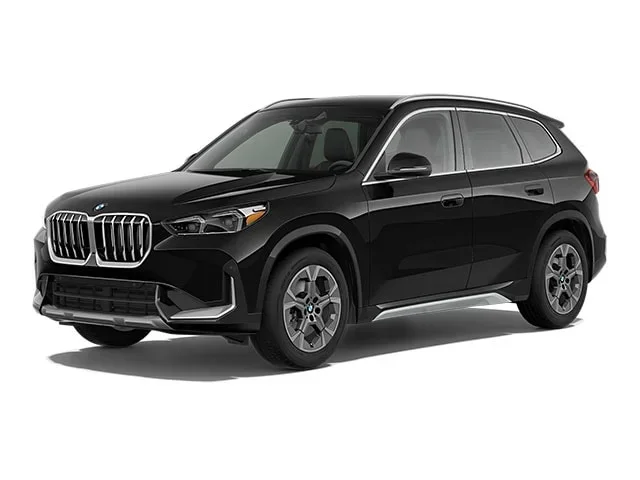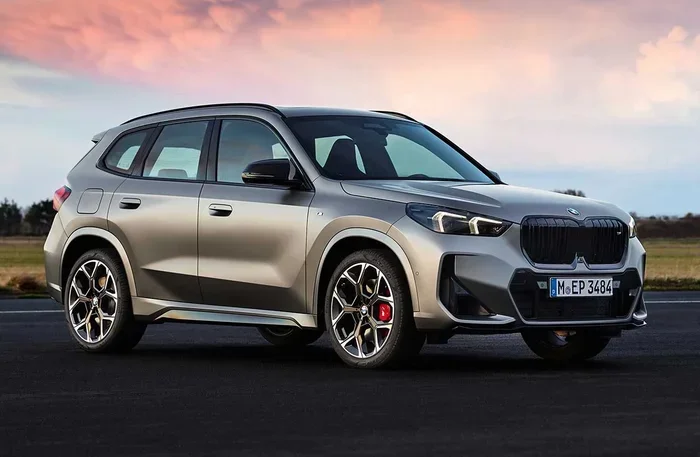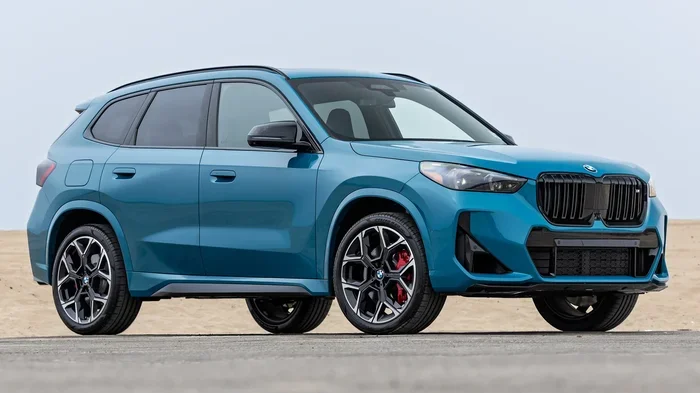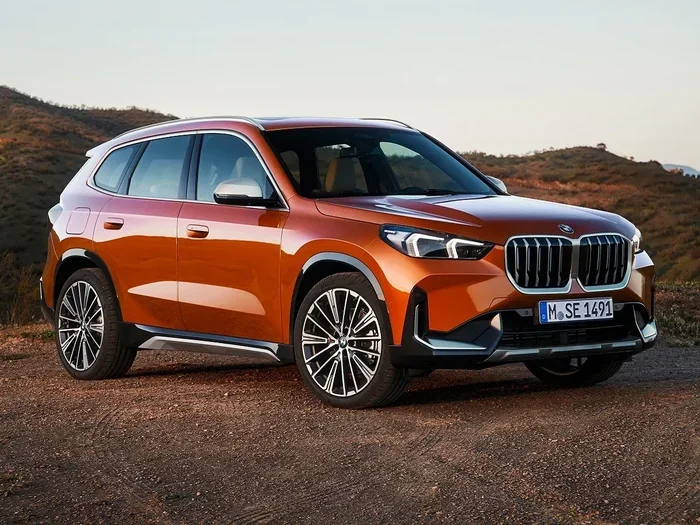
Featured image for BMW X1 front quarter view
Image source: cdn.jdpower.com
The BMW X1 is cheap because it shares its UKL platform with Mini, uses front-wheel-drive architecture, and serves as the brand’s entry-level SUV. These engineering choices lower production costs significantly. Despite the lower price, it still delivers signature BMW driving dynamics and a premium badge, making it a compelling value proposition for budget-conscious luxury buyers.
Shopping for a luxury SUV usually means bracing for a hefty price tag. Then you see the BMW X1. It wears the roundel, it has the kidney grille, but the sticker price is thousands less than its siblings. Naturally, you wonder: why BMW X1 is cheap compared to the X3 or X5? Is it a “real” BMW, or did they cut too many corners?
The short answer is smart engineering and strategic positioning. BMW didn’t build a “cheap” car; they built an efficient one. They used shared architecture, front-wheel-drive layouts, and high-volume manufacturing to hit a specific price point. This article breaks down every reason behind the price tag. We will look at the platform, the drivetrain, the interior, and the used market so you can decide if the X1 is a brilliant value or a compromise too far.
Key Takeaways
- Platform Sharing Saves Money: The X1 rides on the UKL platform shared with Mini models, drastically reducing R&D and manufacturing expenses.
- Front-Wheel Drive Architecture: Unlike larger BMWs, the standard X1 uses FWD, which is cheaper to engineer and build than rear-wheel-drive systems.
- Entry-Level Market Positioning: BMW prices the X1 aggressively to attract first-time luxury buyers and compete with the Audi Q3 and Mercedes GLA.
- Interior Material Compromises: You will find more hard plastics and fewer standard luxury features compared to the X3 or X5.
- Strong Depreciation Creates Used Bargains: High lease volumes and rapid depreciation make used X1 models exceptionally affordable.
- It Retains Core BMW DNA: Despite cost-cutting, the X1 offers sharp handling, turbocharged power, and available xDrive all-wheel drive.
- Low Maintenance Starts with Fluids: Keeping costs down long-term requires using the correct fluids, like the specific BMW coolant color for your engine.
📑 Table of Contents
- The Foundation: UKL Platform Sharing With Mini
- Front-Wheel Drive vs. Rear-Wheel Drive Engineering
- Market Positioning: The “Gateway Drug” Strategy
- Interior Cost-Cutting: Where You See The Savings
- Dimensions and Space Efficiency
- Powertrain Simplicity: The B38 and B48 Engines
- Depreciation: The Used Market Reality
- Reliability and Maintenance Costs
- Comparing The Competition: Is It Actually Cheap?
- The “Real BMW” Question: Driving Dynamics
- Who Should Buy The X1 (And Who Shouldn’t)
- Expert Insight: The Sweet Spot Trim
- Quick Tips For Buying A Used X1
- Common Mistakes To Avoid
- Future Outlook: The Electric iX1
- Conclusion
The Foundation: UKL Platform Sharing With Mini
The single biggest reason for the X1’s lower price sits underneath the sheet metal. Since the second generation (F48 chassis), the X1 has used BMW’s UKL (Untere Klasse) front-wheel-drive platform. This architecture is not exclusive to BMW. It underpins the Mini Cooper, Mini Clubman, Mini Countryman, and even the BMW 2 Series Active Tourer.
How Platform Sharing Lowers Cost
Developing a vehicle platform costs billions. By spreading that cost across Mini and BMW entry-level models, the per-unit expense drops dramatically. The suspension geometry, firewall, floor pan, and electrical architecture are largely shared. This means BMW doesn’t need a unique factory line or unique tooling for the X1’s core structure.
- Shared R&D: Engineering costs are amortized over hundreds of thousands of units globally.
- Parts Bin Economics: Switches, infotainment controllers, seat frames, and climate systems come from a massive shared parts bin.
- Manufacturing Flexibility: The Regensburg plant (and previously Leipzig) can switch production between X1 and Mini models based on demand.
This does not make the X1 a “rebadged Mini.” BMW tunes the suspension, steering, and chassis stiffness specifically for the brand’s driving dynamics. However, the hard points of the car are fixed by the platform, limiting how “rear-wheel-drive” the car can feel compared to the CLAR platform used in the 3 Series, X3, and X5.
Front-Wheel Drive vs. Rear-Wheel Drive Engineering
For decades, “BMW” was synonymous with rear-wheel drive (RWD). The X1 broke that tradition. The base sDrive models send power exclusively to the front wheels. This is a massive cost saver.
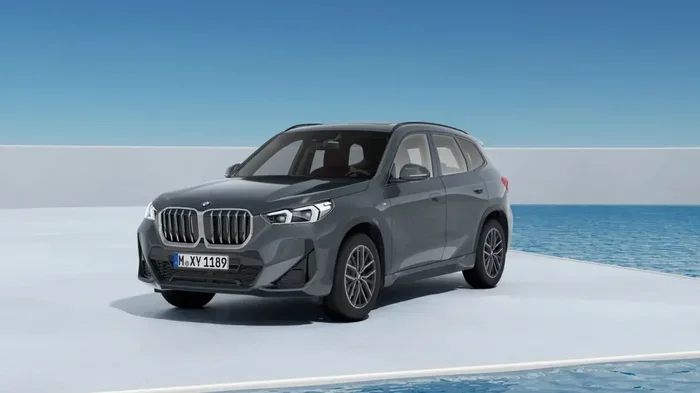
Visual guide about BMW X1 front quarter view
Image source: ic4.maxabout.us
Why FWD Is Cheaper to Build
A traditional RWD layout requires a longitudinal engine, a long driveshaft running under the cabin, a rear differential, and a complex rear suspension to handle torque. That means more metal, more labor, and a larger transmission tunnel eating interior space.
The UKL platform uses a transverse engine mounted sideways. The transmission and front differential are integrated into a single compact unit (transaxle) bolted directly to the engine. This eliminates the driveshaft, center tunnel, and rear diff on sDrive models.
The xDrive Exception
You can get all-wheel drive (xDrive) on the X1. However, it is not the same mechanical system found in an X5. The X1 uses an electro-hydraulic multi-plate clutch mounted on the front transaxle. It sends power rearward only when slip is detected. It is lighter, cheaper, and packaged entirely up front. It works well for weather and light trails, but it lacks the permanent 40:60 torque split of the larger SUVs.
Market Positioning: The “Gateway Drug” Strategy
BMW knows exactly who buys the X1. It is the entry-level SUV. Its job is conquest sales—stealing buyers from the Audi Q3, Mercedes GLA, Volvo XC40, and even loaded Honda CR-Vs or Mazda CX-50s.
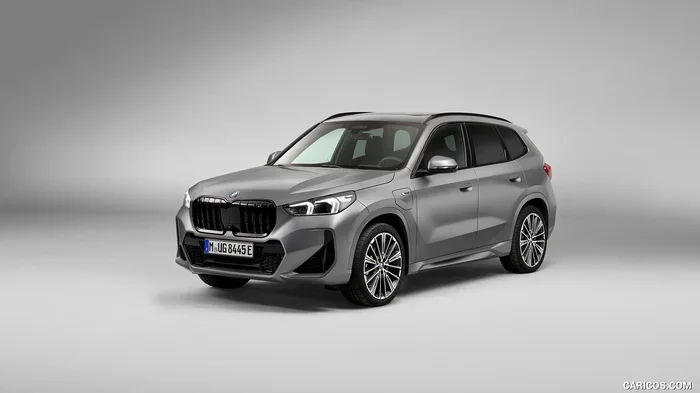
Visual guide about BMW X1 front quarter view
Image source: images.caricos.com
Aggressive Pricing Strategy
BMW prices the X1 to undercut the X3 significantly. There is often a $8,000–$10,000 gap between a base X1 and a base X3. This creates a clear “step up” ladder:
- X1: Entry luxury, FWD-based, high volume.
- X2: Coupe style, same platform, slightly higher price.
- X3: Core midsize, RWD-based (CLAR platform), higher margin.
- X5: Full-size luxury, high margin, flagship SUV feel.
If the X1 were priced too close to the X3, nobody would buy the X1. If it were too expensive, buyers would cross-shop mainstream brands. The “cheap” price is a calculated volume play. BMW sells huge numbers of X1s globally, especially in Europe and China, where tax brackets favor sub-2.0L engines and compact dimensions.
Lease Subvention and Volume
BMW Financial Services heavily subsidizes X1 leases. Low money factors and high residual values (artificially inflated for lease cash flow) keep monthly payments incredibly low—often under $400/month with minimal down. This floods the market with 3-year-old off-lease units, which depresses used prices further.
Interior Cost-Cutting: Where You See The Savings
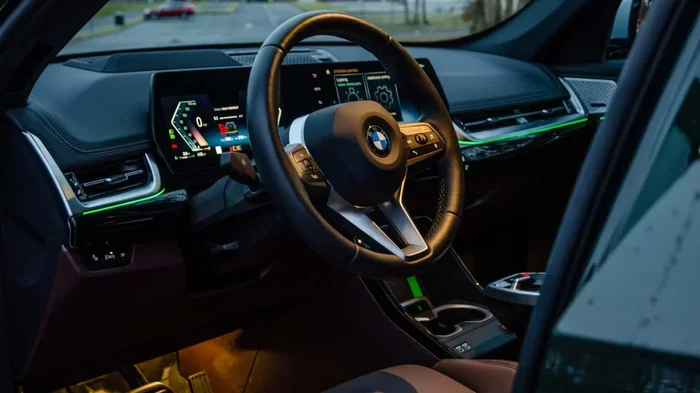
Sit in an X1, then sit in an X3. The difference is immediate. The X1 uses harder plastics on the lower dash, door panels, and center console knee bolsters. The switchgear feels lighter. The standard seats lack the multi-contour adjustments and premium leather textures of the big brothers.
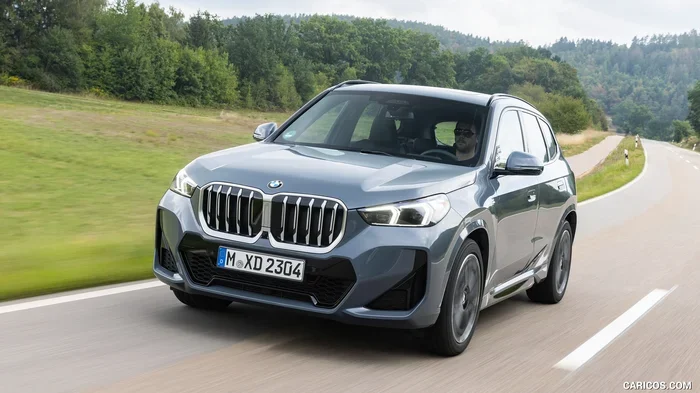
Visual guide about BMW X1 front quarter view
Image source: images.caricos.com
Specific Material Differences
| Feature | BMW X1 (Base/Typical) | BMW X3 (Base/Typical) |
|---|---|---|
| Dash Top | Soft-touch (Sensatec/Leatherette) | Soft-touch (Leatherette/Leather) |
| Lower Dash/Doors | Hard Granular Plastic | Soft-touch / Stitched |
| Center Console | Hard Plastic Sides | Padded / Stitched |
| Standard Seats | Sensatec (Vinyl) | Sensatec / Leatherette |
| Seat Adjustments | 8-Way Power (Base) | 10-Way Power + Lumbar (Base) |
| Sound System | 6-Speaker / 10-Speaker HiFi | 10-Speaker HiFi / Harman Kardon |
However, the X1 adopted the Curved Display (iDrive 9) earlier than the X3 (which got it with the 2025 refresh). So the tech interface actually looks newer in the cheaper car. The ambient lighting is also standard and vibrant. It feels modern, just not “deep” luxury.
Dimensions and Space Efficiency
The X1 is classified as a subcompact luxury crossover. It is roughly the size of a Honda CR-V or Toyota RAV4. Because the FWD platform lacks a driveshaft tunnel, rear floor space is flat. This makes the X1 surprisingly roomy for its footprint.
The “Right Size” for Many Buyers
Many buyers find the X3 too wide for tight garages or European city streets. The X1 fits in compact parking spots. It offers 27 cubic feet of cargo space behind the rear seats (58 folded). That is only 1-2 cubes less than the previous generation X3. For a single person, couple, or small family, the X1 is logically the “right size,” making the X3 an unnecessary expense.
If you need three rows, the X1 is not the answer. You would need to look at the BMW X7 or X5 with third row for that configuration. The X1 is strictly a five-seater.
Powertrain Simplicity: The B38 and B48 Engines
The X1 uses BMW’s modular B38 (3-cylinder) and B48 (4-cylinder) engines. These are mass-produced global engines found in everything from the Mini Cooper S to the Toyota Supra (B58 variant) and the X1 xDrive28i.
Economies of Scale
BMW produces these engines in the millions. The B48 2.0L turbo-4 in the current X1 xDrive28i makes 241 hp and 295 lb-ft. It is a detuned version of the engine in the 330i and X3 xDrive30i. Because it is produced at such scale, the per-unit cost is low. It uses a timing chain (not belt), direct injection, and Valvetronic. It is proven, reliable, and cheap to service relative to the old N20 or the complex inline-6s.
The 3-Cylinder Base Engine
In many global markets (and the previous gen US sDrive28i), the base engine is the 1.5L B38 3-cylinder. It is essentially half a B48. It uses the same bore, stroke, and combustion chamber design. This modularity means BMW builds one engine family on one line. It sounds a bit growly at idle, but it delivers 228 hp in the current X1 xDrive23i (Europe) or 241 hp in the US xDrive28i (which is a 4-cyl). The simplicity keeps the base MSRP down.
Depreciation: The Used Market Reality
If you are asking “why BMW X1 is cheap” while browsing used listings, depreciation is your answer. The X1 historically suffers steeper depreciation than the X3 or X5.
Why Depreciation Hits Hard
- High Lease Volume: Flood of 3-year off-lease supply.
- Perception: Enthusiasts dismiss FWD BMWs; badge snobs want the “real” RWD models.
- Competition: The segment is crowded (Q3, GLA, XC40, NX, GV70).
- Tech Obsolescence: Base models lacked digital dash/infotainment until recently.
A 3-year-old X1 often sells for 50-55% of its original MSRP. An X3 might hold 60-65%. This makes a Certified Pre-Owned (CPO) X1 an incredible value. You get the remainder of the 4yr/50k warranty plus the CPO warranty extension (1yr/unlimited miles) for a fraction of new price.
Reliability and Maintenance Costs
Is the X1 cheap to maintain? Generally, yes—if you stick to the schedule. The B48 engine is robust. The Aisin 8-speed automatic (in xDrive) or 7-speed DCT (in older FWD models) are reliable if fluid is changed.
Common Cost Centers
- Coolant System: Plastic thermostat housing and water pump (electric on B48) fail around 80k-100k miles. Use only BMW-approved blue coolant (HT-12). Mixing colors causes gelling.
- Oil Filter Housing Gasket: Classic BMW leak point. Cheap part, labor intensive.
- Brakes: European pads eat rotors. Plan on rotors every pad change (approx 40k-50k miles).
- Run-Flat Tires: Standard on most. Expensive to replace. Many owners switch to non-run-flats and carry a mobility kit.
Compared to an X5 with air suspension, V8, or complex xDrive transfer case, the X1 is a maintenance bargain. It has no air suspension, no rear diff (on sDrive), and a simpler cooling circuit.
Comparing The Competition: Is It Actually Cheap?
Let’s look at the 2024/2025 competitive set (MSRP starting figures approximate):
| Model | Starting MSRP | Drivetrain Base | Key Advantage |
|---|---|---|---|
| BMW X1 xDrive28i | ~$41,000 | AWD Standard | Best handling, newest tech, standard AWD |
| Audi Q3 45 TFSI | ~$38,000 | FWD | Lower entry price, great virtual cockpit |
| Mercedes GLA 250 | ~$39,000 | FWD | Best interior ambiance, MBUX system |
| Volvo XC40 Core | ~$40,000 | FWD | Best safety, Google built-in |
| Lexus UX 250h | ~$38,000 | FWD Hybrid | Best reliability, hybrid MPG |
The X1 is actually not the cheapest on paper anymore. BMW moved the current gen (U11) upmarket slightly, making AWD standard in the US. However, heavy dealer discounts and lease incentives often make the transaction price the lowest in class.
The “Real BMW” Question: Driving Dynamics
Critics say a FWD BMW isn’t a real BMW. Drive an X1 xDrive28i hard on a back road, and you will change your mind. The front end bites. The steering is quick and weighted. The rear end rotates on lift-off. The xDrive system shuffles power fast enough to mimic RWD behavior.
It lacks the natural balance of a 50/50 weight distribution RWD car. You feel the front tires managing both steering and 60%+ of torque. But for 95% of daily driving? It feels like a BMW. It communicates. It responds. It shrinks around you.
The suspension uses a MacPherson strut front and multi-link rear. This is standard for the class. But BMW tunes the bushings, anti-roll bars, and damper valves specifically. It rides firmer than a Q3 or GLA. That is the brand promise delivered at a discount.
Who Should Buy The X1 (And Who Shouldn’t)
Buy The X1 If:
- You want the badge and driving feel for the lowest entry price.
- You lease and want the lowest monthly payment.
- You live in a city/urban area where size matters.
- You want the latest iDrive 9 / OS 9 tech interface.
- You buy CPO and want maximum warranty coverage per dollar.
Avoid The X1 If:
- You need genuine off-road capability or high ground clearance.
- You want a silent, isolated “magic carpet” ride (buy an X3/X5).
- You are tall and need maximum rear legroom (X3 is wider).
- You plan to keep it 10+ years and worry about long-term electronics complexity.
- You want a longitudinal engine / RWD bias layout (look at used X3 F25/G01).
Expert Insight: The Sweet Spot Trim
Don’t buy the base stripper model. The xDrive28i M Sport is the sweet spot. You get:
- Standard AWD (crucial for resale in snow states).
- Adaptive M Suspension (transforms the ride/handling balance).
- 19-inch wheels (fill the arches, look right).
- Shadowline trim / M Sport seats / M steering wheel.
- Driving Assistant Plus (adaptive cruise, lane centering).
This trim holds value best and delivers the experience that justifies the badge. Skip the massive 20-inch wheels; they ruin the ride on potholes.
Quick Tips For Buying A Used X1
- Check Service History: Verify brake fluid (every 2 yrs), coolant, and transmission fluid (every 60k) were done.
- Scan For Codes: Use a BMW-specific scanner (Carly, BimmerLink, ISTA) to check for hidden transmission or engine codes.
- Inspect Tires: Mismatched brands or excessive wear indicates alignment issues or skipped rotations.
- Verify Recall Completion: Check for the timing chain tensioner recall (early B48) and fuel pump recalls.
- Test xDrive: On a gravel/dirt patch, accelerate hard. Feel the rear engage. If it just spins fronts, the clutch or transfer case actuator may be failing.
Common Mistakes To Avoid
- Mistake: Using green/orange universal coolant. Fix: Use only BMW HT-12 (Blue). See our guide on proper coolant color for your BMW engine.
- Mistake: Ignoring the “Service Due” light because mileage is low. Fix: Time-based intervals matter (brake fluid, coolant, oil).
- Mistake: Buying a high-mileage sDrive (FWD) model in the Rust Belt. Fix: Front control arm bushings and subframe corrosion are common on salted roads.
- Mistake: Assuming “BMW Certified” means perfect. Fix: CPO covers mechanicals, not wear items (brakes, tires, wipers). Inspect those yourself.
Future Outlook: The Electric iX1
BMW now sells the iX1 (fully electric) on the same FAAR platform (front-wheel-drive electric architecture). It shares the body shell with the gas X1. This further amortizes tooling costs. The iX1 xDrive30 starts around $45k (before tax credits). It uses a 64.7 kWh net battery for ~240 miles EPA range. It is heavy (~4,400 lbs) but instant torque masks the weight. If you have home charging, the iX1 is arguably the best value proposition in the lineup right now.
Conclusion
So, why BMW X1 is cheap? It comes down to shared DNA. The UKL platform, front-wheel-drive architecture, modular engines, and high-volume manufacturing strip away the costs that make an X5 expensive. BMW made calculated compromises: hard plastics instead of soft leather, a transverse engine instead of longitudinal, a clutch-pack AWD instead of a Torsen center diff.
But they kept the soul. The steering talks. The chassis rotates. The engine punches above its weight. The tech is current. For the buyer who wants the experience of a BMW SUV without the expense of a midsize luxury lease, the X1 is not “cheap.” It is smart. Whether new, leased, or CPO, it delivers 85% of the BMW experience for 60% of the price. That isn’t a compromise. That is value engineering at its finest.
Just remember to maintain it like a German car. Use the right fluids, change the oil early, and scan the modules. Do that, and the “cheap” X1 will drive like a proper BMW for years to come.
Frequently Asked Questions
Is the BMW X1 considered a “real” BMW since it is front-wheel drive?
Yes, the X1 is a real BMW. While it uses a front-wheel-drive platform (UKL) shared with Mini, BMW engineers tune the suspension, steering, and xDrive system specifically for BMW driving dynamics. It offers the brand’s signature handling feel, turbocharged performance, and premium interior design, just in a smaller, more efficient package.
Why does the BMW X1 depreciate faster than the X3 or X5?
The X1 depreciates faster due to high lease volumes flooding the used market, its entry-level positioning, and the perception that front-wheel-drive models are less desirable than rear-wheel-drive siblings. However, this steep depreciation makes Certified Pre-Owned X1 models an exceptional value for used buyers.
What are the main maintenance differences between the X1 and larger BMW SUVs?
The X1 is cheaper to maintain because it lacks complex systems found in larger models: no air suspension, no rear differential (on sDrive), simpler cooling systems, and smaller brakes. The B48 4-cylinder engine is also more reliable and less expensive to service than the inline-6 or V8 engines in the X3/X5.
Does the BMW X1 require premium gas?
Yes, BMW recommends 91 octane or higher for all X1 models (both B38 3-cylinder and B48 4-cylinder turbo engines). Using lower octane can cause knock, reduce power, lower fuel economy, and potentially cause long-term carbon buildup or engine damage.
Is the BMW X1 good in snow with xDrive?
The X1 xDrive is very capable in snow, especially with winter tires. The electro-hydraulic clutch engages the rear wheels proactively based on steering angle, throttle, and wheel slip. It is not as robust as the mechanical Torsen-based xDrive in the X3/X5 for deep snow or towing, but it excels in daily winter driving.
What is the difference between the X1 sDrive and xDrive models?
sDrive is front-wheel drive only (cheaper, lighter, better MPG). xDrive is all-wheel drive (better traction, standard on current US models, slightly heavier). Mechanically, xDrive adds a driveshaft, rear differential, and a multi-plate clutch on the transmission. xDrive holds resale value better in northern climates.