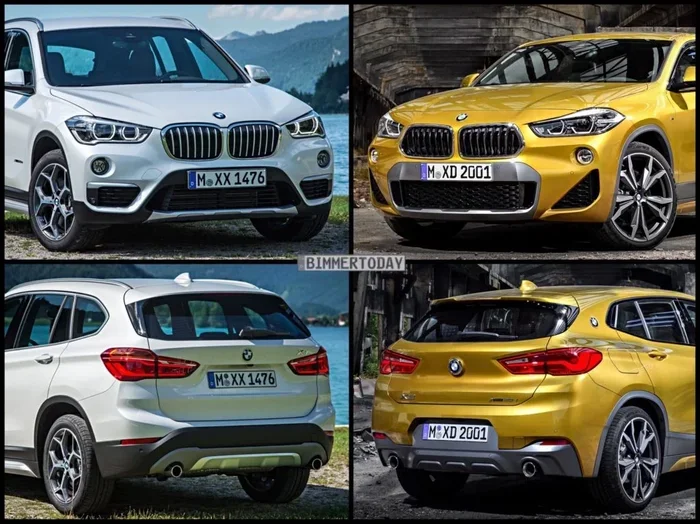
Featured image for BMW X1 lineup comparison
Image source: cdn.bmwblog.com
Choosing which BMW X1 to buy depends on your budget and needs. The third-generation (U11) 2023+ models offer the best tech and space, while the second-gen (F48) 2016-2022 provides the best value. Avoid early first-gen (E84) models with the N20 engine due to timing chain risks.
Buying a compact luxury SUV is a big decision. You want style, space, and that famous BMW driving feel without breaking the bank on repairs. If you are researching which BMW X1 to buy, you have landed in the right spot. This guide breaks down every generation, trim, and engine option so you can drive off the lot with total confidence.
We will cover the three distinct generations, the critical difference between sDrive and xDrive, and the specific model years to target or avoid. We also dive into ownership costs, common problems, and why a Certified Pre-Owned model might be your smartest financial move. Let us find your perfect match.
Key Takeaways
- Best Overall Value: The 2018-2022 F48 generation balances modern features, reliability, and depreciation savings.
- Best for Tech & Space: The new 2023+ U11 generation features iDrive 8, more rear legroom, and a modern design.
- Drivetrain Choice: Choose xDrive (AWD) for snow or rain; sDrive (FWD) saves fuel and money upfront.
- Engine Reliability: Stick to the B48 2.0L turbo (2016+) and avoid the N20 engine (2013-2015) due to timing chain failures.
- Certified Pre-Owned is King: A BMW CPO warranty adds 1 year/unlimited miles of coverage for peace of mind.
- Run-Flat Costs: Budget for expensive run-flat tire replacements; consider a road hazard warranty.
- Test Drive Checklist: Check for transmission hesitation, infotainment lag, and suspension noise on rough roads.
📑 Table of Contents
Understanding the Three BMW X1 Generations
The BMW X1 has been around since 2009. It has changed significantly over three generations. Knowing these chassis codes (E84, F48, U11) helps you search listings like a pro. Each generation has a different personality.
First Generation (E84): 2010–2015
The original X1 (E84) is unique. It was built on a rear-wheel-drive platform. This means even the “sDrive” models were RWD. Enthusiasts love this for the balanced handling. It feels like a raised 3 Series wagon.
However, age is the enemy here. The early models (2010-2012) used the N52 naturally aspirated inline-six in the xDrive28i. That engine is bulletproof. But the 2013-2015 xDrive28i and sDrive28i switched to the N20 turbo-four. This engine has a known timing chain guide failure issue that can grenade the motor. If you look at an E84, verify the timing chain was updated or budget for the repair immediately.
Quick Tip: If you want an E84, hunt for a 2011-2012 xDrive28i with the N52 engine. It is the most reliable combo of the generation. Just accept the dated iDrive screen and tight rear seats.
Second Generation (F48): 2016–2022
This is the sweet spot for most buyers. BMW switched to a front-wheel-drive platform (UKL architecture). Purists complained, but the reality is better interior space, a lower load floor, and improved fuel economy. The F48 is practical, modern, and plentiful on the used market.
All US models use the B48 2.0L turbo-four. This engine is robust. It uses a timing chain too, but the design is far superior to the N20. The 8-speed Aisin automatic transmission shifts smoothly. You get Apple CarPlay (standard from 2018 onward) and a decent iDrive 6 or 7 system.
Expert Insight: The 2018 model year refresh brought LED headlights standard, a larger 8.8-inch screen (10.25-inch optional), and standard CarPlay. Target a 2018+ model for the best daily driving experience.
Third Generation (U11): 2023–Present
The current X1 grows up. It is longer, wider, and rides on the new FAAR platform. The interior is a massive leap forward. You get the curved display running iDrive 8 with QuickSelect. It looks and feels like a mini X5.
The base engine is still the B48, now with 48V mild-hybrid assist in the xDrive28i. The big news is the M35i xDrive. It packs 312 hp and a standard mechanical limited-slip differential. It is genuinely quick. The EV version, the iX1, exists globally but the gas X1 remains the volume seller in the US.
Common Mistake: Do not assume the base U11 “sDrive” exists in the US. For 2023+, BMW only sells the xDrive28i and M35i xDrive here. Both are all-wheel drive.
Which BMW X1 Trim Level Fits Your Life?
Trim names change slightly by generation, but the logic stays the same. You choose a drivetrain (sDrive vs xDrive) and a performance level (base vs M Sport vs M Performance). Here is how to decode the badges.
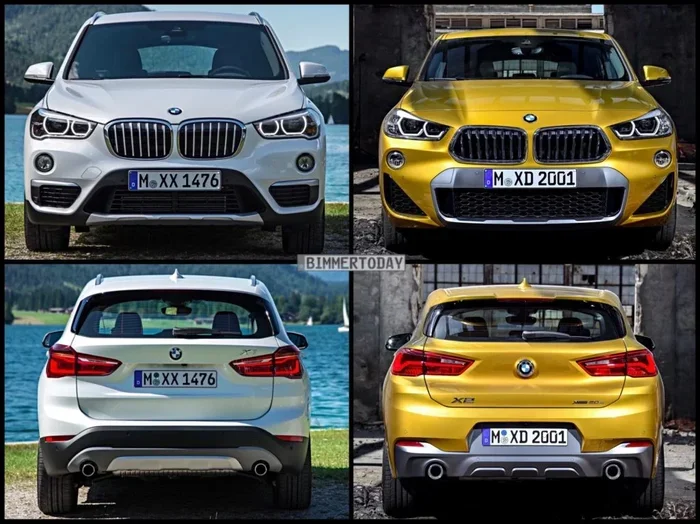
Visual guide about BMW X1 lineup comparison
Image source: cdn.bmwblog.com
sDrive vs xDrive: The Traction Decision
This is the first fork in the road. sDrive means front-wheel drive (FWD) on F48/U11 (RWD on E84). xDrive means all-wheel drive (AWD).
- Choose sDrive (FWD) if: You live in the Sunbelt, want max MPG (adds 1-2 mpg combined), want a lower purchase price, and prefer lighter steering feel.
- Choose xDrive (AWD) if: You see snow, rain, or gravel roads regularly. The resale value is higher. The system sends power to the rear wheels instantly when slip is detected. It adds ~150 lbs and ~$2,000 MSRP.
Quick Tip: Modern FWD-based xDrive is not the same as the old RWD-based system. It is reactive, not proactive. It works great for weather, but do not expect RWD drift dynamics.
The M Sport Package vs M35i
Do not confuse the M Sport package (cosmetic/suspension) with the M35i (performance model).
- M Sport Package: Available on sDrive28i/xDrive28i. Adds 18/19-inch wheels, sport seats, M steering wheel, shadowline trim, and firmer suspension. It looks the part but has the same engine.
- M35i (U11 only): Real M Performance. 312 hp, sport differential, M brakes, M exhaust, specific tuning. It costs $8k-$10k more than a loaded xDrive28i. Buy this if you want a hot hatch SUV.
Comparison Table: Generations at a Glance
| Feature | Gen 1 (E84) 2010-2015 | Gen 2 (F48) 2016-2022 | Gen 3 (U11) 2023+ |
|---|---|---|---|
| Platform | RWD-based | FWD-based (UKL) | FWD-based (FAAR) |
| Base Engine | N52 (I6) / N20 (I4) | B48 2.0T I4 | B48 2.0T I4 + 48V Mild Hybrid |
| Transmission | 6AT / 8AT | 8-Speed Aisin Auto | 7-Speed DCT (M35i) / 8AT (28i) |
| Infotainment | iDrive CIC / NBT (Small screen) | iDrive 6 / 7 (CarPlay 2018+) | iDrive 8 (Curved Display, Standard) |
| Rear Legroom | Tight (37 in) | Good (37.7 in) | Best (39.4 in) |
| Cargo Space (Seats Up) | 27.7 cu ft | 27.1 cu ft | 29.2 cu ft |
| Typical Used Price | $8k – $18k | $18k – $30k | $38k – $50k+ |
| Reliability Verdict | Risky (N20 Years) | Best Balance | Too New to Rate Fully |
New vs Used: Making the Smart Money Move
Depreciation is the biggest cost of car ownership. The X1 depreciates hard in years 1-3. This creates a massive opportunity for used buyers.
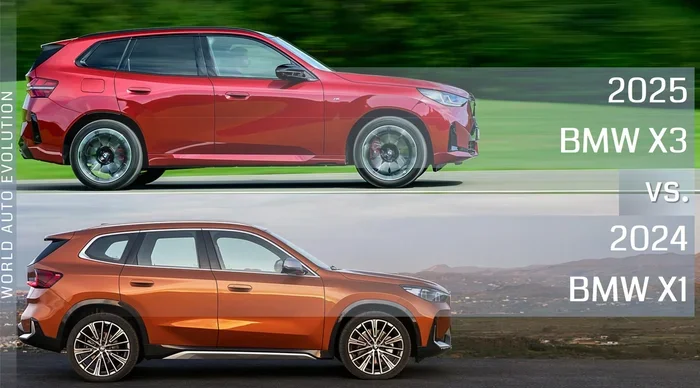
Visual guide about BMW X1 lineup comparison
Image source: worldautoevolution.com
The Depreciation Curve
A new 2024 xDrive28i MSRP starts around $40,000. A 3-year-old 2021 F48 xDrive28i with 30k miles lists for ~$25,000. You save $15,000 for a car that looks 90% the same and drives 95% the same. The F48 aged very well visually.
If you buy new (U11), you get the warranty, the new car smell, and the latest safety tech (standard Parking Assistant Plus, better driver assists). You pay the “early adopter” tax.
Why Certified Pre-Owned (CPO) Wins
This is the golden rule for BMW buyers. A BMW Certified vehicle undergoes a rigorous 150+ point inspection. It extends the original 4yr/50k warranty by 1 year / unlimited miles. That means a 2021 CPO car is covered until 2026 with no mileage cap.
It also includes 24/7 roadside assistance and a free vehicle history report. The CPO premium over a non-CPO used car is usually $1,000-$1,500. It is the best insurance policy you can buy. Check the CPO warranty coverage details before you sign.
What to Check on a Used X1 (F48 Focus)
- Service Records: Look for oil changes every 5k-7k miles (not the 10k-15k BMW CBS interval). The B48 likes fresh oil.
- Brakes: BMWs eat front pads. Check thickness. Rotors often need replacement with pads.
- Tires: Are they matching brands? Mismatched tires confuse xDrive. Check for BMW run-flat tires condition; sidewalls crack with age.
- Coolant: Verify the right coolant for your BMW (Blue HT-12) is in the tank. Green or pink means someone topped off with wrong stuff.
- Recalls: Run the VIN on NHTSA.gov. F48 had recalls for fuel pump, backup camera, and airbag inflators.
Common Issues and Reliability by Year
No car is perfect. Knowing the weak spots lets you negotiate price or walk away. The most reliable BMW models lists often feature the F48 X1 high up, provided you avoid the specific pitfalls below.
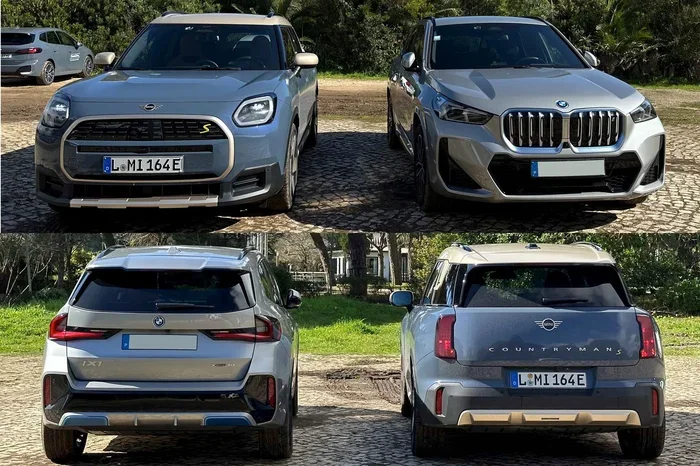
Visual guide about BMW X1 lineup comparison
Image source: cdn.bimmertoday.de
The N20 Timing Chain (E84 2013-2015)
This is the headline defect. The plastic timing chain guides shatter. Metal hits metal. Engine fails. BMW extended the warranty to 7yr/70k miles, but that expired years ago. If buying a 2013-2015 28i, demand proof of the updated chain tensioner and guides (part #11317621415). No proof? Walk away or deduct $2,500 for the repair.
B48 Engine Quirks (F48 / U11)
The B48 is solid but not immune to issues.
- Coolant Leaks: The plastic thermostat housing and water pump outlet crack. Check for dried pink/blue crust near the front of the engine.
- Oil Filter Housing Gasket: Classic BMW leak. Leaks onto the exhaust manifold = burning smell. Cheap part, labor intensive.
- Carbon Buildup: Direct injection causes intake valve carbon. Walnut blast cleaning needed ~60k-80k miles.
Transmission & Drivetrain
The F48 8-speed Aisin is reliable. Fluid is “lifetime” per BMW, but change it at 60k miles. Use ZF Lifeguard 8. The xDrive transfer case fluid (TL-7014 / 75W-90) should be changed every 60k too. Neglecting this leads to “binding” or shudder on tight turns.
The U11 M35i uses a 7-speed DCT. It is snappier but more complex. Ensure software is updated for low-speed smoothness.
Electronics & Infotainment
- F48 iDrive 6/7: Screen delamination (bubbling) on early 2016-2017 models. Covered by warranty extension in some regions. Bluetooth pairing glitches fixed by software updates.
- U11 iDrive 8: Early software bugs (2023 MY) caused random reboots, lost profiles, and CarPlay drops. Most fixed by OTA updates. Verify the latest .xxx software version is installed.
Suspension & Steering
Control arm bushings (thrust arms) wear by 50k-70k miles. Symptom: steering wheel shake at highway speeds or clunk over bumps. Front struts leak on higher mileage cars. The M Sport suspension is firmer and wears bushings faster.
Ownership Costs: Fuel, Insurance, and Maintenance
Luxury costs more to run. Let us break the numbers down so there are no surprises.
Fuel Economy Reality
Premium fuel (91/93 Octane) is required. Do not cheap out; the turbo engine knocks on 87, pulling timing and killing power/MPG.
- F48 sDrive28i: 24 City / 33 HWY / 27 Combined.
- F48 xDrive28i: 23 City / 31 HWY / 26 Combined.
- U11 xDrive28i: 25 City / 34 HWY / 28 Combined (Mild hybrid helps).
- U11 M35i: 22 City / 30 HWY / 25 Combined.
Real world: Expect 1-2 MPG lower than EPA combined in mixed driving.
Insurance Costs
The X1 is cheap to insure for a BMW. It lacks the “M” badge (unless M35i) and has great safety scores (IIHS Top Safety Pick+). Average annual premium: $1,600 – $2,200 depending on zip code and driver profile. The M35i jumps to $2,400+.
Maintenance Schedule (The Real One)
Ignore the “Condition Based Service” (CBS) 15k oil intervals. Follow this enthusiast schedule for longevity:
- Engine Oil & Filter: Every 5,000 – 7,500 miles (LL-01 FE 0W-20 or 5W-30).
- Brake Fluid: Every 2 years (DOT 4 LV).
- Coolant: Every 4 years / 50k miles (BMW HT-12 Blue).
- Transmission Fluid: Every 60k miles (ZF 8HP / DCT specific fluid).
- Transfer Case (xDrive): Every 60k miles.
- Spark Plugs: Every 45k-60k miles (NGK Laser Iridium).
- Air Filters (Engine & Cabin): Every 30k miles / 2 years.
Quick Tip: Find an independent BMW specialist. Dealer labor rates are $180-$220/hr. Indies charge $120-$150/hr and often use better parts.
Expert Tips for the Test Drive
You have narrowed the list. Now drive them. Bring a flashlight and a friend. Do not just drive around the block.
The 20-Minute Route
- Cold Start: Arrive early. Start it cold. Listen for rattles (timing chain, wastegate rattle, exhaust leaks). Watch for blue smoke (valve seals).
- City Streets: Test stop-start smoothness. Does the auto start/stop shudder? Feel for transmission hunting between 2nd-3rd gear at 25 mph.
- Highway On-Ramp: Floor it. 0-60 should be ~6.3s (xDrive28i). Engine should pull cleanly to redline. No hesitation = good turbo health.
- Rough Pavement: Hit potholes (safely). Listen for clunks (control arms, sway bar links). Check steering wheel center.
- Parking Lot: Full lock turns both ways. Listen for clicking (CV axles – rare but possible) or binding (xDrive transfer case fluid).
Tech & Interior Checklist
- Pair your phone. Test wireless CarPlay/Android Auto (U11/F48 2018+).
- Test all seats: heating, cooling, memory, lumbar.
- Open/close tailgate (hands-free kick sensor on F48/U11).
- Check all cameras (360 view on newer models). Clean lenses.
- Test voice assistant (“Hey BMW” on U11).
- Verify all windows auto-up/down. Sunroof opens/closes fully.
Negotiation Leverage Points
- Tires near wear bars ($1,200+ for run-flats).
- Brakes < 3mm ($600+ per axle).
- Missing second key fob ($400+ to program).
- Cosmetic wheel rash (common on run-flats).
- Expired CPO or approaching warranty cliff.
Final Verdict: Which BMW X1 Should You Buy?
Let us make this simple based on your buyer profile.
The “Smart Money” Pick: 2018–2022 F48 xDrive28i M Sport (CPO)
You get the modern look, CarPlay, reliable B48 engine, 8-speed auto, AWD safety, and the best warranty coverage via CPO. Prices range $22k-$30k. It is 80% of the new car experience for 60% of the price.
The “Enthusiast” Pick: 2011–2012 E84 xDrive28i (N52 Engine)
RWD-based platform, inline-six sound, hydraulic steering feel. It is a classic. Find a low-mileage garage queen. Budget $1,500/year for maintenance. Not a family hauler.
The “Money No Object / Latest Tech” Pick: 2024+ U11 xDrive28i or M35i
You want the curved screen, the mild hybrid torque fill, the quietest cabin, and the newest safety suite. You accept the depreciation hit. Get the M35i if you drive enthusiastically; the xDrive28i is plenty fast for 95% of people.
The “Budget Commuter” Pick: 2016–2017 F48 sDrive28i
Cheapest entry ticket ($16k-$20k). FWD, good MPG, same interior space. Skip the 2016 if you want CarPlay (added mid-2017/2018). Have an indie mechanic inspect the transfer case fluid even on FWD (some early FWD models had a dummy rear drive line? No, F48 sDrive is pure FWD. No transfer case).
Whichever you choose, which BMW X1 to buy ultimately comes down to honesty about your budget and climate. Prioritize the B48 engine (2016+), secure a CPO warranty if buying used, and budget for run-flat tires. Do that, and you will join the ranks of happy X1 owners who enjoy the ultimate driving machine in a practical package.
Conclusion
The BMW X1 is a brilliant compromise. It shrinks the X5 experience into a city-friendly footprint. By now, you know the generations inside out. You know the N20 danger zone. You know why the F48 B48 is the reliability king. You understand the sDrive vs xDrive trade-off. And you have a test drive plan that catches expensive faults.
Remember, the best car is the one with a clean history, recent maintenance, and a warranty that matches your ownership timeline. Do not fall in love with a listing; fall in love with the pre-purchase inspection report. Happy hunting, and enjoy the drive.
Frequently Asked Questions
What is the most reliable BMW X1 model year?
The 2018-2021 F48 generation models are widely considered the most reliable. They feature the proven B48 engine, the refined 8-speed transmission, and standard Apple CarPlay, avoiding the N20 timing chain issues of earlier years and the first-year bugs of the new U11 generation.
Is the BMW X1 expensive to maintain?
It costs more than a Honda CR-V but less than larger BMWs. Budget $1,000-$1,500 annually for maintenance and repairs on a used F48. Using an independent mechanic and doing fluid changes early (every 60k miles) significantly reduces long-term costs compared to dealer-only servicing.
Does the BMW X1 require premium gas?
Yes, all BMW X1 models require premium unleaded gasoline (91 octane minimum, 93 recommended). The turbocharged engines are tuned for high compression and boost; using regular gas causes engine knock, reduces power, lowers fuel economy, and can cause long-term carbon buildup or damage.
What is the difference between sDrive and xDrive on the X1?
sDrive is front-wheel drive (FWD) on current models (RWD on the old E84), offering better fuel economy and a lower price. xDrive is all-wheel drive (AWD), providing superior traction in snow, rain, and loose surfaces. xDrive adds weight, complexity, and cost but holds resale value better in northern climates.
Are BMW X1 run-flat tires worth keeping?
Run-flats allow you to drive 50 miles at 50 mph after a puncture, eliminating the need for a spare tire. However, they ride stiffer, wear faster, and cost 30-50% more to replace. Many owners switch to non-run-flat tires for comfort and carry a tire repair kit or spare tire kit instead.
Should I buy a used BMW X1 with over 100k miles?
Only if it is an F48 (2016+) with a B48 engine, full service history showing 5k-7k mile oil changes, and recent major maintenance (spark plugs, transmission fluid, brakes, tires). Avoid high-mileage E84 models with the N20 engine. A pre-purchase inspection by a BMW specialist is mandatory at this mileage.



