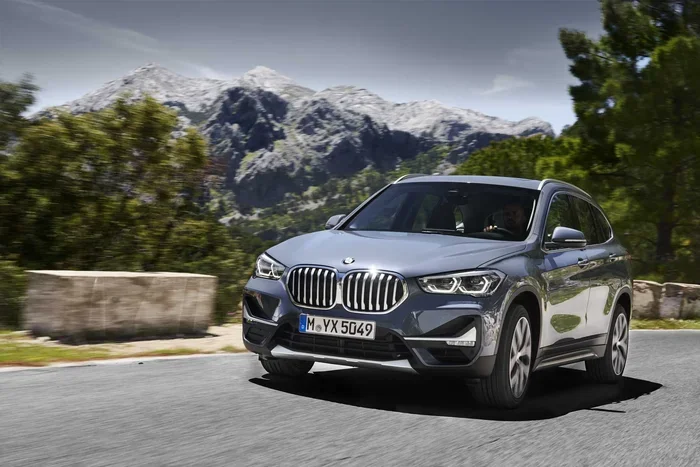
Featured image for BMW X1 driving exterior
Image source: mediapool.bmwgroup.com
The answer to is BMW X1 FWD or RWD depends entirely on the generation. The first generation (E84) used a rear-wheel drive platform, while the second (F48) and third (U11) generations switched to a front-wheel drive architecture with optional xDrive all-wheel drive. Understanding this shift is critical for buying the right used model or new vehicle for your driving needs.
If you are shopping for a compact luxury crossover, you have probably asked yourself: is BMW X1 FWD or RWD? It is a great question because the answer has changed dramatically over the years. Unlike the 3 Series, which has stuck to its rear-wheel drive guns for decades, the X1 has flipped its script completely. This confuses a lot of buyers. One minute you are looking at a 2013 model with classic BMW handling, the next you are sitting in a 2020 model that drives more like a Mini Cooper Countryman underneath.
Knowing the difference isn’t just trivia. It affects how the car handles in snow, how much interior space you get, what maintenance costs look like, and even how fun it is to drive on a back road. In this guide, we will walk through every generation. We will explain the platform swaps, decode the badges, and help you decide which setup fits your life best.
Key Takeaways
- Generation defines drivetrain: The E84 (2009–2015) is RWD-based; the F48 (2015–2022) and U11 (2023+) are FWD-based.
- sDrive means two-wheel drive: On the E84, sDrive is RWD. On the F48 and U11, sDrive is FWD.
- xDrive is always all-wheel drive: This system sends power to all four wheels and is available on every generation.
- Platform swap changed handling: The move to the UKL/FAAR platforms improved interior space and efficiency but altered the classic BMW driving feel.
- RWD models are enthusiast favorites: The E84 sDrive models offer better weight balance and steering feel for driving purists.
- FWD models are practical daily drivers: Newer X1 models maximize cabin room, fuel economy, and foul-weather traction with xDrive.
- Check the badge and VIN: Always verify the specific drivetrain (sDrive vs xDrive) on the specific car you are buying.
📑 Table of Contents
- The Short Answer: It Depends on the Generation
- First Generation (E84, 2009–2015): The RWD Era
- Second Generation (F48, 2015–2022): The Switch to FWD
- Third Generation (U11, 2023–Present): Modern FWD Architecture
- sDrive vs xDrive: What Do the Badges Mean?
- Which Drivetrain Should You Choose?
- Common Misconceptions & Mistakes
- Expert Insight: Maintenance Differences by Drivetrain
- Deep Dive: The Engineering Behind the Switch
- Buying Used: How to Verify What You Are Getting
- The Future: Where Is The X1 Drivetrain Going?
- Key Takeaways Summary
- Conclusion
The Short Answer: It Depends on the Generation
Let’s rip the band-aid off right now. The BMW X1 drivetrain layout is defined by its generation. There are three distinct eras.
- First Generation (E84 Chassis, 2009–2015): Rear-wheel drive platform. sDrive = RWD. xDrive = AWD.
- Second Generation (F48 Chassis, 2015–2022): Front-wheel drive platform (UKL architecture). sDrive = FWD. xDrive = AWD.
- Third Generation (U11 Chassis, 2023–Present): Front-wheel drive platform (FAAR architecture). sDrive = FWD. xDrive = AWD. Also includes the electric iX1.
That is the headline. But the details matter. The switch from longitudinal engines (mounted front-to-back) to transverse engines (mounted sideways) changed everything. It changed the steering feel, the turning circle, the cabin space, and the repair bills. Let’s dig into each era so you know exactly what you are getting.
First Generation (E84, 2009–2015): The RWD Era
The original X1 debuted on the E84 chassis. It shared its bones with the E90/E91 3 Series. This is the “real BMW” era if you ask driving enthusiasts. The engine sits longitudinally behind the front axle. Power goes to the rear wheels first (sDrive) or all four wheels (xDrive).
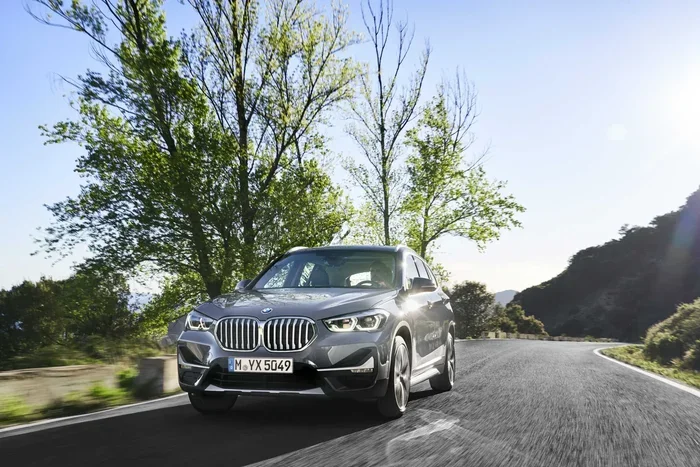
Visual guide about BMW X1 driving exterior
Image source: mediapool.bmwgroup.com
sDrive Models: Pure Rear-Wheel Drive
If you buy an E84 sDrive18i, sDrive20i, or sDrive28i, you are getting rear-wheel drive. This layout gives you a near 50/50 weight distribution. The steering is hydraulic on early models (electric later on), offering genuine feedback. You can rotate the car with the throttle. It feels like a lifted 3 Series wagon. For many, this is the sweet spot of the X1 lineup.
xDrive Models: All-Wheel Drive Security
The xDrive models (xDrive20i, xDrive28i, xDrive35i) use a planetary center differential with a multi-plate clutch. It defaults to a 40:60 front-to-rear torque split. It can send 100% of torque to either axle instantly. It is a proper, mechanical AWD system. It adds weight and complexity, but it transforms the car into a year-round weapon.
Why Enthusiasts Love the E84
This generation holds value well among enthusiasts. The longitudinal engine layout allows for better front suspension geometry (double-joint spring strut front axle, five-link rear). The turning circle is tighter than the F48. The engines (N20, N52, N55) are robust if maintained. However, the rear seat space is tight. The trunk is small. The ride is firm. It is a driver’s car first, a family hauler second.
Expert Insight: If you find a clean E84 xDrive28i with the N52 naturally aspirated inline-six (early 2010–2011 models), grab it. That engine is bulletproof and sounds glorious. Avoid the early N20 timing chain issues by checking service records for the updated tensioner.
Second Generation (F48, 2015–2022): The Switch to FWD
In 2015, BMW dropped a bombshell. The new F48 X1 moved to the UKL platform. This is the same architecture underpinning the Mini Clubman, Mini Countryman, and the 2 Series Active Tourer. The engine rotated 90 degrees. It now sits transversely. The transverse engine layout drives the front wheels primarily.
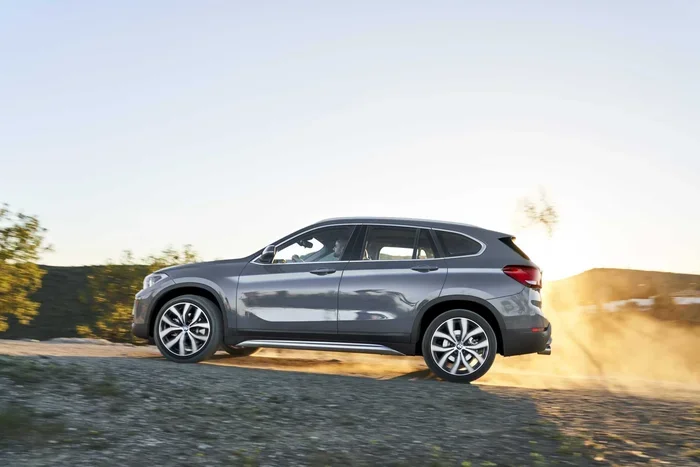
Visual guide about BMW X1 driving exterior
Image source: mediapool.bmwgroup.com
The UKL Platform Change
Why did they do it? Packaging. Money. Regulations. A transverse engine takes up less length. That means a shorter hood, a longer cabin, and more rear legroom. It is cheaper to build because it shares parts with high-volume Minis. The F48 is roomier, quieter, and more efficient. But it lost the “Ultimate Driving Machine” soul for many loyalists.
sDrive Becomes FWD
On the F48, sDrive means front-wheel drive. The sDrive18i, sDrive20i, and sDrive25i send all power to the front tires. Torque steer is managed well by BMW’s engineering, but it is there under hard acceleration. The steering is electric and lighter. The weight balance shifts forward (roughly 60/40). It drives like a very polished, premium front-drive car. It is safe, predictable, and competent. It is not playful.
xDrive AWD System Details
The F48 xDrive system is fundamentally different from the E84. It uses an electro-hydraulic multi-plate clutch (Hang-on unit) mounted at the rear differential. It is front-biased. In normal driving, it is 100% FWD. The computer detects slip and engages the rear clutch in milliseconds. It works incredibly well in snow and rain. It even has a “locked” mode for low-speed off-roading (up to 30 km/h). But it cannot replicate the rear-biased feel of the old car.
Third Generation (U11, 2023–Present): Modern FWD Architecture
The current U11 chassis rides on the FAAR platform (Front-wheel drive Architecture ARchitecture). It is an evolution of UKL. It supports mild hybrids, plug-in hybrids, and full EVs (iX1). The proportions are blockier. The kidney grille is massive. The tech is lightyears ahead (iDrive 9, curved display).
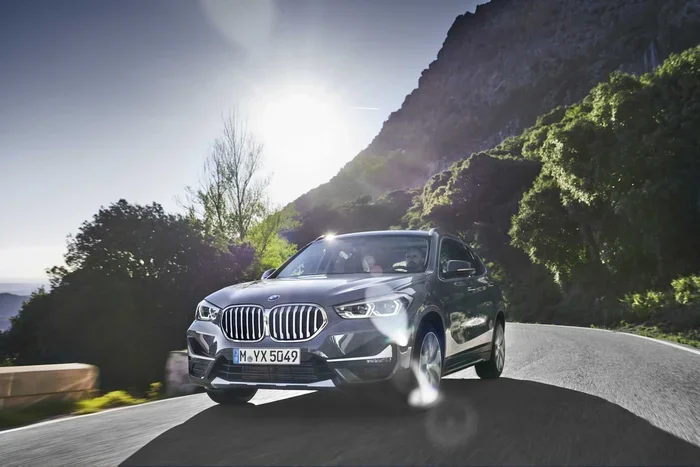
Visual guide about BMW X1 driving exterior
Image source: mediapool.bmwgroup.com
FAAR Platform Improvements
Stiffness is up. NVH (Noise, Vibration, Harshness) is down. The suspension geometry is refined. The sDrive models (sDrive18i, sDrive20i) remain FWD. The xDrive models (xDrive23i, xDrive30i, M35i xDrive) use an updated version of the hang-on AWD. The plug-in hybrids (xDrive25e, xDrive30e) use an electric motor on the rear axle for “through-the-road” all-wheel drive. This is seamless and offers pure EV range around 40–50 miles.
Electric iX1 Variants
The iX1 xDrive30 uses dual motors (one per axle) for standard AWD. The iX1 eDrive20 (in some markets) is RWD via a single rear motor. Wait—RWD on a FWD platform? Yes. The FAAR platform allows a rear-mounted motor for the base EV. This is a fascinating twist. It brings rear-wheel drive back to the X1, but only in electric form.
sDrive vs xDrive: What Do the Badges Mean?
This is the biggest source of confusion. BMW marketing uses “sDrive” for two-wheel drive and “xDrive” for all-wheel drive. But the driven wheels change by generation. Here is the cheat sheet.
sDrive Explained
- E84 (Gen 1): Rear-Wheel Drive (RWD).
- F48 (Gen 2): Front-Wheel Drive (FWD).
- U11 (Gen 3): Front-Wheel Drive (FWD). Exception: iX1 eDrive20 is RWD.
xDrive Explained
- All Generations: All-Wheel Drive (AWD).
- E84: Mechanical center diff, rear-biased.
- F48/U11: Electronic clutch pack, front-biased (rear axle disconnect on U11 for efficiency).
Comparison Table: sDrive vs xDrive Across Generations
| Feature | E84 sDrive (Gen 1) | F48/U11 sDrive (Gen 2/3) | All xDrive Models |
|---|---|---|---|
| Driven Wheels | Rear | Front | All Four |
| Engine Mount | Longitudinal | Transverse | Matches Generation |
| Weight Balance | ~50/50 | ~60/40 Front | Varies (Front bias on Gen 2/3) |
| Steering Feel | Best (Hydraulic early) | Good (Electric, lighter) | Good (Heavier due to hardware) |
| Interior Space | Tight Rear Seat | Class Leading | Same as sDrive counterpart |
| Snow Performance | Poor without winters | Good with winters | Excellent |
| Fuel Economy | Best (Lightest) | Best (Lightest) | Lower (Added weight/drag) |
| Maintenance Cost | Lower (Simpler) | Lower (Simpler) | Higher (Transfer case, fluids) |
Which Drivetrain Should You Choose?
Your choice depends on where you live, how you drive, and what you value. There is no “wrong” answer, only the wrong tool for the job.
Buy RWD (E84 sDrive) If…
- You live in a warm climate or have a second car for winter.
- You prioritize steering feel, balance, and driving engagement.
- You want a cheaper purchase price and lower maintenance complexity.
- You don’t need massive rear seat space.
- You enjoy DIY maintenance (easier access to engine/transmission).
Buy FWD (F48/U11 sDrive) If…
- You live in a mild climate (rain, light snow) and run good all-season tires.
- You maximize passenger space and cargo room.
- You want the best fuel economy (especially the mild-hybrid 48V systems on U11).
- You want modern tech, screens, and driver assists.
- You want lower upfront cost than xDrive on a new car.
Buy xDrive (Any Generation) If…
- You face real winters: heavy snow, ice, steep driveways, unplowed roads.
- You tow a small trailer (xDrive ratings are higher).
- You want maximum resale value in northern states (AWD sells faster).
- You drive performance models (M35i xDrive) where traction puts power down.
- You want peace of mind regardless of weather.
Quick Tips: Tires Matter More Than Drivetrain
- A FWD X1 on four winter tires beats an xDrive X1 on summer tires in snow. Every time.
- If you buy xDrive, you must replace all four tires at once (within 2/32″ tread depth) to avoid destroying the transfer case clutch.
- Rotate tires every 5,000–7,500 miles on xDrive models. It saves expensive drivetrain repairs.
Common Misconceptions & Mistakes
Let’s clear up the noise you hear on forums.
“All BMWs Are Rear-Wheel Drive”
False. Since 2014 (2 Series Active Tourer) and 2015 (X1 F48), BMW builds plenty of FWD cars. The UKL and FAAR platforms are FWD-first. Only the larger models (3 Series, 5 Series, X3, X5) remain RWD-based.
“xDrive Is Just Marketing For FWD”
False. The xDrive system on F48/U11 is a genuine AWD system. It sends torque to the rear axle proactively based on steering angle, throttle position, and wheel slip. It is not just a “slip-and-grip” system. It works exceptionally well. But it is front-biased by architecture.
“The E84 Is Unreliable”
Nuanced. The N20 4-cylinder (2012–2015) had timing chain guide failures. The N55 6-cylinder is solid. The ZF 8-speed auto is bulletproof. The electric power steering rack can fail. The rear differential bushing wears out. If you buy used, budget for BMW run-flat tires replacement immediately—they ride rough and wear fast. Check our guide on BMW run-flat tires design benefits and care to decide if you want to switch to non-run-flats.
“You Can’t Drift An F48 xDrive”
Mostly true. The stability control is very intrusive. The front bias makes power-oversteer difficult. But in “Sport” mode with DSC off (long press), you can induce some slide on loose surfaces. It’s not an E84, though.
Expert Insight: Maintenance Differences by Drivetrain
This is where the rubber meets the road for your wallet.
RWD (E84 sDrive) Maintenance
- Fluids: Engine oil, brake fluid, coolant, rear differential fluid (every ~60k miles), transmission fluid (ZF 8HP: every 60-80k miles despite “lifetime” claim).
- Wear Items: Rear tires wear faster. Front control arm bushings (thrust arms) are a known weak point. Water pump/thermostat (electric on N20/N55).
- Cost: Generally lower. No transfer case. No front axle CV joints (just rear).
FWD (F48/U11 sDrive) Maintenance
- Fluids: Engine oil, brake fluid, coolant, transmission fluid (7-speed DCT or 8-speed Aisin auto – service every 60k).
- Wear Items: Front tires wear fast (steering + driving + braking). Front CV axles/boots. Front strut mounts. Engine mounts (transverse engines torque heavily).
- Cost: Similar to RWD. Transverse engine makes some jobs harder (access to turbo, starter, transmission), some easier.
xDrive (All Generations) Maintenance
- Added Fluids: Transfer case oil (every 30k-60k miles), rear differential fluid (every 60k miles).
- Added Hardware: Front driveshaft (prop shaft), center support bearing, rear driveshaft, rear diff, transfer case actuator motor.
- Critical: Tire matching. Mismatched tires = destroyed transfer case clutch pack ($2,000+ repair).
- Cost: Highest of the three. Budget an extra $200-$400 per year in fluids and tire management.
Pro Tip: If you buy a used xDrive, change the transfer case and rear diff fluids immediately unless you have proof it was done recently. It is cheap insurance. Also, scan for BMW drivetrain malfunction meaning codes before buying; they often point to transfer case actuator or driveshaft issues.
Deep Dive: The Engineering Behind the Switch
Why did BMW anger the purists? It wasn’t just cost. It was physics and regulations.
CAFE and CO2 Regulations
Front-wheel drive platforms are lighter. They have less drivetrain loss (no long driveshaft, no rear diff spinning constantly). They allow smaller engines (3-cylinder 1.5L in sDrive18i) to meet emissions targets. The F48 shaved ~100-150 lbs over the E84 despite being larger.
Interior Packaging Efficiency
Look at the numbers. The E84 has 37 inches of rear legroom. The F48 has 37 inches (wait, similar?) but feels* bigger because the front seats are thinner and the floor is flat (no transmission tunnel). The U11 has 37.5 inches but massive headroom. The trunk grew from 27 cu ft (E84) to 27.1 (F48) to 29.6 (U11) behind rear seats. With seats folded: 58.7 -> 58.7 -> 57.2 (U11 has sloped roof). The packaging win is real.
Manufacturing Synergy
UKL/FAAR underpins: X1, X2, 1 Series (F40/F70), 2 Series Active Tourer/Gran Coupe, Mini Clubman, Mini Countryman, Mini Paceman. Millions of units. That amortizes R&D costs incredibly fast. It allows BMW to sell the X1 at a competitive price point against the Audi Q3 (MQB platform, FWD) and Mercedes GLA (MFA platform, FWD). The Germans all switched together.
Buying Used: How to Verify What You Are Getting
Don’t trust the badge alone. Badges fall off, get swapped, or dealers make mistakes. Here is your verification checklist.
- Check the VIN Decoder: Use a free BMW VIN decoder (like bimmer.work or mdecoder). Look for “SA” codes. SA205 = Automatic Transmission. SA2TB = 8-Speed Sport Auto. Look for drive type: “HECK” = Rear (RWD), “VORDER” = Front (FWD), “ALLRAD” = All-Wheel (xDrive).
- Look Underneath: Do you see a driveshaft running down the center tunnel to a rear differential? It’s RWD or xDrive (Gen 1). Do you see CV axles going to the front wheels only? It’s FWD (Gen 2/3 sDrive). Do you see CV axles front AND rear plus a rear diff? It’s xDrive (Gen 2/3).
- Check the Door Jamb Sticker: The build sticker lists “sDrive” or “xDrive”. Cross-reference with the model year.
- Test Drive: Turn the wheel lock-to-lock. FWD cars (Gen 2/3) have a wider turning circle than the RWD Gen 1. Feel for torque steer on hard acceleration from a stop (FWD trait).
The Future: Where Is The X1 Drivetrain Going?
The U11 generation signals the end of the gas-only X1 in many markets. Europe gets mostly plug-in hybrids and EVs. The US keeps gas engines for now (sDrive20i, xDrive23i, M35i). But the next generation (likely 2029+) will almost certainly be EV-only on a dedicated EV platform (Neue Klasse). That means RWD (single motor rear) or AWD (dual motor). The transverse gas engine era is the bridge.
If you want a gas X1 with classic BMW dynamics, the E84 is the last of the breed. If you want a modern, spacious, tech-laden commuter that handles snow, the F48 or U11 xDrive is brilliant. If you want maximum space for minimum money, the F48/U11 sDrive is a steal on the used market.
Key Takeaways Summary
- The is BMW X1 FWD or RWD question has three answers: Gen 1 = RWD, Gen 2/3 = FWD (sDrive) or AWD (xDrive).
- The E84 (Gen 1) is the enthusiast choice; F48/U11 are the practical family choices.
- xDrive adds cost, weight, and maintenance but provides genuine all-weather security.
- Tires are the single biggest factor in winter performance, regardless of drivetrain.
- Always verify drivetrain via VIN or visual inspection when buying used.
Conclusion
The BMW X1 has lived three distinct lives. It started as a baby sports wagon with rear-wheel drive DNA. It pivoted to a space-efficient front-drive crossover to conquer the sales charts. Now, it is transitioning into an electric future where “RWD” returns via electric motors. Understanding this history saves you from buying the wrong car for your needs.
If you crave that connection to the road, hunt for a clean E84 sDrive. If you need a safe, roomy, efficient daily driver that fits in a garage, a used F48 sDrive is incredible value. If you face winter head-on, any generation xDrive with winter tires will get you home. Know the generation, know the badge, check the tires. That is the secret to happy X1 ownership.
Ready to dive deeper into specific model reliability? Check out our guide on identifying the most reliable BMW models for longevity to see how the X1 stacks up against its siblings. And if you are decoding the alphabet soup of model names, our article on decoding BMW vehicle designations is a great next read.
Frequently Asked Questions
Is the BMW X1 front-wheel drive or rear-wheel drive?
The BMW X1 is rear-wheel drive on the first generation (2009–2015 E84 chassis) and front-wheel drive on the second (2015–2022 F48) and third (2023+ U11) generations. All generations offer optional xDrive all-wheel drive.
What does sDrive mean on a BMW X1?
sDrive is BMW’s marketing term for two-wheel drive. On the first-gen X1 (E84), sDrive means rear-wheel drive. On the second and third-gen models (F48/U11), sDrive means front-wheel drive.
Is BMW xDrive worth it on the X1?
Yes, xDrive is worth it if you live in an area with heavy snow, ice, or steep grades. It provides significantly better traction than FWD or RWD with all-season tires. However, it adds cost, weight, maintenance (transfer case fluid), and requires strict tire matching.
Which BMW X1 generation is most reliable?
The first generation (E84) with the N52 naturally aspirated inline-six (2010–2011 xDrive28i) is widely considered the most mechanically reliable. Later F48 models with the B48 2.0L turbo engine are also very reliable but more complex electronically.
Can you drift a BMW X1?
You can drift a first-generation (E84) sDrive model with stability control off. It is very difficult to drift F48 or U11 xDrive models due to the front-biased AWD system and intrusive stability control, though the M35i xDrive allows more slip in Sport mode.
Does the BMW X1 have a transfer case?
Only xDrive (all-wheel drive) models have a transfer case. On the E84, it is a chain-driven unit bolted to the transmission. On the F48/U11, it is a compact “hang-on” unit integrated with the rear differential. sDrive (2WD) models do not have a transfer case.



