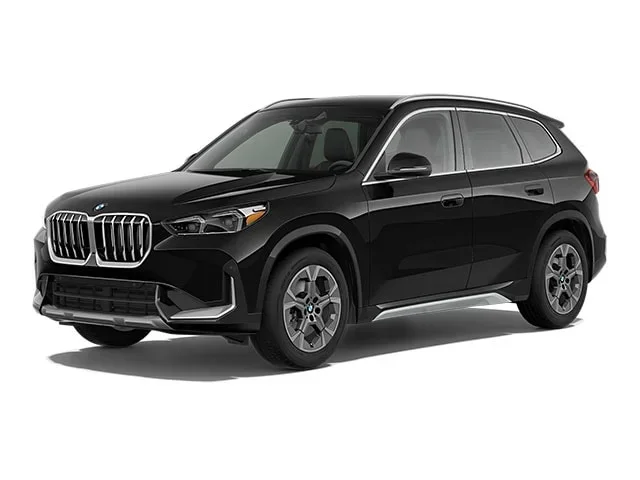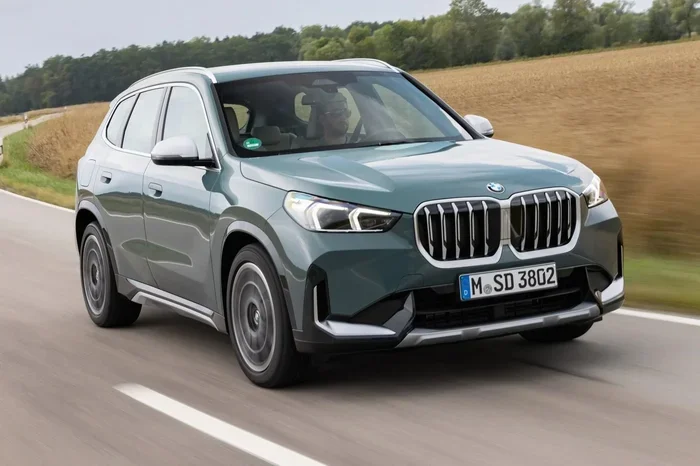
Featured image for BMW X1 crossover exterior
Image source: garirbazar.s3.amazonaws.com
Is the BMW X1 an SUV or hatchback? The short answer: it is a subcompact luxury SUV (officially a Sports Activity Vehicle). While the first generation drove like a raised hatchback, modern models sit on a front-wheel-drive platform with true SUV ground clearance, cargo space, and available all-wheel drive. This guide covers the generational changes, technical specs, and how it compares to rivals so you can buy with confidence.
You are standing at the dealership, looking at the BMW X1. It looks tall, but not too tall. It has a hatch at the back. The salesperson calls it an SAV. Your friend calls it a glorified hatchback. So, is BMW X1 SUV or hatchback? This is one of the most common questions shoppers ask because the X1 sits right on the blurry line between a car and a crossover.
The confusion is totally justified. Over three generations, this vehicle has transformed significantly. It started life sharing DNA with the 3 Series wagon. Today, it shares its bones with the Mini Countryman and the 2 Series Active Tourer. Understanding this evolution is the key to answering the classification question—and knowing if it fits your garage.
Key Takeaways
- Official Classification: BMW markets the X1 as a Sports Activity Vehicle (SAV), which places it firmly in the subcompact luxury SUV segment.
- Generational Shift: The first generation (E84) was RWD-based and drove like a tall hatchback; the second (F48) and third (U11) generations use a FWD-based platform (UKL/FAAR) with standard SUV proportions.
- Ground Clearance Matters: Current models offer roughly 7.2–7.9 inches of ground clearance, well above the 5–6 inches typical of hatchbacks.
- Interior Volume: With up to 58.7 cubic feet of cargo space (seats folded) and an upright seating position, it meets EPA and industry standards for a utility vehicle.
- Drivetrain Options: It offers sDrive (FWD) and xDrive (AWD) configurations, a hallmark of the SUV segment, not the hatchback segment.
- Direct Rivals: It competes directly with the Audi Q3, Mercedes-Benz GLA, and Volvo XC40—all classified as subcompact SUVs.
- Buying Tip: If you want SUV practicality with car-like handling, the current U11 generation is the sweet spot; avoid early E84 models if you need modern tech and space.
📑 Table of Contents
- The Short Answer: It Is an SUV (An SAV)
- Why the Confusion Exists: The “Hatchback” Roots
- Technical Classification: Platform & Architecture Deep Dive
- Dimensions & Practicality: SUV Credentials
- BMW X1 vs. The Competition: Where It Fits
- Drivetrain Decoded: sDrive vs. xDrive
- Buying Advice: Which Generation Suits You?
- Ownership Costs & Maintenance Reality
- Decoding the Name: What “X1” Actually Means
- Conclusion
The Short Answer: It Is an SUV (An SAV)
Let’s rip the band-aid off immediately. BMW classifies the X1 as a Sports Activity Vehicle (SAV). In the automotive industry, that is marketing speak for a subcompact luxury crossover SUV.
Why does BMW use “SAV”? They want to highlight that their utility vehicles drive like sports cars. But for registration, insurance, EPA fuel economy labels, and safety ratings (IIHS/NHTSA), the X1 is an SUV. It is not a hatchback. A hatchback (like a Golf GTI or a BMW 1 Series hatchback sold in Europe) has a lower roofline, lower hip-point seating, and significantly less ground clearance.
Why the Confusion Exists: The “Hatchback” Roots
The “hatchback” label isn’t an insult; it is a historical fact for the first generation. If you drove an early X1, you would understand the comparison instantly.
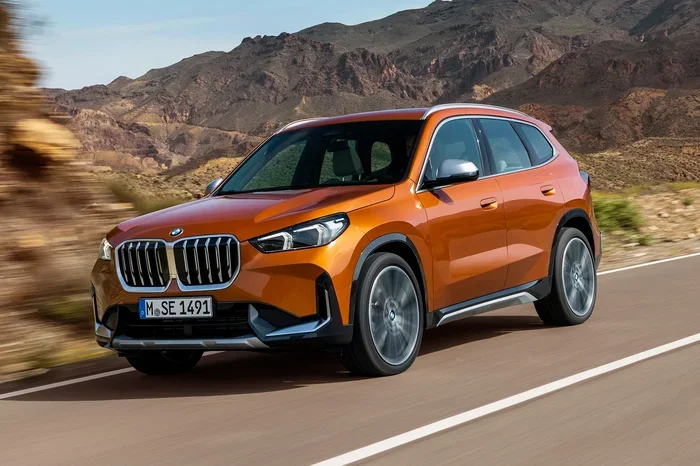
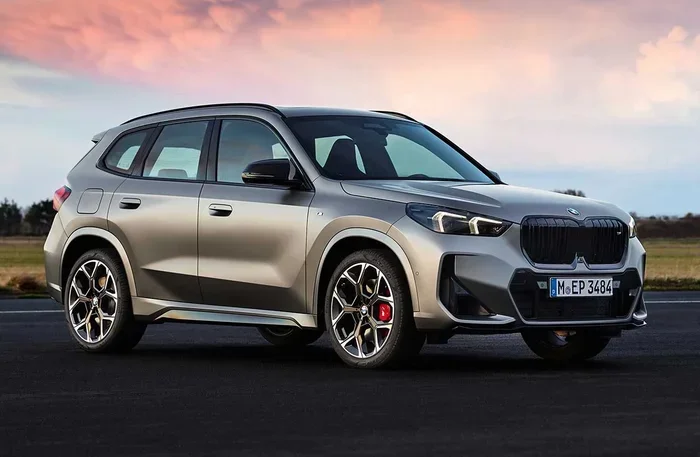
Visual guide about BMW X1 crossover exterior
Image source: thecarexpert.co.uk
Generation One (E84, 2009–2015): The RWD “Tall Wagon”
The original X1 was built on the same rear-wheel-drive platform as the E90/E91 3 Series. It was essentially a 3 Series Sport Wagon lifted slightly with plastic cladding added.
- Platform: RWD (Longitudinal engine).
- Feel: Heavy steering, 50/50 weight distribution, sporty handling.
- Clearance: Only about 6.5 inches.
- Cargo: Decent, but the high load floor and sloped roofline limited vertical space.
Enthusiasts loved the E84 because it drove like a sedan. Critics called it a “hatchback on stilts” because it lacked the upright greenhouse and commanding view of a true SUV. If you buy a used E84 today, you are buying a sporty wagon with AWD availability.
Generation Two (F48, 2015–2022): The FWD Pivot
This is where the “hatchback” argument gained the most traction. BMW switched to the UKL front-wheel-drive architecture (shared with Mini). The engine turned sideways (transverse).
- Platform: FWD-based (Transverse engine).
- Interior Space: Exploded. Rear legroom and headroom became class-leading.
- Clearance: Jumped to ~7.2–7.9 inches depending on spec.
- Styling: Taller roof, more upright tailgate, standard roof rails.
Purists hated the loss of RWD. Families loved the space. Technically, the UKL platform underpins the Mini Countryman (an SUV) and the 2 Series Active Tourer (a minivan/MPV). The X1 F48 is the SUV expression of this platform. It is taller, longer, and wider than the Active Tourer.
Generation Three (U11, 2023–Present): The Definitive SUV
The current model rides on the FAAR evolution of the UKL platform. It grows in every dimension. It looks like a shrunken X3/X5. It offers an EV version (iX1) and a plug-in hybrid. The proportions are unmistakably SUV: short overhangs, tall greenhouse, high beltline, and standard 18-inch wheels (19s/20s optional). Nobody calls the U11 a hatchback.
Technical Classification: Platform & Architecture Deep Dive
To settle the is BMW X1 SUV or hatchback debate technically, we have to look at the hardware. Platform sharing confuses people. “It shares parts with a Mini!” Yes, but so does a Rolls-Royce Ghost (shares BMW 7 Series floorpan). The execution defines the vehicle.
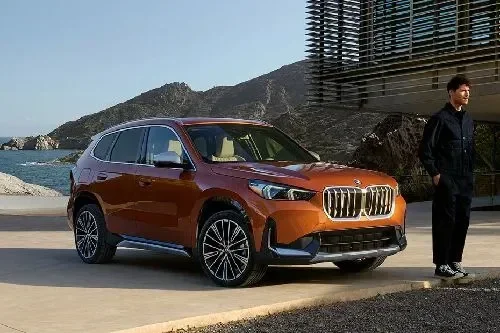
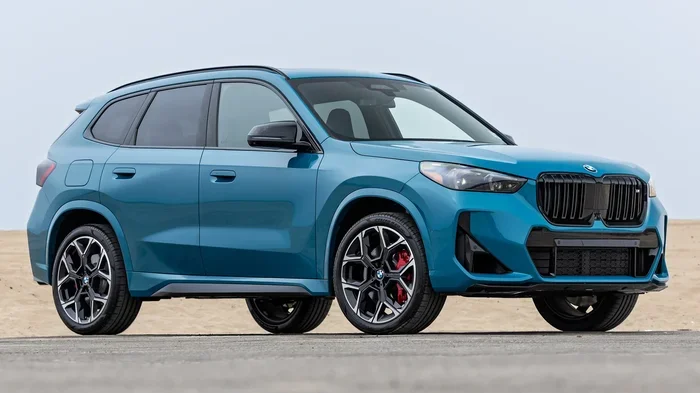
Visual guide about BMW X1 crossover exterior
Image source: imgcdn.zigwheels.ph
The UKL / FAAR Architecture Explained
This modular platform was designed from the start to support higher ride heights and AWD systems (via a Power Transfer Unit and rear driveshaft). It was not designed solely for low-slung hatchbacks.
- Front Suspension: MacPherson struts (standard for this class).
- Rear Suspension: Multi-link (on xDrive) or Torsion beam (on base sDrive). The multi-link setup on xDrive models allows for better wheel articulation off-road—something a hatchback torsion beam cannot do well.
- AWD System: The xDrive system uses an electro-hydraulic clutch pack. It can send 100% torque to the rear axle. It includes hill descent control on newer models. Hatchbacks do not have hill descent control.
Ground Clearance & Approach Angles: The Numbers Don’t Lie
This is the single biggest differentiator. The Society of Automotive Engineers (SAE) and EPA use ground clearance as a primary classifier for “Truck/SUV” vs “Car.”
| Model / Generation | Ground Clearance (inches) | Classification Implication |
|---|---|---|
| Typical Hatchback (VW Golf, BMW 1er) | 4.5 – 5.5 | Car |
| BMW X1 (E84 Gen 1) | ~6.5 | Borderline / Crossover |
| BMW X1 (F48 Gen 2) | 7.2 – 7.9 (xDrive higher) | SUV |
| BMW X1 (U11 Gen 3) | 7.2 – 7.9 (Air Suspension optional on iX1) | SUV |
| BMW X3 (G01 Current) | 8.0 – 8.8 | Compact SUV |
At ~7.5 inches average, the modern X1 clears speed bumps, rutted dirt roads, and snow depths that would high-center a hatchback. It meets the functional definition of an SUV.
Dimensions & Practicality: SUV Credentials
Numbers tell the story better than badges. Let’s look at the cargo and passenger volume that forces the EPA to classify this as a “Small Sport Utility Vehicle.”
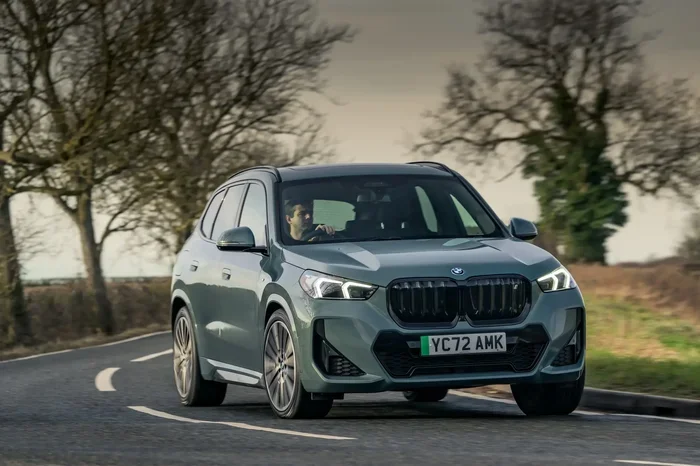
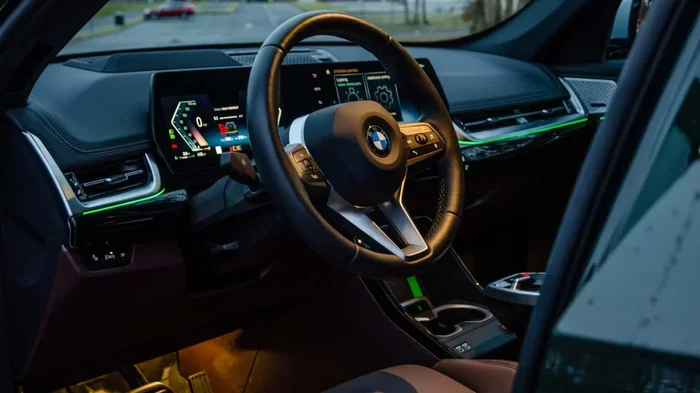
Visual guide about BMW X1 crossover exterior
Image source: carmoola.co.uk
Cargo Space Showdown
The upright roofline (greenhouse) is the key. A hatchback roof slopes down fast. An SUV roof stays flat to the D-pillar.
- Behind 2nd Row (U11): ~25.7 cu ft (F48 was ~27 cu ft, U11 slightly less due to sloped tail but wider).
- 2nd Row Folded (U11): ~58.7 cu ft.
- Competitor Check (Audi Q3): ~23.7 / 48.0 cu ft.
- Competitor Check (Mercedes GLA): ~15.4 / 43.6 cu ft (GLA is tighter, closer to hatchback utility).
The X1 offers genuinely useful box-shaped cargo area. You can fit a stroller, golf clubs, or a large dog crate. The low load floor (especially with the optional 40/20/40 split folding seats) makes loading heavy items easy. That is SUV utility.
Seating Position: The “Hip Point” (H-Point)
Engineers measure the “H-Point”—the pivot point of your hip. In a hatchback, the H-point is low; your knees are near hip level. In an SUV, the H-point is higher; your knees are lower than your hips, and you sit “on” the seat, not “in” it.
The X1 (F48/U11) has a high H-point. You step up into it (or slide in sideways), you don’t drop down into it like a 3 Series or a GTI. This “command seating” view is a primary SUV buying motivation.
BMW X1 vs. The Competition: Where It Fits
If the X1 were a hatchback, it would compete with the Audi A3 Sportback or Mercedes A-Class Hatchback. It doesn’t. It competes in the Subcompact Luxury SUV segment. Here is how it stacks up against its actual rivals.
| Model | Segment | Length (in) | Width (in) | Height (in) | Ground Clearance (in) | Cargo Max (cu ft) | Standard Drivetrain |
|---|---|---|---|---|---|---|---|
| BMW X1 (U11) | Subcompact Luxury SUV | 175.4 | 72.0 | 64.2 | 7.2 – 7.9 | 58.7 | FWD (sDrive) / AWD (xDrive) |
| Audi Q3 | Subcompact Luxury SUV | 176.6 | 71.7 | 64.1 | 6.7 – 7.6 | 48.0 | FWD / Quattro AWD |
| Mercedes GLA | Subcompact Luxury SUV | 174.1 | 71.3 | 61.8 | 5.7 – 6.8 | 43.6 | FWD / 4MATIC AWD |
| Volvo XC40 | Subcompact Luxury SUV | 174.8 | 71.9 | 65.2 | 8.3 | 57.5 | FWD / AWD |
| BMW 2 Series Gran Coupe | Subcompact Luxury Sedan | 176.2 | 71.1 | 55.7 | ~5.5 | 12.0 (Trunk) | FWD / AWD |
Observation: The X1 is taller, has more clearance, and significantly more cargo volume than the Mercedes GLA (which leans closer to the hatchback side). It aligns perfectly with the Audi Q3 and Volvo XC40. The 2 Series Gran Coupe shows what a “car” version of this platform looks like—much lower, trunk instead of hatch, tiny cargo.
Drivetrain Decoded: sDrive vs. xDrive
BMW uses specific badging that reinforces the SUV identity.
- sDrive: Front-Wheel Drive. Standard on entry models. Even in FWD mode, the traction control and stability systems are calibrated for a higher center of gravity (SUV tuning), not a low sports car.
- xDrive: All-Wheel Drive. This is a true on-demand AWD system with a transfer case. It manages torque vectoring between front and rear axles. It is not a simple viscous coupling found in some economy crossovers. It handles snow, gravel, and wet grass capably.
The availability of a legitimate, torque-vectoring AWD system with selectable drive modes (Eco Pro, Comfort, Sport, Off-road mode on newer xDrive models) is a definitive SUV feature.
Buying Advice: Which Generation Suits You?
Your answer to “is BMW X1 SUV or hatchback” changes based on the model year you buy.
Used Market: Gen 1 (E84, 2010–2015) — The “Driver’s Hatchback”
Buy this if: You prioritize driving dynamics, RWD feel, hydraulic steering (early models), and lower purchase price. You don’t need max rear seat space.
Avoid if: You need modern safety tech (blind spot, carplay was late/optional), modern infotainment, or easy child seat installation (LATCH access is tight). Reliability note: The N20 4-cylinder turbo had timing chain issues early on; the N52 6-cylinder (xDrive28i early years) is bulletproof but thirsty. Check our guide on identifying the most reliable BMW models before buying an older turbo 4-cylinder.
Used Market: Gen 2 (F48, 2016–2022) — The “Family Sweet Spot”
Buy this if: You want modern tech (CarPlay, digital dash), max interior space, good fuel economy (B48 2.0T engine is excellent), and SUV practicality. This is the volume seller.
Watch for: Run-flat tires (harsh ride, expensive). Many owners swap to non-run-flats immediately. Learn about BMW run-flat tires design benefits and care before deciding. Also, the 8-speed Aisin transmission fluid should be changed every 60k miles (ZF 8HP in xDrive, Aisin in sDrive).
New Market: Gen 3 (U11, 2023+) — The “Tech & Space Leader”
Buy this if: You want the latest iDrive 9 (curved screen), wireless everything, mild-hybrid efficiency (48V), and the best noise isolation. The iX1 electric version is compelling if you have home charging.
Consider: Price jump is significant. Base MSRP is now well over $40k. The styling is polarizing (large kidney grille).
Ownership Costs & Maintenance Reality
Owning an SUV costs more than a hatchback. Tires are bigger (18s/19s/20s vs 16s/17s). Brakes are heavier. Fluids are more.
Quick Tips for X1 Owners
- Coolant is Critical: The B48 engine runs hot. Use only BMW Blue Coolant (G48/HT12). Never mix green or universal coolant. Read about what coolant BMW uses to avoid aluminum corrosion.
- Brake Fluid: Change every 2 years regardless of mileage. It absorbs water and kills ABS modules. See our guide on selecting the ideal brake fluid.
- Transfer Case Fluid (xDrive): Change every 50k–60k miles. It’s cheap insurance for the AWD clutch pack.
- Walnut Blasting: Direct injection (B48/N20) builds carbon on intake valves. Plan walnut blasting around 60k–80k miles for smooth idle and power.
- CPO Warranty: If buying used, prioritize BMW Certified Pre-Owned cars. The warranty extension covers the expensive turbo/engine/electronics failures common on complex modern SUVs.
Common Mistakes to Avoid
- Mistake: Buying an sDrive (FWD) model thinking it handles snow like an xDrive with all-seasons. Fix: FWD + Winter Tires > AWD + All-Seasons. But AWD + Winter Tires = Unstoppable.
- Mistake: Ignoring the “Service Included” maintenance schedule. The Condition Based Service (CBS) intervals for oil (10k-12k miles) are too long for turbo longevity. Change oil every 5k–7.5k miles. Check what BMW service includes so you aren’t upsold unnecessary flushes.
- Mistake: Assuming the panoramic sunroof doesn’t need maintenance. Clean the drains annually or you get wet headliners.
Expert Insight: The “SAV” Philosophy
BMW’s insistence on “SAV” (Sports Activity Vehicle) vs “SUV” isn’t just marketing fluff. It signals a chassis tuning priority. An X1 is tuned for on-road agility first, off-road capability second. Compare to a Volvo XC40 or Jeep Compass, which tune for comfort/off-road first. The X1 will have stiffer suspension, sharper steering, and more body control. If you want a “soft” SUV, test drive a Lexus UX or Lincoln Corsair. If you want a “sporty” SUV that fits in a compact garage spot, the X1 is the benchmark.
Decoding the Name: What “X1” Actually Means
Understanding BMW nomenclature helps classify the car. The “X” denotes the SUV/SAV lineup (X1, X3, X5, X7). The number denotes the size/price tier relative to the sedan lineup.
- 1 Series / 2 Series Gran Coupe = Entry Sedans/Hatches.
- X1 = Entry SUV.
- 3 Series = Core Sedan.
- X3 = Core SUV.
- 5 Series = Mid-size Sedan.
- X5 = Mid-size SUV.
The X1 is the SUV counterpart to the 1/2 Series platform size. For a deep dive into the numbering logic, see our article on decoding BMW vehicle designations.
Conclusion
So, is BMW X1 SUV or hatchback? The verdict is clear: It is a subcompact luxury SUV.
The first generation (E84) was a “tall wagon” that drove like a hatchback. But since 2016, the X1 has been built on a dedicated high-riding, front-wheel-drive-based architecture with SUV ground clearance (7+ inches), SUV cargo volume (58+ cu ft), SUV seating position (high H-point), and available torque-vectoring AWD. It competes directly with the Audi Q3, Volvo XC40, and Mercedes GLA.
If you need the cargo space, the higher seating position for easy entry/exit, and the ground clearance for snow or gravel driveways, the X1 delivers true SUV utility. If you want a low, sharp-handling car with a hatch, look at a 2 Series Gran Coupe or a hot hatch. But if you want the “Ultimate Driving Machine” experience in a package that fits a car seat, a dog, and a Costco run—the X1 is the real deal.
Ready to maintain yours like a pro? Start with the basics: fluid intervals, tire choices, and understanding your warranty coverage. Your X1 will reward you with years of versatile, engaging driving.
Frequently Asked Questions
Is the BMW X1 considered a compact or subcompact SUV?
The BMW X1 is classified as a subcompact luxury SUV. It slots below the compact X3 in size, price, and interior volume. Its main rivals are the Audi Q3, Mercedes GLA, Volvo XC40, and Lexus UX.
Does the BMW X1 have real ground clearance for snow?
Yes. Modern generations (F48 and U11) offer between 7.2 and 7.9 inches of ground clearance. Combined with standard xDrive all-wheel drive and available driving modes, it handles deep snow and unplowed roads far better than any hatchback or sedan.
Is the BMW X1 front-wheel drive or rear-wheel drive?
Since the 2016 model year (F48 generation), the X1 has been built on a front-wheel-drive platform. The base sDrive models are FWD. The xDrive models use an on-demand all-wheel-drive system that can send 100% of torque to the rear axle when needed. The first generation (E84, 2010-2015) was rear-wheel-drive based.
How much cargo space does the BMW X1 have behind the rear seats?
The current U11 generation (2023+) offers approximately 25.7 cubic feet behind the second row. With the rear seats folded flat (40/20/40 split), maximum cargo capacity expands to 58.7 cubic feet. This is competitive with the Audi Q3 and significantly more than the Mercedes GLA.
Is the BMW X1 expensive to maintain compared to a hatchback?
Generally, yes. As a luxury SUV, it uses larger tires (18–20 inches), more brake pad material, synthetic oil (0W-20/0W-30 LL-01/17FE+), and requires premium fuel. However, the B48 2.0L turbo engine (2016+) is very reliable. Sticking to a 5,000–7,500 mile oil change interval and using a CPO warranty mitigates major cost risks.
What is the difference between the BMW X1 and the 2 Series Active Tourer?
They share the same UKL/FAAR platform. The X1 is the SUV: higher roof, higher ground clearance, more cargo volume, rugged styling, xDrive AWD tuned for light off-road. The 2 Series Active Tourer is an MPV/Minivan: lower roof, lower seating position, sliding rear seats (on some markets), optimized purely for passenger comfort and city parking, not ground clearance.