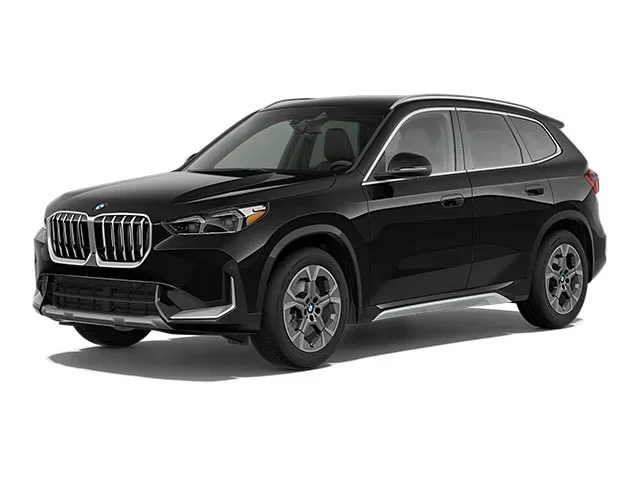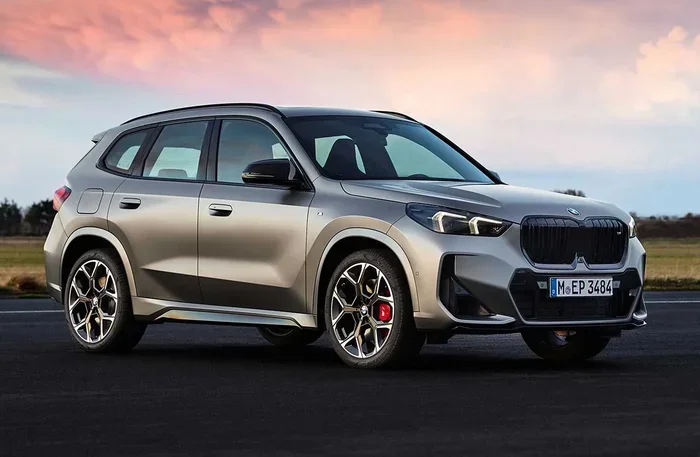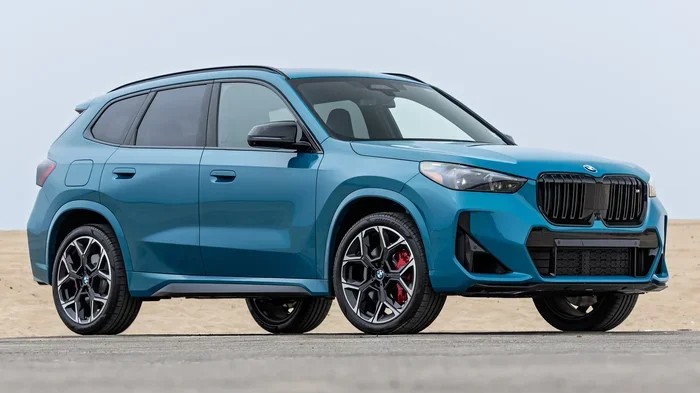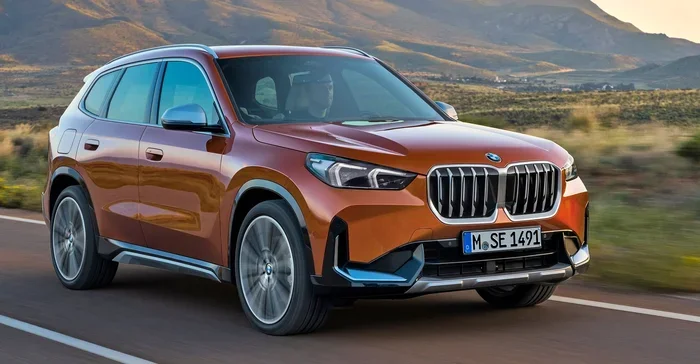
Featured image for BMW X1 SUV exterior
Image source: images.caradisiac.com
How good is the BMW X1? It stands out as a top contender in the luxury subcompact SUV class thanks to its engaging driving dynamics, premium interior quality, and practical cargo space. While maintenance costs run higher than non-luxury rivals, strong reliability scores and available all-wheel drive make it a smart buy for drivers wanting a sporty yet functional daily driver.
Shopping for a luxury crossover often feels like a compromise. You want the badge and the driving thrill, but you also need room for groceries, car seats, or weekend gear. The BMW X1 sits right in that sweet spot. It is the smallest SUV in the Bavarian lineup, but do not let the size fool you. This vehicle packs a serious punch.
We have spent years tracking ownership data, reliability reports, and real-world driving impressions. Below, we break down everything you need to know. From the turbocharged engine feel to the hidden costs of ownership, this guide answers the big question: how good is the BMW X1 for your daily life?
Key Takeaways
- Sporty Handling: The BMW X1 drives more like a hot hatch than a tall SUV, offering sharp steering and quick acceleration.
- Spacious Interior: Despite its compact footprint, it offers generous rear legroom and up to 58.7 cubic feet of cargo space with seats folded.
- Tech-Forward Cabin: Standard features include a massive curved display, wireless Apple CarPlay/Android Auto, and the latest iDrive 9 system.
- Above-Average Reliability: Recent model years score well in dependability studies, though turbo engines require strict oil change intervals.
- Higher Running Costs: Budget for premium fuel, synthetic oil, and run-flat tire replacements which cost more than standard tires.
- Best Value Years: The 2023+ redesign brought major tech and space improvements, while 2018-2021 models offer the best used value.
- Certified Pre-Owned Perks: A BMW Certified Pre-Owned unit adds a strong warranty and rigorous inspection for peace of mind.
📑 Table of Contents
- Performance and Driving Dynamics
- Interior Comfort, Space, and Technology
- Reliability and Common Issues
- Maintenance Costs and Ownership Reality
- BMW X1 vs. The Competition
- Buying Guide: New, Used, or CPO?
- Expert Insights: The Real World Verdict
- Frequently Asked Questions
- Final Verdict: Is the BMW X1 Good?
Performance and Driving Dynamics
The moment you press the start button, the X1 feels different from rivals like the Audi Q3 or Volvo XC40. The steering is weighty and precise. The chassis feels stiff and composed. This is not a tall, wobbly crossover. It is a BMW first, SUV second.
Engine and Transmission
For the current generation (2023–present), there is one engine choice in the US: a 2.0-liter turbocharged four-cylinder. It makes 241 horsepower and 295 lb-ft of torque. That is plenty for a vehicle this size. The 0-60 mph sprint takes roughly 6.2 seconds with xDrive all-wheel drive.
The seven-speed dual-clutch transmission (DCT) is a highlight. It snaps off shifts instantly in Sport mode. In Comfort mode, it fades into the background. It avoids the rubber-band feel of CVTs found in some competitors.
- sDrive28i: Front-wheel drive. Lighter, slightly better fuel economy.
- xDrive28i: All-wheel drive. Better traction, quicker launch, standard on M Sport models.
Older models (2016–2022) used an eight-speed traditional automatic. It is smoother at low speeds but less snappy than the current DCT. Both powertrains are strong, but the new unit feels more modern and efficient.
Handling and Ride Quality
The X1 uses a front-wheel-drive architecture (FAAR platform). Purists used to hate this, but BMW tuned it brilliantly. Turn-in is sharp. Body roll is minimal for the class. The available M Sport suspension lowers the ride slightly and firms up the damping.
On broken pavement, the ride is firm. You feel expansion joints. If you want a magic carpet ride, look at a Lexus UX or Volvo XC40. If you want to enjoy an on-ramp, the X1 wins.
Interior Comfort, Space, and Technology
Step inside the 2023+ model and the transformation is shocking. The old car felt cramped and dated. The new car feels wide, airy, and high-tech.
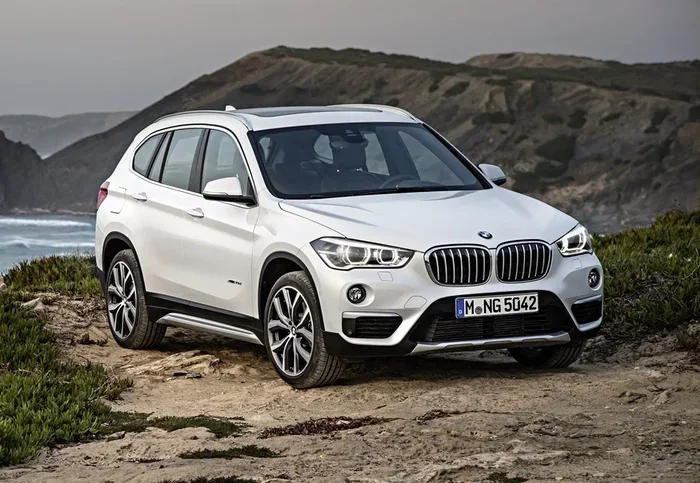
Visual guide about BMW X1 SUV exterior
Image source: parkers-images.bauersecure.com
The Curved Display and iDrive 9
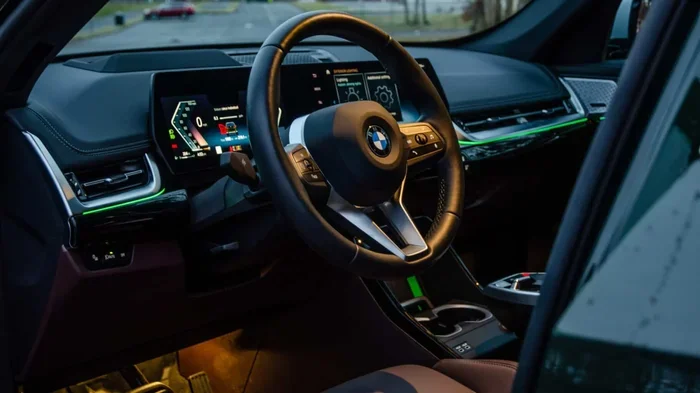
The dashboard is dominated by a single curved glass panel. It houses a 10.25-inch digital gauge cluster and a 10.7-inch touchscreen. There are almost zero physical buttons for climate or radio. It looks futuristic, but it has a learning curve.
The iDrive 9 operating system runs on Android Automotive. It is fast, colorful, and supports wireless Apple CarPlay and Android Auto. Voice commands (“Hey BMW”) work well for navigation and climate. You get over-the-air updates, so the infotainment gets better over time.
Passenger and Cargo Room
This is where the X1 surprises people. The wheelbase grew slightly for 2023. Rear legroom is now 37 inches. Two six-foot adults can sit behind each other comfortably. Headroom is excellent thanks to a tall roofline.
Cargo space behind the rear seats is 27.1 cubic feet. Fold the 40/20/40 split rear seats flat, and you get 58.7 cubic feet. That beats the Audi Q3 and Mercedes GLA. The load floor is low, and there is a handy under-floor bin.
Materials and Build Quality
Every surface you touch feels premium. Soft-touch plastics cover the dash and doors. The standard Sensatec (premium vinyl) seats are durable and look like leather. Real leather (Vernasca) is optional. Panel gaps are tight. Switchgear clicks with authority. It feels like a proper $40k+ vehicle.
Reliability and Common Issues
Reliability is the elephant in the room for any used German car. The good news? The X1 has a solid track record, especially post-2015.
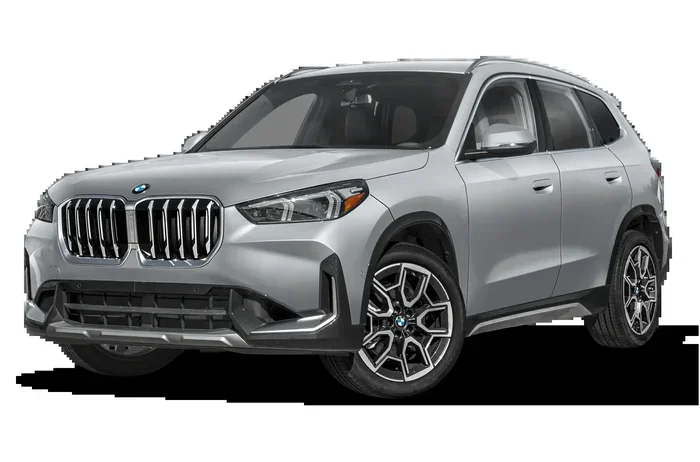
Visual guide about BMW X1 SUV exterior
Image source: platform.cstatic-images.com
Generation Breakdown
E84 (2010–2015): The first generation. It used RWD platforms and inline-six engines (xDrive28i/35i). Fun to drive, but aging. Common issues: valve cover gasket leaks, water pump failure, and electric power steering motor failure. Expensive to maintain today.
F48 (2016–2022): Switched to FWD architecture. Four-cylinder engines only (B38/B48). Much more reliable. The B48 2.0T is a bulletproof engine if maintained. Common gripes: rough idle from carbon buildup (direct injection), and occasional coolant leaks from the thermostat housing.
U11 (2023–Present): Current generation. Too new for long-term data, but the B48 engine carries over with updates. Early software glitches with iDrive 9 were mostly patched via OTA updates.
What the Data Says
Consumer Reports and J.D. Power consistently rate the F48 generation as “Average” to “Above Average” for reliability. It often ranks near the top of the luxury subcompact SUV segment. If you want a broader look at how the brand stacks up, check our guide on identifying the most reliable BMW models for longevity. The X1 usually sits comfortably in the top tier alongside the 3 Series and X3.
Quick Tips: Avoiding Headaches
- Verify the timing chain service history on high-mileage F48 models (80k+ miles). The B48 chain is robust but guides can wear.
- Check for coolant seepage near the thermostat housing on 2016–2019 models.
- Ensure brake fluid was changed every two years (not just mileage based).
- Run a VIN check for open recalls, specifically the Takata airbag recall on older models.
Maintenance Costs and Ownership Reality
Let’s talk money. The purchase price is only the first check you write. The X1 costs more to keep running than a Mazda CX-5 or Toyota RAV4. It costs about the same as an Audi Q3 or Mercedes GLA.
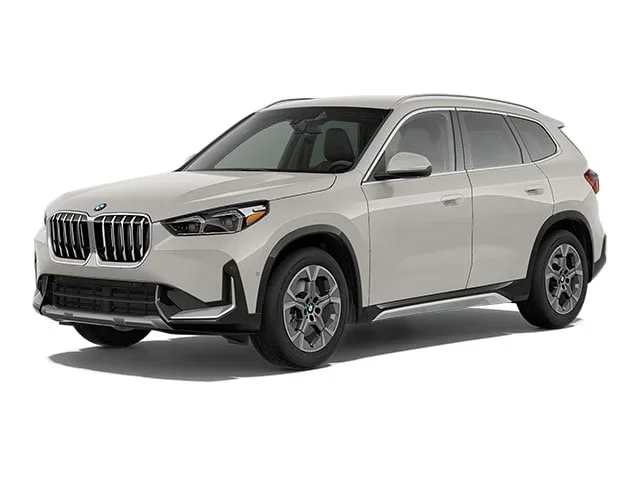
Visual guide about BMW X1 SUV exterior
Image source: images.dealer.com
Scheduled Maintenance
BMW offers “Ultimate Care” (free scheduled maintenance) for 3 years / 36,000 miles on new cars. It covers oil changes, brake fluid, engine air filter, and spark plugs. After that, you pay.
- Oil Service (Synthetic 0W-20): $180–$250 at dealer; $100–$140 independent shop.
- Brake Fluid Flush: ~$150–$200 (Every 2 years).
- Coolant Flush: ~$200–$300 (Every 4–5 years). Use only BMW-approved blue coolant. Mixing types causes gelling. Learn more about choosing the right coolant for your BMW vehicle.
- Spark Plugs: ~$300–$450 (Every 60k miles).
- Transfer Case / Rear Diff Fluid (xDrive): ~$200–$300 (Every 60k miles). Critical for AWD health.
The Run-Flat Tire Factor
Most X1s come with run-flat tires. There is no spare tire in the trunk. Run-flats let you drive 50 miles at 50 mph after a puncture. The downside? They cost 20–30% more than standard tires. They wear faster on the inner edge due to stiff sidewalls. They ride harsher.
Many owners switch to non-run-flats (like Michelin CrossClimate 2) for a better ride and lower cost. If you do this, you must carry a tire repair kit or spare. Read our deep dive on BMW run-flat tires design benefits and care before you swap.
Extended Warranty and CPO
The factory warranty is 4 years / 50,000 miles. If you buy used, a Certified Pre-Owned (CPO) unit is gold. It extends coverage to 6 years / unlimited miles from the original in-service date. It includes a 150+ point inspection and 24/7 roadside assistance. Understand exactly what does BMW warranty cover before buying third-party extended warranties, which often deny claims on turbo components.
BMW X1 vs. The Competition
The segment is brutal. Here is how the X1 stacks up against its main rivals in the 2024 model year.
| Category | BMW X1 | Audi Q3 | Mercedes GLA | Volvo XC40 |
|---|---|---|---|---|
| Horsepower (Base) | 241 hp | 184 hp / 228 hp | 221 hp | 197 hp / 247 hp |
| 0-60 mph (AWD) | 6.2 sec | 7.0 sec | 6.8 sec | 6.2 sec (Recharge) |
| Cargo Space (Seats Down) | 58.7 cu ft | 48.0 cu ft | 43.6 cu ft | 57.5 cu ft |
| Rear Legroom | 37.0 in | 36.1 in | 36.0 in | 36.1 in |
| Starting MSRP (Approx) | $39,600 | $38,200 | $39,100 | $39,500 |
| Driving Feel | Sporty / Sharp | Composed / Safe | Comfort Oriented | Relaxed / Safe |
| Infotainment | iDrive 9 (Touch/Voice) | MMI (Touch/Dial) | MBUX (Touch/Voice) | Google Built-in |
Verdict: The X1 wins on power, cargo space, and driver engagement. The Audi Q3 has a slightly nicer interior aesthetic. The Mercedes GLA rides smoother. The Volvo XC40 wins on safety tech and seat comfort. If driving dynamics matter most, the X1 is the pick.
Buying Guide: New, Used, or CPO?
Your budget dictates the path. Here is the smart money strategy for each scenario.
Buying New (2024/2025)
You get the full factory warranty, free maintenance for 3 years, and the latest iDrive 9. The xDrive28i M Sport is the sweet spot. It adds the sport suspension, 19-inch wheels, shadowline trim, and the upgraded steering wheel. Skip the Executive package unless you really want the head-up display and parking assistant pro. The standard safety suite (forward collision, lane departure, blind spot) is excellent.
Buying Certified Pre-Owned (2021–2023)
This is the value king. The F48 generation (2016–2022) depreciates hard in years 1–3. A 2022 xDrive28i with 25k miles lists for roughly $28k–$30k. That is $10k+ off MSRP. You get the CPO warranty extension (6 years/unlimited miles from original date). You avoid the steepest depreciation. The interior is slightly dated compared to the U11, but the bones are identical.
Check the CPO inspection report carefully. Look for brake rotor wear (common at 25k+ miles on European pads) and tire tread depth matching across axles (critical for xDrive).
Buying Used Private Party (2016–2020)
Cheapest entry point. A clean 2018 sDrive28i can be found for $18k–$22k. Risks are higher. No warranty. You need a pre-purchase inspection (PPI) by a BMW specialist. Cost: $150–$250. Worth every penny.
Focus on the B48 engine (2018+). Avoid the earlier 2016–2017 N20 engine (timing chain guides failed frequently). Confirm the walnut blasting (intake valve cleaning) was done around 60k miles. If not, budget $400–$600 for it immediately.
Trim Levels Decoded
- Base / sDrive28i / xDrive28i: Standard LED lights, 17/18-inch wheels, Sensatec seats, curved display (2023+), iDrive 8/9.
- M Sport: Sport seats, M steering wheel, aerodynamic kit, M sport suspension, 19-inch wheels (standard on 2023+ xDrive). Highly recommended for resale.
- M35i (2024+ only): 312 hp, M-tuned suspension, M Sport brakes, standard 20-inch wheels. Starts ~$48k. Competes with Audi SQ3 / Mercedes GLA 35. Fun, but stiff ride and thirsty.
Expert Insights: The Real World Verdict
We talk to independent BMW mechanics and long-term owners weekly. The consensus on the X1 is surprisingly unified.
Mechanic’s Take: “The F48 X1 with the B48 engine is the most reliable modern BMW we see. It doesn’t have the complex air suspension of the X5 or the high-strung turbo-six of the 340i. Change the oil every 7,500 miles with LL-01 FE oil. Flush the brake fluid. Do the diff fluid. It will run 200k miles easily.”
Owner’s Take (3-Year Lease Return): “I loved the size. Easy to park downtown. Roof rack held my skis. The run-flats were annoying on potholes—I blew two sidewalls in two years. Swapped to Michelin AS4s at lease end, ride got way better. Tech was easy. CarPlay wireless worked 99% of the time. I’d lease another.”
Owner’s Take (Used 2019 Buyer): “Bought a CPO 2019 xDrive with 32k miles. At 55k miles, the thermostat housing leaked coolant. Covered under CPO warranty. At 62k, front control arm bushings squeaked. $400 at indie shop. Otherwise flawless. Gets 28 mpg combined. Best car I’ve owned.”
Common Mistakes to Avoid
- Ignoring the “Service Due” light: The CBS (Condition Based Service) system tracks oil life via algorithm. Don’t wait for 10k miles if the car says do it now. Short trips kill oil life.
- Buying cheap tires: The xDrive system needs matching tire circumferences. Mismatched tread depths (even 2/32nds difference) can fry the transfer case. Replace all four, or shave the new tire to match.
- Using regular gas: The manual says “Premium Recommended.” Run 91+ octane. The ECU retards timing on 87, costing you power and risking carbon buildup/knock long term.
- Skipping the PPI on used cars: A $200 inspection saves $3,000 in hidden suspension/cooling repairs.
Frequently Asked Questions
Is the BMW X1 expensive to maintain?
Yes, it costs more than mainstream brands. Expect $800–$1,200 per year on average for maintenance and repairs after the warranty expires. Using an independent BMW specialist saves 30–40% over dealer labor rates. Sticking to the fluid change schedule prevents the big bills.
Does the BMW X1 require premium gas?
BMW recommends 91 octane or higher. The engine will run on 87 octane safely due to knock sensors, but you will lose horsepower, fuel economy, and risk long-term carbon deposits. The cost difference is roughly $3–$5 per fill-up. Just run premium.
How long do BMW X1 brakes last?
Front pads typically last 30,000–45,000 miles. Rear pads last 40,000–55,000 miles. The X1 uses single-piston floating calipers (not the massive fixed calipers on M cars), so rotor wear is moderate. Budget $600–$900 per axle for quality parts and labor at an indie shop.
Is the BMW X1 good in snow?
With xDrive all-wheel drive and a set of dedicated winter tires (Michelin X-Ice, Bridgestone Blizzak), it is excellent. The ground clearance is only 7.2 inches, so deep unplowed roads are a no-go. The traction control and stability systems are very well calibrated for low grip. FWD sDrive models are fine with winter tires but lack the traction confidence of xDrive.
What is the difference between sDrive and xDrive?
sDrive = Front-wheel drive only. Lighter, cheaper, slightly better MPG. xDrive = All-wheel drive. It uses an electro-hydraulic clutch pack to send up to 100% of torque to the rear axle instantly. It adds ~150 lbs and ~$2,000 to the MSRP. In rain or snow, xDrive is worth it. In sunny climates, sDrive saves money upfront and at the pump.
Does the BMW X1 have a timing belt or chain?
It uses a timing chain. The B48 engine (2018–present) chain is very durable. The older N20 engine (2016–2017) had known chain guide failures. There is no replacement interval for the chain on the B48, but listen for rattling on cold starts after 100k miles.
Final Verdict: Is the BMW X1 Good?
Yes. The BMW X1 is genuinely good at being a daily driver. It solves the “I want a BMW but I need a trunk” problem better than a 3 Series wagon (which doesn’t exist here) or an X3 (which is bigger and pricier).
The current U11 generation fixed the only real complaints about the old car: tight back seat and dated tech. Now it offers class-leading space, a tech interface that finally matches the Germans’ best, and that signature BMW driving feel.
Go in with eyes open on running costs. Budget for tires, fluids, and premium fuel. If you lease, the math works beautifully. If you buy CPO, the warranty safety net makes the depreciation hit someone else’s problem. If you buy a high-mileage used one, find a good indie mechanic first.
Test drive an xDrive28i M Sport. Take a corner hard. Merge onto a highway. Sit in the back seat. Check the trunk. You will likely sign the papers before you get back to the dealership lot.