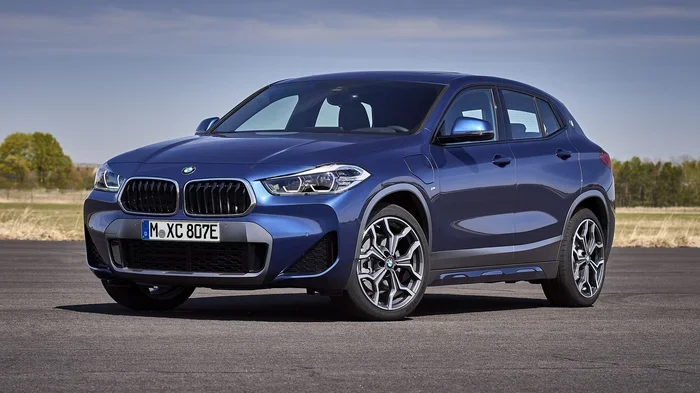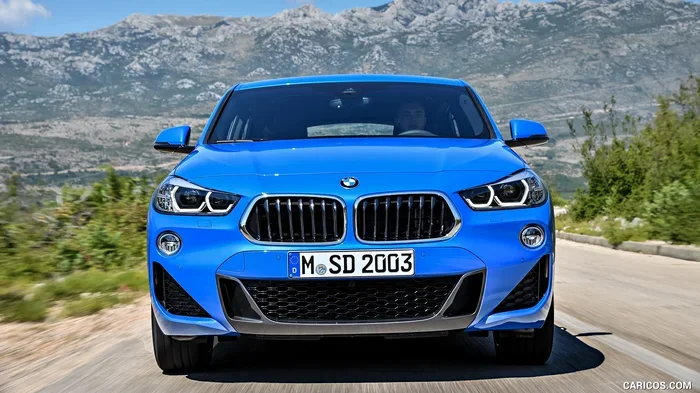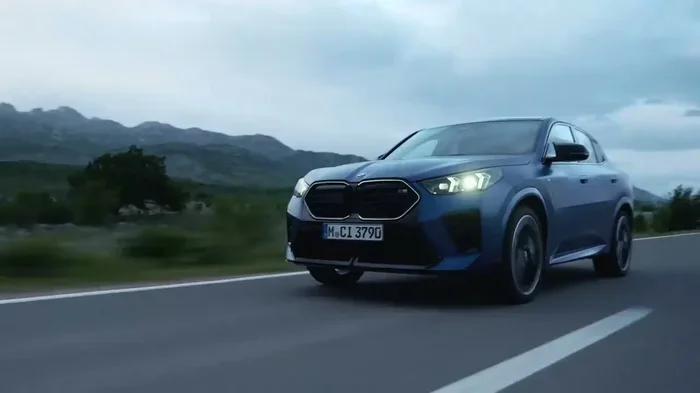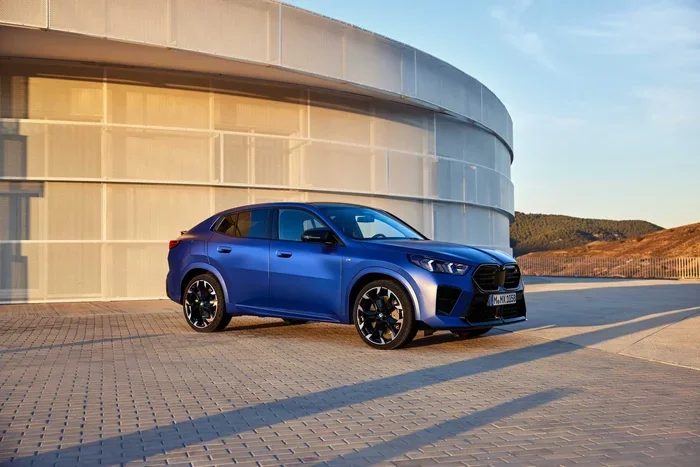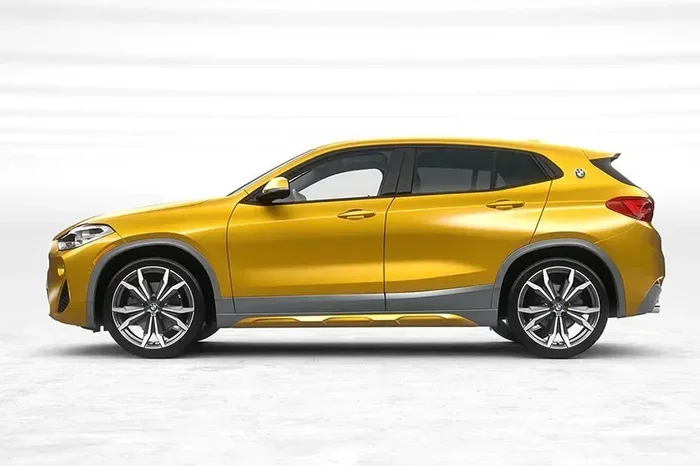
Featured image for BMW X2 exterior side profile
Image source: imgcdn.zigwheels.ph
The BMW X2 is not rear-wheel drive. It uses a front-wheel-drive platform where sDrive models are FWD and xDrive models offer all-wheel drive. This guide explains the architecture, model differences, and how to choose the right setup for you.
If you are shopping for a premium subcompact SUV, you have likely asked yourself: is bmw x2 fwd or rwd? It is a fair question. BMW built its reputation on rear-wheel-drive sedans and coupes that deliver a specific, balanced driving feel. However, the X2 sits in a different segment entirely. It competes with vehicles like the Audi Q3 and Mercedes-Benz GLA-Class. These rivals also use front-drive architectures. The short answer is that the X2 is never rear-wheel drive. Every single model leaving the factory is either front-wheel drive (FWD) or all-wheel drive (AWD). Understanding the difference between the sDrive and xDrive badges is the key to picking the right one for your garage.
This article dives deep into the X2 drivetrain lineup. We will explore the mechanical hardware under the sheet metal. We will compare the driving dynamics of FWD versus AWD versions. We will also look at the specific models offered in the US market. By the end, you will know exactly which drivetrain suits your daily commute, your weekend adventures, and your budget. Let us get started.
Key Takeaways
- No RWD Option: The BMW X2 never offers a traditional rear-wheel-drive layout; it is built on a transverse, front-drive architecture.
- sDrive Means FWD: Badges reading “sDrive” (like sDrive28i) indicate front-wheel drive only.
- xDrive Means AWD: Badges reading “xDrive” (like xDrive28i or M35i) feature BMW’s all-wheel-drive system.
- UKL Platform: The X2 shares the UKL platform with the X1 and Mini Countryman, dictating its front-biased layout.
- xDrive is Reactive: The AWD system uses an electro-hydraulic clutch to send power rearward only when slip is detected.
- M35i is xDrive Only: The high-performance M35i variant comes exclusively with all-wheel drive for maximum traction.
- Fuel Economy Favors FWD: Choosing sDrive saves weight and cost, returning slightly better MPG figures.
📑 Table of Contents
- The Short Answer: It Depends on the Badge
- Understanding BMW Naming: sDrive vs xDrive
- Deep Dive: Front-Wheel Drive Architecture (UKL Platform)
- The xDrive System: How BMW Does All-Wheel Drive
- Model Breakdown: FWD vs AWD by Trim
- Driving Dynamics: How the Drivetrain Changes the Feel
- Pros and Cons: Choosing the Right Setup for You
- Maintenance and Reliability Considerations
- Winter Performance: The Tire Factor
- Manufacturing and Build Quality Context
- Buying Used: Certified Pre-Owned Value
- Comparing to Rivals
- Frequently Asked Questions (Quick Hits)
- Conclusion
The Short Answer: It Depends on the Badge
Walk into a BMW dealership and look at the trunk lids. You will see two distinct designations: sDrive and xDrive. This naming convention tells you everything you need to know about the driven wheels. There is no “RWD” badge on an X2. There never has been, and given the current platform strategy, there likely never will be.
- sDrive: This is BMW marketing speak for front-wheel drive. The engine sends 100% of its torque to the front axle.
- xDrive: This is BMW marketing speak for all-wheel drive. The system can variably split torque between the front and rear axles.
It is that simple. If you see an X2 sDrive28i, it is FWD. If you see an X2 xDrive28i or an X2 M35i, it is AWD. The current generation (U10 chassis, launched 2024) and the previous generation (F39 chassis, 2018–2023) both follow this exact same rule. The platform simply does not support a longitudinal engine placement required for traditional RWD.
Understanding BMW Naming: sDrive vs xDrive
BMW nomenclature can feel like alphabet soup. Let us decode it quickly so you can read a spec sheet like a pro. The “s” in sDrive historically stood for “sport” in older contexts, but on transverse-engine cars, it simply denotes two-wheel drive. The “x” in xDrive has represented all-wheel drive since the system debuted on the X5 in 2003.
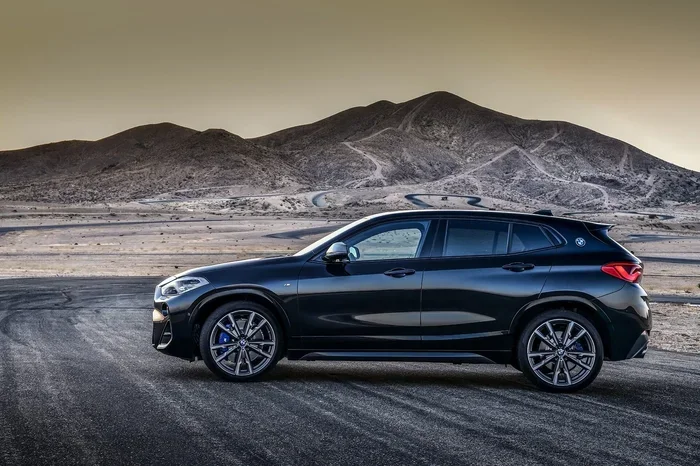
Visual guide about BMW X2 exterior side profile
Image source: cdn.cheersandgears.com
Why No Rear-Wheel Drive?
You might wonder why BMW abandoned RWD for this model. The answer lies in packaging and platform sharing. The X2 sits on the UKL (Untere Klasse) platform. This architecture is designed for transverse engine mounting. The engine sits sideways (east-west) under the hood. The transmission is integrated tightly next to it. Power flows directly into a front differential.
This layout frees up massive amounts of cabin space relative to the vehicle’s footprint. It allows a subcompact SUV to offer legitimate rear-seat legroom and a usable trunk. A longitudinal RWD layout requires a long driveshaft tunnel running down the center of the car. That tunnel eats interior width. For a small SUV, interior space efficiency wins over traditional drivetrain purity. If you want to understand how BMW model numbers relate to platforms, our guide on decoding BMW vehicle designations offers great background context.
Deep Dive: Front-Wheel Drive Architecture (UKL Platform)
The UKL platform is the mechanical backbone of the X2. It also underpins the X1, the 2 Series Gran Coupe, and the Mini Countryman/Clubman. This is a “front-drive biased” architecture. Even the all-wheel-drive versions are fundamentally front-wheel-drive cars with a rear axle added.
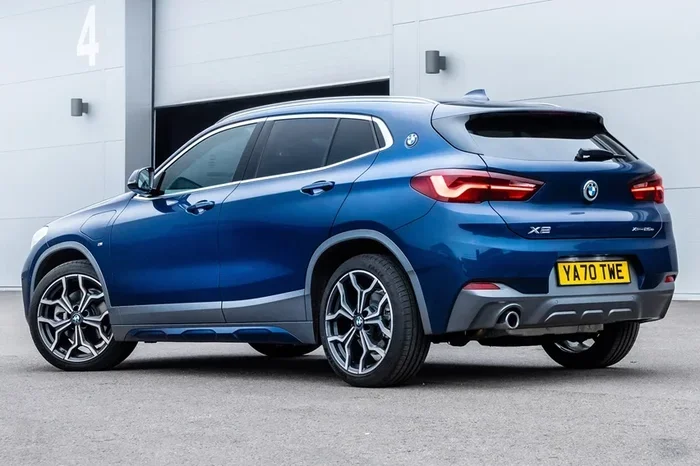
Visual guide about BMW X2 exterior side profile
Image source: parkers-images.bauersecure.com
Transverse Engine Layout
In the X2, the 2.0-liter turbocharged four-cylinder engine (B48) sits transversely. The crankshaft spins perpendicular to the direction of travel. A 7-speed dual-clutch transmission (DCT) or 8-speed automatic (depending on model year) bolts directly to the engine. The front differential is housed inside the transmission casing. Half-shafts exit left and right to the front wheels.
This setup is compact, light, and cheap to manufacture. It also creates specific driving characteristics. The front tires do double duty: they steer the car and they put power down. This can lead to torque steer (the wheel tugging in your hands under hard acceleration) and understeer (the car pushing wide in corners). BMW engineers work hard to mask these traits with suspension geometry and electronic aids.
ARB Technology: The Electronic Diff
Modern FWD BMWs (including sDrive X2s) use a system called ARB (Actuator Wheel Slip Limitation) or “Performance Control.” It is not a mechanical limited-slip differential. Instead, it uses the stability control sensors and the brakes. When the inside front wheel spins under acceleration, the system brakes that specific wheel. This forces torque across the axle to the outside wheel with grip. It works remarkably well for a brake-based system. It helps the sDrive X2 put power down exiting corners better than older FWD cars ever could.
The xDrive System: How BMW Does All-Wheel Drive
If you check the xDrive box, you get a power take-off unit (PTU) bolted to the side of the transmission. A driveshaft runs down the car’s spine to a rear differential module (RDM). This module contains an electro-hydraulically controlled multi-plate clutch pack. This is the heart of the system.
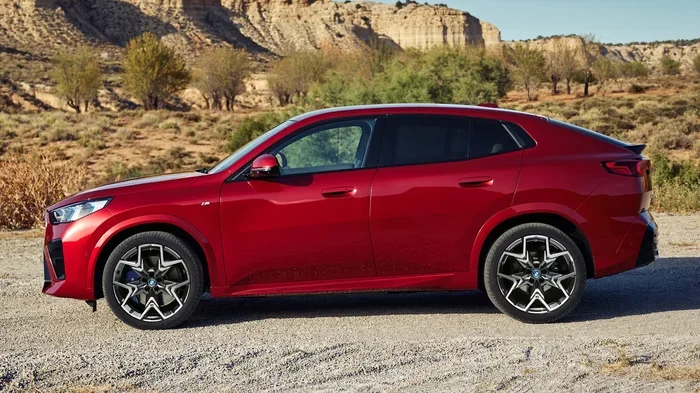
Visual guide about BMW X2 exterior side profile
Image source: images-stag.jazelc.com
Haldex-Type Coupling
Technically, xDrive on the UKL platform uses a Haldex-style coupling (often supplied by GKN or Magna). It is not a full-time mechanical center differential like the Torsen units found in Audis or the planetary gearsets in longitudinal BMWs (like the 3 Series xDrive). In normal driving, the clutch pack is open. The car is 100% FWD. This saves fuel and reduces wear.
Reactive and Predictive Logic
The system monitors wheel speeds, steering angle, throttle position, and yaw rate hundreds of times per second. When it detects front-wheel slip (or predicts it based on driver input), it clamps the clutch plates. This sends up to 50% of engine torque to the rear axle. It happens in milliseconds. The newer U10 generation (2024+) features a quicker-acting clutch and revised software. It can even pre-load the clutch before slip occurs if you select Sport mode.
No Fixed Torque Split
It is crucial to understand: you cannot lock the center differential 50/50 manually. There is no “4×4 Lock” button. The computer decides. This makes xDrive excellent for snow, rain, and gravel. It is less suited for serious off-roading or rock crawling where you need guaranteed momentum. For the X2’s intended purpose—pavement, bad weather, light trails—it is superb.
Model Breakdown: FWD vs AWD by Trim
Let us look at the specific models available in the US market across the two generations. This helps you identify what you are looking at on a used lot or a new showroom floor.
First Generation (F39, 2018–2023)
| Model | Badge | Drivetrain | Engine |
|---|---|---|---|
| X2 sDrive28i | sDrive | FWD | 2.0T 4-cyl (228 hp) |
| X2 xDrive28i | xDrive | AWD | 2.0T 4-cyl (228 hp) |
| X2 M35i | M Performance | AWD (Standard) | 2.0T 4-cyl (302 hp) |
Note: The M35i was only offered with xDrive. There was no FWD M35i. The xDrive28i added roughly $2,000 to the MSRP over the sDrive28i and added about 100-150 lbs of weight.
Second Generation (U10, 2024–Present)
| Model | Badge | Drivetrain | Engine |
|---|---|---|---|
| X2 xDrive28i | xDrive | AWD | 2.0T 4-cyl (241 hp) |
| X2 M35i xDrive | M Performance | AWD (Standard) | 2.0T 4-cyl (312 hp) |
Critical Change: For the 2024 model year, BMW dropped the sDrive (FWD) variant entirely in the US. Every new X2 sold here is now xDrive AWD. This simplifies inventory and reflects buyer preference in the crossover segment. If you want a new FWD X2, you have to look at the previous generation (F39) used. Canadian and European markets still receive the sDrive20i (FWD) entry model.
Driving Dynamics: How the Drivetrain Changes the Feel
On paper, the specs look similar. On the road, the differences are distinct. Let us break down the experience behind the wheel.
The sDrive (FWD) Experience
Driving an FWD X2 feels light and nimble. The steering is uncorrupted by driveshaft vibrations or front axle wind-up. Turn-in is sharp. The car rotates willingly around its center. In dry weather, a skilled driver can make an sDrive28i feel very sporty. You can “lift-off oversteer” the rear end slightly to tuck the nose in.
However, limits appear quickly in the wet or snow. Hard acceleration from a stop lights up the front tires. Torque steer tugs the wheel. Under hard cornering, the front tires eventually wash out (understeer). The ARB system helps, but physics is physics. Fuel economy is the win here. The sDrive is the most efficient X2 you can buy.
The xDrive (AWD) Experience
The xDrive models feel heavier (they are) and more planted. The steering feels slightly more loaded. The big advantage is exit traction. You can floor it mid-corner. The system shuffles torque rearward. The car pushes forward instead of pushing wide. It transforms the X2 into a legitimate all-weather weapon.
The M35i takes this further. It gets a specific xDrive calibration. It allows more rear torque bias in Sport mode. It also features a mechanical Torsen limited-slip differential on the front axle (standard on M35i, not on xDrive28i). This mechanical diff locks the front wheels together mechanically. Combined with the rear clutch, the M35i feels shockingly agile. It mitigates the inherent understeer of the transverse layout effectively.
Eco Pro and Driving Modes
Both drivetrains share BMW’s driving modes: Eco Pro, Comfort, Sport. In Eco Pro, the xDrive system stays in FWD mode longer to save fuel. The throttle mapping softens. In Sport, the xDrive pre-loads the clutch. The steering weights up. The transmission holds gears. If you want to know exactly how Eco Pro changes the car’s behavior, check out our article on what Eco Pro does on a BMW.
Pros and Cons: Choosing the Right Setup for You
Since the new U10 generation is AWD-only in the US, this decision mostly applies to used F39 buyers. However, the principles apply to any UKL-based BMW (X1, 2 Series GC).
Choose sDrive (FWD) If:
- You live in a warm climate (South, Southwest, Coastal).
- You prioritize maximum fuel economy (1-2 MPG better combined).
- You want the lowest purchase price (used market savings).
- You prefer lighter steering and sharper initial turn-in.
- You run dedicated winter tires in cold months (FWD + Winter Tires > AWD + All-Seasons).
Choose xDrive (AWD) If:
- You see snow, ice, or heavy rain regularly.
- You have a steep driveway or unplowed roads.
- You value launch traction and wet-weather confidence.
- You want the M35i performance model (AWD only).
- You plan to tow (xDrive28i/M35i have higher tow ratings).
- Resale value matters (AWD commands a premium in northern states).
Maintenance and Reliability Considerations
Drivetrain choice affects long-term ownership costs. Here is what to watch.
FWD (sDrive) Maintenance
- Simpler: No PTU, no driveshaft, no rear diff, no rear axle seals.
- Fluids: Only transmission fluid (DCT or Auto) and front diff fluid (integrated).
- Tires: Front tires wear faster. Rotations are critical every 5k-7k miles.
- CV Axles: Front CV joints take all the torque. Boots tear eventually.
AWD (xDrive) Maintenance
- More Components: PTU (Power Take Off unit), Driveshaft, Center Support Bearing, Rear Differential Module (RDM).
- Fluid Changes: PTU fluid and Rear Diff fluid need changing. BMW says “lifetime” but enthusiasts change every 30k-60k miles. It is cheap insurance.
- Driveshaft: The center support bearing can fail, causing vibration at highway speeds.
- Tires: CRITICAL. All four tires must match in brand, model, and tread depth (within 2/32″). Mismatched tires destroy the xDrive clutch pack. Budget for four tires at a time.
If you buy a used xDrive, verify the tire condition immediately. If the previous owner replaced only two tires, walk away or budget for a clutch pack replacement. Also, be aware of potential drivetrain malfunction warnings which can sometimes relate to xDrive sensor or actuator issues.
Winter Performance: The Tire Factor
This is the biggest misconception. Many buyers think xDrive makes winter tires optional. It does not. Physics dictates that rubber compound and tread design determine stopping distance and cornering grip on ice. AWD only helps you accelerate.
- FWD + Winter Tires: Stops shorter. Corners better. Gets stuck less in deep snow (if clearance allows). Cheaper to buy/maintain.
- AWD + All-Seasons: Gets moving great. Stops poorly. Pushes wide in corners. False sense of security.
- AWD + Winter Tires: The ultimate combo. Unstoppable in nearly any condition the X2 ground clearance can handle.
If you buy an sDrive X2, spend the $600-$800 on a dedicated winter wheel/tire set. You will be safer than your neighbor in an xDrive on all-seasons. It is the single best modification for winter driving.
Manufacturing and Build Quality Context
Where the X2 is built matters for quality perception. The first generation (F39) was built exclusively in Regensburg, Germany. The second generation (U10) is also built in Regensburg. This is a high-volume, high-quality plant. It also builds the 1 Series, 2 Series, and X1. Consistent German manufacturing is a plus for reliability. For more on where BMWs come from, see our piece on where BMW vehicles are manufactured.
Buying Used: Certified Pre-Owned Value
If you are looking at a used F39 X2 (2018-2023), the CPO (Certified Pre-Owned) warranty is a massive asset. The xDrive components (PTU, Rear Diff, Driveshaft) are expensive to replace out of pocket. A CPO warranty extends the factory coverage by 1 year/unlimited miles on top of the remaining 4yr/50k. It covers the xDrive hardware. We detail the coverage in our guide on what BMW Certified means. For the complex xDrive system, CPO peace of mind is worth seeking out.
Comparing to Rivals
How does the X2 layout stack up?
- Audi Q3: Also transverse FWD/AWD (Quattro Ultra). Very similar architecture. Quattro Ultra disconnects the rear driveshaft for efficiency.
- Mercedes GLA: Transverse FWD/AWD (4MATIC). Uses a dog-clutch disconnect on the rear axle.
- Volvo XC40: Transverse FWD/AWD. Very similar packaging.
- Lexus UX: Transverse FWD/AWD. The AWD system is electric (e-AWD) on the hybrid, mechanical on gas.
The X2 is widely considered the “driver’s choice” in this segment. Even with FWD bias, the steering weight, chassis balance, and brake tuning feel more connected than the Mercedes or Lexus. The Audi is the closest rival dynamically.
Frequently Asked Questions (Quick Hits)
Can you drift a BMW X2? Not really. The xDrive system cuts power to the rear if it detects excessive yaw angle. The FWD model will just understeer. The M35i allows some rotation in Sport mode with traction off, but it is not a drift car.
Does the X2 have a transfer case? Technically no. It has a Power Take-Off Unit (PTU) on the transmission and a Rear Drive Module (RDM). A traditional transfer case implies a longitudinal layout with low range. The X2 has neither.
Is the X2 sDrive bad in snow? With all-season tires, yes, it struggles. With four winter tires, it is surprisingly capable for a FWD car. Ground clearance (approx 6.7 inches) is the limiting factor in deep snow, not the drivetrain.
Why did BMW drop sDrive for 2024 US models? Take rates for AWD were extremely high (over 80-90% in many regions). Simplifying the lineup reduces production complexity and inventory costs.
Conclusion
So, is bmw x2 fwd or rwd? The answer is definitive: it is front-wheel drive based. You get either pure FWD (sDrive) or on-demand AWD (xDrive). There is no rear-wheel-drive version. The architecture is designed for space efficiency and all-weather security, not track-day purity.
If you are buying new today, the decision is made for you: you get xDrive. It is a competent, transparent system that adds security without ruining the fun. If you are buying used, the choice is yours. Choose sDrive for lower cost, better MPG, and lighter handling—provided you buy winter tires. Choose xDrive for peace of mind, launch traction, and higher resale in snow belts—provided you maintain the fluids and match your tires.
Either way, the X2 remains one of the sharpest-driving vehicles in the subcompact luxury class. The drivetrain layout is a constraint, but BMW’s chassis tuning turns that constraint into a virtue. Know what you are buying, maintain it well, and enjoy the drive.