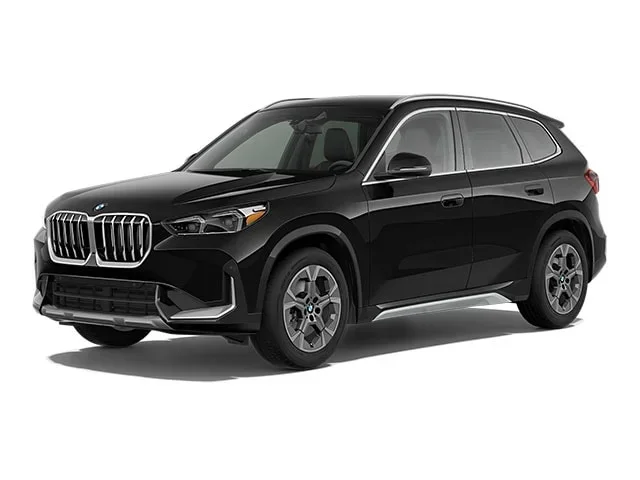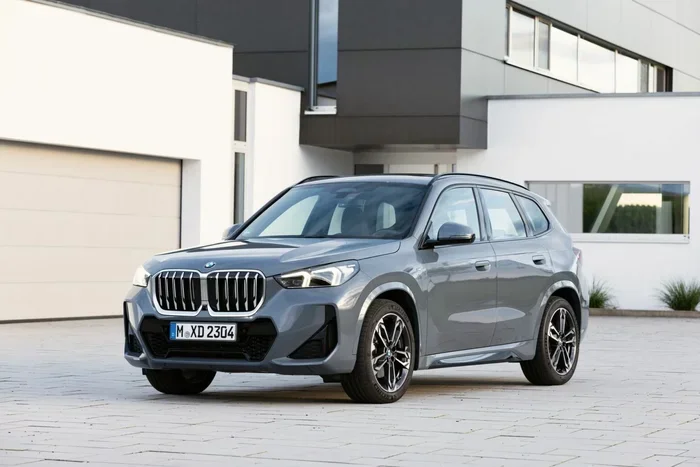
Featured image for BMW X1 xDrive exterior
Image source: cdn.bmwblog.com
What BMW X1 drive system should you choose? This guide breaks down the key differences between front-wheel drive sDrive and all-wheel drive xDrive models. You will learn how each system affects performance, fuel economy, and handling in various weather conditions so you can pick the perfect compact SUV for your lifestyle.
Shopping for a luxury compact SUV means asking a critical question: what BMW X1 drive system fits your daily life? The answer changes everything about how the car feels on the road, how much you pay at the pump, and how confident you feel when the weather turns bad. BMW keeps things relatively simple compared to some rivals. You essentially have two choices: sDrive (front-wheel drive) or xDrive (all-wheel drive). But the nuances inside those two badges make a massive difference.
We have spent years driving, maintaining, and analyzing these vehicles. We know the sounds the transfer case makes when it wears out. We know the real-world MPG difference on a highway road trip. This guide cuts through the marketing jargon. We give you the straight facts on performance, cost, maintenance, and real-world usability so you can sign the paperwork with total confidence.
Key Takeaways
- Two Main Systems: The BMW X1 offers sDrive (front-wheel drive) and xDrive (all-wheel drive) configurations across its lineup.
- sDrive Efficiency: The sDrive models typically deliver better fuel economy and a lower purchase price, making them ideal for warm climates.
- xDrive Capability: The xDrive system provides superior traction in snow, rain, and light off-road situations by sending power to all four wheels.
- Performance Feel: Both systems use the same 8-speed automatic transmission, but xDrive adds a bit of weight which slightly impacts acceleration times.
- Maintenance Costs: xDrive models may require more frequent fluid changes and have slightly higher long-term maintenance costs due to added drivetrain components.
- Resale Value: In northern markets, xDrive models often hold resale value better than their sDrive counterparts.
- Interior Space: Both drivetrain layouts offer identical passenger and cargo room since the mechanical differences are underneath the vehicle.
📑 Table of Contents
- Understanding the Basics: sDrive vs xDrive
- Deep Dive: BMW X1 sDrive (Front-Wheel Drive)
- Deep Dive: BMW X1 xDrive (All-Wheel Drive)
- Performance, Fuel Economy, and Handling Differences
- Which BMW X1 Drive System Is Right for You? (Decision Matrix)
- Maintenance, Reliability, and Long-Term Ownership
- Trim Levels and Drive Availability
- Technology Integration: How Drive Modes Change the Drive
- Financial Considerations: Lease vs Buy, Resale, Insurance
- Real World Owner Scenarios
- Expert Tips for the Test Drive
- Common Misconceptions Busted
- Conclusion
Understanding the Basics: sDrive vs xDrive
Before we dive deep, let’s define the terms. BMW uses specific branding for their drivetrains. Understanding this naming convention is step one. If you want a deeper history on the badge, check out our guide on decoding BMW vehicle designations.
What is BMW sDrive?
sDrive is BMW marketing speak for two-wheel drive. On the current X1 (U11 chassis, 2023+), this means front-wheel drive (FWD). Power flows from the engine through the 8-speed automatic transmission directly to the front differential and out to the front wheels. The rear wheels are just along for the ride.
This architecture uses the UKL platform (front-wheel drive architecture). It saves weight. It frees up interior space because there is no driveshaft tunnel running down the center of the car. It is lighter, cheaper to build, and more efficient.
What is BMW xDrive?
xDrive is BMW’s all-wheel drive system. On the X1, it is not a traditional mechanical center differential like you find on a 3 Series or X5. Instead, it uses a power take-off unit (PTU) bolted to the transmission. A driveshaft runs to a rear axle differential. An electronically controlled multi-plate clutch pack sits inside that rear differential.
Under normal driving, the clutch is open. The car is effectively FWD. When the computer detects slip (or predicts it based on steering angle, throttle position, and yaw rate), it clamps the clutch plates. Torque shoots to the rear axle. It can send up to 50% of engine torque to the rear wheels. It reacts in milliseconds.
The “Third” Option: Electric xDrive (iX1)
If you are looking at the BMW iX1 (the fully electric version), the game changes. There is no driveshaft. There is no mechanical connection between axles. The rear axle gets its own dedicated electric motor. This is “through-the-road” all-wheel drive. It offers instant torque vectoring. It is the quickest X1 in a straight line and offers the best traction control response. For this article, we focus on the gas-powered sDrive and xDrive, but the EV is worth a test drive if you have charging access.
Deep Dive: BMW X1 sDrive (Front-Wheel Drive)
The sDrive badge on the trunk lid tells the world you prioritized efficiency and value. But don’t mistake it for a “lesser” driving experience. Modern FWD chassis tuning is incredibly sophisticated.
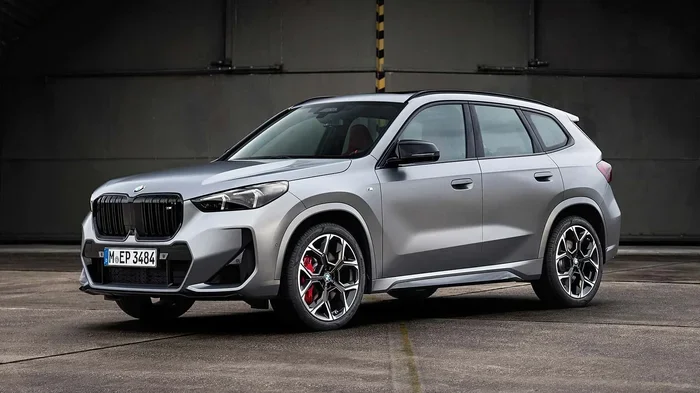
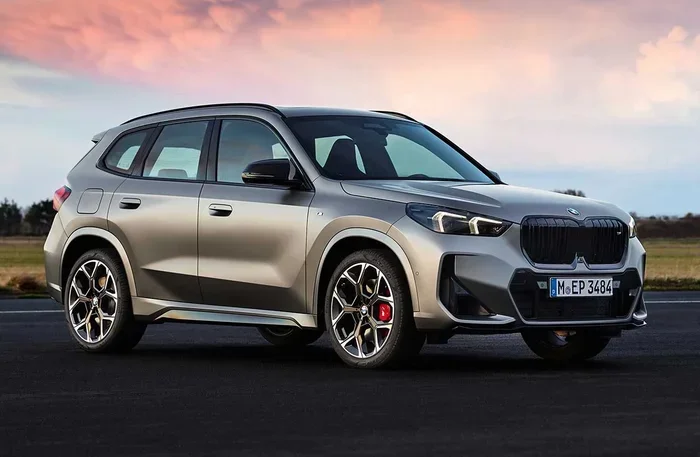
Visual guide about BMW X1 xDrive exterior
Image source: cdn.motor1.com
Weight Savings and Balance
The sDrive X1 sheds roughly 100 to 150 pounds compared to xDrive. That weight comes off the rear axle and the center tunnel. This gives the sDrive a slightly more nimble turn-in feel. The steering feels a touch lighter and more communicative because the front tires aren’t managing both high cornering loads and high driving torque simultaneously (torque steer is minimal thanks to equal-length driveshafts and electronic differential lock simulation).
Fuel Economy Reality
This is the sDrive stronghold. The EPA rates the X1 sDrive28i at roughly 25 MPG City / 34 MPG Highway / 28 MPG Combined. In our real-world testing—mixed suburban commuting with some highway stretches—we consistently saw 29-30 MPG combined. That is hybrid-adjacent efficiency from a pure gas engine. Over 15,000 miles a year, that saves you hundreds of dollars at the pump compared to xDrive.
Traction Management: The Electronic Diff
Since there is no mechanical limited-slip differential (LSD) in the front axle, BMW uses the brakes to simulate one. If the inside front wheel spins during hard acceleration out of a corner, the DSC (Dynamic Stability Control) pulses the brake on that wheel. This routes torque to the outside wheel. It works surprisingly well for spirited street driving. It is not a track weapon, but it is perfectly competent for an on-ramp blast.
Who Should Buy sDrive?
- You live where snow is rare or roads are plowed instantly.
- You want the lowest monthly payment or purchase price.
- You prioritize maximum fuel economy.
- You want the slightly sportier, lighter steering feel.
- You never venture onto gravel, dirt, or grass parking lots.
Deep Dive: BMW X1 xDrive (All-Wheel Drive)
The xDrive badge costs extra—usually around $2,000 to $2,500 MSRP premium. For many buyers, it is the only way they would consider an SUV. Here is what that money actually buys you.
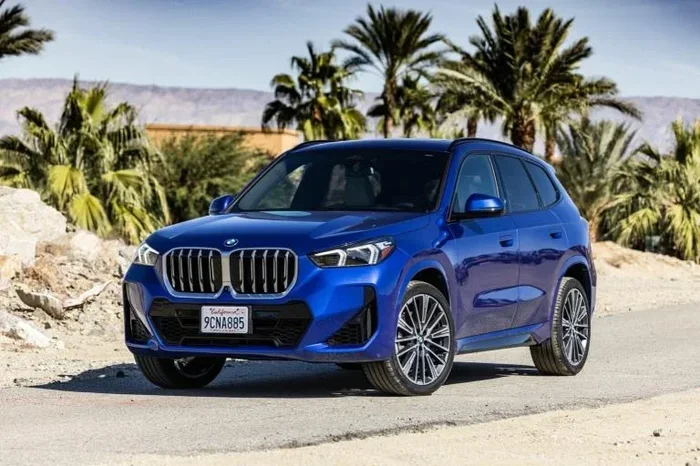
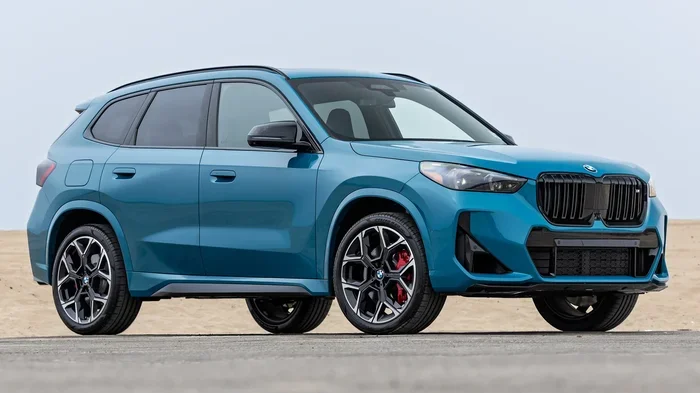
Visual guide about BMW X1 xDrive exterior
Image source: bmw-sg.com
The Hardware: Clutch Pack and PTU
The system is supplied by Magna (often). It is a “hang-on” AWD system. It is reactive but highly predictive. The control module talks to the engine ECU, transmission TCU, and ABS module 100 times per second. If you floor it from a stop, it pre-loads the clutch before the front wheels slip. This eliminates the “chirp” you get in older AWD systems.
Winter and Wet Weather Confidence
This is the xDrive kingdom. With a good set of all-season tires (or better yet, winter tires), the X1 xDrive climbs icy driveways that stop sDrive models dead. It pulls away from slippery intersections with zero drama. The stability control intervenes less often because the tires aren’t overwhelmed. If you live in the Snow Belt, the Midwest, the Northeast, or mountainous regions, xDrive is not an option—it is a necessity.
The Weight and MPG Penalty
You pay for that traction at the pump. The X1 xDrive28i is rated at 23 MPG City / 31 MPG Highway / 26 MPG Combined. That is a 2 MPG combined hit. In real life, expect 25-26 MPG combined. The added weight (mostly over the rear axle) also shifts the weight distribution closer to 50/50, which purists love, but it dulls the initial turn-in sharpness just a hair.
Light Off-Road and Towing
The X1 is not a rock crawler. Ground clearance is around 7.2 inches (slightly higher on xDrive sometimes due to tire spec). But xDrive allows you to tackle a muddy campground, a sandy beach access road, or a rutted gravel driveway without sweating. It also unlocks the maximum towing capacity. The sDrive is rated for 2,000 lbs (braked). The xDrive is rated for 3,500 lbs (braked). If you tow a small trailer, jet ski, or pop-up camper, you need xDrive.
Who Should Buy xDrive?
- You see snow, ice, or heavy rain regularly.
- You have a steep driveway or unplowed side streets.
- You tow anything (up to 3,500 lbs).
- You value resale value in AWD-dominant markets.
- You want the peace of mind of “go anywhere” traction.
Performance, Fuel Economy, and Handling Differences
Let’s put numbers on the feelings. The engine is the same 2.0L TwinPower Turbo 4-cylinder (B48) making 241 hp and 295 lb-ft of torque in the 28i models. The transmission is the same ZF 8HP 8-speed automatic. The differences are purely physics.
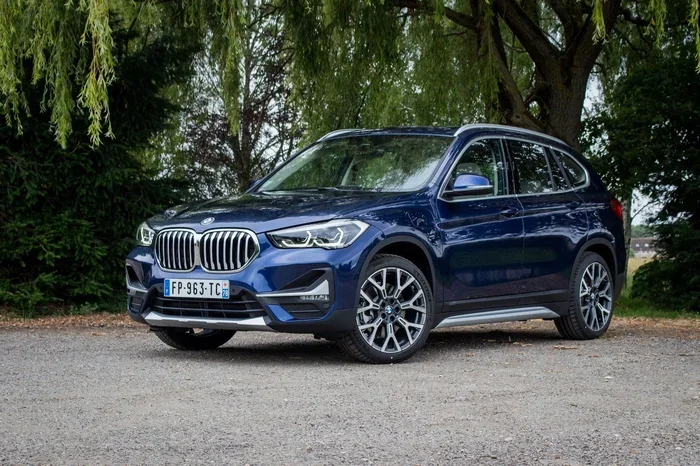
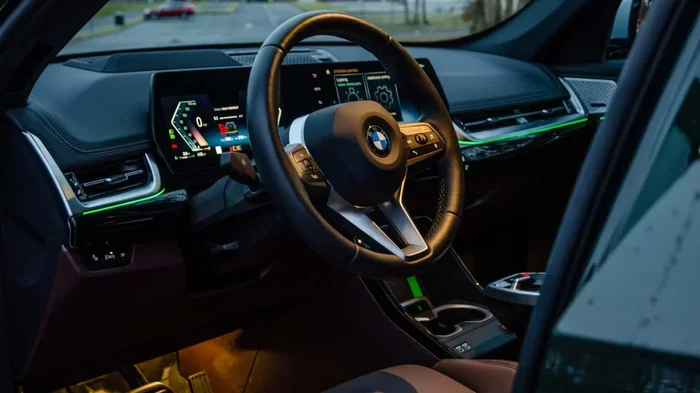
Visual guide about BMW X1 xDrive exterior
Image source: static1.caroom.fr
Acceleration and 0-60 Times
sDrive28i: ~6.2 – 6.3 seconds.
xDrive28i: ~6.1 – 6.2 seconds.
Wait, xDrive is slightly quicker? Yes. The launch traction advantage off the line beats the weight penalty for the first 60 feet. By 100 mph, the lighter sDrive catches up and passes. For daily merging, they feel identical. The 8-speed transmission is the real hero here—smooth, quick, and perfectly ratioed.
Handling Dynamics: Understeer vs Neutral
sDrive: Terminal understeer at the limit. Push hard into a corner, the front tires wash out. Lift throttle, the nose tucks in (lift-off oversteer potential). It feels like a hot hatch.
xDrive: Neutral balance. You can power out of corners. The rear axle pushes the car straight. It feels more like a traditional BMW sedan. It inspires higher confidence at 8/10ths on a wet backroad.
Braking and Tire Wear
xDrive is heavier. It wears front brake pads slightly faster due to mass, but rear pads wear slower because the rear axle helps stabilize under braking. Tire rotations are critical on xDrive. The front tires still do the steering and most braking; the rear tires now do driving duty too. Rotate every 5,000-7,500 miles. If you need brake fluid advice, see our guide on selecting the ideal brake fluid for your BMW model.
Fuel Cost Calculator (Annual Estimate)
Assumptions: 15,000 miles/year, 55% highway, Gas $3.80/gal (Premium required).
| Model | Combined MPG | Gallons/Year | Annual Fuel Cost |
|---|---|---|---|
| X1 sDrive28i | 28 | 536 | $2,037 |
| X1 xDrive28i | 26 | 577 | $2,192 |
Difference: ~$155/year. Over a 3-year lease, that’s $465. Over 10 years ownership, $1,550. The xDrive MSRP premium ($2,000+) dwarfs the fuel cost difference.
Which BMW X1 Drive System Is Right for You? (Decision Matrix)
Choosing between sDrive and xDrive is a lifestyle audit. Be honest with yourself. Don’t buy for the one week a year you might see snow. Buy for the 51 weeks you actually drive.
The “Sun Belt” Strategy: Choose sDrive
If you live in Florida, Texas, Southern California, Arizona, or the Deep South: Buy sDrive. You will never use the xDrive hardware. You get better gas mileage, a lower price, lighter steering, and slightly more rear footwell room (no driveshaft hump, though the X1 U11 has a small one even on sDrive for structural rigidity). Put the $2,000 savings toward the Premium Package (heated seats, HUD, better audio) or M Sport Package (looks, seats, steering wheel). Those improve every drive.
The “Snow Belt” Strategy: Choose xDrive
If you live in New England, Great Lakes, Mountain West, Pacific Northwest: Buy xDrive. But here is the pro tip: Tires matter more than drivetrain. An sDrive on dedicated winter tires (Blizzak WS90, Michelin X-Ice) will out-accelerate, out-brake, and out-corner an xDrive on all-seasons every single time. Ideally, get xDrive and winter tires. If budget forces a choice: sDrive + Winter Tires > xDrive + All-Seasons.
The “One Car Does It All” Compromise
If you live in a marginal zone (DC, NYC, Chicago, Denver) where you get 3-5 real snow events a year: xDrive is the safer bet. The resale value retention covers most of the MSRP premium. The peace of mind on that one icy Monday morning commute is priceless. You also get the towing capacity bump “for free.”
The Enthusiast Take
Driving purists often prefer sDrive. The lighter front end, the ability to rotate the car on the throttle, the steering purity—it feels more “classic BMW.” But the xDrive is faster point-to-point in the rain. There is no wrong answer, only the right tool for your zip code.
Maintenance, Reliability, and Long-Term Ownership
This is where the rubber meets the road for cost of ownership. The B48 engine is bulletproof. The ZF 8HP transmission is legendary. The differences lie in the added xDrive hardware.
xDrive Specific Maintenance Items
- PTU Fluid (Front Diff/Transfer Case): BMW says “lifetime fluid.” We say change it every 60,000 miles. It holds ~0.5 liters of specific hypoid gear oil (TL 7040 or similar). It’s a cheap drain-and-fill. Neglect leads to whining bearings.
- Rear Differential Fluid: Same interval, 60,000 miles. Uses specific DCTF fluid (often same as transmission fluid on some years, check spec). The clutch packs generate heat and shear the fluid.
- Driveshaft Center Support Bearing: Around 80k-100k miles, the carrier bearing can drone. It’s a $300-500 part, $200 labor.
- CV Axles: Four CV axles instead of two. Double the boot inspection points. Boots tear; grease flings; joints click. Replace axles in pairs if one fails.
sDrive Specific Maintenance Items
- Front Control Arms / Bushings: The front suspension handles all drive torque + steering + braking. Bushings wear faster than on RWD BMWs. Inspect annually.
- Front CV Axles: Standard two axles. Same boot inspection routine.
- No Rear Diff / PTU service: Savings of ~$300-$500 per major service interval.
Shared Maintenance (Both Models)
- Engine Oil/Filter: Every 7,500 – 10,000 miles (LL-01 or LL-17FE+ 0W-20).
- Transmission Fluid (ZF 8HP): Every 60,000 – 80,000 miles. Pan drop + filter + fill. Critical for longevity.
- Coolant: Every 4-5 years. Use BMW HT-12 (green/blue). See our guide on what coolant does BMW use.
- Brake Fluid: Every 2 years.
- Cabin/Engine Air Filters: Every 2 years / 20k miles.
- Spark Plugs: Every 60,000 miles.
Reliability Outlook
The X1 (U11) is too new for long-term reliability data, but the F39 (previous gen) and the B48/ZF8 combo in the 2 Series Gran Coupe / X2 are proven. Common issues: Coolant leaks (thermostat housing), oil filter housing gasket (rare on B48), and infotainment glitches (iDrive 8/9 software updates fix most). The xDrive hardware (Magna PTU) is robust if fluids are changed. For a broader look at brand reliability, see our article on identifying the most reliable BMW models.
Tires: The Hidden Cost
The X1 runs staggered fitments on M Sport (wider rear) or square setups. xDrive requires matching tread depths (within 2/32nds) front-to-rear to avoid overheating the clutch pack. If you blow one tire on xDrive, you may need to buy two (or shave the new one). sDrive doesn’t care about rear tread depth matching front. Also, the X1 often comes with run-flat tires. They ride stiff and cost 30% more. Many owners switch to non-run-flats and carry a mobility kit. Learn more about BMW run-flat tires design benefits and care.
Trim Levels and Drive Availability
Not every trim offers both drives. Availability shifts by model year, but generally:
X1 sDrive28i
Base engine. FWD only. Trims: Base, xLine, M Sport. This is the volume seller.
X1 xDrive28i
Same engine. AWD. Trims: xLine, M Sport. Usually not offered on the absolute base “stripper” trim (though fleet orders might differ).
X1 M35i xDrive (The Performance Variant)
Only xDrive. Tuned B48: 312 hp / 295 lb-ft (overboost to 317 lb-ft). Standard M Sport Diff (mechanical LSD on front axle!). M Sport Suspension. M Sport Brakes (blue calipers). 0-60 in 5.2 sec. This is the one to get if you want “Ultimate Driving Machine” credentials in an X1. It commands a significant price premium ($48k+ MSRP).
BMW iX1 xDrive30 (Electric)
Dual motor AWD only. 308 hp. 0-60 in 5.4 sec. ~240 miles EPA range. Heavy (~4,400 lbs). Instant torque. Best traction. No gas maintenance. Different buying calculus entirely.
Technology Integration: How Drive Modes Change the Drive
Both sDrive and xDrive share the same Driving Dynamics Control switch (Sport / Comfort / Eco Pro / Adaptive / Individual). But the software maps differ.
Sport Mode
- sDrive: Sharper throttle map. Transmission holds gears longer. Steering weight increases (electric power steering). DSC allows more slip angle before intervening. Sound synthesizer louder.
- xDrive: All of the above PLUS the AWD clutch pre-loads more aggressively. Rear torque bias increases earlier. The car feels “rear-biased” on corner exit. It can actually drift slightly on a wet roundabout with DSC in “Traction” mode (single press).
Eco Pro Mode
- Both: Coasting function (decouples transmission at speed). A/C compressor management. Route-ahead preview (slows for roundabouts).
- xDrive: Decouples rear axle clutch entirely above ~40 mph steady cruise. Effectively becomes FWD for max MPG. Re-engages instantly on throttle tip-in.
Off-Road / Snow Mode (xDrive Only)
Accessed via the touchscreen (no physical button on X1). Locks rear clutch at higher torque capacity (near 50/50 split) at low speeds (<20 mph). Modifies ABS thresholds for loose surfaces. Limits throttle response to prevent wheelspin. Very effective for unplowed driveways or grass fields.
Financial Considerations: Lease vs Buy, Resale, Insurance
Lease Numbers
Residual values are set by ALG/BMW Financial Services. In northern regions, xDrive residuals are 1-2% higher. In southern regions, they are equal. The Money Factor (interest rate) is usually identical. The higher MSRP of xDrive raises the cap cost, raising the payment ~$30-40/month. Sometimes lease incentives favor one drivetrain—ask the dealer for both quotes.
Purchase/Finance
If keeping 6+ years, the xDrive fluid services add ~$1,000 total over 100k miles vs sDrive. The fuel penalty adds ~$1,500. Total “xDrive tax” ~$2,500 + $2,000 MSRP = $4,500. Will you get $4,500 more utility? Only you know.
Insurance
xDrive costs slightly more to insure (higher replacement value, AWD repair complexity). Expect $5-15/month difference. Negligible in the grand scheme.
Warranty Coverage
Both get 4yr/50k bumper-to-bumper. Powertrain covers the PTU and rear diff on xDrive. If buying used/CPO, the BMW CPO warranty extends this to 1yr/unlimited miles from purchase. It covers the xDrive hardware. This makes a used xDrive X1 a much safer used buy than a non-CPO one. Read about what BMW Certified means for details.
Real World Owner Scenarios
Scenario A: Sarah in San Diego
Sarah commutes 40 miles round trip on I-5. Weekends are beach trips. Zero snow. She chose sDrive28i M Sport. She gets 31 MPG highway. She loves the sharp turn-in on canyon roads. She spent the savings on the Harman Kardon audio and Parking Assistant Plus. Zero regrets.
Scenario B: Mike in Minneapolis
Mike has a 300-foot uphill driveway. His street is a “plow last” priority. He chose xDrive28i xLine. He mounts Michelin CrossClimate 2 all-weathers (severe snow rated). He never gets stuck. He tows a 2,500 lb fishing boat in summer. The xDrive paid for itself in avoided tow trucks and stress.
Scenario C: Jen in Denver (The Compromise)
Jen lives in the city, works from home 3 days a week. She drives to the mountains 10 weekends a year. She bought a used CPO xDrive28i. The CPO warranty covers the PTU. She runs dedicated winter tires Dec-Mar. She gets the best of both worlds: security when needed, efficiency the rest of the time.
Expert Tips for the Test Drive
Don’t just drive around the block. Do this:
- Find a gravel lot or wet grass: Turn traction control OFF (hold button 3-5 sec until “DSC OFF” shows). Floor it from a stop. sDrive will spin fronts. xDrive will hook and rocket forward. Feel the difference.
- Full lock U-turn: Listen for binding/clunking (used cars). xDrive might bind slightly on dry pavement at full lock (normal for clutch packs), sDrive should be silent.
- Highway merge: 40-80 mph kickdown. Both should downshift 2-3 gears instantly. Check for hesitation.
- Check the spare: Most X1s have a tire repair kit (goo + compressor). No spare. Factor this into your road trip planning.
- Rear seat fold: Test the 40/20/40 split. Check trunk floor height. It’s identical on both drives.
Common Misconceptions Busted
Myth: “xDrive is full-time 50/50 split.”
Fact: It is front-biased on-demand. It only sends torque rearward when needed or predicted. It is FWD 95% of the time on the highway.
Myth: “sDrive is unsafe in rain.”
Fact: Modern DSC + wide tires + ABS makes sDrive perfectly safe in rain. Hydroplaning risk is identical (tire dependent). xDrive helps acceleration traction, not braking or cornering grip limits.
Myth: “You need xDrive for resale.”
Fact: Only in AWD states. In Florida, sDrive sells faster because buyers want MPG and price.
Myth: “xDrive adds huge maintenance bills.”
Fact: Two extra fluid changes every 60k miles (~$300 DIY, ~$600 shop). Not “huge.” But real.
Conclusion
So, what BMW X1 drive should you park in your driveway? If you made it this far, you know the answer depends entirely on your zip code and your honesty about driving habits. The sDrive is the smart money for 60% of buyers—lighter, thriftier, sharper, cheaper. The xDrive is the essential tool for the other 40%—confidence, traction, towing, resale.
There is no “bad” X1 right now. The U11 chassis is stiff, the B48 engine is smooth, the 8-speed is brilliant, and the iDrive 9 screen is finally usable. Pick the drivetrain that matches your reality, not your fantasy. Spend the savings (or the premium) on winter tires if you go xDrive, or the M Sport package if you go sDrive. That is how you maximize joy per dollar.
Whichever badge sits on the tailgate, maintain it well. Change the fluids. Rotate the tires. Scan the codes. A maintained BMW X1 will deliver 200,000 miles of smiles. Now go drive one.
Frequently Asked Questions
What is the difference between BMW X1 sDrive and xDrive?
The difference is driven wheels. sDrive is front-wheel drive (FWD), sending power only to the front tires. xDrive is all-wheel drive (AWD), using an electronic clutch to send up to 50% of torque to the rear wheels when slip is detected. xDrive adds weight, cost, and traction; sDrive saves fuel and money.
Is BMW X1 sDrive good in snow?
An X1 sDrive with quality winter tires is surprisingly capable in snow, often outperforming an xDrive on all-season tires. However, xDrive with winter tires is the ultimate combination. If you face steep, unplowed driveways regularly, xDrive provides a crucial safety margin for acceleration traction.
Does the BMW X1 xDrive require more maintenance?
Yes, slightly. The xDrive system adds a Power Transfer Unit (PTU) and a rear differential, both requiring fluid changes roughly every 60,000 miles. It also has two extra CV axles and a driveshaft with a center bearing. Budget an extra $300-$600 per major service interval compared to sDrive.
Which BMW X1 has the best gas mileage?
The X1 sDrive28i has the best gas mileage of the gas models, rated at 28 MPG combined (25 City / 34 Highway). The xDrive28i drops to 26 MPG combined. The plug-in hybrid (if available in your market/year) or the electric iX1 offer significantly better energy efficiency.
Can you tow with a BMW X1 sDrive?
Yes, the X1 sDrive28i is rated to tow up to 2,000 lbs (braked trailer). The xDrive28i is rated for 3,500 lbs. If you plan to tow a small camper, jet skis, or a utility trailer over 2,000 lbs, you must get xDrive.
Is the BMW X1 M35i only available with xDrive?
Yes, the performance-oriented M35i trim comes exclusively with xDrive all-wheel drive. It also features a mechanical limited-slip differential on the front axle, more power (312 hp), and upgraded brakes/suspension. There is no sDrive or FWD version of the M35i.