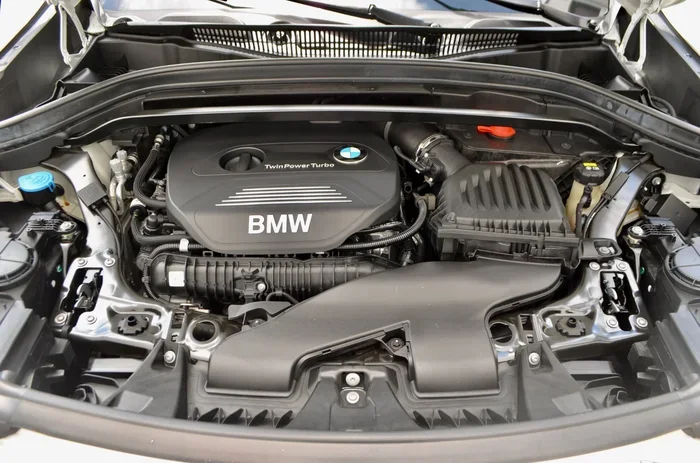
Featured image for 2018 BMW X1 engine bay
Image source: platinumautohaus.com
The 2018 BMW X1 xDrive28i is powered by a 2.0-liter B48 TwinPower Turbo inline-four cylinder engine. This modern powerplant delivers 228 horsepower and 258 lb-ft of torque, paired exclusively with an 8-speed automatic transmission and BMW’s xDrive all-wheel-drive system. It offers a blend of spirited acceleration, strong fuel economy, and proven reliability improvements over its predecessor.
If you are shopping for a used compact luxury SUV or currently own one, knowing exactly what engine on a 2018 BMW X1 xDrive28i sits under the hood is essential. This model year marked a significant transition for BMW’s entry-level crossover. It moved away from the problematic N20 engine to the newer, more robust B48 modular engine family. This change brought better reliability, smoother power delivery, and updated technology. In this deep dive, we will explore every detail of this powertrain. We will cover specifications, performance figures, engineering design, drivetrain pairing, maintenance requirements, and common issues to watch for. Whether you are a DIY enthusiast or just want to understand your vehicle better, this guide has you covered.
Key Takeaways
- Engine Code: The 2018 X1 xDrive28i uses the B48B20 2.0L TwinPower Turbo inline-4, replacing the older N20 engine.
- Output: It produces 228 hp at 5,000–6,000 rpm and 258 lb-ft of torque from 1,450–4,500 rpm.
- Transmission: Power routes through a ZF 8HP 8-speed automatic transmission for smooth, quick shifts.
- Drivetrain: The xDrive all-wheel-drive system provides excellent traction in all weather conditions.
- Performance: 0-60 mph arrives in approximately 6.3 seconds, making it quick for a compact SUV.
- Reliability: The B48 engine features a closed-deck block and timing chain design, offering better durability than the N20.
- Maintenance: Regular oil changes with LL-01 or LL-17 FE+ approved oil and coolant flushes are critical for longevity.
📑 Table of Contents
- The Heart of the Matter: The B48 2.0L TwinPower Turbo Engine
- Performance Numbers: Horsepower, Torque, and Acceleration
- Drivetrain Dynamics: xDrive and the 8-Speed Transmission
- Engineering Highlights: Why the B48 Stands Out
- Maintenance Essentials for Your 2018 X1 Engine
- Common Issues and Things to Watch For
- Tuning and Modification Potential
- Comparing the 2018 X1 xDrive28i to the Competition
- Buying Advice: What to Check on a Used 2018 X1 xDrive28i
- The B48 Engine in the Broader BMW Lineup
- Quick Tips for Daily Driving
- Expert Insight: The “Sweet Spot” Model Year
- Conclusion
The Heart of the Matter: The B48 2.0L TwinPower Turbo Engine
The 2018 BMW X1 xDrive28i engine is the B48B20. This is a 2.0-liter, twin-scroll turbocharged, direct-injection inline-four cylinder engine. It belongs to BMW’s B-series modular engine family (B38 3-cylinder, B48 4-cylinder, B58 6-cylinder). This engine replaced the N20 found in the 2015–2017 models. That switch is the single most important mechanical update for this model year.
Why the Switch from N20 to B48 Matters
The previous N20 engine had a known weakness: the timing chain guide rails. They were made of plastic that became brittle with heat cycles. This led to catastrophic engine failure in many higher-mileage examples. The B48 was engineered specifically to solve this. It uses a more robust timing chain setup with stronger guides and a tensioner design that maintains better control. The block itself moved from an open-deck design to a closed-deck architecture. This adds rigidity to the cylinder walls. It reduces distortion under high combustion pressures. The result is an engine block that can handle significantly more power and stress than the N20 ever could.
TwinPower Turbo Technology Explained
BMW markets this as “TwinPower Turbo.” On a four-cylinder engine, this does not mean two turbochargers. It refers to the combination of a twin-scroll turbocharger, Valvetronic (variable valve lift), and Double-VANOS (variable valve timing). The twin-scroll turbo housing separates the exhaust pulses from cylinders 1/4 and 2/3. This keeps exhaust energy high. It spins the turbine faster at low rpm. This virtually eliminates turbo lag. Valvetronic controls intake valve lift electronically. It eliminates the need for a traditional throttle body in many operating conditions. This improves throttle response and fuel efficiency. Double-VANOS adjusts intake and exhaust camshaft timing independently. This optimizes the power band across the entire rev range.
Technical Specifications at a Glance
- Engine Code: B48B20O0 (O0 denotes the specific output variant for 28i models)
- Displacement: 1,998 cc (2.0 Liters)
- Configuration: Inline-4, 16-Valve, DOHC
- Block Material: Aluminum (Closed-deck)
- Head Material: Aluminum
- Compression Ratio: 11.0:1
- Fuel System: High-pressure direct injection (200+ bar)
- Turbocharger: Single twin-scroll turbocharger with electronic wastegate
- Valvetrain: Valvetronic (variable intake lift) + Double-VANOS (variable cam timing)
- Emissions Standard: LEV3-ULEV70 / EU6
Performance Numbers: Horsepower, Torque, and Acceleration
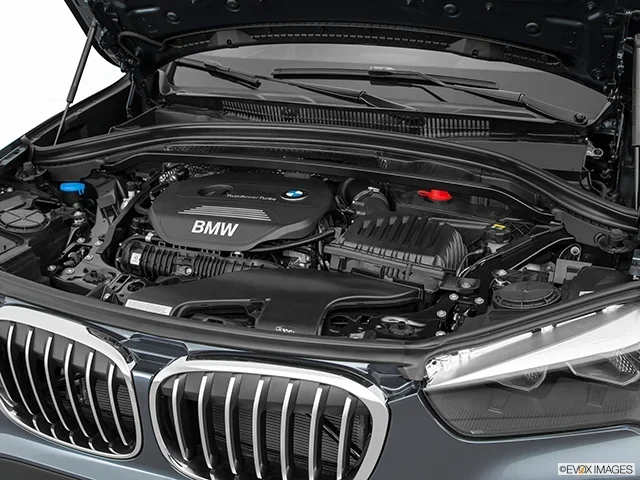
Numbers on a spec sheet only tell half the story. The B48 engine in the 2018 X1 is rated at 228 horsepower at 5,000 to 6,000 rpm. Peak torque is 258 lb-ft available from a very low 1,450 rpm all the way to 4,500 rpm. This broad torque plateau is the hallmark of the twin-scroll setup. It means you have strong passing power immediately off idle. You do not need to downshift or wait for the turbo to spool.
Visual guide about 2018 BMW X1 engine bay
Image source: d2ivfcfbdvj3sm.cloudfront.net
Real-World Acceleration and Speed
BMW claims a 0–60 mph time of 6.3 seconds for the xDrive28i. Independent testing often shows times closer to 6.0 to 6.2 seconds. The quarter-mile is typically run in the mid-14 second range at roughly 95–97 mph. The top speed is electronically limited to 130 mph (210 km/h). These figures make the X1 genuinely quick. It feels faster than many older “35i” six-cylinder models from a decade ago. The power delivery is linear. There is no sudden “hit” of boost. It just pulls steadily and strongly to redline.
Fuel Economy Estimates
Despite the performance, the EPA ratings are respectable for an AWD SUV:
- City: 22 mpg
- Highway: 31 mpg
- Combined: 25 mpg
Real-world average usually settles around 23–26 mpg depending on driving style. The engine requires premium unleaded (91 octane minimum). Using regular fuel will cause the ECU to retard timing significantly. This reduces power and can increase carbon buildup on intake valves over time.
Drivetrain Dynamics: xDrive and the 8-Speed Transmission
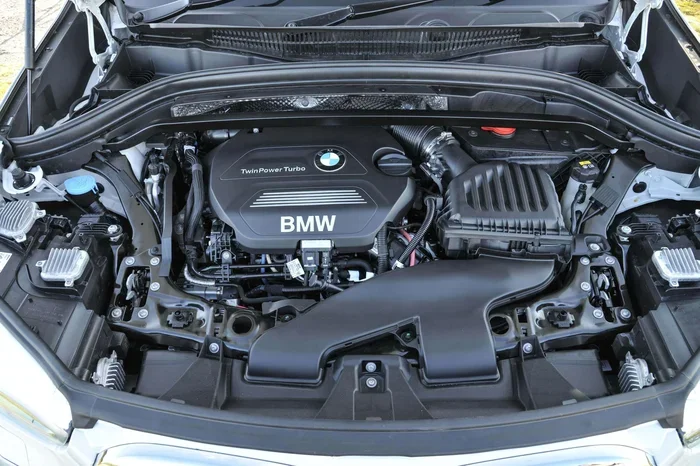
The engine does not work in isolation. The 2018 BMW X1 xDrive28i pairs the B48 exclusively with the ZF 8HP45 8-speed automatic transmission. This is widely considered one of the best transmissions in the industry. It is not a dual-clutch (DCT). It is a torque converter automatic. This provides imperceptibly smooth shifts in daily driving. It locks up the torque converter aggressively for direct feel and efficiency at speed.
Visual guide about 2018 BMW X1 engine bay
Image source: 1cars.org
How xDrive All-Wheel Drive Works
BMW’s xDrive system on the X1 (F49 chassis) is a front-biased system. Under normal conditions, it sends 100% of torque to the front wheels. This saves fuel and reduces drivetrain drag. When the system detects slip (or predicts it via steering angle, throttle position, and yaw sensors), an electronically controlled multi-plate clutch in the transfer case engages. It can send up to 50% of torque to the rear axle almost instantly. It cannot send more than 50% rearward. This is different from the rear-biased xDrive on larger RWD-based BMWs (like the 3 Series or X3). However, for a compact SUV on snow, rain, or gravel, it works exceptionally well. It provides security without the fuel penalty of a permanent 50/50 split. If you want to understand the naming convention better, check out our guide on decoding BMW vehicle designations.
Driving Modes: Eco Pro, Comfort, Sport
The Driving Dynamics Control switch (or iDrive menu) alters the engine mapping, transmission shift points, steering weight, and xDrive behavior.
- Eco Pro: Numbs throttle response. Shifts early (often skipping gears). Aggressive coasting (decouples transmission). Maximizes MPG. Great for highway cruising.
- Comfort: The default balanced setting. Smooth shifts. Normal throttle map. Standard xDrive engagement.
- Sport: Sharpens throttle map significantly. Holds gears longer. Downshifts aggressively on braking. Heavier steering. xDrive reacts faster. This transforms the character of the car.
There is also an Eco Pro specific coasting function. When you lift off the gas at highway speeds, the transmission disengages. The engine drops to idle. The car rolls freely. This saves measurable fuel. You can read more about how this mode works in our article on what Eco Pro means on a BMW.
Engineering Highlights: Why the B48 Stands Out
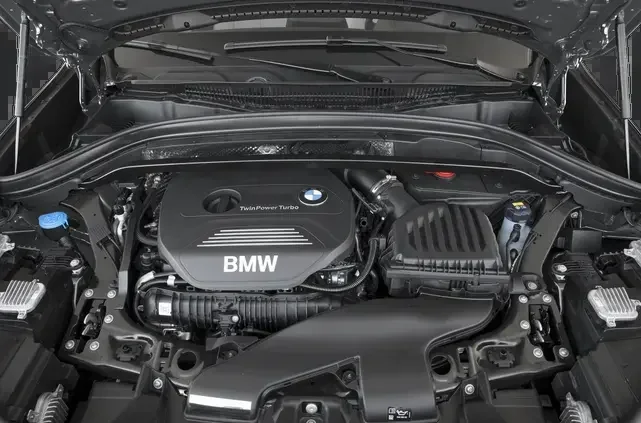
The B48 engine family is a masterclass in modern modular engineering. It shares bore spacing (90mm) and architecture with the B38 3-cylinder and B58 6-cylinder. This allows BMW to manufacture them on the same production lines. For the owner, this means parts commonality and massive aftermarket support.
Visual guide about 2018 BMW X1 engine bay
Image source: platform.cstatic-images.com
Closed-Deck Block Design
As mentioned, the closed-deck block is the star of the show. The N20 had an open-deck block where the cylinder walls were only supported at the very top. Under high boost, the cylinders could oval slightly. This killed ring seal and burned oil. The B48 has solid metal bridges between the cylinders at the top of the block. This supports the cylinder walls fully. Tuners routinely push the B48 to 350+ hp on the stock block with just software and a downpipe. For a daily driver, this means the engine is operating well within its safety margin at 228 hp.
Integrated Exhaust Manifold
The exhaust manifold is cast directly into the cylinder head. It is water-cooled. This is a packaging and thermal management win. It puts the turbocharger extremely close to the exhaust ports. This keeps exhaust gas energy high (spooling the turbo faster). It also allows the engine to warm up incredibly fast. The coolant flowing around the manifold absorbs heat instantly. This brings the engine and cabin heat up to temperature in half the time of older designs. It also reduces emissions during cold starts.
Timing Chain Improvements
The B48 uses a single-row timing chain (simplex) driving the intake cam. A second chain links intake to exhaust cam. The guides are reinforced plastic with metal backing. The tensioner is hydraulic with a mechanical ratchet backup. This is a massive upgrade over the N20. While no timing chain is “lifetime,” the B48 chain typically lasts 150k+ miles if oil changes are done religiously. We will cover oil specifics shortly.
Direct Injection and Carbon Buildup
Because the B48 uses direct injection only (no port injection), fuel never washes the back of the intake valves. Carbon deposits will accumulate over time. This is normal for all modern DI engines. Symptoms of heavy buildup include rough idle, misfires, and power loss. Most 2018 models with 60k–80k miles benefit from a walnut blasting service (intake valve cleaning). It restores lost airflow and smooth idle. It is a maintenance item, not a defect.
Maintenance Essentials for Your 2018 X1 Engine
Owning a turbocharged direct-injection engine requires discipline. The maintenance schedule in the owner’s manual (Condition Based Servicing) often stretches intervals too far for enthusiast standards. If you plan to keep the car long-term, follow a “severe duty” schedule.
Engine Oil: The Lifeblood
- Specification: BMW LL-01 (Longlife-01) or the newer LL-17 FE+ (Low SAPS, for GPF/OPF equipped cars). Most 2018 US models do not have a gasoline particulate filter (GPF), so LL-01 is the gold standard. LL-01 FE (Fuel Economy 0W-20) is also approved but offers slightly less high-temp film strength.
- Viscosity: 0W-30 or 5W-30 (LL-01). 0W-20 (LL-01 FE / LL-17 FE+).
- Capacity: ~5.6 liters (5.9 quarts) with filter.
- Interval: Every 5,000 to 7,500 miles or once a year. Ignore the 10k–15k mile CBS reminders. Turbo engines shear oil viscosity faster. Frequent changes protect the turbo bearings and timing chain tensioner.
- Filter: Use Mann, Mahle, or genuine BMW (Mann/Hengst made). The cartridge filter housing torque spec is 25 Nm (18 ft-lbs). Overtightening cracks the plastic housing.
Coolant System Care
The B48 runs hot by design (thermostat opens at ~105°C / 221°F). This improves efficiency and emissions. The cooling system is pressurized (2.0 bar cap). Plastic components (expansion tank, hoses, thermostat housing, water pump) become brittle after 7–10 years.
- Coolant Type: BMW HT-12 (Green) or G48 (Blue) concentrated, mixed 50/50 with distilled water. Do not use universal green/orange coolants from auto parts stores. They lack the correct additive package for aluminum blocks and can cause electrolysis. For a detailed breakdown, see our guide on choosing the right coolant for your BMW.
- Interval: Flush and fill every 4 years or 60,000 miles.
- Water Pump: Electric, variable speed. It is a wear item. Plan on replacement around 80k–100k miles as preventative maintenance.
- Thermostat: Map-controlled (electrically heated wax element). Failures usually trigger a “Reduced Power” warning and check engine light (code 2D81 / P0597). Replace with the water pump for labor savings.
Spark Plugs and Ignition
- Plugs: NGK Laser Iridium (OEM) or Bosch Double Iridium.
- Gap: Pre-gapped from factory (do not adjust).
- Interval: Every 45,000–60,000 miles. The high cylinder pressures and turbo heat wear the electrodes faster than naturally aspirated engines.
- Coil Packs: Replace only as needed (misfire codes). They are robust but heat kills them eventually.
Walnut Blasting (Intake Valve Cleaning)
As noted, DI engines build carbon. Schedule this service every 50,000–70,000 miles. It requires removing the intake manifold. A shop blasts crushed walnut shells through the intake ports with the valves closed. It is safe for the engine and very effective. Cost typically ranges $400–$700 depending on labor rates.
Transmission and Driveline Fluids
BMW calls the ZF 8HP fill “Lifetime.” ZF (the manufacturer) recommends a fluid and filter change every 60,000–80,000 miles. Use ZF Lifeguard Fluid 8 (or equivalent like Pentosin ATF 1 LV / Ravenol ATF 8 HP). The filter is integrated into the plastic oil pan. You replace the whole pan assembly. Transfer case fluid (xDrive) and rear differential fluid should be changed at the same interval (75W-90 GL-5 for diff, ATF or specific transfer case fluid for the clutch pack). This is cheap insurance for the drivetrain.
Common Issues and Things to Watch For
The B48 is reliable, but no engine is perfect. Here are the specific items 2018 BMW X1 xDrive28i owners report most frequently.
1. Coolant Leaks (Expansion Tank / Hoses)
The pressurized expansion tank develops hairline cracks near the cap or the lower hose connection. The upper radiator hose quick-connect fitting at the thermostat housing also leaks. Check the coolant level monthly. Look for dried pink/green crust (coolant residue) around the tank seams and hose ends.
2. Oil Filter Housing Gasket Leak
The oil filter housing (OFH) sits on the side of the block. The large profile gasket between the housing and block shrinks over time. It leaks oil down the front of the engine, often onto the drive belt. If the belt gets oil-soaked, it can slip off the pulleys or shred. Shredded belt debris can get sucked past the front crank seal into the engine. Replace the OFH gasket at the first sign of seepage. It is a 1–2 hour job.
3. Valve Cover / PCV System
The valve cover integrates the PCV (Positive Crankcase Ventilation) valve. The diaphragm inside tears. This creates a massive vacuum leak. Symptoms: rough idle, whistling noise from the engine bay, check engine light (lean codes), and high oil consumption. The fix is a new valve cover assembly (includes PCV). It is plastic and warps over time. Replace the cover, not just the gasket.
4. Turbocharger Wastegate Rattle
On cold start, a metallic “tin can” rattle from the exhaust manifold area for 10–30 seconds indicates wastegate bushing wear in the turbo housing. The electronic wastegate actuator cannot compensate for the mechanical play. It is annoying but rarely causes immediate failure. Many owners live with it for years. The fix is a new turbocharger assembly (expensive) or a used/low-mile unit.
5. Front Drive Axles (CV Axles)
The xDrive system sends power through the front axles constantly. The inner CV joints (tripod style) can wear. Symptom: vibration on acceleration at 40–60 mph that disappears when coasting. Inspect the boots for tears. Replace axles in pairs if one fails.
Tuning and Modification Potential
The B48 is a tuner’s dream. The closed-deck block and strong internals handle huge power increases reliably.
Stage 1 (Software Only)
- Gains: ~260–280 hp / 300–320 lb-ft (91 octane). ~290–310 hp / 330–350 lb-ft (E30 mix or 93 octane).
- Method: Flash tune (BM3 / MHD / JB4 piggyback).
- Cost: $400–$700.
- Result: Transforms the car. 0-60 drops to low 5-second range. Mid-range torque becomes addictive. Safe on stock hardware with good fuel.
Stage 2 (Software + Downpipe)
- Hardware: High-flow catted downpipe (200-cell) or catless (race only).
- Gains: ~300–330 hp / 350+ lb-ft.
- Note: Catless downpipes will trigger a check engine light (O2 sensor readiness) unless coded out. They also smell strong and may fail visual inspection. A high-flow catted downpipe is the sweet spot for street cars.
Supporting Mods
- Intake: Not required for power on stock turbo. The stock airbox flows well. An aftermarket intake adds noise (turbo spool/whoosh) but minimal power unless you upgrade the turbo.
- Intercooler: Highly recommended for Stage 2+ or track use. The stock unit heat soaks quickly. A larger bar-and-plate core keeps intake temps consistent.
- Charge Pipe: The stock plastic charge pipe can crack under high boost. An aluminum pipe with HKS/Forge blow-off valve flange is cheap insurance.
Comparing the 2018 X1 xDrive28i to the Competition
How does this powertrain stack up against rivals in the 2018 compact luxury SUV segment?
| Vehicle | Engine | Horsepower | Torque (lb-ft) | 0-60 mph (sec) | Transmission | AWD System |
|---|---|---|---|---|---|---|
| 2018 BMW X1 xDrive28i | 2.0L Turbo I4 (B48) | 228 | 258 | 6.3 | 8-Speed Auto (ZF) | Front-biased xDrive |
| 2018 Audi Q3 2.0T Quattro | 2.0L Turbo I4 (EA888 Gen 3) | 200 | 207 | 7.1 | 6-Speed DSG (DCT) | Haldex Front-biased |
| 2018 Mercedes GLA 250 4MATIC | 2.0L Turbo I4 (M270) | 208 | 258 | 6.8 | 7-Speed DCT | Front-biased 4MATIC |
| 2018 Volvo XC40 T5 AWD | 2.0L Turbo I4 (Drive-E) | 248 | 258 | 6.4 | 8-Speed Auto (Aisin) | Front-biased AWD |
The BMW holds a clear advantage in torque availability (peak torque hits at 1,450 rpm vs 1,600+ for rivals) and transmission smoothness. The ZF 8HP is generally preferred over the DCTs in the Audi and Mercedes for daily driving comfort. The Volvo matches power but the BMW feels more athletic due to steering tuning and rear-wheel-drive bias feel (even on FWD architecture).
Buying Advice: What to Check on a Used 2018 X1 xDrive28i
If you are in the market for a used unit, bring a flashlight and an OBD2 scanner (or a shop that knows BMWs).
- Service Records: Demand proof of oil changes every 5k–7k miles. If the seller says “the computer tells me when,” walk away unless the price reflects deferred maintenance.
- Coolant Level/Color: Check the expansion tank. It should be at “Max” cold. Fluid should be bright green (HT-12) or blue (G48). Brown/rusty = neglect.
- Cold Start: Start the engine cold. Listen for timing chain rattle (metallic slapping for 2–3 seconds). Listen for wastegate rattle (tinny buzz). Both should quiet down instantly.
- Oil Filter Housing: Shine a light down the front of the engine. Look for fresh oil seepage at the housing-to-block seam.
- Drive Belt: Check for cracks, glazing, or oil contamination.
- xDrive Function: Find a gravel or wet patch. Accelerate moderately. The car should hook up instantly without front wheel spin. No clunking or binding on tight turns (parking lot test).
- Software Updates: Ask a BMW dealer or indie shop to check for open “ISTA” programming updates. There were updates for transmission shift logic, start/stop behavior, and fuel pump control.
- Recalls: Check VIN for open recalls. Common ones for this era: Takata airbags, fuel pump module (different from HPFP), and potentially rear seat belt anchors.
The B48 Engine in the Broader BMW Lineup
It helps to know that the engine in your X1 is essentially the same unit found in many other BMWs. This means parts are plentiful and mechanics know it well. The B48B20 (228 hp version) also powers:
- 2018+ BMW 228i / 230i (F22/F44)
- 2018+ BMW 328i / 330i (F30/G20)
- 2018+ BMW 428i / 430i (F32/G22)
- 2018+ BMW X2 xDrive28i (F39)
- 2018+ BMW X3 xDrive30i (G01) – Higher tune (248 hp)
- 2018+ BMW 530i (G30) – Higher tune (248 hp)
- Toyota Supra 2.0 (J29/DB) – Same block, different tune/ECU
This massive production volume ensures long-term parts availability. It also means a huge knowledge base exists for troubleshooting and modification.
Quick Tips for Daily Driving
- Let it warm up: Do not floor it until oil temp hits 210°F (center of gauge). The B48 warms fast, but oil takes longer than coolant.
- Cool down after boost: If you have been driving hard (highway pull, mountain road), drive the last 2–3 miles gently. Let the turbo spin down and oil cool the bearings before shutting off. This prevents oil coking in the turbo center cartridge.
- Use Top Tier Fuel: Shell, Chevron, Costco, Exxon. The detergent packages keep injectors and intake valves cleaner longer.
- Disable Auto Start/Stop: If you hate it, press the button every start. Or code it “last user mode” via BimmerCode app + OBD adapter so it remembers your preference.
- Check Tire Pressures: The xDrive system is sensitive to rolling diameter differences. Keep pressures even (spec is usually 35-36 psi front/rear, check door jamb). Rotate tires every 5k–7k miles to keep tread depths even. This saves the transfer case clutch.
Expert Insight: The “Sweet Spot” Model Year
Many BMW technicians consider the 2018 model year the “sweet spot” for the F49 X1. It has the updated B48 engine (reliability win). It has the updated iDrive 6.0 with CarPlay (tech win). It avoids the very early 2016–2017 teething issues (transfer case software, seat frame welds, N20 engine). It also predates the 2020+ models which added the 48-volt mild hybrid system (B48TU) and particulate filters (GPF) that complicate tuning and add cost. The 2018 is purely mechanical B48 goodness with modern tech. It is arguably the most balanced year to own.
Conclusion
The answer to what engine on a 2018 BMW X1 xDrive28i powers the SUV is the B48 2.0L TwinPower Turbo inline-four. It is a modern marvel of engineering. It fixes the sins of the past (N20 timing chain) while delivering punchy torque, smooth power, and surprising efficiency. Paired with the ZF 8-speed and xDrive, it creates a driving experience that feels premium and athletic. Ownership is straightforward if you respect the maintenance intervals. Change your oil early. Use the correct coolant. Watch for the common leak points (OFH gasket, valve cover, expansion tank). Do the walnut blast at 60k miles. If you do these things, this engine will easily see 200,000+ miles. It is a compelling package in the used market today. Enjoy the drive.
Frequently Asked Questions
What engine is in the 2018 BMW X1 xDrive28i?
The 2018 BMW X1 xDrive28i is equipped with the B48B20 2.0-liter TwinPower Turbo inline-four cylinder engine. It produces 228 horsepower and 258 lb-ft of torque.
Is the 2018 BMW X1 engine reliable?
Yes, the B48 engine in the 2018 X1 is significantly more reliable than the N20 engine used in 2015–2017 models. It features a closed-deck block and improved timing chain components that resolve the major failure points of the previous generation.
Does the 2018 X1 xDrive28i have a timing belt or chain?
It uses a timing chain. The B48 uses a robust single-row chain system with reinforced guides. While durable, it is not “lifetime” and should be inspected around 100k–150k miles.
What type of gas does a 2018 BMW X1 xDrive28i take?
BMW requires premium unleaded gasoline (91 octane minimum / 93 recommended). Using lower octane fuel reduces performance, hurts fuel economy, and increases the risk of carbon buildup and engine knock.
How often should I change the oil in a 2018 X1?
For optimal longevity, change the oil every 5,000 to 7,500 miles using BMW LL-01 approved 0W-30 or 5W-30 synthetic oil. This is more frequent than the vehicle’s Condition Based Service (CBS) reminder, which often stretches to 10,000+ miles.
Is the 2018 BMW X1 xDrive28i front-wheel drive or all-wheel drive?
It is all-wheel drive (xDrive). The system is front-biased (100% FWD normally) but can send up to 50% of torque to the rear wheels instantly when slip is detected.



