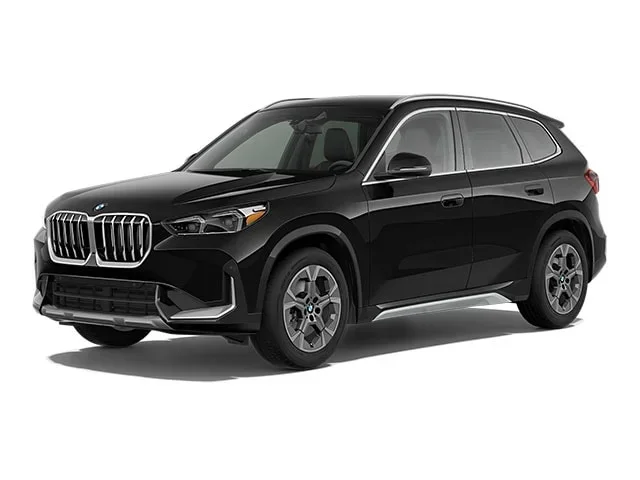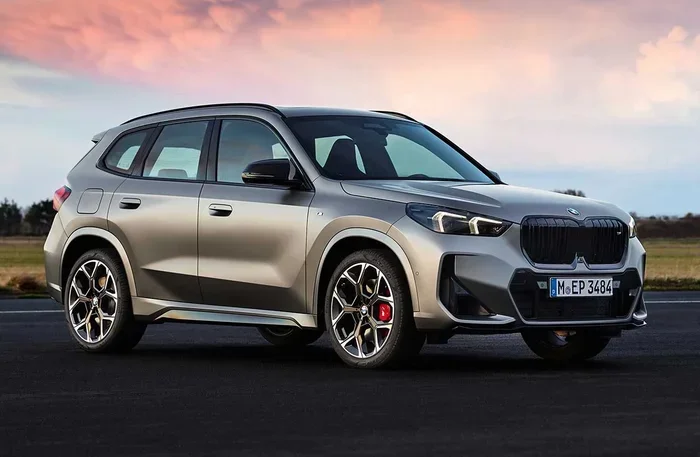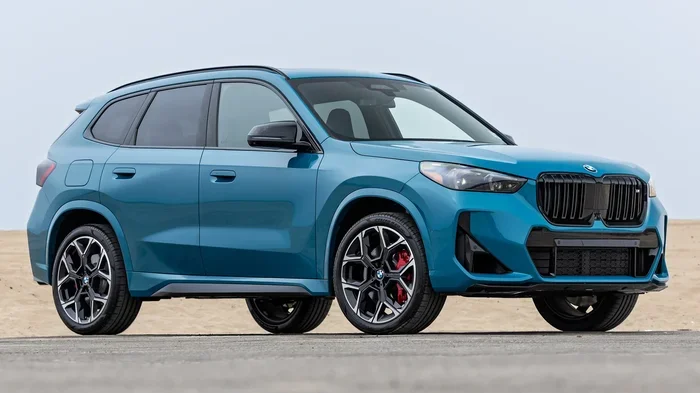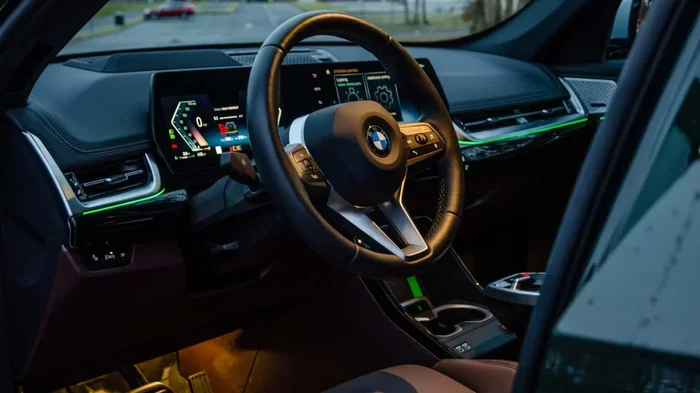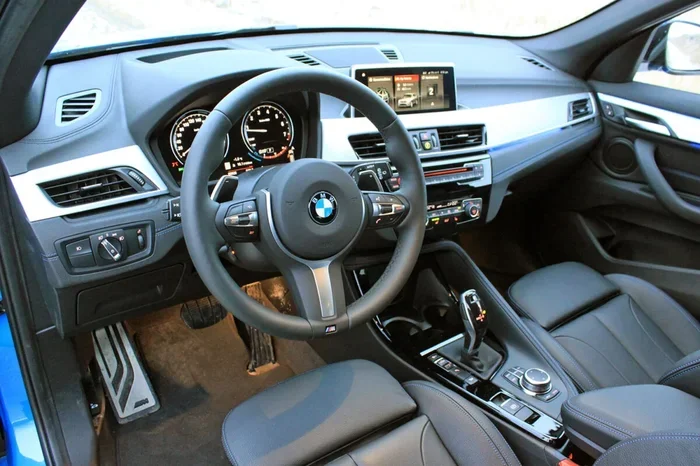
Featured image for BMW X1 interior gear selector
Image source: vicariousmag.com
Is the BMW X1 manual or automatic? The short answer is that every new BMW X1 sold today comes exclusively with an automatic transmission. While early first-generation models offered a manual gearbox, BMW dropped the stick shift years ago in favor of advanced Steptronic automatics. This guide covers the full transmission history, explains the current 7-speed and 8-speed options, and details how to use manual mode via paddle shifters.
If you are shopping for a compact luxury crossover, you have probably asked yourself: Is BMW X1 manual or automatic? It is a fair question. BMW built its reputation on the “Ultimate Driving Machine,” and for decades, that meant a manual gearbox and a clutch pedal. But times change. The automotive world has shifted heavily toward automatics, and the X1 is no exception. Today, we are going to walk through the complete history of the X1 transmission lineup. We will look at which years had a stick shift, what sits under the hood of the current model, and why the manual disappeared. Whether you are a driving purist or just want a smooth commute, this guide has you covered.
The answer depends heavily on the model year you are looking at. The current generation, launched for the 2023 model year, does not offer a manual transmission at all. Not in the US, not in Europe, not anywhere. It is automatic across the board. However, if you are browsing the used market, you will find manual examples. They are rare, but they exist. We will break down exactly which years and trim levels came with three pedals. We will also explain the sophisticated automatic transmissions that replaced them. These aren’t the slushboxes of the past. They are quick, smart, and surprisingly engaging. Let’s dive in.
Key Takeaways
- Current models are automatic only: Every new BMW X1 (U11 chassis) uses a 7-speed dual-clutch or 8-speed Steptronic automatic transmission.
- Manuals were only on early models: The first-generation (E84) X1 offered a 6-speed manual on sDrive 4-cylinder models until roughly 2015.
- Steptronic offers manual control: You can still shift gears yourself using paddle shifters or the gear selector without a clutch pedal.
- Dual-clutch vs. torque converter: Front-drive models get a snappy 7-speed DCT; all-wheel drive xDrive models use a smooth 8-speed torque converter.
- Performance and efficiency drove the change: Modern automatics shift faster, return better fuel economy, and support advanced driver aids better than manuals.
- Used market is your only manual option: If you must have three pedals, you need a used 2013–2015 E84 sDrive18i or sDrive20i.
- Maintenance matters: Automatic transmission fluid changes are critical for longevity on these complex gearboxes.
📑 Table of Contents
- The Short Answer: Automatic Only for New Buyers
- A Look Back: When the X1 Had a Manual
- Understanding the Current Steptronic Transmissions
- Steptronic vs. Dual Clutch: What’s in Your X1?
- Why BMW Dropped the Manual Stick Shift
- Driving the X1: Manual Mode & Paddle Shifters
- Maintenance Tips for Your X1 Transmission
- Buying Used: Finding That Rare Manual X1
- Comparing the X1 to Rivals: The Manual Landscape
- The Future: Will Manuals Ever Return?
- Expert Insight: The Enthusiast Perspective
- Quick Tips for Test Driving
- Common Mistakes to Avoid
- Related BMW Maintenance Guides
- Conclusion
The Short Answer: Automatic Only for New Buyers
Let us get straight to the point. If you walk into a BMW dealership today to buy a brand-new X1, you will leave with an automatic transmission. There is no manual option on the order sheet. This has been the case for the last two generations (F48 and U11). The current BMW X1 (U11 chassis) uses two different automatic transmissions depending on the drivetrain. The front-wheel-drive sDrive models use a 7-speed dual-clutch transmission (DCT). The all-wheel-drive xDrive models use an 8-speed Steptronic torque-converter automatic. Both are excellent. Both offer a manual mode with paddle shifters. But neither has a clutch pedal.
This often surprises enthusiasts. The X1 is based on the UKL front-wheel-drive platform. This platform shares bones with the 1 Series and 2 Series Gran Coupe. In some markets, those siblings once offered manuals. The X1, however, lost its manual option earlier than most. For the US market, the manual died after the 2015 model year. In Europe, it lingered slightly longer on the base sDrive18d diesel, but it is long gone now. If you want a new BMW with a manual transmission today, your only options are the M2, M3, and M4 (and even those are fading fast). The X1 is not on that list.
A Look Back: When the X1 Had a Manual
To find a manual X1, you have to go back to the first generation. The E84 chassis (2010–2015) is the only generation that offered a stick shift. Even then, it was not available on every model. It was strictly a rear-wheel-drive (sDrive) and four-cylinder affair. You could not get a manual with the six-cylinder engine. You could not get a manual with xDrive all-wheel drive. And in the United States, the take rate was incredibly low. Most buyers opted for the 8-speed automatic even when the 6-speed manual was on the menu.
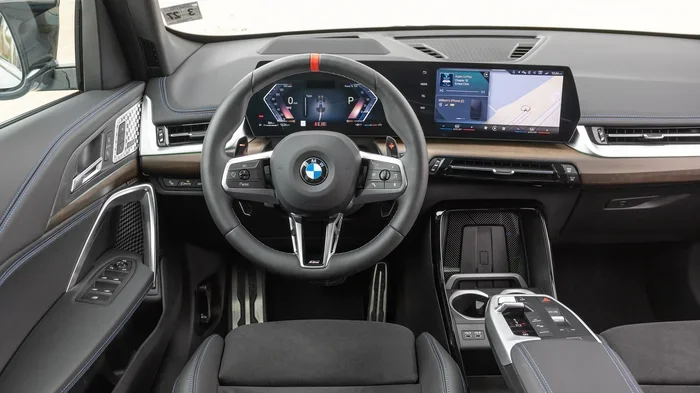
Visual guide about BMW X1 interior gear selector
Image source: motortrend.com
The E84 Manual Specs
The manual gearbox in the E84 X1 was a Getrag 6-speed unit. It was offered on the sDrive18i, sDrive20i, sDrive18d, and sDrive20d models. It featured a relatively short throw for an SUV. The clutch take-up point was predictable. It felt like a proper BMW manual—mechanical, slightly notchy when cold, but satisfying once warm. However, it had drawbacks. The gearing was tall for fuel economy. Sixth gear was a serious overdrive. This meant highway cruising was relaxed, but passing required a downshift to fourth or third. The automatic of that era (the ZF 8HP) was widely considered the better all-rounder. It shifted faster, got better EPA ratings, and handled the turbo torque better.
Why the Manual Disappeared After 2015
When the second generation (F48) launched in 2016, the manual was gone. Why? Three main reasons. First, the take rate was tiny. BMW is a business. They build what sells. Second, the platform switched to front-wheel-drive architecture. The transverse engine layout required a different transmission packaging. The manual gearbox available for that platform wasn’t rated for the higher torque outputs of the newer B-series engines. Third, emissions and fuel economy regulations tightened. Modern automatics with 8 or 9 speeds simply outperform manuals on the test cycles. They keep the engine in its sweet spot better than a human can. It was a business and engineering decision, not just a “lazy driver” decision.
Understanding the Current Steptronic Transmissions
Okay, so the manual is gone. What do you get instead? You get a Steptronic transmission. This is BMW’s marketing name for their torque-converter automatics. But the X1 actually uses two distinct types. It is important to know the difference because they feel different behind the wheel. The type you get depends entirely on whether you choose sDrive (FWD) or xDrive (AWD).
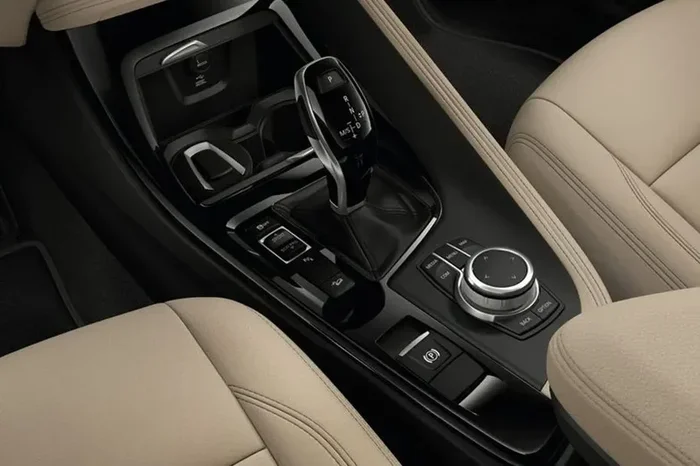
Visual guide about BMW X1 interior gear selector
Image source: imgcdn.oto.com.sg
7-Speed Dual-Clutch (sDrive Models)
If you buy an X1 sDrive18i, sDrive20i, or the electric iX1 (which uses a single-speed reduction gear, but let’s stick to gas), you get a 7-speed dual-clutch transmission (DCT). This is a wet-clutch unit sourced from Magna (formerly Getrag). It is the same basic family used in the Mini Cooper and BMW 1 Series. A DCT uses two clutches—one for odd gears, one for even gears. It pre-selects the next gear. This allows for lightning-fast shifts. In Sport mode, it bangs through gears with a satisfying snap. In Comfort mode, it is smooth enough for daily traffic. It is lighter and more efficient than a torque converter. However, at very low speeds (creeping in a parking lot), it can feel a tiny bit hesitant compared to a traditional automatic. It is a fantastic gearbox for spirited driving.
8-Speed Steptronic (xDrive Models)
If you check the xDrive box, you get the legendary ZF 8HP 8-speed torque-converter automatic. This is widely considered one of the best transmissions on the planet. It is used in everything from the Toyota Supra to the Rolls-Royce Ghost. In the X1, it is calibrated for the transverse layout. It uses a torque converter (a fluid coupling) instead of clutches. This makes it incredibly smooth pulling away from a stop. It handles the higher torque of the xDrive system effortlessly. The shifts are nearly imperceptible in Comfort mode. In Sport mode, it holds gears longer and downshifts aggressively under braking. It is heavier and slightly less efficient than the DCT, but it is more robust for high-torque applications and towing.
Quick Comparison: DCT vs. Torque Converter in the X1
| Feature | 7-Speed DCT (sDrive) | 8-Speed Steptronic (xDrive) |
|---|---|---|
| Type | Dual-Clutch (Wet) | Torque Converter |
| Drivetrain | Front-Wheel Drive | All-Wheel Drive |
| Shift Speed | Very Fast (ms) | Fast & Smooth |
| Low Speed Smoothness | Good (Slight hesitation possible) | Excellent (Creamy) |
| Efficiency | Higher | Slightly Lower |
| Towing Capacity | Lower | Higher |
| Maintenance | Fluid change ~60k miles | Fluid change ~60k-80k miles |
Steptronic vs. Dual Clutch: What’s in Your X1?
We touched on this above, but let’s go deeper. The term “Steptronic” technically applies to both in BMW marketing speak, but enthusiasts distinguish them. “Steptronic” usually implies torque converter. “DCT” or “DKG” (Doppelkupplungsgetriebe) implies dual clutch. The new U11 X1 uses both. The entry-level X1 xDrive23i (in Europe) or xDrive28i (in US) gets the 8-speed. The sDrive20i gets the 7-speed DCT. The high-performance M35i xDrive gets a strengthened version of the 8-speed. There is no manual option for the M35i either. This is a trend across the industry. Even the M135i hatchback (the X1’s platform mate) is automatic only now.
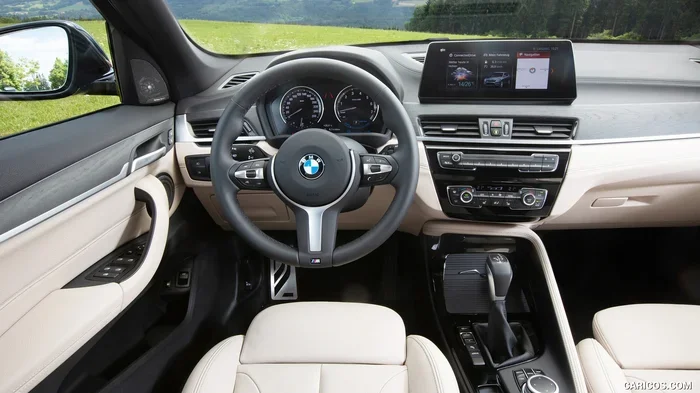
Visual guide about BMW X1 interior gear selector
Image source: images.caricos.com
How to Identify Which One You Have
It is easy. Look at your badge. If it says sDrive, you have the 7-speed DCT. If it says xDrive, you have the 8-speed Steptronic. If you are buying used, check the window sticker or VIN decoder. The gear selector looks identical for both. They both use the same electronic shifter stalk on the steering column (new U11) or the center console lever (F48). They both have paddle shifters on the steering wheel (standard on most trims, optional on base models years ago).
Does It Matter Which One You Get?
For 95% of drivers, no. Both are world-class. The DCT feels a bit sportier and snappier. The 8-speed feels more luxurious and refined. If you live in a snowy climate, get xDrive (and the 8-speed). The all-wheel-drive system is excellent. The 8-speed manages torque distribution beautifully. If you live in the sunbelt and want max MPG and a zippy feel, the sDrive with the DCT is great. It is lighter, so the front end feels slightly more agile. Neither transmission should be a dealbreaker. They are both far superior to the old 6-speed manual in terms of speed and efficiency.
Why BMW Dropped the Manual Stick Shift
It hurts the enthusiast heart, but the logic is sound. Let’s break down the “why” so you understand the market forces. It wasn’t just BMW. Audi, Mercedes, Volvo—they all killed manuals in this segment. The compact luxury SUV buyer wants ease of use. They want CarPlay, adaptive cruise, and a smooth ride. They do not want to heel-toe downshift onto the highway on-ramp.
The Engineering Reality
Modern turbo engines produce massive low-end torque. The B48 2.0L engine in the X1 makes 295 lb-ft of torque (in 28i tune) from 1,500 rpm. A manual clutch that can hold that torque smoothly, last 150k miles, and fit in a transverse engine bay is expensive and heavy. A dual-clutch or torque converter handles that torque effortlessly. It also allows for coasting functions (sailing) where the engine decouples to save gas. A manual cannot do that. It allows for predictive shifting using navigation data. The car sees a corner coming on the GPS and downshifts before you touch the brake. A manual cannot do that. It integrates with mild-hybrid systems (48V starter-generators) for smooth auto start/stop. A manual makes this jerky. The automatic is simply a better engineering partner for modern powertrains.
The Regulatory Push
CAFE (Corporate Average Fuel Economy) standards in the US and WLTP/CO2 standards in Europe penalize manual transmissions. Why? Because the test cycles are optimized for automatic shift points. A human driver shifts at different RPMs every time. The computer shifts at the mathematically perfect RPM every time. The computer wins the MPG test. Since manufacturers are fined for missing fleet targets, they optimize for the test. That means automatics. It is that simple. If you want to blame someone, blame the test cycle, not the engineers.
The “Take Rate” Death Spiral
When take rates drop below 5%, the cost to certify, crash test, and stock parts for a manual variant becomes impossible to justify. For the E84 X1 in the US, the manual take rate was reportedly under 3%. It costs millions to certify a powertrain combination. BMW decided that money was better spent developing the 8-speed or the DCT. Enthusiasts say “I would buy one!” but when the showroom opens, they lease the automatic. The business case evaporates.
Driving the X1: Manual Mode & Paddle Shifters
Just because there is no clutch pedal doesn’t mean you have zero control. Every X1 automatic has a manual mode. You access it by tapping the gear selector to the left (on the console shifter) or pressing the “M” button (on column shifter). Suddenly, the car holds gears to redline. It won’t upshift automatically (mostly). It won’t downshift early. You are in charge. You use the paddle shifters behind the steering wheel. Right paddle upshifts. Left paddle downshifts. It is intuitive and fast.
How Good Is The Manual Mode?
It is genuinely good. In the 8-speed xDrive, the shifts are crisp. The rev-matching on downshifts (blipping the throttle) is smooth. It makes a great noise in Sport mode. In the 7-speed DCT sDrive, the shifts are instantaneous. Click. Click. It feels like a race car. You can drive a canyon road entirely on paddles and have a blast. The transmission logic is smart. If you forget to upshift, it will save the engine at the limiter. If you lug the engine too low, it will downshift to protect it. It protects you from yourself while letting you play.
Launch Control (M35i Only)
If you step up to the X1 M35i xDrive, you get proper Launch Control. Hold brake. Floor gas. Engine builds boost. Release brake. Boom. 0-60 in under 5 seconds. The 8-speed manages the torque delivery perfectly. No wheelspin. No clutch smell. Just violence. You cannot do this in a manual X1 because it never existed. This is the performance argument for the automatic. The fastest X1 ever made is automatic only.
Maintenance Tips for Your X1 Transmission
Since you are stuck with an automatic (or choosing one), you need to maintain it. BMW says “lifetime fluid.” Do not listen. “Lifetime” means the lifetime of the warranty. If you want your X1 to hit 200k miles, change the fluid. It is the single best thing you can do.
Fluid Change Intervals
- 7-Speed DCT (sDrive): Change fluid and filter every 60,000 miles. Use BMW DCTF-1 fluid (or approved equivalent like Pentosin FFL-2). The filter is integrated into the pan. It is a DIY job if you have a lift and a scan tool to check fluid temp/level.
- 8-Speed Steptronic (xDrive): Change fluid and filter every 60,000–80,000 miles. Use BMW ATF-3+ (green) or the newer ATF-3++ (blue). The pan is plastic with an integrated filter. Again, fill by temperature. A scan tool (like BimmerLink or ISTA) is required to verify correct level.
- Transfer Case & Rear Diff (xDrive): Don’t forget these! Change every 60k miles. Use BMW Transfer Case Fluid (OTF-2) and Rear Diff Fluid (SAF-XJ + FM booster). This is cheap insurance for the AWD system.
Software Updates
BMW releases transmission software updates (integration levels) periodically. These can fix rough shifts, improve cold start behavior, or optimize hybrid interaction. Ask your dealer or indie shop to check for “ISTA integration levels” during service. It often requires a programming session. It can make a noticeable difference in drivability.
Common Issues to Watch
Both transmissions are reliable, but not bulletproof.
- DCT: Mechatronic unit (solenoid pack) failures happen. Symptoms: harsh shifts, “Drivetrain Malfunction” error, car stuck in gear. Expensive fix ($2k+). Fluid changes help prevent this.
- 8-Speed: Torque converter shudder (lockup clutch wear). Feels like driving over rumble strips at light throttle ~40 mph. Fluid change might fix it if caught early. Otherwise, torque converter replacement.
- Both: Plastic oil pan cracks from road debris or overtightening. Inspect at every oil change.
If you are doing your own maintenance, make sure you have the right fluids. It is also wise to check your brake fluid and coolant while you are under the car, as these systems are vital for overall vehicle health and performance.
Buying Used: Finding That Rare Manual X1
If you are absolutely set on a manual X1, you are hunting a unicorn. You need a 2013–2015 E84 sDrive18i or sDrive20i (US Spec). The 28i (6-cylinder) was never manual. The xDrive was never manual. The 2016+ F48 was never manual. Your search radius will be national. Check enthusiast forums (Bimmerfest, Bimmerpost), Bring a Trailer, Cars & Bids, and Autotrader. Search for “6-speed” or “manual” in the keyword field.
What to Check on a Used Manual X1
- Clutch Health: Test the bite point. It should engage in the middle of pedal travel. High engagement = worn clutch. $1,500+ job.
- Synchros: Shift 1-2 and 2-3 quickly. Any grind or notchiness? The Getrag box is strong but not invincible.
- Shifter Bushings: The shifter feels vague? Bushings are cheap ($50) and transform the feel.
- Rear Main Seal / Oil Filter Housing Gasket: Standard N20/B48 engine leaks. Check for oil drips.
- Timing Chain (N20 Engine 2013-2014): Early N20 engines had timing chain guide failures. BMW extended warranty to 7yr/70k. Verify it was done. 2015+ B48 engines are fine.
Is a Used Manual X1 Worth It?
Honestly? Probably not for a daily driver. The automatic is better in traffic, better on gas, faster 0-60, and more reliable long-term. The manual is a novelty. It adds engagement but subtracts convenience. If it’s a weekend toy, sure. If it’s your only car, the automatic is the smarter pick. Plus, the automatic X1 holds value better because the market demands it. The manual is a niche within a niche. Hard to sell later.
Comparing the X1 to Rivals: The Manual Landscape
The X1 isn’t alone in killing the manual. Let’s look at the segment.
- Audi Q3: Automatic only (DSG/S tronic). Manual died years ago.
- Mercedes GLA: Automatic only (7G-DCT / 8G-DCT). No manual.
- Volvo XC40: Automatic only (8-speed Geartronic).
- Mazda CX-5: Automatic only (6-speed Skyactiv-Drive). Manual died in 2020.
- VW Tiguan: Automatic only (8-speed / DSG).
- Subaru Forester: CVT only. Manual died long ago.
The entire compact SUV segment has abandoned the manual. If you want a manual crossover, you basically have to look at a used Jeep Compass, a used Honda CR-V (older gens), or a new Bronco Sport (manual available on Base/Big Bend trims only). The premium German segment? Zero manuals. The X1 is just following the herd.
The Future: Will Manuals Ever Return?
Short answer: No. Long answer: The next X1 (likely 2029+) will be built on the Neue Klasse platform. It will be electric-first. The gas versions (if any remain) will be mild-hybrid PHEVs. These architectures do not package a manual transmission. The clutch pedal is dead in this segment. The “manual” experience will be simulated. Think synthetic shift paddles with haptic feedback and sound generation (like the Hyundai Ioniq 5 N). It sounds silly, but it might actually be fun. But a real mechanical linkage? Gone forever.
Expert Insight: The Enthusiast Perspective
I’ve driven every generation of X1 on track and street. The E84 manual was charming. It made a slow car feel involved. The F48 8-speed was a revelation—it made the car feel expensive. The new U11 DCT in the sDrive20i is a hoot. It revs freely, shifts instantly, and makes the 4-cylinder feel punchy. The M35i 8-speed is a sledgehammer. Do I miss the manual? Sometimes. On a perfect back road, rowing your own gears is a unique joy. But in LA traffic? In a snowstorm? On a road trip? The automatic wins every time. BMW made the right call for 99% of buyers. The 1% who care buy an M2.
Quick Tips for Test Driving
- Test drive both sDrive (DCT) and xDrive (8AT) if possible. Feel the difference.
- Put it in Sport mode. Use the paddles. See if you like the manual mode.
- Try the “Launch Control” procedure (if M35i) or just a hard 0-60 run.
- Check low-speed creep in a parking lot. DCT can surge slightly; 8AT is smoother.
- Verify the transmission fluid history if buying used. No records? Budget for a change immediately.
Common Mistakes to Avoid
- Assuming “Steptronic” means one thing: It covers two very different hardware types (DCT vs Torque Converter). Know which you are buying.
- Believing “Lifetime Fluid”: It is a myth. Change it at 60k.
- Buying a used manual without a PPI: Pre-purchase inspection is critical. Clutch jobs are expensive.
- Ignoring xDrive maintenance: Transfer case and diff fluid are not “lifetime” either.
- Thinking the manual is “faster”: It isn’t. The DCT and 8AT destroy the old 6MT in acceleration tests.
Related BMW Maintenance Guides
Keeping your X1 running smoothly involves more than just the transmission. Since you are researching drivetrain options, you might also be interested in overall model reliability. Check out our guide on identifying the most reliable BMW models to see where the X1 ranks. Additionally, the X1 comes standard with BMW run-flat tires, which have specific care requirements. If you ever need more space than the X1 offers, you can read about which BMW SUV has three rows for your growing family needs.
Conclusion
So, is BMW X1 manual or automatic? The verdict is clear. If you are buying new, it is automatic. Period. You get a brilliant 7-speed dual-clutch on front-drive models or a world-class 8-speed torque converter on all-wheel-drive models. Both offer full manual control via paddles. Both are faster and more efficient than the old stick shift. If you are buying used, a manual exists—but only on 2013–2015 rear-drive four-cylinder models. They are rare, slower, and harder to maintain. For the vast majority of drivers, the modern automatic is the better tool. It delivers the performance, the efficiency, and the technology that define a modern BMW. Don’t fear the lack of a clutch pedal. Embrace the paddles. Enjoy the torque. Drive the car.
Frequently Asked Questions
Does the 2024 BMW X1 have a manual transmission?
No, the 2024 BMW X1 does not offer a manual transmission. All current models come standard with an automatic transmission—either a 7-speed dual-clutch (sDrive) or an 8-speed Steptronic (xDrive).
What year did BMW stop making the X1 with a manual transmission?
BMW stopped offering a manual transmission on the X1 in the US after the 2015 model year (end of E84 production). The second generation (F48) launched in 2016 as automatic only.
Can you get a manual BMW X1 with xDrive all-wheel drive?
No, the manual transmission was never offered with xDrive all-wheel drive on any generation of the X1. It was only available on sDrive (rear-wheel drive or front-wheel drive) four-cylinder models.
Is the BMW X1 automatic transmission reliable?
Yes, both the 7-speed DCT and 8-speed Steptronic are generally reliable if maintained. The key is changing the transmission fluid and filter every 60,000 miles, ignoring the “lifetime fluid” claim.
What is the difference between Steptronic and DCT in the X1?
Steptronic (8-speed) uses a torque converter and is standard on xDrive models; it is smoother and better for towing. DCT (7-speed dual-clutch) uses two wet clutches and is standard on sDrive models; it shifts faster and is slightly more fuel-efficient.
Can I add paddle shifters to an X1 that doesn’t have them?
On most modern X1 models (F48/U11), paddle shifters are standard or included with the Sport Line/M Sport packages. Retrofitting them to a base model without the wiring harness is possible but complex and expensive, requiring a new steering wheel, wiring, and coding.