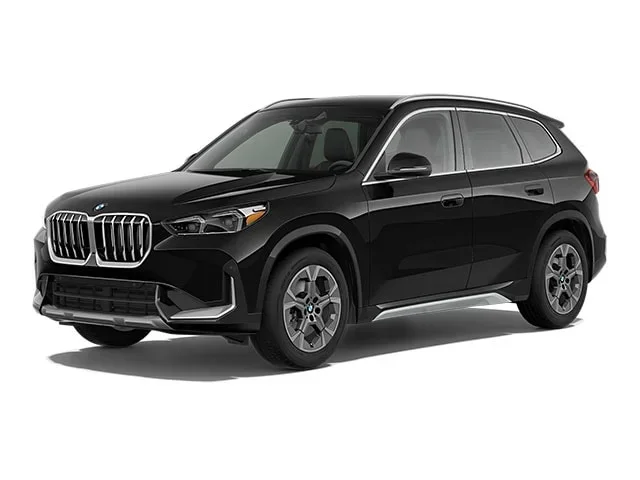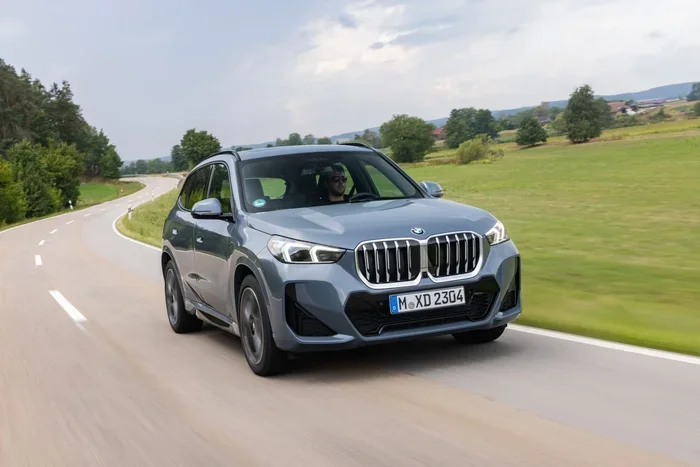
Featured image for BMW X1 compact SUV exterior
Image source: timesmotors.com
Yes, the BMW X1 is classified as a subcompact luxury crossover SUV, though it often feels larger inside than its badge suggests. It sits below the X3 in the lineup and competes directly with the Audi Q3 and Mercedes-Benz GLA. This guide covers dimensions, cargo space, generational growth, and how it stacks up against true compact SUVs so you can make a smart buying decision.
If you are shopping for a luxury crossover, you have likely asked yourself: is BMW X1 a compact SUV? The answer is a little nuanced. Technically, the X1 lives in the subcompact luxury crossover segment. However, the latest generation has grown so much that it challenges the traditional definition of the class. It offers space and tech that often rival larger vehicles. Understanding where it fits helps you compare it fairly against rivals like the Audi Q3 or the larger BMW X3.
In this guide, we will dig into the official classifications, dimensions, interior space, and generational changes. We will also look at how it drives, what it costs to own, and how it compares to the competition. By the end, you will know exactly where the X1 stands and if it is the right size for your garage and your life.
Key Takeaways
- Official Classification: The BMW X1 is technically a subcompact luxury crossover, not a compact SUV, placing it in the entry-level segment.
- Generational Growth: The latest generation (U11 chassis, 2023+) grew significantly in size, blurring the line between subcompact and compact classes.
- Interior Space: Despite exterior dimensions, the X1 offers impressive passenger room and cargo capacity that rivals some older compact models.
- Key Rivals: Its direct competitors are the Audi Q3, Mercedes-Benz GLA-Class, Volvo XC40, and Lexus UX.
- Drivetrain Layout: Modern X1 models use a front-wheel-drive architecture (FAAR platform) with optional xDrive all-wheel drive.
- Value Proposition: It serves as the most affordable entry point into BMW SUV ownership while retaining premium features.
- Electric Variant: The new iX1 joins the lineup as a fully electric version sharing the same dimensions and classification.
📑 Table of Contents
- Understanding SUV Classifications: Compact vs. Subcompact
- The BMW X1 Classification: Official Segment Placement
- BMW X1 Dimensions: The Numbers Behind the Classification
- Generational Evolution: How the X1 Grew Up
- Key Features That Define the X1 Experience
- BMW X1 vs. The Competition: Where It Stands
- Is the BMW X1 Right for You? Pros and Cons
- Ownership Costs and Maintenance Reality
- Buying Guide: Which Trim Should You Choose?
- Common Questions About X1 Size and Practicality
- Final Verdict: Compact in Name, Big in Spirit
Understanding SUV Classifications: Compact vs. Subcompact
Before we look at the X1 specifically, we need to define the playing field. Automotive segments are defined by exterior dimensions, interior volume, and price point. The lines have blurred over the last decade as every model seems to grow with each redesign.
What Defines a Compact SUV?
A traditional compact SUV (often called the C-segment) usually measures between 180 and 188 inches in length. Think of the Toyota RAV4, Honda CR-V, or the BMW X3. These vehicles prioritize a balance of maneuverability and family-hauling capability. They typically offer around 30 to 40 cubic feet of cargo space behind the second row and comfortable rear legroom for adults.
What Defines a Subcompact SUV?
A subcompact SUV (B-segment) usually measures under 175 inches in length. Examples include the Mazda CX-30, Hyundai Kona, or the older BMW X1 generations. These are city-friendly, easier to park, and cheaper to buy. However, they often sacrifice rear seat space and cargo volume. The luxury subcompact segment—where the X1 lives—adds premium materials, better engines, and advanced tech to this smaller footprint.
Why the Lines Are Blurring
Automakers stretch wheelbases and lengthen bodies to maximize interior space without moving the car into a higher tax or regulatory bracket. The current BMW X1 is a prime example of this “segment creep.” It is longer and wider than the first-generation X3. This creates a unique value proposition: you pay subcompact prices but get near-compact utility.
The BMW X1 Classification: Official Segment Placement
So, is BMW X1 a compact SUV according to the EPA and manufacturers? Officially, no. BMW markets the X1 as a Sports Activity Vehicle (SAV) in the premium compact segment, but industry classification standards (like the EPA size class) place it in the “Small Station Wagon” or “Small SUV 2WD/4WD” categories, which align with the subcompact definition.
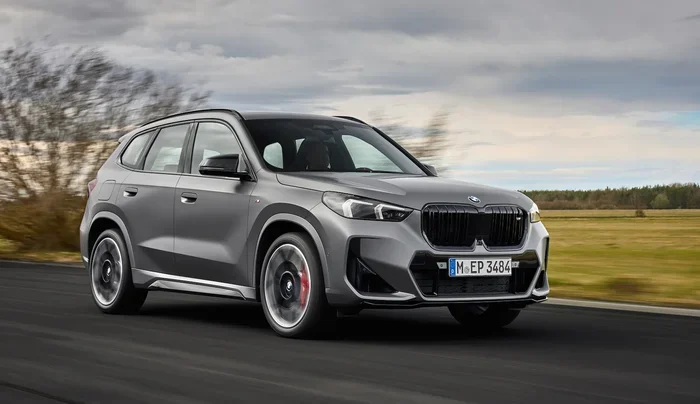
Visual guide about BMW X1 compact SUV exterior
Image source: ddztmb1ahc6o7.cloudfront.net
Where It Sits in the BMW Lineup
The X1 is the entry-level SUV in the BMW portfolio. The hierarchy looks like this:
- X1: Subcompact (Entry Level)
- X2: Subcompact Coupe-SUV (Style Focused)
- X3: Compact (Core Volume Seller)
- X4: Compact Coupe-SUV
- X5: Mid-Size
- X7: Full-Size Three-Row
If you need three rows of seating, the X1 is not the answer. You would need to step up to the X5 or X7. For a detailed look at which models offer that configuration, check out our guide on which BMW SUV has three rows.
EPA Classification vs. Marketing Reality
The EPA classifies the 2023+ X1 as a “Small SUV.” The previous generation (F48) was also a “Small SUV.” However, the current model’s interior volume pushes it right to the ceiling of that category. In the real world, cross-shoppers compare it against both the Audi Q3 (subcompact) and the Audi Q5 (compact). It effectively splits the difference.
BMW X1 Dimensions: The Numbers Behind the Classification
Numbers don’t lie. Let’s look at the tape measure to see exactly how “compact” the current X1 (U11 chassis, 2023–present) really is compared to its predecessor and its bigger brother, the X3.
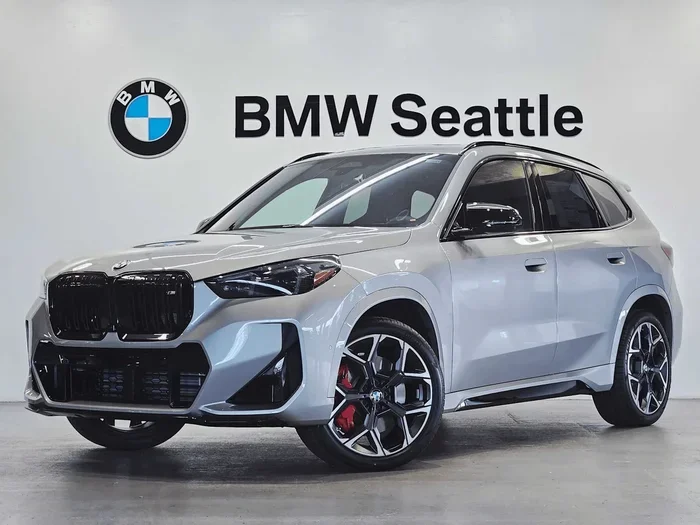
Visual guide about BMW X1 compact SUV exterior
Image source: proznabo.com
Exterior Dimensions Comparison
| Dimension | 2023+ X1 (U11) | 2016-2022 X1 (F48) | 2023+ X3 (G01) |
|---|---|---|---|
| Length | 177.2 in | 175.4 in | 185.9 in |
| Width (excl. mirrors) | 73.5 in | 71.7 in | 74.4 in |
| Height | 64.2 in | 63.7 in | 66.0 in |
| Wheelbase | 106.0 in | 105.1 in | 112.8 in |
| Ground Clearance | 7.2 – 8.1 in | 7.2 in | 8.0 – 8.7 in |
What These Numbers Tell Us
The current X1 is nearly 2 inches longer and almost 2 inches wider than the outgoing model. That extra width is huge for shoulder room. The wheelbase grew by nearly an inch, which directly translates to rear legroom. At 177 inches long, it is still roughly 8.5 inches shorter than the X3. That gap is noticeable in a tight parking garage, but inside? The gap feels much smaller.
Interior Volume and Cargo Space
This is where the X1 punches above its weight class.
- Passenger Volume: ~100 cubic feet (competitive with compact SUVs from 5 years ago).
- Cargo Behind 2nd Row: 27.1 cubic feet (up from 21.6 in the old model).
- Cargo With Seats Folded: 57.2 cubic feet.
For context, the current X3 offers 28.7 cubic feet behind the second row. The X1 gives you 27.1. That is a negligible difference for a vehicle that costs significantly less and parks easier. The rear seats also slide and recline (standard on new models), a feature usually reserved for larger classes.
Generational Evolution: How the X1 Grew Up
The BMW X1 has gone through three distinct generations. Each one moved the needle closer to “compact” territory.
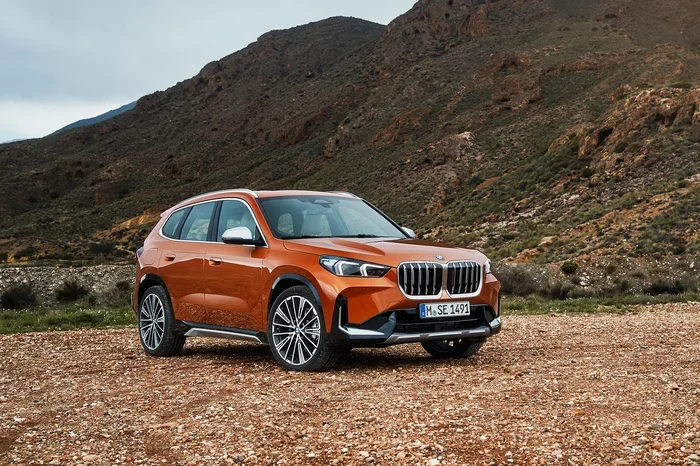
Visual guide about BMW X1 compact SUV exterior
Image source: d.newsweek.com
First Generation (E84, 2010–2015): The RWD-Based Original
The original X1 was unique. It sat on a rear-wheel-drive platform (shared with the 3 Series). It drove like a sporty wagon. It was tall, narrow, and had a long hood. It was definitely a subcompact, but with a driving dynamic that felt special. Cargo space was tight at roughly 17 cubes behind the rear seats.
Second Generation (F48, 2016–2022): The FWD Switch
This was the controversial generation. BMW switched to the UKL front-wheel-drive platform (shared with Mini). Purists hated it, but buyers loved it. Why? Interior space exploded. The wheelbase stretched, the floor flattened, and cargo space jumped to 21.6 cubes. It became a rational, spacious family hauler. It solidified the X1 as a volume seller.
Third Generation (U11, 2023–Present): The “Almost Compact”
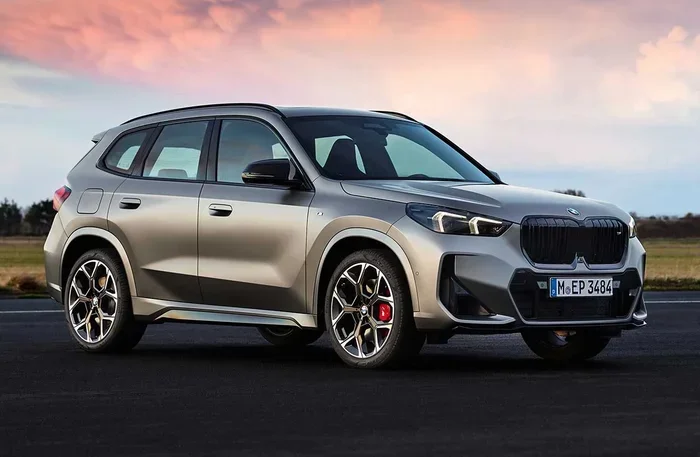
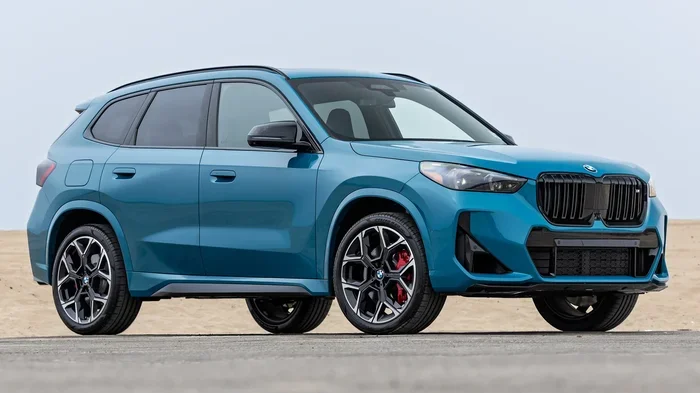
The current model uses the FAAR platform (an evolution of UKL). It looks like a shrunken X5. The design is upright, boxy, and imposing. The kidney grille is massive. Inside, the curved display (shared with the 7 Series) dominates the dash. The dimensions we listed above confirm it: this is no longer a “small” car. It is a right-sized family vehicle for urban and suburban life.
Key Features That Define the X1 Experience
Classification aside, you buy a car for how it works daily. Here is what defines the modern X1 ownership experience.
Drivetrain Options: FWD Architecture with xDrive Smarts
Every X1 (except the electric iX1) uses a 2.0-liter turbocharged four-cylinder engine.
- xDrive28i: 241 hp / 295 lb-ft. 0-60 mph in ~6.2 seconds. Standard all-wheel drive.
- sDrive28i: Same engine, front-wheel drive only (not always available in all US markets).
- M35i xDrive: 312 hp / 295 lb-ft. 0-60 mph in ~5.2 seconds. Sport suspension, M brakes.
The engine pairs with a 7-speed dual-clutch transmission (DCT). It snaps off shifts quickly. The xDrive system is front-biased but can send 100% of torque to the rear axle if needed. It handles snow and gravel well, but this is not a rock crawler. The ground clearance maxes out around 8 inches.
Interior Tech: The Curved Display
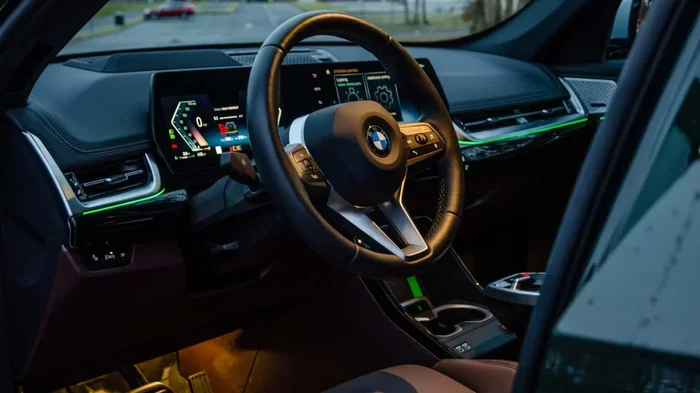
The dashboard is dominated by the BMW Curved Display, combining a 10.25-inch digital gauge cluster and a 10.7-inch central touchscreen. It runs iDrive 9 (Operating System 9). It is slick, responsive, and supports wireless Apple CarPlay and Android Auto. Physical buttons are mostly gone—climate controls are on the screen. Some love the minimalism; others miss tactile knobs.
Practicality Features
- Sliding Rear Bench: Standard 40/20/40 split seats slide 5.1 inches. You can prioritize legroom or cargo space on the fly.
- Hands-Free Liftgate: Standard on higher trims, optional on base. Kick under the bumper to open.
- Storage: Large door bins, a deep center console, and a wireless charging pad (standard).
BMW X1 vs. The Competition: Where It Stands
Since the X1 sits at the top of the subcompact class, it gets cross-shopped against the best in class. Here is how it stacks up.
BMW X1 vs. BMW X3: The Sibling Rivalry
This is the most common internal debate. The X3 is the true compact SUV.
- Price: X1 starts ~$38k; X3 starts ~$46k. That $8k gap buys a lot of options on the X1.
- Space: X3 wins on rear legroom (37.1 vs 36.4 in) and width. X1 cargo is nearly identical.
- Engine: X3 uses a similar 2.0T but offers a 6-cylinder plug-in hybrid (X3 50e) and the M40i inline-6. X1 tops out at the 4-cylinder M35i.
- Ride: X3 rides on a more sophisticated rear suspension (multi-link vs X1’s torsion beam on FWD/sDrive models, multi-link on xDrive). The X3 feels more settled on highways.
Verdict: If budget is tight and you park in a city, the X1 is 90% of the X3 for 80% of the price. If you tow, haul adults in the back daily, or want a 6-cylinder, spend the extra on the X3.
BMW X1 vs. Audi Q3 vs. Mercedes GLA vs. Volvo XC40
| Model | Length | Cargo (Behind 2nd Row) | Base Engine HP | Starting Price (Approx) |
|---|---|---|---|---|
| BMW X1 | 177.2 in | 27.1 cu ft | 241 hp | $38,000 |
| Audi Q3 | 176.7 in | 23.7 cu ft | 184 hp (2.0T base) | $37,000 |
| Mercedes GLA 250 | 174.1 in | 15.4 cu ft | 221 hp | $38,000 |
| Volvo XC40 | 174.8 in | 20.7 cu ft | 247 hp (B4/B5) | $37,000 |
The X1 Advantage
The BMW X1 wins the utility battle hands down. It has the most cargo space, the most powerful base engine, and the longest wheelbase. The Audi Q3 feels tighter in the back. The Mercedes GLA has a sloped roofline that kills headroom and cargo utility. The Volvo XC40 is stylish and safe but feels older inside (though the new EX30/EV models are changing that). The X1 feels like the most “grown-up” car in this specific showroom.
Is the BMW X1 Right for You? Pros and Cons
Let’s cut through the specs and talk real life.
The Pros (Why You Buy It)
- Best-in-Class Space: You get compact SUV utility in a subcompact footprint.
- Driving Dynamics: It feels like a BMW. Steering is sharp, chassis is balanced, brakes are strong.
- Tech Interface: iDrive 9 is arguably the best infotainment system on the market right now.
- Value: High standard equipment (LED lights, sensors, leatherette, curved screen) for the price.
- Electric Option: The iX1 xDrive30 offers 260+ miles of range with the same space.
The Cons (Why You Might Hesitate)
- Ride Stiffness: On 19 or 20-inch wheels (common on M Sport trims), the ride can be jarring over potholes. Stick to 18s for comfort.
- Engine Noise: The 2.0T four-cylinder gets thrashy at high RPM. It lacks the smoothness of the old inline-6 or the X3’s refinement.
- Rear Seat Width: It fits three adults “in a pinch” only. Two adults are very comfortable; three is a squeeze.
- Run-Flat Tires: Most trims come with run-flats. They are expensive to replace and ride harder. Many owners swap to standard tires immediately. Learn more about the pros and cons in our article on BMW run-flat tires.
- No Spare Tire: You get a mobility kit (sealant/compressor) or run-flats. No spare well exists.
Ownership Costs and Maintenance Reality
Buying the car is step one. Owning it for 5–10 years is step two. BMWs have a reputation for maintenance costs, but the X1 is generally one of the more reasonable models.
Reliability Outlook
The current B48 2.0L engine is proven. It has been used across the Mini and BMW lineup for years. The 7-speed DCT is robust. The front-wheel-drive architecture is simpler than the old RWD layouts. However, complexity comes from the electronics, sensors, and turbo components. If you are looking for the absolute most reliable BMW badge, the X1 is a strong contender, but the inline-6 models (like older 3 Series or X3) often edge it out in long-term studies. For a deep dive into long-term durability across the lineup, see our analysis of the most reliable BMW models.
Maintenance Schedule Basics
- Oil Changes: Every 10,000 miles or 12 months (BMW Condition Based Service). Use LL-01 or LL-17 FE+ approved 0W-20 or 0W-30.
- Brake Fluid: Every 2 years.
- Coolant: “Lifetime” fill, but check level often. Top off with BMW specific coolant (HT-12, typically blue/green). Using the wrong type causes issues. Read our guide on choosing the right coolant for your BMW to avoid costly mistakes.
- Brake Pads/Rotors: Expect 30k–50k miles depending on driving style. Rotors often need replacement with pads on modern BMWs.
- Transfer Case / Rear Diff Fluid (xDrive): Every 60k miles is a safe interval for peace of mind.
Fuel Economy
- xDrive28i: 25 City / 33 Highway / 28 Combined MPG.
- M35i xDrive: 23 City / 30 Highway / 26 Combined MPG.
- iX1 xDrive30: ~79 MPGe Combined.
Premium fuel (91+ octane) is required for gas models.
Buying Guide: Which Trim Should You Choose?
The 2024/2025 X1 lineup is streamlined. Here is the sweet spot.
xDrive28i (The Volume Seller)
This is the one to get. You get the 241-hp engine, standard all-wheel drive, the curved display, LED lights, power tailgate, and synthetic leather (Vernasca).
Recommended Packages:
- Premium Package: Heated seats, heated steering wheel, head-up display, Harman Kardon audio, ambient lighting. Essential.
- Driving Assistance Professional: Adaptive cruise with stop-and-go, active lane keeping. Great for highway commuters.
- Parking Assistance Package: 360-degree camera, automated parking. The X1 has thick pillars; the camera helps.
Avoid the base “Essential” trim if possible—it lacks the sliding rear seat and power tailgate in some markets.
M35i xDrive (The Enthusiast Choice)
You get 312 hp, M Sport suspension, M Sport brakes (blue calipers), M Sport differential, and unique cosmetics. It is genuinely quick. But the ride is firm, fuel economy drops, and the price approaches $50k+. At that price, a base X3 xDrive30i becomes a very real alternative.
iX1 xDrive30 (The EV Choice)
Same space, instant torque, ~260 miles range (EPA), 130 kW DC fast charging. It is heavier (approx. 4,400 lbs) but the low center of gravity helps handling. Federal tax credit eligibility varies by battery sourcing—check current IRS guidance.
Common Questions About X1 Size and Practicality
Can you fit a stroller in the trunk?
Yes. A full-size travel system (stroller + bassinet) fits behind the rear seats with room for groceries. If you slide the rear seats forward, you can fit a double stroller.
Can you fit a rear-facing car seat?
Yes. The LATCH anchors are accessible. There is enough front-to-back room for a large convertible seat rear-facing without pushing the front passenger seat all the way forward (depending on driver height). The sliding rear seat helps tremendously here.
Is it big enough for a family of four?
For two adults and two kids in car seats? Absolutely. For two adults and two teenagers? It works for daily driving and road trips, but the X3 is more comfortable for long-haul teen travel.
Does it have a spare tire?
No. No X1 has ever had a spare tire well. You get run-flat tires or a mobility kit. Consider a compact spare kit for the trunk if you travel remote areas.
Final Verdict: Compact in Name, Big in Spirit
So, let’s circle back to the main question: is BMW X1 a compact SUV?
Technically, it remains a subcompact luxury crossover. The EPA, the insurance institute, and BMW’s own hierarchy place it below the X3. However, the 2023 redesign moved the goalposts. It offers cargo space within 1.5 cubic feet of the X3. It offers a wheelbase just 6 inches shy of the X3. It offers more power than the base engines in the Audi Q5 or Volvo XC60 (true compact SUVs).
For the urban dweller, the small family, or the empty nester downsizing from an X5, the X1 is the “Goldilocks” vehicle. It is compact on the outside where you need it (parking, garage fit, city streets) and surprisingly spacious on the inside where you live.
If you prioritize badge prestige, driving engagement, tech interface, and maximum utility per square foot of garage space, the X1 is arguably the smartest buy in the BMW lineup today. Just spec the 18-inch wheels and the Premium Package, and you have a vehicle that punches two weight classes above its sticker price.