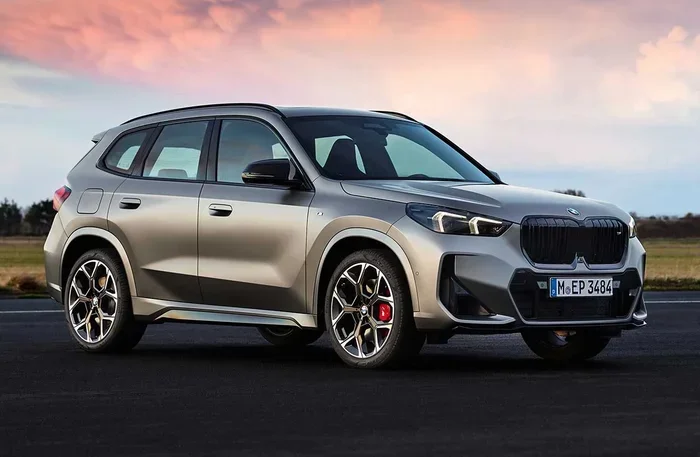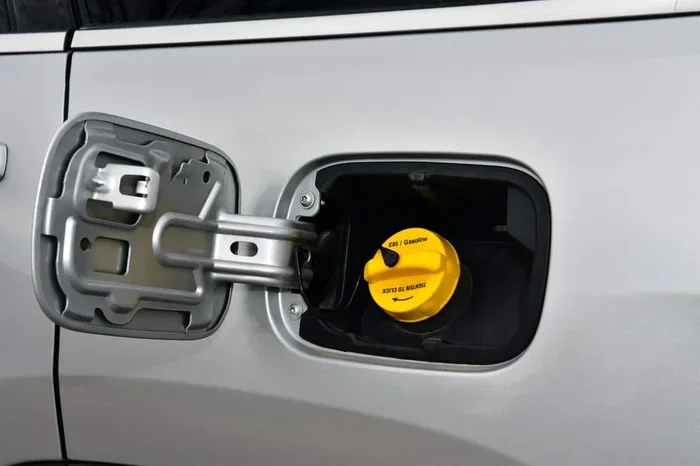
Featured image for BMW X1 fuel door closeup
Image source: autopadre.com
What gas for BMW X1 models? The short answer is premium unleaded gasoline with an octane rating of 91 or higher. Using the correct fuel protects your turbocharged engine from knock, ensures peak horsepower, and maintains fuel efficiency. While the engine can technically run on 89 octane in a pinch, making it a habit risks long-term damage and reduced performance.
Pulling up to the pump in your BMW X1 shouldn’t be a guessing game. Yet, many owners wonder exactly what gas for BMW X1 vehicles is truly best. You see the numbers 87, 89, and 91 (or 93) staring back at you. The price gap between regular and premium can be tempting to ignore. But with a precision-engineered German turbocharged engine under the hood, that choice matters more than you think.
This guide breaks down the official requirements, the science behind octane ratings, and the real-world consequences of choosing the wrong fuel. We will cover everything from the sticker on your fuel door to the long-term health of your direct-injection system. By the end, you will know exactly what to put in your tank to keep your X1 running like the Ultimate Driving Machine it was built to be.
Key Takeaways
- Official Requirement: BMW recommends premium unleaded gasoline with an AKI octane rating of 91 or higher for all X1 models.
- Minimum Acceptable: 89 octane is the absolute minimum per the owner’s manual, but it should only be used temporarily when 91+ is unavailable.
- Engine Protection: High octane prevents pre-ignition (knock) in the X1’s high-compression, turbocharged engine.
- Performance Impact: Using regular gas (87 octane) reduces horsepower, torque, and fuel economy while increasing engine temperatures.
- Top Tier Fuel: Choose Top Tier certified gas stations for superior detergent additives that keep direct-injection valves clean.
- Ethanol Limits: Stick to fuels with 10% ethanol (E10) or less; avoid E15 or E85 unless your specific model is flex-fuel rated (rare for X1).
- Long-Term Savings: The small price difference per gallon is offset by better MPG and avoiding costly carbon buildup or engine repairs.
📑 Table of Contents
- Understanding BMW X1 Fuel Requirements
- Why Octane Rating Matters for Your Turbo Engine
- Can You Use Regular Gas in a BMW X1?
- Choosing the Right Gas Station: Top Tier Fuel
- Fuel Economy and Real-World MPG
- Maintenance Tips for a Healthy Fuel System
- Comparison Table: Premium vs. Regular Gas for BMW X1
- Quick Tips for the Pump
- Common Mistakes to Avoid
- Expert Insights: The Real Cost of Cheap Gas
- Frequently Asked Questions (Deep Dive)
- Conclusion
Understanding BMW X1 Fuel Requirements
Let’s start with the facts straight from the manufacturer. Every BMW X1 sold in North America, from the early E84 generation to the current U11 chassis, shares the same core fuel requirement. The engine management systems are calibrated for high-octane fuel.
The Official Recommendation: Premium Unleaded
Open your fuel door. Look at the sticker. It says Minimum AKI 91. That is your answer. AKI stands for Anti-Knock Index. It is the average of the Research Octane Number (RON) and Motor Octane Number (MON). In the US and Canada, this is the number posted on the yellow pump stickers: 91 or 93.
BMW engineers tune the engine control unit (ECU) for this specific fuel grade. The ignition timing, boost pressure, and fuel injection maps all assume 91+ octane. When you feed the engine what it expects, you get the advertised horsepower, torque, and fuel economy figures. It really is that simple.
Minimum Octane Rating Explained
You might notice the owner’s manual mentions a “minimum” rating of 89 AKI (often labeled Mid-Grade or Plus at the pump). This is not a recommendation for daily use. It is a safety net. If you are in a remote area and the only pump working is 89, you can fill up. The car’s knock sensors will detect the lower resistance to detonation and retard ignition timing to protect the engine.
Crucial distinction: “Minimum” means “limp home” capability. It does not mean “optimal.” Running 89 octane regularly forces the ECU to constantly pull timing. You lose power. You lose efficiency. You run hotter. Save 89 for genuine emergencies only.
Why Octane Rating Matters for Your Turbo Engine
Every modern BMW X1 uses a turbocharged engine. Whether it is the 2.0L TwinPower Turbo 4-cylinder (B48) in the xDrive28i/sDrive28i or the older N20/N18 engines, they all share one trait: high effective compression ratios under boost.

Visual guide about BMW X1 fuel door closeup
Image source: i.ytimg.com
Preventing Engine Knock
Engine knock (detonation) happens when the air-fuel mixture ignites spontaneously from heat and pressure before the spark plug fires. This creates a shockwave that hammers the pistons, rods, and bearings. It sounds like marbles rattling in a can. It destroys engines fast.
Higher octane fuel is more stable. It resists auto-ignition. It allows the ECU to run aggressive ignition timing and high boost pressure safely. When you use 91 or 93 octane, the fuel burns in a controlled wave from the spark plug. Maximum energy pushes the piston down. That is power. That is efficiency.
Performance and Efficiency
Many drivers think premium gas is only for “speed.” It is actually for efficiency. When the ECU retards timing for low octane, the burn happens later in the stroke. Less energy becomes motion. More energy becomes heat. You press the pedal harder to maintain speed. You burn more fuel.
Real-world testing consistently shows that the MPG drop from using 87 or 89 octane often wipes out the per-gallon savings at the pump. You pay less per fill-up but fill up more often. Meanwhile, your 0-60 time suffers, and your passing power on the highway diminishes.
Can You Use Regular Gas in a BMW X1?
This is the most common question. The short answer: Technically yes, practically no. The car will start. It will drive. The check engine light might not come on immediately. But you are fighting the engineering.
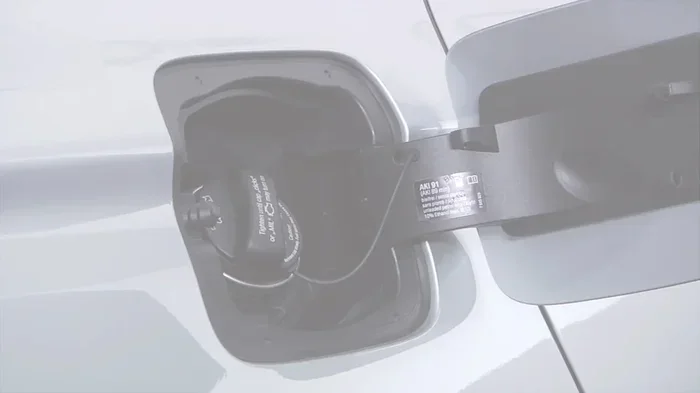
Visual guide about BMW X1 fuel door closeup
Image source: i.ytimg.com
The Risks of Lower Octane
If you put 87 octane (Regular) in your X1, the knock sensors will go crazy. The ECU will pull massive amounts of timing advance. Boost pressure will be capped. You might lose 20-30 horsepower instantly. The engine runs richer (more fuel) to cool the cylinders and prevent damage. This washes oil off cylinder walls, dilutes engine oil with fuel, and kills catalytic converter life.
Long-term use of 87 octane leads to:
- Chronic carbon buildup on intake valves (direct injection issue).
- Premature spark plug wear.
- Catalytic converter overheating and failure.
- Potential piston land cracking from uncontrolled detonation events the sensors can’t catch fast enough.
What Happens in an Emergency?
If you absolutely must use 87 or 89 octane:
- Fill only enough to reach a station with 91+.
- Drive gently. Keep RPMs low. Avoid wide-open throttle.
- Do not tow or carry heavy loads.
- Refill with 93 octane as soon as possible to dilute the lower grade.
- Consider an octane booster additive if you have a long drive ahead on bad fuel.
The car protects itself in the short term. But it is not designed to live there. Treat regular gas like junk food: okay once in a blue moon, terrible as a diet.
Choosing the Right Gas Station: Top Tier Fuel
Octane number isn’t the only variable. The quality of the additive package matters immensely for direct-injection engines like the ones in your X1.

Visual guide about BMW X1 fuel door closeup
Image source: wholesalecarparts.com.au
Benefits of Top Tier Detergent Gasoline
Top Tier is a standard backed by BMW, GM, Honda, Toyota, and others. It requires a higher concentration of detergent additives than the EPA minimum. Why does this matter? Your X1 sprays fuel directly into the combustion chamber, not onto the intake valves. The valves never get “washed” by gasoline.
Without strong detergents in the fuel, carbon deposits bake onto the intake valves. This restricts airflow, causes misfires, rough idle, and power loss. Cleaning them requires walnut blasting—a costly service. Top Tier gas significantly slows this buildup.
Major Top Tier Brands: Shell, Chevron, Costco, BP, Exxon, Mobil, Texaco, 76, and many regional brands. Look for the green Top Tier logo on the pump. Costco is a fan favorite—Top Tier certified and usually the cheapest premium in town.
Ethanol Content Considerations
Most US pump gas is E10 (10% ethanol). BMW approves up to E10. Ethanol raises octane (good) but attracts water and has less energy per gallon (bad for MPG).
Avoid E15 (15% ethanol) and E85 (Flex Fuel) unless your specific X1 is a certified Flex Fuel vehicle (extremely rare/non-existent for X1 in US market). Higher ethanol blends can degrade fuel lines, seals, and pumps not designed for them. They also lean out the air-fuel ratio, risking lean-burn damage in a tuned turbo engine. Stick to standard E10 premium.
Fuel Economy and Real-World MPG
Using the correct fuel is the single easiest way to hit the EPA estimates. The BMW X1 is efficient for an AWD crossover, but only if you feed it right.
City vs Highway Numbers
Current X1 (U11) xDrive28i EPA estimates: 23 City / 32 Highway / 26 Combined MPG. Older generations (F48) run similar: 22/31/25. These numbers assume 91+ octane Top Tier fuel.
If you drop to 87 octane, expect a 10-15% hit in real-world economy. That 26 Combined becomes 22-23. Over 15,000 miles a year, that is roughly 100-150 extra gallons of gas. At $3.50/gallon, that is $350-$500 wasted annually—far more than the $150-200 extra you spent on premium.
Driving Habits That Save Gas
Fuel choice is step one. Driving style is step two.
- Smooth inputs: Turbo engines love steady throttle. Jackrabbit starts drink fuel.
- Tire pressure: Check monthly. Low tires increase rolling resistance significantly.
- Remove roof racks: They kill aerodynamics at highway speeds.
- Use Eco Pro mode: It remaps throttle response and shifts earlier. It works.
- Warm up by driving: Don’t idle cold. Drive gently immediately. Oil warms faster under load.
Maintenance Tips for a Healthy Fuel System
Gas choice is the daily decision. Maintenance is the long game. The X1’s direct injection system is brilliant but needs specific care.
Carbon Buildup on Direct Injection Engines
As mentioned, fuel never touches the back of intake valves. Oil vapor from the PCV system hits hot valves and bakes into carbon. It happens to every DI engine. Premium Top Tier gas slows it. It doesn’t stop it.
Signs of carbon buildup: Rough cold start, misfire codes (P0300-P0304), hesitation off idle, reduced power at high RPM. Usually appears around 40k-60k miles depending on fuel quality and driving style (short trips = worse).
The fix: Walnut shell blasting. A shop removes the intake manifold and blasts crushed walnut shells at the valves. It’s safe, effective, and costs $400-$800. Do it every 50k-60k miles as preventative maintenance.
Fuel Additives and System Cleaners
Do “pour-in” cleaners work? For direct injection? Mostly no. Since fuel sprays past the valves, additives in the tank don’t clean the intake valves. They clean the injectors and combustion chamber—which is good, but not the main issue.
Exception: Polyetheramine (PEA) based cleaners (like Chevron Techron Concentrate Plus or Gumout Regane) used every 5,000 miles keep injectors flowing perfectly. This maintains spray pattern and atomization. Worth the $15/bottle. Just don’t expect them to clean intake valves.
For the intake valves, the only chemical solution is an induction service (spraying cleaner through the throttle body via vacuum line) done by a pro, or the walnut blast. Some dealers offer this as “fuel induction service.” It helps mildly but isn’t a substitute for blasting.
Comparison Table: Premium vs. Regular Gas for BMW X1
| Factor | Premium (91-93 Octane) | Regular (87 Octane) |
|---|---|---|
| Engine Timing | Optimal advance, max power | Retarded significantly, safe mode |
| Boost Pressure | Full target boost achieved | Capped/limited by ECU |
| Horsepower/Torque | 100% Factory Rating | Reduced 10-20% |
| Fuel Economy | Best MPG (EPA rated) | 10-15% Worse MPG |
| Engine Temps | Normal operating range | Elevated (rich mixture cooling) |
| Carbon Buildup Rate | Normal (with Top Tier) | Accelerated (rich burn, low quality) |
| Catalytic Converter Life | Normal | Shortened (overheating risk) |
| Cost Per Year (15k mi) | ~$2,000 (est.) | ~$2,200+ (more gallons used) |
| Long Term Risk | Low | High (Engine damage possible) |
Quick Tips for the Pump
- Check the sticker: Every time. Fuel doors can get swapped or stickers fade. Verify “Min 91 AKI”.
- Use Top Tier brands: Costco, Shell, Chevron are your best bets for price/quality balance.
- Don’t top off: Stop when the pump clicks. Overfilling saturates the charcoal canister (EVAP system), causing check engine lights and hard starts.
- Keep tank >1/4 full: The fuel pump is cooled by gasoline. Running low overheats the pump motor.
- Add PEA cleaner: One bottle every oil change interval (or 5k miles) keeps injectors sharp.
Common Mistakes to Avoid
- Mistake: “I’ll use 89, it’s close enough.” Reality: 89 is the floor, not the target. You lose power and MPG daily.
- Mistake: “All premium is the same.” Reality: Additive packages vary wildly. Non-Top Tier premium leaves deposits Top Tier prevents.
- Mistake: “Octane booster fixes cheap gas.” Reality: Most boosters raise octane marginally (points, not numbers). They are band-aids, not substitutes.
- Mistake: Ignoring the fuel filter. Reality: X1 has a lifetime filter inside the tank on the pump module. If pressure drops, the pump assembly needs replacement. Clean fuel extends its life.
- Mistake: Using E85 “for the octane.” Reality: Your fuel system isn’t rated for it. You will lean out, trigger codes, and potentially melt pistons.
Expert Insights: The Real Cost of Cheap Gas
I’ve seen countless X1s come into the shop with “rough running” complaints. The owner proudly says, “I save $0.50 a gallon!” The scan tool shows random misfires, heavy negative timing corrections, and fuel trims maxed out. A scope check reveals intake valves caked in black crust.
The repair bill for a walnut blast and new plugs: $600-$900. The savings on gas over 30,000 miles? Maybe $200. The math never works. BMWs are high-compression, forced-induction machines. They are not Camrys. They demand the fuel they were mapped for.
Another overlooked factor: Resale value. A Carfax showing consistent dealer maintenance (which includes fuel system services) and an owner who cared enough to run 93 octane commands a premium. A car with a misfire history and carbon issues? Trade-in value tanks.
Also, consider the coolant system health. An engine running hot from bad gas stresses the entire cooling system. Proper fuel keeps combustion temps in check, helping your water pump and thermostat last longer. It’s all connected.
Frequently Asked Questions (Deep Dive)
Does the BMW X1 require 93 octane or is 91 okay?
91 AKI is the factory requirement. 93 AKI is better if available (common in East/Midwest). 93 allows slightly more timing advance in hot weather or high load, offering a tiny power buffer. 91 is perfectly fine for daily driving. Use what is available in your region.
Can I use ethanol-free gas in my BMW X1?
Yes! Ethanol-free (E0) premium is excellent. It has higher energy content (better MPG), doesn’t absorb water, and stores longer. It is ideal if you let the car sit for weeks. It is often sold as “Recreational Fuel” or “Marine Gas” at marinas and some stations. It costs more but is the absolute best fuel for the engine.
What happens if I accidentally put diesel in my X1?
Do not start the car. Do not turn the key to “On” (primes the fuel pump). Have it towed. The tank must be drained, lines flushed, filters replaced. Starting it sends diesel into the high-pressure pump and injectors—destroying them. Gasoline in a diesel is bad; diesel in a gas engine is catastrophic for the fuel system.
Is it okay to mix 89 and 93 to get 91?
Math works: 50% 89 + 50% 93 = 91. But you are mixing additive packages. Just buy 91 or 93 straight. It avoids confusion and ensures consistent detergent levels. If you only have 89 and 93 available, sure, mix to get home. But don’t make it a habit.
Does the BMW X1 have a fuel filter I need to change?
Modern X1s (F48/U11) use a “lifetime” filter integrated into the fuel pump module inside the tank. It is not a separate service item. However, contaminated fuel (bad gas, water, debris) can clog it, requiring the whole pump module replacement ($800+). Another reason to buy clean, Top Tier fuel from busy stations.
My X1 says “Minimum 89” on the sticker. Can I run 89 all the time?
Some older models or specific markets show 89 as minimum. The manual will say “91 Recommended / 89 Minimum.” Running 89 constantly forces the ECU to retard timing. You lose the performance you paid for. The engine runs hotter. It is false economy. Spend the extra $3-5 per tank. Your engine will thank you.
Conclusion
Figuring out what gas for BMW X1 models is required doesn’t need to be complicated. The engineering is clear: Premium unleaded, 91 octane minimum, Top Tier detergent package. That is the recipe for the performance, efficiency, and longevity BMW built into your vehicle.
Skipping premium is a classic case of being penny-wise and pound-foolish. The marginal savings at the pump vanish through lower fuel economy, and the risk of carbon buildup, knock sensor failures, and catalytic converter damage creates massive repair bills down the road. Your X1 is a sophisticated machine. Treat it like one.
Next time you pull up to the pump, reach for the 91 or 93 handle. Look for the green Top Tier logo. Maybe grab a bottle of PEA cleaner every few oil changes. That’s it. That’s the secret to 200,000 miles of smiles per gallon. Drive safe, drive smart, and enjoy the boost.
Keeping up with all fluids is key to longevity. While you’re dialing in your fuel strategy, don’t forget to check your coolant specification and brake fluid type. And if you’re curious about how your X1 stacks up for the long haul, check out our guide on the most reliable BMW models. For a full picture of scheduled upkeep, see what BMW service includes.