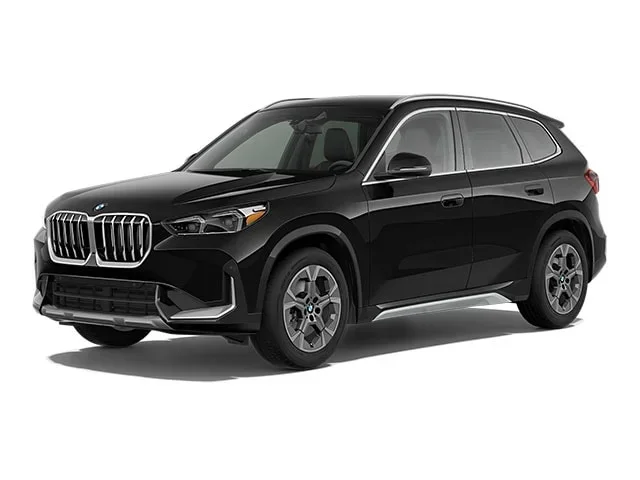
Featured image for BMW X1 SUV exterior
Image source: parkers-images.bauersecure.com
The BMW X1 is a subcompact luxury crossover SUV that sits at the entry point of the brand’s SUV lineup. It offers a compelling mix of BMW driving dynamics, a high-quality interior with the latest iDrive infotainment, and enough space for small families. This guide covers everything from engine choices and generational differences to reliability and key rivals.
Shopping for a luxury SUV often feels like navigating a maze of model numbers and marketing jargon. You want something premium but practical, sporty yet comfortable. If you have asked yourself what car BMW X1 actually is, you have landed on the right entry point. It is the gateway drug to the BMW SUV world—a vehicle that promises the “Ultimate Driving Machine” ethos in a package small enough for city parking but big enough for a Costco run.
Over three distinct generations, the X1 has evolved from a quirky, tall wagon on a rear-wheel-drive chassis into a sophisticated, front-wheel-drive-based tech showcase. It competes fiercely with the Audi Q3, Mercedes-Benz GLA, and Volvo XC40. Whether you are eyeing a used bargain or a brand-new 2025 model, understanding the nuances of this model is critical. Let’s break down the history, the hardware, and the reality of ownership.
Key Takeaways
- Segment Leader: The BMW X1 defines the subcompact luxury SUV class with sharp handling and a premium cabin.
- Two Drivetrains: Choose between front-wheel-drive-based sDrive models or all-wheel-drive xDrive variants for traction.
- Three Generations: The original E84 (RWD-based), the F48 (FWD-based), and the current U11 (larger, tech-heavy) offer distinct used-buying options.
- Powertrain Variety: The lineup includes efficient four-cylinders, a plug-in hybrid (xDrive25e), and the performance-oriented M35i.
- Tech Focus: The newest model features the curved display running iDrive 9, wireless Apple CarPlay/Android Auto, and advanced driver aids.
- Practicality Wins: Despite its small footprint, the rear seats slide and recline, offering class-leading cargo flexibility.
- Ownership Costs: Budget for premium fuel, run-flat tires, and scheduled maintenance; a BMW service plan can help manage expenses.
📑 Table of Contents
- What Exactly Is the BMW X1? Defining the Segment
- A Quick History: Three Generations of Evolution
- Performance, Engines, and Driving Feel
- Interior, Tech, and Practicality
- Reliability, Maintenance, and Ownership Costs
- BMW X1 vs. The Competition: How It Stacks Up
- Buying Guide: New vs. Used Value Proposition
- Quick Tips for X1 Shoppers
- Common Mistakes to Avoid
- Conclusion
What Exactly Is the BMW X1? Defining the Segment
The BMW X1 sits in the subcompact luxury crossover SUV segment. In the BMW hierarchy, it slots below the X3 and the X2 (which is essentially a coupe-styled X1). It is built on the UKL front-wheel-drive platform (shared with the Mini Countryman and BMW 1/2 Series), though the very first generation used a rear-wheel-drive platform.
This positioning is crucial. It means the X1 is not a “soft” SUV. It retains a driver-focused cockpit, a low hip-point, and steering that actually communicates what the front tires are doing. It targets buyers who want the badge and the driving feel but need more ground clearance and cargo versatility than a 2 Series Gran Coupe or 3 Series Sedan provides.
Who Is This Car For?
- Urban Professionals: Easy to park, great visibility, premium badge appeal.
- Small Families: The sliding rear bench makes car seats and strollers manageable.
- Driving Enthusiasts on a Budget: It is the cheapest way into a new BMW SUV with genuine handling chops.
- Tech Early Adopters: The new U11 generation packs the same massive curved screen as the 7 Series.
A Quick History: Three Generations of Evolution
To understand the X1, you have to know which generation you are looking at. They are fundamentally different cars underneath the skin. This is especially important if you are shopping the used market.
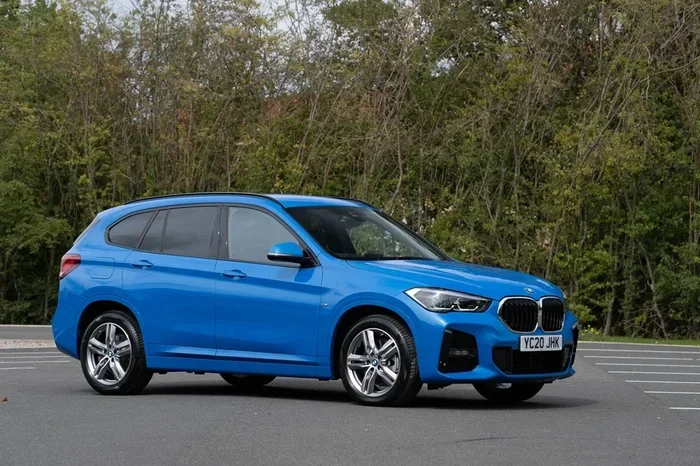
Visual guide about BMW X1 SUV exterior
Image source: parkers-images.bauersecure.com
First Generation (E84 | 2009–2015): The “Real” BMW SUV
The original X1 was built on the E90 3 Series platform. That means rear-wheel drive (sDrive) or a proper longitudinal all-wheel-drive system (xDrive). It felt like a lifted 3 Series wagon. Engines ranged from the N20 four-cylinder to the legendary N52 naturally aspirated inline-six in the xDrive28i (early years) and the N55 turbo-six in the xDrive35i.
Pros: Best driving dynamics, proven inline-six engines (on early models), durable platform.
Cons: Cramped rear seat, dated iDrive (CCC/CIC), timing chain issues on N20 engines, transfer case actuator failures on xDrive models.
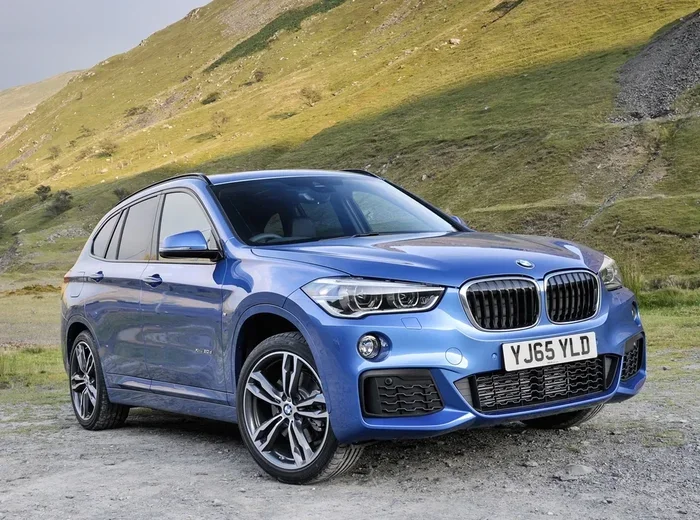
Second Generation (F48 | 2015–2022): The Volume Seller
BMW switched to the UKL front-wheel-drive architecture. Purists cried foul, but sales skyrocketed. The interior space exploded thanks to the transverse engine layout. It got the B-series modular engines (B38 3-cylinder, B48 4-cylinder). The xDrive system here is a front-biased setup with an electro-hydraulic clutch pack—effective in snow, but not the same mechanical feel as the E84.
Pros: Huge interior space, modern tech (CarPlay added later), efficient engines, Apple CarPlay standard.
Cons: Torque steer on high-power FWD models, run-flat ride harshness, some cheap plastics lower down.
Third Generation (U11 | 2023–Present): The Tech Flagship
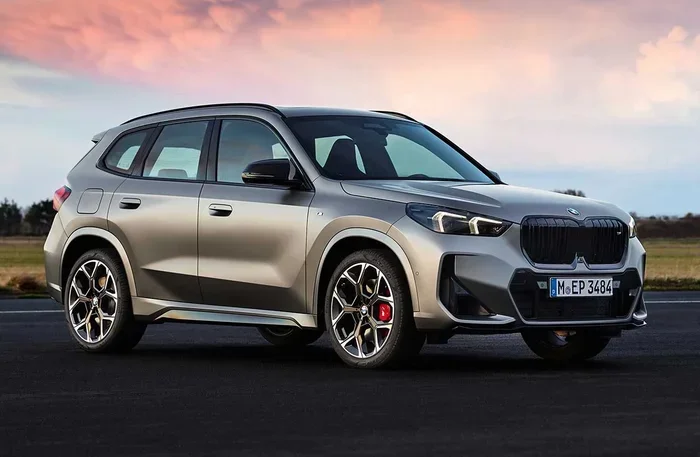
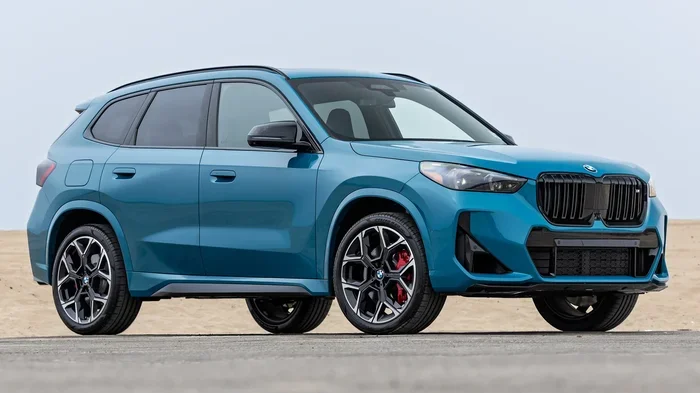
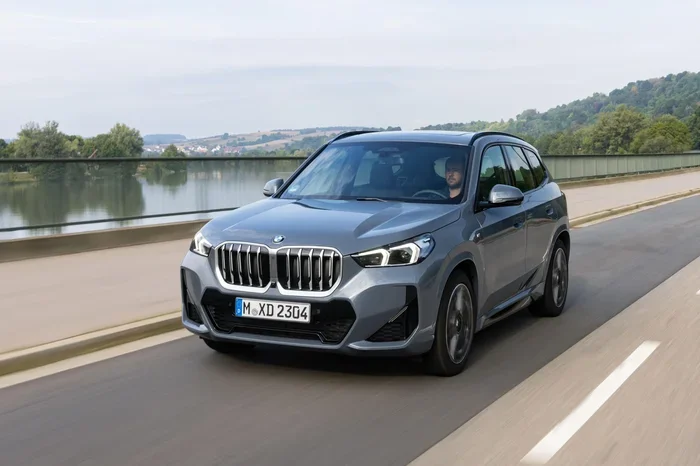
The current model grows significantly—it is nearly as long as the first-gen X3. It rides on the FAAR platform. The design is blockier, upright, and imposing. Inside, the BMW Curved Display (10.25″ cluster + 10.7″ touchscreen) runs iDrive 9. No more physical climate controls. It offers a 48V mild-hybrid system on all gas engines and a potent plug-in hybrid (xDrive30e in Europe, xDrive25e in US initially). The M35i brings 312 hp.
Pros: Class-leading tech, excellent rear seat room, quick acceleration, standard LED lights.
Cons: Touchscreen-reliant UI distracts, stiff ride on M Sport suspension, expensive options packages.
Performance, Engines, and Driving Feel
When people ask what car BMW X1 is dynamically, the answer depends heavily on the badge on the trunk. The driving experience is defined by the engine and the driven wheels.
Visual guide about BMW X1 SUV exterior
Image source: images.carexpert.com.au
sDrive vs. xDrive: The Traction Question
sDrive (FWD): Standard on base models (xDrive28i / sDrive28i). Lighter, better fuel economy, tighter turning circle. In dry pavement driving, it feels agile and tossable. In snow or wet leaves, it struggles without winter tires.
xDrive (AWD): Adds a power transfer unit and driveshaft to the rear. It can send up to 50% torque rearward. It adds ~150 lbs. It transforms the car into a year-round weapon. For anyone north of the Mason-Dixon line, xDrive is worth the premium.
The Engine Lineup (Current U11 Generation)
| Model | Engine | Output | 0-60 MPH | Key Trait |
|---|---|---|---|---|
| X1 sDrive28i / xDrive28i | 2.0L Turbo-4 (B48) + 48V Mild Hybrid | 241 hp / 295 lb-ft | ~6.2 sec (xDrive) | Sweet spot: balance of power & MPG |
| X1 xDrive30e (PHEV) | 1.5L Turbo-3 (B38) + Electric Motor | 296 hp / 332 lb-ft (Combined) | ~5.6 sec | ~40 miles EV range, tax credit eligible |
| X1 M35i xDrive | 2.0L Turbo-4 (B48 High Output) + 48V | 312 hp / 295 lb-ft | ~5.2 sec | M Sport diff, sport tuning, exhaust note |
Quick Tip: The 48V mild-hybrid system on the 28i smooths out the start/stop function and provides a tiny torque fill at low RPM. It is seamless in daily driving.
The M35i: A Pocket Rocket
The M35i is the enthusiast choice. It gets a specific tune, an M Sport limited-slip differential (on the front axle), stiffer suspension, and bigger brakes. It feels genuinely quick—mid-5-second 0-60 times in a compact SUV is serious performance. However, the ride on 19-inch or 20-inch run-flats can be jarring on broken pavement. If you prioritize comfort, stick to the 28i with adaptive dampers (if optioned) or standard suspension.
Interior, Tech, and Practicality
BMW interiors have always been driver-centric. The U11 X1 takes this to a new level with the “Curved Display.” It looks stunning, but functionality is a mixed bag.
Visual guide about BMW X1 SUV exterior
Image source: autotijd.be
The iDrive 9 Experience
The system runs on Android Automotive OS. It is fast, colorful, and supports wireless Apple CarPlay/Android Auto. However, BMW buried climate controls and heated seat toggles inside submenus. You can create shortcut widgets, but it requires a learning curve. Voice control (“Hey BMW”) works well for navigation and climate.
Space and Versatility: The Hidden Superpower
This is where the X1 shines. The rear bench slides 5.1 inches fore/aft and reclines. Slide it forward, and you get 27.1 cubic feet behind the second row (up from 21.6 in the F48). Fold the 40/20/40 split seats flat, and you swallow 57.2 cubic feet. That is within striking distance of the larger X3. The front passenger seat also folds flat for long items (lumber, surfboards).
Materials and Build Quality
Upper dash and door tops are soft-touch “Veganza” (synthetic leather) or real leather (Vernasca). Lower door panels and center console sides are hard plastic. It feels premium where you touch it, but the “premium economy” feel is real compared to an X3 or X5. Wind noise is well suppressed; tire noise on coarse concrete is the main intruder.
Reliability, Maintenance, and Ownership Costs
Let’s talk money. A BMW is not a Toyota RAV4. Depreciation is steep (expect 40-50% loss in 3 years), but maintenance is manageable if you are proactive.
Common Issues to Watch
- Coolant Leaks: The B48 engine uses a plastic coolant outlet housing that can warp and leak. Check for sweet smell or low coolant warnings. Using the correct BMW coolant (blue/green HT-12) is non-negotiable.
- Oil Filter Housing Gasket: A classic BMW leak point on the B48. Cheap part, labor-intensive if DIY.
- Run-Flat Tires: Standard on most trims. They ride stiff and are expensive to replace. Many owners switch to non-run-flats and carry a tire repair kit or spare tire kit.
- Drivetrain Malfunction: Can be triggered by low battery voltage, sensor faults, or transmission mechatronics. Don’t panic; read codes first. See our guide on BMW drivetrain malfunction meaning for diagnostics.
Maintenance Schedule Essentials
BMW uses Condition Based Servicing (CBS). The car tells you what it needs. Do not ignore it.
- Oil & Filter: Every 10,000 miles or 12 months (use LL-01 or LL-17FE+ approved 0W-20/0W-30).
- Brake Fluid: Every 2 years (DOT 4 LV).
- Coolant: “Lifetime” per BMW, but enthusiasts change at 60k-80k miles.
- Transfer Case / Rear Diff Fluid (xDrive): Every 60k miles (often overlooked).
- Spark Plugs: Every 60k miles on turbo engines.
Expert Insight: If buying used (F48 generation), verify the timing chain on early B48 engines (pre-2018) was updated under warranty or recall. Also, check the reliability rankings for specific model years before purchasing.
BMW X1 vs. The Competition: How It Stacks Up
The segment is brutal. Here is how the current U11 X1 compares to its direct rivals on paper.
| Spec / Feature | BMW X1 xDrive28i | Audi Q3 45 TFSI Quattro | Mercedes GLA 250 4MATIC | Volvo XC40 B5 AWD |
|---|---|---|---|---|
| Horsepower | 241 hp | 228 hp | 221 hp | 247 hp |
| Torque | 295 lb-ft | 251 lb-ft | 258 lb-ft | 258 lb-ft |
| 0-60 MPH (Est.) | 6.2 sec | 6.7 sec | 6.8 sec | 6.3 sec |
| Cargo Behind 2nd Row | 27.1 cu ft | 23.7 cu ft | 15.4 cu ft | 20.7 cu ft |
| Max Cargo (Seats Down) | 57.2 cu ft | 48.0 cu ft | 43.6 cu ft | 47.9 cu ft |
| Infotainment Screen | 10.7″ Curved Touch | 10.1″ Touch + 12.3″ VC | 10.25″ Touch (Standard) | 9″ Portrait Touch |
| Starting MSRP (Approx.) | $40,000 | $38,500 | $41,000 | $41,000 |
Verdict: The X1 wins on cargo space, torque, and straight-line speed. The Audi wins on interior material quality and Virtual Cockpit ergonomics. The Volvo wins on safety reputation and seat comfort. The Mercedes feels the most “luxury” in isolation but is tightest in the back. The BMW wins if you actually drive the car.
Buying Guide: New vs. Used Value Proposition
Buying New (U11 Generation)
Order an xDrive28i M Sport for the best resale and look. Essential options: Premium Package (Harman Kardon, Head-Up Display, Parking Assistant Plus) and Adaptive Suspension (if available standalone, often bundled). Skip the 20-inch wheels; 19s ride better and tires are cheaper. The plug-in hybrid (xDrive30e) makes sense only if you can charge daily and have a short commute—otherwise, you are hauling dead battery weight.
Buying Used (F48 Generation | 2016–2022)
This is the value sweet spot. A 2019+ xDrive28i with ~40k miles runs $25k-$30k. Look for:
- CarPlay retrofit (standard 2019+).
- Digital Instrument Cluster (Live Cockpit) – standard on 2020+.
- Service records showing brake fluid and oil changes on time.
- Check for recall completion on the timing chain tensioner (early B48) and fuel pump.
Buying Used (E84 Generation | 2010–2015)
Only for the DIYer or enthusiast on a strict budget ($8k-$15k). Target the xDrive28i (N52 engine, 2010-2011) or xDrive35i (N55, 2013-2015). Avoid the N20 4-cylinder (2012-2015 xDrive28i) unless timing chain/guides have been replaced with updated parts. These are aging German cars; budget $2k/year for repairs.
Quick Tips for X1 Shoppers
- Test Drive Both sDrive and xDrive: The steering weight and turn-in feel different. Decide which you prefer.
- Check Tire Brands: OEM run-flats (Bridgestone, Pirelli, Goodyear) vary wildly in noise. Budget for a swap to Michelin CrossClimate 2 or Continental DWS06+.
- Negotiate “BMW Ultimate Care+”: Extends maintenance to 7 years/100k miles. Worth it if keeping long-term.
- Verify Manufacturing Origin: Current U11 is built in Regensburg, Germany (and China for Chinese market). F48 was Regensburg and Spartanburg, SC. Some buyers prefer German build; check the VIN. Learn more about where BMW vehicles are manufactured.
- Don’t Fear the 3-Cylinder (PHEV): The B38 in the xDrive30e is smooth and torquey thanks to the electric motor. It is not the buzzy econobox engine you imagine.
Common Mistakes to Avoid
- Mistake: Buying sDrive in a snow belt with all-season tires. Fix: Buy xDrive or budget $1k for a dedicated winter wheel/tire set.
- Mistake: Ignoring the “Condition Based Service” alerts because “the car feels fine.” Fix: Fluids degrade on a schedule, not a feeling.
- Mistake: Optioning the M Sport package on a lease without adaptive suspension. Fix: The standard M Sport suspension on 19s/20s is stiff; adaptive dampers are the only way to soften it.
- Mistake: Assuming the plug-in hybrid saves money on gas without home charging. Fix: Do the math on your electricity rate vs. gas price.
Conclusion
So, what car BMW X1 is at its core? It is a masterclass in packaging. BMW took the compact SUV formula—usually defined by numb steering and CVTs—and injected genuine driving engagement, class-leading cargo flexibility, and cutting-edge tech. It is not perfect; the ride can be busy, the infotainment demands attention, and the badge tax on maintenance is real.
But for the driver who refuses to apologize for wanting a practical car that still puts a smile on their face during a freeway on-ramp, the X1 remains the benchmark. Whether you choose a used F48 for value or a new U11 for the tech showcase, you are getting a vehicle that punches well above its weight class. Do your homework on the generation-specific quirks, budget for proper tires and fluids, and you will understand why this little SUV has such a loyal following.
Frequently Asked Questions
Is the BMW X1 a reliable car?
The BMW X1 has average to above-average reliability for a luxury vehicle. The current U11 generation is too new for long-term data, but the F48 (2016-2022) proved solid after early B48 timing chain updates. The E84 (2010-2015) is reliable only if the N20 timing chain or N52/N55 maintenance is up to date. Regular oil changes with correct spec oil are the single biggest factor.
Does the BMW X1 require premium gas?
Yes, BMW recommends 91 octane (premium) fuel for all X1 gasoline engines for optimal performance and longevity. The engine management system can adjust for 87 octane in a pinch, but you will lose power, fuel economy, and risk carbon buildup or knock over time. The plug-in hybrid also requires premium fuel.
What is the difference between the BMW X1 and X2?
The X2 is a “coupe” version of the X1. It shares the same platform, engines, and wheelbase but has a sloping roofline, lower ride height, and sportier suspension tuning. The X2 has less rear headroom, less cargo space (approx. 21 cu ft vs 27 cu ft), and a smaller rear window. The X1 is the practical choice; the X2 is the style choice.
How often should I change the oil in a BMW X1?
BMW’s Condition Based Servicing (CBS) typically prompts an oil change every 10,000 miles or 12 months, whichever comes first. Many enthusiasts and independent specialists recommend changing it every 5,000 to 7,500 miles on turbocharged engines (B48/B38) to prevent carbon buildup and turbo wear, especially if you do short trips.
Can the BMW X1 tow a trailer?
Yes, the BMW X1 can tow. The current U11 xDrive28i and M35i are rated for 2,000 lbs (braked) when properly equipped with the factory tow hitch. The sDrive (FWD) models and plug-in hybrids often have lower or zero tow ratings in the US market. Always check the specific door jamb sticker for your VIN.
What are the most common problems with the BMW X1?
Common issues across generations include: coolant leaks from the thermostat housing or water pump (B48 engine), oil filter housing gasket leaks, transfer case actuator failure (E84 xDrive), rough running due to ignition coils/spark plugs, and suspension control arm bushing wear. Run-flat tire damage from potholes is also a frequent “wallet” issue rather than a mechanical defect.