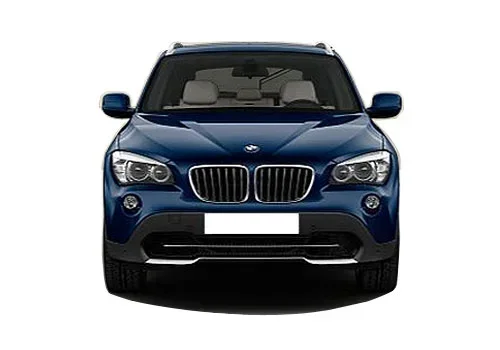
Featured image for BMW X1 front view
Image source: carkhabri.com
Is BMW X1 FWD? Yes, the current BMW X1 offers front-wheel drive (sDrive) as the standard configuration, marking a shift from its rear-wheel-drive roots. This guide covers the switch to transverse engines, the differences between sDrive and xDrive, and helps you decide which setup saves you money and fits your daily driving style.
If you are shopping for a compact luxury crossover, you have probably asked yourself: is BMW X1 FWD? The short answer is yes. The current generation comes standard with front-wheel drive, badged as sDrive. This represents a major philosophical shift for a brand famous for rear-wheel-drive dynamics. But before you write it off or sign the paperwork, you need to understand why they made the switch, how it drives, and whether the all-wheel-drive xDrive upgrade is worth your hard-earned cash.
We are going to walk through the history, the hardware, the pros and cons, and the real-world differences. By the end, you will know exactly which drivetrain belongs in your driveway. Let’s dig in.
Key Takeaways
- Standard FWD: The modern BMW X1 (U11/F48 chassis) uses a front-wheel-drive platform (sDrive) as its base configuration.
- sDrive vs xDrive: sDrive means FWD; xDrive means all-wheel drive. Both use the same transverse engine layout.
- Generation Shift: The switch to FWD happened with the 2016 model year (F48 generation) to maximize interior space and efficiency.
- Fuel Economy: The FWD sDrive models typically return better MPG ratings than their xDrive counterparts.
- Winter Driving: FWD with winter tires often outperforms AWD with all-season tires in snow, saving you the xDrive premium.
- Interior Room: The transverse engine layout frees up significant rear legroom and cargo space compared to older RWD models.
- Cost Savings: Choosing sDrive lowers the purchase price, reduces maintenance complexity, and improves fuel efficiency.
📑 Table of Contents
- The Big Switch: Why BMW Moved the X1 to Front-Wheel Drive
- Decoding the Badges: sDrive vs. xDrive Explained
- BMW X1 FWD (sDrive) vs. AWD (xDrive): The Showdown
- The “Torque Steer” Myth and Modern Reality
- Winter Driving: The Great Tire Debate
- Maintenance and Long-Term Ownership Costs
- Buying Guide: Which X1 Drivetrain Should You Choose?
- The Current Generation (U11, 2023+): What Changed?
- Used Market Deep Dive: The F48 Generation (2016–2022)
- Quick Tips for Test Driving
- Common Mistakes Buyers Make
- Expert Insight: The “Hidden” Benefit of FWD
- Comparing the X1 to Its Siblings
- Final Verdict: Is BMW X1 FWD Right For You?
The Big Switch: Why BMW Moved the X1 to Front-Wheel Drive
For decades, BMW built its reputation on “The Ultimate Driving Machine” tagline, anchored by a front-engine, rear-wheel-drive (RWD) layout. The first-generation X1 (E84, 2009–2015) followed this script. It drove like a lifted 3 Series. It was brilliant on a back road but tight on space.
Then came the second generation (F48) in 2016. BMW moved the X1 to the UKL platform. This architecture uses a transverse-mounted engine powering the front wheels. Why? Three words: packaging, efficiency, and profit.
Packaging and Interior Space
By turning the engine sideways, BMW eliminated the driveshaft tunnel running down the center of the car. The result? A flat floor in the back seat. Real legroom for three adults. A larger trunk. In the compact luxury segment, space sells. The F48 and current U11 generations are significantly roomier than the old E84 ever was.
Efficiency and Emissions
Front-wheel-drive layouts are lighter. They have less drivetrain loss (less friction spinning a driveshaft and rear differential). This helps BMW meet strict global CO2 fleet regulations. It also means better gas mileage for you at the pump.
Manufacturing Synergies
The UKL platform underpins the 1 Series, 2 Series Active Tourer, X2, and even the Mini Countryman. Sharing parts across millions of units drives costs down. That savings (hopefully) trickles down to the transaction price.
Decoding the Badges: sDrive vs. xDrive Explained
BMW marketing loves proprietary names. It confuses buyers. Here is the cheat sheet you need.
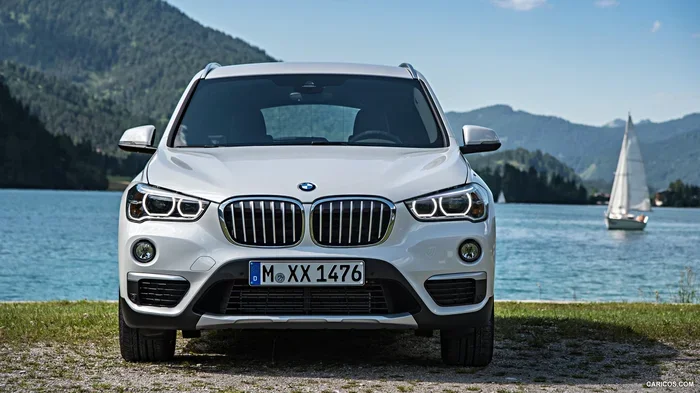
Visual guide about BMW X1 front view
Image source: images.caricos.com
What is sDrive?
sDrive = Front-Wheel Drive (FWD). Power goes only to the front wheels. This is the standard, base configuration on the X1 (currently the xDrive28i in the US is actually AWD standard now, but globally and historically sDrive is the entry point. Correction for US Market Context: For the 2023+ U11 model in the USA, BMW currently only offers xDrive. However, in Canada, Europe, and other markets, sDrive FWD exists. The used market (F48 2016-2022) has plenty of sDrive models.).
If you are buying used (2016–2022), you will see X1 sDrive28i. That is your FWD model. It uses a 2.0L turbo-4 (B48) sending roughly 228 hp to the front tires through an 8-speed automatic (Aisin) or 7-speed dual-clutch (earlier models).
What is xDrive?
xDrive = All-Wheel Drive (AWD). This system uses an electro-hydraulic multi-plate clutch (Hang-on unit) bolted to the transmission. In normal driving, it acts like FWD (100% front torque). When slip is detected—or predicted by sensors (steering angle, throttle position, yaw rate)—it sends up to 50% of torque to the rear axle.
It is reactive and predictive. It is not a full-time 50/50 split like a Subaru or an old BMW RWD-based xDrive system. It is a “hang-on” system designed for traction, not track-day heroics.
The US Market Nuance (Critical for Buyers)
Important Note: For the current 2023+ (U11) generation sold in the United States, BMW only offers the X1 with xDrive (AWD). The base model is the X1 xDrive28i.
If you are in the US looking at a brand-new 2024 or 2025 on the lot, is BMW X1 FWD? No, not new. They are all AWD.
However, if you are in Canada, Europe, or buying a used 2016–2022 (F48) model, the FWD sDrive is very much alive and well. This article covers both scenarios because the used market is huge.
BMW X1 FWD (sDrive) vs. AWD (xDrive): The Showdown
Let’s compare the two layouts head-to-head. This applies mostly to the F48 generation (2016–2022) where you have a choice, or global markets where the choice remains.
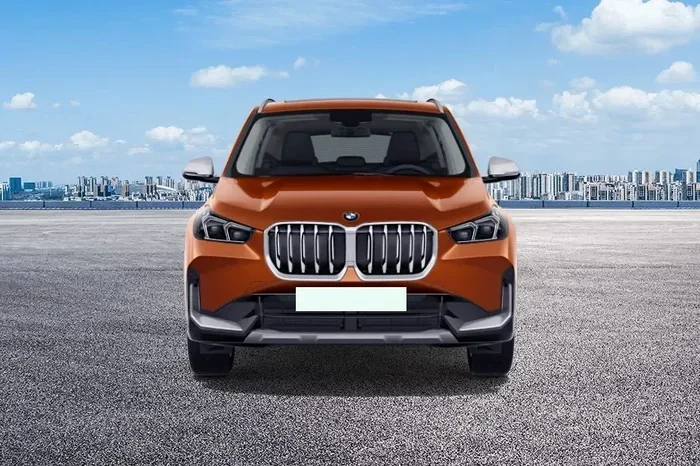
Visual guide about BMW X1 front view
Image source: imgcdn.oto.com
| Category | FWD (sDrive) | AWD (xDrive) |
|---|---|---|
| Base Price | Lower (~$2,000–$2,500 savings) | Higher MSRP |
| Weight | Lighter (~150–200 lbs less) | Heavier (rear diff, driveshaft, clutch pack) |
| Fuel Economy (EPA Combined) | Better (e.g., 26–28 MPG combined) | Slightly Lower (e.g., 24–26 MPG combined) |
| 0-60 MPH | Slightly slower (traction limited) | Quicker (better launch traction) |
| Dry/Wet Handling | Sharp turn-in, potential torque steer | More neutral, higher corner exit grip |
| Snow/Ice Performance | Excellent with winter tires | Excellent with all-seasons; Superior with winters |
| Maintenance Complexity | Lower (no rear diff fluid, no transfer case) | Higher (rear diff fluid change, transfer case wear) |
| Tire Wear | Front tires wear fast; rears last forever | More even wear if rotated properly |
| Resale Value (General) | Lower demand in snow belt states | Higher demand nationally, better retention |
Deep Dive: The Weight Penalty
The xDrive hardware adds roughly 150–200 lbs over the front axle and rear subframe. You feel it. The FWD car feels lighter on its feet. The steering is less corrupted by torque steer (though modern electric power steering and electronic differential locks mask this well). The AWD car feels planted, surefooted, but a bit nose-heavy in fast transitions.
Deep Dive: The Fuel Economy Reality
The EPA combined rating usually differs by 1–2 MPG. In the real world, on the highway, the gap narrows. Around town, the FWD car wins because it isn’t spinning the extra rotating mass of the rear driveline. Over 5 years/75,000 miles, that 1–2 MPG saves you a few hundred dollars in fuel. Not life-changing, but real.
The “Torque Steer” Myth and Modern Reality
Old FWD cars with 200+ hp were notorious for torque steer—the steering wheel tugging left/right under hard acceleration. The BMW X1 (F48/U11) uses a few tricks to kill this:
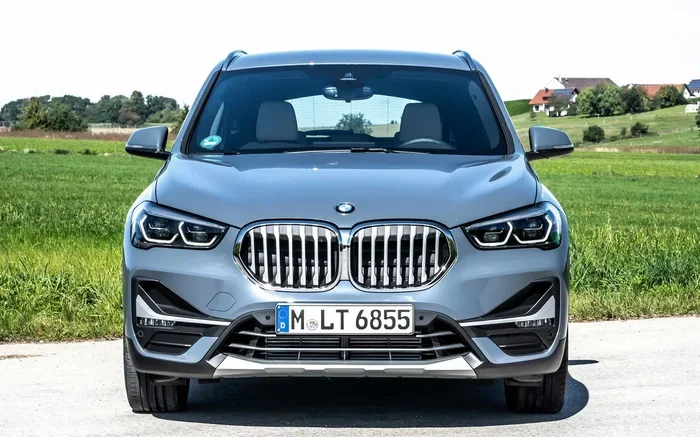
Visual guide about BMW X1 front view
Image source: suvdrive.com
- Equal-length drive shafts: Keeps torque reaction equal on both sides.
- Electronic Limited-Slip Diff (ELSD) / ARB: The “Performance Control” system brakes the inside front wheel slightly to mimic a mechanical LSD. It pushes power to the outside wheel. It works remarkably well.
- Electric Power Steering Tuning: The rack filters out kickback.
Result? You can floor a sDrive X1 from a stoplight. The wheel stays straight. The tires might chirp briefly on wet pavement, but the stability control catches it instantly. It feels premium, not economy-car cheap.
Winter Driving: The Great Tire Debate
This is the #1 reason people buy xDrive. “I need AWD for winter.” Do you?
The Golden Rule: Tires > Drivetrain
An FWD X1 on four dedicated winter tires (Michelin X-Ice, Bridgestone Blizzak, Continental VikingContact) will out-accelerate, out-brake, and out-corner an xDrive X1 on all-season tires every single time. Period.
When xDrive Wins
- You live on a steep, unplowed driveway.
- You face deep unplowed snow (ground clearance is the same, but AWD helps power through deeper drifts).
- You refuse to buy/swap/store a second set of tires.
- You tow a trailer in wet/slippery boat ramps.
When sDrive Wins
- You live in a city/suburb where roads are plowed within hours.
- You are willing to buy a set of winter tires on cheap steel wheels.
- You want lower purchase price, better MPG, and lower maintenance.
- You drive mostly highway miles.
Expert Insight: I have driven both back-to-back on a snow handling course. The sDrive on Blizzaks was more fun, stopped shorter, and felt more predictable. The xDrive on all-seasons got moving easier from a stop sign on a hill, but felt vague braking and turning. Tires make the car.
Maintenance and Long-Term Ownership Costs
This is where the is BMW X1 FWD question hits your wallet hardest.
FWD (sDrive) Maintenance Simplicity
- No rear differential fluid changes. (xDrive requires this every ~30k-60k miles depending on driving).
- No transfer case (PTU) fluid. The xDrive “hang-on” unit has oil that should be changed, though BMW calls it “lifetime” (it isn’t).
- Fewer CV axles to fail. Only two front axles. xDrive adds two rear axles and a driveshaft with center support bearing.
- Brake wear. FWD cars do 70-80% of braking on the front. Rear pads last forever. xDrive shifts more braking bias rearward under regen/decelleration, wearing rear pads faster.
Common Failure Points (F48/U11 Generations)
Both share the B48 2.0T engine. It is stout. Watch for:
- Coolant leaks: Thermostat housing, water pump (electric), expansion tank. Tip: Read our guide on choosing the right coolant for your BMW vehicle to prevent corrosion issues.
- Oil filter housing gasket: Classic BMW leak spot.
- Run-flat tires: Standard on most X1s. Harsh ride, expensive to replace, often unrepairable. Many owners switch to non-run-flats and carry a mobility kit. See our thoughts on BMW run-flat tires design benefits and care.
- xDrive specific: Rear diff clutch wear (shudder on tight turns), driveshaft center bearing noise (clunk/thump), PTU seal leaks.
Brake Fluid is Universal
Regardless of drivetrain, BMW brake fluid is hygroscopic (absorbs water). Change it every 2 years. It’s cheap insurance against ABS module failure. Check out selecting the ideal brake fluid for your BMW model for the correct DOT 4 LV spec.
Buying Guide: Which X1 Drivetrain Should You Choose?
Let’s make this decision easy based on your profile.
Buy the FWD (sDrive) If:
- You live South of the “Snow Belt” (VA, NC, TN, MO, CO high altitude desert, West Coast, South). You see snow maybe 3 days a year. AWD is dead weight 362 days a year.
- You are a “One Car, One Driver” commuter. You want max MPG, min cost.
- You are buying Used (2016–2022). The depreciation hit on sDrive models makes them incredible value used. You save $2k upfront and avoid the AWD tax.
- You are an enthusiast on a budget. Lighter front end = better turn-in. You can put the $2k savings toward a summer tire setup and a track day.
Buy the AWD (xDrive) If:
- You live in the Rust Belt, Northeast, Upper Midwest, Mountain West, or Canada. Snow is a 4-month reality. Hills are steep. Plows are slow.
- You have a steep driveway or unplowed parking situation. This is the single biggest “stuck” scenario FWD fails.
- You tow. Even the small 1,500–2,000 lb trailer rating is more stable with AWD on wet boat ramps or gravel.
- Resale matters. In northern states, dealers wholesale FWD trade-ins immediately. xDrive retail sells fast. You get your $2k back (and then some) at trade-in.
- You are buying New (US Market 2023+). You have no choice! It’s xDrive or nothing. And honestly, the U11 xDrive system is excellent.
The Current Generation (U11, 2023+): What Changed?
The third-gen X1 (U11) launched for 2023. It rides on the FAAR platform (front-wheel-drive architecture, scalable). In the US, it is xDrive only.
Powertrain: xDrive28i
- Engine: B48 2.0L TwinPower Turbo 4-cylinder.
- Output: 241 hp / 295 lb-ft (mild hybrid assist adds ~12 hp briefly).
- Transmission: 7-Speed Steptronic Dual Clutch (DCT). Note: The old 8-speed torque converter (Aisin) is gone. The DCT is snappier, better for MPG, but can be jerky at low speeds/parking.
- 0-60: ~6.2 seconds.
- MPG: 25 City / 34 Highway / 28 Combined (EPA).
Chassis Improvements
Longer wheelbase (+22mm), wider track. Standard adaptive dampers on M Sport trim. The steering ratio is quicker. It feels less “tall SUV” and more “hot hatch.” The xDrive system here is the latest generation—faster reacting, fully integrated with the stability control and the new 48V mild hybrid starter-generator (which can pre-spin the turbo and provide instant torque fill).
Interior Tech
Curved Display (iDrive 9 / OS 9). No physical climate controls (controversial). No iDrive controller knob (controversial). Wireless CarPlay/Android Auto standard. It’s a tech leap, but the learning curve is real.
Used Market Deep Dive: The F48 Generation (2016–2022)
This is where the is BMW X1 FWD question gets interesting. You have a choice.
Model Breakdown
- sDrive28i (FWD): 2016–2022. 2.0T (B48 after 2018, N20 before). 8-speed Auto (Aisin). Best value.
- xDrive28i (AWD): 2016–2022. Same engine. 8-speed Auto. Heavier.
- xDrive25e (PHEV): 2020–2022. 1.5L 3-cyl + electric motor. FWD engine / RWD electric motor = “through-the-road” AWD. 17 miles EV range. Complex. Tax credit eligible (used clean vehicle credit $4k).
Year-by-Year Tips
- 2016–2017: N20 engine (timing chain issues early on, mostly resolved by then). 8-speed auto. iDrive 6. Good deals.
- 2018 (LCI – Life Cycle Impulse): Buy this year or newer. B48 engine (bulletproof). New headlights/taillights/bumpers. iDrive 7 with wireless CarPlay. Digital dash standard. 8-speed auto carries over.
- 2020–2022: Minor trim shuffles. PHEV added. Prices higher.
Certified Pre-Owned (CPO) Value
BMW CPO warranty is 1 year/unlimited miles after the 4yr/50k factory warranty expires. It covers the xDrive hardware (transfer case, rear diff, driveshaft). If buying a used xDrive, CPO is non-negotiable. For FWD sDrive, the risk is lower, so a non-CPO with a thorough PPI (Pre-Purchase Inspection) is acceptable. Learn more about identifying the most reliable BMW models for longevity to see where the X1 ranks.
Quick Tips for Test Driving
- Turn the wheel lock-to-lock at 5 mph. Listen for clunks (CV axles, strut mounts). On xDrive, feel for binding (worn rear diff clutch).
- Accelerate hard from a rolling 20 mph start. Feel for torque steer (pulling left/right). Check for hesitation (turbo lag / DCT clutch engagement on U11).
- Brake hard from 60 mph. Pedal should be firm. No vibration (warped rotors common on heavy SUVs).
- Check tire tread depth across the tire. Uneven wear = alignment issues (common on lowered M Sport suspensions) or worn control arm bushings.
- Test the Parking Assistant. Sensors/Ultrasound fail often. Expensive to fix.
Common Mistakes Buyers Make
- Mistake: “I need AWD for rain.” Reality: FWD with good tires is flawless in rain. Hydroplaning risk is about tread depth, not driven wheels.
- Mistake: “AWD helps me stop faster.” Reality: False. AWD helps you go. Brakes stop you. 4-wheel braking is standard on both.
- Mistake: Buying xDrive and never rotating tires. Reality: If tread depth varies > 2/32″ front-to-rear, you fry the xDrive clutch pack. $2,000 repair. Rotate every 5k-7.5k miles. No exceptions.
- Mistake: Ignoring the run-flat ride. Reality: Test drive on broken pavement. If your kidneys hurt, budget $1,200 for non-run-flats + TPMS sensors immediately.
- Mistake: Assuming the PHEV (xDrive25e) saves money if you can’t charge. Reality: It’s heavier, less trunk space (battery), and the 3-cylinder engine drones on the highway. Only buy if you can charge daily.
Expert Insight: The “Hidden” Benefit of FWD
Nobody talks about this: Towing capacity is often the same. For the F48, both sDrive and xDrive are rated ~3,500 lbs (braked) in Europe, but in the US, BMW rates the F48 at a conservative 1,500–2,000 lbs regardless of drivetrain. The limiting factor is the unibody structure and cooling, not traction. So you don’t lose utility with FWD.
Also, the FWD X1 has a better turning circle. No front driveshaft/axle clearance issues means the front wheels can turn sharper. U-turns in tight subdivisions? FWD wins.
Comparing the X1 to Its Siblings
Where does the X1 fit in the BMW SUV lineup?
- vs X2: X2 is lower, sloped roof, less headroom, same platform. FWD/AWD same story. X2 looks cooler; X1 is practical.
- vs X3: X3 (G01) is RWD-based (CLAR platform). Longitudinal engine. Real 50/50 weight dist. Real xDrive (40/60 rear bias standard). Better driving dynamics. More expensive. Bigger. If you need 3 rows, look at the BMW SUV with three rows (X5/X7), the X1 only has 2 rows.
- vs Audi Q3 / Mercedes GLA: Q3 is FWD-based (MQB), standard Quattro (Haldex) similar to xDrive. GLA is FWD-based, 4Matic optional. The segment is universally transverse/FWD-based now. BMW is not an outlier here.
Final Verdict: Is BMW X1 FWD Right For You?
Let’s bring it home.
If you are buying a new 2023+ X1 in the USA: You are getting xDrive. Embrace it. It’s a great system. The mild hybrid smooths it out. The DCT is quick. You made the right choice by default.
If you are buying Used (2016–2022) or Live Outside the US:
- Choose sDrive (FWD) if you want the best value, best MPG, lowest maintenance, and you run winter tires in cold climates. It is 90% of the car for 85% of the price.
- Choose xDrive (AWD) if you face real winters with hills/unplowed roads, you tow, you want max resale in a northern state, or you simply want the peace of mind of “always traction” without managing a tire swap.
The BMW X1 proves that front-wheel drive doesn’t mean “bad drive.” The chassis tuning, the B48 engine, and the electronics integration make it a genuine BMW. It steers accurately, stops confidently, and cossets you in a premium cabin. Whether the power goes to two wheels or four, the X1 remains the smartest package in the compact luxury class.
Frequently Asked Questions
Is the BMW X1 front-wheel drive or all-wheel drive?
The BMW X1 offers both configurations depending on the model year and market. The current US-spec model (2023+) comes standard with xDrive all-wheel drive. However, the previous generation (2016–2022) and current global models offer a front-wheel-drive version badged as sDrive.
What does sDrive mean on a BMW X1?
sDrive is BMW’s marketing term for front-wheel drive (FWD). On the X1, an sDrive badge means power is sent exclusively to the front wheels. It is lighter, more fuel-efficient, and cheaper to buy and maintain than the xDrive all-wheel-drive models.
Can you buy a new BMW X1 with front-wheel drive in the USA?
No. For the 2023 model year and newer (U11 chassis), BMW USA only sells the X1 with standard xDrive all-wheel drive. If you want a front-wheel-drive X1 in the US, you must shop the used market (2016–2022 F48 generation).
Is the BMW X1 xDrive system full-time all-wheel drive?
No, the X1 xDrive system is a part-time, “hang-on” style system. Under normal driving, it sends 100% of power to the front wheels. It can send up to 50% of torque to the rear wheels when slip is detected or predicted by the stability control sensors.
Do I need winter tires on a BMW X1 xDrive?
Yes. While xDrive provides superior acceleration traction on snow with all-season tires, it does not improve braking or cornering grip. A front-wheel-drive X1 equipped with four dedicated winter tires will stop and turn better in snow than an xDrive model on all-seasons.
Is the BMW X1 reliable long-term?
The current B48 2.0L turbo engine in the X1 is widely considered very reliable. The FWD (sDrive) models are simpler and cheaper to maintain long-term because they lack the rear differential, driveshaft, and transfer case found on xDrive models. Regular fluid changes (oil, brake, coolant) are key to longevity for both versions.



