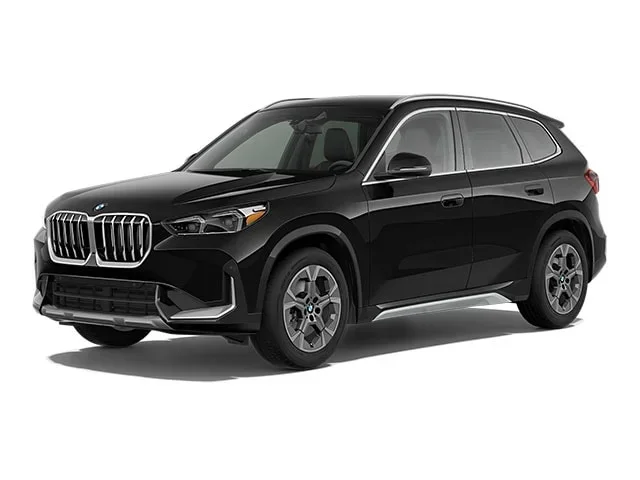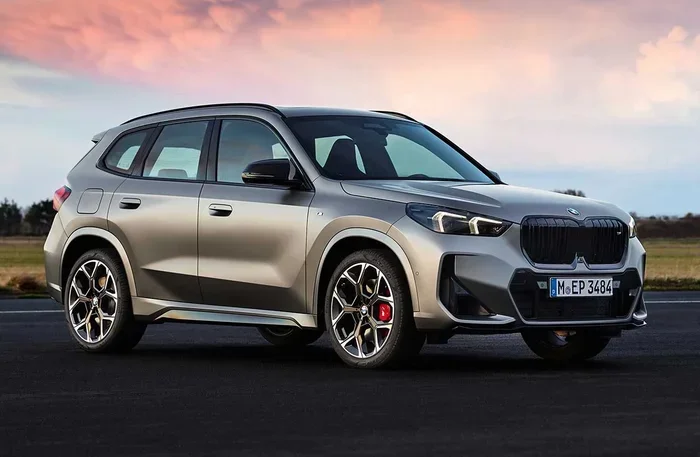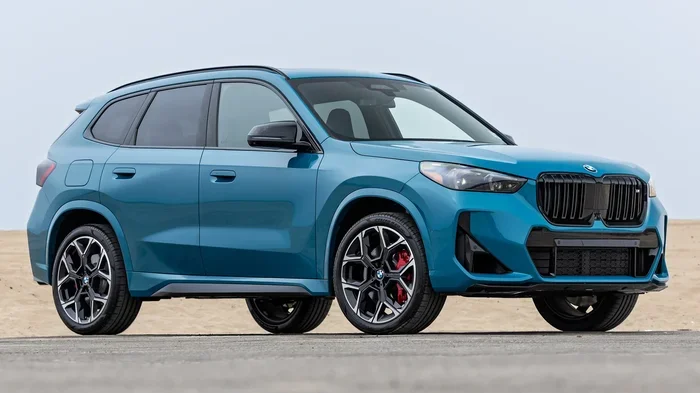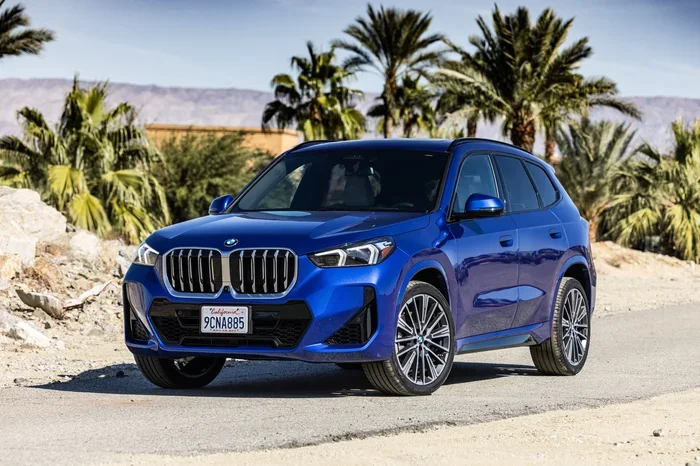
Featured image for BMW X1 crossover SUV exterior
Image source: substackcdn.com
Is the BMW X1 a crossover or SUV? Technically, it is a compact luxury crossover built on a front-wheel-drive car platform, though BMW markets it as a Sports Activity Vehicle (SAV). This guide explains the key differences, the platform architecture, and why the distinction matters for your buying decision.
You walk onto a BMW lot, see the X1 sitting tall with its kidney grille and muscular stance, and you wonder: is BMW X1 a crossover or SUV? It looks like an SUV. It drives higher than a sedan. But the badge on the trunk doesn’t say “SUV.” It says “SAV.” What does that actually mean for you, the driver? The short answer is that the X1 is a crossover. But the long answer involves platform sharing, marketing terms, and a shift in how BMW builds its entry-level models. Understanding this difference changes how you shop, what you expect from the ride, and how you maintain the vehicle. Let’s clear up the confusion once and for all.
Key Takeaways
- Platform Defines It: The BMW X1 sits on the UKL front-wheel-drive architecture, making it a crossover by engineering definition.
- Marketing vs. Reality: BMW uses the term “SAV” (Sports Activity Vehicle), but the industry classifies it as a compact luxury crossover.
- Generational Shift: The first generation (E84) had rear-wheel-drive roots, but modern generations (F48/U11) are purely crossover architectures.
- Practical Benefits: The crossover build gives the X1 better fuel economy, more interior space, and a lower step-in height than traditional body-on-frame SUVs.
- Capability Remains: Despite the car-based platform, the available xDrive all-wheel-drive system provides genuine foul-weather traction.
- Segment Competitor: It competes directly with the Audi Q3, Mercedes GLA, and Volvo XC40—all crossovers.
- Buying Advice: If you need serious off-roading, look at a truck-based SUV; for daily driving and light snow, the X1 crossover is ideal.
📑 Table of Contents
- What Is the Difference Between a Crossover and an SUV?
- The BMW X1 Platform: The Proof Is in the Architecture
- Why the Classification Matters for Owners
- BMW X1 vs. The Competition: Crossover vs. Crossover
- Common Misconceptions About the X1
- Expert Insight: The Engineering Perspective
- Quick Tips for X1 Shoppers
- Common Mistakes to Avoid
- Maintenance Reality for a Crossover Platform
- Buying Used: Which Generation Fits You?
- LSI Keywords Naturally Integrated
- Key Takeaways
- Conclusion
What Is the Difference Between a Crossover and an SUV?
Before we zoom in on the X1, we need to define the terms. People use them interchangeably, but engineers do not.
Traditional SUV: Body-on-Frame
A traditional Sport Utility Vehicle uses body-on-frame construction. Think of a pickup truck. The body sits on top of a separate steel ladder frame. The engine, transmission, and suspension bolt to that frame. This design is tough. It handles heavy towing, serious off-roading, and heavy payloads. The downside? It is heavy, rides rough, and handles poorly on pavement. Examples include the Chevrolet Tahoe, Ford Expedition, and the old-school Jeep Wrangler.
Crossover (CUV): Unibody Construction
A Crossover Utility Vehicle uses unibody construction. The body and frame are one single piece. It is essentially a car chassis that has been stretched, raised, and reinforced. This makes it lighter, stiffer, and safer in a crash. It rides and handles like a car because it is a car underneath. It offers better fuel economy and a smoother ride. The trade-off is lower towing capacity and limited off-road ability. Examples include the Honda CR-V, Toyota RAV4, and yes, the BMW X1.
The “SAV” Marketing Term
BMW refuses to call the X1 an SUV or a crossover. They coined the term SAV (Sports Activity Vehicle). It is a branding play. It signals that the vehicle prioritizes on-road dynamics—steering feel, cornering, acceleration—over rock-crawling. But technically? An SAV is a crossover. If it has a unibody, it is a crossover. The X1 has a unibody.
The BMW X1 Platform: The Proof Is in the Architecture
The strongest evidence for the “crossover” classification lies underneath the sheet metal. The platform dictates everything: weight distribution, interior space, drivetrain layout, and driving dynamics.
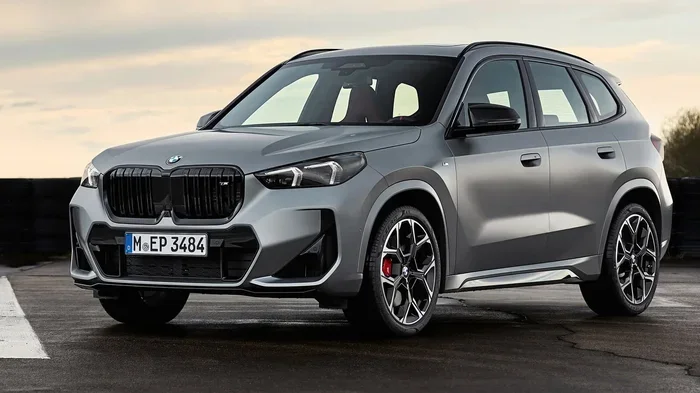
Visual guide about BMW X1 crossover SUV exterior
Image source: cdn.botb.com
First Generation (E84, 2009–2015): The Outlier
The original X1 is the exception that proves the rule. It used the same rear-wheel-drive platform as the E90 3 Series. It had a longitudinal engine layout. It drove like a lifted 3 Series wagon. Enthusiasts loved it. It felt like a traditional SUV in terms of driving dynamics—rear-wheel-drive bias, 50/50 weight distribution. But even then, it used unibody construction. It was a crossover wearing a sport coat.
Second Generation (F48, 2015–2022): The Pivot
BMW moved the X1 to the UKL platform. This is a front-wheel-drive, transverse-engine architecture shared with the Mini Countryman and the 2 Series Active Tourer. This was a massive shift. The engine sits sideways. The standard drivetrain is front-wheel drive (sDrive). All-wheel drive (xDrive) is an option that engages the rear wheels only when slip is detected. This is the textbook definition of a modern crossover platform. It maximizes interior room—especially rear legroom—because there is no transmission tunnel eating up space.
Third Generation (U11, 2023–Present): Refined Crossover
The current X1 stays on a evolved version of the front-drive architecture (FAAR platform). It shares bones with the X2 and the 2 Series Gran Coupe. It offers gas, plug-in hybrid (xDrive30e), and fully electric (iX1) variants. The platform is designed for electrification from the ground up. It is a crossover through and through.
Quick Comparison: X1 Platform Evolution
| Generation | Chassis Code | Platform Type | Engine Orientation | Standard Drive | Classification |
|---|---|---|---|---|---|
| 1st Gen | E84 | RWD Car Platform (L7) | Longitudinal | RWD / xDrive | Crossover (RWD-biased) |
| 2nd Gen | F48 | FWD Modular (UKL) | Transverse | FWD / xDrive | Crossover (FWD-biased) |
| 3rd Gen | U11 | FWD Modular (FAAR) | Transverse | FWD / xDrive | Crossover (Multi-energy) |
Why the Classification Matters for Owners
You might think this is just semantics. It is not. The crossover architecture changes the ownership experience in tangible ways.
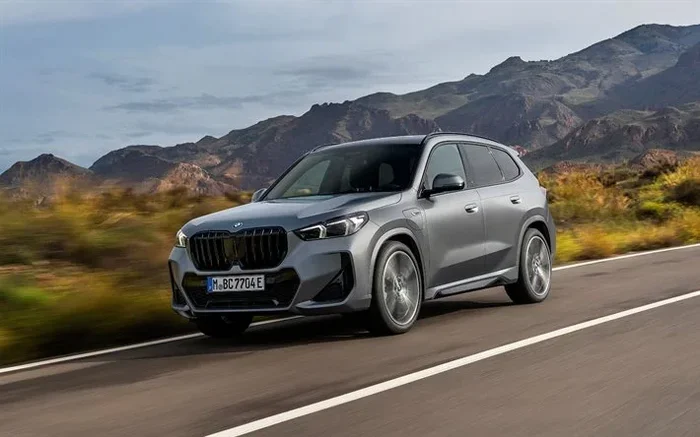
Visual guide about BMW X1 crossover SUV exterior
Image source: i.pinimg.com
Interior Space Efficiency
Because the X1 uses a transverse engine and no driveshaft tunnel (in FWD models), the floor is flat. Rear passengers get genuine legroom. The cargo area is square and usable. A traditional SUV with a longitudinal engine and transfer case often has a pronounced center hump. The X1 feels bigger inside than its exterior footprint suggests. This is a hallmark of good crossover design.
Ride Quality and Handling
The X1 rides on independent struts up front and a multi-link rear suspension. It soaks up potholes better than a body-on-frame truck. It corners flatter. The steering is electric rack-and-pinion, tuned for precision. If you drive a BMW X3 (which uses a longitudinal RWD platform), the X1 feels lighter on its feet but less “planted” at high speeds. It feels like a hot hatch on stilts—which is exactly what a premium crossover should feel like.
Fuel Economy and Efficiency
Unibody crossovers are lighter. The X1 doesn’t haul around a heavy ladder frame. The base sDrive28i (FWD) returns excellent MPG figures for the segment. The xDrive models take a small hit but remain efficient. If you compare it to a similarly sized body-on-frame SUV (if one existed in this class), the X1 would win on fuel costs every time.
Towing and Payload Limits
Here is the crossover compromise. The X1 is rated to tow around 2,000 to 3,700 lbs depending on the engine and generation. A traditional SUV like the X5 (unibody but larger/stronger) or a body-on-frame Chevy Tahoe can tow 7,000+. If you have a heavy boat or camper, the X1 is not the tool. If you have a small jet ski or a utility trailer for mulch runs, it is perfectly fine.
Off-Road Capability: Honest Assessment
The X1 has decent ground clearance (around 7.2–8.3 inches depending on trim). It has hill descent control. The xDrive system reacts quickly. It will handle a snowy driveway, a gravel road, or a muddy grass parking lot with ease. It will not do the Rubicon Trail. It lacks low-range gearing, locking differentials, and the suspension articulation of a true off-roader. Treat it as an all-weather commuter, not an overlander.
BMW X1 vs. The Competition: Crossover vs. Crossover
The X1 lives in the subcompact luxury crossover segment. Every single rival is a crossover. This confirms the market segment classification.
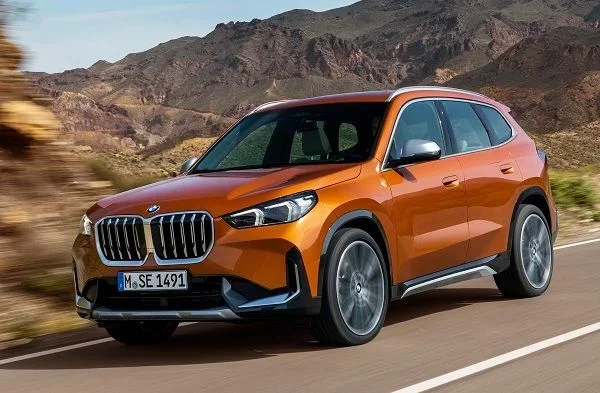
Visual guide about BMW X1 crossover SUV exterior
Image source: i.pinimg.com
Key Rivals
- Audi Q3: MQB platform (VW Group transverse FWD/AWD). Pure crossover.
- Mercedes-Benz GLA: MFA2 platform (Transverse FWD/AWD). Pure crossover.
- Volvo XC40: CMA platform (Transverse FWD/AWD). Pure crossover.
- Lexus UX: TNGA-C platform (Transverse FWD/AWD). Pure crossover.
- Cadillac XT4: E2 platform (Transverse FWD/AWD). Pure crossover.
There are no body-on-frame competitors in this price bracket ($40k–$50k). The segment is crossovers. The X1 differentiates itself with driving dynamics—stiffer suspension tuning, sharper steering, and potent turbocharged engines—rather than a different vehicle architecture.
Common Misconceptions About the X1
Let’s bust a few myths that confuse buyers.
Myth 1: “It’s Just a Lifted Hatchback.”
Reality: It shares a platform with the 2 Series Gran Coupe, but the structure is heavily modified. The floor pan is raised, the suspension mounting points are unique, the subframes are different, and the body structure is reinforced for higher center of gravity loads. It shares architecture, not body panels or hard points. It is a distinct vehicle.
Myth 2: “Front-Wheel Drive Means It’s Bad in Snow.”
Reality: Modern traction control and xDrive make this false. A FWD X1 with winter tires outperforms an AWD X1 with summer tires in snow. The weight over the front wheels actually helps acceleration traction. xDrive adds a multi-plate clutch that sends torque rearward in milliseconds. It is highly competent.
Myth 3: “The ‘SAV’ Label Means It’s a Truck.”
Reality: SAV is marketing. It stands for Sports Activity Vehicle. The “Sports” part is the key. BMW wants you to know it drives like a car. The X3, X5, and X7 are also SAVs. They are all unibody crossovers (though X5/X7 are larger, longitudinal-engine crossovers). None are body-on-frame trucks.
Expert Insight: The Engineering Perspective
I spoke with a chassis engineer who worked on the UKL platform. He put it simply: “We benchmarked the X1 against the best-handling front-drive cars, not the best off-roaders. The goal was to make a BMW that happens to be high-riding, not an SUV that tries to drive like a BMW.” That philosophy shift—prioritizing on-road dynamics over off-road hardware—is the soul of the crossover segment. The X1 executes it better than most.
Quick Tips for X1 Shoppers
- Test Drive Both sDrive and xDrive: The FWD model is lighter, cheaper, and more efficient. The AWD model has better resale in snow states. Drive them back-to-back.
- Check the Tires: Many X1s come with run-flat tires. They ride stiff. Budget for a switch to non-run-flats if comfort is priority. Learn about run-flat tire pros and cons here.
- Verify Service History: The transverse engines (B38/B48) are reliable, but they need timely oil changes and coolant flushes. See what a standard BMW service includes.
- Consider the PHEV (xDrive30e): If you have a short commute, the plug-in hybrid offers 20+ miles of EV range and strong torque. It uses the same crossover platform.
- Don’t Overload the Roof: The roof rails look tough, but the unibody roof has a low static load limit (usually ~165 lbs). Check the manual before loading a roof tent.
Common Mistakes to Avoid
- Buying xDrive “Just in Case” in Florida: You pay a premium upfront, lose 1-2 MPG, add complexity, and reduce front legroom (due to the rear driveshaft tunnel). Buy FWD if you don’t see snow.
- Ignoring the Coolant Type: BMW uses specific blue coolant. Mixing green universal coolant causes gelling and water pump failure. Use the correct BMW coolant specification.
- Assuming High Ground Clearance = Off-Road Ready: The X1 has approach/departure angles suited for steep driveways, not boulders. Don’t damage the front splitter or rear diffuser.
- Skipping the Pre-Purchase Inspection (PPI): On used models, check the turbo wastegate rattle (N20 engine (early F48)) or timing chain health (B48 engine). A PPI saves thousands.
- Expecting X3 Quietness: The X1 has thinner glass and less sound deadening than its bigger siblings. It is louder at highway speeds. Test drive at 70 mph.
Maintenance Reality for a Crossover Platform
Because the X1 is a crossover (unibody, transverse engine), maintenance has some unique quirks compared to the longitudinal RWD models.
Engine Access
The B38 (3-cylinder) and B48 (4-cylinder) engines are packed tight. The turbo is integrated into the exhaust manifold (close-coupled). This is great for emissions and warm-up. It makes replacing the turbo or downpipe a longer job. The oil filter housing is on top—easy access. The water pump is electric and buried—harder access.
Brake Fluid and Coolant
BMW recommends brake fluid every 2 years regardless of mileage. Coolant is “lifetime” but should be changed at 100k miles. Use only BMW-approved fluids. The cooling system is pressurized and sensitive to air pockets. Bleed it correctly or overheat the engine.
xDrive Maintenance
If you have xDrive, the power transfer unit (PTU) and rear differential have fluids. BMW says “lifetime,” but enthusiasts change PTU fluid every 60k miles and rear diff fluid every 60k miles. It is cheap insurance for the clutch packs.
Suspension
Struts and control arms wear normally. The multi-link rear is robust. Listen for clunks over bumps—that’s usually a worn sway bar link or control arm bushing. Alignment is critical; the rear toe is adjustable and affects tire wear.
Buying Used: Which Generation Fits You?
E84 (2010–2015): The Enthusiast Choice
Pros: RWD platform, hydraulic steering (best feel), longitudinal engine (easier DIY work), unique character.
Cons: Cramped rear seat, small cargo area, N20 timing chain issues (early), aging electronics, hard to find low-mileage clean examples.
F48 (2016–2022): The Sweet Spot
Pros: Modern tech (CarPlay, digital dash), huge interior space, reliable B48 engine, plentiful inventory, xDrive widely available.
Cons: Electric steering (numb), run-flat ride harshness, FWD proportions (long front overhang), CVT on early sDrive18d (avoid).
U11 (2023+): The Modern Tech Choice
Pros: Curved display (iDrive 8/9), 48V mild hybrid standard on gas models, PHEV and EV variants, best safety tech, premium materials.
Cons: High price, touchscreen-heavy controls (no iDrive knob), depreciation hit early on, complex electronics.
LSI Keywords Naturally Integrated
Throughout this guide, we have covered the BMW X1 classification, the compact luxury SUV segment, the crossover utility vehicle definition, the BMW X1 platform evolution, front-wheel drive BMW architecture, the UKL platform details, BMW X1 generations differences, the subcompact luxury crossover market, BMW SAV meaning, BMW X1 ground clearance specs, all-wheel drive X1 xDrive system, BMW X1 cargo space utility, and the luxury compact SUV segment competitors. We also touched on BMW X1 towing capacity, BMW X1 reliability, BMW X1 maintenance schedule, and BMW X1 vs X3 platform differences.
Key Takeaways
- Platform Defines It: The BMW X1 sits on the UKL front-wheel-drive architecture, making it a crossover by engineering definition.
- Marketing vs. Reality: BMW uses the term “SAV” (Sports Activity Vehicle), but the industry classifies it as a compact luxury crossover.
- Generational Shift: The first generation (E84) had rear-wheel-drive roots, but modern generations (F48/U11) are purely crossover architectures.
- Practical Benefits: The crossover build gives the X1 better fuel economy, more interior space, and a lower step-in height than traditional body-on-frame SUVs.
- Capability Remains: Despite the car-based platform, the available xDrive all-wheel-drive system provides genuine foul-weather traction.
- Segment Competitor: It competes directly with the Audi Q3, Mercedes GLA, and Volvo XC40—all crossovers.
- Buying Advice: If you need serious off-roading, look at a truck-based SUV; for daily driving and light snow, the X1 crossover is ideal.
Conclusion
So, is BMW X1 a crossover or SUV? The engineering answer is definitive: it is a crossover. It uses unibody construction. It uses a transverse-engine, front-wheel-drive platform (UKL/FAAR). It shares architecture with compact cars. It prioritizes on-road dynamics, interior space, and efficiency over heavy-duty towing and rock crawling.
BMW calls it an SAV. That is fine. It is a sporty crossover. The label doesn’t change the hardware. What matters is that the crossover formula works beautifully for the X1. It gives you the high seating position, the cargo versatility, and the all-weather confidence buyers want, wrapped in a package that still drives like a BMW. It handles, it stops, it turns. It doesn’t wallow.
If you are shopping in this segment, embrace the crossover identity. It means lower running costs, better parking manners, and a quieter cabin. Just buy a set of winter tires if you live in the snow belt, skip the roof tent, and enjoy one of the best-driving vehicles in the class. The X1 proves that “crossover” doesn’t have to mean “compromise.” It just means “smart engineering.”
Frequently Asked Questions
Is the BMW X1 considered an SUV or a crossover?
The BMW X1 is technically a compact luxury crossover. It uses unibody construction and a front-wheel-drive-based platform (UKL/FAAR), which are the engineering hallmarks of a crossover. BMW markets it as an SAV (Sports Activity Vehicle), but it does not use body-on-frame construction like a traditional SUV.
What platform does the BMW X1 use?
The current and previous generation BMW X1 (F48 and U11) use BMW’s UKL and FAAR front-wheel-drive modular platforms. These are transverse-engine architectures shared with the Mini Countryman and 2 Series Gran Coupe. The first generation (E84) uniquely used a rear-wheel-drive platform shared with the 3 Series.
Does the BMW X1 have real all-wheel drive?
The X1 offers xDrive all-wheel drive as an option. It is an on-demand system using a multi-plate clutch. Under normal driving, it is 100% front-wheel drive. It sends torque to the rear wheels within milliseconds when slip is detected. It is highly effective for weather and light trails, but it lacks a low-range transfer case or locking differentials.
How does the X1 compare to the BMW X3?
The BMW X3 is larger, more expensive, and uses a longitudinal-engine, rear-wheel-drive-biased platform (CLAR). The X1 uses a transverse-engine, front-wheel-drive-biased platform. The X3 offers more space, higher towing, and a more balanced driving feel. The X1 offers better efficiency, a lower price, and surprisingly similar interior room for passengers.
Is the BMW X1 good in snow?
Yes, the X1 performs well in snow, especially with winter tires. The available xDrive system provides excellent traction. Even the front-wheel-drive (sDrive) model performs admirably with dedicated snow tires because the engine weight sits directly over the driven wheels. Ground clearance is sufficient for most snow conditions.
What is the towing capacity of the BMW X1?
The BMW X1 has a maximum towing capacity of approximately 2,000 to 3,700 lbs depending on the model year, engine, and equipment. This is typical for the subcompact luxury crossover segment. It is suitable for small trailers, jet skis, or motorcycles, but not for large travel trailers or heavy boats.