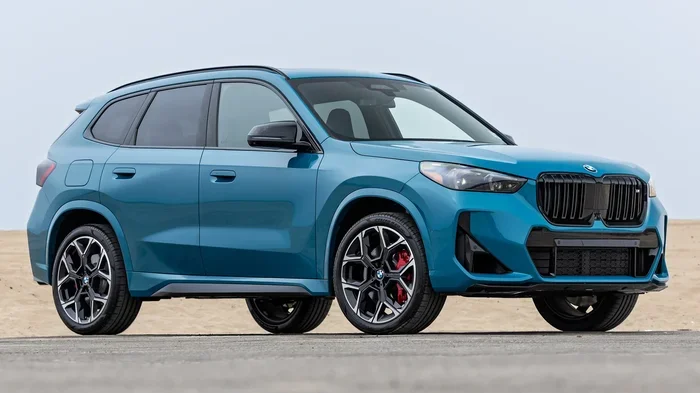
Featured image for 2013 BMW X1 exterior
Image source: platform.cstatic-images.com
What to look for with 2013 X1 models includes checking the turbo four-cylinder timing chain, verifying transmission service history, and inspecting the xDrive transfer case for leaks. This guide covers engine differences, common failure points, and essential maintenance records you need before buying. Follow our checklist to score a dependable compact luxury crossover.
Buying a used luxury crossover can feel like walking a tightrope. You want the badge, the driving dynamics, and the premium interior. But you also fear the repair bills that come with German engineering. The 2013 BMW X1 sits right in that sweet spot. It offers the classic BMW driving feel in a practical package. However, knowing what to look for with 2013 X1 models separates a smart buy from a money pit. This guide breaks down every critical detail you need to inspect before signing the papers.
The 2013 model year is a transition year for the first-generation E84 chassis. It marks the shift from the naturally aspirated inline-six to the turbocharged four-cylinder across the lineup. This change brings better fuel economy and torque but introduces specific reliability concerns. We will cover engines, transmissions, drivetrain quirks, and the interior gremlins that plague these cars. By the end, you will have a clear checklist to evaluate any candidate confidently.
Key Takeaways
- Engine choice matters: The N52 six-cylinder (xDrive28i early build) is the most reliable; the N20 four-cylinder (sDrive28i/xDrive28i late build) needs timing chain vigilance.
- Transmission service is critical: The 6-speed and 8-speed automatics require fluid changes every 60k miles; neglect leads to harsh shifting or failure.
- xDrive transfer case leaks: All-wheel-drive models often leak from the transfer case output seals; check for wetness underneath.
- Turbo wastegate rattle: N20 and N55 engines develop a distinct rattle on cold starts; budget for actuator or turbo replacement.
- Oil filter housing gasket leaks: A common BMW issue; oil drips onto the exhaust manifold causing smoke and smell.
- Interior electronics glitch: iDrive screen delamination and faulty FRM (Footwell Module) cause lighting and window issues.
- Maintenance records trump mileage: A 100k-mile X1 with full dealer history is safer than a 60k-mile car with zero proof of care.
📑 Table of Contents
- Why the 2013 BMW X1 Deserves Your Attention
- Engine Deep Dive: N20 vs N52 vs N55 Reliability
- Transmission and Drivetrain Quirks to Check
- Common Problem Areas: Leaks, Timing Chains, and Electronics
- Interior, Features, and Trim Level Differences
- Pre-Purchase Inspection Checklist and Maintenance Costs
- Frequently Asked Questions
- Conclusion
Why the 2013 BMW X1 Deserves Your Attention
The 2013 BMW X1 is often called the “baby X3,” but it drives better than that nickname suggests. It uses a rear-wheel-drive platform (mostly). This gives it a 50/50 weight distribution that many modern crossovers lack. It feels planted, sharp, and genuinely fun on back roads. It is smaller than the X3, making it easier to park and maneuver in tight cities.
Inside, you get a surprisingly roomy cabin. The rear seats slide and recline. The cargo area is boxy and useful. It does not feel like a penalty box. It feels like a shrunken 3 Series wagon. That is high praise. For 2013, you get the updated iDrive system with a larger screen and better graphics. It also marks the last year before the switch to the front-wheel-drive UKL platform in 2016. Enthusiasts prefer this RWD-based architecture. If you want to understand how this model fits into the broader lineup reliability picture, check out our guide on identifying the most reliable BMW models for longevity.
The Two Distinct Engine Lineups
This is the single most important factor when researching what to look for with 2013 X1 inventory. BMW swapped engines mid-year. You must know which one sits under the hood of the specific car you are viewing.
- Early 2013 (Build dates before ~March 2013): These carry the N52 3.0L Naturally Aspirated Inline-6. Badged as xDrive28i. This engine is legendary for reliability. No turbo, no direct injection carbon buildup, no timing chain guides failing early. It has Valvetronic and VANOS, but parts are plentiful and well-understood.
- Late 2013 (Build dates after ~March 2013): These carry the N20 2.0L Turbocharged Inline-4. Badged as sDrive28i (RWD) and xDrive28i (AWD). This engine makes more torque and gets better MPG. However, it has a known timing chain guide failure issue and valve cover cracking problems.
How to tell? Check the VIN or the build date sticker on the driver’s door jamb. Pop the hood. The N52 has a black plastic cover with “BMW” script. The N20 has a silver/black cover with “TwinPower Turbo” branding. The N52 is the safer bet for long-term ownership with minimal surprises. The N20 is faster and more efficient but demands stricter maintenance.
Engine Deep Dive: N20 vs N52 vs N55 Reliability
Let’s break down the specific mechanical habits of each powerplant. This dictates your inspection focus.

Visual guide about 2013 BMW X1 exterior
Image source: motortrend.com
The N52 3.0L Inline-6 (Early 2013 xDrive28i)
This is the “gold standard” engine for this chassis. It uses a magnesium/aluminum composite block. It is light and strong.
Common Issues:
- Valvetronic Motor / Eccentric Shaft Sensor: Causes rough idle, check engine light, and limp mode. The sensor fails more often than the motor. It is a DIY-friendly fix.
- Oil Filter Housing Gasket (OFHG): Leaks oil onto the exhaust manifold. You smell burning oil. It is a $30 part but requires intake manifold removal (3-4 hours labor).
- Water Pump & Thermostat: Electric water pump fails without warning. Overheating warps the aluminum head instantly. Replace preventatively at 80k-100k miles.
- Valve Cover Gasket: Rubber hardens and leaks. Another smell/burn risk.
Verdict: Bulletproof bottom end. Maintenance items are predictable. Budget $1,500-$2,000 for the “cooling system refresh” if records are missing.
The N20 2.0L Turbo Inline-4 (Late 2013 sDrive28i / xDrive28i)
This engine powers the majority of 2013 X1s on lots today. It uses a timing chain to drive the cams and the balance shaft.
Critical Issue – Timing Chain Guides: The plastic guides become brittle and shatter. This slackens the chain. The chain jumps teeth or snaps. Result: Bent valves, destroyed head, junk engine. BMW extended the warranty on this to 7 years / 70k miles (expired now). Updated guides (metal-backed) were introduced mid-2015. A 2013 build likely has the old plastic guides unless replaced.
Action Item: Ask for proof of timing chain replacement. If done, get the invoice. Verify updated parts were used. If not done, negotiate $1,500-$2,500 off price to do it immediately. Listen for a “diesel-like” rattle on cold startup for 2-3 seconds. That is the chain slapping.
Other N20 Issues:
- Valve Cover / PCV Assembly: The cover integrates the PCV valve. The diaphragm ruptures. Causes rough idle, whistling noise, high oil consumption, check engine light. The cover is plastic and cracks. Replace as a unit (~$400 parts).
- Turbo Wastegate Rattle: The actuator rod wears. Rattles at idle/low load. Can adjust rod end temporarily. Permanent fix is new turbo or aftermarket actuator bracket.
- Coolant Leaks: Plastic thermostat housing and radiator outlet crack. Use only BMW-approved coolant (Blue G48 or HT-12) to prevent corrosion.
The N55 3.0L Turbo Inline-6 (Not in US 2013 X1)
Note: The N55 engine was not offered in the 2013 US-market X1. It appears in the X1 xDrive35i (Canada/Europe) or later 2016+ X1 xDrive28i (B48 engine). However, if you are looking at a Canadian import or comparing to the 3 Series, the N55 shares the electric water pump and OFHG leaks of the N52 but adds turbo complexity. For more on that engine family, see our article on exploring BMW models equipped with the N55 engine.
Transmission and Drivetrain Quirks to Check
The transmission is the second most expensive component. The 2013 X1 uses two different ZF automatics depending on the engine.

Visual guide about 2013 BMW X1 exterior
Image source: carsinvasion.com
6-Speed ZF 6HP (N52 Engine)
This is a robust unit. It is “filled for life” per BMW, but that is marketing speak. Fluid degrades. Change it every 60k miles. Use ZF Lifeguard 6 fluid. Check for:
- Harsh 2-1 downshift when cold (mechatronics sleeve or valve body wear).
- Flare between 3-4 or 4-5 (clutch wear).
- Leaks from the mechatronics sleeve (plastic connector on side of trans) or pan gasket.
8-Speed ZF 8HP (N20 Engine)
This is a world-class transmission. Smooth, quick, efficient. Same maintenance rule: Fluid and filter every 60k miles. Use ZF Lifeguard 8 fluid.
- Mechatronics sleeve leaks are common (easy fix).
- Torque converter shudder (rare, usually fluid related).
- Software updates fix many shift quality complaints. Ensure latest ISTA programming is installed.
xDrive All-Wheel-Drive System
If you are buying an xDrive model (very common in snow belt states), you must inspect the transfer case (VTG). It sits bolted to the transmission rear.
- Output Seal Leaks: The seals where the driveshafts exit leak fluid. Look for wetness on the case and front/rear diff input seals.
- Fluid Type: Takes specific BMW TF-95 (or equivalent) fluid. Change every 60k miles. Neglect destroys the clutch packs inside.
- Actuator Motor: The electric motor that engages the clutch pack can fail. Causes “Drivetrain Malfunction” light. Expensive part ($400+), easy swap.
Also check the front differential (open diff) and rear diff fluid. Rear diff uses 75W-90 GL-5 + friction modifier for the limited-slip (if equipped with sport package).
Common Problem Areas: Leaks, Timing Chains, and Electronics
Beyond the major powertrain items, several “nickel-and-dime” issues add up fast. These are the things that make owners sell.

Visual guide about 2013 BMW X1 exterior
Image source: stat.overdrive.in
Oil Leaks: The BMW Trifecta
Almost every 2013 X1 will have at least one of these three leaks. Factor them into your offer price.
- Oil Filter Housing Gasket (OFHG): Top of engine, driver side. Leaks down onto exhaust. Smoke smell after driving. $40 gasket, 2-3 hrs labor.
- Valve Cover Gasket (N52) / Valve Cover Assembly (N20): Leaks onto exhaust manifold. Smoke from hood vents. N52 gasket is cheap. N20 cover is a pricey assembly.
- Oil Pan Gasket: Requires subframe drop (or engine support bar) to replace. Labor intensive ($800+). Check for seepage vs active drip. Seepage is okay to monitor; drips need fixing.
Cooling System: The Silent Killer
BMW cooling systems are maintenance items, not lifetime parts. Plastic becomes brittle with heat cycles.
- Expansion Tank: Cracks at the seam. Pressurize system (cold) to 1.5 bar. Watch for pressure drop.
- Radiator: Side tanks crack. Look for crusty white/green residue at tank-core joints.
- Hoses: Upper and lower radiator hoses. Squeeze them. They should be firm, not mushy or rock hard.
- Water Pump (N52 Electric / N20 Mechanical): N52 fails electronically. N20 is mechanical but thermostat fails electronically. Replace both at 90k miles regardless.
Always top off with the correct fluid. Mixing coolant types creates sludge. Reference our guide on choosing the right coolant for your BMW vehicle to avoid costly contamination.
Suspension and Steering: The “Sport” Tax
Many X1s have the M Sport package or Sport Line. They sit lower on stiffer springs and different dampers.
- Front Control Arm Bushings (FCAB / Thrust Arms): Fluid-filled bushings leak. Causes steering wheel shimmy at 50-60 mph braking. Replace in pairs. Lemforder or Febi only.
- Front Control Arms (Lower): Ball joints wear. Clunk over bumps.
- Rear Subframe Bushings: The rear subframe mounts via large bushings. They tear. Causes vague rear end, clunk on acceleration/deceleration. Difficult DIY (subframe drop).
- Run-Flat Tires: Most came with run-flats. They ride harsh, wear fast, and are expensive. Many owners switch to non-run-flats. Check for a spare tire kit! The X1 has no spare well. You need the BMW mobility kit (compressor + sealant) or a spare tire kit that fits in the cargo floor. If missing, budget $150-$300.
Electrical Gremlins: FRM and Battery
The E84 chassis is sensitive to battery voltage. A weak battery causes phantom codes.
- Battery Registration: New battery MUST be registered to the car (BMS reset) via scanner. If not, the car overcharges/undercharges the new battery, killing it in months.
- FRM (Footwell Module): Controls windows, lights, mirrors. Water ingress from clogged sunroof drains or A-pillar leaks kills it. Symptoms: Windows don’t auto-up, exterior lights flicker, turn signals hyper-flash. Repair shops can rebuild ($200) vs dealer ($800).
- iDrive Screen Delamination: The CCC/CIC screen layers separate. Bubbles appear. Purely cosmetic but annoying. Used replacement screens are affordable.
- Sunroof Drains: Clog with pine needles/leaves. Water pours into footwells (kills FRM) or headliner (stains/sags). Test by pouring water in track corners; watch for drainage behind front wheels.
Interior, Features, and Trim Level Differences
The 2013 X1 came in three main trim lines: Base (unbadged), xLine, and M Sport. Knowing the equipment helps you value the car correctly.
Trim Breakdown
| Feature | Base / sDrive28i / xDrive28i | xLine | M Sport |
|---|---|---|---|
| Wheels | 17″ or 18″ Standard | 18″ or 19″ Specific Design | 18″ or 19″ M Double-Spoke |
| Suspension | Standard | Standard (or opt Sport) | M Sport (Lower, Stiffer) |
| Seats | Dakota Leather / Power Front | Dakota Leather / Power Front | Sport Seats (More Bolstering) / Alcantara/Leather Combo |
| Steering Wheel | Standard Leather | Standard Leather | M Leather (Thick Rim, Paddles Standard) |
| Exterior Trim | Chrome / Matte Chrome | Aluminum / Satin Aluminum | Shadowline (High Gloss Black) |
| Headliner | Anthracite (Optional) | Anthracite | Anthracite Standard |
Must-Have Options (Check Window Sticker or VIN Decode)
- Premium Package: Heated seats, satellite radio, comfort access (keyless entry), auto-dimming mirrors, power tailgate (rare on X1, usually manual), lumbar support. Highly recommended.
- Technology Package: Navigation (Professional), Head-Up Display (HUD), Enhanced Bluetooth/USB, Real Time Traffic. HUD is fantastic in this car.
- Cold Weather Package: Heated steering wheel, heated rear seats, ski bag pass-through. Essential for northern buyers.
- Driver Assistance Package: Park Distance Control (PDC), Rear View Camera, Lane Departure Warning, High Beam Assist. Camera is very helpful for the high trunk lid.
- Panoramic Sunroof: Standard on many. Check drains! Glass roof adds headroom loss in rear (about 1 inch).
Interior Wear Points
- Driver seat bolster leather cracks/wears (entry/exit friction).
- Steering wheel leather peels (common on high-mile cars).
- Center armrest hinge breaks (plastic internal gear strips).
- Cup holder cover spring snaps (flops open).
- Glove box damper fails (slams open).
Pre-Purchase Inspection Checklist and Maintenance Costs
Do not buy without a Pre-Purchase Inspection (PPI) by an independent BMW specialist. Dealer PPIs often miss “wear items” that aren’t broken yet. A specialist knows the what to look for with 2013 X1 specific failure patterns. Expect to pay $150-$250. It is the best insurance you can buy.
The Ultimate 2013 X1 PPI Checklist
Print this. Hand it to your mechanic.
Underhood
- [ ] Engine type confirmed (N52 vs N20) via VIN/Build Date.
- [ ] N20 Only: Timing chain service records verified. Cold start rattle test (video it).
- [ ] Oil filter housing gasket: Dry? Leaking? Fresh residue?
- [ ] Valve cover gasket/assembly: Dry? Oil smell on hot engine?
- [ ] Coolant level/color: Correct blue/green? No oil contamination (milky = head gasket).
- [ ] Expansion tank: Cracks? White crusty residue?
- [ ] Serpentine belt / Tensioner: Cracks? Noise? N52 tensioner fails.
- [ ] Power steering fluid (N52 has hydraulic; N20 is electric): Level/condition.
- [ ] Brake fluid: Clear/Amber? Dark black = overdue. Test moisture content. Use correct brake fluid for your BMW model (DOT 4 LV).
Under Car (On Lift)
- [ ] Transfer case (xDrive): Output seals dry? Fluid level/condition (dark = burnt).
- [ ] Rear diff: Seals dry? Fluid level.
- [ ] Front diff (xDrive): Seals dry?
- [ ] Transmission pan: Leaks? Mechatronics sleeve dry?
- [ ] Oil pan gasket: Seepage vs drip.
- [ ] Front control arm bushings (Thrust arms): Fluid leak from bushing?
- [ ] Lower control arm ball joints: Play? Boots torn?
- [ ] Rear subframe bushings: Cracked/torn?
- [ ] Sway bar end links: Play? Boots torn?
- [ ] Exhaust: Flex pipe cracks (common on N20 downpipe)? Hangers intact?
- [ ] Brake pads/rotors: Life remaining % (sensors trigger light at ~2-3mm).
- [ ] Tires: Brand matching? Tread depth (4/32″ min for safety)? Run-flats vs non-run-flats? Date codes (DOT) < 6 years old.
Electronics & Interior
- [ ] Battery: Load tested. Registration history checked (ISTA).
- [ ] All windows: Auto up/down work? (FRM check).
- [ ] All locks: Central locking works? Comfort access (door handle touch) works?
- [ ] Sunroof: Opens/closes/tilts? Drains tested (water flows out behind front wheels).
- [ ] iDrive: Screen delamination? Nav loads? Bluetooth pairs? USB reads phone?
- [ ] HVAC: Blows cold (AC) / hot (Heat)? Blower motor speeds work? No clicking (blend door actuator).
- [ ] Lights: All exterior (xenon/halogen adaptive turn, LED tails, fogs, DRLs). No condensation inside housings.
- [ ] Parking sensors / Camera: Beep/Display clean?
- [ ] Steering wheel controls / Paddle shifters work.
- [ ] Seat adjustments / Memory / Heating / Lumbar all function.
Test Drive (15+ Minutes, Cold & Hot)
- [ ] Cold start: Smoke? Rattle (timing chain/wastegate)? Rough idle?
- [ ] Transmission: Smooth shifts? No flares, bumps, hesitation? Manual mode holds gear?
- [ ] Steering: Centered? No pull? No vibration at speed? No clunk over bumps?
- [ ] Brakes: No pedal pulsation? No squeal? Straight stop?
- [ ] AWD (xDrive): No binding on tight turns (parking lot figure-8)?
- [ ] Turbo: Boost builds smoothly? No limp mode (half engine light) under WOT?
- [ ] Noises: Whine (diff/transfer case)? Clunk (mounts/bushings)? Rattle (heat shields)?
Estimated Annual Maintenance Budget
Set aside $1,500 – $2,500 per year for a 100k+ mile 2013 X1. This covers fluids, brakes, tires, and the inevitable gasket/sensor. If you DIY, cut that in half. Major items (timing chain N20, transfer case rebuild, turbo) are $2k-$4k one-time hits.
Quick Tips for Negotiation
- No timing chain proof on N20? Deduct $2,000.
- No cooling system refresh (water pump/thermostat/hoses) on N52 at 90k+? Deduct $1,200.
- Transfer case fluid never changed on xDrive? Deduct $400.
- Brakes/tires need immediate replacement? Deduct $1,000+.
- FRM issues / Sunroof drain neglect? Deduct $300-$500.
- Missing spare/mobility kit? Deduct $200.
Frequently Asked Questions
Is the 2013 BMW X1 reliable?
The 2013 BMW X1 can be reliable if you buy the right engine and maintain it aggressively. The early N52 inline-six models are significantly more reliable than the later N20 turbo-four models. The N20 requires a timing chain service history to be considered a safe buy. Overall reliability is average for the class; it is not a Toyota RAV4, but it is far better than its reputation suggests if maintained.
What is the most common problem with the 2013 BMW X1?
The most common major problem is the N20 engine timing chain guide failure (late 2013 models). The most common annoying problems are oil leaks (valve cover, oil filter housing, oil pan), electric water pump failure (N52), and FRM module failure due to clogged sunroof drains. Suspension bushing wear is also very common by 80k miles.
Should I buy a 2013 BMW X1 with 100k miles?
Yes, but only with complete service records. At 100k miles, the cooling system, suspension bushings, and brake fluid should have been done recently. For N20 models, the timing chain must be done. For xDrive, transfer case and diff fluids must be fresh. If records are missing, assume nothing was done and budget $3,000-$4,000 for immediate catch-up maintenance.
Does the 2013 X1 have a timing belt or chain?
All 2013 X1 engines (N52 and N20) use a timing chain. The N52 chain is very durable and rarely needs service before 200k+ miles. The N20 chain uses plastic guides that fail early (often 60k-100k miles) and requires preventative replacement with updated metal-backed guides.
What is the difference between sDrive and xDrive on the 2013 X1?
sDrive28i is Rear-Wheel Drive (RWD). It is lighter, cheaper to maintain (no transfer case/front diff), gets slightly better MPG, and handles better in dry conditions. xDrive28i is All-Wheel Drive (AWD). It adds a transfer case, front driveshaft, and front differential. It offers superior traction in snow/rain but adds weight, complexity, cost, and potential leak points. Choose based on your climate.
What type of gas does a 2013 BMW X1 take?
Both the N52 and N20 engines require Premium Unleaded (91 Octane minimum, 93 recommended). Using regular 87 octane will cause the ECU to retard timing significantly, reducing power, worsening fuel economy, and risking carbon buildup or knock sensor codes over time. The small savings at the pump are not worth the risk.
Conclusion
The 2013 BMW X1 is a hidden gem in the used luxury market. It drives like a proper BMW because it is* a proper BMW—rear-wheel-drive architecture, inline engines, hydraulic steering (on N52), and a balanced chassis. But it is not an appliance. It demands respect, maintenance, and a knowledgeable owner.
If you prioritize reliability above all, hunt for an early-build 2013 xDrive28i with the N52 inline-six. It is the most bulletproof combination. If you want modern torque and efficiency, the late-build N20 models are excellent if the timing chain has been updated. Verify the paperwork. Inspect the leaks. Test the electronics. Budget for the “BMW tax” on parts and labor.
Use the checklist above. Bring a flashlight. Bring a mechanic. Don’t fall in love with the badge before you verify the bones. A well-sorted 2013 X1 will reward you with 100,000 more miles of driving joy that no front-drive competitor can match. Now you know exactly what to look for with 2013 X1 models. Go find a good one.