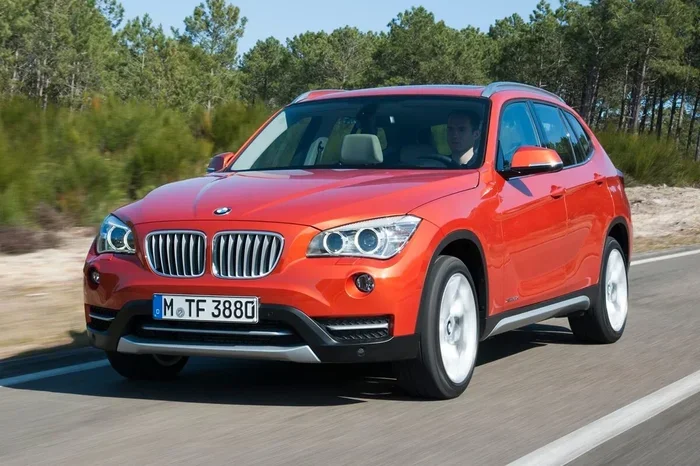
Featured image for 2015 BMW X1 refueling
Image source: autotijd.be
What fuel for 2015 BMW X1 models? All trims require premium unleaded gasoline with a minimum 91 octane rating for best performance. Using lower octane can cause engine knock and reduce power. This guide covers fuel specs for the N20 and N55 engines, explains the risks of regular gas, and shares tips to maximize your fuel economy.
Pulling up to the pump in your 2015 BMW X1 shouldn’t be a guessing game. You want to protect your investment, keep the turbo spooling happily, and avoid that dreaded check engine light. The short answer is clear: BMW requires premium unleaded gasoline with an AKI octane rating of 91 or higher. But there is nuance. The 2015 X1 came with two distinct engines, and understanding the “why” behind the recommendation saves you money and headaches down the road. We will break down the fuel requirements for every trim, explain the science of octane, and show you how to get the best mileage from every gallon.
Key Takeaways
- Premium Fuel Required: The 2015 BMW X1 needs 91 octane (AKI) minimum; 93 octane is ideal for peak output.
- Engine Differences: The 2.0L N20 (28i) and 3.0L N55 (35i) both mandate premium fuel despite different power outputs.
- Knock Sensor Protection: The ECU retards timing if you use 87 or 89 octane, cutting horsepower and torque noticeably.
- Top Tier Gasoline: Choose Top Tier certified stations to prevent carbon buildup on direct-injection valves.
- Eco Pro Mode Helps: Using the Eco Pro driving mode stretches each tank further without hardware changes.
- Catalytic Converter Health: Proper fuel prevents damage to expensive emissions components like the catalytic converters.
- Check the Label: Always verify the sticker inside your fuel door; it is the final authority for your specific VIN.
📑 Table of Contents
- Quick Answer: 2015 BMW X1 Fuel Requirements at a Glance
- Understanding Octane Ratings: Why Your Turbo Cares
- Fuel Needs by Engine: N20 vs. N55
- Why Premium Fuel Matters for Your BMW
- What Happens If You Use Regular Gas (87 Octane)?
- Top Tier Gasoline: The Secret Weapon
- Maximizing Fuel Economy in Your 2015 X1
- Other Vital Fluids for Your 2015 X1
- Common Myths About BMW Fuel Requirements
- Long-Term Ownership: Reliability Context
- Quick Checklist at the Pump
- Conclusion
Quick Answer: 2015 BMW X1 Fuel Requirements at a Glance
Before we dive deep, here is the cheat sheet you can screenshot for later. Every 2015 X1 rolling off the line was engineered for high-octane fuel.
| Model Trim | Engine Code | Displacement | Recommended Octane (AKI) | Minimum Octane (AKI) |
|---|---|---|---|---|
| sDrive28i | N20B20 | 2.0L TwinPower Turbo I4 | 91 – 93 | 89 |
| xDrive28i | N20B20 | 2.0L TwinPower Turbo I4 | 91 – 93 | 89 |
| xDrive35i | N55B30 | 3.0L TwinPower Turbo I6 | 91 – 93 | 89 |
Key Definitions: AKI (Anti-Knock Index) is the number you see on the yellow pump sticker in the US (R+M/2). “Recommended” is what the engineers designed the engine for. “Minimum” is the absolute floor before risking damage; you should avoid running at the minimum regularly.
Understanding Octane Ratings: Why Your Turbo Cares
Octane is not about energy content or “power” in the fuel itself. It is a measure of knock resistance. In a high-compression, turbocharged engine like the ones in the X1, the air-fuel mixture is under immense pressure and heat before the spark plug fires. If the fuel isn’t stable enough, it ignites spontaneously—this is “knock” or “ping.”
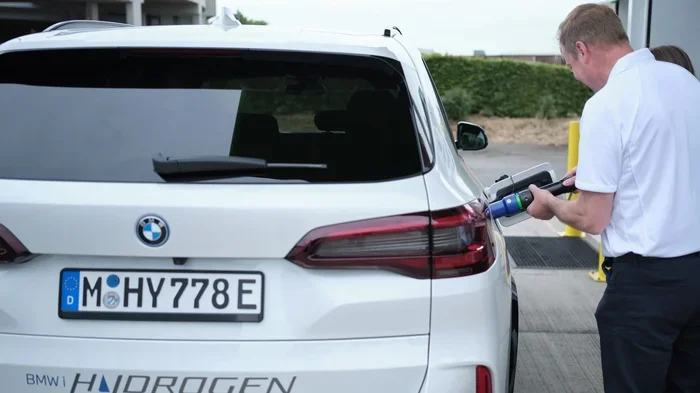
Visual guide about 2015 BMW X1 refueling
Image source: cdn.mos.cms.futurecdn.net
The Knock Sensor Safety Net
Modern BMWs, including the 2015 X1, have sophisticated knock sensors. If you fill up with 87 octane, the sensors detect the tiny vibrations of pre-ignition instantly. The Digital Motor Electronics (DME) computer then retards the ignition timing—firing the spark plug later—to stop the knock. This saves the engine from catastrophic damage, but it kills your performance. You lose horsepower, torque, and often fuel economy because the engine runs less efficiently.
RON vs. MON vs. AKI
You might see “RON 95” or “RON 98” in the European owner’s manual supplement. The US uses AKI (R+M/2). As a rule of thumb: US 91 AKI ≈ 95 RON. US 93 AKI ≈ 98 RON. If you are in the US or Canada, ignore RON numbers and look for the yellow sticker showing 91 or 93.
Fuel Needs by Engine: N20 vs. N55
The 2015 X1 utilizes two legendary BMW engines. Both are direct-injection, turbocharged, and feature Valvetronic. Both demand premium fuel, but their personalities differ.
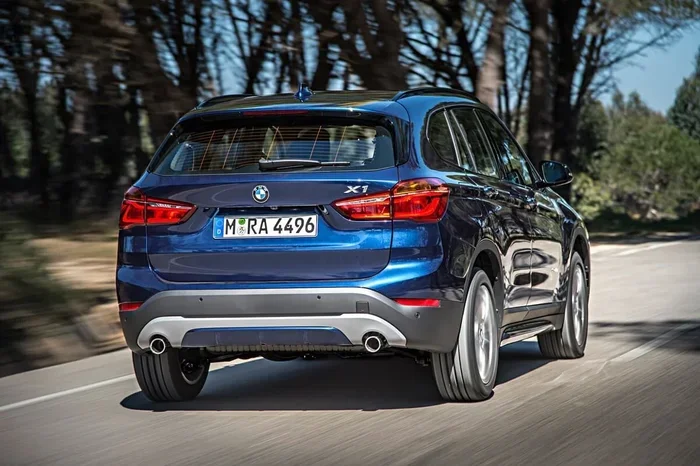
Visual guide about 2015 BMW X1 refueling
Image source: autotijd.be
The 2.0L N20 (sDrive28i & xDrive28i)
This four-cylinder is a marvel of engineering. It makes 240 hp and 260 lb-ft of torque. Because it is a small displacement engine making big power, it runs high boost pressure (approx 18-20 psi). High boost + high compression = high cylinder pressure. This engine needs 91+ octane to hit its torque peak low in the RPM range. On 89 octane (the stated minimum), you will feel a flat spot in the mid-range and the auto start-stop system may disable itself to protect the catalyst.
The 3.0L N55 (xDrive35i)
If you own the xDrive35i, you have the N55 inline-six. This engine is smoother, makes 300 hp and 300 lb-ft, and sounds incredible. It also runs high boost. The N55 is famously tolerant, but it has a high compression ratio (10.2:1). Running 89 octane here dulls the throttle response significantly. The “minimum 89” allowance exists strictly for emergencies—like finding only 89 octane in a remote area—not for daily driving.
Why Premium Fuel Matters for Your BMW
It is tempting to save $0.50-$0.80 per gallon at the pump. On a 16-gallon tank, that is roughly $8-$12 per fill-up. Over a year, maybe $400-$600. But the hidden costs of cheap gas often exceed that savings.
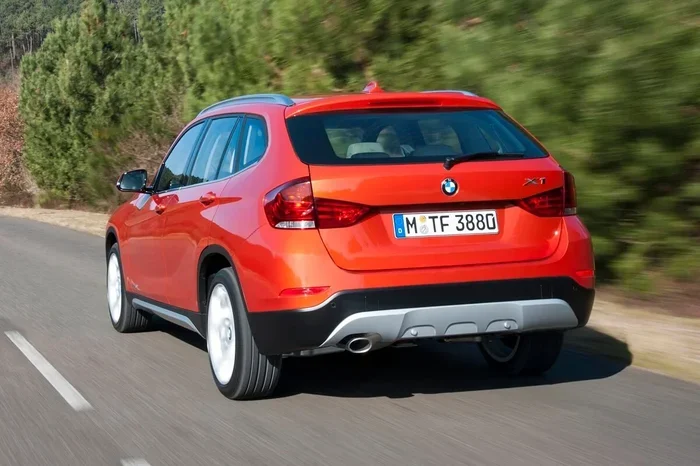
Visual guide about 2015 BMW X1 refueling
Image source: autotijd.be
1. Preventing Engine Knock and Carbon Buildup
Direct injection sprays fuel directly into the cylinder, not the intake ports. This means the intake valves never get “washed” by gasoline detergents. Low-quality or low-octane fuel burns less completely, leaving carbon deposits on the valves. This causes rough idle, misfires, and power loss. A walnut blasting service to clean those valves costs $400-$800. Premium Top Tier fuel contains enhanced detergent packages that minimize this buildup.
2. Protecting the Catalytic Converters
When the ECU retards timing for low octane, exhaust gas temperatures (EGTs) skyrocket. The unburnt fuel hits the catalytic converters superheated. This melts the precious metal substrate inside. Replacing a BMW catalytic converter is a four-figure repair. Premium fuel keeps combustion controlled and EGTs in the safe window.
3. Maintaining Fuel Economy
It sounds backward, but premium gas often returns better MPG in these engines. When timing is retarded for 87/89 octane, the engine produces less torque per combustion cycle. You press the pedal deeper to maintain speed, injecting more fuel. Many X1 owners report a 1-2 MPG drop on regular gas, effectively erasing the per-gallon savings.
What Happens If You Use Regular Gas (87 Octane)?
Let’s be real: mistakes happen. You borrow the car, a spouse fills up, or you are in a “fuel desert.” One tank of 87 octane will not blow up your engine. The knock sensors and DME are designed exactly for this scenario. Here is the sequence of events:
- Immediate Detection: Knock sensors pick up pre-ignition within a few engine cycles.
- Timing Retard: DME pulls ignition timing back aggressively (often 6-10 degrees or more).
- Boost Reduction: On the N20/N55, the DME may also close the wastegate slightly, lowering boost pressure.
- Power Loss: You lose 20-40 hp and a similar amount of torque. The car feels sluggish.
- Adaptation: The car stays in this “safe mode” until it sees consistent high-octane knock-free cycles.
Pro Tip: If you accidentally fill with 87, drive gently (low RPM, light throttle) and top off with 93 octane as soon as you hit half a tank. This dilutes the low-octane fuel faster and helps the adaptations reset quicker.
Top Tier Gasoline: The Secret Weapon
Octane rating is only half the equation. The additive package is the other half. BMW officially recommends “Top Tier Detergent Gasoline.” This is a standard backed by major automakers (BMW, GM, Honda, Toyota, VW, etc.) that mandates a higher concentration of deposit-control additives than the EPA minimum.
Why Top Tier Matters for Direct Injection
As mentioned, direct injection engines (N20, N55) are prone to intake valve carbon deposits. Top Tier fuel keeps the combustion chamber cleaner and reduces the rate of buildup significantly. Major brands like Shell, Chevron, Costco, Exxon, Mobil, BP, and Sinclair are Top Tier certified. Look for the green Top Tier logo on the pump. Avoid unbranded “discount” stations if possible; their additive packages often meet only the bare legal minimum.
Ethanol Content: E10 vs. E15 vs. E85
Your 2015 X1 is designed for up to E10 (10% ethanol). Most US pump gas is E10. Do not use E15 or E85 (Flex Fuel) unless your specific vehicle has a yellow gas cap and Flex Fuel badge (the 2015 X1 does not). Higher ethanol content leans out the air-fuel ratio, risks fuel pump/lubrication issues, and voids warranty coverage for fuel system damage.
Maximizing Fuel Economy in Your 2015 X1
Since you are buying premium, you might as well stretch it. The X1 is reasonably efficient for an AWD crossover (EPA: 20-22 City / 28-30 Highway for 28i; 18/26 for 35i). Real world varies wildly based on driving style.
Use Eco Pro Mode
The Eco Pro mode remaps the throttle pedal (less sensitive), shifts the 8-speed ZF transmission earlier, and decouples the torque converter more aggressively when coasting. It also reduces climate control compressor load. It can net you 2-3 MPG in mixed driving without feeling dangerously slow.
Tire Pressure is Free Horsepower
Check your door jamb sticker (usually 32-35 PSI front/rear cold). Under-inflated tires increase rolling resistance dramatically. The X1 often runs run-flat tires which have stiff sidewalls; they hide low pressure visually. Check monthly with a quality gauge.
Lighten the Load
The X1 has a handy roof rack system. If you aren’t using the crossbars or cargo box, take them off. They ruin aerodynamics. Every 100 lbs of junk in the trunk costs ~1% fuel economy.
Stay on Top of Maintenance
- Spark Plugs: N20/N55 plugs are due every 60k miles. Worn plugs = incomplete burn = wasted fuel.
- Air Filter: A clogged filter chokes the turbo.
- Oil Changes: Use LL-01 or LL-17FE+ approved 0W-30 or 5W-30. Thick, old oil creates parasitic drag. Change every 7,500 miles or annually, whichever comes first.
Other Vital Fluids for Your 2015 X1
Fuel is just one fluid. To keep your 2015 X1 running like new, you need the right specs for the rest.
Engine Oil
Capacity: ~5.3 qts (N20) / ~6.9 qts (N55) with filter. Spec: BMW LL-01 (pre-2014 spec) or LL-17FE+ (newer, backward compatible). Viscosity: 0W-30 or 5W-30. Do not use 0W-20 or 5W-20.
Coolant
Use BMW Genuine Coolant (Blue, concentrated) mixed 50/50 with distilled water. Do not use green universal coolant or Dexcool. The aluminum block/head and magnesium components need the specific phosphate/nitrite-free additive package. For more details, see our guide on what coolant BMW uses.
Brake Fluid
DOT 4 LV (Low Viscosity). BMW recommends a flush every 2 years regardless of mileage. Hygroscopic fluid absorbs water, lowering boiling point and corroding ABS/DSC internals. See selecting the ideal brake fluid for specifics.
Transmission & Differential Fluids
ZF 8HP Automatic: “Lifetime” fill per BMW, but enthusiasts change at 60k-80k miles using ZF Lifeguard Fluid 8. Transfer Case (xDrive): BMW Transfer Case Oil (TL 7080 / TL 7080S). Rear Diff (xDrive): 75W-90 GL-5 (approx 0.8L).
Common Myths About BMW Fuel Requirements
Let’s bust a few persistent internet myths.
Myth: “My Friend Runs 87 in His BMW and It’s Fine.”
They likely don’t notice the power loss, or they drive so gently the knock sensors never trigger heavy retard. Long term, they are accelerating carbon buildup and catalyst wear. “Fine” today doesn’t mean “fine” at 100k miles.
Myth: “Premium Gas Has More Energy.”
False. Premium and regular have nearly identical energy density (BTUs per gallon). Premium simply resists uncontrolled explosion better.
Myth: “Octane Boosters Work Like Race Gas.”
Most bottle boosters raise octane by “points” (0.1 – 0.5 AKI), not whole numbers. You would need dozens of cans to turn 87 into 91. They are a band-aid, not a solution. Just buy the right gas.
Myth: “The Car Learns My Driving Style and Adjusts Octane Needs.”
The DME adapts to sensor inputs (knock, O2, load). It cannot change the physical compression ratio or boost pressure. It only reacts to the fuel you put in.
Long-Term Ownership: Reliability Context
The 2015 X1 is generally a solid choice in the used market. The N20 had early timing chain guide issues (mostly pre-2015), but the 2015 model received updated guides. The N55 is bulletproof with oil changes. Both engines reward strict maintenance. If you are shopping, check our guide on identifying the most reliable BMW models to see how the X1 stacks up against its siblings. Proper fuel discipline is the single cheapest “mod” for longevity.
Quick Checklist at the Pump
- ✅ Engine off, key out (or comfort access away).
- ✅ Open fuel door (push rear edge).
- ✅ Verify yellow sticker: “Min. AKI 91 / RON 95”.
- ✅ Select 91 or 93 Octane nozzle.
- ✅ Insert nozzle fully; let auto-click stop it. Do not “top off” after click.
- ✅ Tighten cap until it clicks 1-2 times (prevents EVAP leak codes).
- ✅ Close fuel door firmly.
Conclusion
Knowing what fuel for 2015 BMW X1 models is required takes the mystery out of ownership. The answer is unwavering: 91 AKI premium unleaded, preferably Top Tier certified. Your N20 or N55 engine was engineered with precision for this fuel. Skimping on octane fights the engineering, costing you performance, efficiency, and potentially expensive repairs like carbon cleaning or catalytic converter replacement. Treat your X1 to the good stuff, keep up with the other fluids, and that little crossover will deliver the Ultimate Driving Machine experience for years to come. Next time you see the pump, reach for the 91 or 93 handle with confidence—your turbo will thank you.
Frequently Asked Questions
What is the minimum octane rating for a 2015 BMW X1?
The absolute minimum octane rating for the 2015 BMW X1 is 89 AKI. However, BMW strongly recommends 91 AKI or higher for optimal performance and engine longevity. Running 89 octane regularly will reduce power and fuel economy.
Can I put 87 regular gas in my 2015 BMW X1?
You can physically put 87 octane in the tank, but you should not. The engine computer will retard timing significantly to prevent knock, resulting in noticeably reduced power, potential rough running, and higher exhaust temperatures that can damage catalytic converters over time.
Does the 2015 BMW X1 xDrive35i require different fuel than the xDrive28i?
No, both the 2.0L N20 (28i) and 3.0L N55 (35i) engines require the same fuel: premium unleaded 91 AKI minimum. The N55 in the 35i has higher compression and more boost, making premium fuel arguably even more critical for that model.
Is Costco gas good for my 2015 BMW X1?
Yes, Costco Kirkland Signature gasoline is Top Tier certified. It meets the higher detergent standards BMW recommends for direct injection engines to prevent carbon buildup on intake valves. It is an excellent, cost-effective choice.
What happens if I accidentally put E85 or diesel in my X1?
E85: Do not start the car. Have it towed to a shop to drain the tank and flush the lines. E85 will destroy non-flex-fuel seals and pumps. Diesel: Do not start the car. Diesel in a gas engine requires a full fuel system drain and flush. Starting the engine circulates the wrong fuel and multiplies the repair cost exponentially.
Where is the fuel type sticker located on the 2015 X1?
The fuel requirement sticker is located on the inside of the fuel filler door. Push the rear edge of the door to pop it open; the sticker is on the body panel behind the door or on the door itself. It lists the minimum and recommended octane ratings for your specific VIN.



