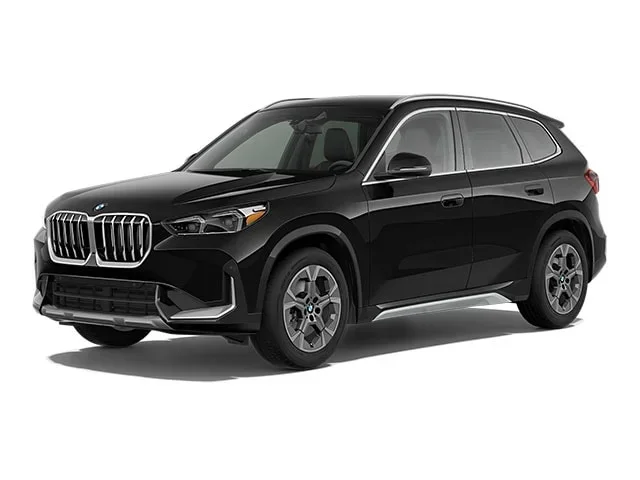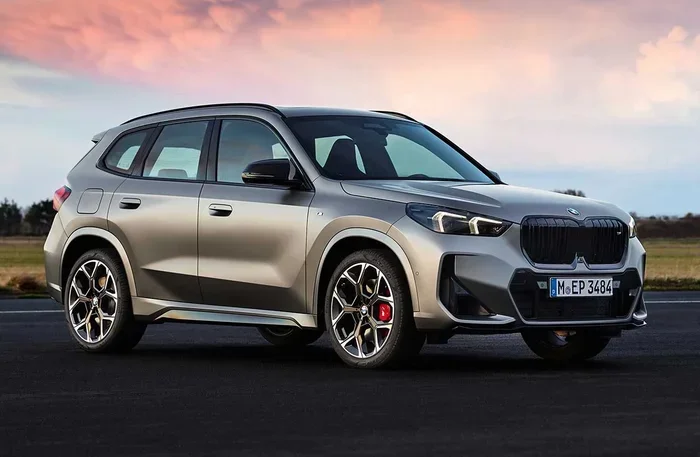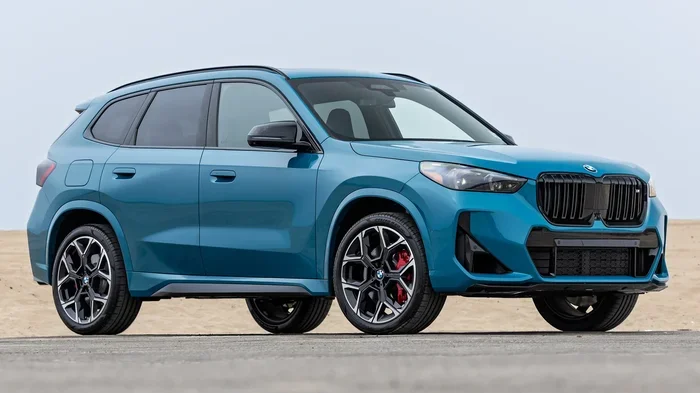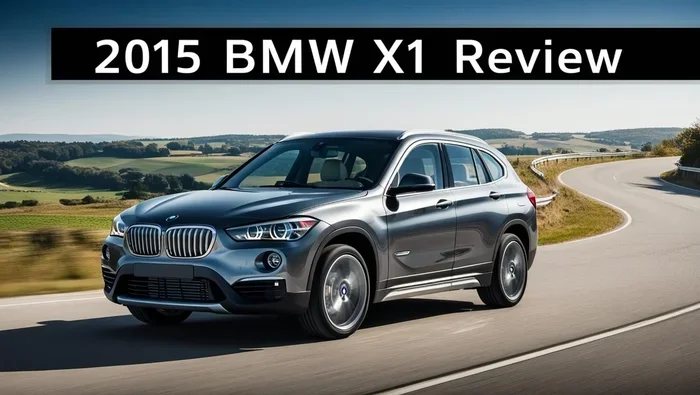
Featured image for 2015 BMW X1 exterior
Image source: bmwinsights.com
The 2015 BMW X1 uses the E84 chassis code for most markets, but late-year production switched to the F48 platform. This guide helps you identify your specific what chassis does the 2015 bmw x-1 use configuration using your VIN. Knowing the difference is vital for ordering correct parts, scheduling maintenance, and understanding your vehicle’s drivetrain layout.
If you are shopping for parts, planning a repair, or just curious about your vehicle’s architecture, knowing what chassis does the 2015 bmw x-1 use is the essential first step. The 2015 model year is famous among BMW enthusiasts because it sits right on the knife-edge of a massive platform shift. Unlike most model years where the answer is simple, 2015 is a “split year.” This means two completely different vehicles share the same model badge depending on when they rolled off the assembly line. Getting this wrong leads to ordering the wrong control arms, the wrong brake rotors, or even the wrong engine oil filter housing. Let’s clear up the confusion once and for all.
Key Takeaways
- Primary Chassis: The vast majority of 2015 model year X1s sold in North America use the E84 chassis (RWD-based platform).
- Transition Year: Late 2015 production introduced the F48 chassis (FWD-based UKL platform), typically sold as 2016 models but built in late 2015.
- VIN is King: Always verify your chassis using the VIN decoder; the 10th digit (year) and 4th-8th digits (model/series) confirm the platform.
- Drivetrain Difference: E84 uses longitudinal engines (RWD/xDrive); F48 uses transverse engines (FWD/xDrive).
- Parts Compatibility: Suspension, brakes, and engine components are not interchangeable between E84 and F48.
- Maintenance Impact: Service intervals, fluid capacities, and common failure points differ significantly between the two chassis.
- Resale & Value: The E84 is often preferred by enthusiasts for its RWD bias; the F48 offers more interior space and efficiency.
📑 Table of Contents
- The Short Answer: It Depends on Your Build Date
- Deep Dive: The E84 Chassis (First Generation)
- The New Era: The F48 Chassis (Second Generation)
- How to Identify Your Specific Chassis Code (Definitive Methods)
- Why Chassis Code Dictates Your Maintenance & Repairs
- Expert Insights: Common Mistakes Owners Make
- Reliability and Longevity: E84 vs F48
- Frequently Asked Questions
- Conclusion
The Short Answer: It Depends on Your Build Date
Here is the bottom line: Most 2015 BMW X1 models use the E84 chassis. This applies to virtually every unit sold as a “2015 Model Year” in the United States and Canada. However, BMW began producing the next generation— the F48 chassis— in late 2015 (around November) for the 2016 Model Year launch. In some European markets, the F48 arrived slightly earlier. If your car was built in October 2015 or earlier, it is an E84. If it was built in November 2015 or later, it is likely an F48. You cannot tell just by looking at the badge; you must check the VIN or the door jamb sticker.
Deep Dive: The E84 Chassis (First Generation)
The E84 chassis underpinned the first-generation BMW X1 from 2010 through 2015. It holds a special place in BMW history as the brand’s first foray into the compact premium SUV segment. Understanding this platform explains why the 2015 X1 drives the way it does.

Visual guide about 2015 BMW X1 exterior
Image source: imgcdn.zigwheels.my
RWD-Based Architecture
The E84 is built on a modified version of the E90/E91 3 Series platform. This means it uses a longitudinal engine layout (engine sits front-to-back). Power goes to the rear wheels by default (sDrive models) or to all four wheels via a transfer case (xDrive models). This layout gives the E84 a distinct driving feel. It has a near 50/50 weight distribution and a steering rack that isn’t corrupted by torque steer. For a compact SUV, it handles remarkably like a sport sedan.
Suspension and Subframe Details
The front suspension uses a MacPherson strut design mounted to a steel subframe. The rear uses a multi-link setup (Central Link Rear Axle) which is a hallmark of BMW’s RWD platforms. The subframes are robust but the rear subframe bushings are a known wear item on higher mileage examples. The steering is hydraulic-assisted on most early models, switching to electric power steering (EPS) on later LCI (Life Cycle Impulse) models around 2013+. This is a crucial distinction if you are diagnosing steering feel or leaks.
Engine Bay Packaging
Because the engine sits longitudinally, the engine bay is “long” but narrow. The 2015 E84 X1 typically came with the N20 2.0L Turbo Inline-4 (xDrive28i / sDrive28i) or the N55 3.0L Turbo Inline-6 (xDrive35i). The N55 models are highly sought after. The longitudinal layout makes certain repairs easier (like accessing the valve cover or turbo) but others harder (like the starter motor or transmission work). If you are doing DIY maintenance, the E84 rewards patience and the right tools.
The New Era: The F48 Chassis (Second Generation)
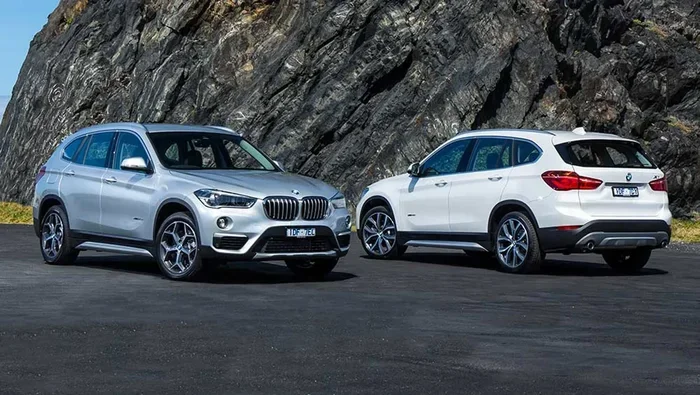
Starting production in late 2015, the F48 chassis represented a radical departure. It moved to the UKL (Untere Klasse) front-wheel-drive platform, shared with the Mini Countryman and the 2 Series Active Tourer. This was a cost-saving and packaging move by BMW.
Visual guide about 2015 BMW X1 exterior
Image source: images.carsguide.com.au
Transverse Engine Layout (UKL Platform)
On the F48, the engine sits transversely (sideways). The “front-wheel-drive” bias means the base sDrive models are actually FWD. The xDrive system here uses a power take-off unit (PTU) on the transmission and a driveshaft to a rear axle disconnect. It is a reactive AWD system, not the proactive, torque-vectoring center differential found in the E84 xDrive. The driving dynamics are competent but noticeably less “BMW-like” in terms of balance and steering purity.
Chassis Stiffness and Dimensions
The F48 uses significantly more high-strength steel and aluminum in the body structure. Torsional rigidity increased by roughly 30% over the E84. The wheelbase grew by ~3.6 inches (now 105.1 inches), liberating massive rear legroom. The track width is wider. This makes the F48 a much better family hauler but a larger, heavier vehicle to park in tight urban spots.
Powertrain Shift: B-Series Engines
The F48 launched with the new modular B-series engines (B38 3-cylinder, B48 4-cylinder). The 2016+ xDrive28i uses the B48 2.0L. These engines feature a timing chain at the rear (near the firewall), a rotated exhaust manifold (integrated into the head), and are generally more efficient but more complex to service in the tight transverse bay.
How to Identify Your Specific Chassis Code (Definitive Methods)
Don’t guess. Use these foolproof methods to know exactly what you have.
Visual guide about 2015 BMW X1 exterior
Image source: cdn.bmwblog.com
Method 1: The VIN Decoder (Most Accurate)
Your Vehicle Identification Number (VIN) is the absolute truth. Find it on the driver’s side dash (visible through windshield) or door jamb. Look at positions 4 through 8 (Vehicle Descriptor Section).
- E84 Codes: Typically start with WBAVL, WBAVM, WBAZL, WBAZM, 5UXZV, 5UXZW (North America).
- F48 Codes: Typically start with WBXHT, WBXHU, WBXJV, WBXJW (North America).
You can plug your full VIN into a free online BMW VIN decoder (like bmwvin.com or mdecoder.com). It will explicitly list “Chassis: E84” or “Chassis: F48”. This is the gold standard for unraveling your BMW’s chassis code for owners who want zero ambiguity.
Method 2: The Door Jamb Sticker (Build Date)
Open the driver’s door. Look at the white/sticker on the B-pillar (door frame). It lists “MFD BY BMW AG” and a date (MM/YYYY).
- 03/2015 – 10/2015: Almost certainly E84 (2015 MY).
- 11/2015 – 12/2015: Could be late E84 or early F48 (2016 MY). Check VIN.
- 01/2016 Onward: F48.
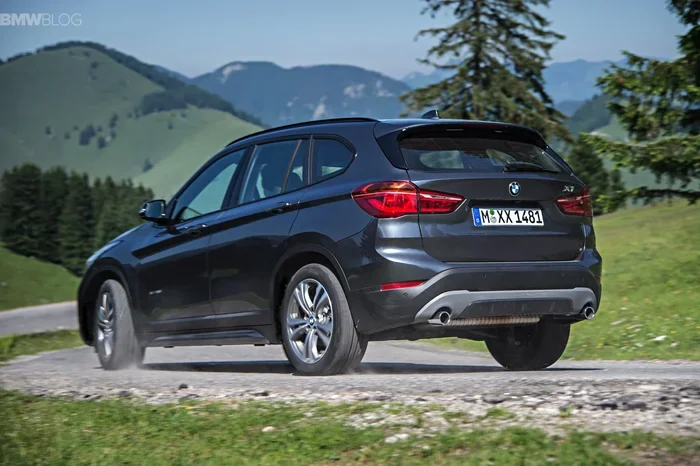
Method 3: Visual Identification (Quick Walkaround)
If you can’t access the VIN right now, look for these dead giveaways:
| Feature | E84 Chassis (2010-2015) | F48 Chassis (Late 2015+) |
|---|---|---|
| Kidney Grille Shape | Tall, vertical, separate slats | Wider, lower, connected “single frame” look |
| Hofmeister Kink | Pronounced, classic C-pillar kick | Subtler, integrated into rear window line |
| Rear Door Handle | Traditional pull-out handle | Flush, recessed handle (often) |
| Center Console | High, driver-focused “bridge” console | Lower, floating console with more open space |
| Shifter | Traditional lever (mechanical linkage feel) | Electronic toggle shifter (F48) or newer lever |
| Engine Orientation (Hood Open) | Longitudinal (Belts on passenger side) | Transverse (Belts on driver side / front) |
Why Chassis Code Dictates Your Maintenance & Repairs
This isn’t just trivia. The chassis code determines every nut, bolt, and fluid spec for your car.
Suspension and Brakes: Zero Interchangeability
You cannot swap E84 control arms onto an F48. The geometry is totally different. The E84 uses a double-pivot front lower arm setup; the F48 uses a different MacPherson geometry with a distinct steering knuckle. Brake rotor diameters, caliper mounting points, and pad shapes are unique to each platform. If you order “2015 X1 front brakes” without specifying chassis, you have a 50/50 shot of getting the wrong ones. Always filter by E84 or F48.
Drivetrain Fluids and Service
- E84 xDrive: Uses a transfer case (VTG) requiring specific BMW transfer case oil (typically 8.3 fl oz / 245ml). Rear diff fluid is standard hypoid gear oil. Front diff is integrated in the transmission (except early models).
- F48 xDrive: Uses a PTU (Power Transfer Unit) on the transmission side and a Rear Axle Disconnect (RAD). The PTU has its own specific oil. The RAD has its own oil. The transmission is a 7-speed DCT (early) or 8-speed Aisin/Torque Converter (later), requiring specific ATF.
- E84 sDrive (RWD): Standard rear diff service.
- F48 sDrive (FWD): No rear diff. No transfer case. Just transmission fluid.
Engine Maintenance Nuances
On the E84 N20, the timing chain guide failure is the infamous issue. The oil filter housing gasket (OFHG) leaks are common. The valve cover has integrated PCV. On the F48 B48, the timing chain is at the rear of the engine (firewall side) – a massive job. The oil filter is a cartridge on top (easy). The coolant system uses a MAP-controlled thermostat. Spark plug intervals differ. Knowing your chassis tells you which engine you have, which dictates the service schedule. For a deeper look at how model designations tie to engines, see our guide on decoding BMW vehicle designations.
Expert Insights: Common Mistakes Owners Make
I’ve seen plenty of owners (and even some shops) trip up on the 2015 split. Here are the top errors to avoid.
Quick Tips for DIYers
- Label Your VIN: Write your VIN on a piece of masking tape inside your glove box or trunk. Save a photo on your phone. You will need it every time you order parts.
- Use RealOEM: Go to RealOEM.com, enter your VIN. It builds a parts catalog exclusively for your specific car. It is the single best free tool for BMW owners.
- Check the Strut Towers: Open the hood. E84 strut towers are close to the firewall, tall and narrow. F48 strut towers are further forward, wider, and the brake booster is huge (vacuum vs electric).
- Scan for Codes: Before buying suspension parts, scan the chassis module (DSC/ESP). Fault codes for “Steering Angle Sensor” or “Yaw Rate” often point to calibration needs after alignment, not broken parts.
Reliability and Longevity: E84 vs F48
Both chassis are solid if maintained, but they age differently. The E84 is older, so it faces rubber degradation (bushings, hoses, seals) and the N20 timing chain saga. The F48 is newer but introduces complexity: the B48 rear timing chain, the DCT/8HP transmission mechatronics, and the electric parking brake modules. If you are buying used, the E84 (especially the xDrive35i N55) is often viewed as the more “analog” and DIY-friendly keeper. The F48 is the better modern daily driver. For a broader look at how the X1 stacks up against the lineup, check our analysis on identifying the most reliable BMW models for longevity.
Frequently Asked Questions
Is the 2015 BMW X1 front-wheel drive or rear-wheel drive?
It depends on the chassis. The E84 (most 2015s) is rear-wheel drive based (sDrive = RWD, xDrive = AWD). The F48 (late 2015 build) is front-wheel drive based (sDrive = FWD, xDrive = AWD). Check your VIN to be sure.
What engine is in the 2015 BMW X1?
E84 models use the N20 2.0T (28i) or N55 3.0T (35i). F48 models use the B48 2.0T (28i) or B38 1.5T (18i/20i in some markets). The 35i badge was dropped for the F48 generation initially.
Can I put F48 wheels on an E84?
Generally, no. While both often use a 5×112 bolt pattern (E84 moved to 5×112 in 2011+), the offsets, center bore, and brake caliper clearance differ significantly. F48 wheels usually have a higher positive offset for the FWD platform. Always verify fitment specs.
Where is the chassis code stamped on the car?
It is not typically stamped as “E84” or “F48” on the metal. It is encoded in the VIN (positions 4-8). The model code is on the door jamb sticker (e.g., “X1 sDrive28i” + “E84” or “F48” in the model field on some stickers). The VIN decoder is the only 100% reliable source.
Does the 2015 X1 have a timing chain or belt?
All BMW X1 engines (N20, N55, B48, B38) use timing chains. There are no timing belts. The N20 (E84) chain is at the front; the B48 (F48) chain is at the rear (firewall side).
Which 2015 X1 is better: E84 or F48?
“Better” depends on priorities. Choose the E84 for driving dynamics, RWD feel, N55 engine availability, and DIY ease. Choose the F48 for interior space, modern tech, fuel efficiency, newer safety features, and warranty coverage (if buying CPO).
Conclusion
Identifying what chassis does the 2015 bmw x-1 use is the single most important piece of data for any owner or buyer. The 2015 split between the RWD-based E84 and the FWD-based F48 creates a unique scenario where two different cars wear the same badge. Never assume. Grab your VIN, check the build date on the door jamb, or pop the hood to check the engine orientation. Once you know your code—E84 or F48—you unlock the correct maintenance schedule, the right parts catalog, and the true character of your BMW. Drive smart, maintain well, and enjoy the Ultimate Driving Machine, whichever chassis it sits on.