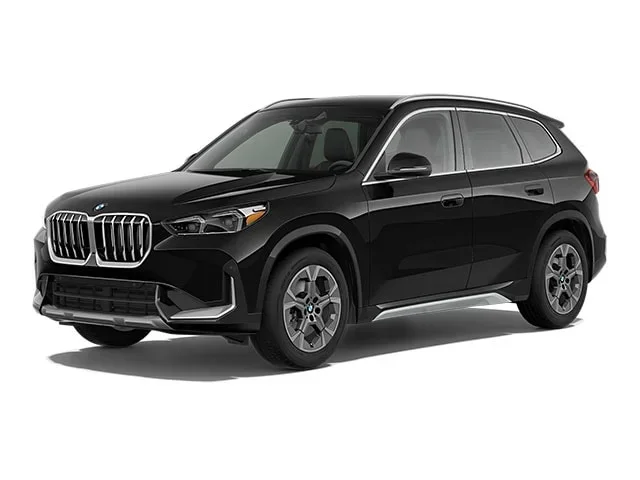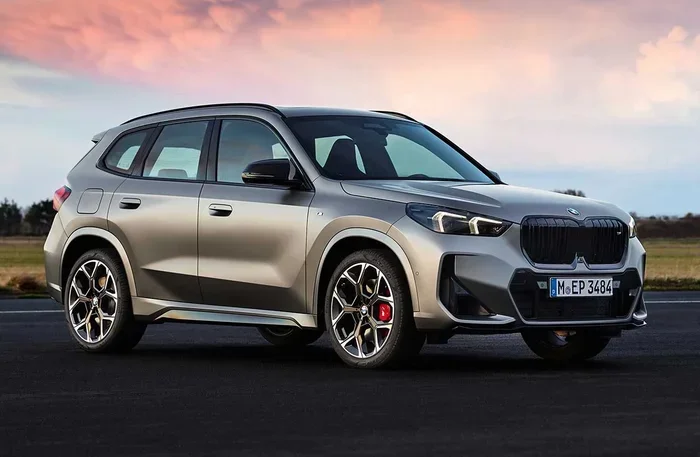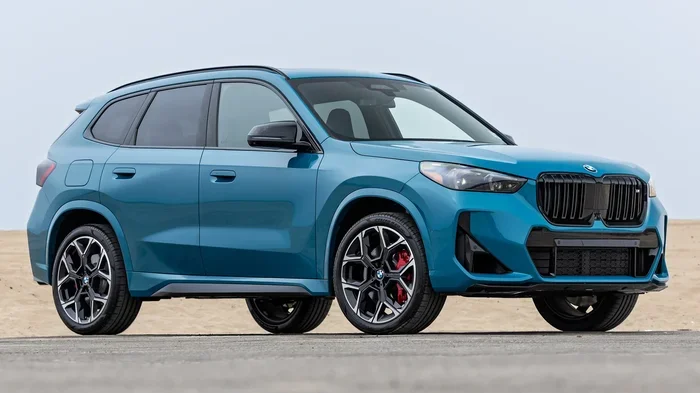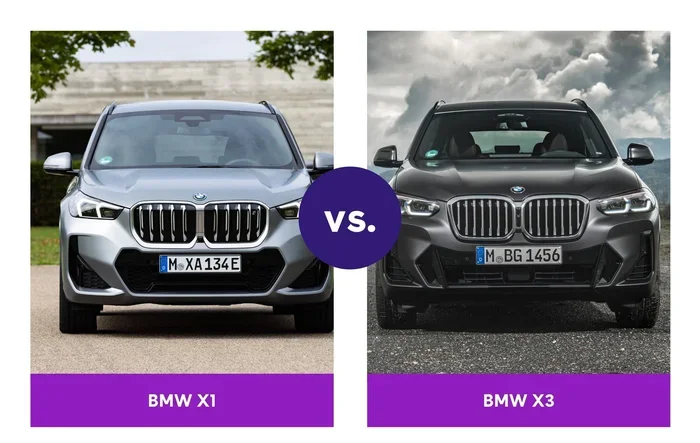
Featured image for BMW X1 vs X3
Image source: a.storyblok.com
What car is slightly larger than X1 models? The direct answer is the BMW X3, which offers significantly more cargo space, rear legroom, and engine power. The BMW X2 provides a sportier coupe-like shape with similar dimensions, while rivals like the Audi Q3 and Mercedes GLA compete closely on size and luxury features. This guide breaks down dimensions, pricing, and driving dynamics to help you choose the perfect upgrade.
So you love your BMW X1, but you are starting to feel the squeeze. Maybe the stroller doesn’t fit behind the second row anymore, or your teenagers are complaining about knee room on road trips. You are asking the golden question: what car is slightly larger than X1 models on the market today?
The short answer is the BMW X3. It is the next rung on the BMW SUV ladder. But the long answer is much more interesting. There is the sporty BMW X2, the electric iX3, and a fierce lineup of German rivals like the Audi Q3 and Mercedes GLA that sit right in that “Goldilocks” zone between subcompact and compact luxury.
In this guide, we will walk through every option. We will compare hard numbers like wheelbase and cargo cubes. We will talk about how the drive changes when you size up. And we will help you decide if you need the space of an X3 or the style of an X2. Let’s dive in.
Key Takeaways
- The BMW X3 is the true size upgrade: It rides on a larger platform (CLAR), offering 5-6 more inches of length and significantly more cargo volume than the X1.
- The BMW X2 is a style variant, not a size upgrade: It shares the X1’s FAAR platform and wheelbase but sacrifices rear headroom and cargo space for a sloping roofline.
- Electric buyers should compare the iX1 and iX3: The iX3 is a dedicated EV platform larger than the iX1, which shares its gas counterpart’s architecture.
- Rivals offer compelling alternatives: The Audi Q3 and Mercedes-Benz GLA-Class sit dimensionally between the X1 and X3, often with lower starting prices.
- Watch for “Run-Flat” standardization: Most BMWs in this class come standard with run-flat tires, impacting ride comfort and replacement costs.
- Badge decoding matters: Understanding BMW vehicle designations helps you distinguish between sDrive (FWD/RWD) and xDrive (AWD) across models.
- Test drive for third-row needs: Neither the X1 nor X3 offers a third row; if you need seven seats, you must step up to the X5 or X7.
📑 Table of Contents
- The Direct Answer: BMW X3 (The True “Step Up”)
- The Stylish Alternative: BMW X2 (Same Size, Different Shape)
- The Electric Route: iX1 vs. iX3
- Non-BMW Rivals: The “Tweener” Segment
- Key Factors to Consider When Sizing Up
- Common Mistakes When Upgrading from the X1
- Expert Insight: The “Right Size” Philosophy
- Quick Decision Matrix
- Conclusion
The Direct Answer: BMW X3 (The True “Step Up”)
If you want the vehicle that BMW engineers designed specifically as the larger brother to the X1, it is the BMW X3. There is no way around it. The X1 sits on the FAAR front-wheel-drive architecture. The X3 sits on the CLAR rear-wheel-drive/all-wheel-drive architecture. That fundamental platform difference changes everything.
Dimension Comparison: X1 vs. X3 (Current Generation)
Numbers don’t lie. Here is how the current G01 X3 stacks up against the U11 X1:
- Length: X3 (~185.9 in) vs X1 (~175.4 in) — ~10.5 inches longer.
- Wheelbase: X3 (~112.8 in) vs X1 (~106.0 in) — ~6.8 inches longer.
- Width: X3 (~74.4 in) vs X1 (~72.0 in) — ~2.4 inches wider.
- Height: X3 (~66.0 in) vs X1 (~64.2 in) — ~1.8 inches taller.
- Cargo Space (Seats Up): X3 (~28.7 cu ft) vs X1 (~27.1 cu ft) — Modest gain.
- Cargo Space (Seats Down): X3 (~62.7 cu ft) vs X1 (~58.7 cu ft) — Noticeable gain.
- Rear Legroom: X3 (~38.5 in) vs X1 (~37.0 in) — ~1.5 inches more knee room.
That wheelbase stretch is the key. It pushes the front wheels further forward and the rear wheels further back. That translates directly to adult-sized rear seat comfort and a longer cargo floor for golf clubs or luggage.
Performance and Powertrain Differences
The platform swap brings a longitudinal engine layout (mostly) for the X3 versus the transverse layout in the X1. What does that mean for you?
- X1 (xDrive28i): 2.0L Turbo 4-cyl, 241 hp, 295 lb-ft. 0-60 mph ~5.8 sec.
- X3 (xDrive30i): 2.0L Turbo 4-cyl, 255 hp, 295 lb-ft. 0-60 mph ~6.0 sec (heavier car).
- X3 (M40i): 3.0L Turbo Inline-6, 382 hp. 0-60 mph ~4.4 sec.
The X3 offers the legendary B58 inline-six in the M40i trim. The X1 tops out at a four-cylinder (M35i makes 312 hp, but it’s still a 2.0L). If you want smooth, linear power delivery and that classic BMW straight-six sound, you must step up to the X3 M40i.
The Price Jump
Be prepared for a significant MSRP increase.
- 2024/2025 X1 xDrive28i: ~$41,000 starting.
- 2024/2025 X3 xDrive30i: ~$48,000 starting.
- X3 M40i: ~$63,000 starting.
You are paying a ~$7,000-$8,000 premium just for the base model upgrade. Option an X3 to match an equipped X1, and the gap widens to $10k+.
The Stylish Alternative: BMW X2 (Same Size, Different Shape)
Here is where it gets tricky. The BMW X2 looks like a totally different car. It has a sloping coupe roofline, aggressive stance, and frameless doors. But pop the hood (or check the spec sheet), and you find the exact same FAAR platform as the X1.
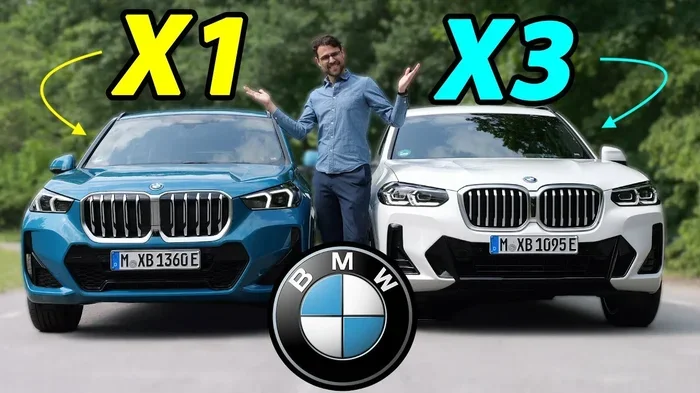
Visual guide about BMW X1 vs X3
Image source: i.ytimg.com
Dimensions: X1 vs. X2
- Wheelbase: Identical (106.0 in).
- Length: X2 is actually ~1.5 inches shorter than X1.
- Height: X2 is ~2.8 inches lower.
- Cargo Space: X2 has ~21.6 cu ft (seats up) vs X1’s 27.1 cu ft.
- Rear Headroom: X2 loses ~1.5 inches due to the roofline.
Verdict: The X2 is not the answer to “what car is slightly larger than X1.” It is the answer to “what car looks cooler than X1 but fits less stuff.” If you are single, a couple, or carry small kids in car seats (which fit fine), the X2 is a blast to drive. It feels sharper because the center of gravity is lower. If you need utility, skip it.
The New Electric X2 (iX2)
BMW now offers the iX2 (in Europe/globally, coming to US markets in various forms). It shares the same dimensional constraints. The battery pack sits in the floor, raising the seat height slightly, which actually helps the headroom issue a tiny bit, but cargo space remains tight compared to an X3 or iX3.
The Electric Route: iX1 vs. iX3
If your next car has a plug, the comparison shifts slightly. The BMW iX1 (xDrive30) is the electric X1. The BMW iX3 is the electric X3.
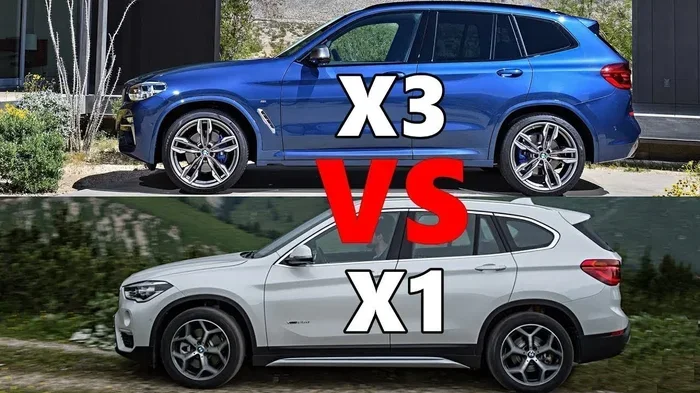
Visual guide about BMW X1 vs X3
Image source: i.ytimg.com
Platform Differences Matter More Here
The gas X1 and X3 share almost no hard points. The electric versions are similar.
- iX1: Built on the FAAR platform (adapted for EV). Uses a front motor + rear motor (xDrive only in US). ~64.7 kWh usable battery. ~230-240 miles EPA range (est).
- iX3: Built on the CLAR platform (adapted for EV). Rear-wheel-drive only (single motor rear) in current gen. ~74 kWh usable battery. ~280-290 miles EPA range (est).
The iX3 is a dedicated RWD EV. It drives beautifully—balanced, rear-biased, true BMW feel. The iX1 is FWD-biased AWD. It is quick (0-60 in ~5.6s), but it doesn’t have that “ultimate driving machine” chassis balance. The iX3 is also physically larger in every dimension, mirroring the gas X3 specs.
Wait for the “Neue Klasse” (2025+)
Critical buying advice: The current iX3 is an older design (launched 2020). BMW is launching the Neue Klasse architecture in 2025/2026. The next-gen iX3 (likely called iX3 on the new platform) will be a massive leap in tech, range (800V charging), and efficiency. If you can wait 12-18 months, the next electric “car slightly larger than X1” will be vastly superior.
Non-BMW Rivals: The “Tweener” Segment
This is arguably the most competitive segment in luxury. The Audi Q3, Mercedes-Benz GLA-Class, and Volvo XC40 are all dimensionally very close to the X1. But the Audi Q5, Mercedes GLC, and Volvo XC60 are the direct X3 competitors.
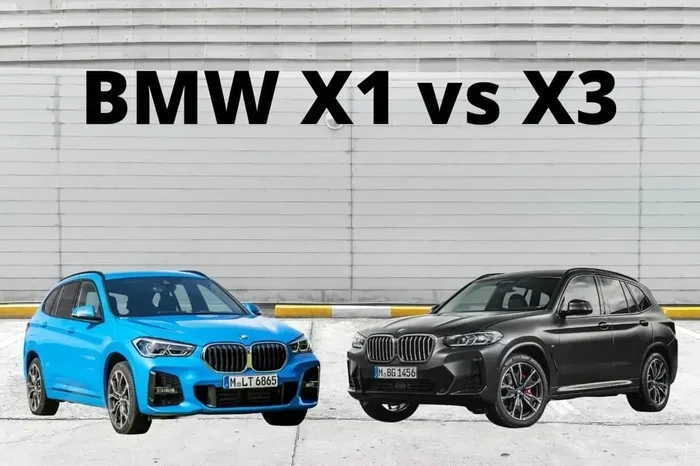
Visual guide about BMW X1 vs X3
Image source: vehicleanswers.com
Is there a rival that splits the difference? Not really. The Germans align their segments tightly.
- Subcompact (X1 rivals): Q3, GLA, XC40, Lexus UX/NX (NX is slightly larger), Cadillac XT4.
- Compact (X3 rivals): Q5, GLC, XC60, NX, XT5.
However, the Genesis GV70 and Acura RDX are worth a look. The RDX is unique—it is built on a Honda Accord platform (FWD-based AWD) but sized almost exactly like an X3. It offers massive interior volume for the money. The GV70 is RWD-based, stunning inside, and sized like an X3 but priced closer to a loaded X1.
Comparison Table: X1 vs. X3 vs. Key Rivals (Compact Class)
| Model | Length (in) | Wheelbase (in) | Cargo (Seats Up) | Starting MSRP (Approx) |
|---|---|---|---|---|
| BMW X1 | 175.4 | 106.0 | 27.1 cu ft | $41,000 |
| BMW X3 | 185.9 | 112.8 | 28.7 cu ft | $48,000 |
| Audi Q5 | 184.3 | 112.7 | 25.8 cu ft | $46,000 |
| Mercedes GLC | 184.5 | 113.1 | 21.9 cu ft | $47,000 |
| Volvo XC60 | 185.0 | 112.8 | 22.4 cu ft | $45,000 |
| Genesis GV70 | 184.6 | 112.6 | 28.9 cu ft | $45,000 |
| Acura RDX | 186.7 | 108.3 | 29.5 cu ft | $42,000 |
Note: Specs based on 2024/2025 model year data. Cargo volumes vary by measurement standard (SAE vs ISO).
Key Factors to Consider When Sizing Up
Before you sign on the dotted line for an X3 or a Q5, ask yourself these three questions. They save buyers from regret every single day.
1. The “Garage Test” (Parking & Maneuverability)
The X1 is a city slicker. It turns tight, parks in compact spots, and fits in old garages. The X3 is 10 inches longer and 2.5 inches wider. That matters if:
- You have a narrow, single-car garage with shelves on the wall.
- You parallel park on city streets daily.
- You drive narrow canyon roads or tight parking structures.
Tip: Take the X3 to your actual parking spot/garage during the test drive. Don’t just drive it on the open highway.
2. The “Third Row” Fallacy
Some buyers size up hoping for a third row. Stop right there. Neither the X1 nor the X3 offers a third row in the US market. (The X1 never has; the X3 had a tiny “5+2” option in Europe years ago, never here). If you need 7 seats, you must jump to the BMW X5 (or X7). The X5 is a full size class larger—~194 inches long. That is a massive jump in price ($65k+), fuel consumption, and parking difficulty.
3. Running Costs: Tires, Fuel, and Maintenance
Larger car = heavier car = more wear.
- Tires: X3 runs larger diameter wheels (19s/20s standard vs 18s/19s on X1). Replacement sets cost $200-$400 more per set. And yes, they almost certainly come with BMW run-flat tires standard. They let you drive 50 miles on a flat, but they ride stiffer and cost more to replace.
- Fuel: X3 is heavier. Expect 1-2 MPG combined penalty vs X1 (e.g., 25 MPG vs 27 MPG combined).
- Brakes: More mass = more brake dust and faster pad wear, especially on the M40i/M models.
4. The “sDrive” vs “xDrive” Decision
On the X1 (FWD platform), sDrive = FWD. xDrive = AWD. On the X3 (RWD platform), sDrive = RWD (rare in US, mostly Euro). xDrive = AWD. In the US, almost every X3 sold is xDrive. If you live in the Sun Belt and want to save weight/gas/maintenance, an X1 sDrive28i is a legitimate money-saver. An X3 sDrive30i is a unicorn here. Understand what CI means in BMW badges (and sDrive/xDrive) to decode the trunk lid correctly.
Common Mistakes When Upgrading from the X1
I have seen owners make these errors repeatedly. Don’t be one of them.
- Buying X3 for “Prestige” but losing Agility: The X1 is genuinely fun. It rotates well. The X3 is competent but heavier. If you love the X1’s tossability, you might hate the X3’s mass. Drive both back-to-back.
- Ignoring the X2 M35i: If you want performance more than space, the X2 M35i (312 hp) is faster than an X3 xDrive30i and cheaper than an X3 M40i. It is the “hot hatch” of the lineup.
- Overlooking Certified Pre-Owned (CPO): A 2-3 year old X3 CPO with 20k miles saves you $10k+ vs new. The depreciation curve on the X3 is steep years 1-3. BMW Certified warranty adds 1 year/unlimited miles on top of the factory remainder. It is the smart money move.
- Forgetting the “i” (Electric) Tax Credit: The iX1 and iX3 (if leased) may qualify for the $7,500 commercial clean vehicle credit (via lease pass-through). This can make an electric “car slightly larger than X1” cheaper per month than a gas X1. Run the lease numbers.
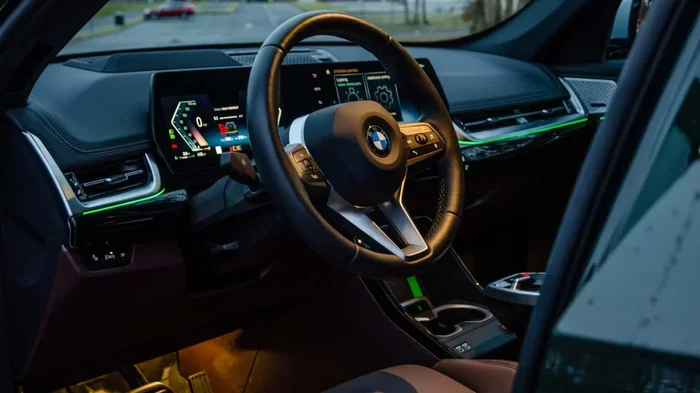
- Skipping the Tech Check: The new X1 (U11) has the curved display (OS9). The current X3 (G01 facelift) also has the curved display (OS9) as of the 2025 model year. But older used X3s (pre-2022) have the old iDrive 7 with separate screens. If you want the newest tech interface, verify the build date.
Expert Insight: The “Right Size” Philosophy
After years of watching buyers cross-shop these, here is my rule of thumb:
“Buy the smallest car that solves your problem.”
If your problem is “rear-facing car seat touches the front seat back,” the X3 solves it. The X2 does not. The Q3 might not either.
If your problem is “I want a frunk and silent commute,” the iX1 or iX3 solves it.
If your problem is “I want a badge that says I arrived,” the X3 M40i or Genesis GV70 solves it better than a base X3 xDrive30i.
Don’t buy size for the sake of size. Every inch costs you in garage fit, fuel, tires, and turning circle. The X1 is a remarkably complete package. You only leave it when you physically cannot fit your life inside it.
Quick Decision Matrix
- Need max space for family/dogs/gear > Buy BMW X3 (or Genesis GV70 / Acura RDX for value).
- Want style, solo/couple driving, tight parking > Buy BMW X2 (or keep X1).
- Want EV, max range, RWD dynamics > Wait for Neue Klasse iX3 (or lease current iX3/iX1).
- Want tech, value, 10-year warranty > Buy Genesis GV70.
- Want reliability reputation, huge cargo > Buy Acura RDX.
- Want latest interior tech, digital dash > Buy New X1 (U11) or 2025+ X3.
Conclusion
So, what car is slightly larger than X1 models? The definitive answer is the BMW X3. It is the only model in the lineup engineered on a larger platform specifically to offer more passenger room, cargo capacity, and towing capability.
The BMW X2 is a style play, not a space play. The iX3 is the electric equivalent, though a new generation is imminent. And the rival set—Audi Q5, Mercedes GLC, Volvo XC60, Genesis GV70—all occupy that same “Compact Luxury” segment, trading blows on price, tech, and comfort.
My advice? Define your “pain point” with the X1 first. Is it rear legroom? Cargo height? Towing? Then test drive the X3 and one rival (I’d pick the Genesis GV70 for value or GLC for comfort). If the X3 doesn’t feel worth the $10k premium over your X1 trade-in, keep the X1. It is a fantastic vehicle exactly as it is.
Ready to maintain that new ride? Check out our guide on what BMW service includes so you know exactly what to expect at your first service visit.
Frequently Asked Questions
Is the BMW X2 bigger than the X1?
No, the BMW X2 is not bigger than the X1. They share the exact same wheelbase (106 inches) and platform. The X2 is actually slightly shorter in length and lower in height, resulting in less cargo space (21.6 vs 27.1 cu ft) and reduced rear headroom due to its coupe-like roofline.
What is the main difference between the BMW X1 and X3 platforms?
The X1 uses the FAAR front-wheel-drive architecture (transverse engine), while the X3 uses the CLAR rear-wheel-drive architecture (longitudinal engine). This makes the X3 wider, longer, and better balanced for driving dynamics, while the X1 maximizes interior space relative to its smaller exterior footprint.
Does the BMW X3 have a third row?
No, the BMW X3 does not offer a third row in the US market. It is a strict 5-seater. If you need seven seats, you must step up to the BMW X5 (or X7), which are significantly larger and more expensive vehicles.
Which is better value: BMW X3 or Genesis GV70?
The Genesis GV70 generally offers better value. It starts at a lower price than the X3, includes more standard features (like ventilated seats, surround cameras, premium audio), and offers a longer warranty (5yr/60k basic, 10yr/100k powertrain). The X3 wins on driving dynamics, brand cachet, and dealer network size.
Is the electric BMW iX1 larger than the gas X1?
Dimensionally, the BMW iX1 is virtually identical to the gas X1 (U11 platform). It shares the same wheelbase, length, and width. The main differences are a slightly higher floor (battery pack), a small front trunk (frunk), and the dual-motor xDrive system being standard.
What does sDrive vs xDrive mean on the X1 vs X3?
On the X1 (FWD platform), sDrive = Front-Wheel Drive and xDrive = All-Wheel Drive. On the X3 (RWD platform), sDrive = Rear-Wheel Drive (rare in US) and xDrive = All-Wheel Drive. In the US market, nearly all X3s sold are xDrive AWD, while the X1 offers a choice between sDrive (FWD) and xDrive (AWD).