Featured image for BMW X1 SUV
Image source: motortrend.com
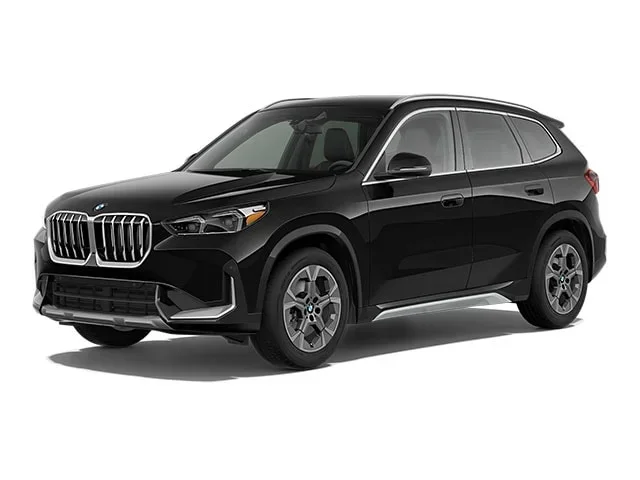
The BMW X1 is absolutely considered an SUV, specifically falling into the subcompact luxury crossover segment. BMW markets it as a Sports Activity Vehicle (SAV), but it fits the standard industry definition of a small SUV thanks to its raised ride height, available all-wheel drive, and practical cargo area. This guide breaks down its classification, dimensions, capabilities, and how it stacks up against competitors like the Audi Q3 and Mercedes GLA.
If you are shopping for a luxury vehicle that is easy to park but still hauls your gear, you have likely asked: is the BMW X1 considered an SUV? The short answer is yes. It sits firmly in the subcompact luxury SUV class. However, BMW prefers its own term: Sports Activity Vehicle, or SAV. This distinction confuses many buyers. We will clear up the terminology, look at the hardware, and help you decide if this little Bavarian hauler fits your life.
We will cover the platform, the dimensions, the drivetrain options, and the interior space. We will also compare it to direct rivals. By the end, you will know exactly where the X1 sits in the market. You will also understand why it remains a top seller for the brand.
Key Takeaways
- Official Classification: BMW labels the X1 a Sports Activity Vehicle (SAV), but it is universally classified as a subcompact luxury SUV.
- Platform: It uses a front-wheel-drive-based architecture (UKL/F40), making it a unibody crossover rather than a body-on-frame truck.
- Drivetrain: Standard front-wheel drive (sDrive) with optional all-wheel drive (xDrive) provides genuine SUV capability.
- Interior Space: Despite its small footprint, it offers surprising rear legroom and up to 58.7 cubic feet of cargo space with seats folded.
- Segment Rivals: Key competitors include the Audi Q3, Mercedes-Benz GLA, Volvo XC40, and Lexus UX.
- Performance Range: Models range from the efficient xDrive28i to the high-performance M35i with over 300 horsepower.
- Ground Clearance: At roughly 7.2 to 8.3 inches (depending on trim), it handles light off-roading and snow well.
📑 Table of Contents
- What Defines an SUV vs. a Crossover?
- The BMW X1 Platform and Design
- BMW’s Official Classification: The SAV Badge
- Interior Space and Practicality
- Performance and Drivetrain Options
- How the X1 Stacks Up Against Rivals
- Is the BMW X1 Right for You?
- Ownership Considerations: Maintenance and Costs
- Quick Tips for Buyers
- Common Misconceptions
- Expert Insight: The “Sweet Spot” Trim
- Conclusion
What Defines an SUV vs. a Crossover?
Before we dive into the X1 specifically, we need to define the terms. People use “SUV” and “crossover” interchangeably today. Technically, they are different.
A traditional SUV (Sport Utility Vehicle) uses body-on-frame construction. Think of a truck chassis with a passenger cabin bolted on top. Vehicles like the Chevrolet Tahoe or the Jeep Wrangler use this method. They are heavy, tow heavy loads, and handle rough terrain well.
A Crossover (CUV) uses unibody construction. The body and frame are one single structure. This is how cars are built. Crossovers are lighter, handle better on pavement, and get better fuel economy. The BMW X1 uses unibody architecture. Therefore, technically, it is a crossover.
However, the market has spoken. Almost everyone calls crossovers “SUVs” now. The EPA classifies the X1 as a “Sport Utility Vehicle.” Insurance companies do too. So, for all practical purposes, the X1 is an SUV.
The BMW X1 Platform and Design
The current generation (U11 chassis, launched 2023) rides on BMW’s FAAR platform. This stands for Front-wheel Drive Architecture. It is the same basic bones used by the 2 Series Gran Coupe and the X2. This platform is designed for transverse engine mounting. That means the engine sits sideways, like in a Honda Civic or a Mini Cooper.
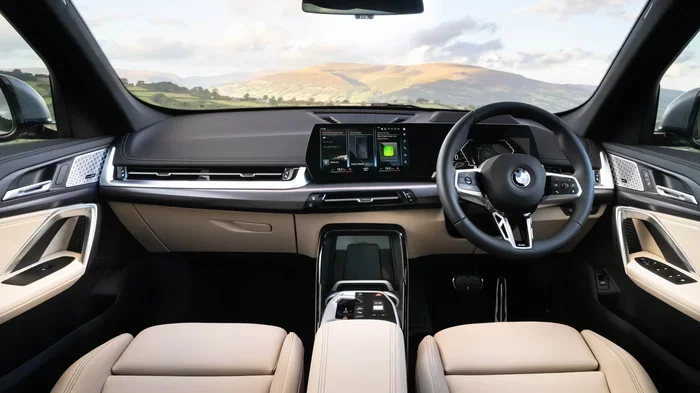
Visual guide about BMW X1 SUV
Image source: topgear.com
Unibody Construction
Because it uses the FAAR platform, the X1 is a unibody vehicle. There is no separate ladder frame. This gives it a lower center of gravity than a traditional SUV. It also makes the structure very rigid. This rigidity is why the X1 feels sporty on winding roads. It does not wallow or flex like a truck-based SUV.
Ground Clearance and Dimensions
Ground clearance is a key metric for SUV credibility. The X1 offers roughly 7.2 inches of clearance on standard models. The xLine trim and the M35i can push that closer to 8.3 inches with the adaptive suspension in its highest setting. That is enough for deep snow, rutted dirt roads, and steep driveway approaches.
Here are the key exterior dimensions for the current model:
- Length: 175.4 inches
- Width: 72.0 inches (without mirrors)
- Height: 64.2 inches
- Wheelbase: 105.1 inches
These numbers place it squarely in the subcompact segment. It is about the same size as an Audi Q3 or a Mercedes GLA. It is noticeably smaller than the BMW X3, which is a compact SUV.
BMW’s Official Classification: The SAV Badge
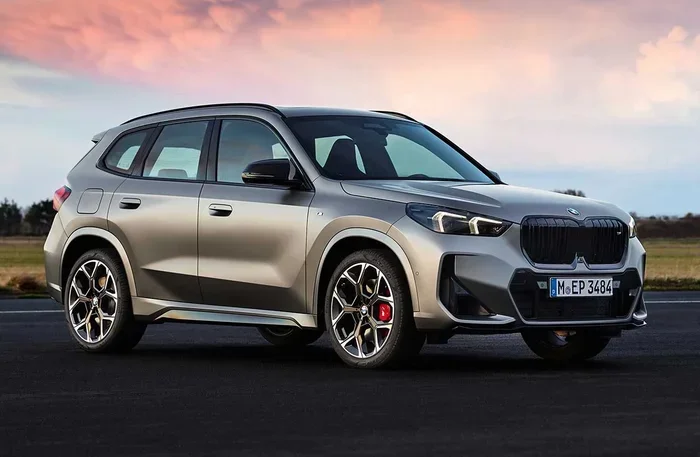
You will see “SAV” on the marketing materials. You will see it on the window sticker. BMW coined this term decades ago for the X5. They wanted to distance their vehicles from the truck-like reputation of 1990s SUVs. They emphasized on-road dynamics, handling, and luxury.
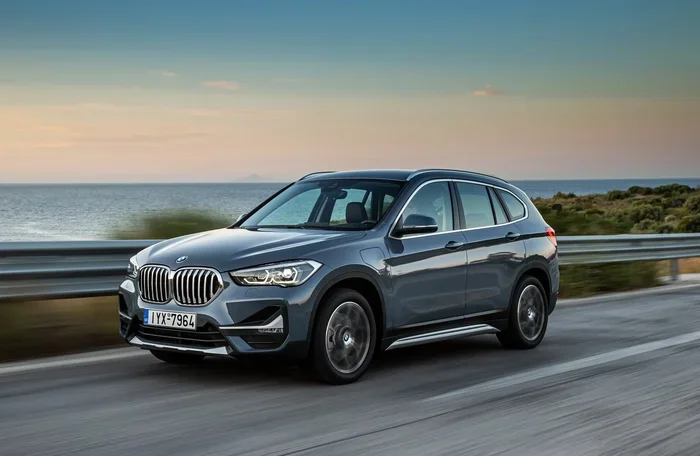
Visual guide about BMW X1 SUV
Image source: cdn.bmwblog.com
Today, every BMW “X” model (X1 through X7, XM) is an SAV. The “X” stands for the all-wheel-drive system (xDrive) historically, though now RWD “sDrive” models exist too. The “1” denotes the size segment. It is the entry point. So, when you ask is the BMW X1 considered an SUV, the manufacturer says “SAV,” but the segment says “Subcompact Luxury SUV.” Both are correct.
If you are curious about how BMW names its lineup, our guide on BMW vehicle designations explains the logic behind the numbers and letters.
Interior Space and Practicality
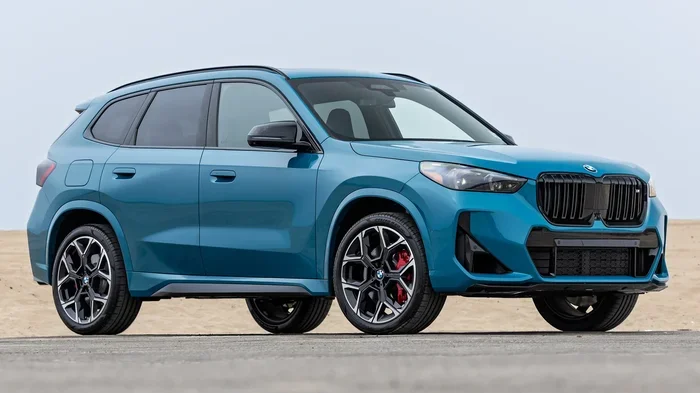
This is where the X1 surprises people. It looks small outside. Inside, it feels much larger. BMW pushed the wheels to the corners. The long wheelbase relative to overall length maximizes the cabin.
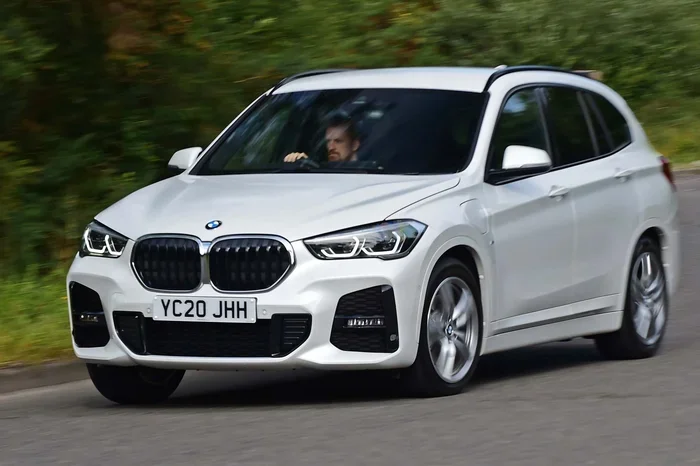
Visual guide about BMW X1 SUV
Image source: media.drivingelectric.com
Passenger Room
Front seat passengers get 40.4 inches of legroom and 39.4 inches of headroom. That is generous for six-footers. The rear seat is the real story. You get 37.0 inches of legroom. That beats several compact SUVs that cost more. Two adults sit comfortably. Three is a squeeze for a long trip, but doable for short hops. The rear seat backrest reclines (40/20/40 split). This adds comfort or cargo flexibility.
Cargo Capacity
Cargo space defines an SUV’s utility. The X1 delivers strong numbers:
- Behind rear seats: 27.1 cubic feet (54.9 with the available spare tire kit removed/underfloor storage used).
- Rear seats folded: 58.7 cubic feet.
The load floor is low and flat when seats are folded. The rear hatch opens wide. There is a standard 12-volt outlet and tie-down points in the back. The hands-free power tailgate is standard on higher trims, optional on base. You can fit a couple of large suitcases behind the rear seats. Fold them down, and you can move a small apartment’s worth of boxes.
Performance and Drivetrain Options
The X1 lineup is simple but potent. For the US market, there are effectively two main engines, both 2.0-liter turbocharged four-cylinders.
xDrive All-Wheel Drive
BMW’s xDrive system is a major reason the X1 earns the SUV label. It is not a simple “slip-and-grip” system. It uses an electronically controlled multi-plate clutch. It can send 100% of torque to the front or rear axle instantly. It works with the stability control system. It vectors torque side-to-side via brake actuation. This gives real traction in snow, mud, or gravel. It also sharpens cornering on dry pavement. The base sDrive28i is front-wheel drive only. We strongly recommend xDrive if you see weather or dirt.
Engine Choices
- xDrive28i (sDrive28i): 2.0L TwinPower Turbo. 241 hp / 295 lb-ft. 0-60 mph in ~6.2 seconds. This is the volume seller. It is quick, smooth, and returns ~25 city / 34 highway MPG.
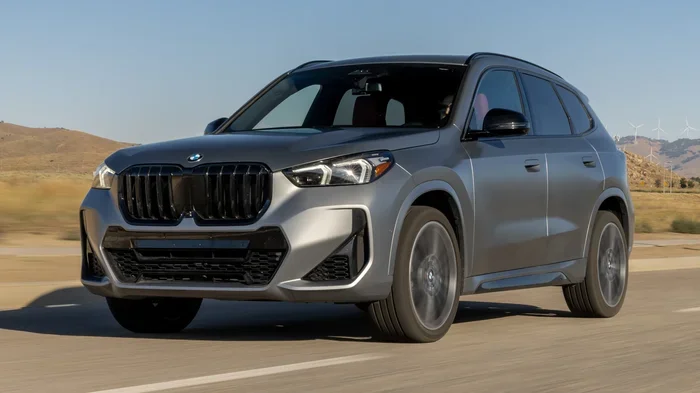
- M35i xDrive: 2.0L TwinPower Turbo (higher tune). 312 hp / 295 lb-ft (overboost to 317 lb-ft). 0-60 mph in ~5.2 seconds. This adds an M Sport differential, sport suspension, bigger brakes, and quad exhaust tips. It is a genuine pocket rocket.
Both engines pair with a 7-speed dual-clutch automatic (DCT). It shifts faster and smoother than the old 8-speed torque converter. There is no manual transmission option. There is also a fully electric iX1 in Europe, but it is not currently sold in the US.
For those chasing ultimate speed across the brand, our deep dive into the most powerful BMW models shows where the M35i sits in the hierarchy.
How the X1 Stacks Up Against Rivals
The subcompact luxury SUV segment is a bloodbath. Everyone wants a piece. Here is how the X1 compares to its main rivals on paper and in feel.
| Model | Starting Price (Approx) | Horsepower (Base) | Cargo Max (cu ft) | Rear Legroom (in) | Key Trait |
|---|---|---|---|---|---|
| BMW X1 xDrive28i | $41,000 | 241 | 58.7 | 37.0 | Best driving dynamics, tech |
| Audi Q3 45 TFSI | $39,000 | 228 | 48.9 | 36.1 | Best interior quality, quiet |
| Mercedes GLA 250 | $39,000 | 221 | 43.6 | 36.0 | Style, MBUX infotainment |
| Volvo XC40 Core | $39,000 | 247 | 57.5 | 36.1 | Safety, boxy utility |
| Lexus UX 250h | $37,000 | 181 (Hybrid) | 46.9 | 33.1 | Best MPG, reliability |
The BMW Advantage: The X1 leads in cargo space and rear legroom. It also leads in driving engagement. The steering is heavier and more communicative. The chassis feels balanced. The DCT transmission is snappier than the torque converters in the Audi or Mercedes.
The Trade-offs: The ride is firmer. Run-flat tires (standard on most trims) transmit sharp impacts. The base iDrive 9 infotainment is excellent but relies heavily on touch/voice; some miss physical climate knobs. The Mercedes and Audi feel more “plush” over broken pavement. The Lexus hybrid wins on fuel economy hands down.
If you need three rows of seating, the X1 cannot help you. It is strictly a five-seater. You would need to step up to the X5 or X7. You can read about which BMW SUV has three rows if your family is growing.
Is the BMW X1 Right for You?
Decision time. The X1 is a compelling package, but it is not for everyone.
Buy It If:
- You want a driver’s car in SUV clothing. It handles better than anything in class.
- You need maximum rear seat space in a subcompact footprint.
- You want modern tech (iDrive 9, curved display, wireless CarPlay/Android Auto).
- You live in a snowy climate and want a competent xDrive system.
- You like the M35i idea: a 300-hp daily driver that fits in a compact spot.
Look Elsewhere If:
- You prioritize a pillowy soft ride over handling. Look at the Audi Q3 or Lincoln Corsair.
- You want a hybrid or EV powertrain (US market). Look at the Lexus UX 250h, Volvo XC40 Recharge, or Audi Q4 e-tron.
- You need three rows. Look at the X5 or X7.
- You hate run-flat tires. They are standard on non-M models. They are expensive to replace and ride stiff. You can swap them, but it voids the mobility kit logic. Learn more about BMW run-flat tires before you decide.
- You want a proven reliability record over 100k miles. The new platform is too new for long-term data. Historically, BMW ranks average. Check our list of the most reliable BMW models for context.
Ownership Considerations: Maintenance and Costs
Buying the SUV is step one. Owning it is step two. The X1 is built in Regensburg, Germany (and China for that market). Build quality is high. The 2.0L B48 engine is mature and robust. It uses a timing chain, not a belt. It has a forged crankshaft. It handles the power easily.
Maintenance costs are higher than a Toyota RAV4 or Honda CR-V. You pay for synthetic oil, premium fuel (required), and specialized labor. The first service is usually around 10k-12k miles. BMW offers Ultimate Care (free scheduled maintenance for 3 years/36k miles) on new cars. This covers oil, filters, brakes, and wipers. It is a huge value in the first ownership cycle.
Extended warranties are popular on these. The electronics, sensors, and turbo components can be pricey out of warranty. If you keep cars long-term, budget $1,500-$2,500 per year for maintenance/repairs after year 4.
Quick Tips for Buyers
- Test drive both sDrive and xDrive. The weight difference changes the steering feel slightly. FWD is lighter; AWD is sure-footed.
- Spec the Parking Assistant Plus. It adds the surround-view cameras and automated parking. The X1 has thick pillars; cameras help immensely.
- Check the tire brand. Run-flats vary. Bridgestone and Michelin are common. Michelin Pilot Sport or Alpin (winter) generally ride better than Bridgestone equivalents.
- Negotiate on the “Doc Fee” and “Market Adjustment.” Inventory has normalized. You should not pay over MSRP.
- Get winter wheels/tires. If you buy xDrive, spend the money on a dedicated winter set. The summer performance run-flats are dangerous below 40°F. The xDrive system shines with proper rubber.
Common Misconceptions
“It’s just a lifted 2 Series.” False. They share a platform, but the X1 has unique body structure, suspension tuning, steering rack, ride height, and interior packaging. It drives differently.
“It can’t go off-road.” False. With xDrive, 8 inches of clearance, and hill descent control (standard on xDrive), it handles forest service roads, beach sand, and snow fields better than 95% of owners will ever demand. It is not a Wrangler, but it is not a car.
“The 4-cylinder sounds bad.” Subjective. The B48 is smooth. The M35i has a synthesized soundtrack through speakers, but the real exhaust note is a decent growl. It is not a V8, but it sounds sporty for a four-banger.
Expert Insight: The “Sweet Spot” Trim
Most enthusiasts agree: the xDrive28i xLine is the sweet spot. You get the AWD, the 241-hp engine, 19-inch wheels (better tire sidewall than 20s), the upgraded seats, and the shadowline exterior trim. Skip the M35i unless you truly want the performance tax (stiffer ride, lower MPG, premium fuel only, higher insurance). Skip the base sDrive unless you live in the deep South and never see rain or snow.
Conclusion
So, is the BMW X1 considered an SUV? Absolutely. It checks every box: raised seating, available all-wheel drive, generous cargo volume, and ground clearance for real-world obstacles. BMW calls it an SAV. The government calls it an SUV. Your insurance agent calls it an SUV. Your passengers will call it comfortable.
It is the entry ticket to the BMW SUV family. It does not feel like a penalty box. It feels like a proper BMW that happens to have a hatch and a high roof. It drives better than its rivals. It holds more stuff than its rivals. It packs tech that punches above its price point. If you want a luxury badge, engaging dynamics, and daily practicality in a city-friendly size, the X1 is the benchmark. Go drive one. You will likely sign the papers.
Frequently Asked Questions
Is the BMW X1 a real SUV or just a hatchback?
It is a real SUV by modern standards. It uses unibody crossover construction, but it has 7-8 inches of ground clearance, available all-wheel drive, and nearly 59 cubic feet of cargo space. It meets every functional definition of a subcompact SUV.
What is the difference between the BMW X1 sDrive and xDrive?
sDrive is front-wheel drive only. xDrive is all-wheel drive. xDrive can send 100% of power to either axle instantly. We recommend xDrive for anyone facing rain, snow, or unpaved roads.
Does the BMW X1 have three rows of seats?
No. The X1 is strictly a five-passenger, two-row vehicle. If you need three rows, you must move up to the BMW X5 or X7.
Is the BMW X1 reliable?
The current generation (2023+) is too new for long-term reliability ratings. The previous generation had average scores. The 2.0L turbo engine is proven. BMW includes 3 years/36k miles of free maintenance, which lowers early ownership risk.
Does the BMW X1 require premium gas?
Yes. BMW recommends 91 octane or higher for all X1 models (both 28i and M35i) for optimal performance and engine longevity. Using regular fuel can reduce power and efficiency.
How does the BMW X1 compare to the X3?
The X3 is a compact SUV (one size up). It is wider, longer, heavier, and more expensive. It offers more rear legroom, more cargo space, and a standard 6-cylinder engine on the M40i. The X1 is nimbler, more efficient, and easier to park.